Davos Skiing Guide: Which Ski Area and Where to Base
Plan a Davos ski trip across six areas, from Parsenn's 12km run to Pischa's freeride terrain, with pass choices, beginner zones and base-town advice.
On this page
Davos is not one ski hill but a group of six winter sports areas spread around the town and across to Klosters, served collectively by 57 transport systems and roughly 300 kilometres of piste. That scale is the appeal and the catch: you can ski a different mountain every day, but you cannot ski them all from one lift base. Deciding which two or three areas match your ability, and buying the right ticket for them, matters more here than in a compact single-mountain resort.
The practical split is straightforward. Parsenn is the long-descent classic, Jakobshorn the lively blues-to-blacks mountain with a terrain park, Madrisa, Rinerhorn and Schatzalp lean family and calm, and Pischa has no groomed pistes at all. This guide works through each area, the pass decision, beginner provision, hire and access, so you can build an itinerary rather than guess at one.
Quick verdict: is Davos good for skiing?
Yes, with a caveat about travel time. Davos suits skiers who like variety and long runs and who are happy to move between mountains by bus, train or car rather than step out of a hotel onto a lift. Intermediate and advanced skiers get the most from it, because the headline terrain at Parsenn and Jakobshorn is extensive and genuinely varied.
Beginners are well served, but not on the big mountains: the valley practice zones at Bolgen and Bünda sit in town next to rental shops and bus stops. Book accommodation near the right one and your first days are simple. If you want a single mountain with everything on the doorstep, this spread-out layout will feel like extra logistics.
The six ski areas at a glance
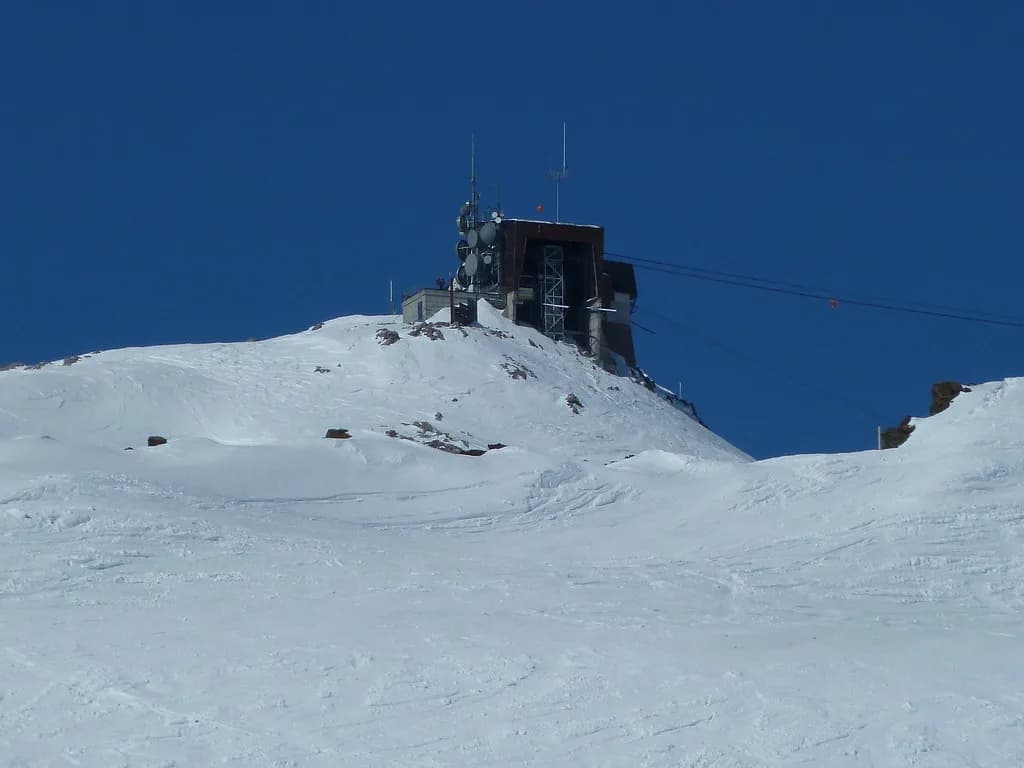
Parsenn, reached by funicular from Davos or cable car from Klosters, is the largest and most traditional area, with about 97 kilometres of slopes and a high point of 2,844 metres on the Weissfluh summit. Jakobshorn delivers 55 kilometres of blue to black piste plus the JatzPark freestyle lines. Madrisa above Klosters has 31 kilometres and four children's practice lifts; Rinerhorn has 39 kilometres and five lifts; Schatzalp-Strela is a small natural-snow area; and Pischa is freeride terrain only.
The 57 lifts figure covers all six areas together, not one interconnected circuit, so treat each mountain as its own day out. For sector-by-sector orientation, the Davos Ski Map and Piste Plans resource is the companion piece to this guide.
Parsenn and Gotschna: the classic long-descent mountain
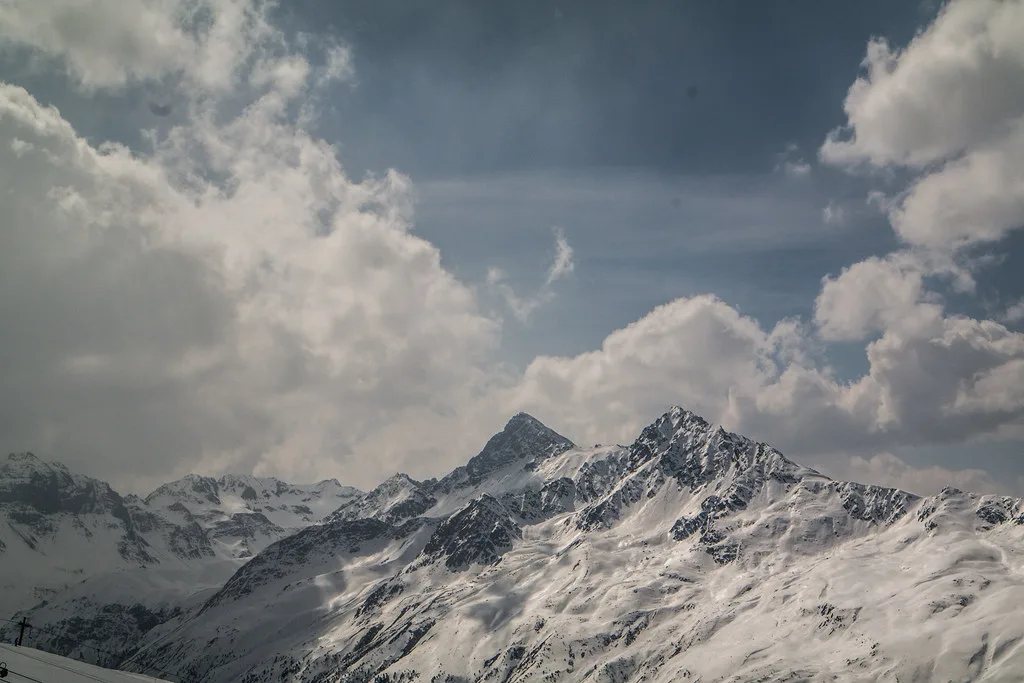
Parsenn is where Davos skiing made its name, and it remains the area to prioritise if you like wide, sustained descents. The Parsenn funicular climbs from Davos and the Gotschna cable car from Klosters, so the same mountain can be entered from either end of the valley, which is useful when you are choosing a base. The resort describes reliable snow from November to April, the longest season window of the group.
The signature run is the roughly 12-kilometre descent from Weissfluhjoch down to Küblis. Plan it as a one-way journey rather than a lap: you finish in the village and return by train, so build the transfer into your day and start early enough not to rush the final pitches. Slopes range from beginner-friendly to genuinely steep, and the Totalp chairlift area hosts a ski and boardercross track if you want a timed race with friends.
Freeriders will find plenty of off-piste lines here, but the good routes reward local knowledge. A guided day is the efficient way to learn the mountain's exits, and the Parsenn terrain is a sensible place to spend a guide budget rather than saving it for the smaller areas.
Jakobshorn: blues to blacks, JatzPark and the Bolgen base
Jakobshorn is the liveliest of the Davos mountains, with 55 kilometres of piste from blue to black and a reputation for après-ski as much as for skiing. The JatzPark freestyle area has three lines of kickers, rails and boxes, so park skiers and boarders can progress without committing to the biggest features on day one. Signposted freeride routes drop towards the Dischma and Sertig valleys when they are open and secured, and proper avalanche kit is essential on them.
Its strongest practical asset is the valley base. The Bolgen area in Davos Platz holds the ski school's easy slopes, the children's Home of Winter slope at the Carjöler chairlift, and parking beside the lifts, which makes it the simplest place to start a family day. Staying in Davos Platz puts this within a short walk or bus ride of most accommodation.
Behind the Châlet Güggel restaurant sits the Avalanche Training Center, a simulated search area where you can practise transceiver work before heading onto the signposted routes. It is a low-cost way to sharpen rescue skills and worth an hour if anyone in your group plans to ski off-piste.
Rinerhorn, Madrisa and Schatzalp: the quieter alternatives
Rinerhorn sits toward the edge of the region and feels like a local's mountain: 39 kilometres of mostly blue and red slopes with five lifts and a 3.5-kilometre sledging run. Its published season runs from mid-December to the end of March, so check dates if you are travelling in early December or late March. It is the pick for families and school groups wanting space to practise carving turns without crowds.
Madrisa is Klosters' landmark mountain, aimed squarely at children and skiers with disabilities. Four practice lifts and 31 kilometres of piste sit alongside Madrisa Land, and the cable car and mountain restaurant are wheelchair accessible, with the Schaffürggli chairlift adapted for monoskis. If anyone in your party needs step-free access to the snow, this is the area to build a day around.
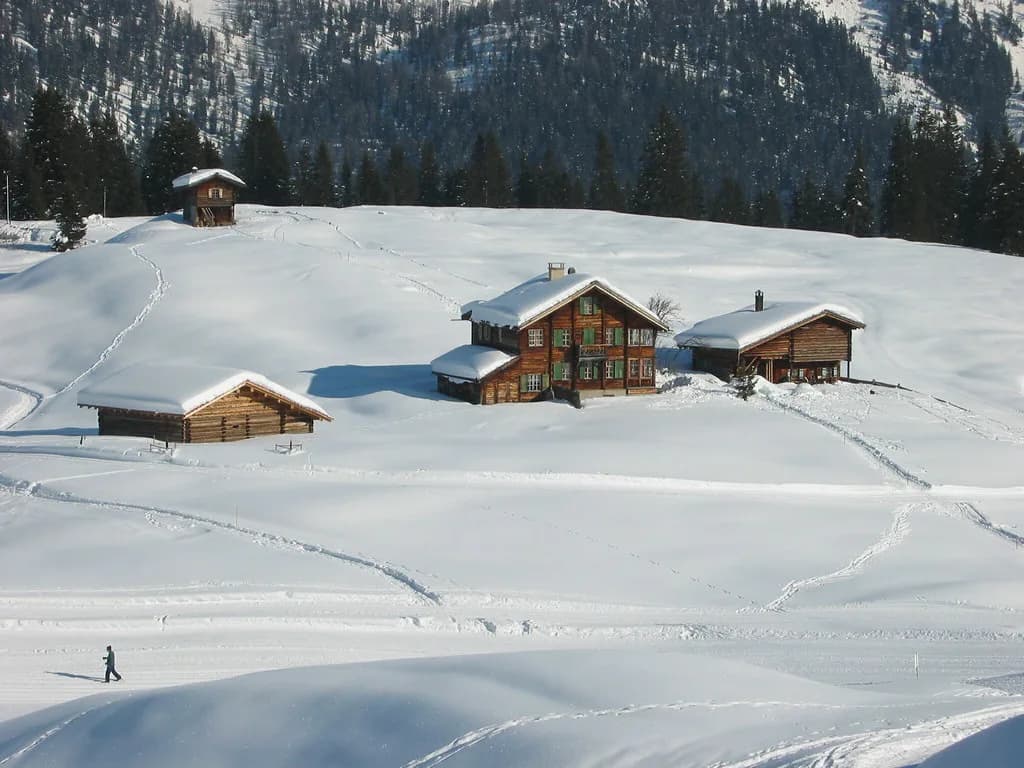
Schatzalp-Strela is the nostalgia option: wide, gentle pistes on natural snow with no snowmaking, served by a historic chairlift above Davos. Leisurely skiers and families like it precisely because it is slow and quiet, and softer natural snow is kinder for beginners. One rule to remember: standard ski passes are not valid here, so budget for a separate ticket.
Pischa: freeride terrain with no groomed pistes
Pischa is not a conventional ski area: there is not a single groomed slope, only signposted freeride descents that are secured when open. A cable car takes you to the start, and route number 6 drops into the Pischa valley; other lines are at your own risk. Come with your own avalanche equipment, the skills to use it and a current avalanche forecast, because there is no piste patrol function to fall back on in the usual way.
For strong off-piste skiers it is the quietest and most distinctive day in the region, and the lift ticket is sold as inexpensive. Ski tourers and snowshoers use the same mountain, so expect a mixed but sparse crowd rather than lift queues.
Ski passes: single-area tickets versus the regional pass
The regional pass covers all winter sports areas of the Davos Klosters Mountains and comes in durations from one to 21 days. Any pass valid for more than three days is issued automatically as a regional pass, so short trips are where the single-area versus regional decision really bites. For a two-day weekend, a ticket for one mountain you plan to ski both days can be cheaper; for three days or more across different mountains, the regional pass is the simpler and usually better value choice.
Two caveats shape the decision. Passes are not valid on Schatzalp, and they do not cover evening events such as night sledging or night skiing. Prices are published as low-season and high-season PDF lists, so check the current figures before you commit rather than budgeting from secondhand numbers.
Parsenn and Jakobshorn are also sold together on one ticket, which suits skiers who want the two biggest mountains without the full regional price. For a like-for-like comparison of the products, durations and season bands, work through the Davos Ski Pass Guide before buying.
Where beginners should start: Bünda and Bolgen
Davos keeps its beginner zones in the valley, and the choice between them comes down to where you sleep. Bolgen sits in Davos Platz beside the Jakobshorn valley station; Bünda sits in Davos Dorf near the railway station. Both are reachable by bus, both have rental shops alongside, and both have restaurants for a long lunch. Match the zone to your hotel and you avoid a daily transfer with small children.
The packaged first-ski offer is the low-risk way in: two to three hours at Bolgen or Bünda with an English-speaking instructor, full equipment and a beginner-area lift pass included. Bring or buy your own gloves and goggles, which are excluded for hygiene reasons and sold at the rental shops. Beyond that package, compare school formats and group sizes before booking.
Once you can link turns, Jakobshorn's blue runs and the wide reds at Rinerhorn are the natural next steps. Parsenn's lower slopes work too, but its long descents can strand tired legs far from the valley, so save it until your group is skiing the full day.
Equipment hire and ski schools
Rental shops cluster at the valley stations and beside the beginner zones, which means you can collect gear on the morning you ski rather than carrying it across town. The first-ski package bundles equipment, so complete beginners need not shop around; everyone else should reserve online in peak weeks, when popular boot sizes go first. Check what is included, such as helmet and insurance excess, before you pay.
The Swiss Ski School Davos runs the beginner programmes and takes bookings for the first-ski offer directly, while private instructors and other schools operate across the mountains. Group lessons give the best value for improvers, private hours suit anyone fixing a specific habit, and guiding is the sensible spend for off-piste days at Pischa or Jakobshorn.
Getting around without a car
Davos and Klosters are served by the Rhätische Bahn line, and local buses link the town centres to the valley stations, so a car is not necessary for a ski week. The Parsenn funicular leaves from Davos Dorf and the Gotschna cable car from Klosters, which makes the train a genuine alternative to driving between the two ends of the valley.
Pick your base with lift access in mind: Davos Dorf is convenient for the Parsenn funicular and Bünda, Davos Platz for Jakobshorn and Bolgen, and Klosters for Gotschna and Madrisa. If you plan to ski Rinerhorn often, check how you will reach it, as it sits away from the main town stations.
Where to base yourself: Davos Platz, Davos Dorf and Klosters
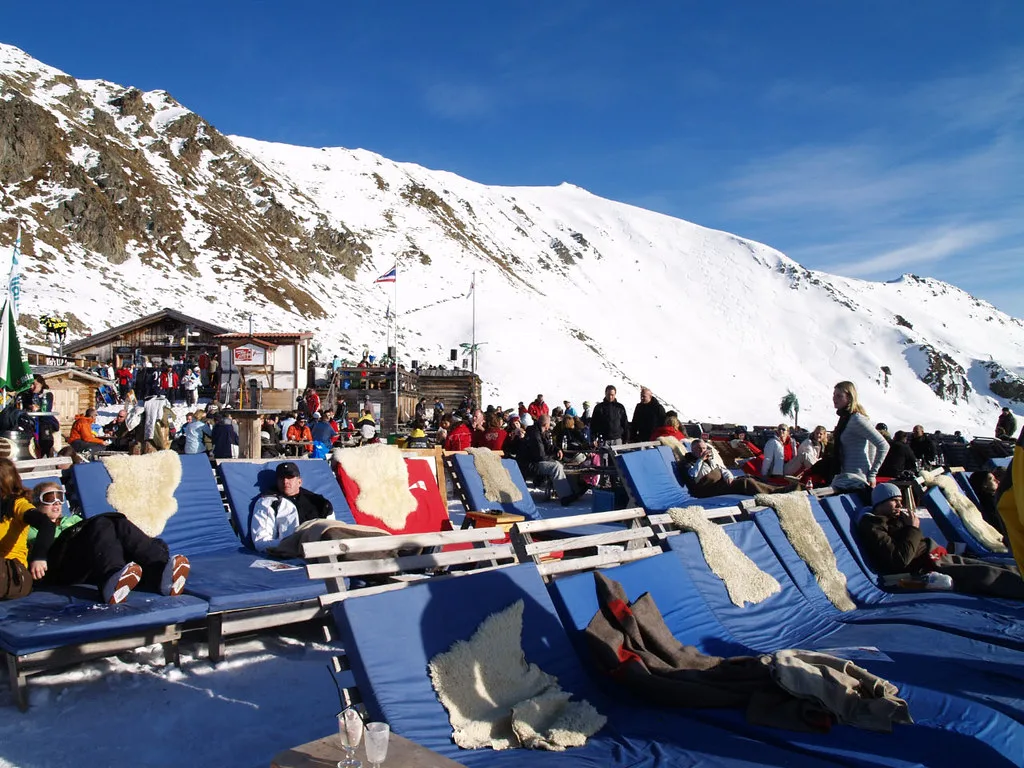
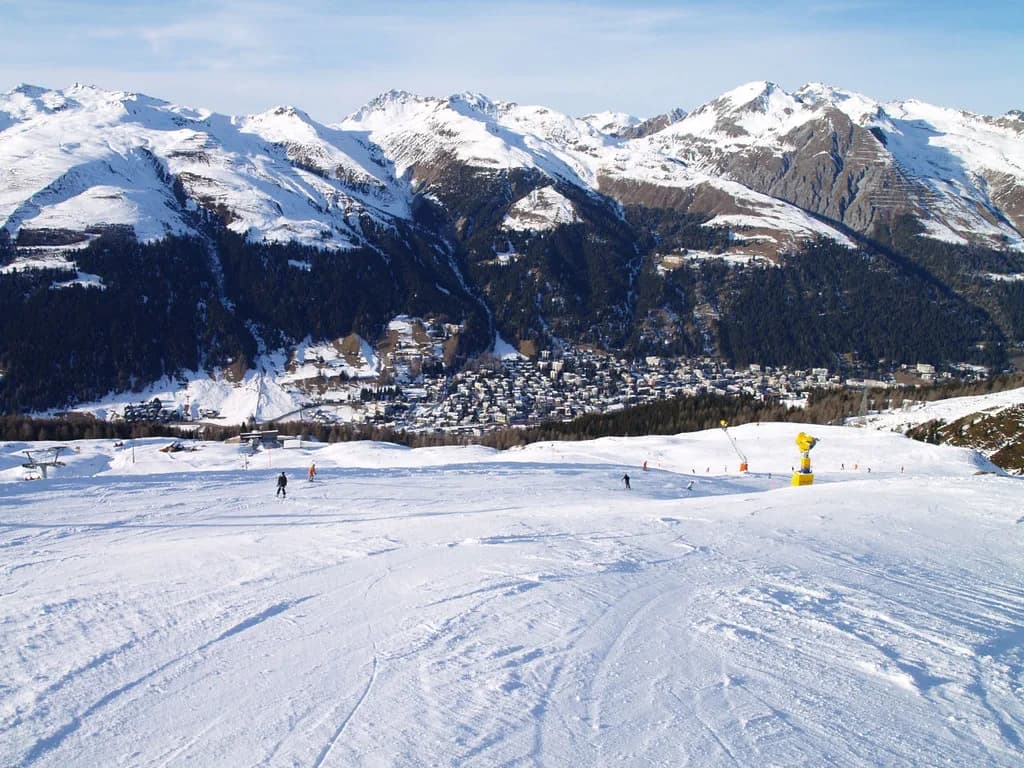
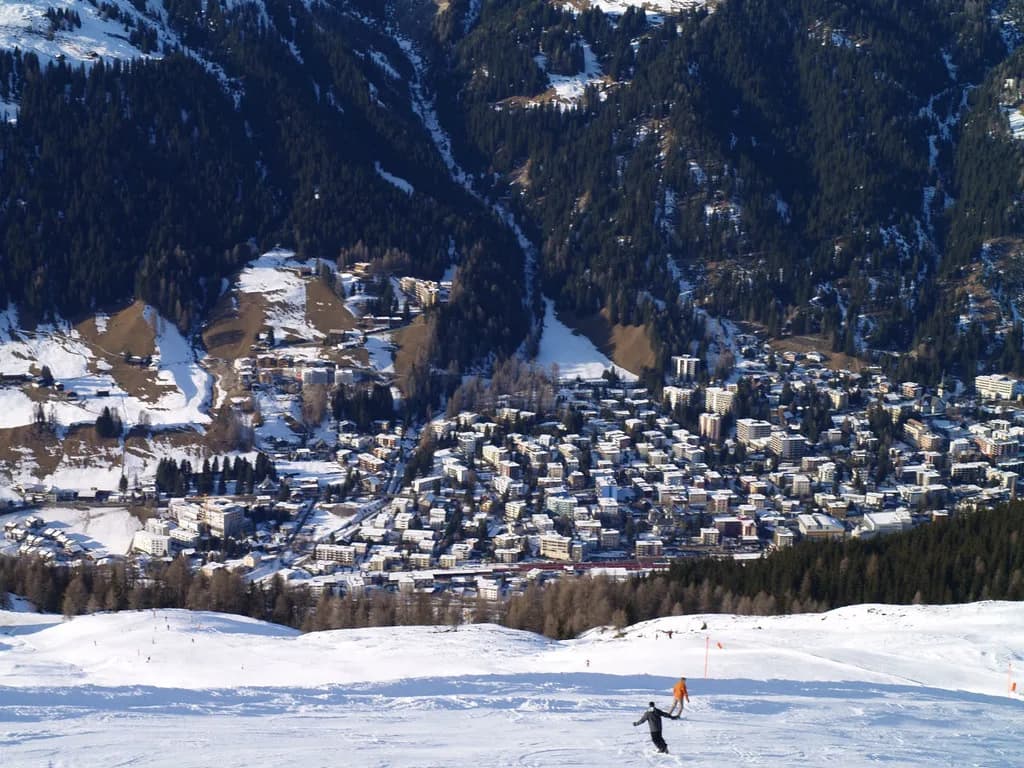
Davos Platz is the busier, more built-up end, closest to the Jakobshorn lifts and the Bolgen beginner area, and the obvious choice for families and anyone who wants easy evening options. Davos Dorf is quieter and better placed for the Parsenn funicular and Bünda, which suits early risers and skiers focused on long descents.
Klosters is a village in its own right and gives direct access to Gotschna and Madrisa without crossing the valley each morning. It trades some of Davos's scale for calm, and it makes sense if the Prättigau side of the region is your priority. Whichever you choose, book early for peak weeks and school holidays, when the closest accommodation to the lifts goes first.
Season timing and snow reliability
Parsenn publishes reliable snow from November to April, while Rinerhorn runs from mid-December to the end of March, which tells you how much the areas differ in altitude and aspect. Early-season trips should aim high: the Weissfluh summit at 2,844 metres and the upper Parsenn slopes hold snow better than the lower runs. Late March favours sunny days and softer snow, with the valley areas the first to suffer.
Schatzalp depends entirely on natural snow, so it is a bonus mountain rather than one to plan a week around. If it is open during your stay, take an afternoon there for the quiet and the historic lift.
Terrain picks by ability and by day
Beginners should spend the first one or two days at Bünda or Bolgen, then move to Jakobshorn's blues or Rinerhorn's wide reds. Intermediates get the best of the region at Parsenn, where the long descents reward confident cruising, and can add Jakobshorn for mileage. Advanced skiers should schedule Parsenn for steeps and the Küblis run, Jakobshorn for freeride routes and the park, and Pischa for a genuine off-piste day.
A sensible five-day shape looks like this: two days at Parsenn including the run to Küblis, one at Jakobshorn, one at Rinerhorn or Madrisa depending on whether you need family facilities, and a final day at whichever mountain the weather favours. That spread justifies a regional pass and still leaves Schatzalp or Pischa as optional extras.
Insider moves: night sledging, fun runs and avalanche training
Beyond the pistes, Rinerhorn's 3.5-kilometre sledging run and Madrisa's 8.5-kilometre descent to Saas give non-skiers a real day out, and both mountains run night sledging events on selected dates. Note that standard passes do not cover these evening events, so buy separately and confirm dates locally.
Racers can take on the timed runs at Parsenn, including the Raiffeisen giant slalom and the Nordica Speed Run, which make a good half-day goal for competitive groups. Combine one with the Avalanche Training Center at Jakobshorn and you have a trip that mixes speed with skills.
Book early: what goes first
In peak weeks, the scarce items are accommodation within walking distance of the lifts, hire equipment in common boot sizes and lesson places at the beginner zones. Reserve all three before you buy lift passes, because they constrain which base and which ticket make sense. Passes themselves can be bought close to arrival, but check the season bands first, as high-season rates apply to the dates you will actually ski.
If your dates are flexible, aim for the shoulder weeks either side of the school holidays: you will find more availability near the lifts and quieter slopes at Parsenn and Jakobshorn. Anyone planning freeride days at Pischa should also book a guide or a skills course early, since those fill up with the same weather windows everyone else is chasing.
Davos versus other multi-area Alpine resorts
Davos stands out for the number of genuinely separate mountains you can ski on one regional pass, which suits skiers who enjoy moving around. The trade-off is that the areas are spread along a valley rather than linked by pistes, so you commit to a mountain each morning. Resorts built around a single interconnected circuit offer faster access and simpler logistics, but less variety day to day.
If you are comparing options, the Andermatt ski guide covers a more compact, snow-sure alternative with its own linked sectors. Within Graubünden, the Arosa Skiing area partners with Lenzerheide and appears on the same three-region Topcard as Davos, which is worth knowing if you want to combine two trips.
Plan Your Visit
Build your Davos trip around two or three mountains, not six: Parsenn for long descents, Jakobshorn for variety and the park, and one of Rinerhorn or Madrisa for a quieter day. Choose your base by lift access, read the low-season and high-season pass PDFs before buying the Ski pass, and book lessons and hire at the beginner zones early.
Then check the current season dates and lift status on the official Davos Klosters Mountains site in the week before you travel, and you will arrive with a plan that fits the snow rather than fighting it.
Explore more Davos guides
- Davos Ski Hire
- Davos Ski Lessons
- Davos Ski Map and Piste Plans
- Davos Ski Pass Guide
- Davos Ski Season
- Davos Skiing for Beginners
- Davos Snowboarding
- Zermatt Skiing
- Verbier Skiing
- Skiing in Grindelwald
- Saas-Fee Skiing
- Wengen Skiing
- Crans-Montana Skiing
- St Moritz Skiing
- Andermatt Skiing
- Villars Skiing
- Engelberg Skiing
- Arosa Skiing
- Laax Skiing
Frequently Asked Questions
Is Davos good for skiing?
Davos suits skiers who value variety: six separate areas, long descents at Parsenn, a lively blues-to-blacks mountain at Jakobshorn and quieter family terrain at Madrisa, Rinerhorn and Schatzalp. The trade-off is that the mountains are spread along the valley, so you pick one per day rather than skiing between them.
How many ski areas are there in Davos Klosters?
Six: Parsenn, Jakobshorn, Madrisa, Rinerhorn, Schatzalp-Strela and Pischa. They share a regional pass and 57 lift systems collectively, but they are not linked by pistes, so treat each as its own day out.
Which Davos ski area is best for beginners?
Start in the valley: Bünda serves Davos Dorf and Bolgen serves Davos Platz, both with practice slopes, nearby rental shops and bus access. After that, Jakobshorn's blue runs and Rinerhorn's wide reds are the natural progression.
Should I buy a regional pass or a single-area ski pass in Davos?
For two days on one mountain, a single-area ticket can be cheaper. Any pass of more than three days is issued as a regional pass automatically, which makes sense if you plan to ski several mountains. Passes are not valid on Schatzalp and do not cover evening events.
Does Pischa have groomed pistes?
No. Pischa is a freeride area with signposted descents secured only when open, plus winter hiking and snowshoeing. Bring avalanche equipment, the skills to use it and a current forecast, or ski it with a guide.
How long is the run from Parsenn down to Küblis?
The descent from Weissfluhjoch to Küblis is roughly 12 kilometres. It is a one-way journey, so plan the train back from Küblis into your day rather than expecting a return lap.
Where is the best place to stay for skiing in Davos?
Davos Platz suits families and Jakobshorn access; Davos Dorf is better for the Parsenn funicular and Bünda; Klosters is convenient for Gotschna and Madrisa if you prefer a quieter village base. Choose by which lifts you will use most.
When is the Davos ski season?
Parsenn publishes reliable snow from November to April, while Rinerhorn runs from mid-December to the end of March. Schatzalp relies on natural snow only. Check current lift and season dates for early- or late-season travel.
Sources
- Parsenn – the timeless classic | davosklostersmountains.ch
- Jakobshorn in Davos Klosters | davosklostersmountains.ch
- Rinerhorn – the insider’s tip | davosklostersmountains.ch
- Pischa – the tranquil alternative | davosklostersmountains.ch
- Madrisa – the family mountain | davosklostersmountains.ch
- Ski & regional tickets Davos Klosters | davosklostersmountains.ch
- First ski experience
Useful notes for your next ski trip
Optional updates to our Alpine resort guides.
You might also like
Continue reading
More guides you'll find useful