Crans-Montana Skiing: A Practical Resort and Terrain Guide
Crans-Montana skiing explained: the four lift sectors, the south-facing piste layout, beginner zones and how to pick a base before you book.
On this page
Crans-Montana skiing is not one place you choose once and then forget. It is four separate lift access points spread across a broad plateau, and which one you stay near decides how your ski day actually runs. This guide frames the resort around that decision instead of repeating a piste count.
The resort sits above the Rhone Valley in Valais, formed from the two villages of Crans-sur-Sierre and Montana. The published piste area is around 140 km, ranging from wooded lower slopes up to the Plaine Morte Glacier at roughly 3,000 m. Intermediates are the clear centre of gravity here, so a group with strong skiers needs an honest look at whether the terrain matches what they want.
Below you will find the sector layout, the altitude and aspect trade-offs, beginner provision, base-selection logic, and the verification steps for passes, lessons and hire. Where the resort has not published something definitive, this guide says so rather than guessing on your behalf.
Opening Decision: Is Crans-Montana Right for Your Skiing?
Choose Crans-Montana if your group mostly wants long, groomed, cruise-able reds and blues on a sunny south-facing plateau, with a genuine glacier sector at the top. Think twice if your group is expert-led and hunting steep, sustained challenge, because the published piste breakdown is heavily weighted towards intermediate terrain with only a small black selection. The honest test is whether the majority of your group is happy skiing reds all week.
The second condition is base location. Because the ski area is accessed from four separate sectors rather than a single hub, a group that books a base without checking the nearest lift can spend part of every morning in transit. If that trade-off sounds acceptable, this resort works well. If not, the planning has to be more deliberate than a typical single-lift-base resort.
The third condition is snow-timing expectations. Crans-Montana's lower slopes face south, and the resort's own piste and lift status page lists individual installations and trails with their current state, which is useful during your stay but not a forecast for it. Treat any historic snow pattern as background, never as a promise about your week.
What and Where Crans-Montana Is
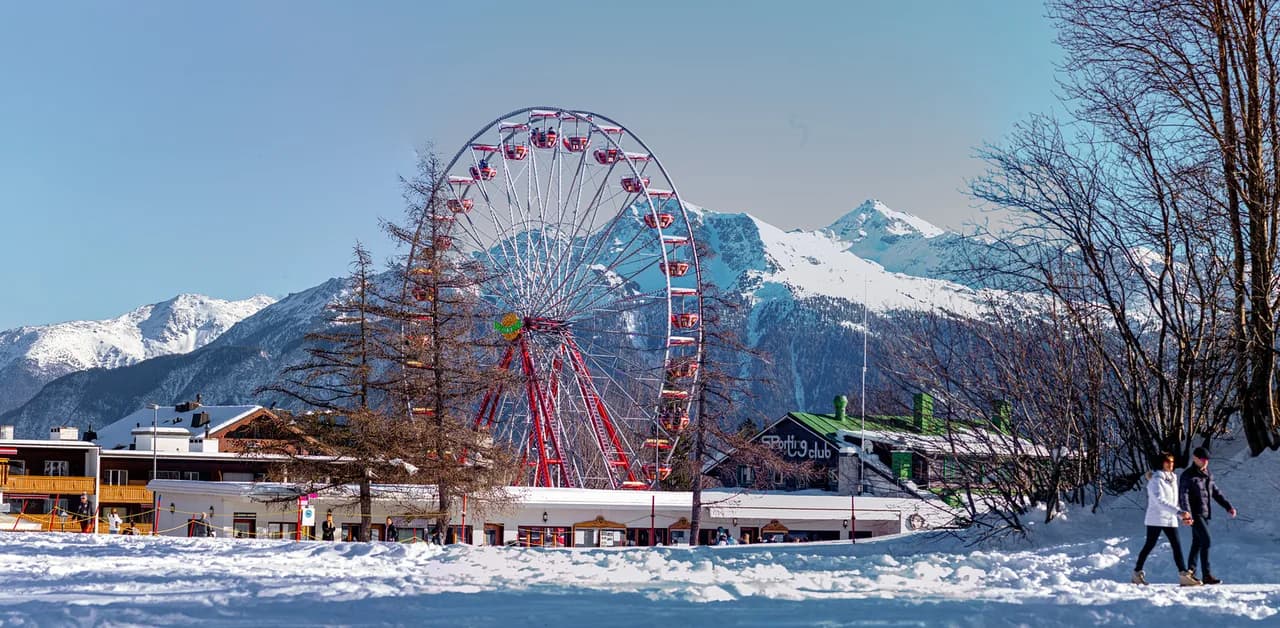
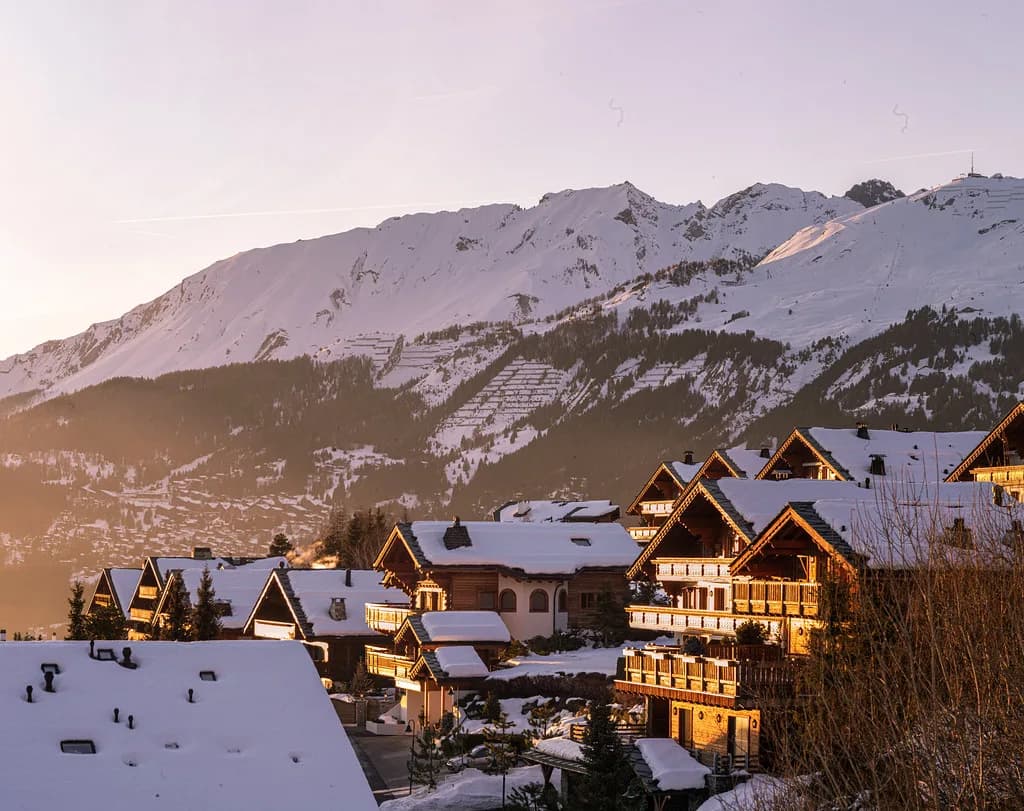
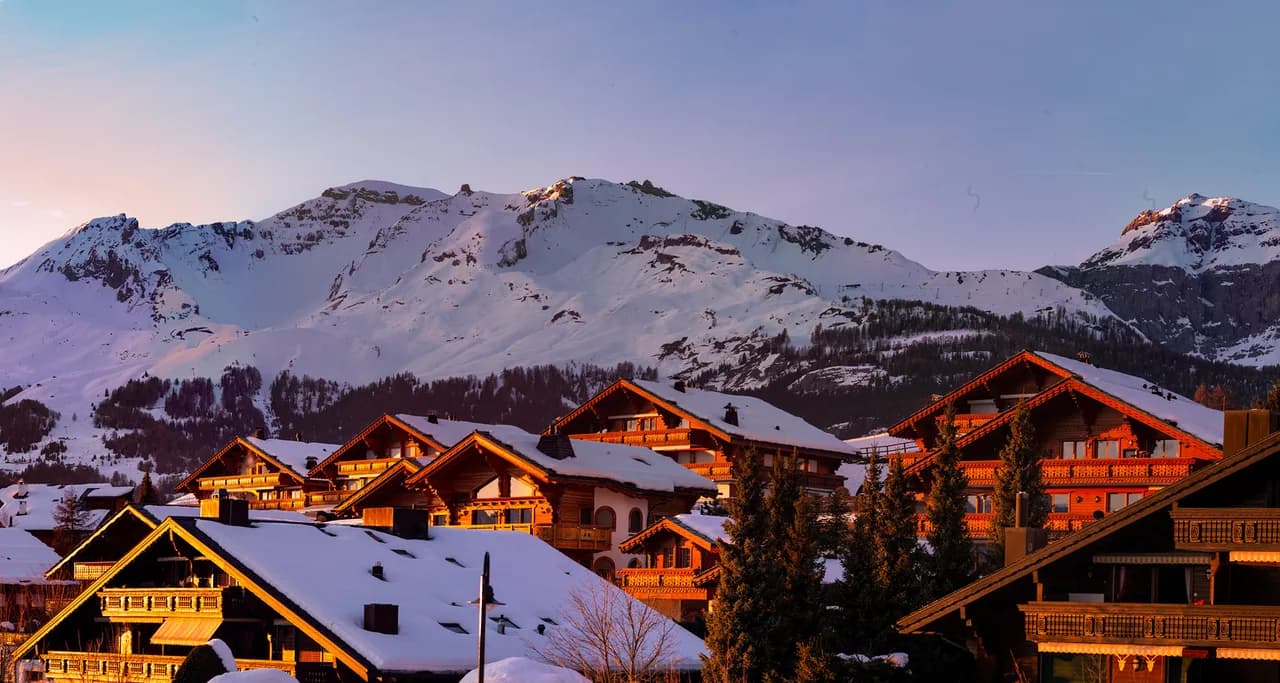
Crans-Montana is a merged resort on a broad, sunny, south-facing plateau above the Rhone Valley in the Valais canton of Switzerland. It grew from two separate villages, Crans-sur-Sierre and Montana, that expanded into one continuous urbanised community. That geography matters for skiing: the town is wide and relatively flat, and the pistes sit above it rather than threading through it.
Both villages connect to the valley town of Sierre, which is the practical rail gateway for anyone arriving without a car. Because the resort is spread out, the free resort bus between the two centres and the lift bases is not a nice-to-have; it is part of how a ski day is assembled. The flat centre also means walking and snowshoe trails are a realistic option when a member of your group is not skiing.
One practical consequence of the plateau setting is that the resort feels more like a town than a single village wrapped around a lift. That suits groups who want range in the evenings and a choice of base areas. It suits less well anyone who wants to step out of a door and onto a piste with no planning.
How the Ski Area Is Organised: Four Access Sectors
The supported description of the ski area is four main sectors, west to east: Crans, Montana, Barzettes-Violettes and Aminona. Each sector has its own base area and its own gondola lift, which is the single most important structural fact about skiing here. The resort's official piste and installation status page structures its access points the same way, listing Crans-Merbé-Cry d'Er, Montana-Arnouva, Barzettes-Marolires-Violettes and Aminona as separate entries, which confirms the four-sector organisation.
A free half-hourly ski bus connects the base terminals of the four lifts, which is how you move between sectors without skiing across. That bus is the practical link that turns four separate access points into one usable area. If you plan to ski different sectors on different days, build the bus timetable into your morning rather than discovering it at the base.
The four-sector layout also explains why the resort can feel larger than its piste kilometrage suggests. You are not skiing a single circuit; you are choosing which base to start from and which terrain to reach from it. Treat the sector map as the first document you study, ahead of any piste count.
Sector by Sector: What Each Base Gives You
Crans is the de facto centre of the resort and carries the most upmarket, retail-heavy character, with its base lift giving access to the Cry d'Er side. Staying here puts you closest to the busiest concentration of shops and the flat town centre. The trade-off is that you are at one end of the resort rather than in the middle of the ski area.
Montana has its own base lift and its own centre, and the ski area above it includes a beginner slope. Barzettes-Violettes is the sector that links upwards towards the glacier via the Violettes-Plaine-Morte funitel, which makes it the natural starting point for anyone whose priority is the high terrain. Aminona sits at the eastern end and also has beginner slopes above it.
The real decision is whether to stay near the sector you will use most, or to accept a bus or drive between bases each day. Staying near one base simplifies mornings but can narrow your default terrain. Staying centrally in the resort keeps your options open at the cost of a short journey to whichever lift you choose. Neither is wrong, but the choice should be deliberate.
The 140 km Piste Mix: What It Actually Suits
The published piste area is roughly 140 km. The resort's own terrain breakdown puts beginners at about 41 percent, intermediates at about 50 percent and expert terrain at about 9 percent. That is a genuinely intermediate-led mountain: a large volume of cruise-able reds, a few mid-range blues, and only a couple of low-end black runs.
For a mixed-ability group this weighting is usually helpful, because the middle of the group will have more than enough to fill a week. For a group where two or three skiers want sustained steep pitches every day, the small expert share is a real constraint worth discussing before booking. The resort is not pretending otherwise; the numbers are published.
In a separate resort summary, the piste count is given as 10 blue, 31 red and 10 black runs across the 140 km area. Counts and percentages measure different things and sources can disagree on how runs are classified, so use both as directional rather than exact. Either way, the reds are the heart of the mountain.
Altitude, Aspect and the Glacier Sector
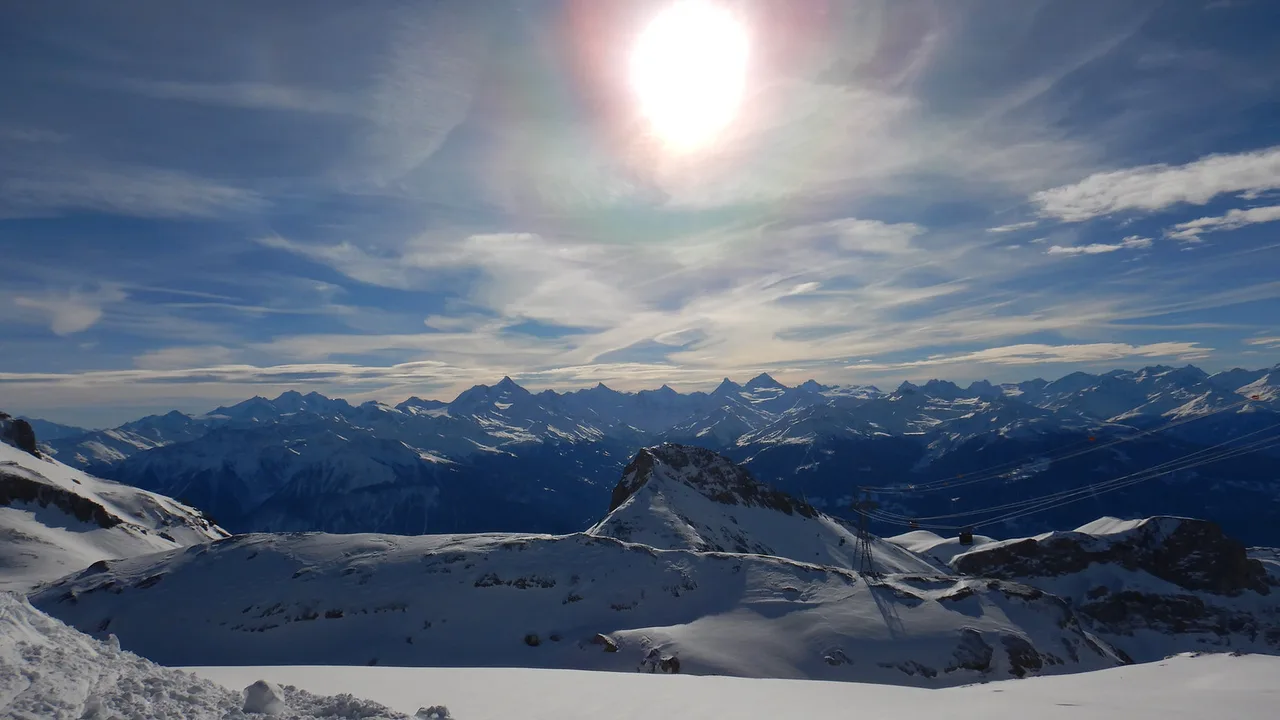
The ski area runs from about 1,500 m at resort level up to roughly 3,000 m at the summit, with the glacier covering an area of around ten square kilometres. The mid-mountain terrain above the tree line reaches heights that hold snow reasonably well, and the summit glacier sector is the highest and most reliable part of the area. The lower slopes are wooded, which provides shelter and better visibility on poor-weather days.
The south-facing aspect is the defining trade-off. It delivers the sun and the panorama that the resort is known for, but it also exposes the lowest runs to melt and refreeze. The lowest slopes are equipped with snow guns to compensate, so early-season and late-season conditions at the bottom of the mountain are more variable than at altitude. This is a real planning factor, not a criticism.
Altitude figures describe the terrain, not the conditions you will get. A high summit does not guarantee good snow on your dates, and a low base does not guarantee poor snow either. The resort publishes a live status page for current lift and piste states during the season, which is the correct place to check before and during a trip.
Glacier Descent and Home Runs: Why Return Routes Matter
The long red run down from the Plaine Morte Glacier is described as the highlight of the ski area. It gives the resort a genuinely long top-to-bottom descent rather than a collection of short lifts. For a strong intermediate, that run alone can justify a day in the Violettes sector.
There are home-run pistes down to all four base stations, which is unusual and genuinely useful. It means you can end a day at whichever base suits your onward plan instead of downloading by gondola. It also means longer runs are available without committing to a single return route.
The practical implication is that you can plan a day across sectors and still finish at the base nearest your accommodation. That flexibility is worth more than it sounds, because it removes the late-afternoon rush to reach one specific lift. Check the live status page on the day, since return routes depend on the lifts and pistes actually operating.
Beginner Provision: Snow Island and Other Learning Zones
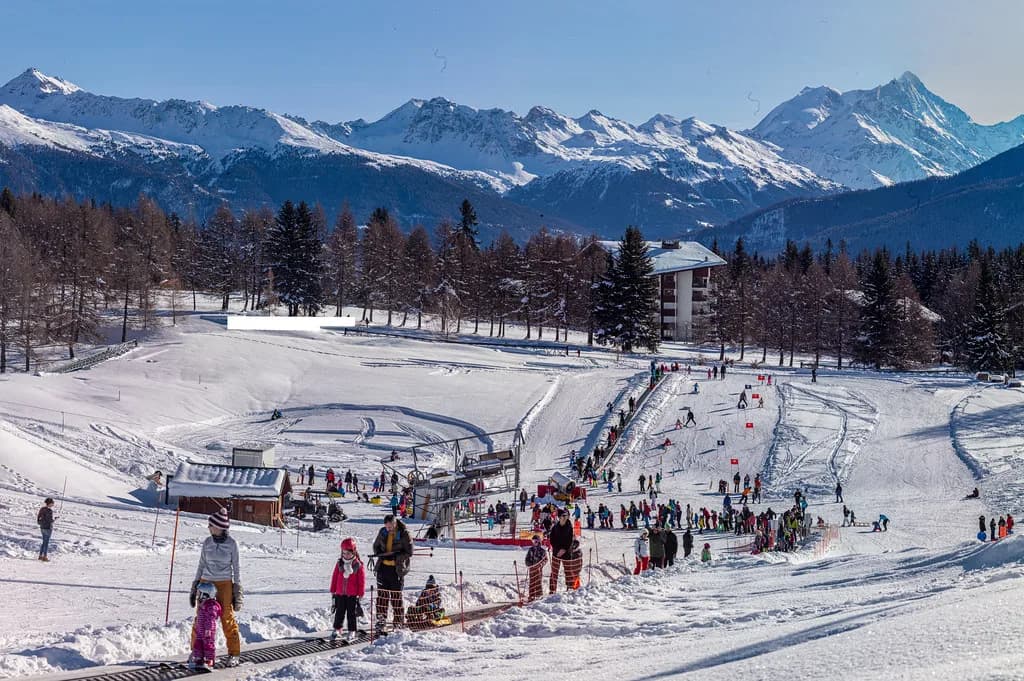
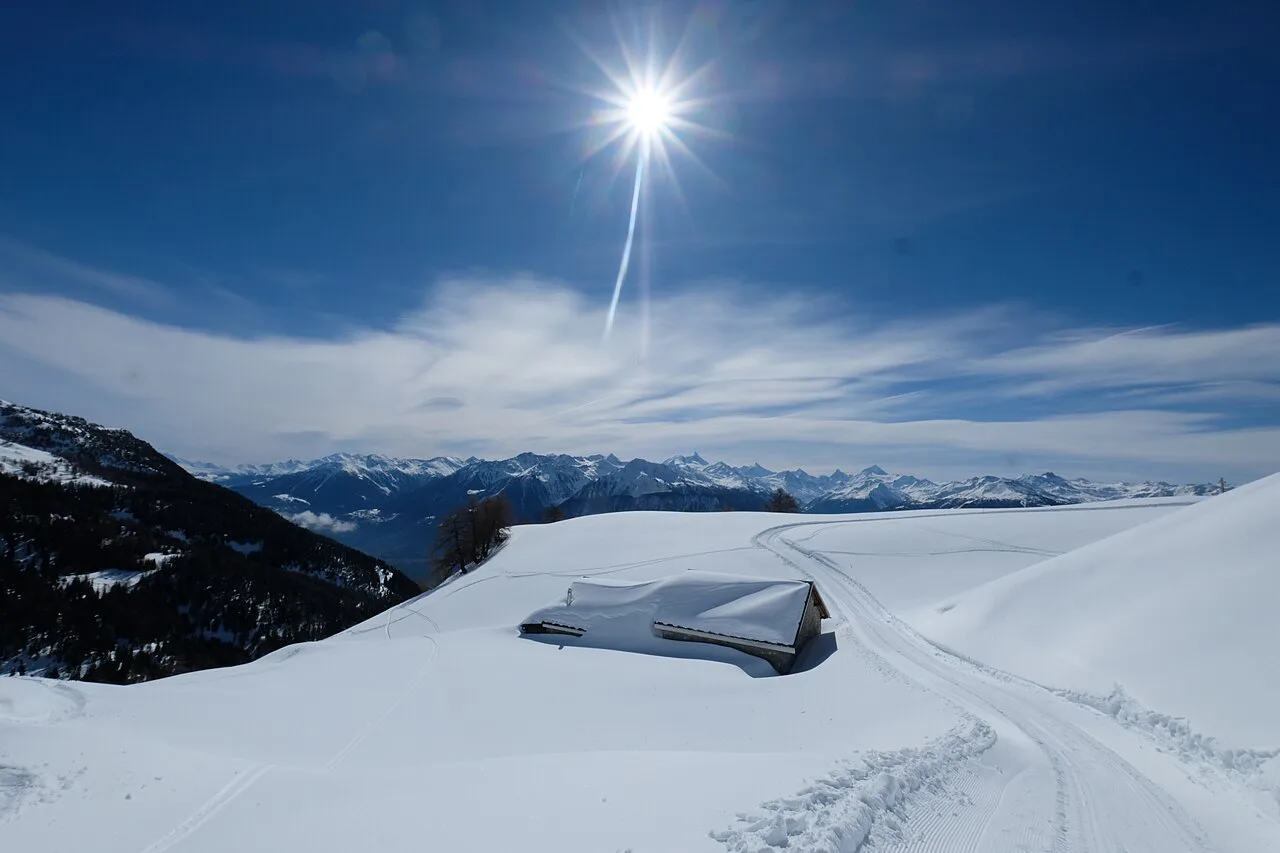
The best beginner option is a dedicated zone called Snow Island, set on the gentle fairways of the Golf-Club Crans-sur-Sierre in the centre of town. It uses ski-tows and conveyor-belt surface lifts, which is exactly the right equipment for absolute beginners. Its position near the town centre makes it easy to reach without committing to a full mountain day.
There are also beginner slopes above Montana and above Aminona, so a first-timer does not have to travel to the golf course zone if their base is elsewhere. A separate resort source describes a dedicated beginner area on the golf course with gentle slopes and special beginner lifts close to the town centre, which corroborates the Snow Island provision.
What you should not assume is how lessons are organised, how large groups are, or where they meet. Those are operator decisions that change, and no source here establishes them. Verify directly with the school you intend to book before you travel; the same applies to whether nursery-zone access is included in any given pass product.
Choosing a Base: Crans, Montana or a Specific Lift
Base choice is the single decision that shapes your week more than any other. Staying in Crans puts you in the resort's main centre with its concentration of shops and its own lift base. Staying in Montana gives you a second centre with its own lift and beginner slope. Choosing a location tied to Barzettes-Violettes or Aminona instead prioritises terrain access over town convenience.
The free bus between the two centres and the lift bases means you are not stranded wherever you stay. The bus journey between Crans and Montana is short, given as no more than about a five-minute drive, which makes cross-resort movement realistic for a meal or an evening but less appealing as a daily ski commute. Frequency matters more than distance on a powder morning.
A useful rule is to pick the base nearest the terrain your group will ski most, then accept the bus for everything else. If your group is split between beginners and intermediates, a base near a beginner zone plus a short bus ride to a main gondola often beats a compromise location. Write the bus route and the nearest lift into your notes before you book anything.
Pass Boundaries: What to Verify Before Booking
Do not assume that a crans-montana ski pass covers everything shown on the piste map. Pass products, validity periods, sector inclusions and whether the glacier link is part of the standard product are commercial decisions that change between seasons. None of the available sources establishes the current product structure or conditions, so any specific inclusion claim would be a guess.
The verification route is straightforward: check the resort's own pass and pricing pages for the season you are travelling, and confirm whether your chosen product covers the sectors and lift links you intend to use. A pass that excludes the upper glacier access, for example, changes the value calculation for a strong intermediate. Read the inclusions list rather than the headline name.
The same caution applies to beginner-zone access and to any multi-day or family product. Because prices and product rules are volatile and not evidenced here, this guide deliberately states none. Treat the pass as a verification task, not an assumption.
Lessons: What to Confirm Rather Than Assume
Ski schools operate in Crans-Montana, and independent instructor-booking routes also exist. That is the extent of what can be stated reliably. Named schools and platforms appear in secondary guides, but no source here establishes their current formats, group sizes, languages, meeting points, refund terms or quality. Verify with the school directly rather than booking on a reputation.
The questions worth asking are concrete: where does the group meet, how many people are in a group at your level, what happens if a session is cancelled, and does the lesson include lift access. These are operational details that determine whether a lesson is good value for your specific group. A booking platform listing is not evidence of any of them.
For a mixed-ability group, consider whether separate morning crans montana ski lessons for the weaker skiers and free skiing for the stronger ones is more efficient than a single shared booking. That is an editorial suggestion about structuring a week, not a claim about what any school offers. Confirm availability and format before you commit.
Hire and Equipment: Fitting It Into Your Day
Multiple ski hire shops operate in Crans-Montana, and secondary guides name several of them, but no source here establishes their current fleets, categories, booking terms or performance. Do not infer equipment range or service quality from a shop name. If you want a specific category of ski or board, ask the shop directly before you travel.
The practical planning point is timing. Because the resort is spread across several bases, the shop you choose should ideally be near your accommodation or your usual starting lift. Hiring near the wrong base adds a daily walk or bus ride with equipment in hand, which is a small friction that compounds over a week. Check the shop's location against your base before booking.
Booking ahead matters most for peak weeks, when popular sizes and categories are the first to go. If you are travelling during a school holiday period, reserve early and confirm the collection time with the shop. For everything else, arranging hire on arrival is usually workable. Either way, a given shop's promises are best checked against its own terms before you pay.
Snowboarders and Freestyle Provision
Crans-Montana has a snowpark with modules that have included a halfpipe, a boardercross course, a slope-style zone, jumps, a wall ride, and boxes and rails. That is a more substantial freestyle setup than the resort's traditional image might suggest, and it gives snowboarders a reason to consider the area beyond the piste skiing.
The resort's own status page lists the snowpark and related freestyle features as separate installations, which confirms they are treated as distinct facilities rather than incidental terrain. Features are built and maintained seasonally, so their availability varies. Check the live status page if a specific park feature is central to your trip.
Snowboarders on the wider mountain will find the same intermediate-led profile as skiers, with long groomed runs and a small expert share. The terrain shape, rather than the discipline, is the limiting factor. If your group rides mostly park, this is a stronger fit than if it rides mostly steep terrain.
Non-Skiing Days and Mixed Groups
The resort's flat centre and extensive waymarked walking and snowshoe trail network make non-skiing days genuinely practical rather than an afterthought. The town itself is pleasant to walk, and there is a documented network of marked paths and snowshoe routes across the area. That matters for groups where not everyone skis every day.
The resort also has a range of indoor and off-slope facilities, including an indoor sports centre with a climbing wall and courts for racket sports, plus an outdoor skating rink. A lantern path between the lakes of Moubra and Etang Long is described as an evening activity. Availability and opening times are seasonal and should be checked locally.
For a mixed group, the useful planning move is to agree in advance which days are skiing days and which are not. The resort's spread-out layout means a non-skier based in one village may need the bus to reach facilities in the other. Factor that into the base decision rather than treating it as a separate question.
Planning Sequence: Base, Dates, Pass, Lessons, Hire
Work through the decisions in an order that avoids rework. First, confirm the resort fits your group's ability profile, using the published terrain weighting as the test. Second, choose a base, because it constrains everything that follows. Third, fix your dates and accept that the season is conditional rather than guaranteed.
Then handle the bookings with verification: pass product and inclusions, lesson format and meeting arrangements, and hire near your chosen base. Each of these has a dedicated guide if you want the detail, and the pass question in particular should be resolved before you commit to a product. Prices and product rules change between seasons, so check them at source.
Finally, plan daily logistics: which base you start from, how the free bus fits your morning, and which return route brings you back. That last step is what distinguishes a smooth week here from a frustrating one. It takes an hour of planning and saves considerably more.
Season Conditions: Using History Without Treating It as Forecast
Historic snow patterns and altitude figures describe what a resort has typically received, not what your week will deliver. A 3,000 m summit and a snowmaking-equipped lower mountain improve the odds of something being skiable, but they do not guarantee any specific piste, link or sector being open. Winter operations are conditional by nature.
The practical approach is to book with flexibility in mind and to check the resort's live status page as your trip approaches. That page shows current states for lifts, pistes, freestyle features, walking routes and snowshoe trails, which is exactly the information a forecast cannot give you. Use it during the trip, not as a substitute for a forecast.
If a specific run or sector is essential to your trip, plan an alternative rather than counting on it being available. That is a general principle for any alpine resort, and it applies here as much as anywhere. Crans-Montana publishes what is open; it does not publish what will be open.
When Crans-Montana Is the Wrong Choice
Skip Crans-Montana if your group is expert-led and expects a large volume of sustained steep terrain. The published expert share is small, and no amount of glacier altitude changes the shape of the piste network. A different resort type will serve that group better.
Also reconsider if your priority is a compact, single-base resort where you step out and ski. Crans-Montana is a spread-out town with four sector bases, and that structure is central to how it works. If you want a single connected area with minimal transit, look at resorts built around one lift hub instead, and our Andermatt skiing guide shows how a more compact, single-village base changes the daily routine.
For a group that wants intermediate cruising, sun, a genuine glacier descent and a town with range, the fit is strong. For a group that wants steeps and a compact base, it is not. Making that call honestly at the start is worth more than any amount of on-trip adjustment.
Verification Checklist Before You Book
Confirm the pass product and its inclusions at source for your travel season, including whether the sectors and upper links you want are covered. Confirm lesson format and meeting arrangements directly with the school you intend to use. Confirm hire availability and collection location against your base.
Check the resort's own published pages for any seasonal opening information rather than relying on historic dates or on secondhand summaries. If a detail is not published, treat it as unconfirmed and ask the tourism office directly. A short email before booking resolves most of the uncertainty.
Finally, write down your fallback for each day: an alternative base, an alternative sector, or a non-skiing plan. Groups that do this spend less time standing around deciding and more time skiing. It is the least glamorous and most useful part of planning a trip here.
Plan Your Crans-Montana Ski Trip
Crans-Montana rewards groups who plan around its structure rather than against it. Four sector bases, an intermediate-led piste network, a south-facing aspect and a genuine glacier descent are the facts that should drive your decisions. Base location is the choice that matters most, followed by the pass verification step.
Use the published resort pages for anything seasonal or operational, including lift and piste status, and treat historic snow data as background rather than prediction. Verify pass inclusions, lesson arrangements and hire details at source before you commit. Those three checks remove most of the avoidable friction from a trip.
Explore more Crans Montana guides
Frequently Asked Questions
Is Crans-Montana good for beginners?
Yes, beginner provision is substantial. A dedicated nursery zone called Snow Island uses conveyor and surface lifts on the golf course area in the centre of town, and there are also beginner slopes above Montana and Aminona. What you cannot assume is how lessons are organised or where they meet, so verify those details directly with the ski school you intend to book.
How many ski sectors does Crans-Montana have?
The supported description is four sectors: Crans, Montana, Barzettes-Violettes and Aminona. Each has its own base area and gondola lift. A free ski bus connects the four base terminals, which is how you move between sectors without skiing across from one to the next. Some secondary sources describe three sectors, but the resort's own status page structures the access points under four headings.
How high does Crans-Montana skiing go?
The ski area runs from around 1,500 m at resort level to roughly 3,000 m at the summit, where the Plaine Morte Glacier sector sits. The glacier covers around ten square kilometres. Altitude describes the terrain, not the conditions on your dates. There is no snow guarantee, and any specific piste or lift may be closed during your stay.
What does a Crans-Montana lift pass cover?
The current product structure and inclusions are not established by available sources, so this guide does not state them. Pass products, validity periods and sector inclusions change between seasons and are commercial decisions. Check the resort's own pass and pricing pages for your travel season and read the inclusions list rather than the product name before booking.
Do you need a car to ski Crans-Montana?
Not necessarily. A free ski bus connects the four lift base terminals, and a bus also links the two main centres, so movement within the resort is possible without a car. The resort is reachable via the valley town of Sierre, which is the rail gateway. Whether a car helps depends mainly on where you stay relative to your usual starting lift.
Is Crans-Montana better for intermediates than experts?
The published terrain weighting is heavily intermediate-focused, with around half the terrain rated for intermediates and only a small expert share. A strong skier will find the long glacier descent and the red network rewarding, but the volume of sustained steep terrain is limited. Expert-led groups should weigh that honestly before booking.
When should I check whether lifts and pistes are open?
Check during or immediately before your trip, not when booking. The resort publishes a live status page listing individual lifts, pistes, freestyle features, walking routes and snowshoe trails with their current states. A winter season is conditional, so no itinerary should assume that every sector, link or run will be open.
Sources
Useful notes for your next ski trip
Optional updates to our Alpine resort guides.
You might also like
Continue reading
More guides you'll find useful