Kitzbühel Skiing Guide: Ski Areas, Passes & Where to Base
Kitzbühel skiing explained: how the KitzSki sectors connect, which pass covers which lifts, where beginners start and how to choose a base for your trip.
On this page
Kitzbühel skiing rewards a bit of homework, because the KitzSki area behaves less like one resort than several. The Hahnenkamm, Jochberg and Pass Thurn sectors link by lifts and pistes into a single interconnected area, while the Kitzbüheler Horn and Bichlalm sit apart and require separate valley-side journeys. Understanding that split early decides where you sleep, what ticket you buy and how much of the day you spend in transit.
This guide covers the sector layout, the official piste and lift figures, the KitzSki pass boundary and the standalone zones that need their own plan. It also outlines beginner provision in the valley and the signals to check before committing to lessons or equipment hire. The aim is an operational picture you can act on, not a ranking of which slope is best.
Opening Decision: What Kitzbühel Skiing Is Actually Like
Start with the honest shape of the place: Kitzbühel is a genuine multi-sector ski destination with a famous race mountain at its centre and quieter, more spread-out slopes around it. The official winter page describes around 233 kilometres of piste and roughly 58 ski lifts across Kitzbühel and the villages of Reith, Aurach and Jochberg. That footprint tells you something practical: a short trip cannot cover it all comfortably, so sector priorities matter more than sheer size.
Who suits it best is a planning question rather than a marketing one. The western Hahnenkamm side suits groups who want varied linked terrain and a range of mountain restaurants, while the compact eastern Horn suits mixed groups and non-skiers sharing a day. If your party spans strong skiers and complete beginners, plan on splitting some days rather than expecting everyone to ride the same lifts.
Kitzbühel also rewards readers who distinguish operator facts from editorial choices. KitzSki publishes which sectors are connected, where free valley practice lifts sit and how season bands work; deciding how many days to allocate to each sector is your judgement. Treat the official KitzSki and Kitzbühel Tourismus pages as the authority on what exists and use your own itinerary logic for how to sequence it.
Where Kitzbühel Sits and How the Ski Areas Are Laid Out
Kitzbühel occupies a valley in Tirol between the Hahnenkamm mountain and the Kitzbüheler Horn, with the ski terrain fanning out west and south toward Jochberg and Pass Thurn. The eastern Horn stands on the opposite side of town, and the two main sides do not link by piste or lift. That geography explains why some ski days begin with a lift beside the town centre and others start with a bus ride.
KitzSki divides the area into the main western complex and three standalone pieces. On the western side, the Hahnenkamm anchors one of the largest interconnected areas in the Alps, with lifts and pistes running toward Jochberg and Pass Thurn. On the east, the Kitzbüheler Horn is a small area of its own with 11 runs, and the Bichlalm above town is a distinct zone reached by its own chairlift. Reith and the Gaisberg in Kirchberg are further standalone spots for beginners and non-ski activity.
A practical consequence is that your base location determines your default sector. Staying near the Hahnenkammbahn gondola puts the western complex on your doorstep and makes Jochberg and Pass Thurn day trips rather than commutes. Staying in the southern villages changes that calculus in the other direction, and the Kitzbühel ski map makes the shift obvious at a glance once you know which valley station sits nearest your bed. There is no single correct answer, only a base that matches the terrain you intend to ski most.
Hahnenkamm and Pengelstein: The Main Sector and the Streif
The Hahnenkamm is the operational heart of KitzSki, with access lifts including the A1 Hahnenkammbahn, the B1 Fleckalmbahn, the B2 Maierlbahn and the D1 Pengelstein I. The A1 valley station is less than a ten-minute walk from the town centre, which is why the town side feels so closely tied to the mountain. From the top, the network spreads toward Pengelstein and Kirchberg and connects onward via the D9 3S cable car.
The Streif is the race course that gives the sector its fame, and the sensible way to engage with it as a visitor is through the Family Streif route rather than the race line itself. KitzSki states that Family Streif, run 21, runs alongside the race course in several places and offers views of well-known sections including the Mausefalle and Hausbergkante. Treat this as terrain for viewing the course, not a claim about conditions anywhere on the race piste, which is a separate operational matter.
For a ski day, the Hahnenkamm and Pengelstein reward anyone who wants long linked runs and a dense choice of mountain restaurants. The trade-off is that this is the busiest and most obvious sector, so build in slack for the lifts that return you to the correct valley. If your group mixes strong and cautious skiers, agree a meeting point before the day starts rather than relying on catching up mid-mountain.
Jochberg and Pass Thurn/Resterhöhe: The Southern Arm and the 3S Link
Jochberg sits between the Hahnenkamm and Pass Thurn, and its chairlifts and pistes climb toward Pass Thurn while the D9 3S gondola provides a direct link back to the Hahnenkamm. The access lift is the F1 Wagstättbahn in the centre of Jochberg, reachable by bus lines 4010 and 850, with free parking for lift users. KitzSki notes that Jochberg's slopes are generally less crowded than the main Hahnenkamm area, which makes it a reasonable base for a quieter day.
Pass Thurn is the furthest sector from Kitzbühel and is connected to Jochberg and the Hahnenkamm by slopes and lifts. Its access points include the G1 Resterhöhe chairlift and the G8 and G9 Panoramabahn, both served by bus lines 4010 and 850 with free parking for lift users. KitzSki describes a large snow park here and several red runs, plus a classic route from Kitzbühel to Pass Thurn and back.
The 3S cable car matters because it turns the western and southern sectors into one practical day rather than two separate outings. Practical advice: plan your return direction before lunch, because the southern arm is long and the lifts back toward the Hahnenkamm take time. Riders who try to cover both ends in a single morning usually spend more of it in transit than on snow.
Kitzbüheler Horn: The Standalone Sector and What It Offers
The Kitzbüheler Horn on the eastern side of town is a standalone ski area with 11 runs, accessed by the H1 Hornbahn I about a ten-minute walk from the centre or via the Ringbus. Because it has no piste or lift connection to the Hahnenkamm, getting between the two means travelling through the valley. That is the single most important logistic to understand if your accommodation sits near the Horn but your group wants the western complex.
Operationally, the Horn is described as compact and accessible, with all areas reachable in a maximum of two lift rides and runs spanning beginner slopes to red and black. The Family Park and beginner slopes below the Alpenhaus are the child-friendly core, and KitzSki notes that wide red runs and few drag lifts make it comfortable for snowboarders. Three restaurants in the area are accessible without skis, which matters for non-skiing companions.
The Horn is also where Austrian ski history is anchored: KitzSki states that in spring 1893 Franz Reisch made Austria's first high-alpine ski descent from its summit. That is context rather than a reason to choose it, and it does not tell you anything about current terrain conditions. Choose the Horn for convenience, compactness and mixed-ability groups, not for scale.
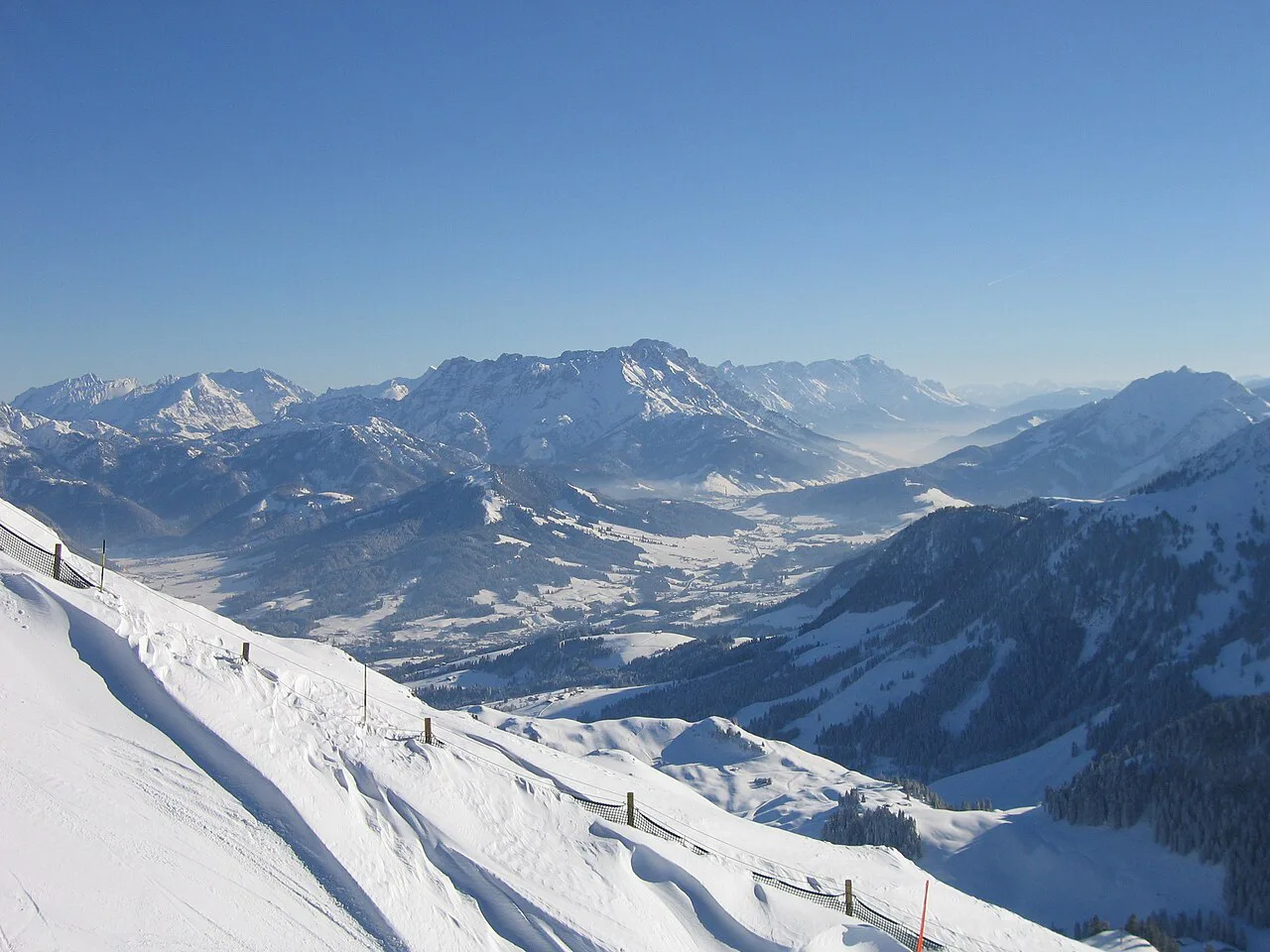
Bichlalm, Reith and Gaisberg: Specialist and Beginner-Only Zones
The Bichlalm, reached by the H11 Bichlalm chairlift from bus line 4002, is a specialist zone with one slope and two ski routes. KitzSki describes it as a natural-snow area suited to ski touring and winter hiking rather than a conventional piste day. If your group includes tourers and piste skiers, this is one of the few places where both can start from the same valley station, but the touring side operates under its own access rules.
Reith is the clearest beginner-only option in the area, with two free practice lifts, the E3 Reith practice lift and the E4 Sun Cord Reith, plus a few short slopes. It has no lift connection to the main area, and in peak season the Reith-Fleckalmbahn bus runs close to the lifts. Free parking is available near the lifts for lift users, which makes it a low-friction first morning for nervous starters.
The Gaisberg in Kirchberg is primarily a tobogganing hill with an additional ski slope and a touring route, served by the E1 Gaisberg lift about a ten-minute walk from Kirchberg centre or by bus line 861. KitzSki states the toboggan run is illuminated Tuesday to Saturday evenings, 6:00 p.m. to 8:30 p.m., with the slope open to ski tourers on Tuesdays and Fridays until 10:00 p.m. Check current status before relying on any of those evening windows.
Piste, Lift and Terrain Figures: What the Official Numbers Do and Don't Tell You
Use KitzSki's own figures as your baseline: around 233 kilometres of slopes and roughly 58 ski lifts across the KitzSki area and its villages. The same official page also shows a live lift-status line reading 2 of 59 open, which is why this guide treats the lift count as approximately 57 to 59 rather than one settled figure. A third-party review giving 215 kilometres and 57 lifts does not override KitzSki's numbers.
Statistics describe capacity, not what will be open on your dates. Lifts, links and pistes open and close according to operational decisions, weather and maintenance, so a stated piste figure is a planning input rather than a promise. Before travelling, check KitzSki's live lift status rather than expecting the headline numbers to apply to your week.
The official sources also state that the connected area includes more than 40 mountain huts and restaurants, and that access to SkiWelt adds an additional 275 kilometres of slopes beyond KitzSki. Read that 275-kilometre figure as the scale of a neighbouring area reached via a specific link, not as terrain included automatically in a KitzSki ticket. The pass boundary is covered in the next section for exactly that reason.
KitzSki Pass Boundaries: What the Standard Ticket Covers and Season Bands
KitzSki publishes multi-day passes in consecutive-day blocks from 2 to 14 days, with prices split into three season bands: Super Savers, Saver Season and Premium Season. The bands are labelled by date ranges rather than by expected conditions, so the band you fall into is determined by your travel dates, not by snowfall. For current fares and any changes, KitzSki directs readers to its webshop, and the Kitzbühel ski pass guide walks through how those bands usually fall.
Personalised cards are a practical detail: KitzSki sells the KitzSki Keycard and the wooden KitzSki Pure Card, and states that cards cannot be personalised at ticket offices, only through the webshop, with 5 to 7 working days for postal delivery. If your trip starts soon, factor that lead time in rather than planning to collect and load a card on arrival. KitzSki also notes that all practice lifts in the valley can be used free of charge.
The KitzSkiWelt Tour is a separate product that connects KitzSki with SkiWelt Wilder Kaiser-Brixental via a short, free ski bus between Pengelstein and Ki-West. Before setting out, KitzSki advises checking which lifts are open, the bus timetable and the validity of your ski pass, which is a useful reminder that the link is conditional. Do not assume a standard multi-day KitzSki pass automatically covers the full circuit; confirm the terms for your chosen ticket with KitzSki.
KitzSki also sells other ticket formats, including hourly tickets, an option pass and smartphone tickets, alongside the multi-day products. Treat these as different products with their own terms rather than interchangeable versions of the same pass. If your itinerary includes one short skiing day between travel days, checking whether a shorter format fits better than a multi-day pass is worth the effort.
Beginner and Improver Provision: Free Valley Practice Lifts and Family Areas
KitzSki places free practice lifts in the valley as the entry point for first-timers, with lifts including the A2 Mocking, A3 Rasmusleiten and A4 Ministreif next to the A1 Hahnenkammbahn. It states clearly that all practice lifts in the valley can be used free of charge, which removes one cost barrier for a first morning on snow. An overview of which practice lifts are currently in operation is published separately.
A free practice lift also sits in Jochberg beside the Kempinski Hotel, and further practice lifts are located next to the G1 Resterhöhe chairlift at Pass Thurn. That distribution means absolute beginners are not confined to a single corner of the area. If your group has mixed abilities, a valley practice lift near your accommodation can let a beginner start locally while stronger skiers head up the mountain.
KitzSki also flags Reith and the Kitzbüheler Horn as the family-oriented ends of the spectrum, with the Horn's Family Park and beginner slopes below the Alpenhaus being the child-focused core. Practical advice: choose the beginner zone that matches your base rather than the most famous one, because an hour of travel before a first-ever lesson is not a good use of a short trip.
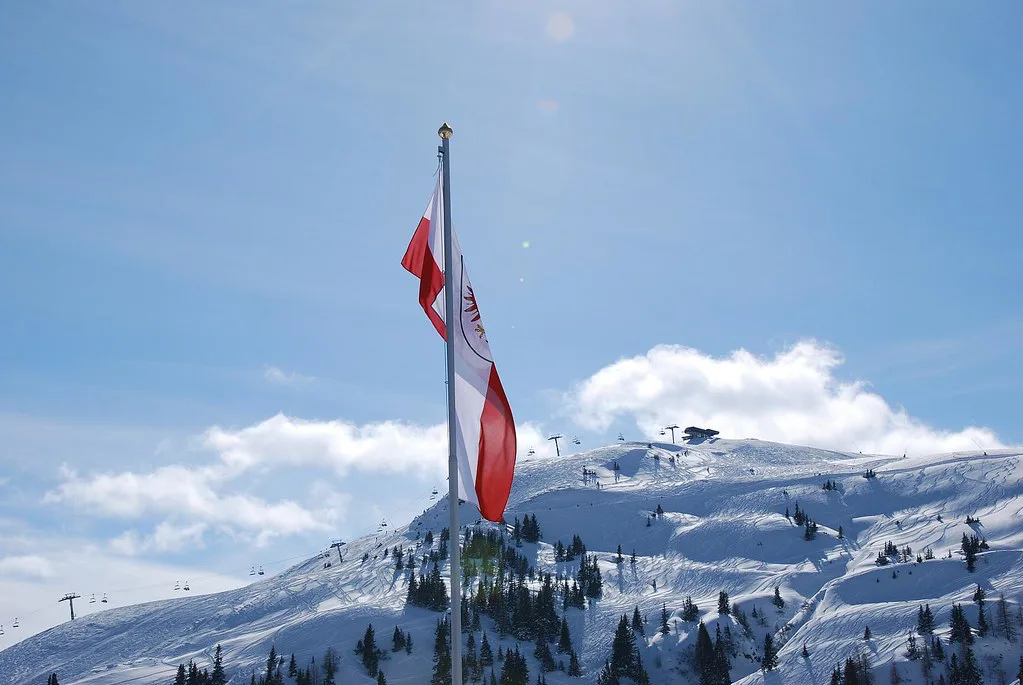
Choosing a Base: Town Centre, Hahnenkamm Side or the Southern Villages
Base choice in Kitzbühel is really a sector choice in disguise, because the standalone zones enforce valley travel. Staying near the Hahnenkammbahn puts the A1, B1, B2 and D1 access lifts within reach on foot, and the A1 is less than a ten-minute walk from the centre. That base suits groups who intend to ski the western complex and use the 3S link south; it suits them less if the plan centres on the Kitzbüheler Horn.
The southern villages change the daily routine rather than the terrain on offer. Jochberg's F1 Wagstättbahn sits in the village centre with free parking for lift users and bus lines 4010 and 850, while Pass Thurn's access lifts are likewise served by those bus lines with free parking. A base here shortens transfers to the southern arm and lengthens them to the Horn, the opposite of a town-centre stay.
Since this is a ski-planning decision rather than an accommodation review, assess bases against three questions: which sector you will ski most, whether anyone in the group needs a valley practice lift, and whether your group can reach each planned sector without a car. Public transport connects the valley stations and surrounding towns, so a car is optional, but the connection pattern is the thing to check for your exact dates.
Ski Schools and Ski Hire as Bookable Services: What to Confirm
Ski schools and ski hire are listed by KitzSki as bookable services alongside pass purchase, which tells you they exist as products rather than what they include. The official pages say nothing about lesson formats, group sizes, meeting points or equipment ranges, and those details are not safe to infer from a school's name or reputation. Confirm them directly with the ski school or hire shop before you commit.
KitzSki's pass pages also state that the KitzSki Keycard and Pure Card are personalised only through the webshop, with 5 to 7 working days for postal delivery. That lead time interacts with any pre-booked lesson or hire package that assumes your card is ready on day one. If you are booking lessons for the first morning, plan the card and the lesson timelines together rather than separately.
A sensible booking sequence is pass product first, then lessons and hire, then any sector-specific plans. Pass choice affects which lifts you can use, which in turn affects where a lesson or hire pickup can realistically sit. Reversing that order tends to produce an itinerary that looks fine on paper and inconvenient in practice.
Planning Sequence: Sector Priorities, Pass Choice, Then Booking
Build the trip in a fixed order: sector priorities, then pass, then lessons and hire, then travel and base. Decide first whether your group wants the linked western complex, the compact Horn, the beginner zones, or a mix, because that single decision constrains everything downstream. A group that never plans to leave the western complex does not need to solve the valley-transfer problem at all.
Next, match the pass product to those priorities, checking the KitzSkiWelt Tour terms separately if the 88-kilometre circuit is part of your plan. KitzSki states the circuit covers 30 blue runs, 27 red runs and one black run and uses a short free ski bus between Pengelstein and Ki-West, all of which is conditional on current lift openings and your ticket's validity. Then confirm lesson and hire arrangements, and only after that settle on a base and travel pattern.
Finally, check operationally close to departure: live lift status, the practice-lift overview, bus timetables and the validity of your chosen pass. Numbers on a marketing page are planning inputs, while the live status pages tell you what is actually running during your stay. Checking both, in that order, is the difference between a plan and a guess.
Plan Your Kitzbühel Ski Trip Around Sectors, Not Slogans
Kitzbühel skiing is easiest to plan once you accept that it is a collection of sectors with different access rules. The Hahnenkamm, Jochberg and Pass Thurn form one linked area, the Kitzbüheler Horn and Bichlalm stand apart, and Reith and the Gaisberg serve specific beginner and non-ski purposes. Match your base and your pass to the sector you will actually ski most, and the trip stops feeling sprawling.
Before booking, confirm the things only KitzSki and Kitzbühel Tourismus can confirm: current fares and ticket terms, live lift status, practice-lift availability and the KitzSkiWelt Tour conditions. Treat published season bands and piste figures as conditional planning inputs rather than guarantees about your week. If you are still comparing Austrian options, looking at Alpbach skiing or Ischgl skiing can sharpen what you actually want from a Kitzbühel trip, and our Mayrhofen ski guide offers another Tirol benchmark for pass structure and sector layout.
Explore more Kitzbuhel guides
Frequently Asked Questions
How high is Kitzbühel ski resort?
Kitzbühel Tourismus and KitzSki publish piste, lift and sector information on their winter pages, but neither states a single resort altitude figure there, so no headline number is quoted here. Third-party reviews give approximate numbers, and they do not match one another closely enough to rely on. If altitude matters to your planning, check the official ski area pages or the piste map legend for the current figure before comparing resorts.
What is the most famous downhill ski race?
Kitzbühel is home to the Hahnenkamm Race, a World Cup event run on the Streif course on the Hahnenkamm. The Streif is the venue for that race, and visitors can view key sections from the Family Streif route rather than the race line. Race scheduling and course conditions change, so check current details rather than planning around a fixed date.
What month is best to ski in Austria?
There is no single best month, and this guide does not use snow-quality claims or season-length guarantees. The KitzSki ticket structure instead defines season bands by date, with Super Savers, Saver Season and Premium Season as specific date ranges. Choose your dates by what you want from the trip, then check which band your dates fall into and the live operating status near departure.
What are the pros and cons of skiing in Kitzbühel?
The main advantage is scale and variety: around 233 kilometres of piste across linked sectors plus standalone zones, with a broad range of terrain and a compact town centre close to the Hahnenkammbahn. The main trade-off is logistics, because the Kitzbüheler Horn and Bichlalm do not connect by piste or lift to the main area, so moving between them means valley travel. Base and pass choice determine how much that matters.
Is the Kitzbüheler Horn connected to the Hahnenkamm by lift?
No. The Kitzbüheler Horn is a standalone area of KitzSki accessed via the Horn lifts, with no piste or lift connection to the Hahnenkamm. Travelling between the two areas requires going through the valley, and the Horn is served by the H1 Hornbahn I and the Ringbus rather than by a mountain link.
Does a standard KitzSki pass cover SkiWelt?
Not automatically. The KitzSkiWelt Tour connects KitzSki with SkiWelt Wilder Kaiser-Brixental using a short free ski bus between Pengelstein and Ki-West; check lift openings, the bus timetable and your pass validity before setting off. Confirm the terms for the specific ticket you buy rather than treating the link as included.
Are there free lifts for beginners in Kitzbühel?
Yes. All practice lifts in the valley can be used free of charge, and a separate overview shows which ones are currently in operation. Named examples include the A2 Mocking, A3 Rasmusleiten and A4 Ministreif beside the A1 Hahnenkammbahn, plus practice lifts in Jochberg, at Pass Thurn and in Reith. Check current operation before you travel.
What is the KitzSkiWelt Tour and is it included in a normal pass?
It is a multi-peak ski circuit linking KitzSki with SkiWelt Wilder Kaiser-Brixental, covering 88 kilometres with 30 blue runs, 27 red runs and one black run. The connection uses a short free ski bus between Pengelstein and Ki-West. Inclusion depends on your pass product and current validity, so verify the terms before planning a circuit day.
Sources
Useful notes for your next ski trip
Optional updates to our Alpine resort guides.
You might also like
Continue reading
More guides you'll find useful