Val d'Isère Skiing Guide: Sectors, Passes and Terrain
Plan Val d'Isère skiing around its three sectors, the Tignes-Val d'Isère pass boundary and beginner provision, with a clear planning sequence for your trip.
On this page
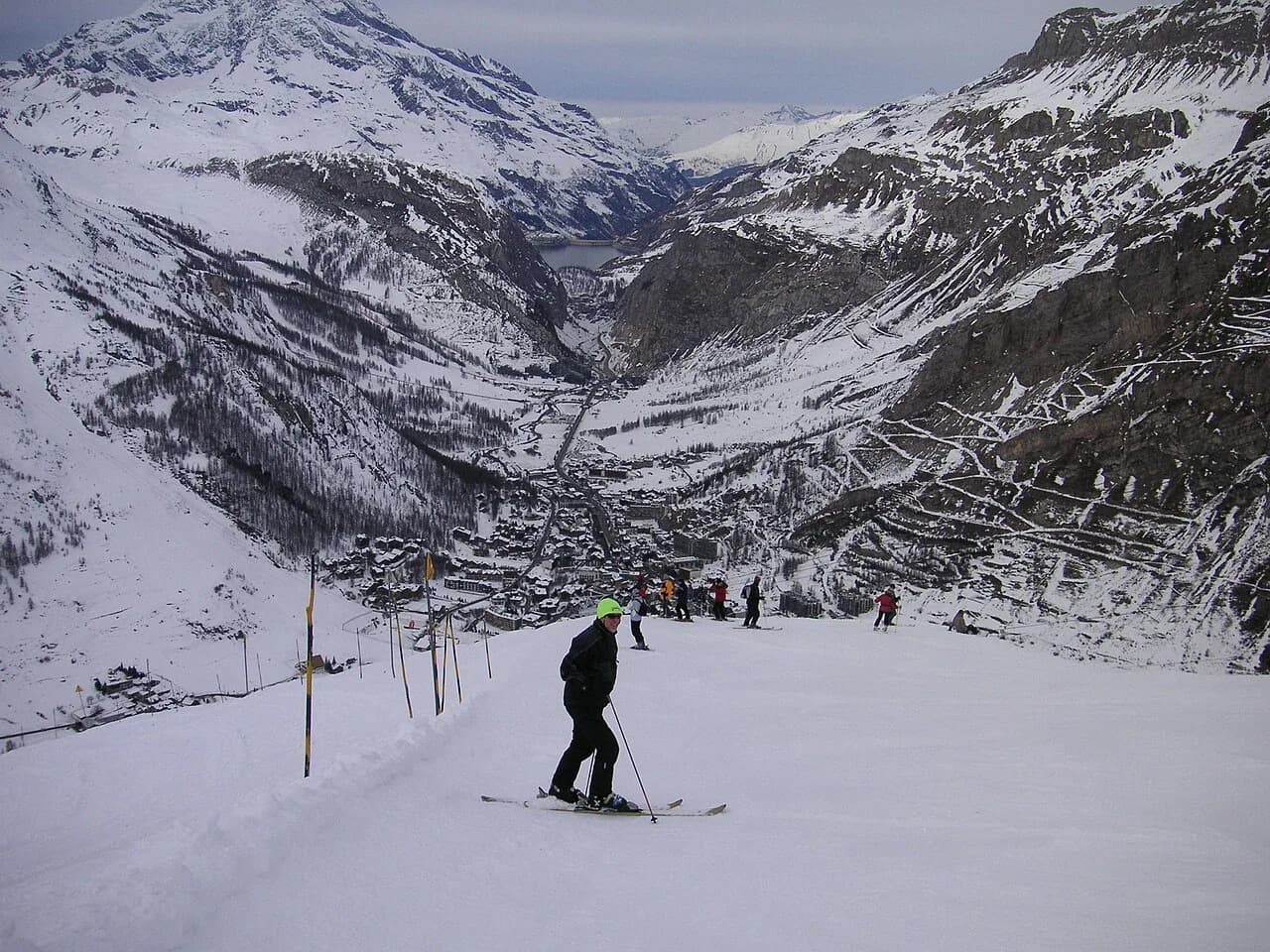
Val d'Isère sits in the Savoie department of the French Alps, a high village strung along a valley, and it is one of the reference points for a ski trip in France. Skiing here means planning around three separate sectors, two secondary access points, a shared pass domain with Tignes, and a season that is scheduled rather than guaranteed. It is worth treating those as distinct decisions when you plan the trip.
The practical question is not whether the resort is good, since the terrain clearly is extensive, but which part of it justifies your particular group. A confident group skiing off groomed terrain wants different planning from a first-week family, and neither wants the same base or pass. This guide works through sector choice, the pass boundary, learning provision and the order in which to make bookings.
Why choose Val d'Isère for a ski trip
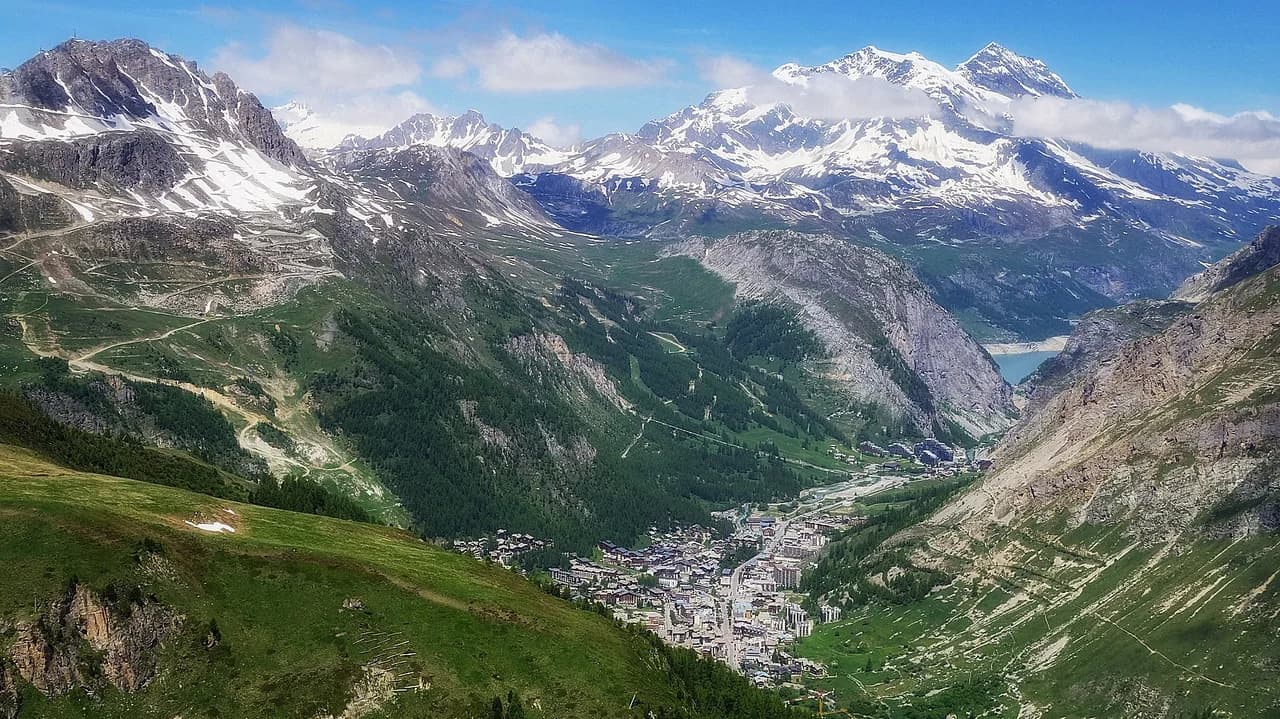
Val d'Isère began as a farming village and is now a major resort with a genuinely working centre rather than a purpose-built block at the valley floor. That matters practically: the layout is spread out, with the original village in the middle, the satellite base of La Daille at the lower end of the valley and the hamlet of Le Fornet at the far end. Choosing where you stay within the resort has consequences for how quickly you reach lifts each morning.
The resort's elevation is the other headline factor. Val d'Isère sits at 1,850 m, and the official destination site states that skiing runs from around 1,550 m to over 3,400 m across the shared domain. The gap between those two figures, roughly 1,850 vertical metres, is what gives the valley its long scheduled season and its reputation for holding snow into spring.
A planning caveat sits inside the official information itself. One official page describes terrain up to over 3,400 m, while another official page cites a range of 1,850 m to 3,230 m for spring skiing. The upper bound therefore varies between official sources, so check the current season's published figures before you plan anything that depends on a precise altitude.
If you are comparing Val d'Isère against another French resort, the fair comparison is less about prestige and more about whether a three-sector, high-altitude layout suits your group. A resort with one compact sector and one access point is simpler; Val d'Isère rewards a group willing to plan sector by sector, and that trade-off is the core of this guide.
The three Val d'Isère sectors: Solaise, Bellevarde and Fornet
The Val d'Isère side of the domain divides into three main sectors, and treating them as three separate decisions is the single most useful planning habit here. Solaise and Bellevarde both have lifts reaching them directly from the centre of the resort, while Fornet is reached either from valley level at Le Fornet and Le Laisinant or from altitude via Solaise. Each has its own character in terms of where the easier and harder terrain sits.
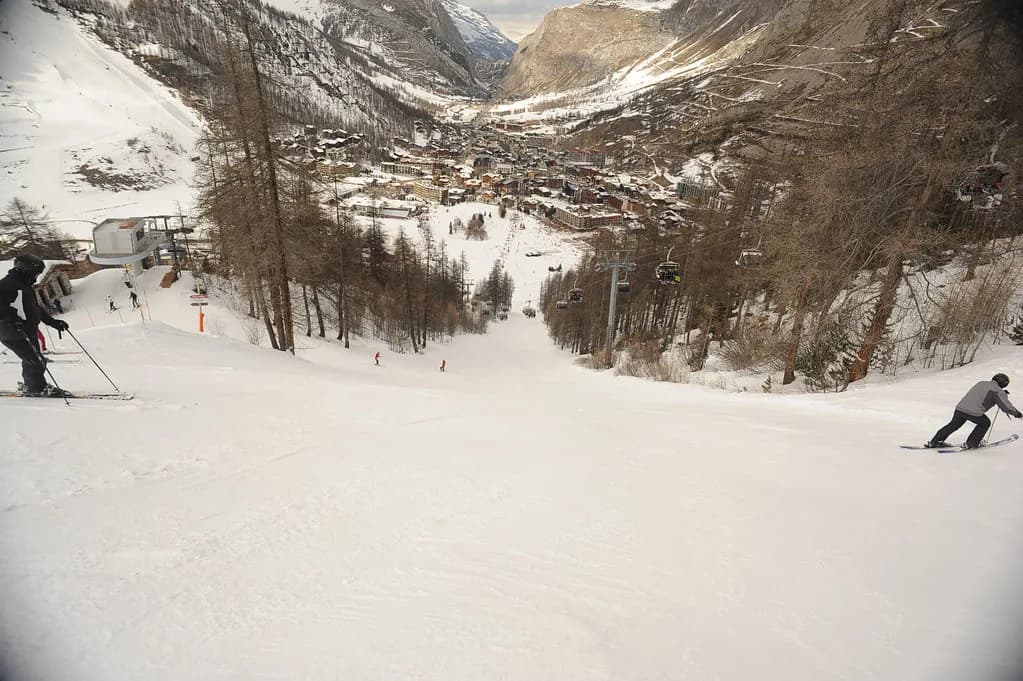
Bellevarde carries the resort's competitive history. It hosted the 1992 Albertville Olympic downhill and the 2009 World Ski Championships, and the Face de Bellevarde remains the most cited steep descent above the village. The official site is clear that the Face is intended for skiers with an advanced level, and notes that beginners are advised to stay away from it. That is a terrain statement, not a marketing line, and it should shape how you brief a mixed group.
Solaise is the sector most guests think of as the natural intermediate cruising side, with wide terrain above the mid-stations and a nursery area at altitude reached by the Solaise gondola. Fornet, at the far end of the valley, is quieter by geography because it takes deliberate effort to reach, whether from valley level or from above. For a group wanting to avoid the busiest pistes, that deliberate detour is the plan.
One consistent pattern across all three sectors is worth knowing before you commit to a daily route. The easiest skiing tends to be in the upper half of each sector, while the runs back into the resort at valley level are relatively steeper. For newer skiers, planning to use a lift back down at the end of the day is a reasonable strategy rather than an admission of weakness.
La Daille and Le Laisinant: second access points
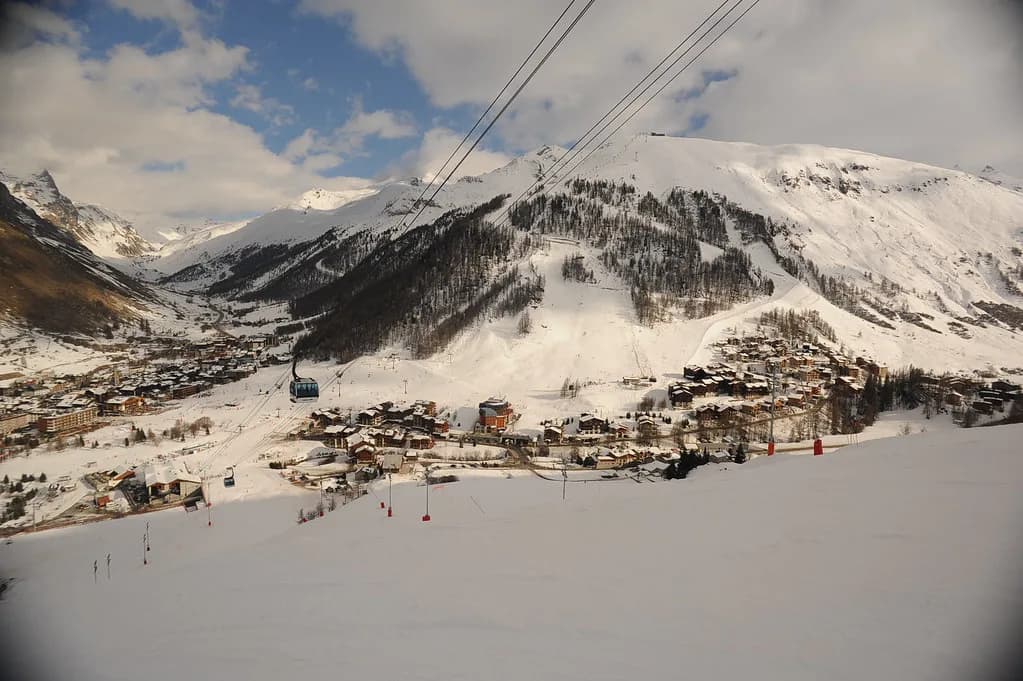
La Daille and Le Laisinant are not separate resorts, but they function as independent ways into the ski area, and that changes how a day runs if you are based near either. La Daille sits at the lower end of the valley with its own lift and a direct connection into the Bellevarde sector and onward toward Tignes. Le Laisinant sits at valley level below the Fornet sector and gives a second, quieter entry point to that side.
The practical difference is morning logistics. If your accommodation is nearer La Daille, you can be on the snow without crossing to the village centre, and the same applies in reverse at Le Laisinant for the Fornet side. That matters most on powder mornings and on days when you want to ski one sector hard rather than tour the whole domain.
The trade-off is evening flexibility. The further you are from the centre, the more your evening options narrow to what is locally available, and the village's restaurants and shops concentrate in the middle. If your group values a short walk to dinner over a shorter morning walk to a lift, staying central is the more coherent choice. Confirm exactly which lifts are scheduled to run from each access point for your dates, because this varies by season.
The pass boundary: what the shared domain covers
Val d'Isère shares its lift system with neighbouring Tignes, and the combined domain is now named Tignes-Val d'Isère, formerly known as Espace Killy. The official site describes the area as 300 km of marked runs served by 161 pistes, divided into 21 green, 65 blue, 41 red and 32 black runs. The same source counts 71 lifts, including 37 chairlifts, 6 gondolas and 3 cable cars, with 11 lifts accessible to pedestrians.
Those figures should be read as current official counts rather than fixed facts, because lift and piste numbers change from season to season as infrastructure is replaced or reclassified. Treat them as an order-of-magnitude picture of a very large domain, and check the current season's official map before you rely on a specific number for planning.
There is a conflict in how the extent is reported. The official destination source describes the full Tignes-Val d'Isère domain as 300 km, while the snow-wise guide cites 150 km for Val d'Isère alone and 300 km for the combined area. The two are broadly consistent once you separate the Val d'Isère share from the shared total, but it is worth knowing which figure refers to which so you do not expect a 300 km Val d'Isère-only domain.
The pass decision flows from that boundary. A pass covering the full shared domain is what lets you cross into Tignes, and it is typically the default product sold for the area. Whether you actually need it depends on whether your group plans to link across, since Val d'Isère alone contains enough terrain for a full week. Check the current pass tiers and their named inclusions directly with the lift company rather than guessing what a given pass covers.
Terrain by level: what the run mix means
The official run breakdown is useful because it tells you where the volume sits. Of 161 marked runs across the shared domain, 21 are green and 65 are blue, so just over half fall into the easier two categories. A further 41 are red and 32 are black, meaning the harder classifications make up a little under half the total.
For intermediates, that blue-heavy distribution is the reassuring part, since there is genuine volume of cruising terrain rather than a token handful. The snow-wise guide points out that most of the easier intermediate terrain sits above the mid-stations, with gentler runs in the Fornet sector and beneath certain Bellevarde chairs, and simple runs on Solaise. That suggests intermediates should plan to spend most of their day high rather than working down to valley level.
For advanced skiers, the black-run count and the resort's competition history are the relevant signals, along with the fact that harder groomed terrain tends to sit lower down. This guide does not cover off-piste routes or ski-touring itineraries, and any such decision belongs with a qualified local guide arranged through the resort's ski schools. What you can plan in advance is how much of the day you want to spend on the steeper end of the groomed network.
One honest limitation applies to any run-count comparison between resorts. Classification varies by country and by operator, so a black run here is not directly comparable to a black run elsewhere, and one resort's red might exist at a different level of difficulty entirely. Use the counts to gauge balance within Val d'Isère, not to rank it against a resort with a different grading culture.
Beginner provision: snow front and altitude
Val d'Isère has two learning locations, and understanding both is more useful than a simple verdict on whether the resort suits beginners. The first is on the snow front at village level, close to the accommodation, which makes early mornings and tired afternoons far easier to manage. The second is at altitude, reached by the Solaise gondola, where there is additional beginner terrain.
The official site describes the resort's family provision in more detail, noting that it holds Famille Plus certification and that the Savonnette green run on the snow front lets children learn within sight of parents. It also lists free beginner lifts on the snow front, fun zones including ValKids play areas, and easy skiing areas on both Solaise and Bellevarde. Those named facilities are operator-stated, and it is worth confirming current operating status for your dates.
The altitude nursery area is the detail that most resort summaries miss. Because the easiest beginner runs across the resort sit in the upper half of each sector, a beginner who progresses past the snow front will often be skiing at altitude rather than at village level. That means gondola rides and cold, exposed conditions even for a second-day skier, which is worth explaining to anyone in the group who assumed beginners stay low.
For a group with a genuine first-timer, the sensible sequencing is to base near the snow front and plan to use the village-level learning area for the first days before thinking about altitude. That keeps the walk short and the day flexible. Confirm the meeting arrangements with whichever school you book, because lesson meeting points are set by the provider and are not something to assume from a resort map.
Altitude, snowmaking and what shapes the season
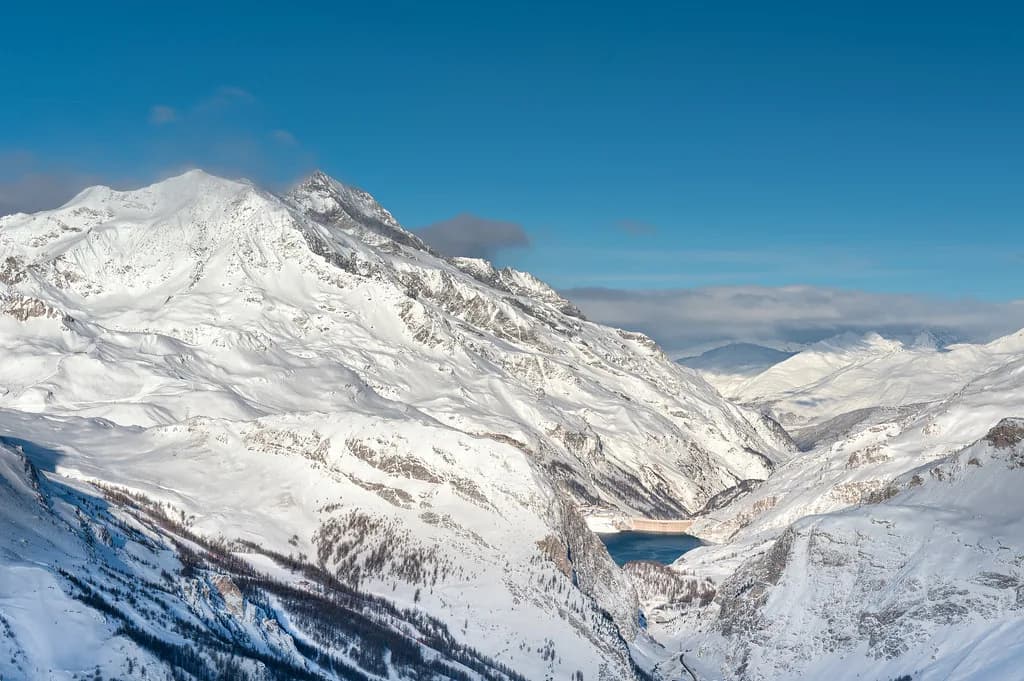
Height is the organising fact of a Val d'Isère season. The official source states that the domain's snowmaking network covers more than 65 km of slopes and that the terrain is predominantly north-facing, which supports snow retention. It also notes the resort's proximity to the Italian border and the associated weather pattern that can bring additional snowfall. These are resort-context statements about how the area is set up, not forecasts or guarantees about any given date.
The snow-wise guide offers a second, independent view of the same underlying factors, pointing to the resort's elevation, the share of skiing above 2,500 m and the role of north-facing slopes. It frames Val d'Isère as having a strong snow record relative to other Alps resorts. That is the guide's assessment rather than an operator figure, and neither source should be read as promising conditions on your specific travel dates.
The practical conclusion is to plan for variability rather than to bank on a base depth. Choose dates for reasons you control, such as school holidays, price windows or the length of daylight, and treat snow as the variable it is. If deep-snow conditions are central to your trip, the honest answer is that you cannot book certainty; you can only choose a high-altitude resort and a flexible attitude to daily plans.
Nordic skiing and non-skiing options
The official resort site states that cross-country skiers have around 20 km of loops across the resort, and it points to the Manchet valley as a Nordic area. That is modest compared with dedicated Nordic destinations, so anyone whose trip is primarily about cross-country skiing should treat Val d'Isère as a downhill resort with a Nordic add-on rather than the reverse.
The snow-wise guide is more direct, noting six loops totalling roughly 20 km mostly at resort level and describing the resort as not really suited to keen cross-country skiers. The two sources agree on the scale, so treat the headline number as reliable and the verdict on suitability as one guide's judgement rather than an official position.
For mixed-ability groups, the resort also publishes a range of non-skiing winter activities, which matters if part of the group is not on the mountain. This guide deliberately does not rank those activities or cover the evening scene, since trip-planning value here lies in knowing they exist as options for a non-skiing day. Check the current season's official activity listings for what is actually running during your dates.
Season timing and operational conditions
The official destination site lists the winter season as running from 28 November 2026 to 2 May 2027. That is a scheduled window rather than a promise: opening dates, lift operations, sector connections and individual piste openings all remain conditional and can change through the season. Book travel with that distinction clearly in mind.
Within that window, timing changes what you get. Early season and late season carry different daylight hours, different proportions of the domain open and different snow history, and the resort itself markets specific periods such as early December and spring skiing separately. The sensible approach is to decide which of those trade-offs you prefer before you compare prices.
For live conditions, the official site publishes piste and lift openings, snow information and webcams. Use those rather than any pre-season summary, including this one, once your dates are close. No published figure about a normal season tells you what will be open during your week.
Ski schools and booking lessons
The official resort site directs visitors to its ski schools and independent instructors for lessons, ski touring and off-piste arrangements. It does not publish standardised lesson formats, group sizes or meeting points in a form you can plan around, and this guide will not invent them. What you can do is identify the schools operating in the resort and compare their published products directly.
Several practical questions are worth settling with a school before you pay: whether lessons run in the morning or afternoon, what level grouping is used, where the group meets, and what happens if a lesson is cancelled. Refund terms, minimum group sizes and the treatment of missed days vary between providers, so ask rather than assume a standard policy exists.
Timing matters for a short trip. Lessons located at altitude require a gondola ride before the first turn, which can eat into a short morning session, while snow-front lessons start almost at your accommodation door. If your group is at different levels, booking lessons that meet at the same place makes the day far easier to coordinate than separate arrangements at opposite ends of the resort.
Book lessons as early as you can commit to dates. Popular weeks fill first, and peak holiday periods are the ones where choice disappears fastest. If a specific provider matters to you, treat the lesson booking as the constraint that determines your travel dates rather than the other way around.
Ski and snowboard hire
Equipment hire is a bigger planning decision in a resort of this shape than in a compact one, because where you collect your gear determines your morning route. Shops cluster in the village centre and around the main access points, and collecting at La Daille or Le Laisinant only makes sense if you are based near those points or deliberately skiing that side.
Before committing, establish four things directly with any hire shop: the swap policy if your chosen ski is wrong for the conditions, whether they will store equipment overnight near your base, the collection and return times, and what happens if you damage something. None of these can be inferred from a shop's name or reputation, and published terms should be the basis of your decision.
If you are travelling with a beginner, consider whether the shop offers a package that makes swapping easier as skills develop over a week, since a skier changing level mid-trip may want a different ski. Ask specifically whether that flexibility exists. Families with children often benefit from a single shop near their base for the whole stay, even if it is not the cheapest option.
Snowboarders should confirm board and boot availability for their dates and sizes before booking, particularly in peak weeks, because stock mix varies by shop and by season. If your group mixes skiers and snowboarders, a shop that handles both well may be worth more than a marginally better price for one discipline. These are questions to ask, not features to assume.
Planning sequence: base, pass, lessons, hire
The order of decisions matters more than any single choice. Start by identifying which sector your group will actually ski most, since that determines whether you want to be central, near La Daille, or near Le Laisinant. Then confirm the pass that matches that plan, rather than buying the largest product by default, before you look at lessons and equipment.
Next, check the scheduled season window against your dates and confirm what is published as running during that period. Then book lessons, since they are the most capacity-constrained item and often set the daily rhythm of a first-week trip. Only then choose hire, using the meeting locations you have already fixed to decide which shop is convenient.
These decisions interlock rather than stack. A beginner group based near the snow front wants a snow-front lesson and a central hire shop; an advanced group wanting to link across to Tignes wants a pass that covers the shared domain and a base near a fast access point. If you decide sector and pass first, everything else follows with far less friction.
Finally, check the operational details close to departure, including lift openings, piste status and lesson confirmations. If skiing in another large French resort is on your shortlist, the Alpe d'Huez skiing guide can help you judge whether Val d'Isère's three-sector layout suits your group better than a single-sector alternative. Do that comparison before you commit, not after.
Plan Your Val d'Isère Ski Trip
Val d'Isère rewards planning because its skiing is not a single product. Three sectors, two secondary access points and a shared pass boundary with Tignes mean that where you base, which pass you buy and where your lessons meet all interact. Decide sector first, then pass, then lessons, then hire, and the rest of the trip falls into place.
Treat the official seasonal window and published counts as context rather than promises. The scheduled dates, piste and lift numbers and snowmaking coverage all describe how the resort is set up for a normal season, and all of them can shift. Check current operations with Val d'Isère Tourisme directly once your dates are fixed, and use the official piste, lift and snow information as your source of truth in the final weeks.
Explore more Val d Isere guides
Frequently Asked Questions
Is Val d'Isère good for skiing?
The resort offers a large, high-altitude domain with genuine variety across three sectors: Solaise, Bellevarde and Fornet. The official site counts 161 marked runs across the shared Tignes-Val d'Isère area, with a blue-heavy distribution and a substantial harder-terrain share. Whether it suits you depends less on quality than on whether a multi-sector, high resort layout matches your group's habits.
Which sectors make up the Val d'Isère ski area?
There are three main sectors. Solaise and Bellevarde both have lifts reaching them from the centre of the village, while Fornet is reached from valley level at Le Fornet and Le Laisinant or from altitude via Solaise. La Daille and Le Laisinant function as additional access points into the same terrain rather than separate ski areas.
Do you need the full Tignes-Val d'Isère pass to ski Val d'Isère?
The shared domain pass is what lets you cross into Tignes, and it is typically the default product sold for the area. Val d'Isère alone holds enough terrain for a full week, so the choice depends on whether your group intends to link across. Confirm the current pass tiers and their named inclusions directly with the lift company.
Is Val d'Isère suitable for beginners?
The resort has beginner terrain on the snow front at village level and additional learning terrain at altitude reached by the Solaise gondola. The official site states the resort holds Famille Plus certification and lists the Savonnette green run on the snow front, free beginner lifts and easy skiing areas. Because the easiest runs generally sit in the upper half of each sector, a progressing beginner should expect to ski at altitude rather than only at village level.
How many runs and lifts does the Tignes-Val d'Isère ski area have?
The official source counts 300 km of marked runs, 161 pistes and 71 lifts, including 37 chairlifts, 6 gondolas and 3 cable cars, with 11 lifts accessible to pedestrians. Those figures cover the shared Tignes-Val d'Isère domain rather than Val d'Isère alone, and they can change from season to season.
When does the Val d'Isère ski season run?
The official destination site lists the winter season as running from 28 November 2026 to 2 May 2027. This is a scheduled window, not a guarantee: individual lift, sector and piste openings remain conditional and can change through the season. Check current piste and lift status close to your travel dates.
Is Val d'Isère an expensive ski resort?
Val d'Isère carries a reputation as a premium resort, and the reliable way to judge cost for your trip is to price the specific components: the pass tier you need, lesson formats from the schools you shortlist, and hire terms from shops near your base. Prices change by season and by product, so this guide does not quote figures. Compare published prices directly once your dates are fixed.
Which is better, Chamonix or Val d'Isère?
They are different trip shapes rather than better and worse. Val d'Isère is a single high-altitude domain with three connected sectors and a shared pass boundary with Tignes, which suits skiers who want one large linked area. Chamonix spreads its terrain across separate areas with different access logistics. Choose based on whether you want one linked domain or a valley with multiple distinct ski areas.
Sources
Useful notes for your next ski trip
Optional updates to our Alpine resort guides.
You might also like
Continue reading
More guides you'll find useful