
Val Cenis Skiing: Terrain, Sectors and Passes Explained
Val Cenis skiing links three Haute Maurienne villages with 125 km of runs. Compare sectors, terrain, pass products and booking steps before you book.
On this page
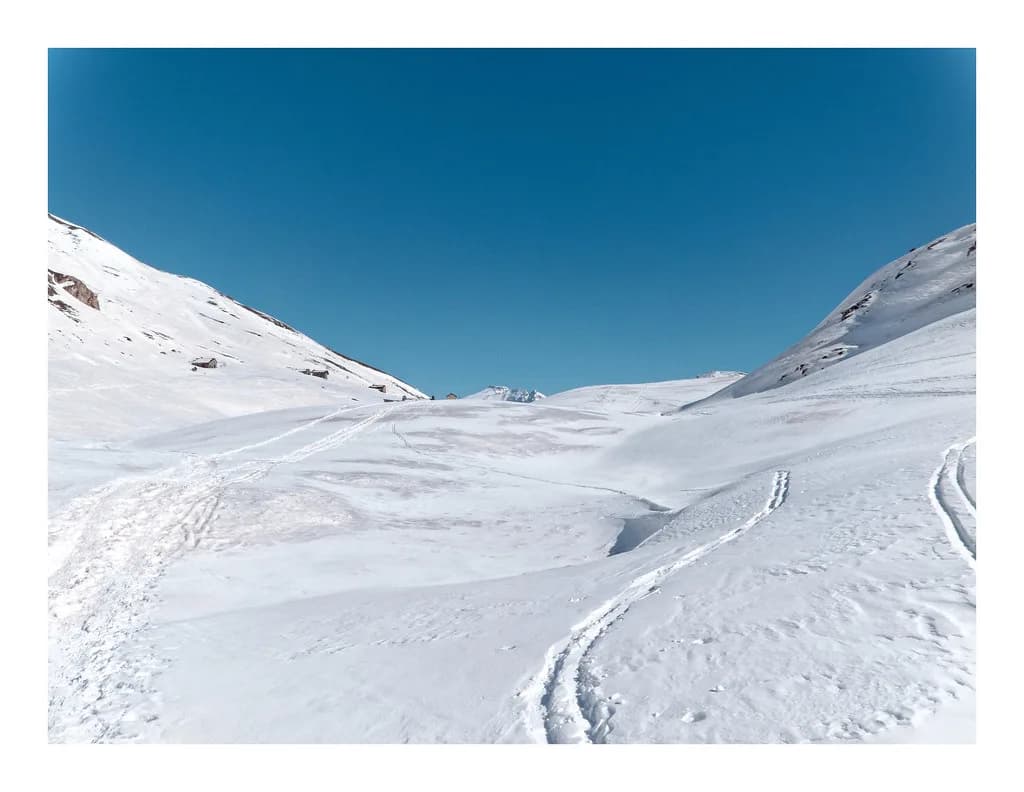
Val Cenis skiing is best understood as a valley-based, intermediate-focused area rather than a high-altitude destination resort. The resort publishes 125 km of marked runs between 1,300 m and 2,800 m, linking three villages that sit along the Haute Maurienne rather than around a single purpose-built core. That structure shapes everything: how you move between sectors, where beginners learn, and how much of the area you actually ski from your base.
This guide is built for the decision stage of planning, before you fix dates or book products. It compares the terrain honestly, separates the resort's scheduled winter operations from any assumption about conditions, and flags where third-party counts disagree with the resort's own published figures. It deliberately avoids accommodation rankings, transfer logistics and off-piste route advice, which sit outside a trip-planning brief of this kind.
The single most useful early decision is which of the three villages you treat as your base, because that determines your lift access and how often you rely on the valley bus. The second is which pass boundary you buy into, since a local Val Cenis product and the wider Haute Maurienne Vanoise annual pass open different amounts of terrain and Nordic skiing. Get those two right and the rest of the booking becomes straightforward.
Opening Decision: What Kind of Ski Trip Val Cenis Is Built For
Choose Val Cenis if you want a spacious, village-based French area where the bulk of the terrain sits in the blue and red range rather than in steeps. The resort's own run breakdown lists 65 marked trails, of which 22 are red and just 5 are black, alongside 17 green and 21 blue runs. That distribution tells you more about the resort's character than any reputation claim: it is a cruising and progression area, not an expert playground.
It is also a reasonable fit if you value scale you can learn in a week, because 125 km across three linked villages is enough to keep an intermediate busy without the disorientation of a mega-area. The trade-off is that confident expert skiers will exhaust the genuinely steep marked terrain quickly and may want to look at areas with deeper black-run counts. Being clear about that ceiling before booking is more useful than discovering it on day three.
If your group mixes abilities, Val Cenis handles that well because the easier terrain and the harder terrain are not concentrated in one place. Beginners have dedicated zones in the villages, and there is a long green run that lets early skiers cover real distance rather than looping a nursery slope.
Where Val Cenis Sits: Haute Maurienne Vanoise, Savoie
Val Cenis is in the Haute Maurienne Vanoise area of Savoie, in the far south-east of the French Alps close to the Italian border. Val Cenis's ski-area page describes an area reaching from 1,300 m at village level to 2,800 m at its highest point, with 1,500 m of vertical. It sits beside the Vanoise National Park, which shapes both the scenery and the pattern of development along the valley.
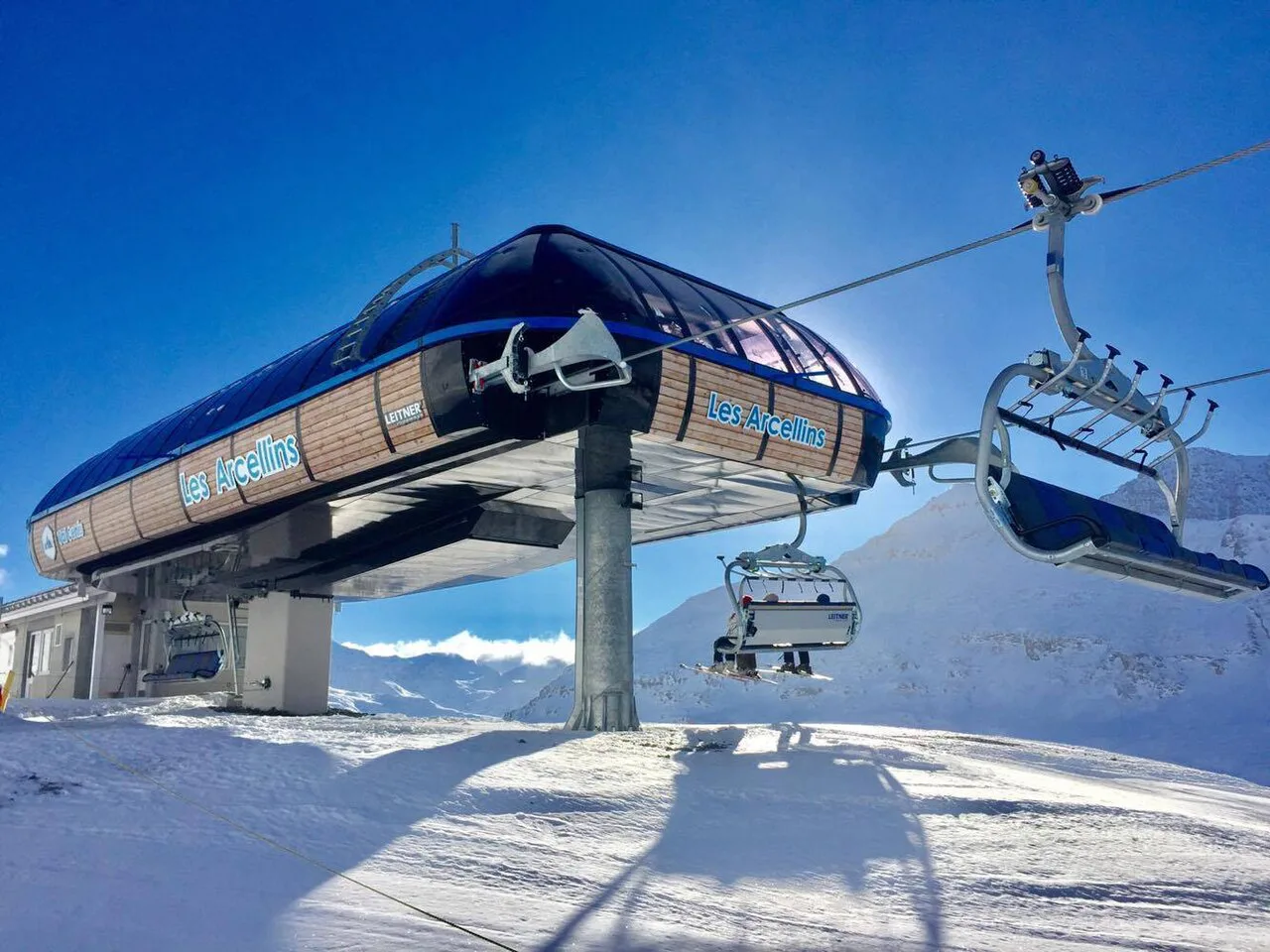
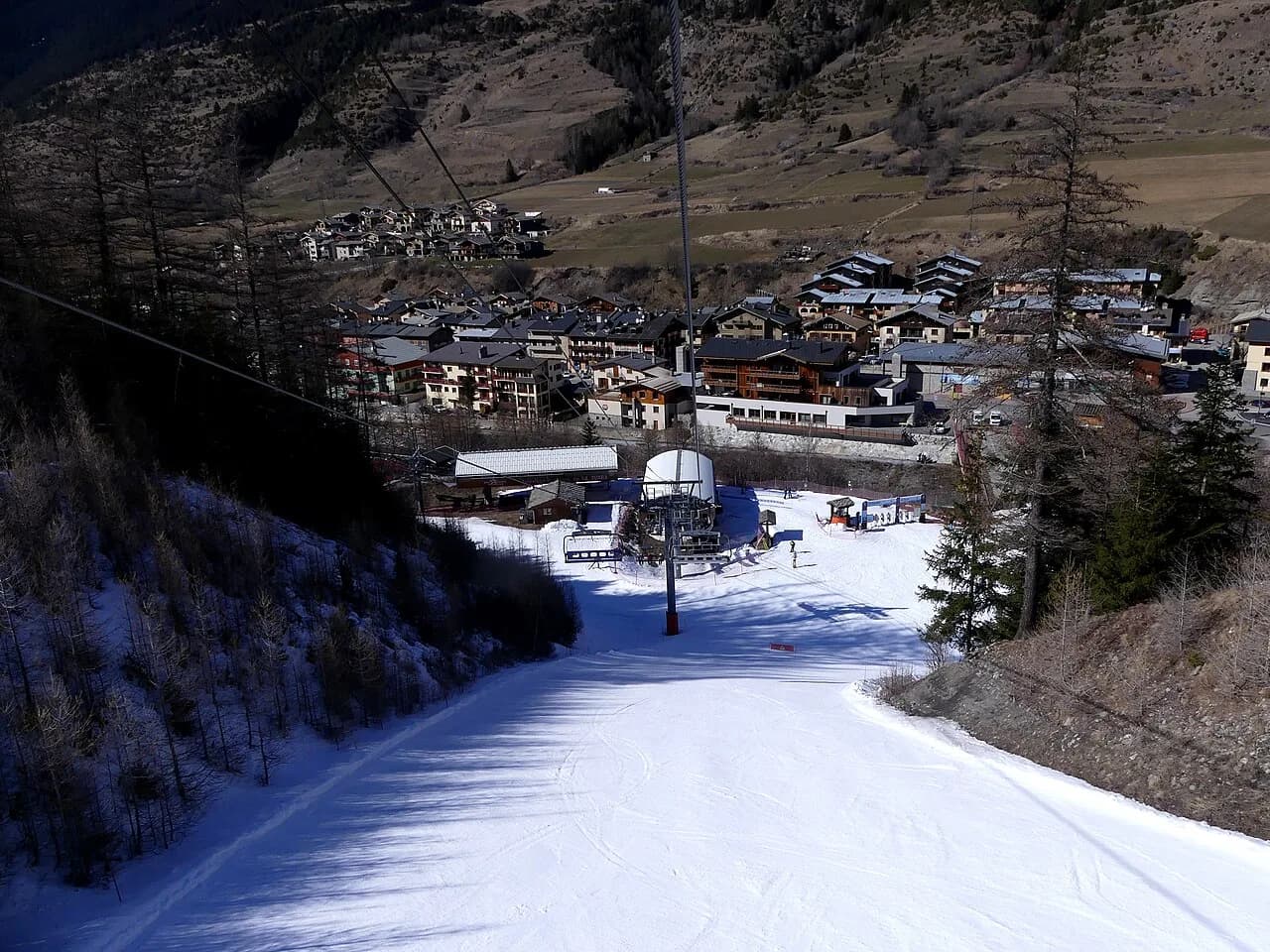
Rather than one compact resort core, Val Cenis is a string of villages along the valley: Lanslevillard, Lanslebourg and Termignon. Val Cenis confirms all three as part of the linked area, so when you read about Val Cenis skiing you are really reading about a valley system. That matters for planning because the villages are connected by lifts above and by a valley bus below, and where you stay changes how you use both.
The National Park setting is not just marketing; it explains the low build density and the way the villages retain traditional architecture. The Ski Club of Great Britain's resort overview also notes the valley composition and describes the slopes up to around 2,100 m as tree-lined, which is a practical detail for anyone who cares about shelter on poor-weather days.
The Shape of the Ski Area: 125 km, 1,300–2,800 m, 29 Lifts
Val Cenis publishes the headline figures as 125 km of marked runs, altitudes from 1,300 m to 2,800 m, 1,500 m of vertical descent, and 29 ski lifts serving 65 trails. The same page breaks those trails down as 17 green, 21 blue, 22 red and 5 black. Use these as your planning baseline, because they come from the resort itself.
Some third-party guides publish different numbers, and it is worth knowing why your research may look inconsistent. The WeSki resort page, for example, lists 115 runs and 39 lifts with an altitude range of 1,350 m to 2,832 m, which does not match the resort's own counts. Where a secondary guide conflicts with Val Cenis, treat the resort's published figures as the ones to plan against.
One run is worth singling out for scale: Val Cenis lists a 10 km green run called L'Escargot and describes it as Europe's longest green run. A green run of that length changes what beginners can do in a day, because it offers genuine distance rather than repetition. It is also the clearest published signal that early progression is a deliberate part of the resort's offer.
Sector by Sector: How the Three Villages Differ
The three linked villages are Lanslevillard, Lanslebourg and Termignon, and Val Cenis confirms they are joined into one area. Third-party descriptions frequently simplify this to two main villages, so if your research only mentions Lanslebourg and Lanslevillard, you are reading an abbreviated version of the layout. Treat Termignon as part of the system when you judge how far the area spreads.
For a ski trip, the practical sector question is which side you start from and how much of the area is reachable without depending on the valley bus. Third-party guides describe the slopes above Lanslebourg as wider and more open and the Lanslevillard side as offering more variety in gradient and character, though that is a general description rather than an operator-published breakdown. Use it as a prompt to check the official piste map rather than as a fixed rule.
Our recommendation is to treat the choice of village as a lift-access decision, not a scenery decision. Download Val Cenis's piste map, trace the lifts nearest each village, and ask which sectors you can reach without a bus leg. That single exercise resolves more planning uncertainty than any general description of village atmosphere.
Beginner and Early-Progression Provision
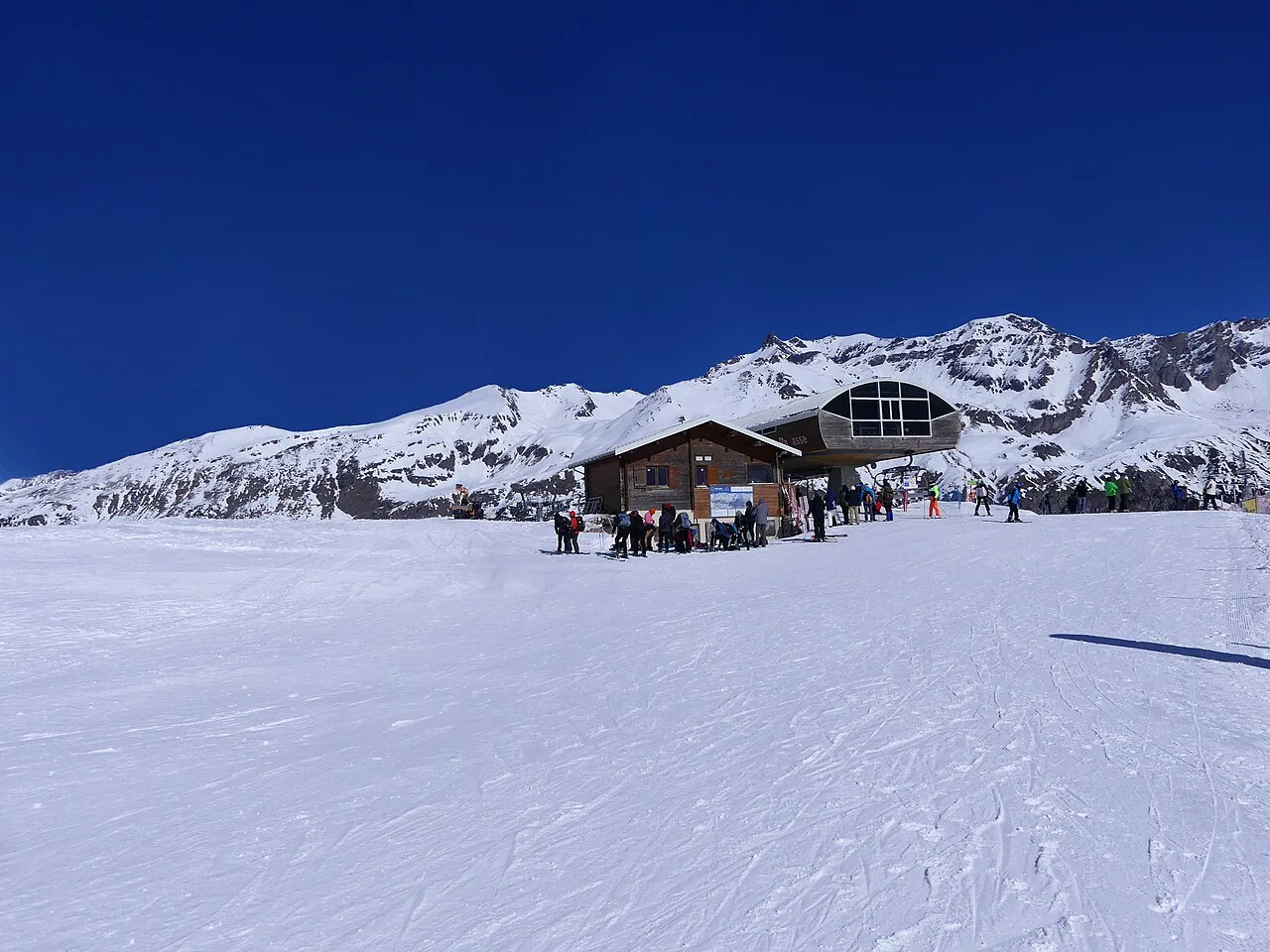
Beginner provision at Val Cenis is concentrated in the villages rather than scattered across the mountain. Val Cenis's pass page describes dedicated beginner lift groups tied to specific village points, including a set of lifts and a chairlift for the 1,300 m village and a larger group for the 1,400 m level. That structure means a first-timer can learn close to base with short lift rides.
The wider terrain supports progression once beginners leave those zones. With 17 green runs and 21 blue runs across 65 trails, there is a substantial low-intensity layer above the nursery areas, and the 10 km L'Escargot green gives early skiers a genuine destination run. Third-party guidance points to long green and easy blue runs as the natural next step after the village zones, which is consistent with Val Cenis's run counts.
If lessons are part of your plan, book them through the schools Val Cenis lists rather than inferring meeting points or group structures from a school's name. Details on how to structure that booking sit in our companion guide to val cenis ski lessons, which addresses class formats and timing decisions. Confirm meeting arrangements directly with the school you choose.
Intermediate and Upper-Mountain Terrain
The intermediate layer is the largest part of the area. With 22 red runs against 21 blue and only 5 black, plus 17 green, the terrain is weighted toward cruising rather than steep descents. Val Cenis's own breakdown is the best evidence for that, and it should temper expectations if your group is looking for sustained steep skiing.
Upper-mountain skiing reaches 2,800 m at the top of the area, which gives red and blue runs a longer vertical than the valley figures might suggest. Third-party descriptions note a mixture of mostly blue and red terrain above the tree line and fairly limited steep terrain, which aligns with the low black count. If your priority is technical steeps, that combination is a genuine limitation rather than a detail.
Our recommendation is to plan an intermediate trip around distance and variety rather than pitch. A group of confident red-run skiers will find more value linking sectors across the valley than hunting for the handful of black runs. If you are a strong expert, weigh whether a resort with a deeper black-run count suits you better before you commit.
Snowboard and Park-Adjacent Skiing
Val Cenis lists a limited but specific set of freestyle and fun features: one snowpark, one boardercross, one snowtubing run, two photo spots and a 900 m toboggan run called Val Cenis Turbo. Those figures come from the resort's own facilities list
Third-party sources describe more park provision, with INTERSPORT Rent listing two snow parks and two boardercross courses. Because Val Cenis's own page lists one of each, plan against the smaller figure and treat additional features as a bonus rather than a certainty. Features and their availability can change through the winter.
For riders who mainly want space to carve rather than park laps, the area's width and blue-red balance matter more than the feature count. Wider cruising terrain across a 125 km area generally means less congestion on any single run. Check Val Cenis's piste map to see how the park sits relative to your likely base.
The 2026/27 Season Window and Partial-Opening Periods
Val Cenis publishes a winter season running from mid-December 2026 to mid-April 2027, but the two official pages do not state the same opening day. The ski-area page gives Saturday 12 December 2026, while the ski-pass page gives Sunday 13 December 2026 with a partial opening through 18 December and reduced rates in that period. Because the primary source is ambiguous on this point, treat the exact first day as unconfirmed and check it with the Val Cenis tourist office before booking travel.
The pass page also describes a partial period at the end of the season, from 10 to 16 April 2027, again with reduced rates. That is a scheduling signal, not a snow forecast: shoulder periods mean a smaller operating footprint, so fewer lifts and runs are likely to be available. If your trip depends on a specific sector being open, that risk is highest at the edges of the season.
Separately, Val Cenis gives a narrower window for the Nordic area, which is not the same as the alpine season. Our guide to the val cenis ski season covers how those two calendars differ and what to check before you fix dates. For any specific week, confirm lift and piste openings with Val Cenis rather than relying on the headline season dates.
Pass Products: Local, Multi-Resort and Nordic Access
Val Cenis sells its own alpine passes for the local area, and its pass page also promotes a Haute Maurienne Vanoise annual pass that extends access well beyond the valley. That annual product is described as including unlimited skiing across six Haute Maurienne Vanoise resorts, adding up to 350 km of alpine and 200 km of Nordic skiing, plus access to area buses. Those inclusions are Val Cenis's published terms, so check the current details before you buy.
The same page describes a multi-day local pass of six days or more as including one day in each of the other Haute Maurienne Vanoise resorts and unlimited access to the Nordic areas, along with the area bus services. That is a meaningfully different product from a simple local pass, and it changes how much terrain and how many villages your ticket covers. Read the full terms on the Val Cenis pass page rather than assuming a named pass includes a given lift or area.
Our recommendation is to decide your pass boundary before you decide anything else, because it determines whether you book lessons and hire around one valley or several. The val cenis ski pass guide works through those product choices in detail. If you are unsure whether the wider pass earns its cost on a short trip, that comparison is the decision to make first.
Booking Sequence: What to Confirm and in What Order
Start with the pass boundary, then lessons, then equipment. Pass choice constrains everything else, because a wider product may change which village you base in and how many days you spend skiing elsewhere in the Haute Maurienne. Only once that is settled does it make sense to commit to lesson dates or hire periods.
For equipment, reserve before arrival if you are travelling in a peak week, and treat online reservation as a way to guarantee a model rather than as a discount you can rely on. Providers publish their own booking conditions, and terms such as cancellation windows and collection times vary. Our val cenis ski hire guide covers how to compare those terms without assuming brands behave the same way.
Before you travel, confirm three things directly with Val Cenis and your ski school: the exact opening day at the start of your week, which lifts and sectors are scheduled to run, and your lesson meeting arrangements. If any of those cannot be confirmed, treat it as an open question rather than filling the gap with an assumption. There is more on reserving in our Val Cenis Ski Pass Guide and in the lessons and hire pages linked above.
Who Val Cenis Suits, and the Trade-Offs
Val Cenis suits groups whose skiing sits in the beginner-to-advanced-intermediate range and who want distance and variety rather than steep challenge. The run counts make that explicit: greens, blues and reds dominate, and the area is large enough to fill a week without repetition. If that describes your group, the resort's scale and layout work in your favour.
The clearest trade-off is the shallow expert layer. With only 5 black runs among 65 trails, a group of strong expert skiers will run out of genuinely demanding marked terrain faster than they would at a resort built around steeps. That is a real limitation, not a matter of perception, and it is worth weighing before you commit to the area on the strength of its size alone.
If you are comparing French options more broadly, our alpe d huez skiing guide covers a resort with a different terrain balance and scale, which can help you judge whether Val Cenis or a larger area fits your group; our Flaine ski guide offers another comparison point. Avalanche risk, snow conditions and lift operations remain variable everywhere, so plan for flexibility rather than for a fixed itinerary.
Planning FAQ
The questions below cover the recurring planning uncertainties around Val Cenis: how reliable the snow is across a season, what a trip is likely to cost, how the resort handles beginners, and whether the pass covers anything beyond the valley. Each answer points you to Val Cenis's own terms rather than to a general assumption.
Where Val Cenis publishes a figure, we use it; where it does not, we say so and tell you what to confirm. That approach keeps the guide useful without overstating what is known about a future winter. For anything that changes season to season, check the resort's pages before you commit money.
Plan Your Val Cenis Trip
Val Cenis is a valley-based, intermediate-focused ski area with 125 km of runs across three linked villages and a terrain balance weighted toward greens, blues and reds. Its strengths are scale, progression-friendly terrain and a genuine beginner layer; its constraint is a limited expert ceiling with only 5 black runs among 65 trails. Decide whether that profile matches your group before you compare dates or pass prices.
The practical sequence is to settle your pass boundary first, then your base village, then lessons and equipment. Confirm the exact opening day for your week, the lifts and sectors scheduled to run, and your lesson arrangements directly with Val Cenis and your ski school, because the two official pages differ on the first day of the season. Treat all season dates and openings as scheduled operations that can change.
Explore more Val Cenis guides
Frequently Asked Questions
Is Val Cenis good for beginners?
Yes, and the provision is structural rather than incidental. The operator lists dedicated beginner lift groups tied to the 1,300 m and 1,400 m village levels, and the wider area contains 17 green runs and 21 blue runs. The 10 km L'Escargot green run gives early skiers a long, continuous descent rather than a short nursery loop. Before booking, ask your chosen ski school how it organises beginner groups and where it meets.
Does the Val Cenis pass cover other resorts?
It depends on which product you buy. Val Cenis sells local alpine passes for the Val Cenis area and separately promotes a Haute Maurienne Vanoise annual pass described as including unlimited skiing across six Haute Maurienne Vanoise resorts, plus Nordic access and area buses. A six-day-or-longer local pass is also described as including one day in each of the other area resorts. Inclusions change, so check the current terms for the specific product before you buy.
Is Val Cenis suitable for expert skiers?
It is a limited fit for expert-focused trips. The published run breakdown includes only 5 black runs among 65 trails, with the majority in the green, blue and red range. Strong skiers who want sustained steep terrain will exhaust the marked options relatively quickly. If steep skiing is the priority, compare resorts with a deeper black-run count before committing.
When does the Val Cenis ski season start and end?
Val Cenis publishes a winter season running from mid-December 2026 to mid-April 2027, but its two official pages do not state the same opening day, giving 12 and 13 December 2026 respectively. The pass page also describes partial opening periods with reduced rates in mid-December and in mid-April. Check the exact first day and the scheduled lift operations for your travel week before booking.
Sources
Useful notes for your next ski trip
Optional updates to our Alpine resort guides.
You might also like
Continue reading
More guides you'll find useful

.JPG)