Val Thorens Skiing Guide: Ski Area, Passes, Lessons & Season
Plan a Val Thorens ski trip with real detail: 150 km of local pistes, the 3 Vallées link, season dates, pass choices, beginner zones, lessons and hire.
On this page
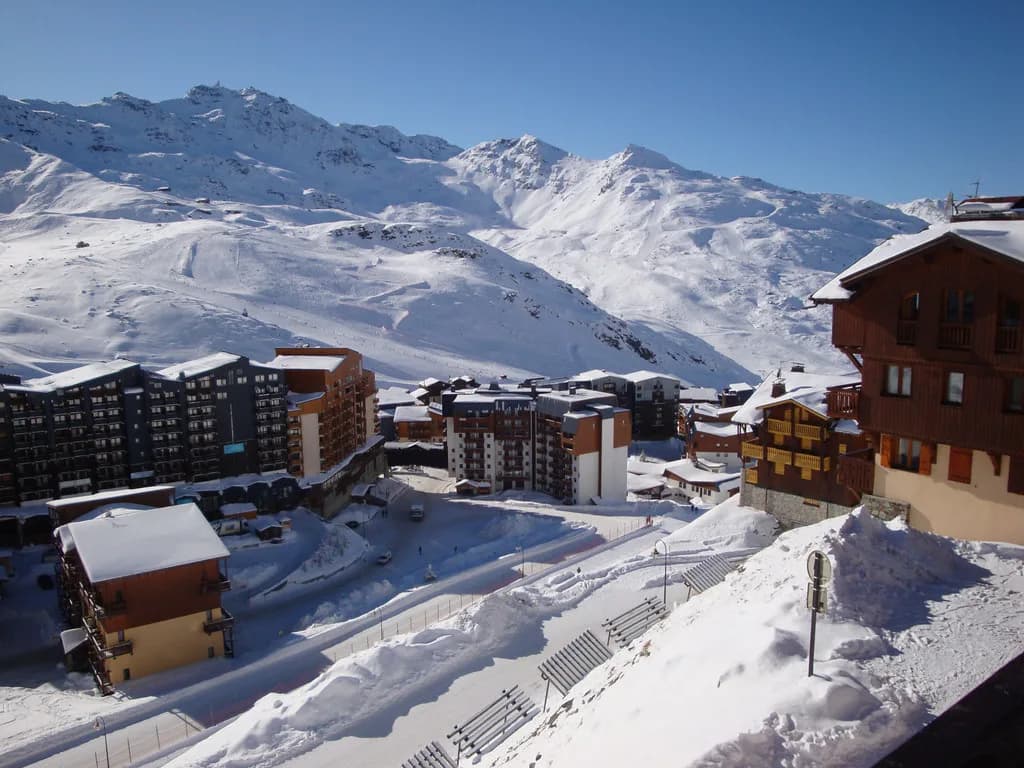
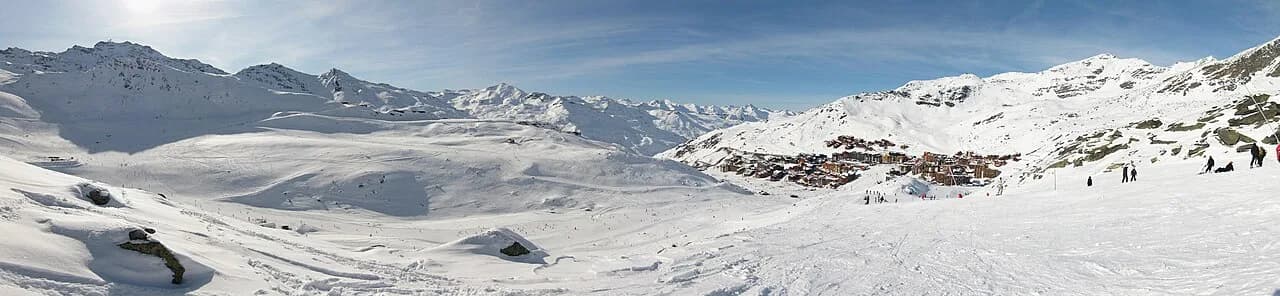
Val Thorens sits at roughly 2,300 m in the Savoie Alps, the highest resort village in Europe and the top corner of Les 3 Vallées. The layout is unusually simple for a big French resort: the village is effectively ski-in, ski-out, so you clip in outside your building rather than riding a bus to a lift station. That single fact shapes everything from where you book accommodation to how much time you actually spend skiing each day.
The terrain above the village is almost entirely high altitude — the resort states that 99% of its ski area lies above 2,000 m — and the local lift network links directly into the wider 3 Vallées system. The practical question for most skiers is not whether Val Thorens is big enough, but which of its two pass products makes sense for the week they have booked.
What Val Thorens Skiing Actually Is
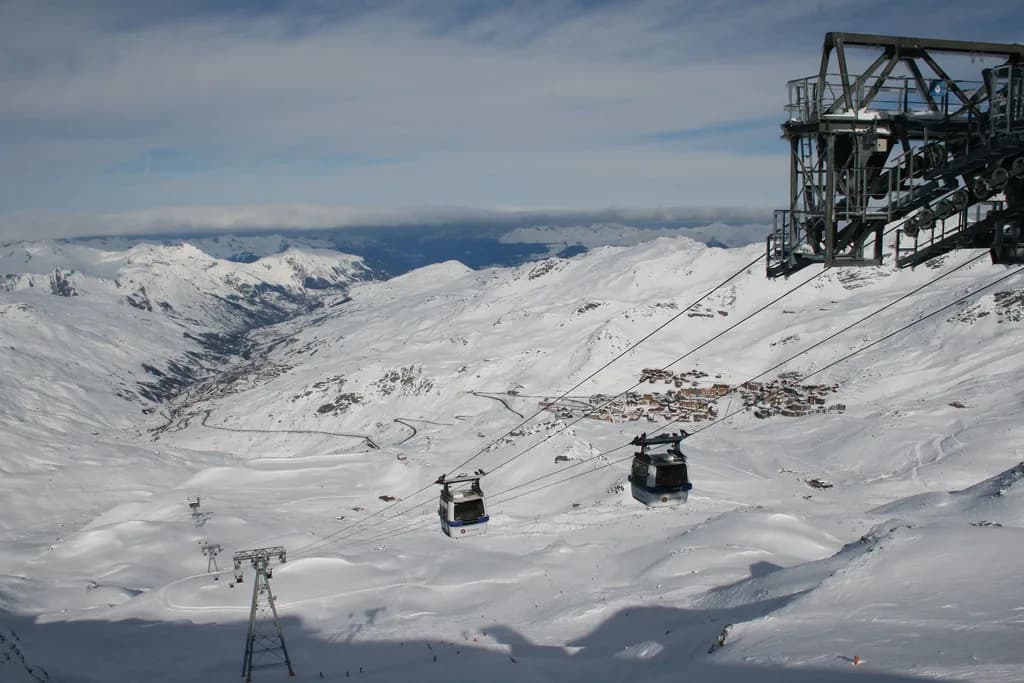
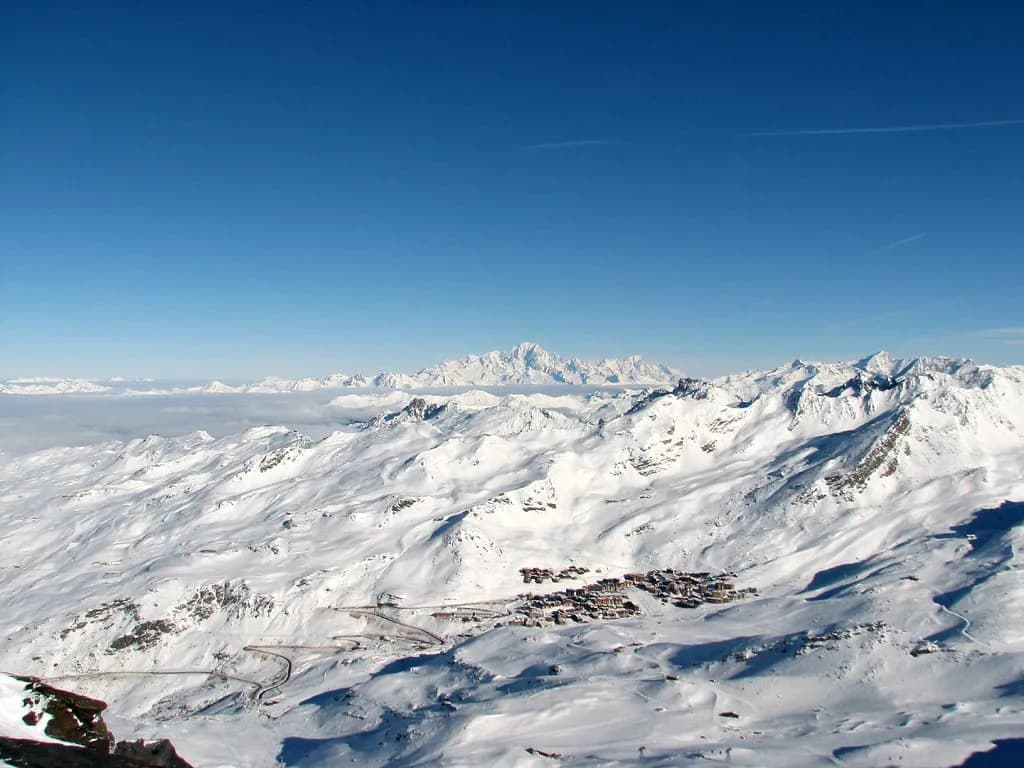
Val Thorens occupies a natural cirque ringed by six glaciers, with the village at around 2,300 m and the Cime Caron summit at 3,200 m. Because nearly all the terrain sits above the 2,000 m mark, snow cover holds better here than in valley-floor resorts, and the resort markets itself on snow reliability as much as on scale. The trade-off is a bare, high-Alpine setting rather than tree-lined runs — little of the skiing is sheltered on storm days.
The local ski area, shared with Orelle on the far side of the ridge, covers roughly 150 km of piste according to the resort. Link through to Les 3 Vallées and that figure grows to 600 km across Courchevel, Méribel, Les Menuires and Saint-Martin-de-Belleville. Both numbers appear in the resort's own material, and which one matters to you depends entirely on how far you intend to roam in a day.
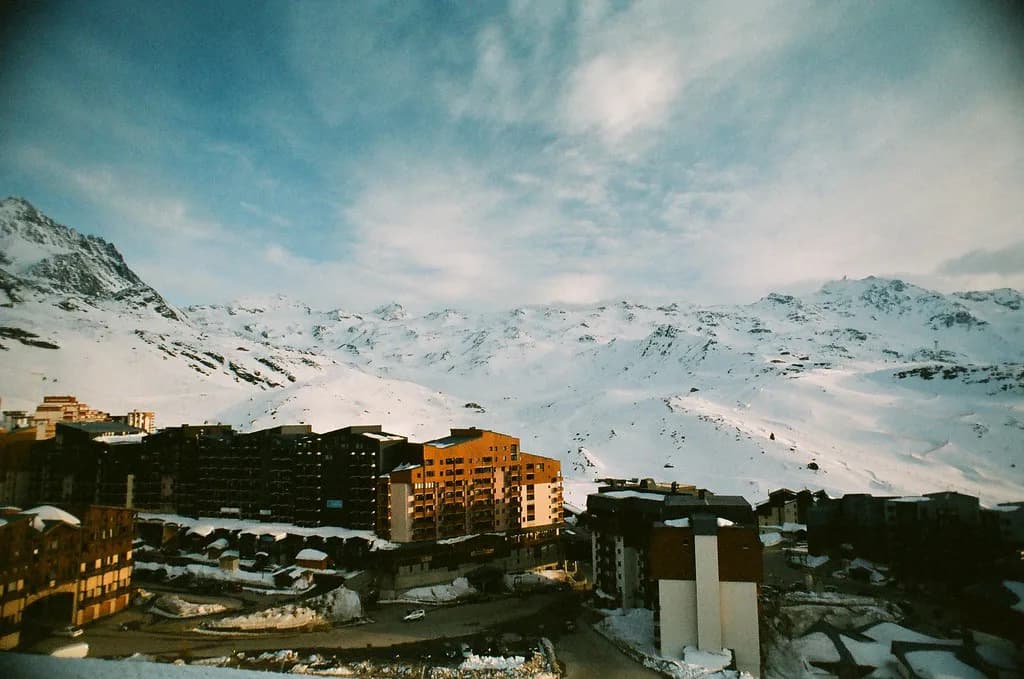
Ski-in, ski-out means you can start and finish the day at your door, but it also means the village is spread along the slopes rather than around a single square. Before you book, spend ten minutes with the Val Thorens piste map guide to work out which lift serves your building and which sector your ability suits. That is far more useful than picking accommodation on price alone.
Val Thorens–Orelle vs Les 3 Vallées: Which Pass You Need
Two products sit side by side. The Val Thorens–Orelle pass covers the local 150 km and is the sensible default for a short break, a first-timer, or anyone who wants to stay high and skip the traverses. The full 3 Vallées pass opens the entire 600 km network, including the runs towards Méribel and Courchevel, and only earns its premium if you plan at least one or two long day tours out of the valley.
A good test is your appetite for mileage versus your appetite for laps. Strong intermediates and advanced skiers often get more value from the 3 Vallées pass because the long route between valleys is the point of the trip. Families with young children, beginners and anyone on a three-day break usually lose money buying up, since the local area already has more terrain than most people cover in a week.
The Val Thorens ski pass guide breaks down coverage, durations and seasonal options in more detail, including the multi-day products sold alongside the standard passes. Read it alongside your accommodation choice, because where you stay affects how quickly you can reach the links into the rest of the 3 Vallées.
Season Dates: The Local Area Runs Longer Than the 3 Vallées Link
For 2026/27 the resort states that Val Thorens–Orelle opens on 21 November 2026 and closes on 2 May 2027, while the full 3 Vallées area runs from 5 December 2026 to 18 April 2027. Those dates are the single most important thing to understand before booking early- or late-season travel, because the local lifts and the inter-valley connections do not start and finish together.
In practice, a late-November or late-April trip means skiing the Val Thorens–Orelle area, where the altitude keeps snow in condition, without the option of touring to Courchevel or Méribel. Early December is the reverse problem: the local area is open but the wider network may not yet be, so a 3 Vallées pass bought for that week buys less than it would in January. Match your dates to your pass, not the other way round.
The ski season page also carries live snow and weather information and webcam feeds, which is the right place to look in the final week before departure if you are travelling on the shoulders of the season.
The Sectors: Péclet, Caron, Moraine and Cascades
The Péclet sector sits at the heart of the local area and gives access to the glacier and a broad spread of blue and red runs, which makes it the natural starting point for most first mornings. The Cime Caron sector above it holds the 3,200 m summit and the steep, high runs that drop from it. Moraine and Cascades fill out the rest of the local area, with the Orelle side reachable by lift and offering a quieter, less-tracked alternative on busy weeks.
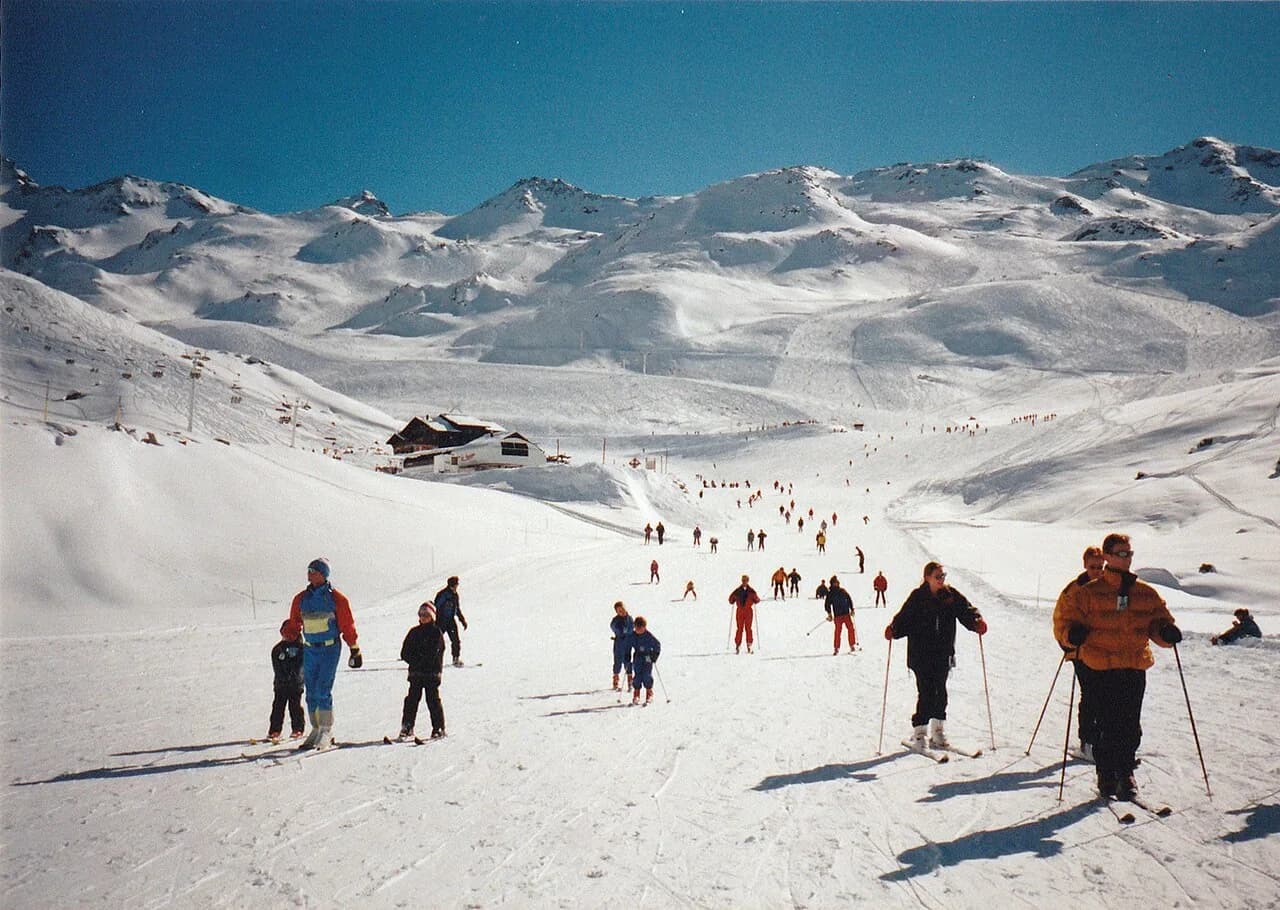
Beginners and low intermediates will find the most comfortable terrain close to the village and around the nursery areas, while confident skiers should head high early, before the upper lifts queue. Study the Val Thorens Ski Map before you travel and mark two or three sectors you want to cover rather than trying to cross the whole area in a day.
Because the resort is spread along the slopes, sector choice also determines where you stop for lunch and how easily you get home at the end of the day. A run that looks short on the map can involve a long traverse back to the village side, so plan a return route from the outermost point you reach.
Cime Caron at 3,200 m and Caron 3200
Cime Caron is the high point of the Val Thorens ski area at 3,200 m and is served by lift, so you do not need to climb to stand on the summit. The resort describes the view as a 360° panorama taking in more than a thousand Alpine peaks across France, Switzerland and Italy. It is worth building part of a morning around it, not a whole day, since the runs down are the reason to be up there.
The summit building, Caron 3200, houses a 130-seat restaurant, a wine bar, a rooftop snack bar with a panoramic terrace, a boutique and an 80 m² multi-purpose space. That makes it a sensible lunch stop or bad-weather refuge, though the altitude means you should not count on spending a long, comfortable afternoon there if you are not acclimatised.
The runs from the summit are steep and exposed, so treat them as advanced terrain rather than a scenic descent for the whole family. Less confident skiers can ride up, take in the view and download, which is a perfectly reasonable use of a morning.
Beginner Skiing: Nursery Zones and the Pionniers Meeting Point
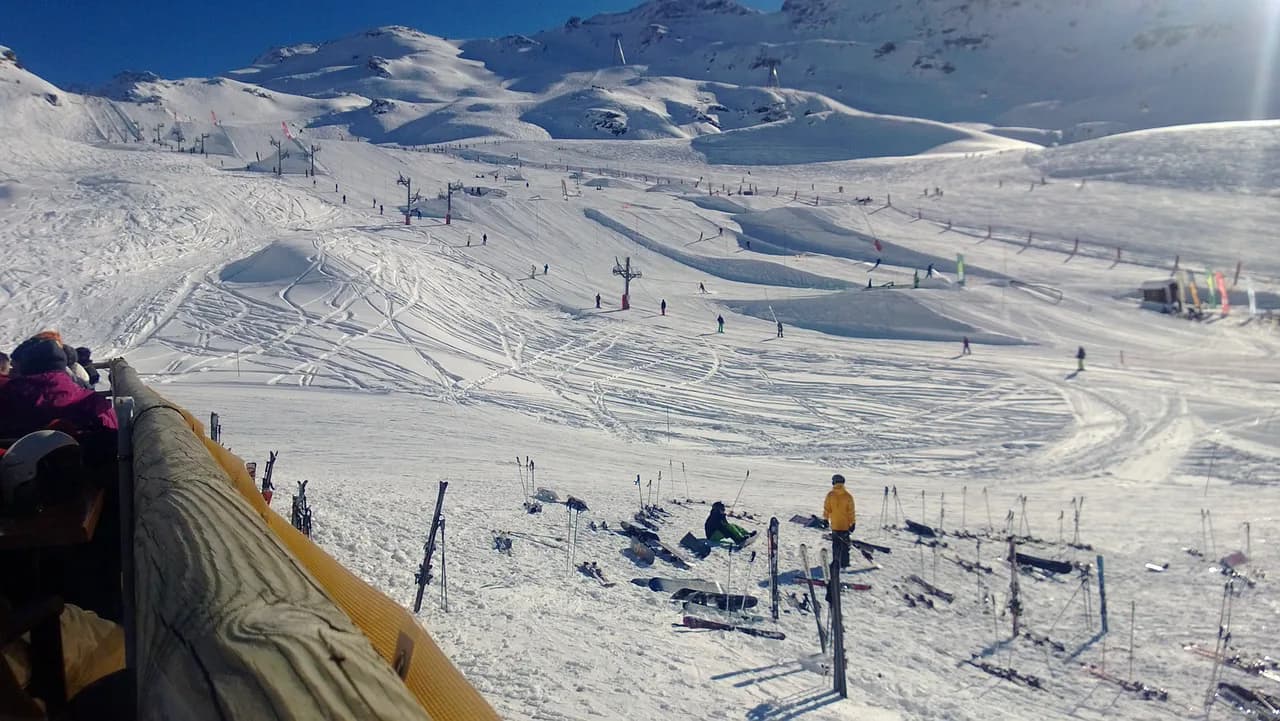
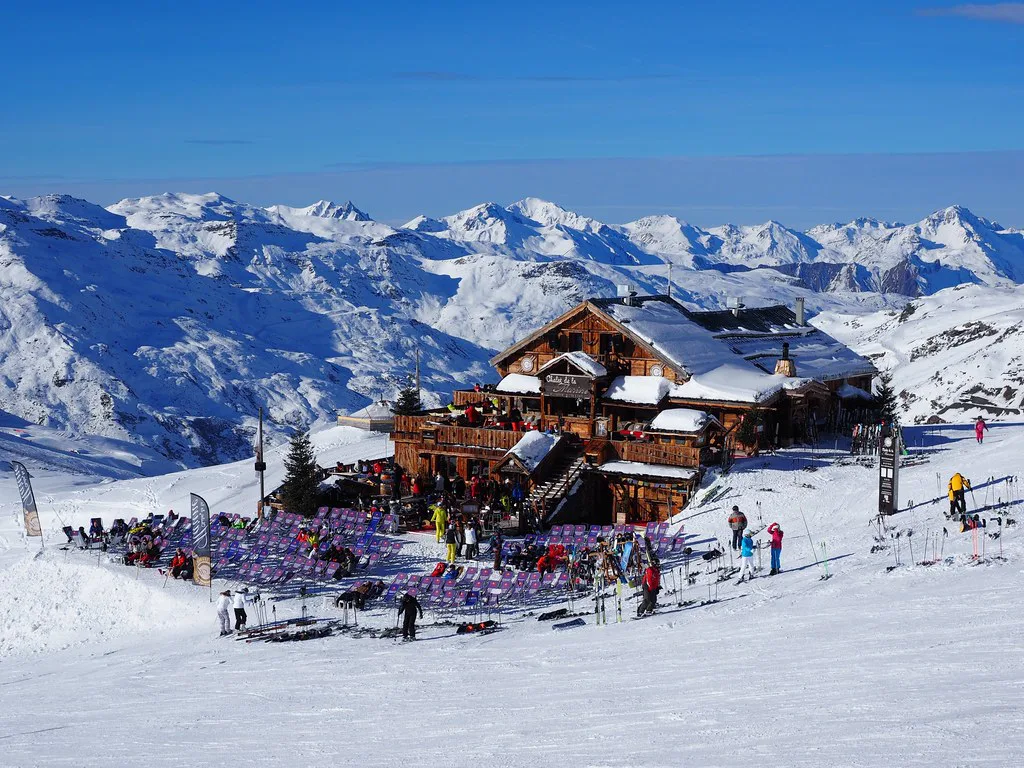
Val Thorens is a better beginner resort than its altitude-first reputation suggests, largely because the village sits on the slopes and the nursery areas are close at hand. ESF runs its adult beginner group lessons from the Pionniers chairlift, with morning sessions from 9am to 11.30am and afternoon sessions from 2pm to 4.30pm. Three-day courses also run from the top of the Montana garden, so where you book accommodation relative to those two points genuinely affects your mornings.
One detail catches people out: a lift pass is not included in the lesson price and is required from the second day of beginner group lessons. That means you can book a single first-day lesson without committing to a pass, then buy one once you know you are staying upright. It is a small thing that changes how you sequence your bookings.
The first-timer's real advantage here is the layout. With ski-in, ski-out access from most accommodation, tired legs at the end of a lesson do not have to negotiate a bus or a long walk in boots. The trade-off is that many buildings sit on a slope, so check the exact position of your accommodation before booking.
Intermediate and Advanced Terrain
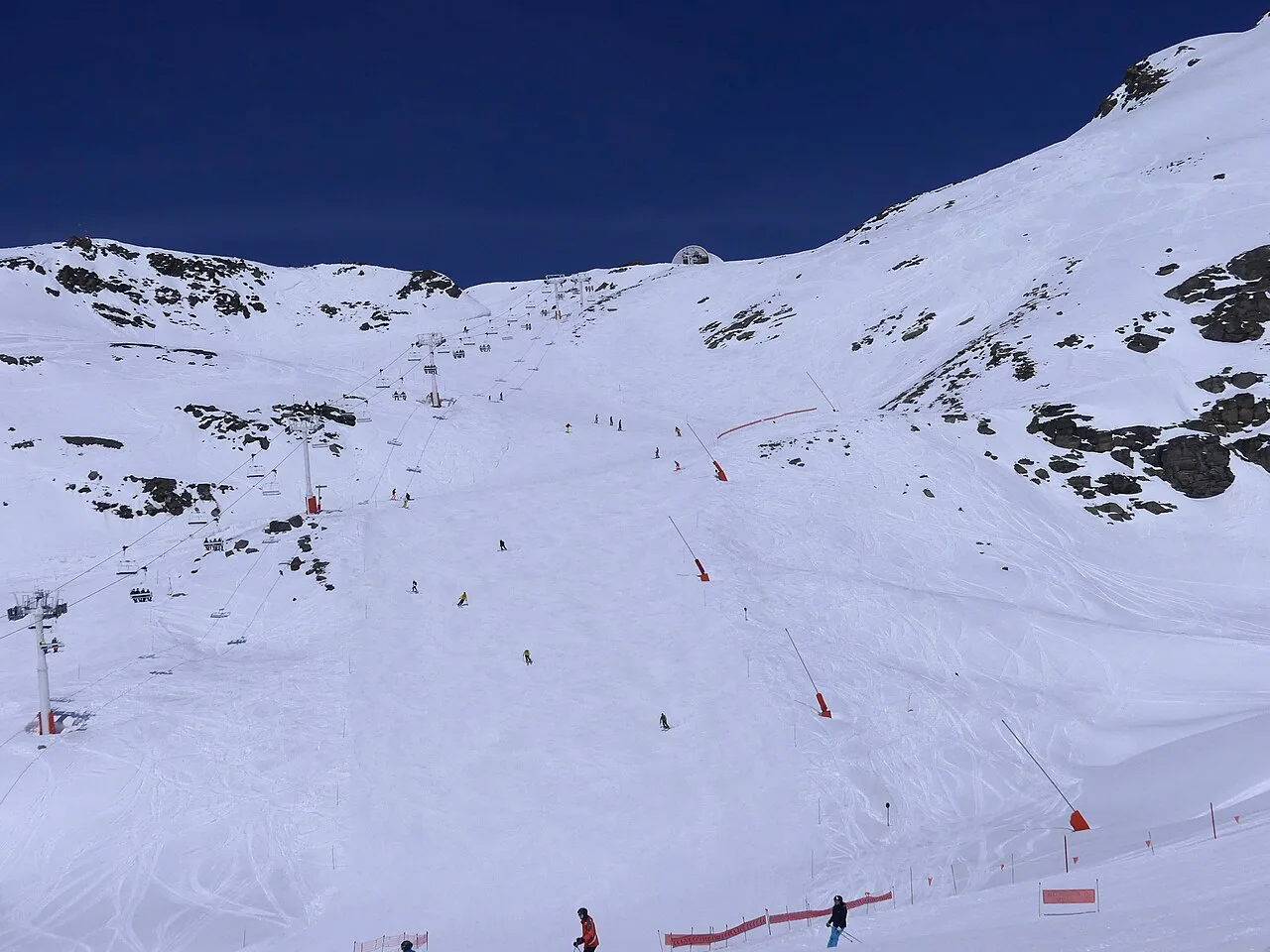
Intermediates get the best of Val Thorens: long, wide groomers off the Péclet and Moraine lifts that hold an edge well into the afternoon, plus enough variety to fill a week without repeating a run. The 99% above 2,000 m figure is not marketing spin for this level — it means the snow stays cold and grippy rather than turning to slush at the bottom of the mountain.
Advanced skiers have the steep terrain off Cime Caron, a snowpark, a boardercross course and lift-served off-piste including the glacier. The resort's own material points towards guided off-piste outings and ski touring, which is the sensible route if you want the glacier without local knowledge. Check the avalanche bulletin and the live lift status before committing to anything off the marked runs.
If you are weighing Val Thorens against other French options, the Alpe d'Huez Skiing Guide is a useful comparison for a resort with a similarly large, high-altitude layout.
Lift Passes and What They Cost
For 2026/27 the listed 3 Vallées figures give a clear sense of scale: a 6-day adult solo pass is €421, a 6-day child pass is €345, and a 6-day veteran pass is €105. Family Flex, a 5-day product for groups of three or more, starts at €345 per person. Treat these as the published 2026/27 prices rather than a forecast of what you will pay.
The gap between adult and child pricing is narrower than many families expect, which is why Family Flex exists — the group product often works out better than buying individual child passes. The veteran rate is dramatically lower, so anyone eligible should check the eligibility rules before buying anything else. For the local Val Thorens–Orelle pass, prices sit below the 3 Vallées figures, and the resort publishes them season by season.
Passes are sold online in advance, which is worth doing for a six-day product because it removes a first-morning queue and lets you start skiing the moment you arrive. Buy for the days you will actually ski: a five-day pass bought for a six-day trip saves money and gives you a rest day.
Where to Buy Your Pass and Avoid the First-Morning Queue
Buying online before you travel is the standard advice and it holds here: the 3 Vallées site sells passes directly, and the resort's own pages point to the same channels. If you are collecting a pre-ordered pass in resort, do it on arrival day rather than on your first ski morning, when the lift-station windows are at their busiest.
If your trip straddles the start of the 3 Vallées season, decide your pass after checking which lifts are actually running, not before. A pass bought in October for an early-December week may cover less terrain than the price suggests. The same logic applies to the final week of April.
Ski Schools: ESF, Audacius and When Private Tuition Pays
ESF Val Thorens runs adult group lessons across beginner, intermediate and experienced levels, plus snowboard courses and guided off-piste and ski touring. Group sizes and formats vary by level and week, so the right choice depends on how much time you want to commit. Book early for February half-term and the New Year week, which fill first.
Audacius, formerly Prosneige, takes a different approach: small groups capped at eight, a 200 m² chalet at the lesson meeting point open from 8am to 6pm daily, its own rental and boot-fitting shops, and 36 bilingual or trilingual instructors. It also runs dedicated programmes for very young children. The single-location setup is genuinely convenient if you are travelling with a family and want lessons, hire and a warm base in one place.
Private tuition is the format to cost carefully. ESF prices five or six morning blocks of 2 hours 45 from around €1,100, and five or six afternoon blocks from around €555, with the pass not included in either. If you are a couple or a family of three sharing an instructor, the per-person maths often beats group lessons for rapid progress.
The Val Thorens ski lessons guide compares course formats and booking details if you want the full picture before committing. As a rule of thumb, group lessons suit steady weekly progression and private blocks suit a short trip or a specific technical goal.
Beginner Lesson Costs and What the Price Excludes
ESF beginner group lessons start from €230 for afternoon sessions and run to €315 for some morning formats, depending on the week and time of day. A three-day beginner course is cheaper again, from around €159, and is a sensible way to test whether skiing is for you before committing to a full week.
Three things sit outside the price: the lift pass, the equipment and insurance. The pass becomes mandatory from day two, so budget for it from the outset rather than treating it as an optional extra. Equipment hire, helmet and optional insurance such as Carré Neige are all additional and should be added into your total before you compare schools.
Some adult group formats include a medal and some do not, which is a reminder to read the specific course description rather than the headline price. The difference is small in cash terms but affects what you get at the end of the week.
Ski and Boot Hire: Five Locations and Mid-Week Swaps
INTERSPORT Rent operates five shops in Val Thorens: Caron for the resort centre, Péclet for the Péclet area, Soleil Cheval Blanc for the Le Cheval Blanc residences, and Bas des Balcons and Haut des Balcons for guests staying around Les Balcons. Matching your accommodation to the nearest shop is the single easiest way to avoid carrying skis across the village on arrival day.
Booking online before arrival brings meaningful savings, with the company advertising up to 60% off compared with walk-in rates depending on the period and category, plus the seventh rental day free and a cancellation option up to 24 hours before pick-up. You can also collect equipment from 5pm the day before your first ski day, which removes the morning scramble.
The option to swap models mid-week matters more here than in many resorts, because a high-altitude week can move from groomed pistes to powder and back. If your group includes a beginner and an advanced skier, book separate categories rather than compromising on one set of skis. The Val Thorens ski hire guide covers the named branches, including the five INTERSPORT Rent shops, and what each shop stocks.
Getting There and Getting Around Without a Car
The resort is built on the slopes, so once you arrive a car is largely redundant. Most accommodation is genuinely ski-in, ski-out, and the lifts connect the village to the wider area without road transfers. That makes self-catering chalets on the edge of the village far more practical than they would be in a valley resort.
Driving gives you flexibility on arrival and departure days, especially if your group is carrying its own equipment or arriving late, but it also means parking and snow-chain decisions. If you are flying, plan your transfer to arrive in daylight and on a day when your accommodation can take a late check-in. Check the resort's own access information for current road conditions rather than relying on a fixed timetable.
If you are comparing resorts for a self-drive trip, the Flaine Skiing Guide covers a similarly compact, purpose-built layout with easy access from Geneva.
When to Go: December, February and the May Extension
December splits in two. Before the 3 Vallées link opens on 5 December 2026, you ski only the local area, which is quiet and cheap but limited if you had planned to tour. After it opens, the resort fills fast for Christmas and New Year, and prices peak accordingly. If your goal is mileage, the second week of December is the value window.
February half-term brings the best snow of the year and the biggest crowds, with queues at the main lifts and lesson groups filling weeks in advance. Book lessons, hire and passes together rather than leaving any of it to arrival. Late April and the first days of May are the opposite: quiet slopes, long sunny lunches and a limited local area once the 3 Vallées connections close on 18 April 2027.
If a late-season week appeals, the 21 November 2026 to 2 May 2027 window for the local area is the one to plan around, and the early-May days are for high-altitude laps rather than touring.
Whatever week you choose, check the official resort site for current prices and dates before you commit, since it is the season's own pages that carry the operating windows and pass rates for your travel dates.
A Three-Day Shape for a First Val Thorens Trip
Day one belongs to the local area: warm up around Péclet on blue and red runs, find your feet with the lifts and finish early enough to sort hire and passes. Book any group lesson for day one if you are a beginner, remembering the pass only becomes compulsory from day two.
Day two is the summit day. Head up to Cime Caron early for the view and the steep runs, then drop back into the local sectors for lunch and a relaxed afternoon. Day three is the day to decide whether the 3 Vallées link is worth it — if you bought the larger pass, this is when you use it, touring towards Méribel or Courchevel and returning with enough daylight to spare.
Booking Order and What Sells Out First
Accommodation goes first, especially anything genuinely ski-in, ski-out, and especially for February and the Christmas week. Match the building to your lift, your rental shop and — if you have beginners — the Pionniers or Montana meeting points. After that, book lessons, because popular group formats and private instructors fill weeks ahead.
Hire comes next, booked online for the discount and the seventh-day-free benefit, choosing the shop nearest your accommodation. Passes can be bought last because they are less capacity-constrained, but buy them online before you travel to save the first-morning queue and confirm the season dates match your trip.
Plan Your Val Thorens Trip
Val Thorens rewards a bit of planning before you book. Decide first whether your week is about the local 150 km or the full 600 km 3 Vallées network, then pick dates that fit the season window you have chosen, then match accommodation to your lift, your lessons and your hire shop. Get those three in the right order and the rest of the trip largely organises itself.
The practical advantages are real: high-altitude snow, a village you can ski from and into, five hire locations spread across the resort and ski schools that cater for everyone from nervous first-timers to off-piste skiers. What the resort asks in return is that you check the 2026/27 season dates and pass prices for your specific week before you commit, because early December and late April are not the same resort as mid-January.
Explore more Val Thorens guides
Frequently Asked Questions
How many kilometres of pistes does Val Thorens have?
The Val Thorens–Orelle local area covers roughly 150 km of piste, and the linked Les 3 Vallées network stretches to about 600 km across Courchevel, Méribel, Les Menuires and Saint-Martin-de-Belleville. Which figure applies to your day depends on the pass you hold, not on the weather. If you want the wider network, buy the full 3 Vallées product; if you are staying local, the smaller pass covers more terrain than most skiers cross in a week.
Is a Val Thorens–Orelle pass enough, or do I need the full 3 Vallées pass?
For a short break, a first-timer or a family with young children, the local Val Thorens–Orelle pass is usually the better buy because the 150 km area sits high and holds snow well. Choose the full 3 Vallées pass if you plan at least one or two long tours towards Méribel or Courchevel during the week. On a three-day trip the local pass is almost always the right call.
When does Val Thorens open and close for skiing?
For 2026/27 the resort lists Val Thorens–Orelle as open from 21 November 2026 to 2 May 2027, while the full 3 Vallées network runs from 5 December 2026 to 18 April 2027. The two windows do not match, so early-December and late-April trips ski the local area only, without the inter-valley connections. Check the resort's season page for your dates when booking lifts and accommodation.
How much is a 6-day ski pass in Val Thorens?
The 3 Vallées organisation publishes a seasonal rate card covering 6-day adult, child and veteran solo passes, and a 5-day Family Flex product for groups of three or more, all listed per person. The local Val Thorens–Orelle pass is priced lower than the full 3 Vallées products and is published separately by the resort. Compare both on the official pass pages for your travel dates, since the rates change with the season.
Is Val Thorens good for beginners?
Yes, mainly because the village sits on the slopes and the nursery areas are close at hand. ESF adult beginner group lessons meet at the Pionniers chairlift, with three-day courses also running from the top of the Montana garden. A lift pass is not included in lesson prices and is required from the second day of beginner group lessons, so you can book a first day without one.
Where can I hire skis in Val Thorens?
INTERSPORT Rent runs five shops in the resort: Caron for the centre, Péclet for the Péclet area, Soleil Cheval Blanc for the Le Cheval Blanc residences, and Bas des Balcons and Haut des Balcons for guests around Les Balcons. Choose the branch nearest your accommodation and book online before arrival. Booking ahead typically brings a discount, a free seventh rental day on longer hires, and collection from 5pm the day before your first ski day.
Sources
- Opening date of Val Thorens : opening of the station
- The Ski Area of Val Thorens : Skiers' Paradise
- French ski resorts maps: map of Val Thorens, Méribel ski resorts in the French Alps - Les 3 Vallées
- ESF Val Thorens, adult ski and snowboard lessons
- Private ski lesson / private ski tuition - ESF Val Thorens
- Beginners' skiing lessons - esf Valthorens
- Ecole ski Val Thorens - Cours ski Val Thorens - Leçon ski
- Skiing & ski rental in Val Thorens | INTERSPORT Rent
Useful notes for your next ski trip
Optional updates to our Alpine resort guides.
You might also like
Continue reading
More guides you'll find useful