Val di Fassa Skiing: Village Bases, Sectors and Lift Passes
Val di Fassa skiing spans several villages, separate sectors and two pass tiers. Compare bases, Sellaronda access and beginner terrain before you book.
On this page
Val di Fassa skiing rewards readers who understand one thing before booking: this is a valley of several villages and several separately accessed sectors, not a single resort with one lift base. Where you sleep determines which lift you ride first, how easily you reach the Sellaronda, and whether you need a car or can rely on buses between villages. Trentino's official snow bulletin lists the valley's sectors individually, from Alba-Ciampac to Vigo di Fassa-Pera-Ciampedie, which reflects how the skiing is actually organised on the ground.
Two pass tiers sit behind that layout. Lower-tier coverage bundles the valley's own sectors with Carezza, while the Dolomiti Superski pass adds the wider Dolomites network and the Sellaronda circuit that runs from Canazei and Campitello. Neither tier is simply "better": the right choice depends on whether you plan to circulate around the Sella massif or stay within the valley. If the circuit is the draw, our Canazei ski guide covers the Belvedere and Col Rodella lifts that put you on it.
The sections below work through the layout, the sectors, the pass boundary, beginner provision, cross-valley logistics and a booking order, and they flag plainly which details sit with the lift companies and tourism offices. Pisted-kilometre and lift counts differ by product and by publisher, so figures here are attributed rather than blended into a single valley total.
How Val di Fassa Skiing Is Structured: One Valley, Several Villages, Several Sectors
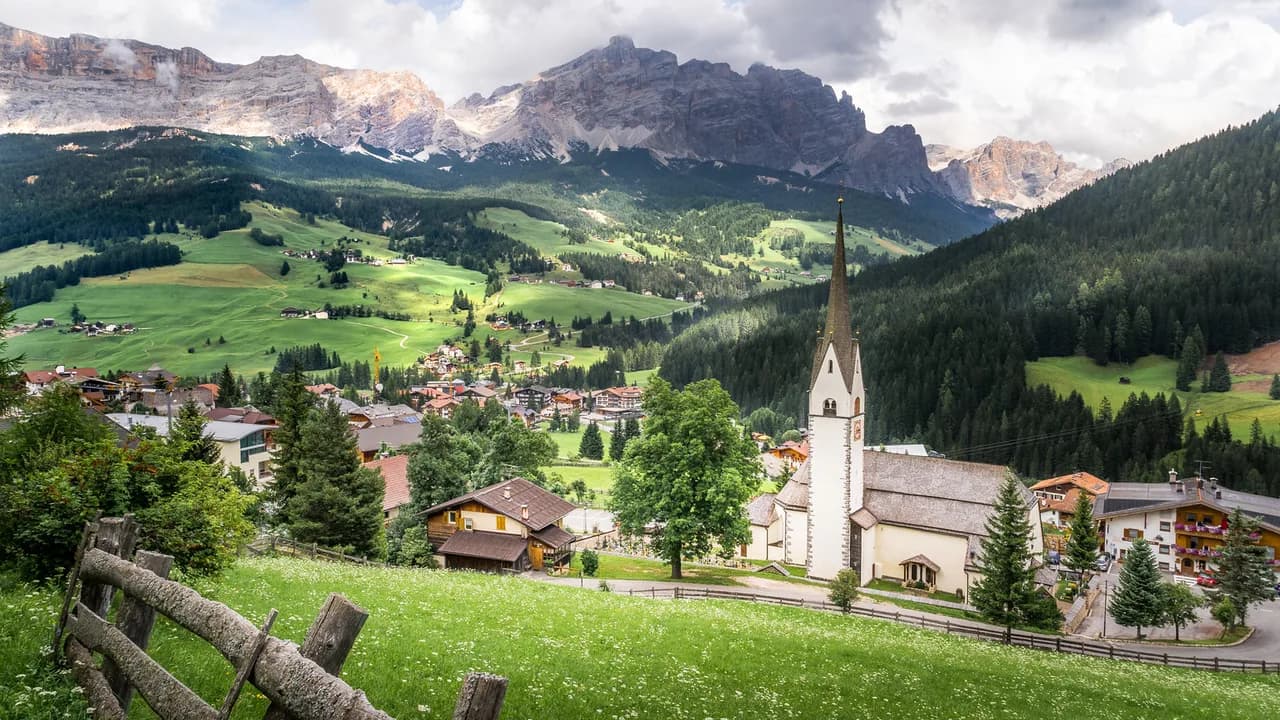
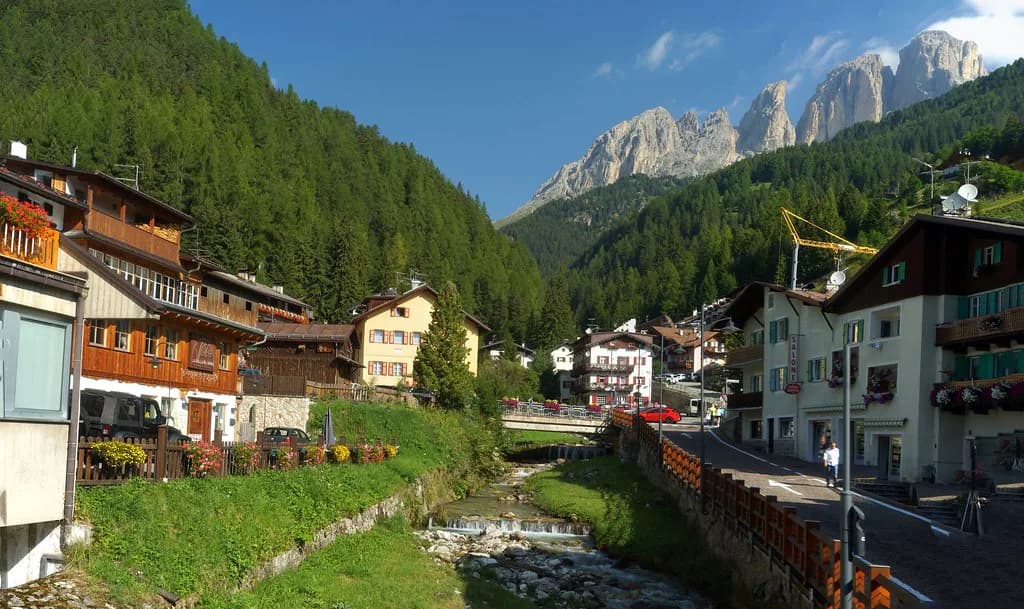
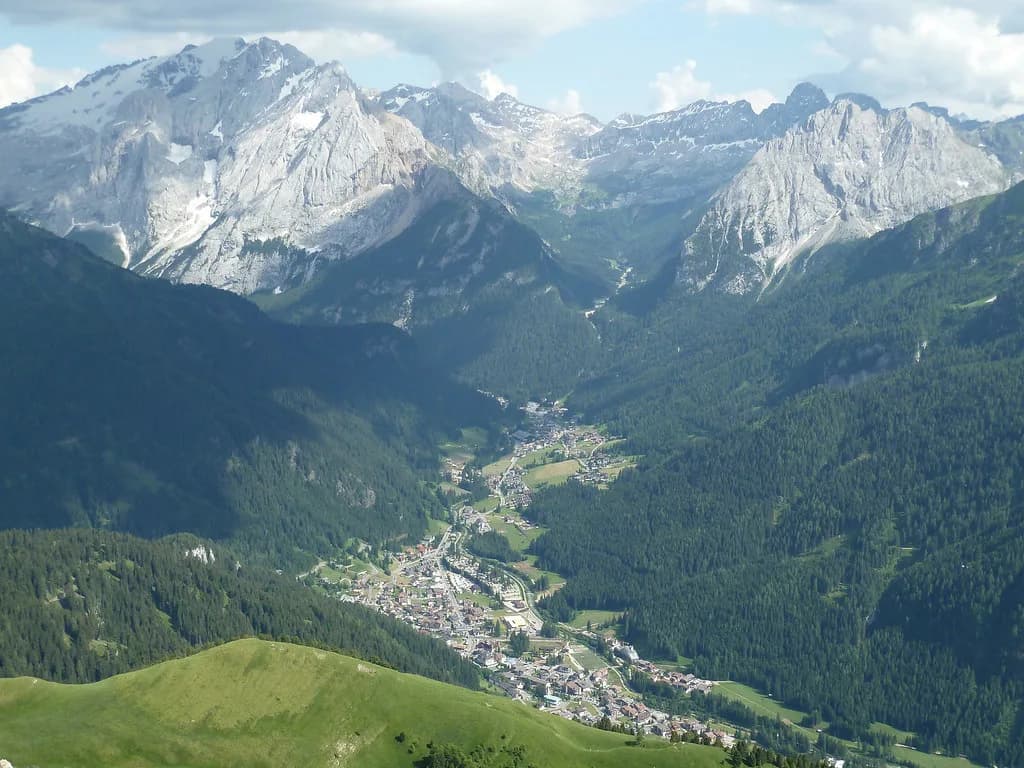
Val di Fassa sits in Trentino and is made up of several villages rather than one settlement: Canazei, Campitello, Mazzin, San Giovanni di Fassa, Soraga and Moena, according to the package operator Sunweb. Ultimate-Ski draws the same map slightly differently, placing Pozza and Vigo inside San Giovanni di Fassa and noting that Mazzin and Soraga have no pistes or lifts of their own but sit a short bus ride from villages that do. Knowing which village has its own lift base is the first practical filter when you compare accommodation areas.
The skiing itself is split into sectors with separate access points. Ultimate-Ski describes the main area as Belvedere-Col Rodella-Pordoi, reached by lift from either Campitello or Canazei, and a second sector, Buffaure-Ciampac, crossed from Canazei's outlying hamlets of Alba and Penia towards Pozza. Further sectors sit at Vigo di Fassa-Catinaccio, Moena-Alpe Lusia, Carezza and San Pellegrino-Falcade.
That structure has a direct consequence for trip planning: you cannot treat the valley as one continuous lift network from a single doorstep. Some sectors connect by lift to a village, others realistically need a bus or a car. Treat sector names as distinct units, because publishers group them differently and a single combined name can hide two separate access points.
The Opening Decision: Which Village You Sleep In Decides Which Lift You Ride First
Start with the sector you most want to ski, then choose the village that reaches it most simply. If the Sellaronda and the Belvedere-Col Rodella terrain are the priority, Canazei and Campitello are the natural bases, since Ultimate-Ski identifies the main area as lift-accessible from either. If you prefer a quieter sector, Alba or Pozza put you closer to the Buffaure-Ciampac side.
Villages without their own lifts are not a bad choice, but they change your routine. Mazzin and Soraga have no pistes or lifts of their own and depend on a short bus ride to a village that does, per Ultimate-Ski. That is workable for a week if you accept a commute at each end of the day, and less convenient if you like to ski back to your door.
Weather and timing can reshape this decision after you book. A scheduled winter season is conditional: an operator may plan an opening, but that does not promise that every lift, link or piste will run on your dates. Trentino's official bulletin publishes which lifts and pistes are actually open per sector, so check it close to departure rather than treating any published calendar as a guarantee.
As practical editorial advice, shortlist two bases rather than one: a first choice tied to your main sector and a fallback near a different access lift. That way, a change to which sectors are running does not strand your whole week in a village whose nearest lift is not operating.
Belvedere, Col Rodella and Pordoi from Canazei and Campitello: The Sellaronda Doorway
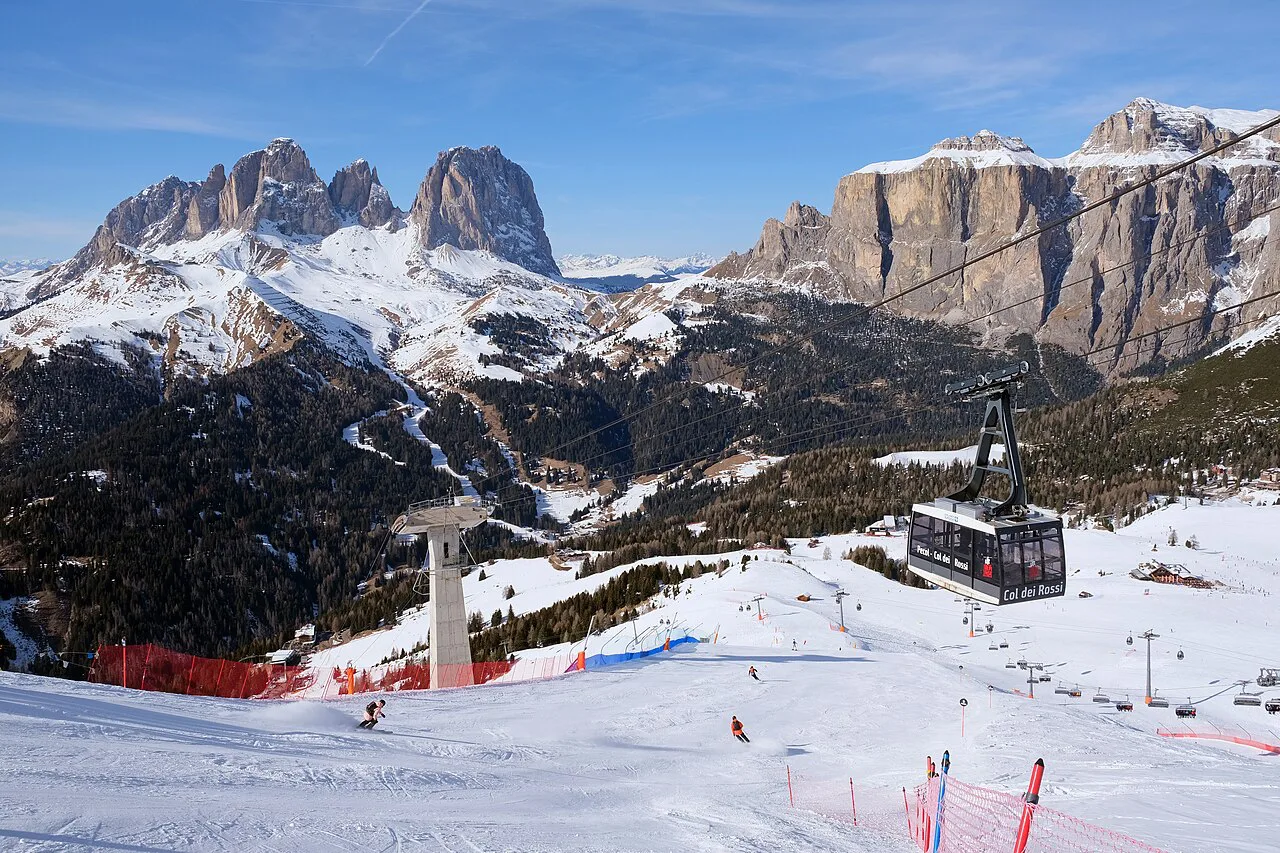
This is the sector most skiers picture when they read about Val di Fassa skiing, and it is the one that opens the Sellaronda. Ultimate-Ski describes Belvedere-Col Rodella-Pordoi as reachable by lift from Canazei or Campitello, and notes that it connects into the Sellaronda, a circuit that links Val di Fassa with Val Gardena, Arabba and Alta Badia. From Canazei, SnowTrex reports direct access to the Belvedere and Col Rodella areas.
The Sellaronda deserves realistic budgeting rather than optimistic scheduling. Sunweb describes the circuit as connecting four ski areas and taking roughly five to six hours to complete on skis or a snowboard. Treat that as a full-day commitment: it is a loop with lift rides, signposted direction and stops, not a side trip you bolt onto a normal morning.
High ground matters here, but read it carefully. Ultimate-Ski notes that the Sass Pordoi lift rises to around 2,950 metres, the valley's high point, while also stating that there are no pistes down from it, and that most Val di Fassa skiing consists of shorter runs below about 2,250 metres. The practical reading is that the lift gives access to high viewpoints and terrain, not a long descent back to the valley.
Piste totals for this sector differ by publisher and by product, so compare like with like. SnowTrex gives the Belvedere-Col Rodella-Ciampac-Buffaure grouping as 55 kilometres of piste with 35 lifts, while Sunweb's Val di Fassa offering lists 59 kilometres across the categories it covers. Neither number should be read as the whole valley's total.
Buffaure and Ciampac above Alba and Pozza: The Quieter Side of the Valley
Crossing the valley from Canazei's hamlets of Alba and Penia leads to the Buffaure-Ciampac sector, which Ultimate-Ski describes as stretching along the far side of the valley towards Pozza. It is a separate unit with its own access rather than an extension of the Belvedere lifts. For skiers based in Canazei, getting there involves crossing the valley rather than simply riding one lift from the village centre.
SnowTrex's lift/piste listing for Pozza di Fassa-Aloch-Buffaure describes the sector on its own terms, separate from any valley-wide count. The figures give a rough sense of scale: with around fourteen kilometres of piste across blue, red and black categories, this is a half-day to day area, not a Sellaronda-scale network.
The official Trentino bulletin lists Alba-Ciampac and Pozza di Fassa-Aloch-Buffaure as separate sectors, which matters when you check whether the lifts you want are running. If your plan depends on this side of the valley, look at those two entries individually; a single valley-wide status does not apply to every sector.
Vigo di Fassa, Pera and Ciampedie: Lower, Gentler Terrain and Its Own Access
Vigo di Fassa-Pera-Ciampedie is its own sector with its own lift access, listed by the Trentino bulletin with six lifts and fourteen kilometres of piste, weighted towards blue and red runs. That profile makes it a sensible target for newer skiers or anyone wanting a quieter, lower day away from the main circuit. It is not a satellite of the Canazei lifts, so plan it as a separate outing.
If you are based in Canazei, reaching Ciampedie means crossing the valley by bus or car rather than skiing there from your doorstep. That is a logistics decision as much as a terrain one, and it is the sort of day where a flexible plan helps: decide on the morning whether the transfer is worth it for the group.
Do not infer difficulty from a sector's name or from its reputation among other resorts. The published piste-category counts per sector are a more honest guide than a name, and even those use different denominators across publishers. Read the category split for the specific sector you intend to ski.
Moena, Alpe Lusia, Carezza and San Pellegrino: The Outlying Sectors and How You Reach Them
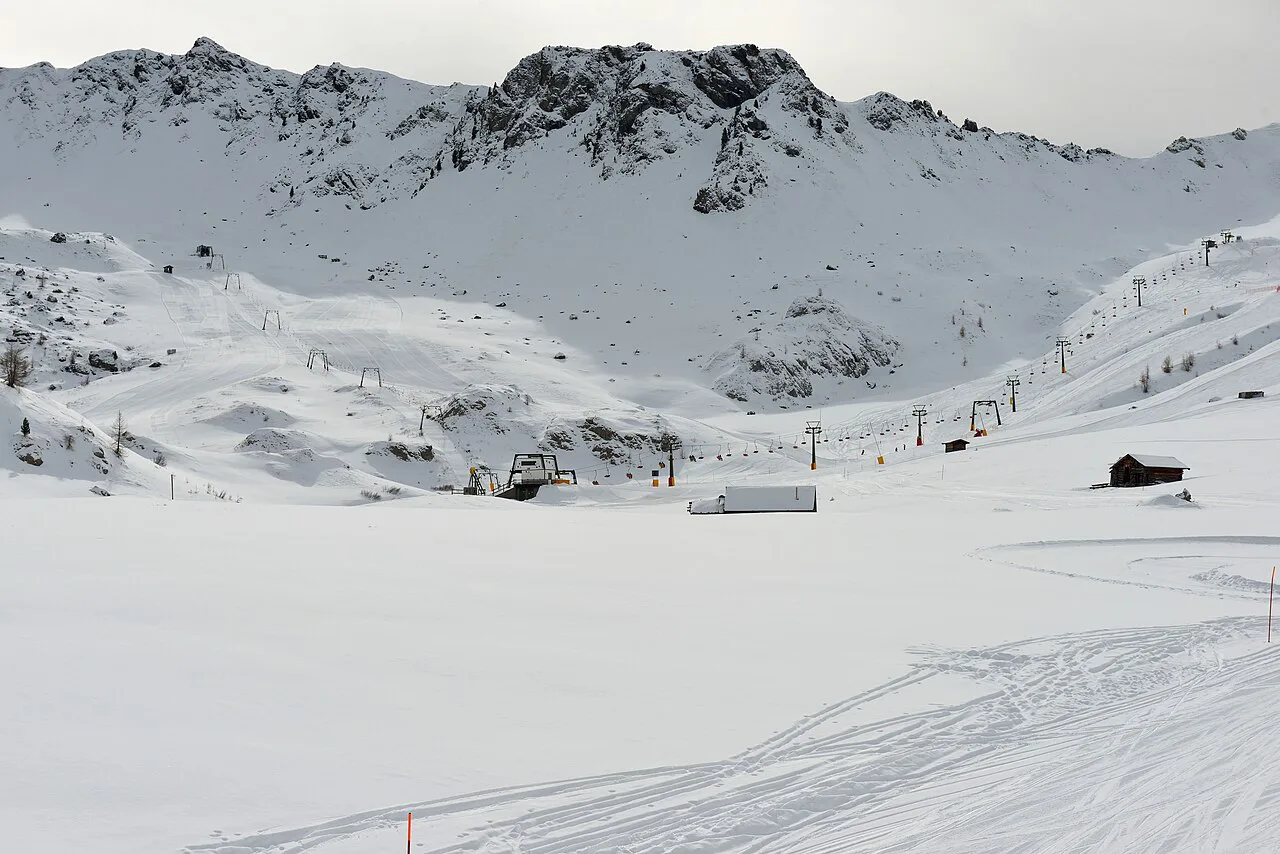
Beyond the core valley, Ultimate-Ski lists further sectors at Moena, Passo Costalunga for Carezza, and Passo San Pellegrino for San Pellegrino-Falcade, describing none of them as large but each offering at least half a day of skiing. They are best treated as commutes by car or bus rather than as extensions of a valley day.
The Trentino bulletin reflects that separation, publishing Moena-Alpe Lusia, Passo di Costalunga-Carezza and Passo San Pellegrino-Falcade as their own entries with their own lift and piste counts. San Pellegrino-Falcade, for example, is listed with 62 kilometres of piste and 15 lifts, a scale that makes it a destination in its own right for a day.
Carezza is the sector that matters most for pass choice, because SnowTrex states that the Val di Fassa-Carezza lift pass includes the areas around Alba, Canazei, Campitello, Carezza, Pozza di Fassa and Vigo di Fassa. If Carezza is on your list, the lower pass tier may cover you. If the Sellaronda and beyond are the point of the trip, the wider Dolomiti Superski tier is the one to compare.
Travelling between these outlying sectors is not covered by the lift system. Ultimate-Ski notes it is easy to commute by car or bus, which is a statement about feasibility rather than a timetable. Check local bus services and road conditions before building a day around a cross-valley transfer.
Val di Fassa-Carezza Pass versus Dolomiti Superski: What Each One Actually Covers
The lower tier is a valley-plus-Carezza product, and its boundary is documented. SnowTrex reports that the Val di Fassa-Carezza pass covers almost 110 kilometres of piste and 54 lifts between 1,182 and 2,485 metres, spanning Alba, Canazei, Campitello, Carezza, Pozza di Fassa and Vigo di Fassa. If you intend to ski mainly within those areas, this tier matches the terrain you will actually use.
The wider tier adds the connected Dolomites network and Sellaronda access. SnowTrex describes the Dolomiti Superski pass as adding 1,200 kilometres of piste and around 450 lifts across 12 ski areas for an extra charge, including direct Sellaronda access from Canazei. Sunweb gives the same headline figure of roughly 1,200 kilometres and about 450 lifts under one pass, with the Sellaronda linking four areas. Attribute these numbers rather than treating them as fixed valley facts.
The decision rule is simple in principle: buy the tier that covers the days you will actually ski. A skier who stays in the valley and takes one rest day rarely needs the wider network; a skier who wants two or three days circulating the Sella massif and visiting neighbouring valleys does. Pass products, inclusions and any upgrade rules change between seasons, so confirm the current boundary with the lift company before purchase rather than relying on a package description.
A common planning error is buying the larger pass and then never leaving the home sector, or buying the smaller one and discovering the intended circuit crosses the boundary. Check the sector coverage list against your planned days before you pay, and confirm whether any intended link requires a supplement.
Beginner Provision Across the Valley: Kinderland Zones, Blue Terrain and Where First-Timers Learn
Documented beginner provision is concentrated in specific, named places rather than spread evenly across the valley. Sunweb refers to a Kinderland in Canazei as a fun park for ages four and up where children can take their first steps on the snow, and to a children's play area at Ciampac above Alba. These are physical facilities at fixed locations, so a base near one of them changes the first-timer experience.
Beginner-friendly terrain also appears in the sector listings. The Trentino bulletin records seven of Vigo di Fassa-Pera-Ciampedie's fourteen kilometres as blue, and SnowTrex notes beginner and family provision in the Belvedere area with a Kinderland where newcomers take first steps on skis. Both are concrete, checkable statements about specific sectors rather than valley-wide promises.
Resist comparing published beginner percentages between sources. Ultimate-Ski gives 22 percent beginner terrain for its ski-area definition, while Sunweb lists 13 blue kilometres out of 59 for its Val di Fassa offering, and SnowTrex publishes per-sector blue counts. These use different denominators and different products, so they cannot be ranked against one another. Use the per-sector blue figures when you are choosing where a nervous skier should spend the morning.
What no source settles is how a particular ski school groups beginners, where classes meet, or how quickly a learner progresses. Those are operator decisions. Ask the school directly about group sizes, the language of instruction, and the meeting point for the level you book.
Ski Schools and Equipment Hire: What Varies Between Villages and What to Confirm
Ski schools and hire shops exist across the valley's villages, and their presence is well documented, but the operational details are not uniform. A school based in Canazei will typically meet and teach in the sectors around Canazei, while one based in Pozza or Vigo will run its groups on that side of the valley. That single fact often determines which village you should book.
The sources do not establish lesson meeting points, group sizes, instructor qualifications or hire stock, and reputation is not evidence. Ask the school or shop directly which sectors it uses, whether lessons run in the sector you intend to ski, and what the cancellation terms are. Frame those as questions rather than assumptions, because the answers change between operators and seasons.
Equipping a group is a logistics task worth starting early. Establish how many sets of skis, boots or boards you need, whether the shop can fit everyone in one appointment, and whether equipment can be collected in one village and returned in another if your plans change. Confirm any deposit or cancellation terms at the point of booking rather than on arrival.
Prices for lessons, hire and passes are not published here because current rates cannot be verified for the coming season. Check the lift company's own pass pages and the ski school's and hire shop's own materials for the season you are travelling, and compare what is included rather than headline numbers alone.
Cross-Valley Logistics: Ski Buses, Driving and Realistic Day Plans
Because the sectors are spread around a large valley, moving between them is a daily planning task. Ultimate-Ski notes the sectors are scattered and that commuting by car or bus is the practical way to reach those without lift access from your base. Build transfer time into any day that crosses the valley, especially on a short trip.
Buses connect the villages, and Sunweb mentions a ski bus linking them, but service patterns, routes and timetables vary by season and are not fixed facts for the coming winter. Ask your accommodation or the local tourist office for the current service, timetable and how to buy the relevant ticket. Do not plan a tight connection around a published frequency you have not confirmed for your dates.
Driving gives more flexibility but introduces its own constraints. Parking at base stations, road conditions and any local restrictions are not settled by the sources here, so check locally before relying on a car for a cross-valley day. If your group includes drivers who also want a full ski day, weigh that against the bus option.
A realistic day plan usually means one sector, not three. Pick the sector that matches the group's level, ride it properly, and save cross-valley transfers for the days when the whole group agrees on the objective. This is editorial advice rather than operator policy, but it avoids the common trap of spending a ski day in transit.
Terrain Character and Honest Limits: Where Intermediates Thrive and What Experts Should Expect
The terrain is intermediate-led. Ultimate-Ski gives an intermediate share of 68 percent for its ski-area definition to 22 percent beginner and 10 percent advanced, and describes very few steep pistes. Sunweb's listing for its Val di Fassa offering shows 40 red kilometres out of 59 total, with 13 blue and six black. Different denominators again, but both point the same way: red terrain dominates.
The area is not built for skiers seeking sustained steep challenges. Ultimate-Ski states plainly that there are few challenging pistes and that overall freeride potential is limited, noting the Dolomites' jagged peaks are often impossible to ski. That is a limitation to plan around, not a flaw to be argued with.
Expert terrain does exist in places. SnowTrex records seven black kilometres within the Belvedere-Col Rodella-Ciampac-Buffaure grouping and three black kilometres at Pozza di Fassa-Aloch-Buffaure, while the Trentino bulletin counts two black kilometres at Alba-Ciampac and ten at Carezza. Those numbers describe individual sectors, and they are modest.
The honest summary for a strong skier is this: come for the circuit, the scenery and the volume of linked intermediate terrain, not for a week of steep descents. If steep challenges are the main objective, compare the valley against areas known for that profile before committing a week.
Matching a Week to the Terrain: First Visit versus Return Trip
For a first visit, weight the week towards getting oriented. Spend a day or two on the sector you can reach from your base without a transfer, then use a clear day for the Sellaronda if the group is comfortable with a full circuit and the right pass. Keep one flexible day for a quieter sector such as Ciampedie or Buffaure-Ciampac.
For a return trip, the calculus shifts towards covering ground. Consider basing where a different sector is on the doorstep than last time, and build in two Sellaronda days in opposite directions if the circuit appeals, since it can be ridden either way. Give yourself the larger pass tier for those days and check what it includes before buying.
Either way, structure the week around one main objective per day rather than trying to sample everything. The valley's sectors are close enough to reach, but not close enough to combine casually, and transfers consume the best hours of the morning.
Booking Sequence: Base, Pass Tier, School and Hire in the Order That Avoids Mistakes
Book in this order: base village first, then pass tier, then school and hire. Base choice determines which sector you will ski most, which in turn determines whether the lower-tier valley pass or the wider Dolomiti Superski pass is the right size. Choosing the pass first often means paying for coverage you will not use, or discovering your intended circuit crosses the boundary.
When comparing the pass tiers, work from the published coverage lists rather than the headline kilometre figures. SnowTrex states that the local pass covers Alba, Canazei, Campitello, Carezza, Pozza di Fassa and Vigo di Fassa, while the wider pass adds the 12-area network and Sellaronda access. Check the current season's inclusions with the lift company, because product boundaries and upgrade rules can change.
Only after the base and pass are settled should you approach ski schools and hire. At that point you know which sector you will ski, so you can ask a school whether its lessons run there and book hire near the lift you will actually use. Confirm meeting points, cancellation terms and equipment pickup details in writing at the time of booking.
Finally, treat the season as conditional rather than guaranteed. Operators publish planned dates, but the Trentino bulletin is the place to see which lifts and pistes are actually running per sector, and it should be checked close to travel. Build in a fallback sector so a partial opening does not spoil the week.
Plan Your Val di Fassa Ski Trip
Val di Fassa skiing works best when you treat the valley as what it is: several villages, several separately accessed sectors and two pass tiers. Choose the village that reaches your priority sector, then size the pass to the days you will actually ski, and confirm the current inclusions with the lift company before you pay.
For a comparison point on how another Italian resort organises its terrain and passes, the bormio skiing guide and the cervinia skiing guide follow the same decision-first approach. Both are useful if you are still weighing where to spend a week in the Alps.
Book school and hire last, once you know your sector and level, and check seasonal operation close to departure rather than assuming a published calendar will hold. That sequence keeps the expensive decisions reversible for as long as possible.
Explore more Val di Fassa guides
Frequently Asked Questions
Which village in Val di Fassa is best for a first ski trip?
There is no single answer, because the best base depends on the sector you want to ski. Canazei and Campitello give lift access to the Belvedere-Col Rodella area and the Sellaronda connection, while Alba and Pozza sit closer to the quieter Buffaure-Ciampac side of the valley. If beginners are in the group, note that a children's fun park operates in Canazei and a children's play area sits at Ciampac above Alba, so a base near one of those changes the week for newcomers. Villages such as Mazzin and Soraga have no pistes or lifts of their own and rely on a short bus ride to a village that does.
Do you need the Dolomiti Superski pass to ski Val di Fassa?
No. The valley has its own pass tier covering its sectors plus Carezza, documented as covering areas around Alba, Canazei, Campitello, Carezza, Pozza di Fassa and Vigo di Fassa with almost 110 kilometres of piste and 54 lifts. The wider Dolomiti Superski pass adds the connected Dolomites network, commonly cited as around 1,200 kilometres of piste and about 450 lifts across 12 ski areas, and it is the tier that gives Sellaronda access from Canazei. Buy the tier that matches the days you will actually ski; check current inclusions and any supplement with the lift company before purchase.
Can you ski the Sellaronda from Canazei?
Yes. The main Belvedere-Col Rodella area is reached by lift from Canazei or Campitello and connects into the Sellaronda, the circuit around the Sella massif that links Val di Fassa with Val Gardena, Arabba and Alta Badia. One source describes the circuit as roughly five to six hours of skiing or snowboarding, so plan it as a full day rather than an add-on. It sits within the wider Dolomiti Superski coverage rather than the local pass, so check the pass tier and any supplement before you set out.
Is Val di Fassa good for beginners?
Documented beginner provision exists in specific places rather than uniformly across the valley. There is a children's fun park in Canazei for ages four and up and a children's play area at Ciampac above Alba, and the Vigo di Fassa-Pera-Ciampedie sector lists seven of its fourteen kilometres as blue. Published beginner percentages use different denominators across sources and should not be ranked against one another. Ask the ski school you book about group sizes and meeting points, since those are operator decisions rather than published facts.
Are the Val di Fassa ski sectors connected by lift?
Partly. Some sectors connect by lift from particular villages, while others sit across the valley and realistically need a bus or car. The Belvedere-Col Rodella area is reachable by lift from Canazei or Campitello and connects to the Sellaronda, whereas Buffaure-Ciampac, Vigo di Fassa-Catinaccio, Moena-Alpe Lusia, Carezza and San Pellegrino-Falcade are separate units with their own access. Check current bus services and local conditions before planning a day that depends on crossing the valley.
Is Val di Fassa suitable for expert skiers?
It is intermediate-led rather than expert-focused. One source rates the terrain at 68 percent intermediate against 10 percent advanced and describes very few steep pistes with limited freeride potential. Black terrain exists in individual sectors, but the counts are modest: seven black kilometres in the Belvedere-Col Rodella-Ciampac-Buffaure grouping, three at Pozza di Fassa-Aloch-Buffaure, two at Alba-Ciampac and ten at Carezza. Come for the linked intermediate terrain and the circuit rather than for a week of sustained steep descents.
Sources
Useful notes for your next ski trip
Optional updates to our Alpine resort guides.
You might also like
Continue reading
More guides you'll find useful