Canazei Skiing Guide: Where to Ski in the Dolomites
Plan a Canazei ski trip: how Belvedere and Col Rodella link up, Sellaronda access, ski passes, lesson options and where to hire gear in the village.
On this page
Canazei sits at 1,460 m in the upper Val di Fassa, with lifts leaving the village centre and a second access point a short bus ride away at Campitello. That pairing is what makes it such a strong base: you are not committing to one hill for the week, but to a connected high-altitude circuit that reaches the Sellaronda in either direction.
The skiing suits confident intermediates best. Most runs are red, the vertical is generous, and the reward for a bit of mileage is the circuit itself rather than a single trophy descent. Beginners are well served down in the valley, and advanced skiers get the black pitches, the timed course and the freeride options off Sass Pordoi.
Where Canazei Sits in Val di Fassa
The village spreads along the valley floor at 1,460 m, with the Belvedere gondola rising directly from the centre towards Pecol. Campitello, a few kilometres down the valley, has its own access lift to Col Rodella. Treat these as two doors into the same ski area rather than two separate resorts.
Where you sleep changes your morning. Staying in Canazei puts the Belvedere gondola, the ski school office and the hire shops within walking distance. Staying in Campitello shortens the approach to Col Rodella and the 3-Tre run but means a bus or drive for the Belvedere side. The valley ski bus connects the main lift stations, so a car is optional rather than essential.
The Belvedere Side: Canazei, Pecol and Col dei Rossi
From Canazei, the Canazei–Pecol gondola climbs to Pecol at 1,926 m, where the Pecol–Col dei Rossi cable car continues to the ridge at 2,382 m. A separate cable car from Alba di Canazei also reaches Col dei Rossi, giving the village a second way up when the main gondola is busy.
Above Pecol the terrain fans out. The Toè gondola and the Pian Frataces–Gherdecia gondola serve the sunny middle slopes, the Kristiania and Sass Becé chairlifts open up steeper pitches, and the Belvedere and Lezuo chairs cover the long, wide runs back towards the valley. This is the sector to learn first because it is compact and every lift leads somewhere useful.
Lift hours on this side typically run from around 08:30 to 16:30–16:45, with the higher chairs starting slightly later. Check the day's times at the valley station board at Canazei-Pecol or Campitello-Col Rodella, and plan your last descent on the Belvedere side with a margin.
Col Rodella and the 3S Lift from Campitello
The Campitello–Col Rodella 3S cable car is the headline piece of infrastructure on this side. It runs 18 cabins of 30 places and covers the climb from Campitello in about six minutes, putting you at the top of the Col Rodella sector with the Sellaronda circuit on the doorstep.
Practically, the 3S changes your timing. It absorbs queues that used to build at the old lift, so a later start from Campitello is now realistic. The trade-off is that everyone else knows this too: aim to be on the first few cabins on peak weekends, or ski the Belvedere side early and cross over after the initial rush.
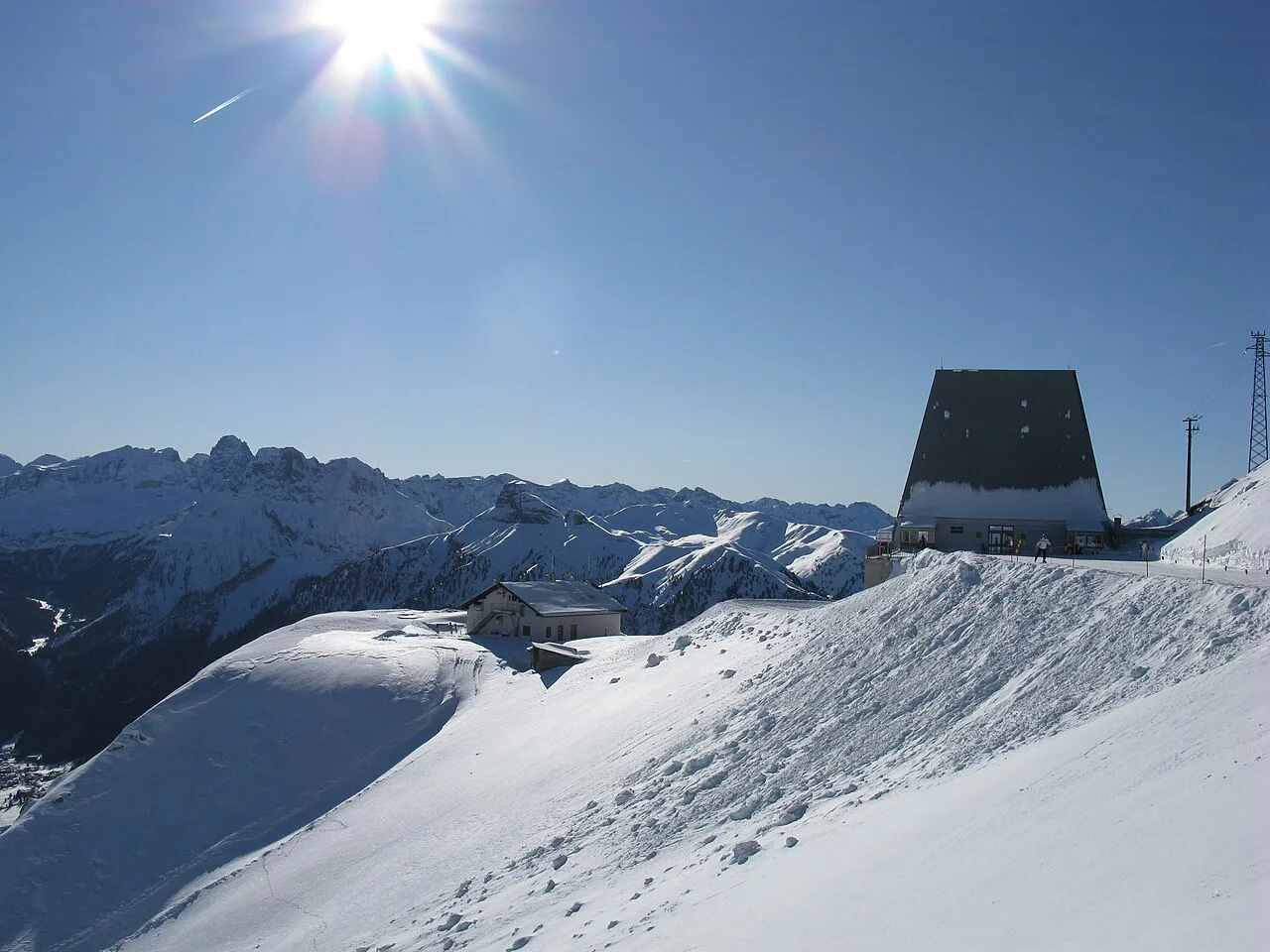
From Col Rodella at 2,485 m you can drop towards Passo Sella, head across to the Belvedere side, or start a full circuit. The ridge is exposed, so fog and wind can close the upper lifts while the valley runs stay open. Keep a flexible plan for the day rather than a fixed route.
Named Runs Worth Planning Around
The 3-Tre is the run most skiers come for: 3,303 m from Col Rodella down to Pian de Frataces, a long, sustained descent that suits strong intermediates and above. The Diego on the Belvedere side is the signature black at 1,359 m, steep enough to demand real edge control.
Between the headline runs, the strength of the area is its red cruising. The Sass Becé, Vernel and Kristiania runs are wide, sunny and groomed for mileage, while the Variante Super Red and the Rodella–Des Alpes chair give you repeat laps without crossing the whole area.
If you want a benchmark for your skiing, the Ski FunArena above Canazei adds a timed course, a Funcross and freestyle lines including jumps and tunnels. It sits alongside the ordinary pistes, so you can dip in for a run and carry on with the day.
Piste Figures and How the Area Adds Up
The Val di Fassa Ski Tour Panorama counts 70 km of slopes and 38 lifts across its linked sectors. That figure covers the Panorama circuit rather than every Dolomiti Superski kilometre, so read it as the local network you can ski without leaving the valley.
Most of the local runs are classified red, with a smaller share of blue and black. The lift map marks difficulty with coloured circles: blue for easy, red for medium, black for difficult. That mix explains why Canazei rewards a week of skiing rather than a weekend: you can progress across the sectors without repeating the same descent.
Sellaronda Access: Which Direction to Ski
The Sellaronda runs in two directions: clockwise, signed orange, and anti-clockwise, signed green. Both pass through the Canazei–Belvedere and Col Rodella sectors, so you can pick a direction based on which side you want to finish on.
The green anti-clockwise route from Col Rodella tends to suit skiers who want the longer, gentler traverses first, while orange rewards confident skiers with quicker transitions. Whichever you pick, start early: the circuit needs a full day, and the last lifts close mid-afternoon.
If a full circuit feels too much, the area has shorter alternatives. The Panorama circuit runs in yellow and red variants within Val di Fassa, there is a pink Sass Becé Tour, and the Rosengarten Ronda covers the Catinaccio side. These give you the flavour of a tour without committing to the entire Sellaronda.
Beginner Zones and First-Day Decisions
Beginners should start in the valley rather than riding high immediately. The ski schools of Canazei and Campitello run dedicated teaching areas with easy lifts and gentle gradients, and the Col de Lin drag lift serves a short school slope near the valley floor. Learn to turn there before taking the gondola up.
Once you can link turns, the Belvedere side is the friendlier introduction to altitude: wide, groomed runs and straightforward lift access. Save Col Rodella and the Sellaronda for later in the trip, when tired legs are less of a factor.
Intermediate and Advanced Terrain
Intermediates will spend most of the week on the red runs around Belvedere and Col Rodella, linking the Toè, Gherdecia and Sass Becé lifts into long top-to-bottom descents. The terrain is forgiving but not flat, so you can build confidence without boredom.
Advanced skiers have the Diego and the other black pitches, the timed course and the Ski FunArena for something more playful. The bigger draw is the off-piste above Passo Pordoi, where guided freeride days reach terrain that is not marked on the piste map.
The Sass Pordoi cable car climbs from Passo Pordoi at 2,239 m to the Rifugio Maria at 2,950 m, the so-called Terrace of the Dolomites. It runs for non-skiers too, so mixed groups can split up and meet at the top for the view.
Sass Pordoi and Guided Freeride
Sass Pordoi is the launch point for the valley's serious off-piste. The terrain is high, glaciated in places and needs a guide, which the local ski schools and alpine guide services arrange. Book a guide early in the trip, because weather windows close quickly in the Dolomites.
The cable car also gives non-skiers access to the summit, and the Lift & Walk ticket combines the main sightseeing lifts for a day off the skis. That makes Sass Pordoi a good option for a mixed-ability group or a rest day.
Ski Pass Options: Which Product to Buy
Val di Fassa sells four pass products. The Val di Fassa/Carezza pass covers the local sectors from Carezza to Canazei, Alpe Lusia/San Pellegrino covers the eastern valleys, Valle Silver spans 380 km across Trentino and South Tyrol, and Dolomiti Superski covers 12 ski areas across the Dolomites.
For a week based in Canazei with a Sellaronda day and maybe an excursion to Alta Badia, the Dolomiti Superski pass is the straightforward choice. If you plan to stay local and ski Belvedere and Col Rodella most days, the Val di Fassa/Carezza pass is cheaper and simpler, and you can add a day pass elsewhere when you need it.
The official ski pass page publishes current daily, multi-day and seasonal prices, along with early-season SuperPremière and spring Springdays offers that bundle free days. Check the page for the season you are travelling, since the products and dates change each winter. A fuller comparison of coverage and duration sits in the Canazei ski pass guide.
Where to Buy Passes and What to Sort Before You Travel
Passes can be bought at the valley ticket offices and online through the official Dolomiti Superski and Val di Fassa channels, and many hotels and apartments can issue them as part of a booking. Buying online before you travel avoids the morning queue at the gondola.
Decide on your pass length before you arrive. A six-day pass bought in advance usually costs less per day than daily tickets, and it lets you start skiing the moment you reach the lift. If you are unsure about the weather, a shorter pass plus a day extension is the safer structure.
Ski Schools in Canazei and Campitello
The Scuola Sci Canazei Marmolada is the main local school, based at Strèda del Piz 18 in Canazei, with group courses, private lessons and dedicated children's programmes. It also runs a rental shop at the same address, which is convenient if you want lessons and gear in one stop.
Group lessons are the budget option and give you a steady rhythm across the week, while private lessons suit a specific technique problem or a short trip. Maison Sport lists private lessons in Canazei from €112 for two hours and €341 for a full day, with a maximum of six participants; those are its own published rates, so compare them with the local school's own prices before booking.
Book lessons before you travel in peak weeks, especially for children's courses, which fill first. Confirm the meeting point and start time with the school directly, as these vary by course and season. More detail on formats and booking sits in the Canazei ski lessons guide.
Ski Hire and Bootfitting in Canazei
Peak Sport Adventure on Strèda de Pareda 83 sits close to the Belvedere gondola and offers online booking with a 10% discount, plus delivery to hotels and apartments. The shop is open daily from 8:00 to 19:00 and runs bootfitting, repairs and a wintersteiger workshop for edge and wax work.
Northland Ski & Snowboard, bookable through SKiSET, is at Strada del Piz 15, roughly a hundred metres from the Belvedere lift. It hires alpine skis, snowboards, boots, children's gear and snowshoes, and offers heated lockers and a drying service, which matters if you are skiing in wet snow.
Locker pricing is one of the few costs you can compare directly: Peak Sport Adventure charges €2.50 per person per night for guests renting equipment and €4 per night for those with their own skis. Pre-booking online is usually cheaper than walking in, and it secures the boot size you need in busy weeks. Full comparisons sit in the Canazei Ski hire guide.
Season Timing and Opening Dates
The official Belvedere–Col Rodella page lists the 2026/27 season from 4 December 2026 to 4 April 2027. Individual lifts come and go within that window, with some opening later in December and closing earlier in April, so treat the season dates as the outer envelope.
The Dolomiti Superski SuperPremière offer adds free days at the start of the season, and Springdays does the same in the closing weeks. Those windows are the best value if you can travel outside school holidays, but confirm the exact dates and conditions on the official ski pass page before booking.
Getting There and Getting Around
Canazei sits on the SS48 through the Val di Fassa, reachable by road from Bolzano and Trento, with the nearest large airports outside the valley. Most visitors arrive by car or by train to Bolzano or Trento followed by a bus or transfer, so plan the last leg while you are arranging your flights.
Once in resort, the valley ski bus connects Canazei, Campitello, Alba and the main lift stations. The bus is a paid service, and timetables are published online, so check the schedule for your accommodation before deciding whether you need a car.
A Three-Day Plan That Uses the Area Well
Day one: stay on the Belvedere side. Ride the Canazei–Pecol gondola, warm up on the wide reds around Toè and Gherdecia, and finish with the Sass Becé chair. This gives you your bearings without the pressure of a circuit.
Day two: cross to Col Rodella via the 3S lift from Campitello, or ski over from Belvedere. Ski the 3-Tre and the Col Rodella reds, then explore the Passo Sella and Sass Pordoi area. If you want the view without the skiing, ride the Sass Pordoi cable car to the Rifugio Maria.
Day three: ski the Sellaronda in whichever direction suits your legs, starting early and packing a lunch stop into the circuit. Keep the final day free for a repeat of your favourite sector or a lesson, rather than chaining a third big day.
Plan Your Canazei Ski Trip
Canazei rewards a bit of planning: choose which side of the valley you sleep on, pick a pass that matches how much you want to travel, and book lessons and hire before you arrive. The skiing itself is generous, with two access points, a compact local network and the Sellaronda within a day's reach.
If you are comparing Dolomites bases, Canazei stands out for direct Sellaronda access and a genuinely varied local area. Resorts such as La Thuile in the Aosta Valley trade that circuit for a quieter, more self-contained ski domain, so match the resort to the trip you actually want. For a closer look at that alternative, see our La Thuile ski guide.
Explore more Canazei guides
Frequently Asked Questions
How is skiing in Canazei?
Canazei offers two valley access points, Canazei and Campitello, that feed one connected high-altitude circuit above the village. The local network is mostly red runs, with direct access to the Sellaronda in either direction, so it suits confident intermediates and strong skiers best. Beginners are better served by the valley school slopes before heading up.
Is Canazei good for beginners?
Yes, provided you start in the right place. The Canazei and Campitello ski schools run dedicated teaching areas with easy lifts and gentle gradients near the valley floor, and the Belvedere side has wide groomed runs once you can link turns. Save Col Rodella and the Sellaronda for later in the trip.
Do you need a Dolomiti Superski pass to ski the Sellaronda from Canazei?
A Dolomiti Superski pass gives you the widest coverage and is the simplest choice if you plan to ski the full Sellaronda circuit. The Val di Fassa/Carezza pass covers the local sectors and is cheaper if you stay close to Canazei most days, but check its coverage carefully before relying on it for a full circuit.
How many kilometres of piste are there in Canazei?
The Val di Fassa Ski Tour Panorama counts 70 km of slopes and 38 lifts across its linked sectors, which is the local network rather than the whole Dolomiti Superski area. Most of those runs are classified red, with a smaller share of blue and black.
What is the closest airport to Canazei?
Canazei sits on the SS48 in the Val di Fassa, and most visitors arrive by car or by train to Bolzano or Trento followed by a bus or transfer. Check the resort's own travel information for the recommended connection from your departure point, as transfer options vary by season.
Where is the best place to stay for skiing in Canazei?
Staying in Canazei puts the Belvedere gondola, ski school and hire shops within walking distance of most accommodation. Staying in Campitello shortens the approach to Col Rodella and the 3S lift, but means a bus or drive for the Belvedere side. The valley ski bus connects the main lift stations.
Sources
Useful notes for your next ski trip
Optional updates to our Alpine resort guides.
You might also like
Continue reading
More guides you'll find useful