Corvara Skiing Guide: Choose Slopes, Passes & Trip Plans
Plan a Corvara skiing trip with honest detail on Alta Badia's sectors, pass boundaries and beginner provision, plus how the village links to the Sellaronda circuit.
On this page
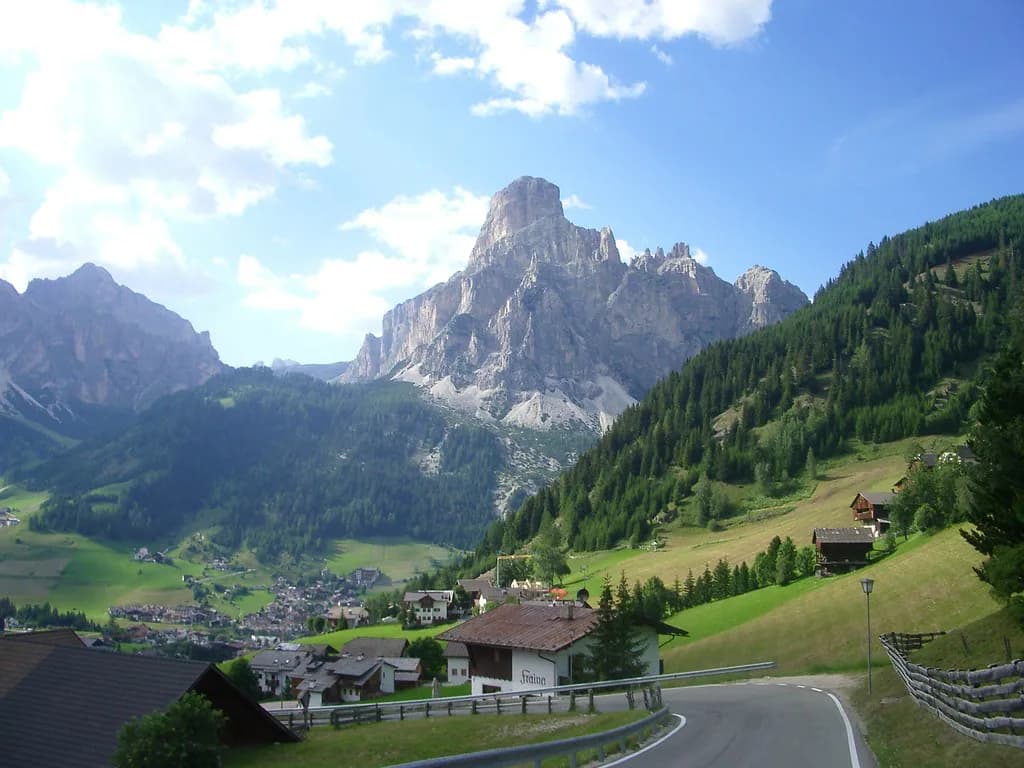
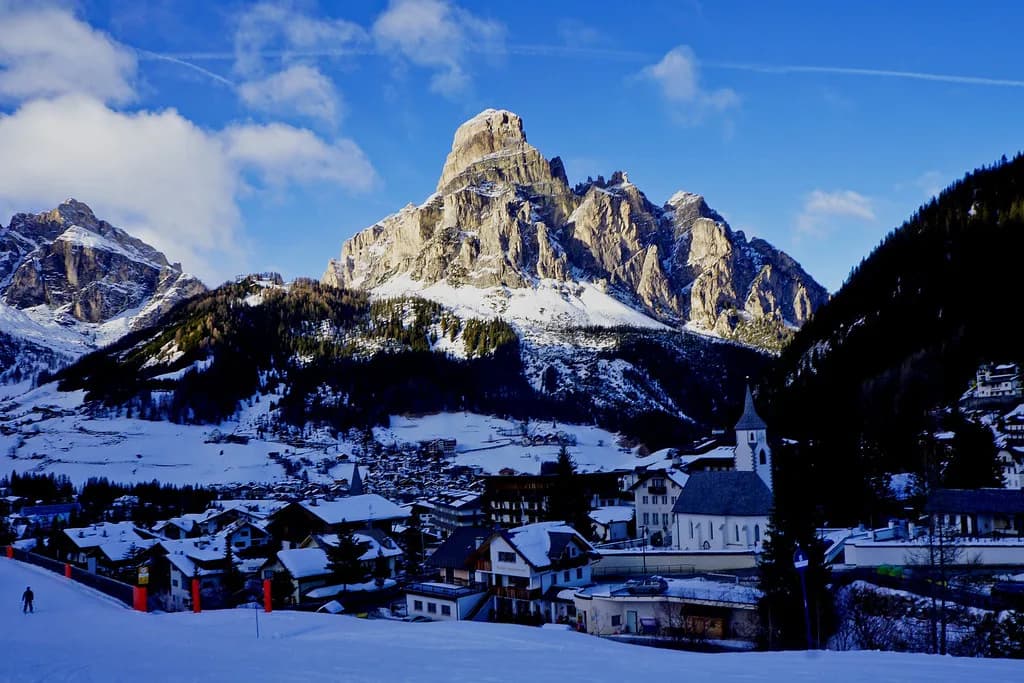
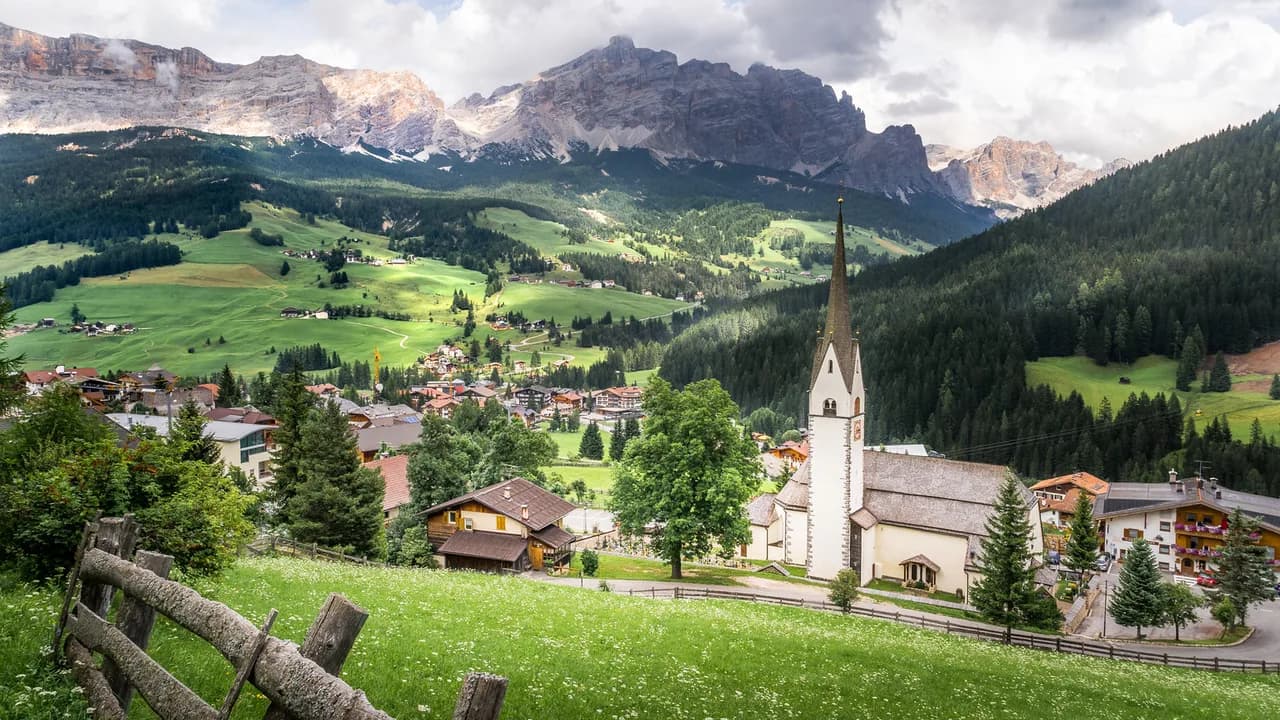
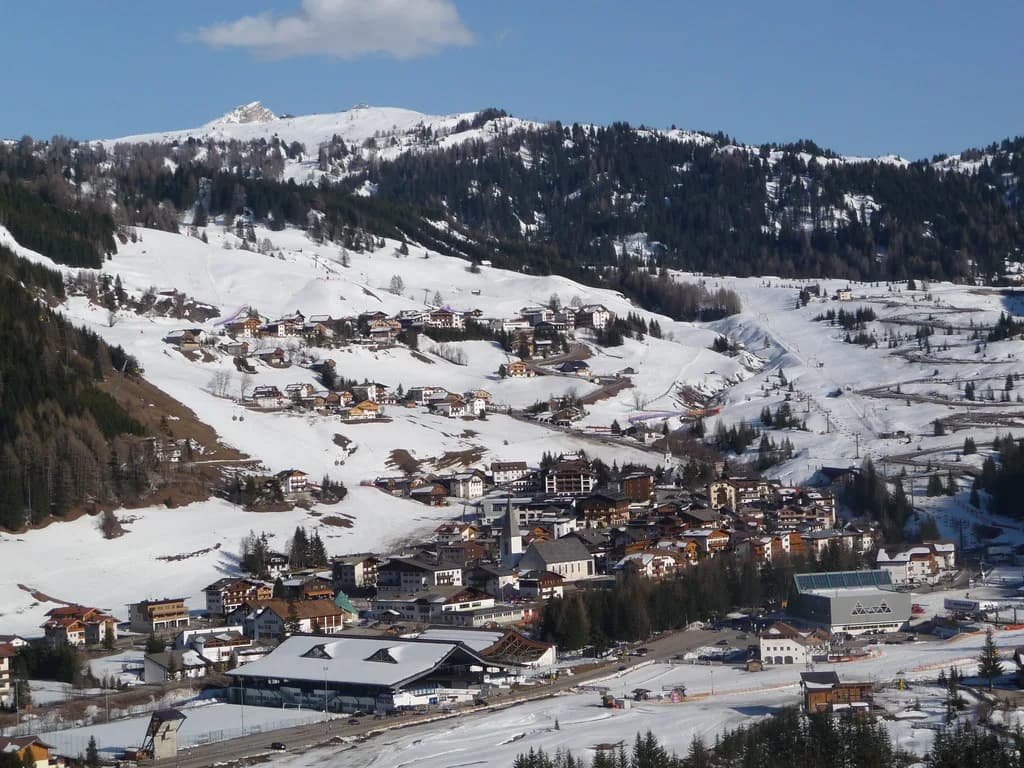
Planning Corvara skiing starts with one structural fact: the village sits inside the wider Alta Badia ski area rather than owning its own terrain. Corvara occupies a basin at 1,568 m under the Sassongher, and the lifts above it feed into a shared network that also serves Colfosco, La Villa, San Cassiano and Badia. That distinction shapes everything from which pass you buy to how you choose a base.
Alta Badia reports 54 lifts and 130 piste kilometres, split into 74 km of easy blue runs, 47 km of medium red and 9 km of black. The area runs from about 1,300 m to 2,800 m and is scheduled to operate from 4 December 2026 to 4 April 2027, though every opening remains conditional on conditions and operations.
The decisions that actually matter for your trip are the base village, the pass scope, and whether you commit a day to the Sellaronda circuit. Local lift and piste figures come from the Alta Badia ski area page, while the wider network numbers sit with Dolomiti Superski. Get those boundaries straight first and the rest of the planning falls into place.
Why Corvara Is the Base to Weigh First
Corvara is the largest of the Alta Badia villages and has the most concentrated lift access, which makes it a natural first candidate. The Boé and Col Alto lifts both rise from close to the village, giving quick entry to the Alta Badia network and to the Sellaronda. If your priority is minimising time between breakfast and the first run, this is the base to measure the others against.
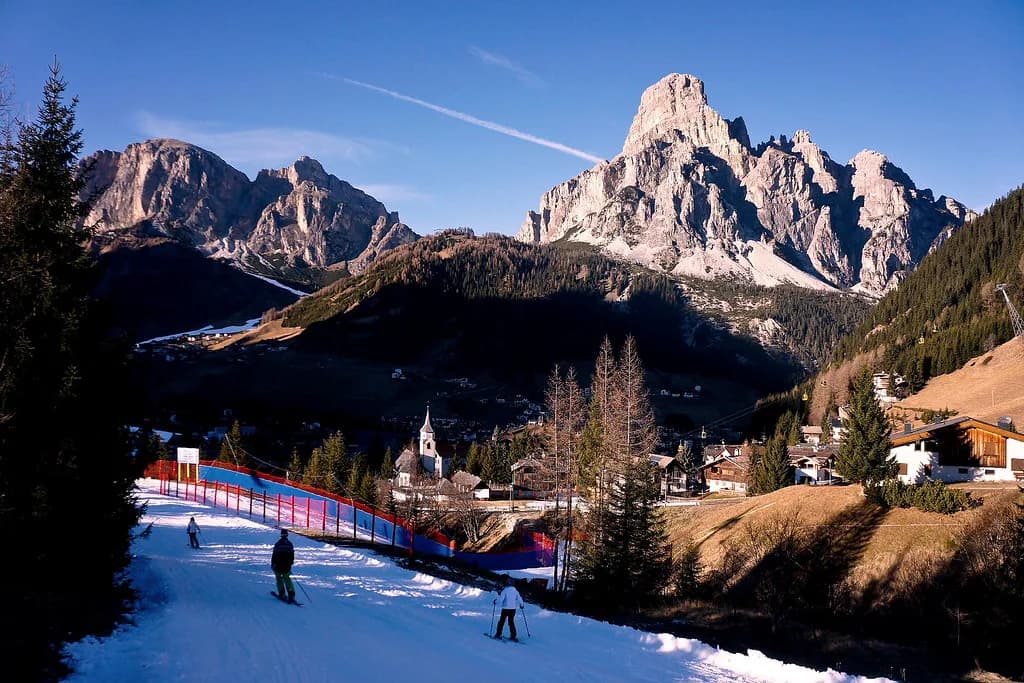
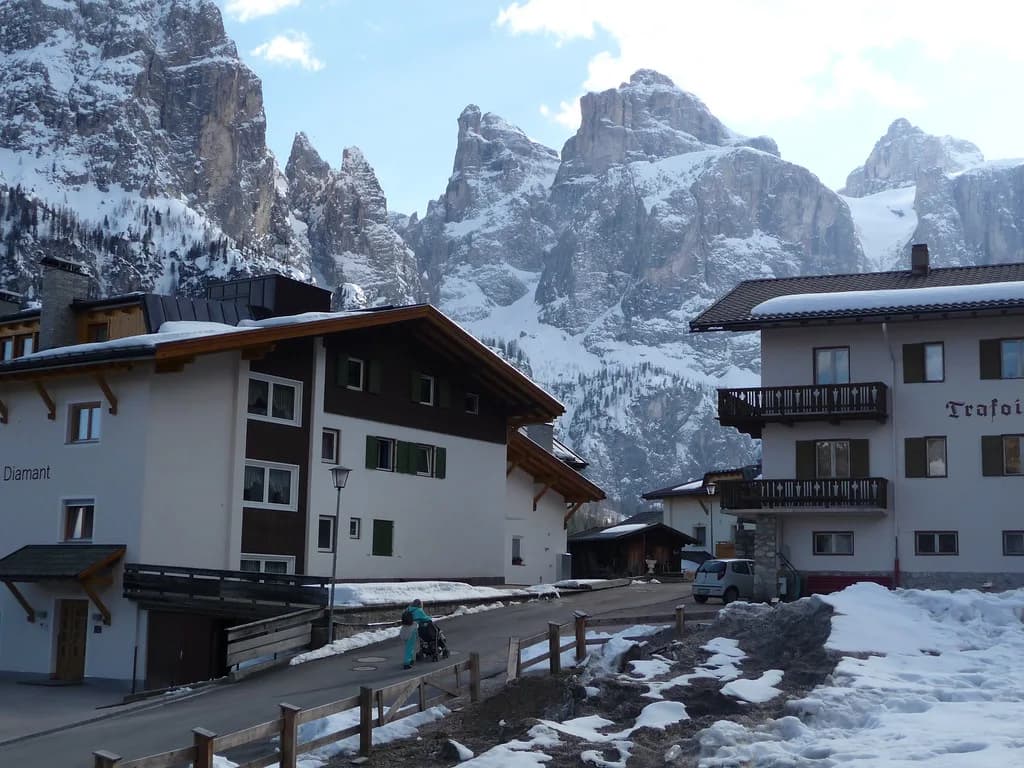
Being in a basin means Corvara is not the sunniest spot in the area in midwinter, and its position puts it closer to the Arabba and Sellaronda side than to the La Villa or San Cassiano sectors. That is a genuine trade-off rather than a flaw. La Villa sits near the Piz La Ila lift and the Gran Risa run, while San Cassiano puts you closer to the Pralongiá plateau and Piz Sorega. Keep the layout straight with the corvara ski map before you settle on a base.
The village has been a tourism centre since the Col Alto lift appeared after the Second World War, and its altitude of 1,568 m places it just below the middle of the ski area's 1,300–2,800 m range. That means most skiing above the village is accessed by lift rather than by skiing back to your accommodation. Plan your day around the base station you leave from and return to, and keep a copy of the layout to hand.
What Corvara Skiing Actually Covers
When people search for Corvara skiing they often mean the Alta Badia ski area, and the two are not the same thing. The piste networks of Corvara, Colfosco, La Villa, San Cassiano and Badia are interconnected and covered by a single Alta Badia ski pass. Buying a lift ticket for Corvara alone is not a separate product, so you will be choosing between the local area pass and the wider Dolomiti Superski pass.
That shared structure is why the choice of base village changes convenience rather than access. A skier staying in Corvara can reach the Gardenaccia side above La Villa or the La Crusc slopes above Badia on the same ticket, provided the connections are running. The condition is worth stating plainly: links between sectors can close in bad weather or when snow cover is thin, so a route you plan in the morning may need a different return in the afternoon.
Alta Badia also reports direct on-ski access to roughly 500 piste kilometres from its slopes, which is distinct from the full 1,200 km Dolomiti Superski network. Both figures are operator statements about what is connected rather than a promise about any given day. Check the live lift and piste status before committing to a long traverse.
Sector by Sector: Pralongiá, Col Alto, Gardenaccia and La Crusc
The Pralongiá high plateau stretches between Corvara, La Villa and San Cassiano and is reached by interconnected lifts. It is the panoramic heart of the area, with views towards the Marmolada and across to the Austrian Alps, and the terrain there is generally wide and forgiving. The Piz Sorega lift above San Cassiano is the usual entry point if you want to start on the plateau rather than climb to it.
Col Alto sits directly above Corvara and serves the village side of the local network, with the Vallon-Boé black run among the descents in the Corvara sector. This is where many Corvara-based skiers start, and the nearby Movimënt fun slopes and the parallel slalom at Pre dai Corf add non-piste options. The Movimënt facilities have their own published opening windows, so check those separately if they are part of your plan.
The Gardenaccia side lifts skiers towards the rock walls of Sas dla Crusc and the Conturines group, with slopes that Alta Badia describes as suitable for novices and experienced skiers alike. Terrain descriptions come from the resort rather than from an independent assessment, so treat suitability as a broad guide and judge from the piste map. La Crusc, reached from Badia, is one of the most panoramic tours in the area and includes a WinterPark with a ski cross track and a kids fun line.
The Val Stella Alpina above Colfosco is a smaller, sunnier basin reached by cable car from the village floor. It holds around 5.5 km of descents described as suited to families and leisurely skiers, with views towards the Val Mezdí and the Sella group. If you are based in Corvara and want an easier day, it is a short transfer across the valley rather than a full traverse.
Reading the Terrain Mix
The published split of 74 km blue, 47 km red and 9 km black tells you that Alta Badia is weighted towards easier and intermediate skiing. Blue runs make up more than half the total, which is unusual for a major Dolomites area and is the main reason it suits mixed-ability groups. The black component is small and concentrated, so confident skiers will spend most of their mileage on reds.
For a week-long trip, that balance means you are unlikely to exhaust the terrain in the first few days even without leaving the local pass. The red runs around the Sella massif and the connections towards Arabba and Val Gardena extend the red mileage considerably, while the blues on the Pralongiá plateau and in Val Stella Alpina give an alternative on tired legs. Plan your week by mixing a plateau day, a Sellaronda day and a local village day rather than treating every day the same.
The nine black kilometres are worth respecting. Gran Risa at La Villa and Vallon-Boé at Corvara are both steep, sustained and often hard-packed, which is exactly why they hold race and advanced skiing reputations. If your group includes a skier who is not comfortable on steep, icy pitches, plan those as a separate morning rather than a route everyone joins.
Pass Boundaries: Alta Badia Versus Dolomiti Superski
The Alta Badia pass covers 130 piste kilometres and 54 lifts across Corvara, Colfosco, La Villa, San Cassiano and Badia, including the Campolongo, Falzarego and Gardena passes. The Dolomiti Superski pass extends to the full network of around 1,200 km and 450 lifts. The decision is not simply larger versus smaller, because the local pass already reaches the Sellaronda and the connecting valleys in several directions.
If your trip is centred on Corvara with occasional trips to Arabba or Val Gardena, the local area pass is likely to cover what you ski. If you intend to spend days in Val Gardena, Cortina or the Civetta area, or you want the freedom to follow the First World War ski tour, the wider pass makes sense. The same pass-scope question shapes a stay on the other side of the massif, so compare notes in this Canazei ski guide when weighing a Sellaronda base. One official page frames the choice around a 500 km direct-on-ski figure from Alta Badia, so it is worth reading the pass pages before deciding which boundary you actually need.
Dolomiti Superski also participates in the Ikon Pass, which gives holders up to seven days of access across more than 40 international destinations including the Dolomiti Superski carousel. If you already hold an Ikon Pass, check how many days apply and how they are redeemed before buying a separate ticket. The exact terms sit with Ikon Pass and Dolomiti Superski, not with the resort village, so confirm them directly rather than relying on a general description.
The Sellaronda Decision
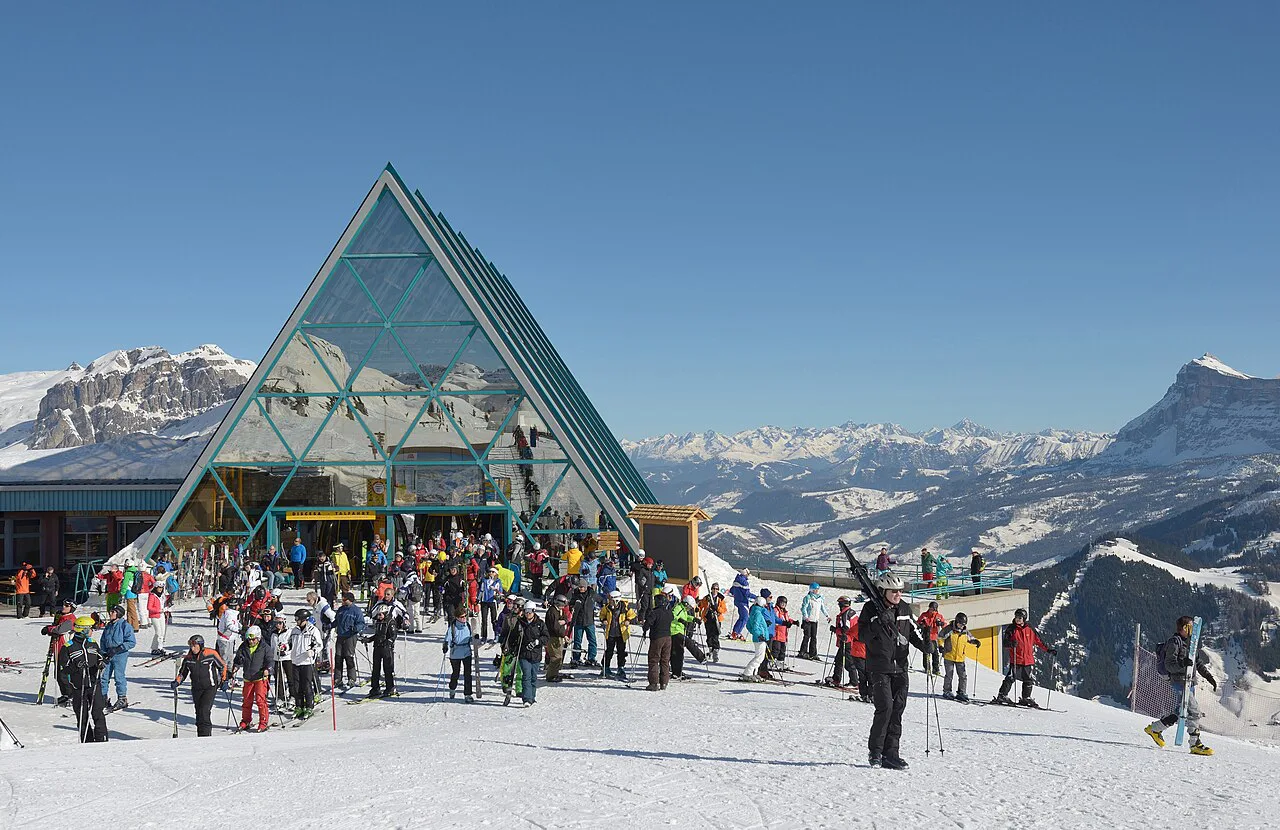
The Sellaronda is a roughly 39.6 km circuit around the Sella massif, taking about four to four and a half hours in either direction. The counterclockwise version runs from Alta Badia into Val Gardena and returns via Arabba, while the clockwise version goes to Arabba first and returns over the Gardena Pass. The official circuit lengths and times come from the Dolomiti Superski map listings rather than from promotional descriptions.
This is a day you plan rather than a run you add to an afternoon. You need an early start, the full circuit open, and a group that moves at a consistent pace, because a missed connection late in the day can leave you dependent on a bus or taxi. The circuit is rated moderate in the official listings, which reflects the sustained mileage and the number of lifts more than any single difficult pitch.
For skiers based in Corvara, the Sellaronda is genuinely accessible and can be repeated in both directions on different days without a huge amount of logistics. The longer First World War ski tour is a different proposition at around 80 km and eight hours, and it is rated difficult. Treat these as separate objectives and do not assume that completing one prepares you for the other.
Beginner and Improver Provision
Alta Badia publishes a structured package for children aged three to five that bundles several half-day ski lessons, rental equipment, a lift pass and accommodation for the child in the same lodging as the accompanying adult. The package is designed around first days on snow and is administered by the local ski schools, so the exact content, lesson times and age rules should be checked with your chosen ski school or the resort at the time of booking.
For first-time adult skiers, the local terrain offers broad beginner zones near several base stations, including the Gardenaccia side and the Val Stella Alpina basin, both described by Alta Badia as suitable for novices and families. Access to those zones from Corvara normally involves a lift ride or a short bus transfer. Independent beginner provision beyond the published packages is not something the sources describe in detail, so ask the ski school directly about adult beginner group courses.
The ratio of blue to red terrain is the strongest practical argument for bringing beginners here. More than half the marked pistes are graded blue, which gives new skiers room to progress without immediately facing steep pitches. That said, the descents to the village floor can be firmer than the plateau runs, so ask an instructor which return route suits the level of the group before heading down.
Lessons and Equipment Hire
Alta Badia has ski, snowboard and cross-country schools, and the Corvara-Ladinia Ski & Snowboard School states that its instructors include former local athletes and national team coaches. That is a school claim rather than an independent assessment, so treat it as context rather than a guarantee of a particular lesson experience. Schools publish their own course structures, which is where the specifics of group sizes and level groupings sit.
Corvara's ski and snowboard school publishes lesson categories by age band, including private lessons for children from three and group courses for teenagers and adults, along with telemark and snowboarding options. It also runs themed experiences such as sunrise tours and a racing programme. These offerings change between seasons, so the Corvara-Ladinia Ski & Snowboard School booking page is the reliable place to check what is running.
Equipment hire is available through the ski school and through independent shops in the villages, so you can sort out a set as part of your first morning or the evening before. The comparison that matters most is whether the shop is near your base station and whether you can collect gear the evening before your first lesson. Ask about boot fitting and storage lockers rather than guessing a package name tells you what is included. Check corvara ski hire options against your base station before you commit.
Getting Around Without a Car
Alta Badia operates regular buses and ski buses from the villages to the lift base stations, and notes that in many cases you step off the bus and are effectively on the slopes. The network is designed so that you can leave the car at your accommodation and still reach the skiing. Timetables vary by season and by route, so check the current connections for your dates.
The South Tyrol Guest Pass, which is issued through participating accommodation, gives access to the whole public transport network of South Tyrol. If your lodging does not provide one, tickets can be bought online or on the bus. The pass is issued by accommodation providers rather than by the ski area, so ask your host before you arrive whether you will receive one.
There is also a ski bus link from Alta Badia to the Piculin base station, from which the Plan de Corones lifts can be reached without using a car. This is a genuine alternative for a day trip to a different ski area, but it depends on the service running. Check the connection timetable on the day you intend to travel rather than planning around your recollection of last season's schedule.
Pass Purchase and Logistics
Ski pass offices operate in Corvara, Colfosco, La Villa, San Cassiano and Badia, and the operator states that they are open every day of the week from December. La Villa and Badia offices publish specific opening windows, so check those if you are arriving early or late in the season. Buying online is also possible, and the operator advertises a 5% discount for one-day and multi-day passes purchased no later than two days before use.
Online purchases generate a QR code that can be used to collect a My Dolomiti Card from the pick-up boxes at the ski pass offices. If you already hold the card, you can load a pass from home and go straight to the lifts, skipping the cash desk. The card itself is reusable and personal, which Alta Badia presents as a sustainability benefit as well as a convenience.
A newer option, SmartPass, turns a smartphone into the lift pass. Exact prices, product tiers and family rates are not published in the pages reviewed here, so use the Alta Badia skipass price calculator and the official pass pages to get current figures rather than working from second-hand estimates. Discount windows and card rules are the kind of detail that changes between seasons.
Matching Village to Trip
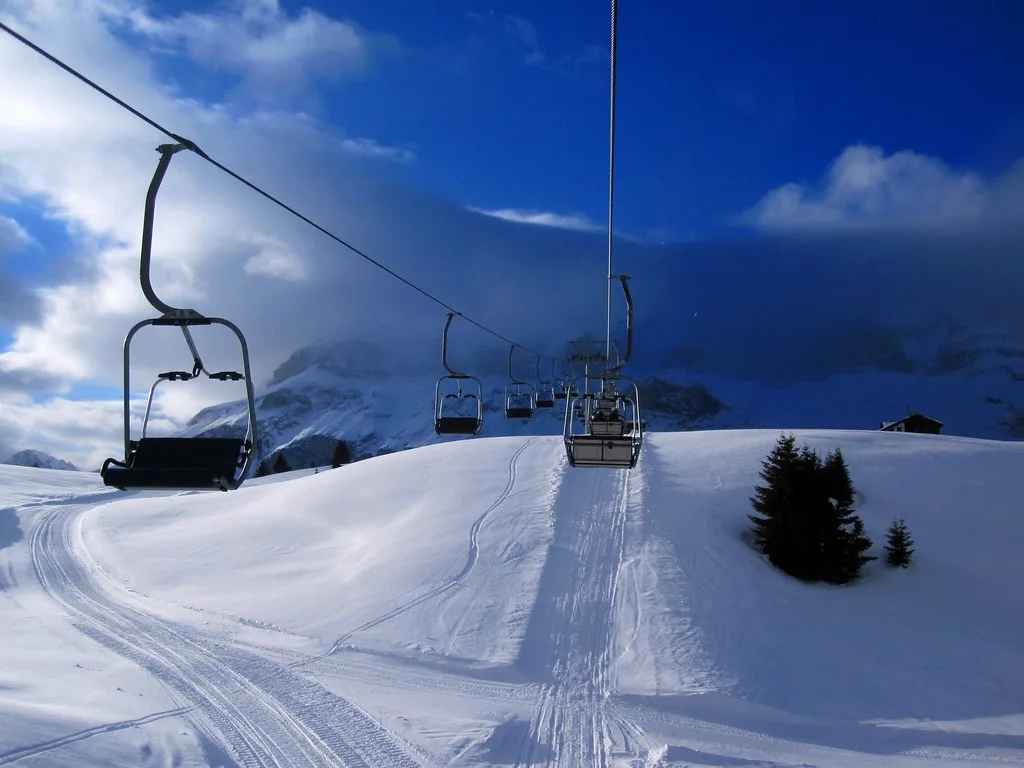
Corvara suits skiers who want the widest choice of lifts from the village and quick access to the Sellaronda, and who do not mind a basin location. Colfosco is quieter and closer to the Sella group, with the Val Stella Alpina basin on its doorstep, which appeals to families and to skiers who prefer a smaller base. La Villa puts you near the Piz La Ila lift and the Gran Risa run, which is a strong argument for confident skiers.
San Cassiano is well placed for the Pralongiá plateau and the Piz Sorega lift, giving easier access to the wide open terrain above the tree line. Badia, further west, is the entry point for the La Crusc area and is generally the quietest of the villages. None of these bases is inconvenient for the others, because the ski area is interconnected, but the difference shows in how long it takes to reach the terrain you ski most.
Choosing a base is therefore a question of which sectors you expect to ski repeatedly rather than which village is objectively best. A group that spends most of its time on the Pralongiá plateau will feel the distance from Corvara, while a group focused on the Sellaronda and the Arabba side will find Corvara more efficient. Work out your priorities first, then match the village to them.
A Practical Planning Sequence
Start by fixing the pass scope, because it determines what you can reach and therefore how you divide your days. If your skiing will stay within Alta Badia and the Sellaronda, the local area pass is the sensible baseline; if you plan to range across the wider Dolomiti Superski network, budget for the larger pass. Decide this before you book lessons, since a lesson programme that moves around the area may require the broader ticket.
Book lessons and hire early, particularly for children's courses and peak weeks, because group places in the popular age bands fill quickly. Confirm the meeting point, the lesson times and whether equipment is included at the time of booking rather than guessing from a package name. If you are travelling with beginners, ask which sectors the school uses for first lessons so you can match your accommodation to the right base station.
Block the Sellaronda day deliberately, ideally mid-trip once you have your ski legs and a sense of the lift system. Give yourself an early start, check that the circuit is open, and keep a contingency for a bus or taxi return. Schedule a lighter local day after it, because the circuit is a sustained day rather than a morning outing.
Finally, plan your non-ski movement before you arrive. Confirm whether your accommodation issues a South Tyrol Guest Pass, check the ski bus routes and timetables for your base village, and note the pass office opening windows if you intend to buy on arrival. These details are small individually but they determine how smoothly the first morning goes.
What Remains Conditional
The scheduled season runs from 4 December 2026 to 4 April 2027, but a published season is not a promise that every lift, link or piste will be open on any given day. Weather, snow cover, wind and operational decisions all affect what runs, and the resort publishes live status rather than guaranteeing outcomes. Plan around the schedule and check the current situation on the morning you intend to travel.
Snowmaking and nightly grooming are reported operator practices across the area, and the resort describes a fleet of more than 90 snowcats preparing the pistes each night. These practices support consistency but they do not constitute a guarantee of snow conditions or of any particular piste being open. Historic snow statistics tell you what has happened before, not what will happen during your stay.
The links between sectors deserve particular attention when you plan a long route. A Sellaronda circuit or a traverse to Plan de Corones depends on connections that can close independently of the main lifts. Build flexibility into those days and carry a backup plan that does not rely on a single return route.
Plan Your Visit
Corvara works well as a base because it puts a large interconnected ski area on the doorstep while remaining close to the Sellaronda and the Arabba side. The trade-off is the basin position and the distance from the Pralongiá plateau and La Villa sectors. If your group will ski mostly on wide blue and red terrain, the village location matters less than you might expect.
Decide the pass boundary first, then the base village, then the lesson bookings, and treat the Sellaronda as a planned day rather than an add-on. Confirm prices through the official Alta Badia ski pass calculator, check the live status before any long route, and keep the conditional nature of season dates and lift openings in mind throughout.
Explore more Corvara guides
Frequently Asked Questions
Is Corvara a good ski resort?
Corvara is a village base within the Alta Badia ski area rather than a self-contained resort. The area reports 54 lifts and 130 piste kilometres, with more than half of the runs graded blue, which suits mixed-ability groups. The basin location means it is not the sunniest spot in midwinter, and some sectors require a lift or bus transfer to reach.
Which ski pass do I need for Corvara?
The Alta Badia pass covers 130 piste kilometres and 54 lifts across Corvara, Colfosco, La Villa, San Cassiano and Badia, and it gives access to the Sellaronda. The wider Dolomiti Superski pass extends to around 1,200 km and 450 lifts across the network. Decide between them based on whether you plan to ski beyond the local area.
Can beginners ski in Corvara?
Yes, the terrain mix is weighted towards easier skiing, with 74 km of blue runs out of 130 km. The Gardenaccia slopes and the Val Stella Alpina basin are described as suitable for novices and families. For children aged three to five, Alta Badia publishes a structured all-inclusive package; check the exact content and age rules with the ski school at booking.
How long does the Sellaronda take from Corvara?
The Sellaronda is roughly 39.6 km and takes about four to four and a half hours in either direction, according to Dolomiti Superski circuit listings. It is rated moderate and should be treated as a planned day with an early start. Check that the full circuit is open before setting out, and keep a contingency for the return.
Do I need a car in Corvara?
Regular buses and ski buses run from the Alta Badia villages to the lift base stations, so a car is not essential. The South Tyrol Guest Pass, issued through participating accommodation, covers the regional public transport network. A ski bus also connects Alta Badia to the Piculin base station for Plan de Corones, though timetables should be checked for your travel dates.
How do I buy a ski pass in Corvara?
Ski pass offices operate in Corvara, Colfosco, La Villa, San Cassiano and Badia, open daily from December. Passes can also be bought online, with a discount advertised for purchases made at least two days before use. A price calculator for current rates and products is published online.
Sources
Useful notes for your next ski trip
Optional updates to our Alpine resort guides.
You might also like
Continue reading
More guides you'll find useful