Courchevel Skiing: Villages, Passes and Ski Area Guide
Courchevel skiing explained: the five villages, the Courchevel-only and 3 Vallées pass boundary, beginner zones and where to buy and collect a pass.
On this page
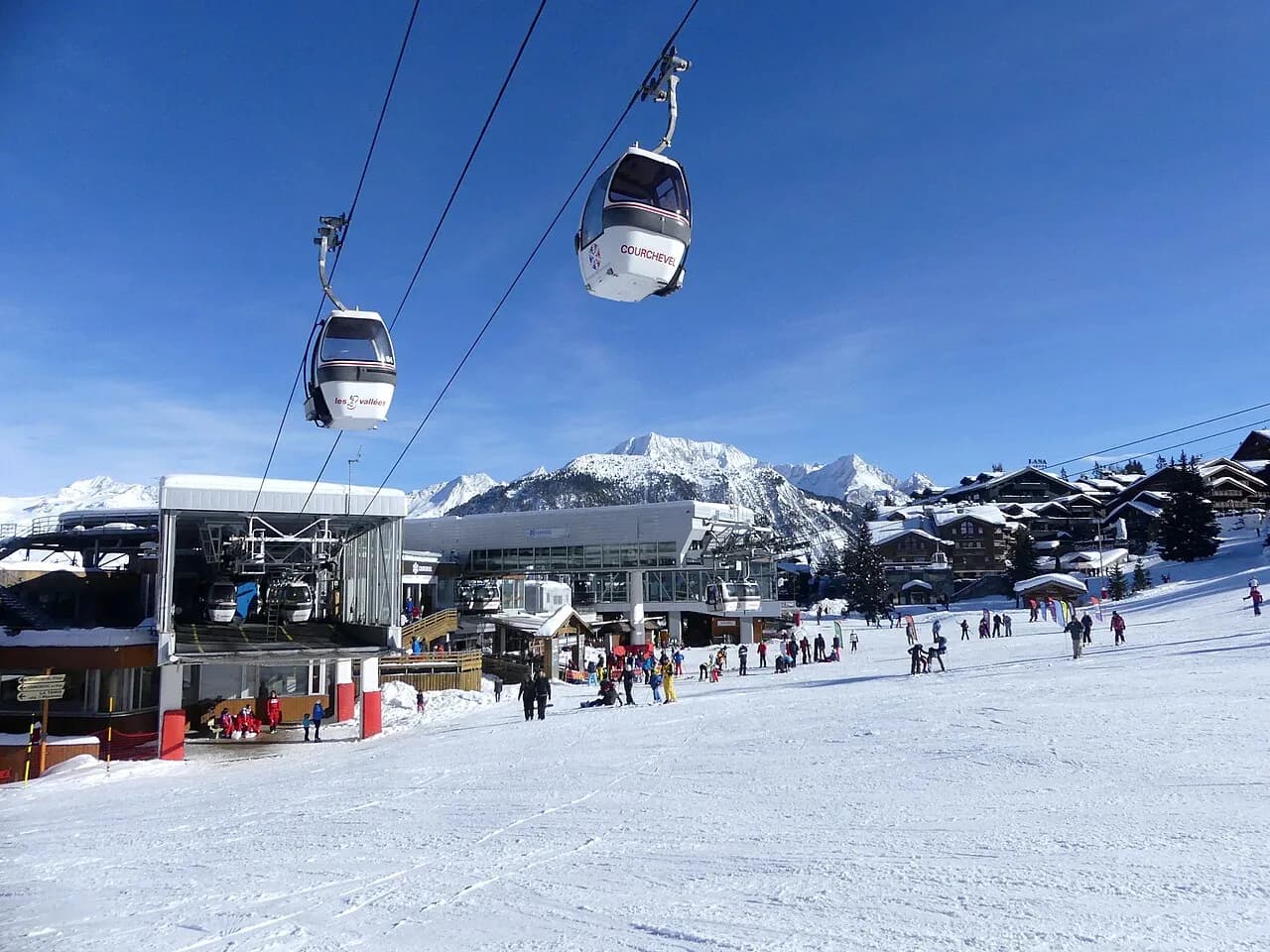
Courchevel is a French ski resort in the Savoie department of the Auvergne-Rhône-Alpes region, sitting at the northern end of the Tarentaise valley and forming part of the Three Valleys. The resort is not one place but five distinct villages spread across the valley, each with a different altitude, lift access and character. That structure is the single most useful thing to understand before booking, because your village choice determines how much of the ski area sits on your doorstep.
The practical decision that shapes everything else is whether you want the Courchevel-only area or the full 3 Vallées network. Those are genuinely different products with different boundaries, not tiers of the same ticket, and the difference in price and daily travel is real. This guide sets out the villages, the pass trade-offs, beginner provision and the booking sequence, so you can make that call with the facts in front of you.
Why choose Courchevel for a ski trip
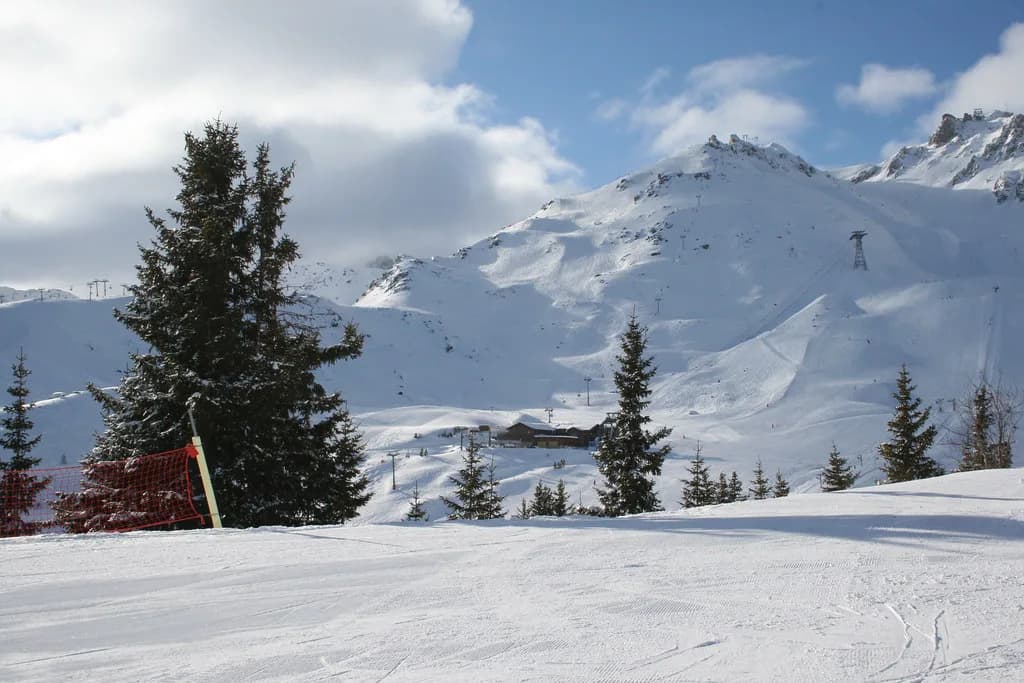
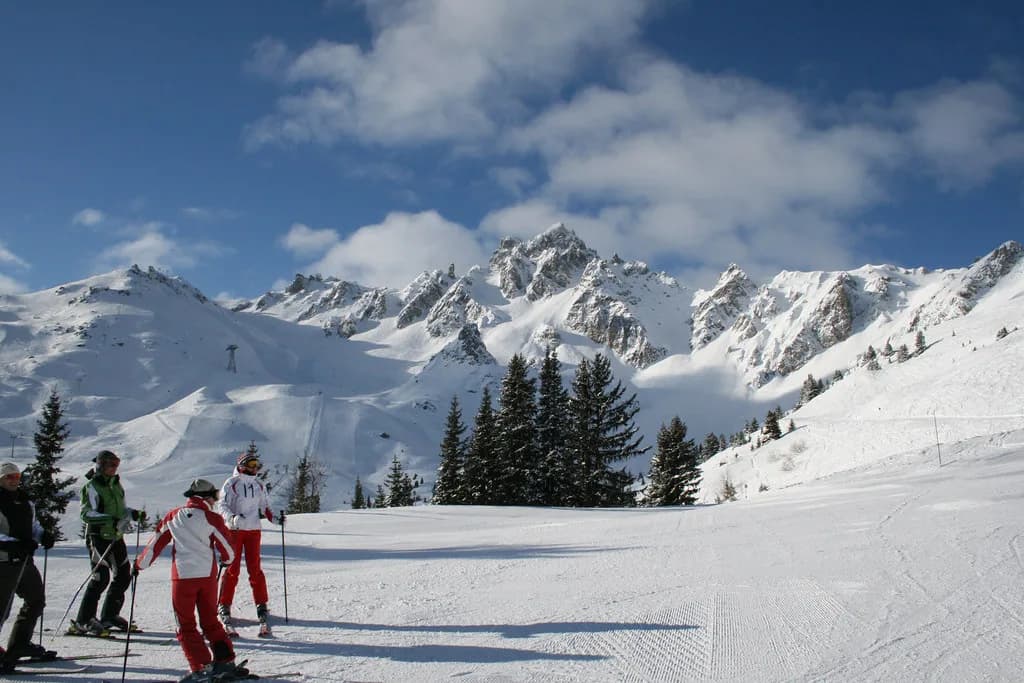
Courchevel combines a compact local area with one of the largest linked networks in the Alps, which means the same resort can serve a group that wants gentle cruising near the accommodation and a group that wants to spend the week moving between valleys. The local Courchevel area covers around 150 km of pistes and is valid across the resort's villages, including 1850, Moriond, Village, Le Praz and La Tania. That local footprint alone is larger than many standalone resorts, so a Courchevel-only pass is not a token ticket.
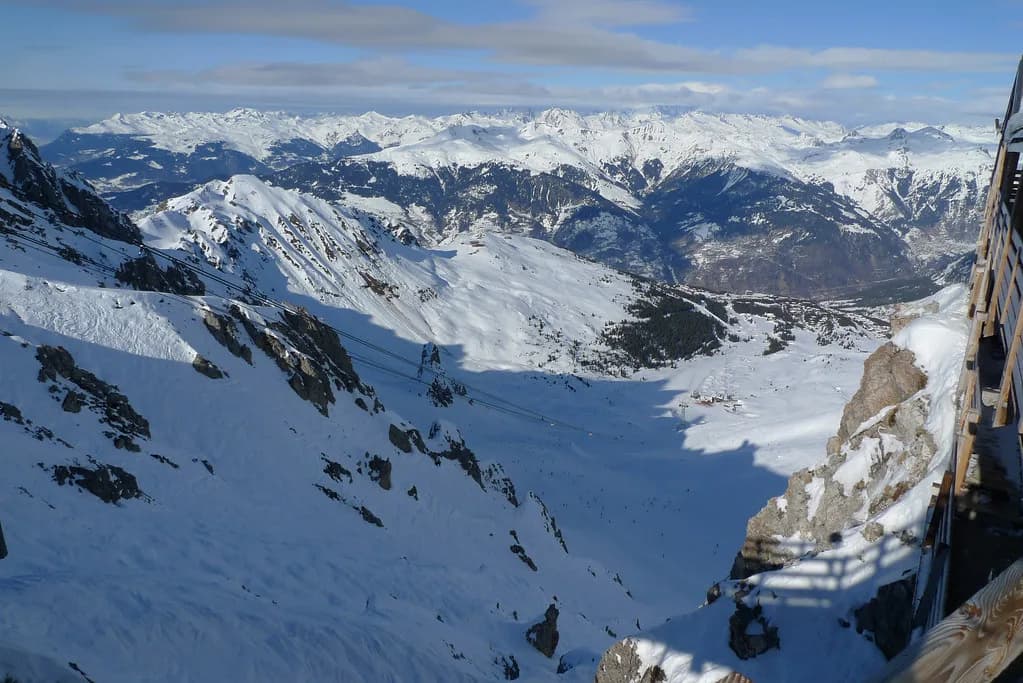
The wider 3 Vallées network, by contrast, is described by Courchevel's tourist office as 600 km of interconnected slopes across multiple resorts, including Courchevel, Méribel and Val Thorens. Third-party sources put the area's piste count between roughly 321 and over 500 marked pistes and lift counts between 158 and just under 200, so treat headline figures as approximate; the official Courchevel pass pages list the current numbers. What matters for planning is not the exact count but the fact that the network connects several resorts under one pass.
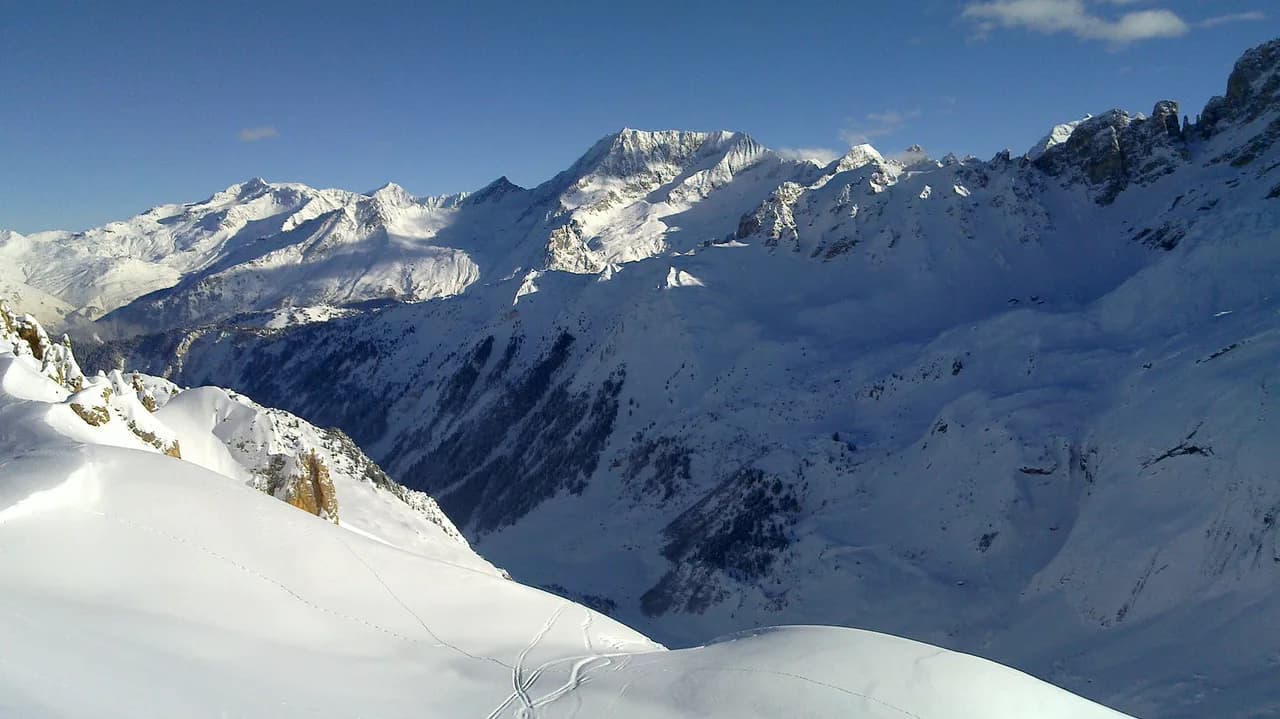
Courchevel sits mainly north-facing, which is relevant to how the area holds up through the season, but no aspect guarantees good snow on any given trip. The resort's own pages describe the season as scheduled from early December to mid-April, and any part of that window is conditional on conditions and lift operations. Plan around the published window, then confirm what is actually open closer to your dates.
The five Courchevel villages and how the choice of base changes your day
The five villages are Courchevel 1850, Courchevel Moriond 1650, Courchevel Village, Le Praz and La Tania. They sit at different altitudes and connect to different parts of the lift system, so the same pass can produce a very different daily routine depending on where you sleep. As practical advice rather than an operator fact, the most useful base is usually the one that puts your preferred terrain and your group's ability level closest to the front door.
Courchevel 1850 is the highest of the main villages and has the most immediate access to the upper slopes, which suits groups who want to start high and cover ground quickly. Moriond 1650 sits lower and is often described as having gentler, sunnier blues and reds, which suits improving skiers who want long, confidence-building runs. Courchevel Village, Le Praz and La Tania sit lower still, with their own lift connections into the wider area.
A trade-off to weigh is that lower villages can mean more time on lifts before you reach the high terrain, but they often offer quieter, tree-lined runs and a different pace. Le Praz and La Tania, for example, are associated with sheltered pistes that can be useful when visibility is poor higher up. Decide how much of your day you want to spend in transit versus on the snow, and let that drive the village choice.
Understanding the ski area boundary: 150 km of Courchevel pistes versus the 600 km 3 Vallées network
The Courchevel-only pass covers the area's own pistes and lifts and is described by Courchevel's tourist office as valid throughout the resort's villages. The 3 Vallées pass extends that access into the wider interconnected network, which is the product to choose if you want to ski into Méribel, Val Thorens or the other linked resorts during your stay. These are separate products, and a Courchevel-only pass does not automatically unlock the full network.
Altitude figures for the area vary between sources: one third-party guide gives a resort height of 1,850 m and an altitude range of 1,100 m to 2,738 m, while another describes 600 km of cumulative descent between 1,300 m and 3,230 m. Those ranges are measured differently, so use them as a rough picture rather than a precise specification. If exact altitudes matter to your planning, the lift company's published piste map is the reliable source.
The La Tania question is worth settling early, because sources describe it in two ways. Courchevel's tourist office lists La Tania within the villages covered by the Courchevel-area pass, while another source counts it among the eight 3 Vallées resorts. For pass purposes, read the current product description at purchase, because the boundary determines which lifts your ticket opens.
Courchevel-only pass, 3 Vallées pass, Minipass beginner pass and Family Flex
Courchevel's tourist office publishes four broad pass categories: the Courchevel area pass, the 3 Vallées pass, a beginner Minipass, and Family Flex. The Courchevel pass suits stays of roughly half a day to three weeks and covers the local area; the 3 Vallées pass is the one to take if you plan to move between resorts. The Minipass is a reduced-price beginner product valid in the resort's Easy Rider zones, and Family Flex lets a family ski at the child rate within stated adult and child limits.
The trade-off behind the 3 Vallées pass is that you pay for access you may not use if your group stays local, while the Courchevel-only pass can feel limiting if you want a day in another valley. If your group is mixed, consider whether a local pass for most of the week plus one extension day makes more sense than a full network pass throughout. Courchevel's tourist office also advertises six-day products at the price of five, worth weighing against your actual ski days.
Carré Neige is offered as an optional insurance add-on at the time of purchase. The Courchevel pass service lists cover including rescue and evacuation costs and certain medical costs, but the terms are set by the product and can change, so read the current conditions before adding it. Insurance is no substitute for judging conditions on the day.
Beginner provision: Easy Rider and ZEN zones, free lifts, magic carpets and the Western Ski Park
Courchevel's beginner provision is best understood through named zones rather than a general reputation. Third-party sources describe seven Easy Rider zones and 12 free lifts, many labelled ZEN (Zones for the Evolution of Novices), with examples including Mickey ZEN in Moriond, Pralong ZEN and Golf ZEN in 1850, Les Roys in Courchevel Village, Envolée ZEN in Le Praz, and magic carpets in La Tania. These names are more useful than a broad claim, because they tell you where a first-timer can actually start.
Courchevel's Minipass is designed for learners and is valid in the Easy Rider zones, with a single price for children and adults and a one-day validity. That structure matters for a first trip: you can buy a low-commitment ticket for the learning zone while more confident members of the group buy a full-area pass. The ticket only covers what its product description specifies, so read the zone boundaries and validity on the official pass page.
One source also describes a Western Ski Park in Courchevel combining gentle slopes with carpets, and a Stop Zone for practising braking. These are third-party descriptions of provision and the features are seasonal and weather-dependent, so they are not guarantees that everything operates. If a specific learning zone matters to your group, ask the lift company or the ski school (such as ESF) before booking lessons or passes.
Terrain by sector: what each village and altitude band offers across the ability range
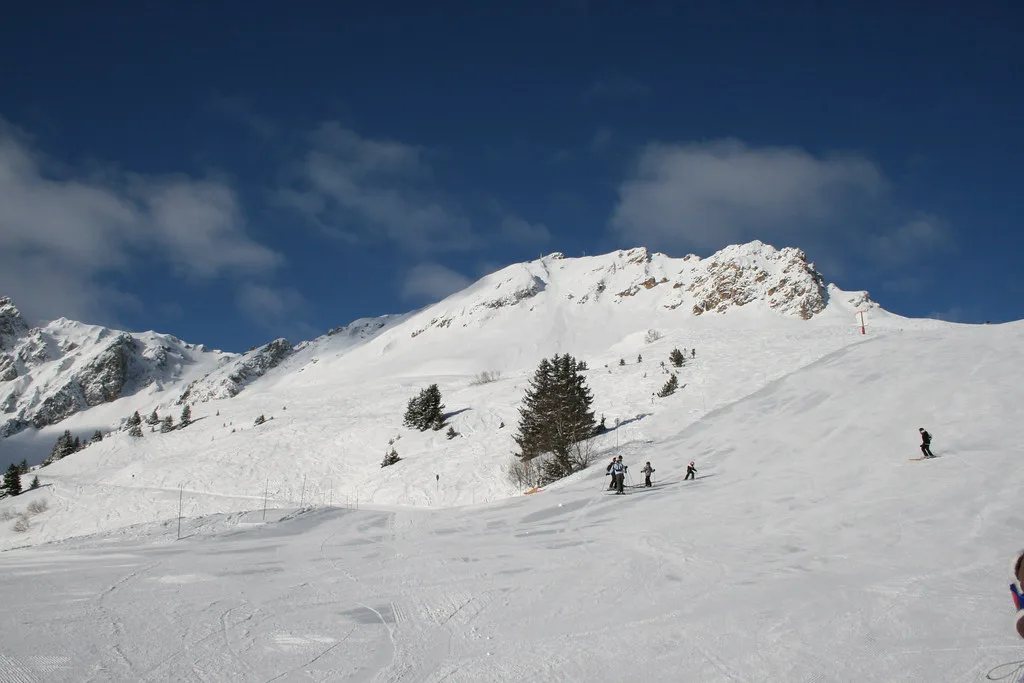
The upper slopes around 1850 and the Saulire sector provide the steepest terrain and the highest starting points, which is where advanced skiers will spend most of their time. Third-party descriptions highlight steep reds and blacks in that sector, alongside quiet, long runs such as Chapelets. For strong skiers, basing high reduces transit time to that terrain.
Moriond 1650 is generally described as the sector for mellow blues and reds, making it a sensible base for intermediates who want long, flowing runs and a gentler return at the end of the day. Lower down, Le Praz and La Tania offer sheltered, tree-lined pistes that can be the better choice in poor visibility. That makes the lower villages worth considering for groups who value cruising and shelter over maximum vertical.
The area's overall piste mix is broadly weighted towards blue and red runs rather than black, according to third-party counts, so most intermediates will find plenty within their range. A 12 km longest piste is also reported, which is enough for a long top-to-bottom run without repeating lifts. Check the current piste map for your dates, because individual runs close for grooming, events or conditions throughout the season.
Courchevel and La Tania within the local area, and the wider Three Valleys resorts you can reach
Within the local area, La Tania is described by Courchevel's tourist office as part of the villages covered by the Courchevel-area pass, and third-party sources highlight its mix of a steep black and a long winding blue. If your group includes both confident and cautious skiers, a base that reaches La Tania without a network pass can work well. The lift connections between the villages are what make that possible.
With a 3 Vallées pass, the reachable resorts include Méribel, Les Menuires, Val Thorens, Saint-Martin-de-Belleville, Brides-les-Bains and Orelle, according to third-party descriptions of the network. The practical consideration is travel time: moving between valleys can consume a significant part of a day, so a network pass rewards groups who genuinely want to explore rather than those who will ski the same sector daily.
If you are weighing Courchevel against another French resort for a future trip, the same logic applies: match the local area to your group's ability and appetite for movement before comparing headline sizes. A resort with a huge network can still feel like wasted pass money if your group never leaves one valley. Read the resort pages for the area you are considering as carefully as you read Courchevel's; for a like-for-like comparison, the Alpe d'Huez skiing guide covers another large French resort with its own local pass and village structure.
Snowparks, boardercross-style features and cross-country loops based from Courchevel
For freestyle riders, third-party sources describe a Family Park at Courchevel 1850 with gentle features, boxes, rails, kickers and a boardercross-style course, plus an airbag. A separate Wood Park is also mentioned in some descriptions. Park features are built and maintained on a seasonal basis, so the current layout is best taken from the resort's own park information.
Courchevel is also a base for cross-country skiing, with third-party descriptions of loops from Le Praz and connections towards La Tania and the Col de la Loze. The Le Praz Nordic site, host of the 1992 Olympic Nordic combined events, is described as having three loops of roughly 1.5 km, 7 km and 8.5 km. Cross-country trails depend on snow and grooming, so check locally before travelling for them.
If you want a mixed group where some ski downhill and others tour on cross-country trails, Courchevel's village structure makes it feasible to meet later in the day. Decide in advance which village is the meeting point, because the villages are not all walkable to one another in winter. That single decision saves a lot of unnecessary lift riding.
When to go: season timing, quiet periods, school holidays and late-season conditions
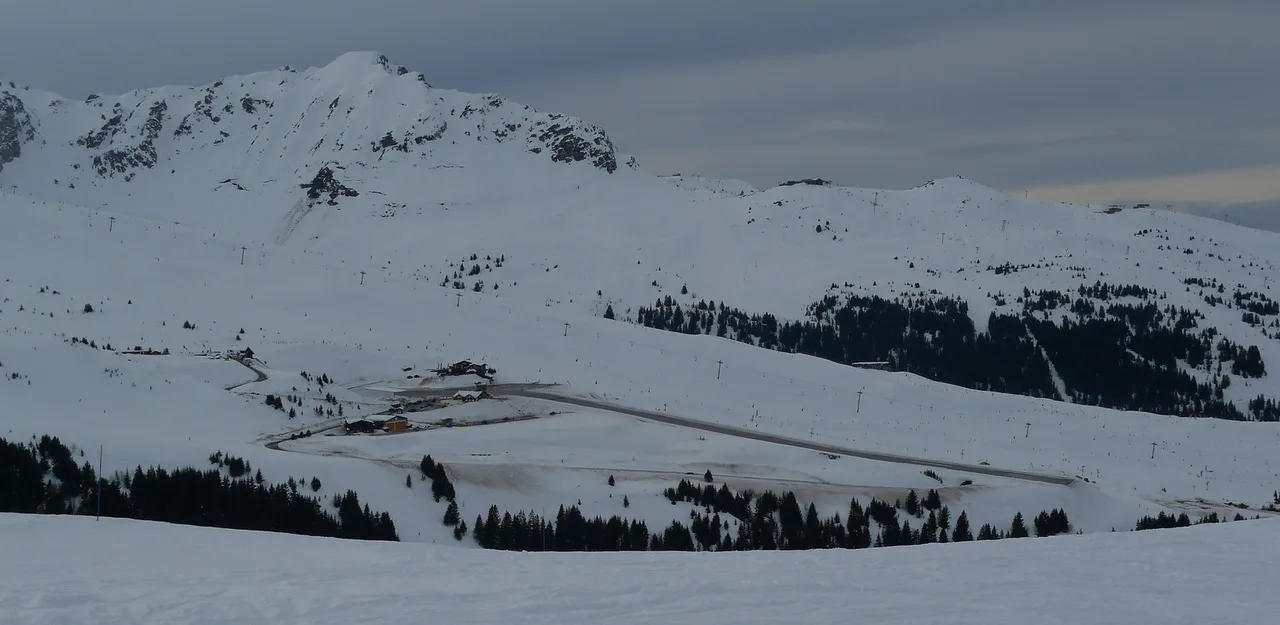
Courchevel's tourist office states a scheduled season running 4 December 2026 to 18 April 2027. Any date within that window is conditional: early- and late-season skiing depends on what is open and on conditions, and not every lift or link is guaranteed to run throughout. Treat the published window as the planning frame, then consult the lift company's opening information closer to your travel dates.
Within the season, third-party guidance suggests January tends to be quieter with fresher snow, February aligns with family school holidays, and March and April tend to offer sunnier pistes. Those are general patterns rather than forecasts, and holiday timing varies by country. If avoiding crowds matters more than snow variety, check the school holiday calendars of the markets you share the resort with.
If you are travelling early or late, it is worth checking which lifts are open and looking at webcams before committing to a specific sector. A lower village can be a better bet late in the season when upper terrain is affected by sun and wind, while high terrain can hold up better early. Build flexibility into your plans rather than booking around a single run.
Buying your pass and lessons: purchase channels, collection and booking terms to confirm
Courchevel's tourist office lists several purchase channels: online via skipasscourchevel.com, the 3 Vallées mobile app, ticket machines, and sales points in each village. Online purchases can be collected at kiosks, and holders with an existing card number beginning 01-1614 can top up immediately. That range means you can plan ahead or decide on the day, but collection logistics still need planning, especially on arrival day.
For lessons, Courchevel has ski schools, but specific meeting points, group sizes and booking terms are set by each school and are not published on the resort pass pages. Check directly with the school you intend to use, and confirm whether your chosen pass covers the zone where lessons take place. Do not assume a beginner pass and a lesson booking align automatically.
As practical advice, buy or reserve your pass before you travel if you are visiting during a peak week, because on-arrival queues at sales points are longest then. Also confirm the refund and alteration terms for your specific product, since these vary by ticket type and purchase channel. Those two checks prevent most first-day friction.
Planning sequence: matching village, pass and dates before you commit
Start by deciding how much of the network your group will realistically ski. If the answer is mostly one valley, a Courchevel-area pass is the simpler and cheaper choice; if you want to cross into Méribel or Val Thorens more than once, the 3 Vallées pass earns its premium. Write down the answer before you look at accommodation, because it drives everything else.
Next, choose a village based on the terrain your group will use most, not on reputation. Beginners and intermediates often do well from Moriond or the lower villages, while strong skiers may prefer the higher base at 1850 for quicker access to steep terrain. Then set your dates within the published season window and confirm what is scheduled to be open for that period.
Finally, book passes and any lessons through the official channels, and check collection points before arrival day. Read Carré Neige terms if you intend to add the insurance, and note that pass products, prices and inclusions can change between seasons. A short call to the tourist office or a review of the official pass pages before payment resolves most uncertainty.
Plan Your Courchevel Ski Trip
Courchevel rewards a decision made in the right order: pass boundary first, village second, dates third. The five villages give the resort unusual flexibility, but they also mean that a mismatched base and pass combination can waste time and money. Settle the network question honestly before booking anything else.
Confirm season dates, lift operations and pass terms with the lift company close to your travel dates, since all three are conditional and can change. Use the official pass pages for products and purchase channels rather than relying on older figures. Once those checks are done, the rest of the planning becomes straightforward.
Explore more Courchevel guides
Frequently Asked Questions
What is the difference between the Courchevel ski pass and the 3 Vallées pass?
The Courchevel-area pass covers the resort's own 150 km of pistes and is valid across its villages, while the 3 Vallées pass extends access into the wider interconnected network of around 600 km. These are separate products, so a Courchevel-only ticket does not automatically open the full network. Check the current product description before buying, because inclusions and boundaries can change between seasons.
Is Courchevel suitable for beginners?
Courchevel has dedicated beginner provision, including Easy Rider and ZEN zones, free lifts and magic carpets in several villages, plus a reduced-price Minipass valid in the learning zones. Third-party sources describe named areas such as Mickey ZEN in Moriond and Pralong ZEN in 1850. Confirm which zones are operating and which ticket covers them when you book, since provision is seasonal and weather-dependent.
When does the Courchevel ski season start and end?
The scheduled winter season runs from early December to mid-April. This is a planning window, not a guarantee: early- and late-season skiing depends on conditions and on which lifts and links are running. Check current details close to your travel dates, as the full area may not be open on day one or at the end.
Can you buy a Courchevel ski pass online?
Yes. Passes are sold online through the resort's pass site, the mobile app, ticket machines and sales points in each village. Online purchases can be collected at kiosks, and existing card holders can top up without visiting a desk. If you travel in a peak week, buying ahead reduces time spent queueing on arrival day.
Sources
Useful notes for your next ski trip
Optional updates to our Alpine resort guides.
You might also like
Continue reading
More guides you'll find useful