Courchevel Snowboarding Guide: Which Terrain and Lift Pass
Plan a Courchevel snowboarding trip: pick the right village, read the terrain by ability, and choose between the local pass and the full Three Valleys pass.
On this page
Courchevel is a strong snowboarding base for one simple reason: it puts a compact, well-groomed local area at the foot of the biggest linked domain in the Alps. You can spend a morning on forgiving blues above your chalet and an afternoon riding into Méribel or Val Thorens without ever getting back in a car. The trade-off is choice — five villages, several pass products and a long list of schools — so this guide is built to help you decide rather than list everything.
Two numbers frame the whole trip. The local Courchevel ski area covers 150km of marked runs between 1350m and 2738m, and it plugs into the Three Valleys, which opens up around 600km of marked pistes. Whether you buy access to the second figure or stay inside the first is the single biggest planning decision you will make.
What Courchevel Offers a Snowboarder
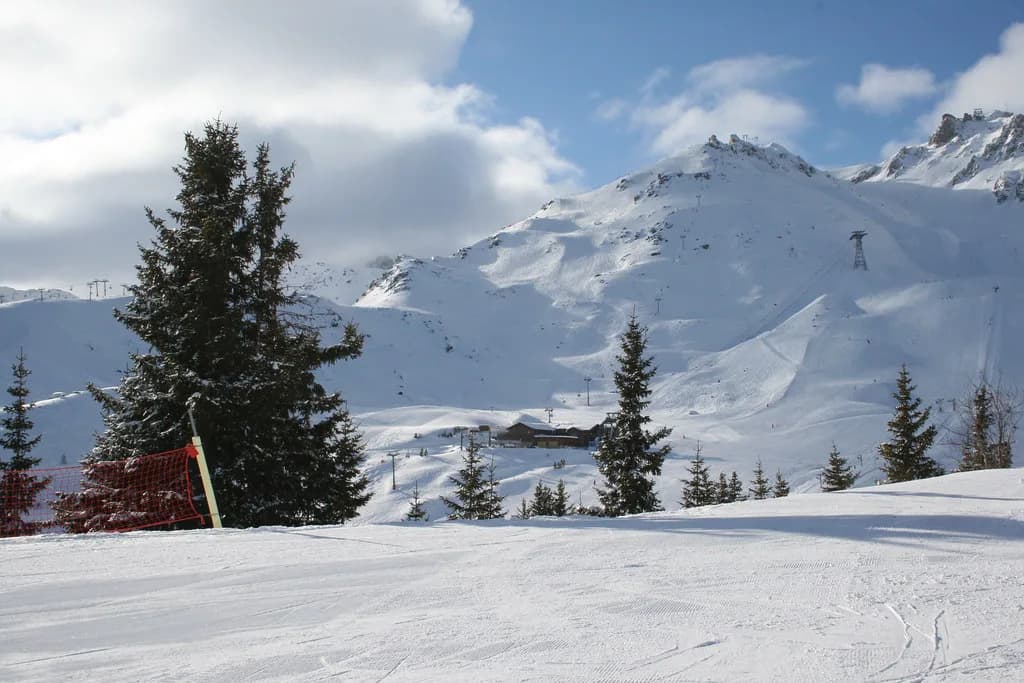
Courchevel's terrain runs from 1350m at the valley floor to 2738m at the top of the lift system, with 150km of marked pistes in the local area. The resort sits on a largely north-facing aspect, which is why snow quality holds up well here, and much of the riding threads through forest rather than across bare open bowls. For a boarder, that combination means cold, grippy snow and visible tree lines in flat light.
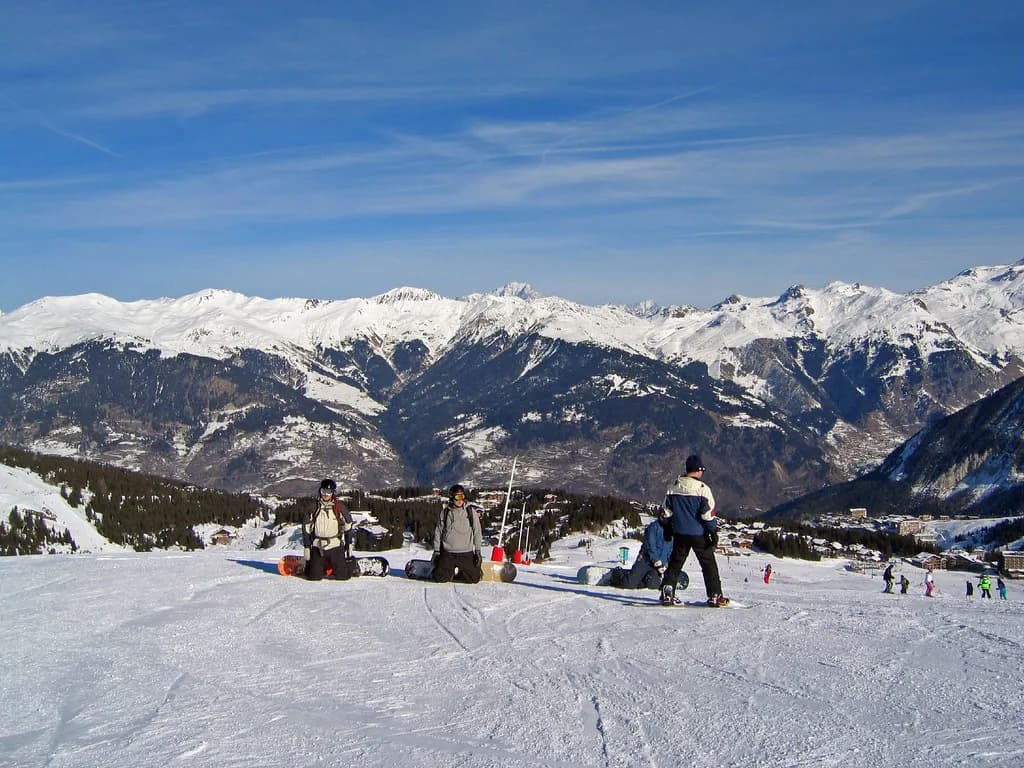
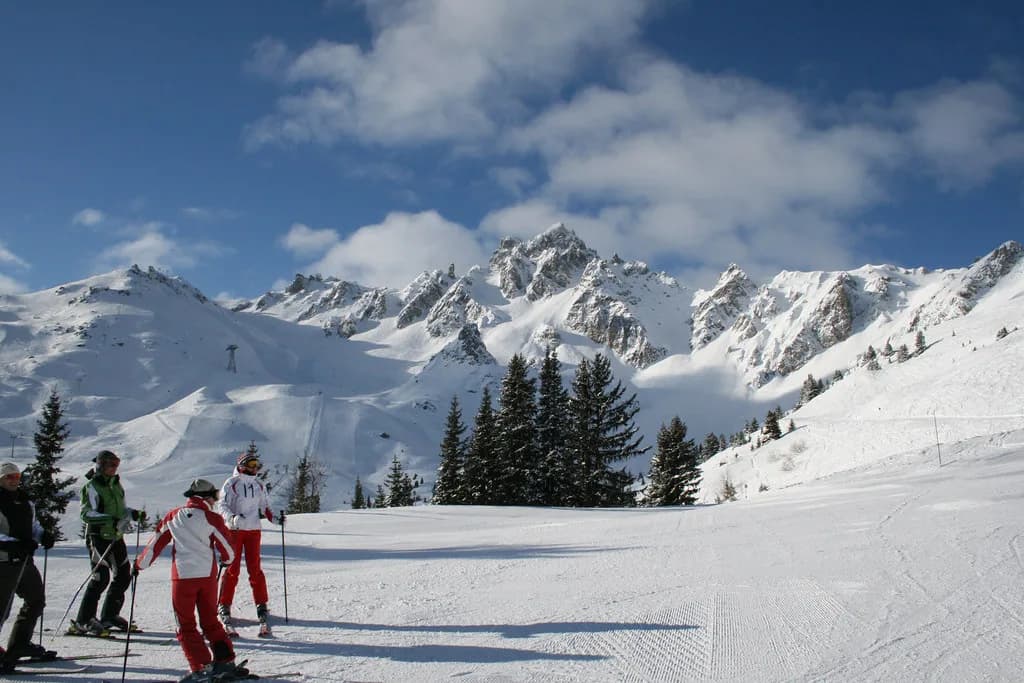
The character of the piste network is wide, gently pitched and immaculately groomed, with long cruising runs rather than a dense concentration of steep drops. That is excellent news if you are building mileage, working on carving or riding with a mixed-ability group. It is less of a draw if your priority is freestyle — the published resort material does not confirm a snowpark, halfpipe or boardercross course, so do not plan around one without first seeing the piste and park listings.
Beyond the pistes the resort publishes a broad off-snow offer, including a bowling alley, an ice rink, a cinema showing films in English, an indoor climbing wall, a luge sledging run down to Courchevel Village and sleigh rides. There are also 66.5km of cross-country trails and a 2.3km toboggan run for days when you want a break from the board.
The Five Villages Compared for Boarders
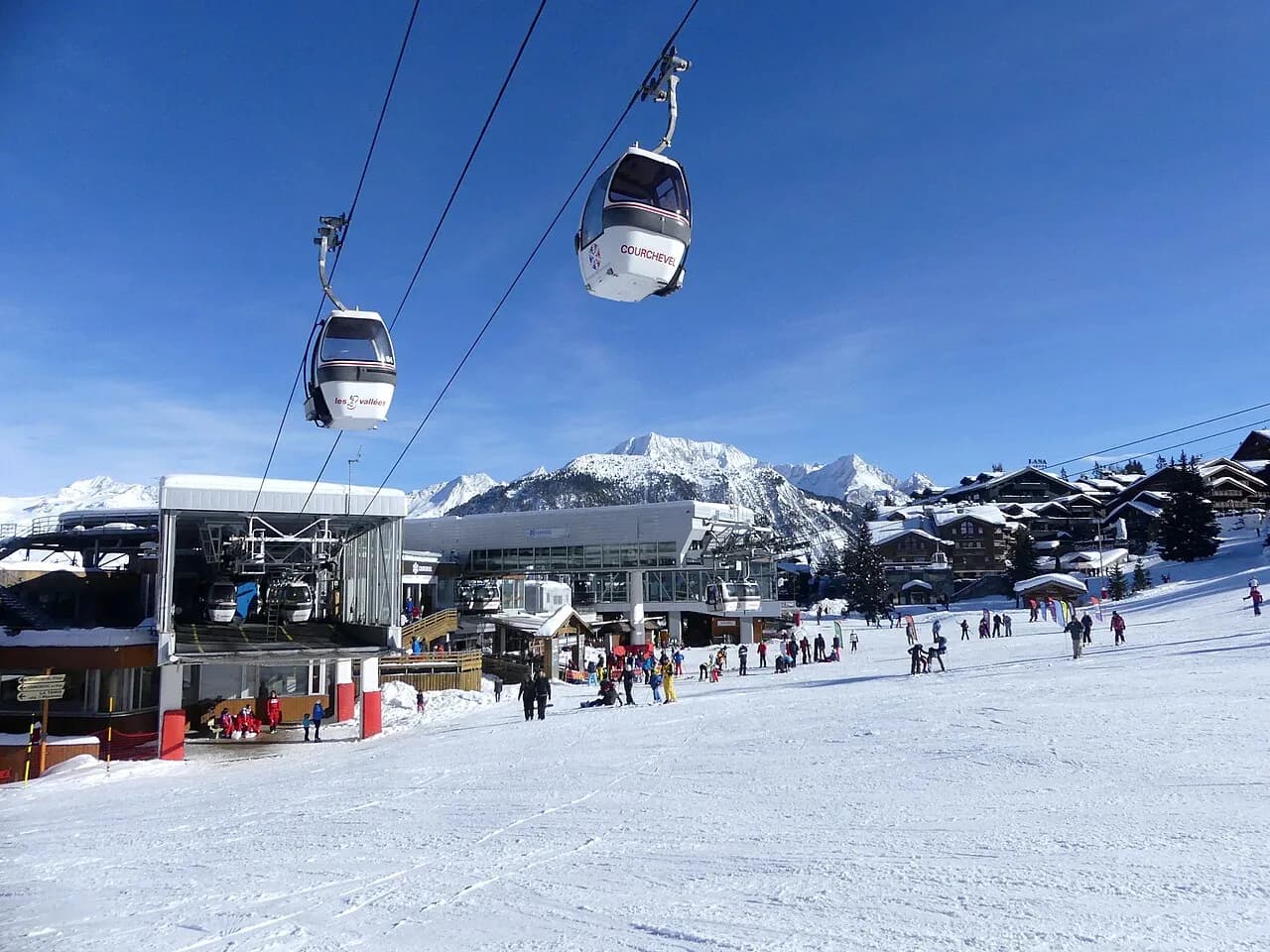
Courchevel is not one resort but five villages linked by lifts and a free shuttle bus, and each has a distinct personality. Courchevel 1850 is the glamorous, most exclusive base; Courchevel Moriond at 1650 is the liveliest after dark; Courchevel Village at 1550 is the budget-friendly option; Le Praz at 1300 keeps a rustic, hamlet feel; and La Tania is the family favourite. Where you sleep shapes your mornings far more than any lift upgrade.
For most boarders the practical choice is Courchevel Moriond, which has become the unofficial hub of Courchevel nightlife while keeping genuine ski-in convenience and a broader spread of accommodation than 1850. Base here if you want to ride hard, eat well and go out without paying 1850 prices. The trade-off is that you are slightly further from the prestige restaurants and designer boutiques, which matters if your group wants that scene.
Choose Courchevel 1850 if access and altitude matter more than value: you are at the heart of the lift network, close to La Croisette, and within easy reach of the highest terrain. Pick Courchevel Village or Le Praz if you want lower prices and do not mind a shuttle or a lift ride at each end of the day, and La Tania if you are riding with children or beginners who benefit from a quieter, more contained base.
Terrain by Ability
Beginners are well served. The resort describes wide, gentle, carefully groomed pistes running through forest, and the green and blue zones around the lower villages give new riders room to learn without traffic. Children's group programmes at ESF 1650 include lesson cards and beginner lift access as part of an all-in-one package, with the first star level charged separately — one of the few documented bundles worth comparing against booking elements individually.
Intermediates have the run of the place. Long blues and reds let you link turns for hundreds of vertical metres, and the published itineraries include a blues cruise through the Méribel valley and a full Three Valleys circuit plotted entirely on blue pistes for riders comfortable on gentle gradients. Use those routes as your first two days: they build confidence and show you how the sectors connect.
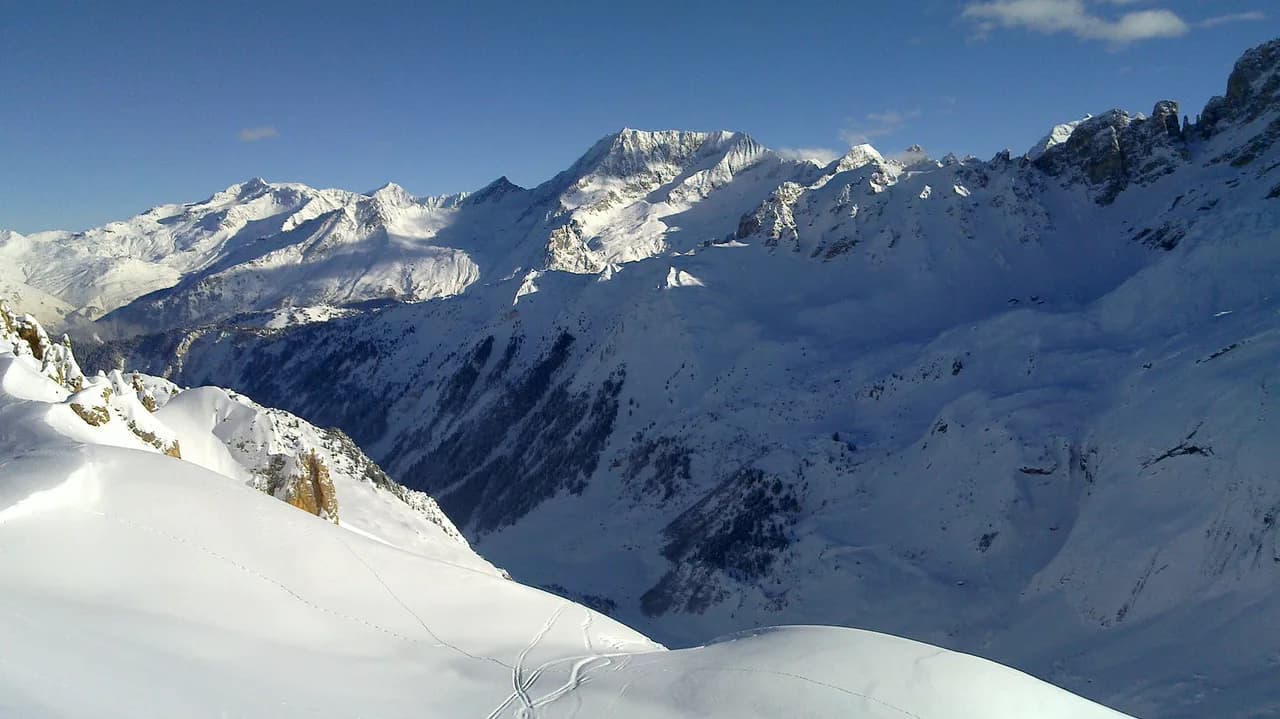
Experts should head high and pick their days. The resort publishes an itinerary explicitly reserved for the most competent skiers and snowboarders, covering Courchevel's steep and deep terrain, and the upper mountain reaches 2738m. Treat that as a serious objective rather than a warm-up, and ride it with someone who knows the lines.
Linked Areas and Day Routes
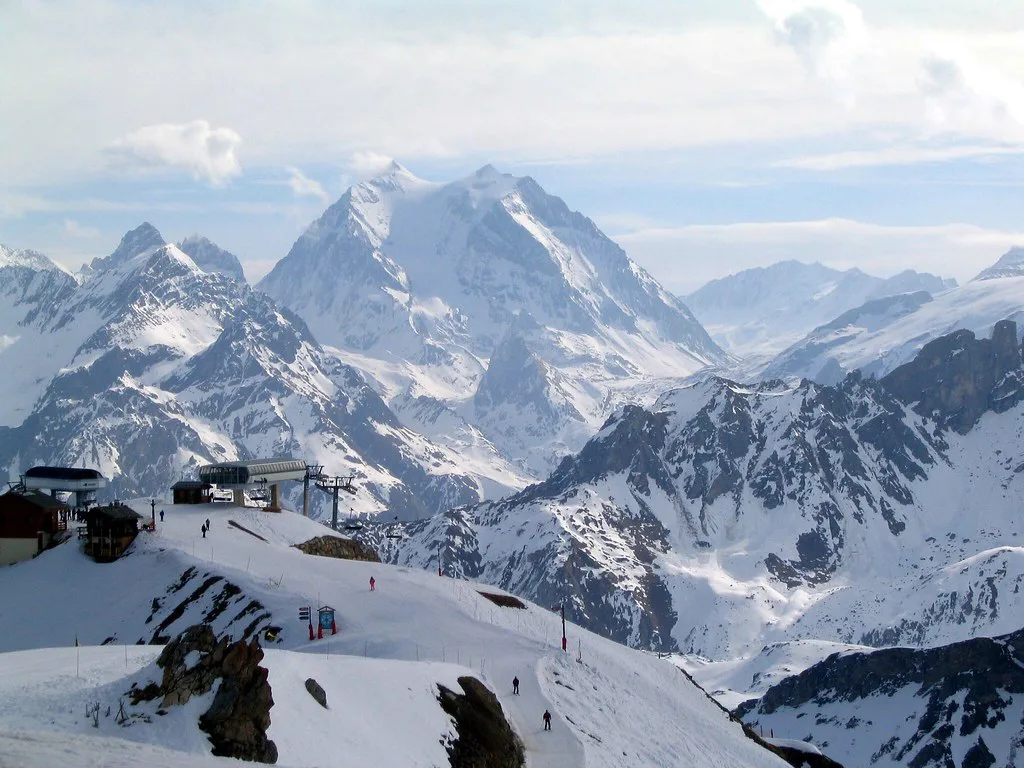
The Courchevel lift system has been connected to Val Thorens and Méribel since 1973, and the combined Three Valleys domain offers around 600km of marked pistes. That scale is the reason to buy the larger pass even for a short trip: Méribel is a straightforward cruise away, Les Menuires and the Orelle valley extend the circuit further, and Val Thorens usually holds the best snow in the system.
Two published routes are worth building a week around. The all-blue Three Valleys circuit starts and finishes in Courchevel and can be picked up from whichever village you are staying in, which makes it ideal for a mixed group. The Méribel-to-La Tania tree-line circuit is the better pick on poor-visibility days, because the forest gives you reference points when the upper mountain is in cloud.
If you are based in Val Thorens or Méribel and riding over for the day, plan the crossing in the morning and keep the return leg conservative — an intermediate should allow a bit over an hour on the most direct route between Val Thorens and Courchevel. Carry a piste map and agree a meeting point before the group splits, since phone signal and lift queues both vary by sector.
Snowboard Schools and Coaching
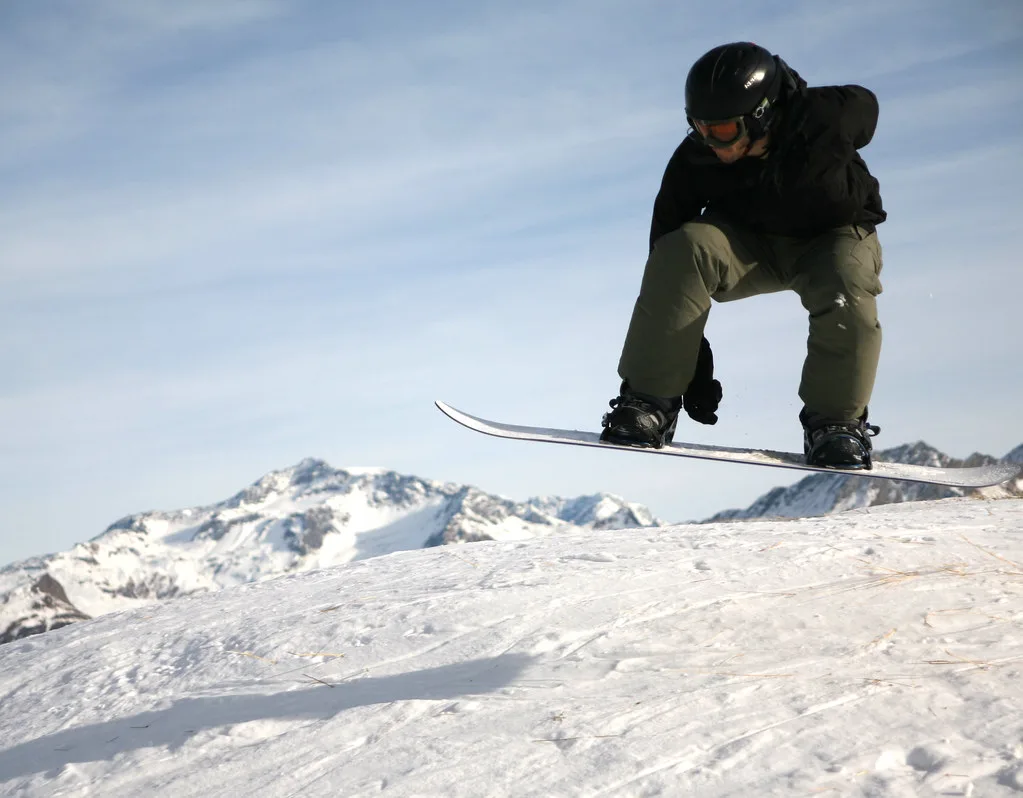
The main school is ESF, with a large teaching team in 1850 teaching in a long list of languages and taking students from the age of two, plus a second base in 1650. ESF 1850 operates from La Croisette in the centre of the resort, which makes it a convenient meeting point if you are staying high. Group lessons are the cheapest way to add structure to a week; private sessions are better value if your group has mixed goals or limited time.
Several British-run schools also operate in Courchevel, which appeals to riders who want instruction in English and small groups. New Generation runs teams in both 1650 and 1850 and has a shop in the centre of 1650; Supreme has taught here since 1991; BASS keeps adult groups to three to six people; and TDCski focuses on coaching clinics and private lessons. Snow d'Light and First Tracks both offer private tuition, and Parallel Lines teaches in La Tania and Courchevel.
For off-piste ambitions, Guides de Courchevel run freeride instruction from the Maison de la Montagne in 1850 and supply transceiver, shovel and probe, with ABS packs available to rent separately. Book guides and specialist coaching well before you travel: instructor numbers in peak weeks are finite, and the small-group formats are the first to fill.
Board Hire and Setup
Hire shops are spread across the villages rather than concentrated in one place, so match the shop to your accommodation and save yourself a daily walk in boots. Courchevel 1850 has shops close to the main hotels, Moriond and 1650 have several options in the centre, Courchevel Village has rental at the foot of the Tovets residence near the Grangettes lift, and Le Praz has its own shops in the village.
Book boards and boots online before you leave home. Pre-booking secures the specific model and size you want, and several shops let you collect equipment from the evening before your first riding day so you can be on the first lift rather than in a queue. If you are arriving late, confirm collection hours directly with the shop.
Bring your own boots if you possibly can. Rental boots are the usual weak point of a board package, and a familiar pair removes a variable from the first morning. If you are hiring everything, ask for the board's waist width and stance options when you reserve — a mismatch between boot size and board width is the most common fixable problem on a snowboard holiday.
Lift Passes: Local Versus Three Valleys
The core decision is whether you buy a Courchevel-only pass or the full Three Valleys pass. The local pass covers the 150km of marked runs between 1350m and 2738m; the full pass adds the linked domain and its roughly 600km of pistes. Neither figure is a price, and current rates change by season and duration.
Buy local if you are riding with young children, staying for a short break, or genuinely happy to stay inside Courchevel for the week — the area is large enough to fill three or four days without repetition. Buy the full Three Valleys pass if you want the Méribel crossing, a Val Thorens day, or the all-blue circuit, because none of those work on a local ticket, and upgrading mid-week usually costs more than buying correctly at the start.
Passes can be bought in advance through Courchevel's own booking channel, which avoids the ticket-office queue on your first morning, and lift pass offices sit in each village. Prices are not published in the material used here, so confirm current rates and any family or beginner reductions on the official Courchevel ski pass pages before you commit.
Getting There and Getting Around
Chambéry is the most convenient airport for the Three Valleys, sitting roughly 109km away and about 1h15 by road, with transfers, buses, taxis and car hire all available from there. Geneva and Lyon are the usual alternatives for UK travellers, adding road time but often improving flight choice and cost. Book a shared or private transfer in advance if you are arriving at night, when airport bus timetables thin out.
Once in resort, the free shuttle bus links the five villages, which is what makes staying low and riding high genuinely practical. Boarders staying in Le Praz or Courchevel Village should plan around the shuttle for evenings out in 1850 or Moriond, where a short walk will not cover it. Keep boots and boards together on the return leg — late shuttles fill quickly in peak weeks.
When to Go and How to Structure the Week
Season dates are not fixed across years, so confirm the opening and closing dates for your travel window before booking accommodation or transfers. Courchevel's north-facing aspect helps snow hold through the later weeks, and the altitude range up to 2738m gives the upper mountain a longer season than the village-level runs. Half-term weeks are the busiest; book lessons, hire and any guided days first, then build the rest of the trip around them.
A sensible seven-day shape for a confident intermediate: day one on the local blues to find your feet and your hire setup, day two on the all-blue Three Valleys circuit, day three into Méribel with a long lunch, and day four high on the Courchevel steeps or in a coaching clinic. Keep one day flexible for the best weather and one for the tree-line route if visibility closes in.
If you want a freestyle-focused trip rather than a cruising one, look at how other French resorts document their parks before committing. Our Alpe d'Huez Snowboarding guide shows what a resort with a published park and course offer looks like, which is a useful comparison against Courchevel's groomed, forested, north-facing profile.
Plan Your Snowboarding Trip to Courchevel
Decide two things first and everything else follows: base yourself in Courchevel Moriond if you want value plus nightlife, or 1850 if you want maximum access and altitude, and choose between the local pass and the full Three Valleys pass before you buy anything else. Then book lessons and hire early, because the small-group coaching and the specific board sizes are what disappear first in peak weeks.
Treat the published itineraries as your planning skeleton rather than an afterthought — the all-blue circuit and the La Tania tree-line route cover the two conditions you will actually meet, fine weather and flat light. Everything else, from pass rates to season dates, confirm before you book.
Frequently Asked Questions
Is Courchevel good for snowboarding?
Yes, particularly for riders who like wide, groomed, north-facing pistes. The local area covers 150km of marked runs between 1350m and 2738m, much of it through forest, and it links into the roughly 600km Three Valleys domain. It is a cruising and mileage resort rather than a documented freestyle destination, so check current park listings if a park is essential to your trip.
Which Courchevel village is best for snowboarders?
Courchevel Moriond at 1650 is the best all-round base for most boarders: it has the liveliest nightlife, good lift access and a wider spread of accommodation than 1850. Courchevel 1850 suits riders who prioritise access and altitude, while Courchevel Village, Le Praz and La Tania are quieter and cheaper, with the free shuttle covering the gaps.
How much is a lift pass in Courchevel?
Current rates are not published in the material used for this guide, and lift pass prices change with season and duration. Compare the Courchevel-only pass against the full Three Valleys pass on the official Courchevel ski pass pages before booking, and check any family, beginner or multi-day reductions at the same time.
Do I need the full Three Valleys pass?
Only if you intend to leave the Courchevel valley. The local pass covers 150km of marked runs and is plenty for a short break or a family week. The full Three Valleys pass is what unlocks the Méribel crossing, a Val Thorens day and the all-blue circuit, and buying it up front is usually cheaper than upgrading later.
Where do the rich stay in Courchevel?
Courchevel 1850 is the exclusive end of the resort, with the high-end hotels, chalets, Michelin-starred restaurants, designer boutiques and upmarket hotel bars. Courchevel Moriond has become the livelier after-dark alternative, which is why many groups split their evenings between the two.
Are there English-speaking snowboard schools in Courchevel?
Yes. ESF teaches in many languages from bases in 1850 and 1650, and several British-run schools operate here, including New Generation, Supreme, BASS, TDCski, Snow d'Light, First Tracks and Parallel Lines. Group lessons are cheapest; private sessions suit mixed-ability groups. Book in peak weeks well ahead.
What else is there to do in Courchevel off the slopes?
The resort lists a bowling alley, an ice rink, a cinema showing films in English, an indoor climbing wall, a luge sledging run to Courchevel Village and sleigh rides. There are also 66.5km of cross-country trails and a 2.3km toboggan run for a rest day.
How do you get to Courchevel?
Chambéry is the closest airport, roughly 109km away and about 1h15 by road, with transfers, buses, taxis and car hire available. Geneva and Lyon are common alternatives with more flight choice. Once in resort, a free shuttle bus links the five villages, which matters if you stay low and ride high.
Sources
Useful notes for your next ski trip
Optional updates to our Alpine resort guides.
You might also like
Continue reading
More guides you'll find useful