Verbier Skiing: A Complete Guide to the 4 Vallées
Plan a Verbier ski trip with clear detail on the 4 Vallées sectors, pass families, beginner terrain, season windows and how to check live lift status.
On this page
Verbier rewards skiers who plan by sector rather than by reputation. The resort sits in the Bagnes Valley in Switzerland's Valais canton, and the official lift company describes a ski area of 410 km of slopes with its highest point at 3,330 m. That scale is real, but it is distributed across several base points and a linked network, so the practical question is which sectors you can reach comfortably from where you sleep.
The resort is one part of the wider 4 Vallées, which also takes in Nendaz, La Tzoumaz and Thyon. That matters for pass choice and for expectations: a full-area pass and a local Verbier pass are different products, and the links between sectors depend on specific lifts and pistes being open on the day. A trip planned around one sector can be excellent; a trip planned around crossing the whole network needs a longer stay and some flexibility.
This guide sets out the geography, the sectors, the lift and pass families, beginner provision and the season window, and it explains where to check conditions before travelling. Treat scheduled dates and openings as conditional, and check the official live pages close to departure rather than relying on any guide written months earlier.
Verbier's Location and How It Fits Into the 4 Vallées
Verbier is a village in the Swiss canton of Valais, in the Bagnes Valley, reached through the Rhône valley town of Martigny. The lift company presents it as the largest ski area entirely within Switzerland, with skiing from November to the end of April and the wider area open for around ten months a year across seasons and activities. Those are the operator's published parameters, and they describe the intended operating window rather than a weather guarantee.
The 4 Vallées name covers a network that includes Verbier alongside Nendaz, La Tzoumaz and Thyon. A resort map is useful precisely because it shows how those pieces connect: Verbier is one node rather than the whole, and the linked terrain to the east and south runs through intermediate sectors. If your aim is to ski the full circuit, budget several days rather than one.
Access to the slopes from the valley is by lift rather than by road in winter. The Verbier sector's valley connection is the Le Châble to Verbier cable car, listed on the official live page with a long daily operating span; the same page shows how that link and the higher lifts are separately statused. Read that page as a live snapshot, not a timetable for your dates.
The 4 Vallées Ski Area: Size, Altitude and Boundaries
The headline figures published by the lift company are 410 km of slopes and a high point at 3,330 m. Third-party resort profiles circulate alternative numbers, often converted into miles or feet, but the operator's own figures should take precedence when they conflict. Use 410 km and 3,330 m as your planning reference, and treat any other figure you see as secondary.
That 410 km spans the whole 4 Vallées, not just Verbier's local slopes, which is the single most useful distinction for trip planning. The official live page lists pistes under separate headings for Verbier, La Tzoumaz, Bruson and 4 Vallées, which shows how the operator itself divides the terrain. If you are staying in Verbier village, some of that 410 km sits a long way from your bed.
The high point is the Mont-Fort area, where the summit sits at 3,330 m and the terrain around it includes the Mont-Fort black piste and the Gentianes sector. Altitude at the top does not mean the same altitude at the bottom, and valley-level pistes are listed on the same page as high ones. Plan your day knowing that descent to a low base can finish on thin cover late or early in the season.
Verbier's Local Sectors and Piste Network at a Glance
Within the Verbier heading on the official live page, the pistes are grouped by area names rather than by a single village base. Familiar groupings include Médran and Les Ruinettes above the village, Savoleyres toward La Tzoumaz, and the higher Attelas, Chaux and Tortin zones. Reading those names on the live page is a quick way to understand how Verbier's skiing actually divides.
Piste names carry difficulty indicated by colour on the same listing, from blue through red to black, alongside yellow itineraries and connection slopes. Examples that recur in the Verbier and 4 Vallées listings include Attelas, Fontanet, Chassoure-Tortin and the Lacs runs, plus the Siviez to Verbier links. Checking a sector's mix before booking helps you avoid a trip built entirely around terrain that turns out to suit only one ability level in your group.
Colour coding tells you the lift company's grading, not a guarantee of how a run will feel on a given day. A red piste can be wide and forgiving or narrow and sustained depending on the sector, and grooming and cover vary through the season. Use the grading for rough group matching, then check the specific sector on the interactive map before committing the day to it.
La Tzoumaz, Bruson and the Wider 4 Vallées Sectors
La Tzoumaz appears on the official live page as its own set of pistes, separate from Verbier, with runs such as Planards, Etablons, Taillay and the Cœur sector. It is also where the La Tzoumaz to Savoleyres link sits, meaning the two local sectors are connected by lift rather than by road. For skiers based on that side, the Savoleyres terrain is the natural first objective.
Bruson is a third local sector, listed with pistes including Moay, Pasay and Sur le Six, and it connects down toward Le Châble as well as up toward Verbier. It is smaller and lower than the high alpine sectors, so its season and its snow reliability differ from the Mont-Fort end of the network. During early or late season, a low sector like Bruson is often the first place to lose cover and the last place to have reliable conditions.
The wider 4 Vallées heading collects the Siviez, Nendaz, Thyon and Greppon Blanc terrain together with the connection slopes between them. Those connections are explicitly labelled as links rather than ordinary pistes, including Siviez to Verbier via Chassoure and via Mont-Fort, and Siviez to Veysonnaz and Thyon via Greppon Blanc. When a link is closed, a sector is not gone, but it becomes a different trip: you may need a shuttle or a different route entirely.
The Lift System: Cable Cars, Gondolas, Chairs and Drag Lifts
The ski map uses short codes to separate lift types: TK for téléski or drag lift, TS for télésiege or chair, TC for télécabine or gondola, and TPH for téléphérique or cable car. A lift name suffixed with Express indicates a fast six-person chair. Learning these four codes before you open the verbier ski map saves time on the first morning.
The practical implication is that the network is not uniform. Some sectors are served by big cabins with long ride times and long queues, others by chairs and surface lifts where the rhythm is quicker but the exposure to weather is greater. The official live page shows each lift's type next to its status, so you can see whether a sector's access is a cable car or a chair before you commit.
Drag lifts remain part of the picture in the linked sectors, and they matter for beginners and for anyone whose group includes snowboarders, since surface lifts require different handling. The official live listing includes smaller installations such as the Baby-lift Siviez and the Tapis roulant Tracouet alongside major cabins, so read the whole list rather than only the headline lifts.
Pass Products: Annual Pass, Mont 4 Card and Day Passes
The lift company publishes several pass families: an annual 4 Vallées pass, a Mont 4 Card described as an annual product for youth and children, and one- and multi-day ski passes. The same pages advertise early-bird sales for 4 Vallées for the next winter and a separate prices section. Product names and families are confirmed; the conditions attached to each one should be read on the operator's own pages rather than assumed.
Do not assume that any named pass covers the whole 4 Vallées or every activity. The Mont 4 Card, for example, is described as an annual card for youth and children, but its precise scope and eligibility rules are a matter for the operator's terms. If you need a pass that reaches Nendaz, Thyon, La Tzoumaz or Bruson, verify that the product you are buying covers those sectors before you pay.
Because pass pricing is volatile and changes with season and sales window, this guide deliberately avoids quoting figures. The operator's shop is the only place to see current 4 Vallées pass prices, and the operator's own pages state that buying online is cheaper than at the sales desk. Check the price for your exact dates and group composition shortly before purchase.
Alongside conventional passes, the site lists an annual pass for hikers and a range of special offers. These sit outside straightforward lift access and are aimed at different user groups, so they are worth checking only if your trip mixes walking and riding. Do not fold them into a ski-pass comparison without reading the eligibility conditions.
When to Ski: The Season Window and Early-Bird Passes
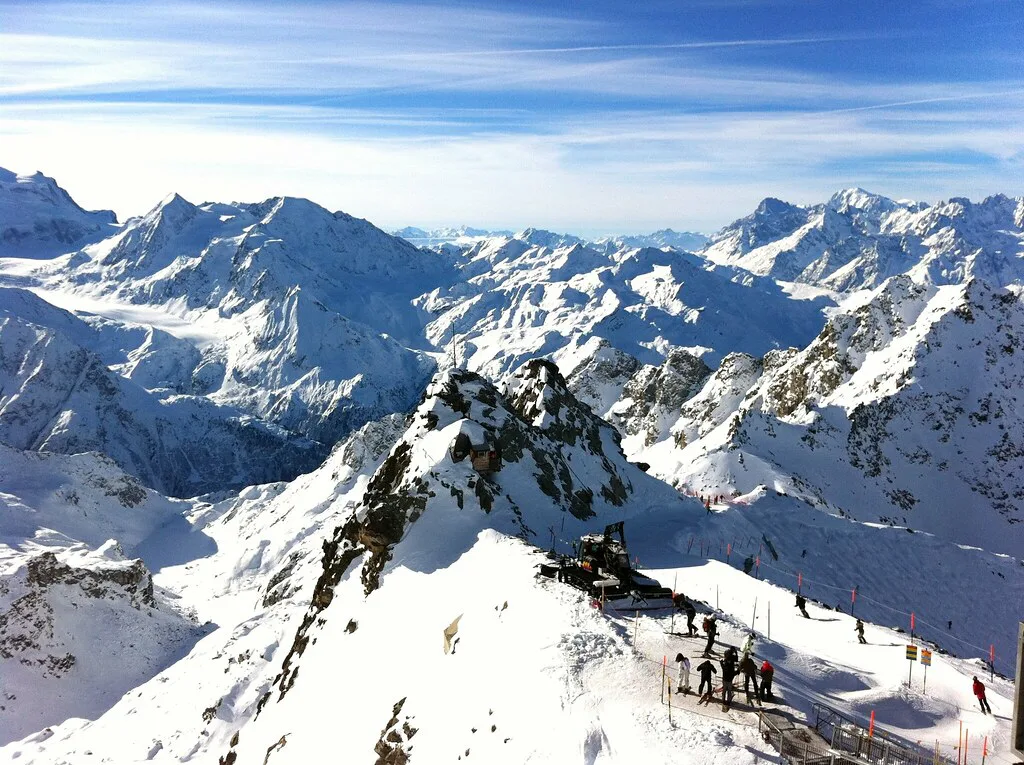
The official description gives skiing from November to the end of April, with the wider area open for around ten months a year across activities. That is the operator's published season window, not a promise that lifts and pistes will run every day within it. Early-season and late-season operations are typically partial, with some sectors closed and others in preparation.
The live information page shows exactly how conditional that is: lifts and pistes each carry a status of open, in preparation or closed, and the whole listing can change within a day. It also shows a status timestamp, which tells you how fresh the information is. Before any travel decision, check that timestamp and the specific lift or piste you are relying on.
Early-bird sales for the next winter's 4 Vallées pass are advertised on the operator's homepage, which is relevant if you plan to ski multiple weeks or want the annual product. Deadlines and eligibility sit with the operator, so read the sale page directly instead of relying on a general assumption about when early-bird pricing closes. Historic snow statistics should never be used as a forecast for your dates.
If your trip needs a fixed date far in advance, build in a fallback: choose a base with access to more than one sector, and accept that high-altitude terrain and lower valley runs may not open together. The Mont-Fort summit sector and the valley-level pistes that finish a descent are separately statused, so a good day on the upper mountain does not guarantee the run home is open.
Beginner Provision: Nursery Areas and Easy Pistes
Beginner provision in the Verbier area is real but scattered, which matters when you choose where to stay. The official live listing includes blue-graded pistes and specific learning infrastructure such as the Bambino piste and the Baby-lift Siviez in the 4 Vallées heading, and the Tapis roulant Tracouet, a moving carpet. Those named installations are the concrete evidence for learning terrain; a full nursery-area inventory is not published in one place.
The La Tzoumaz to Savoleyres sector hosts a Funslope that the operator describes as open to all skiers and snowboarders regardless of level, with banked turns, jumps and a tunnel among its elements. That is freestyle-oriented rather than a first-day learning zone, so treat it as a progression feature rather than a beginner area. A snow-covered playground with tunnels and slides sits at the top of the Pasay chairlift, which is a separate children's facility again.
Because the beginner facilities are spread across sectors, the most useful planning step is to decide which lift or base you will use for the first two or three mornings and check that specific piste or installation on the live page. If your group has mixed abilities, a sector with both easy and moderate runs lets everyone meet for lunch without crossing the whole network. Pair that sector choice with proper verbier ski lessons rather than teaching from the group, and book instructors early in peak weeks.
Progression and Varied Terrain Across the Network
Progression on Verbier's terrain means moving between sectors rather than simply skiing harder runs. Blue and red pistes are numerous across the listings, from Lacs and Moulins to Fontanet, while black pistes such as the FIS runs and the Mont-Fort descent sit at the demanding end. A skier comfortable on reds can build a full week without needing the blacks, provided the group agrees on sectors.
Yellow itineraries and connection slopes appear throughout the listings, including Chassoure-Tortin, Vallon d'Arbi and the Mont-Gelé links. These are marked differently from graded pistes, and their status is listed separately, which is a hint that they should not be treated as ordinary groomed runs. Check them individually if they are part of your plan.
Away from the pistes, the same live page lists ski touring routes, a cross-country loop between Les Ruinettes and La Chaux, a skicross course at La Chaux and a kilometre sprint. These are separate activities with their own access and conditions, not substitutes for piste skiing. Treat them as options within the resort's published activity list rather than as guaranteed extras.
Mountain Facilities, Parks and Non-Ski Activities
The operator lists a number of organised activity areas in the resort, including the La Tzoumaz to Savoleyres Funslope, a Skicross course at La Chaux, a Mini KL speed-skiing strip and a Race Experience timed giant slalom at the top of the La Tzoumaz to Savoleyres sector. Each has its own status on the live page, so they open and close independently of the main piste network. If one of these is a reason for your trip, verify it in the days before you travel.
The Mont 4 Zipline runs from the Mont-Fort area and is described as accessible during winter and summer when the Mont-Fort sector is open. It is a separate paid activity, not part of the ski terrain and not included in a standard lift pass. Check access and conditions with the operator rather than assuming it will run alongside the ski day.
Winter walking and snowshoeing trails appear as their own map category, alongside cross-country and piste maps. If part of your group does not ski, those maps are the documents to consult, and they are distinct from the sliding terrain. This guide does not assess them for difficulty or suitability.
Checking Live Lift and Piste Status Before You Travel
The single most useful pre-trip action is opening the official live information page and reading the status of the lifts and pistes you intend to use. It lists facilities by sector and by piste name, with a status indicator and a last-update timestamp. Cross-reference the specific piste names rather than scanning the whole list for a general impression.
Status can change through the day and from day to day, so a check the evening before is more reliable than one made a week out. The page also states plainly that real-time information is the point of the service: it exists to avoid unpleasant surprises. Treat a favourable snapshot as a good sign rather than a guarantee for the following morning.
For weather, webcams and conditions, the operator's site gathers several tools together, and the interactive map page links out to them. Use the map and the live list together: the map tells you where a piste sits in the network, and the live list tells you whether it is open. Neither replaces the other.
Maps and Navigation Tools for Verbier Skiing
The official interactive map is designed to work on a phone on the slopes, and the operator pairs it with a GPS app for finding your way from slope to slope. The map covers planning before you go and navigation while you are out, and opening it in full-screen mode gives a broader view of how the sectors join up. If you want a printable version instead, the Verbier Ski Map Guide sets out the sectors and lift codes in one place.
A second useful mapping resource gathers piste maps, town maps, winter walking and snowshoeing maps, cross-country maps and mountain bike trail maps in one place. The piste map section explains the lift-type abbreviations and the Express naming convention, which is genuinely helpful when reading a printed map. For route planning in the village itself, the town maps are separate from the piste maps.
Practical advice: save an offline copy of the sector you plan to ski before leaving your accommodation, because phone use on a cold mountain can be brief. Mark the lifts you need for your return route, especially where a connection slope or a single cabin is the only way back. If the network is unfamiliar, plan a return leg that does not depend on a single lift.
How to Plan a Verbier Ski Day Using Sectors
A workable planning sequence is to choose a sector rather than a list of runs. Decide whether your day is a Verbier local day, a Savoleyres and La Tzoumaz day, a Bruson day, or a full-network traverse through Siviez toward Nendaz and Thyon. Each of those is a genuinely different day with different lift dependencies.
Second, check the specific lifts and pistes that your chosen route needs, including any connection slope. The official listing names connections explicitly, which makes it possible to see whether a link is closed before you set out. If the link is closed, the route is not merely longer; it may not exist for that day.
Third, decide your descent before lunch rather than at the end of the day. Valley-level runs can be the first to close and the last to be reliable, and a route that ends at a lower base may not be the route that gets you home. Build the day around a return via a lift you have already confirmed.
Fourth, keep a spare half-day option in a different sector. The 4 Vallées is a network of separate pieces rather than one continuous block, and the sector that is closed in the morning may not be the one that opens later. Flexibility is a genuine planning advantage here.
Verbier and the Wider Swiss Resort Choice
Verbier sits in a different category from smaller, single-valley Swiss resorts because of the linked network and the altitude range. The trade-off is complexity: a compact resort is quicker to learn, while a linked area asks you to plan by sector and accept that some links may close. Which suits you depends on whether your group wants variety or simplicity.
If you are comparing options, two useful reference points on the same principle of sector-based planning are crans montana skiing, which organises terrain around a plateau resort, and davos skiing, which spreads skiing across several linked mountains. Neither is a substitute for the other, but comparing how each area divides its terrain is more useful than comparing headline piste kilometres. The same logic applies to Davos Klosters Mountains, where the spread across separate hills changes how you plan a day.
One clear differentiator for Verbier is the altitude ceiling at 3,330 m, which supports high terrain when lower slopes are marginal. That is an operational advantage in a marginal season, not a snow guarantee for your week. Weigh it alongside the effort of moving around the network when you decide.
Plan Your Verbier Ski Trip
The most reliable way to plan Verbier skiing is in this order: choose your base and the sector you will use most, pick a pass product whose coverage matches the ground you actually intend to ski, and confirm both against the official live page and interactive map close to departure. The scheduled season from November to the end of April is an operating window, and individual lifts, pistes and links can be closed within it.
If your trip depends on beginners progressing, on crossing to Nendaz or Thyon, or on a specific activity such as the zipline or the terrain parks, verify each of those separately rather than treating the resort as a single product. The operator publishes enough detail to answer those questions, but the answers change with conditions and maintenance.
Prices, booking terms, lesson arrangements and equipment hire conditions all sit with the relevant operators, so consult their own pages for your dates rather than relying on older listings. Lesson and hire providers are best compared directly, since the resort's own material does not rate or rank them.
Explore more Verbier guides
Frequently Asked Questions
Where is Verbier and is it part of the 4 Vallées?
Verbier is a village in the Swiss canton of Valais, in the Bagnes Valley, reached via Martigny. It is one of the resorts within the wider 4 Vallées network alongside Nendaz, La Tzoumaz and Thyon, and the ski area is described by the lift operator as the largest entirely within Switzerland.
How big is the Verbier ski area?
The lift operator publishes a figure of 410 km of slopes with a high point at 3,330 m. That figure covers the whole 4 Vallées rather than Verbier's local slopes alone, so the ground reachable from your base is smaller than the headline number.
What pass products are available?
The operator lists an annual 4 Vallées pass, a Mont 4 Card described as an annual product for youth and children, and one- and multi-day passes, plus an annual hiker pass and special offers. Coverage and eligibility conditions should be read on the operator's own pages before buying, because scope is not implied by the product name.
When does the Verbier ski season run?
The published season is from November to the end of April, with the wider area described as open for around ten months a year across seasons and activities. That is an operating window rather than a guarantee, and individual lifts and pistes carry separate open, in-preparation or closed status on the official live page.
Are there beginner areas in Verbier?
Yes, but they are spread across sectors rather than gathered into one place. The official live listing includes blue pistes and specific installations such as the Bambino piste, the Baby-lift Siviez and the Tapis roulant Tracouet moving carpet, and a children's playground at the top of the Pasay chairlift. A complete nursery-area inventory is not published in one location, so check the specific facility you need.
How do I check whether lifts and pistes are open?
Use the official live information page, which lists lifts and pistes by sector with an open, in-preparation or closed status and a last-update timestamp. Check it close to your travel date, since status changes through the day and a favourable snapshot is not a guarantee for the following morning.
Can I ski the whole 4 Vallées in a day?
It is possible only when the connection slopes between sectors are open, and those links are listed separately on the official live page. The network is sprawling rather than compact, so a full crossing needs early starts, favourable conditions and flexibility. If a link such as a Chassoure or Mont-Fort connection is closed, part of the circuit becomes unreachable for that day.
Do I need a car to ski from Verbier?
You reach the Verbier sector from the valley by cable car rather than by driving up to the slopes, and the local sectors connect by lift where links are open. Whether a car helps depends on where you stay and which sectors you plan to use; check access to your chosen lifts with the operator or your accommodation before deciding.
Sources
Useful notes for your next ski trip
Optional updates to our Alpine resort guides.
You might also like
Continue reading
More guides you'll find useful