Madonna di Campiglio Skiing: Dolomites Ski Area Guide
Plan Madonna di Campiglio skiing around linked sectors: how the shared skipass works, where beginners and intermediates ski and how to structure your trip.
On this page
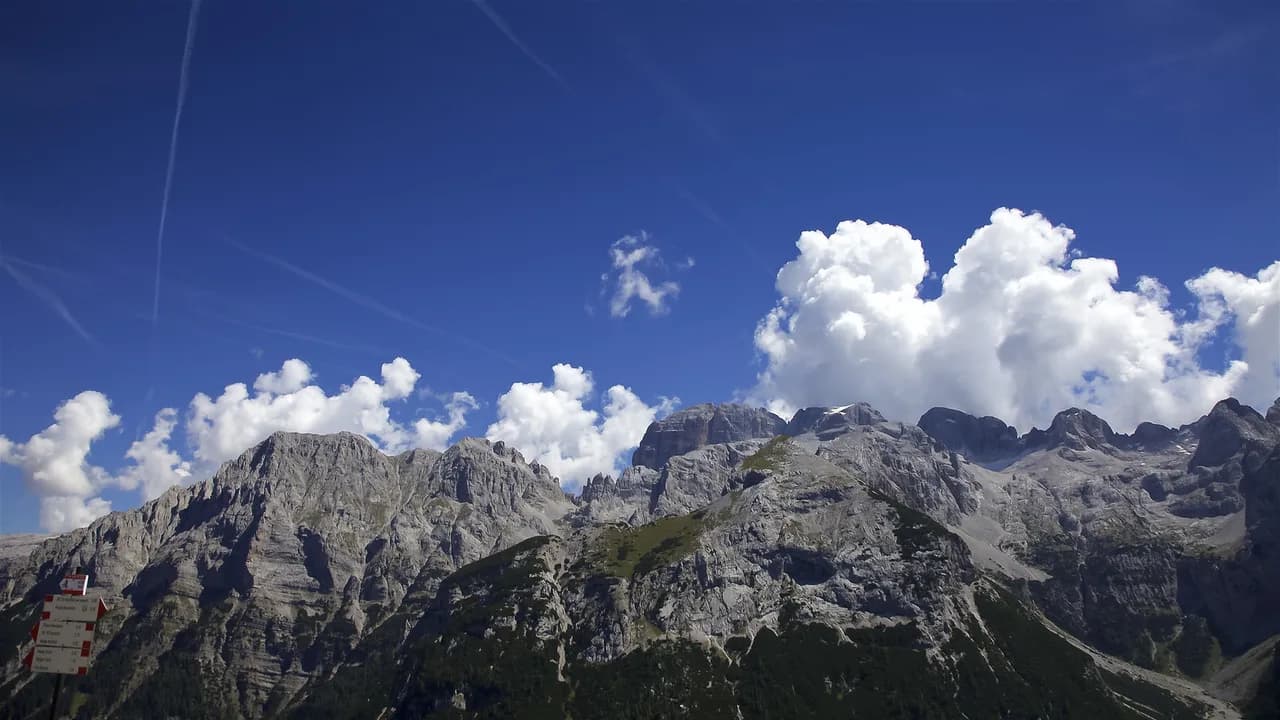
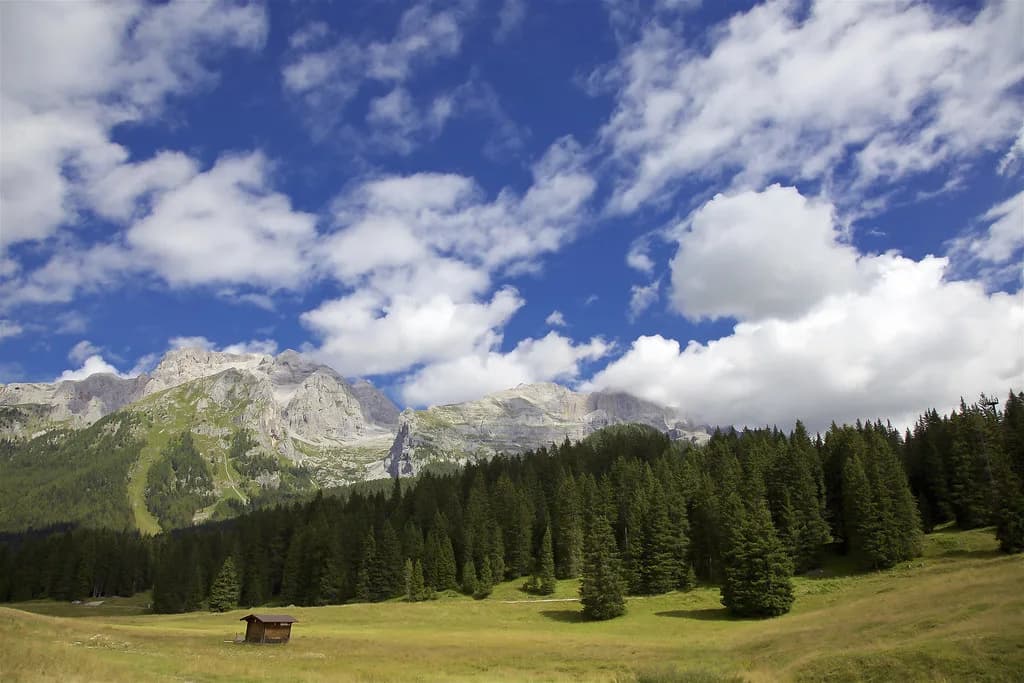
Madonna di Campiglio sits in Trentino, in northern Italy, in a wooded valley beneath the Brenta Dolomites and inside the Adamello-Brenta Nature Park. Its skiing is not one uniform domain but a set of sectors radiating from the valley, each with a different character and its own access point. That layout is the single most useful thing to understand, because it determines where you sleep, where you start each morning and how much of the linked area you realistically ski.
This guide is an orientation for trip planning, not a terrain guarantee. It covers the linked area concept, sector geography, approximate scale, beginner and intermediate provision, pass boundaries and the order in which to resolve decisions. Where sources disagree, it says so rather than inventing a tidy number, and it treats a published winter season as conditional: individual lifts, links and pistes can be affected at any point in the winter.
Prices, operating dates and pass terms change, so check them with Funivie Madonna di Campiglio S.p.A., the lift company, before you commit. Everything below is about structure and decisions, so you can ask Funivie Madonna di Campiglio better questions.
Why Choose Madonna di Campiglio for a Ski Trip
The resort suits skiers who want a varied, well-groomed linked area with a compact, walkable valley base rather than a single huge high-altitude domain. The official Trentino tourism page describes a modern area of slopes across Madonna di Campiglio, Pinzolo and Folgarida-Marilleva, connected so that a visitor can move between them under one skipass. Third-party guides describe the same structure, with sectors radiating from each side of a deep valley.
What it does not promise is scale in every direction. The same third-party assessment notes the sectors are extensive but not the best linked in the world, meaning some movements between areas cost time and a bus or a longer lift sequence. If you want to cover maximum ground on every run, a tightly linked single-basin domain may suit you better; if you want variety with a village base, this works.
The resort's reputation is built partly on its long history and its Italian clientele, with a car-free centre and lifts within walking distance of much of the accommodation. A third-party guide also notes a bus service for those who would rather not walk in ski boots. Treat that reputation as context for atmosphere, not as evidence of terrain difficulty: judge the skiing by the sectors and their actual runs.
Where the Resort Sits: Trentino and the Brenta Dolomites
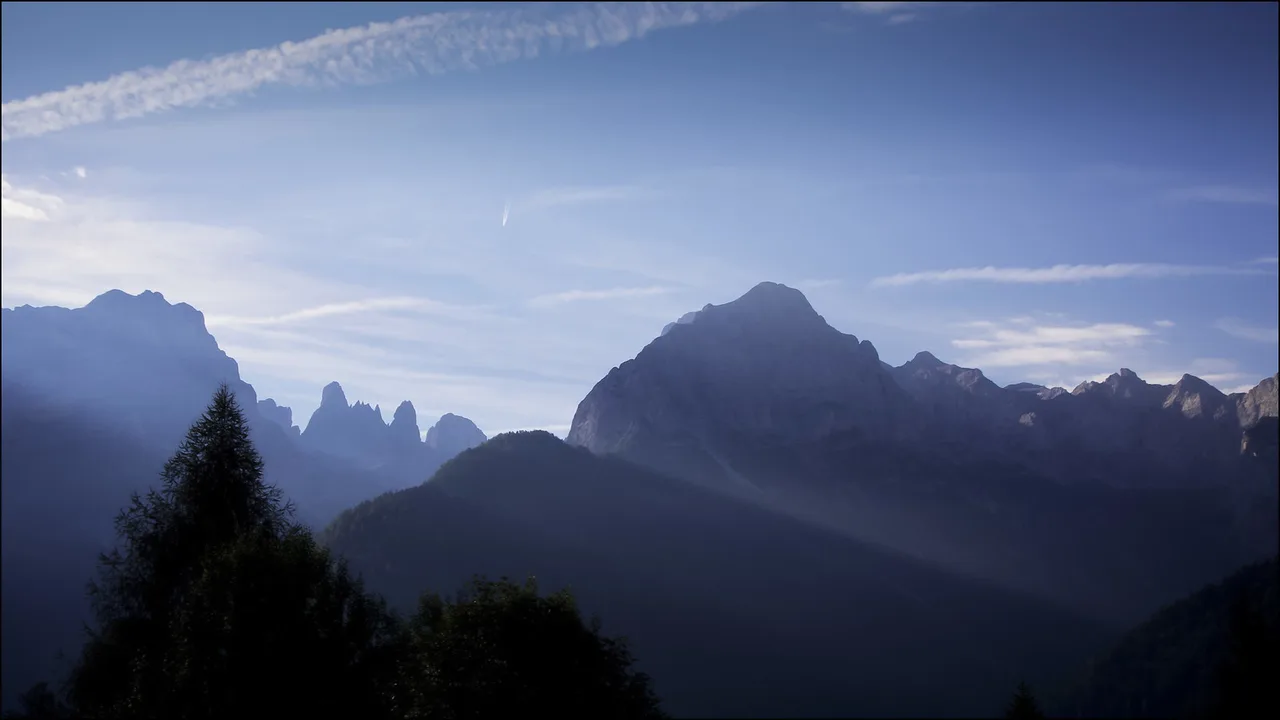
Madonna di Campiglio is in Trentino, in the Dolomites of northern Italy, in a valley between the Brenta Dolomites and the wider Adamello-Brenta park. The park setting shapes the skiing as much as the altitude does: the skiable slopes sit below cliff faces and wooded flanks rather than on a wide open glacier. That is why the character changes so much between neighbouring sectors even though they share one lift system.
The village base sits at around 1,520 m according to a third-party resort stat panel, with the high point of the system given as roughly 2,505 m by one source and 2,504 m by another. A third-party description of the ski area puts the lowest point of the linked system near Pinzolo at about 800 m. Treat all of these as approximate and attributed rather than exact current figures.
That altitude spread is the practical point. Lower sectors tend to be more sheltered and wooded, while the higher ground above Passo Grostè is more open; both descriptions come from third-party characterisations, not operator guarantees, and conditions vary through the season. Plan your day around which side gives you the exposure you want, not around a single resort-wide figure.
The Linked Ski Area Explained: Three Resorts, One Skipass Concept
The ski area is marketed as Skiarea Campiglio Dolomiti di Brenta – Val di Sole Val Rendena, and the official Trentino page states that a single skipass allows visitors to explore the entire area across the three resorts of Madonna di Campiglio, Pinzolo and Folgarida-Marilleva. That is the headline structure to plan around: it is one commercial area made of several distinct basins with different bases.
Third-party guides describe the same three-part structure, with the Madonna di Campiglio sectors sitting directly above the village, Folgarida and Marilleva reached by a link from the western side, and Pinzolo linked from the south. The wording matters for planning: a linked area means you can move between these basins, but it does not mean every movement is a single lift ride.
A shared pass name is not proof of what is included. Do not infer inclusions, upgrades, refund conditions or cross-resort validity from the branding; confirm the current product terms with the lift operator before booking. Our Madonna di Campiglio Ski Pass Guide breaks down that decision in more detail.
How Much Skiing There Is: Reconciling the Figures
The official Trentino page describes skiing on 155 km of slopes, calling it the largest ski area in Trentino. A third-party guide states a 156 km total, broken into 65 km at Madonna di Campiglio, 66 km at Folgarida-Marilleva and 30 km at Pinzolo. Those component figures sum to 161 km, which does not match that source's own stated total, so the breakdown is internally inconsistent.
The honest conclusion is that Madonna di Campiglio and its linked partners offer a substantial area of roughly 150 to 160 km of piste, with rounding and possibly scope differences between sources, and that no single figure should be treated as exact. Do not use piste-kilometre totals to compare resorts precisely; they are marketing-scale numbers that change as terrain is reclassified.
A more decision-relevant measure is vertical and sector spread. A third-party guide describes a maximum uninterrupted vertical drop of about 1,300 m from Doss di Sabion down towards the valley near Pinzolo, and notes that reaching the very bottom requires good snow cover. That is a route-level point rather than a guarantee, and it is the kind of detail worth checking on the day.
Sector by Sector: Cinque Laghi and Pradalago in the West
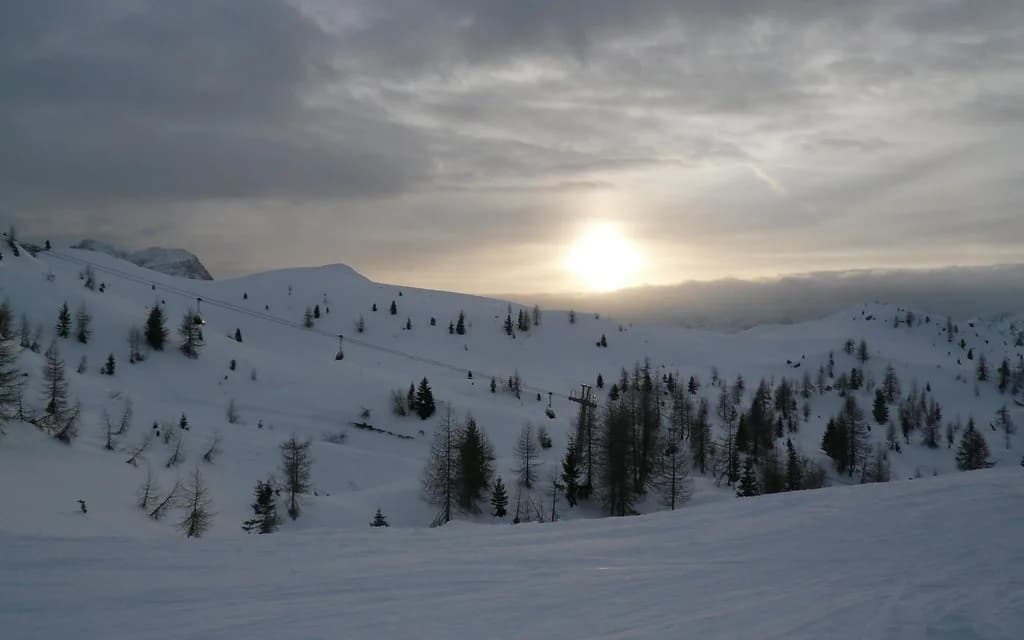
Cinque Laghi and Pradalago are the western sectors directly above the village, and third-party descriptions treat them as the gateway to Monte Vigo and on towards Marilleva and Folgarida. They are characterised as lower and more sheltered, with many runs cut through trees, which makes them a natural choice in poor visibility or when the upper mountain is exposed.
The character here is generally described as groomed and relaxed, with forested slopes opening onto views. For planning, that means these sectors are a sensible default for a first morning while you learn the lift sequence, and a fallback when the weather closes in higher up. Bear in mind that these are third-party characterisations rather than operator facts, and that openness and shelter vary with conditions.
Pradalago also carries the link onward towards Folgarida and Marilleva on the western side, so a day here can be extended into the neighbouring basins without returning to the village. Check the current lift and link status locally before committing to a long transit, because links are the first thing to be affected by wind or maintenance.
Sector by Sector: Passo Grostè and Monte Spinale
Passo Grostè and Monte Spinale sit above the village on the eastern side, rising higher and opening onto more exposed terrain. Third-party descriptions put much of the skiing above the tree line around Grostè, with broad slopes between Dolomite cliffs and peaks, while Monte Spinale is described as an engaging sector with a direct descent back to town.
That combination has a practical consequence: if you are staying on that side of the village, Monte Spinale is the logical daily start because it avoids a bus ride to a more distant base station. If you are staying elsewhere, the trade-off is a longer morning transfer in exchange for beginning on the higher, more open ground.
The official Trentino page notes the Ursus Snowpark on Grostè with features for different levels, and a separate mini park in Pradalago aimed at beginners and younger riders. Those are documented provisions rather than endorsements; if freestyle matters to your group, look up the current season's layout with Funivie Madonna di Campiglio, the lift company, since parks are rebuilt and reshaped through the season.
Sector by Sector: Doss del Sabion and the Pinzolo Side
Doss del Sabion forms the southern part of the Madonna di Campiglio skiing, with runs descending towards Pinzolo. Third-party descriptions note that the runs above Pinzolo tend to be steeper than those at Madonna di Campiglio, and that the red run continuing all the way into the valley depends on good snow conditions.
For a planning decision, treat this as the sector that most changes your day if you commit to it: it is geography rather than difficulty that matters, because reaching it and returning takes time. If your group has mixed abilities, agree in advance whether the day ends on this side or whether you return to the village side before lifts close.
Names in third-party sources are not always consistent, with at least one guide using both Pinzola and Pinzolo in the same passage. The correct linked resort is Pinzolo, and the naming inconsistency is a good reminder to rely on Funivie Madonna di Campiglio's own materials rather than repeating a secondhand detail.
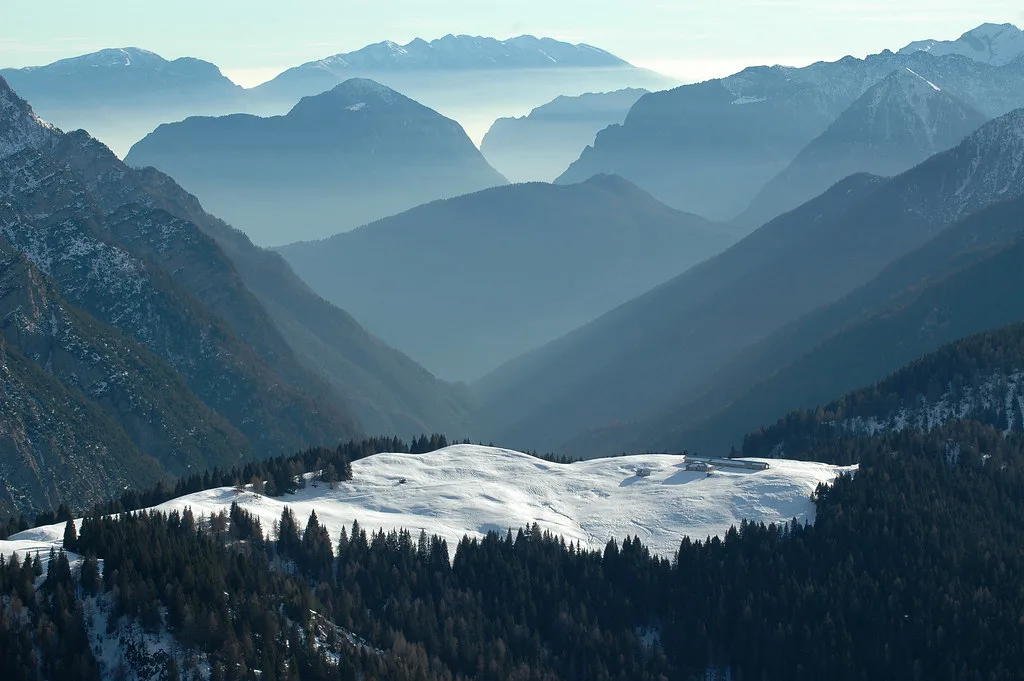
Sector by Sector: Monte Vigo, Monte Spolverino and the Folgarida-Marilleva Link
Monte Vigo and Monte Spolverino are the sectors associated with the western link towards Folgarida and Marilleva, reached from Pradalago. The official Trentino page includes Folgarida-Marilleva as one of the three resorts covered by the shared skipass, so a day extending west is part of the intended use of the area rather than an add-on.
Third-party guides describe this as the side where the link between the basins actually runs, which makes it the direction to choose if you want to see more than the Madonna di Campiglio sectors in a single day. It also means the return leg matters: plan your last run with enough margin to get back before the connecting lifts stop for the day.
Because this side is described as lower and more sheltered, it can be the better option when the upper mountain is windy or cloudy. That is a general characterisation, not a weather guarantee, and link availability should always be confirmed locally on the morning you intend to use it.
Sector by Sector: Campo Carlo Magno and the Satellite Base
Campo Carlo Magno is a smaller satellite base within the Madonna di Campiglio area, with nursery runs and its own lift connection towards Spinale. Third-party descriptions treat it as a separate starting point rather than part of the main village circulation.
The same area is also where the official Trentino page locates cross-country skiing, with a network of trails through forest and open ground, and a wider network of snowshoe trails and winter walks in the park. If part of your group does not ski downhill every day, this is the practical reason to consider staying or starting on that side.
Decide early whether Campo Carlo Magno is your base or a day trip. If it is your daily start, accept that reaching the main village sectors involves a transit; if it is a day trip, check that the lifts you need are running before you travel over.
Beginner and Early-Intermediate Provision
Beginners have several distinct kinds of provision here, and separating them helps you choose. First, dedicated nursery and family areas: the official Trentino page lists baby parks including Family Park Madonna di Campiglio and Baby Rainalter, plus the Pradalago Mini Ursus space for children and beginners. Those are specific named facilities rather than general claims.
Second, gentle linked runs across the wider area. A third-party guide notes a separate nursery area free of faster traffic, followed by a large network of gentle runs across the sectors, and describes an easy route from the highest point on Grostè that gives beginners a share of the alpine views. That is a description of terrain, not a promise that any specific run will be open or suitable on your dates.
Third, sectors that are simply not relevant in week one. The same guide singles out Monte Spinale as the area a beginner can ignore, while noting it has a gentle option back towards the lower Grostè slopes. Knowing which sector to skip is as useful as knowing where to start.
Some skiers never leave the nursery areas, which is fine, but if you hope to progress onto the linked network, a base near the gentler western sectors shortens your daily journey to suitable ground.
Intermediate Skiing: The Bulk of the Area
Intermediate skiers are the group the area best serves, according to third-party assessments: both the ambience and the extent of the skiing suit most holiday skiers, with no no-go areas. Over a third of the area is described as red runs, generally not severe by normal standards. That is a characterisation to weigh, not a difficulty rating you can rely on.
Several named runs are cited as classics, including the Genziana Bassa in Pradalago, the Vagliana for repeated south-facing laps, and the 3Tre course at Cinque Laghi. Names are useful for orientation on the map, but do not infer difficulty from a name, colour count or sector reputation; read the piste map and judge from the grading shown.
A common planning approach is to start with the lift up to Cinque Laghi and work around the resort in a clockwise direction, ending on Monte Spinale, with diversions west to Marilleva and Folgarida possible within a day for competent skiers. The same guide notes that being stranded far from the village at closing time is unlikely even with a slow group, because the layout brings you back.
Blue runs deserve more credit than they often get here: many follow long, attractive routes through the forest, and the longest descent back to the valley from Passo Grostè is described as around 7 km. If your group is mixed, plan a route that lets stronger skiers loop while others stay on a single long blue. For a different Dolomites base with a similarly sector-based layout, the Canazei ski guide is a useful comparison when weighing where to stay.
Advanced and Expert Character: Honest Expectations
Advanced skiers should arrive with moderate expectations of piste challenge. Third-party guides describe a handful of black runs, making up roughly 11 percent of the area by one estimate, concentrated in direct descents that sit below the tree line. The Spinale Direttissima, the Canalone Miramonti and the Amazzonia on Pradalago are cited as examples, along with a black above Marilleva.
The same source notes that Folgarida and Marilleva together add a great many kilometres of predominantly intermediate piste, while Pinzolo's runs are generally steeper than Madonna's, and that on-piste experts may find the challenging mileage limited. Read that as a market assessment, not a fixed rule about a named run on a given day.
One third-party overview lists a lack of really challenging on-piste skiing as a drawback, which is a fair signal if steep groomed terrain is your priority. If that describes your group, treat Madonna di Campiglio as a base for a varied week rather than as a destination for hard piste mileage.
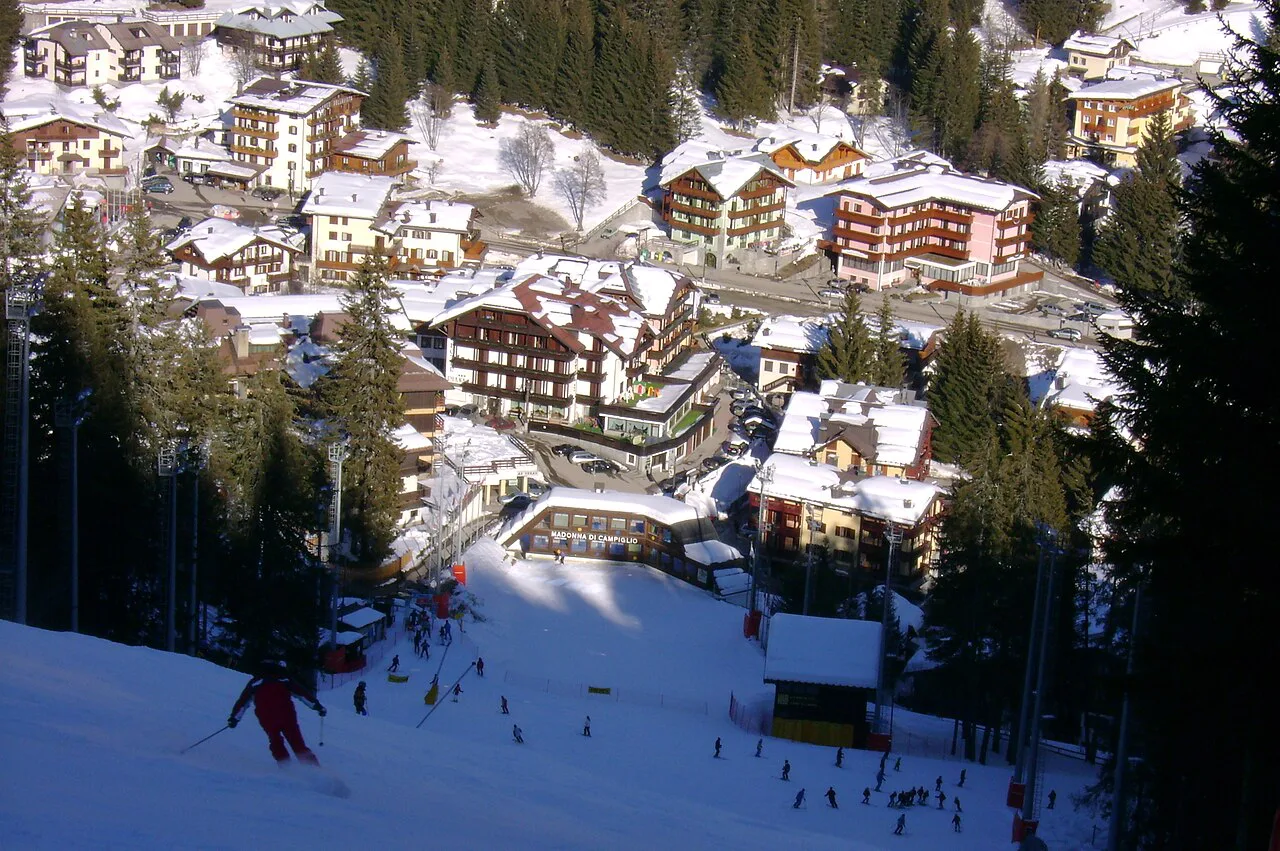
Pass Boundaries and Booking Implications
The linked-area skipass is best understood as a boundary decision rather than a single product to buy. The official Trentino page states that a single skipass covers the whole area across the three resorts, and adds that pricing is dynamic, which means the price you see depends on when and how you buy. Because dynamic pricing changes, this guide does not quote figures; the Funivie Madonna di Campiglio website lists current rates and terms.
Ask Funivie Madonna di Campiglio four questions before you commit: which lifts and links are covered by the product you are buying, whether the product is valid across all three resorts or only locally, what the conditions are for changes or refunds, and whether any planned closures fall within your dates. None of these can be inferred from the pass name.
If you plan to spend most of your week on the Madonna di Campiglio sectors, the value of the full linked product depends on whether you will realistically travel west or south. Work out your two or three intended sectors first, then match the pass to that plan instead of buying the widest product by default.
Ski Schools, Lessons and Hire: What to Establish First
The official Trentino page lists multiple alpine ski schools operating in the area, including Scuola Italiana Sci Nazionale Des Alpes, Scuola di Sci Rainalter and Trentino Ski Emotion, alongside snowboard and cross-country providers. Those entries confirm that provision exists; they do not tell you what a given school offers, in which language, or where a lesson meets.
Before booking, establish the practical details directly with the ski school: group sizes and ability splits, the language the lesson is taught in, where and when you meet, whether lift access is included, and how hire equipment is arranged. A third-party guide notes that in Italy ski school is often oriented towards children and that language can sometimes be an issue, so asking the school directly is worthwhile.
For equipment, book hire before you travel if your dates fall in a busy period, and confirm collection point, opening times and whether boots can be swapped during the week. Do not assume features or services from a shop's name or reputation; ask what is actually included in the package you are quoted.
Choosing Where the Layout Matters: Base and Daily Start
The most consequential planning decision is which side of the valley you start from each morning. A third-party guide notes that lifts are within walking distance of much of the accommodation, with a bus service for those who prefer not to walk in ski boots, so the village base is workable from most positions, but the daily transit still costs time.
Use the sector geography as your filter rather than hotel names. If you want forested, sheltered skiing and easy access to the western link, orient towards the Pradalago and Cinque Laghi side. If you want to begin high and open above the tree line, orient towards Monte Spinale and Grostè. Choosing a base on the wrong side means a bus ride before every ski day.
If you are travelling with a group of mixed ability, prioritise a base that keeps everyone within a short distance of terrain that suits them, and accept that the strongest skiers will spend part of each day in transit. That is a better trade than moving accommodation mid-trip, which rarely works in a compact valley resort.
A Practical Planning Sequence
Start with the decision that constrains everything else: which sectors you actually want to ski. Read the madonna di campiglio ski map, identify two or three sectors that match your group's ability and the exposure you prefer, and only then choose accommodation on the side of the valley that makes those sectors your daily start.
Second, resolve the pass question. Decide whether the linked product matches your intended sectors, confirm current inclusions and terms with Funivie Madonna di Campiglio, and check whether any planned lift or link closures affect your dates. Because pricing is dynamic, buy when you have your dates fixed rather than guessing at a future price.
Third, book lessons and hire early if you need them, with the practical details confirmed in writing: meeting point, language, group size and equipment arrangements. Fourth, build a rough day plan for each sector, keeping one flexible day for the weather, and treat any published season dates as conditional rather than fixed. If you are weighing which part of the winter to visit, our guide to the Madonna di Campiglio ski season covers month-by-month considerations.
Common Mistakes and Open Questions
The most common mistake is treating the resort as a single ski area and expecting to cover it in one or two days; the sectors radiate from a valley and moving between them takes time. A second is buying a pass without checking whether your itinerary genuinely needs the full linked product, which ties back to the pass boundary question.
A third is relying on piste-kilometre totals to judge the resort: the official 155 km and third-party 156 km figures differ, and the third-party breakdown does not sum to its own total. Use sector character and vertical instead, and treat all totals as approximate. A fourth is assuming that a scheduled season guarantees every lift, link and piste, which it does not.
The genuine open questions are ones only Funivie Madonna di Campiglio and the ski schools can answer: current pass inclusions and prices, which lifts and links are scheduled during your stay, whether any planned closures affect your dates, and which ski school or hire terms apply. Resolve those before booking, and leave the rest to the conditions on the day.
Plan Your Madonna di Campiglio Ski Trip
Madonna di Campiglio skiing works best when you plan by sector. Decide whether you want a village-side base near the forested western sectors or a start on the higher, more open ground above Spinale and Grostè, then choose your accommodation to match that daily route.
Confirm pass inclusions, prices and scheduled lifts with Funivie Madonna di Campiglio S.p.A. before you commit, and treat every published season as conditional rather than guaranteed. With those checks done, the resort's mix of sheltered lower sectors, higher open ground and a compact valley base gives most skiers a varied week without needing to chase a single headline number.
Explore more Madonna di Campiglio guides
Frequently Asked Questions
Is Madonna di Campiglio good for beginners?
It has documented provision in several forms: named nursery and family areas such as Family Park Madonna di Campiglio and Baby Rainalter, a mini freestyle park at Pradalago aimed at beginners and children, and gentle linked runs across the sectors. A third-party guide describes a separate nursery area free of faster traffic plus a large network of easy runs. It also singles out Monte Spinale as a sector beginners can ignore for most of a first week. Terrain character is not a guarantee, so check which runs and areas are open on your dates with the lift operator.
How big is the Madonna di Campiglio ski area?
Sources differ and the figures should be treated as approximate. The official Trentino tourism page describes skiing on 155 km of slopes across the linked area, while a third-party guide states a 156 km total with a component breakdown that does not sum to its own total. Madonna di Campiglio is linked with Pinzolo and Folgarida-Marilleva under a shared area concept, so the combined figure is larger than the village sectors alone. Do not use these totals for precise resort comparisons.
Is Madonna di Campiglio one ski area or several?
It is one commercial area made up of several distinct basins. The official tourism page presents a single skipass covering Madonna di Campiglio, Pinzolo and Folgarida-Marilleva, while third-party guides describe sectors radiating from each side of a valley, including Cinque Laghi, Pradalago, Passo Grostè, Monte Spinale, Doss del Sabion and the western link towards Folgarida and Marilleva. Movements between basins involve real travel time and sometimes a bus, so plan by sector rather than treating the area as uniform.
Do Folgarida, Marilleva and Pinzolo share the same skipass as Madonna di Campiglio?
The official Trentino tourism page states that a single skipass allows visitors to explore the entire area across the three resorts of Madonna di Campiglio, Pinzolo and Folgarida-Marilleva. That describes the intended structure of the area, but it is not proof of the inclusions, upgrades or refund terms of any specific product, and pricing is described as dynamic. Confirm the current product terms, coverage and any planned closures with the lift operator before booking.
Which sectors suit intermediates best?
Third-party assessments suggest intermediates are the group the area best serves, describing over a third of the terrain as red runs that are generally not severe by normal standards. Named routes cited include the Genziana Bassa in Pradalago, the Vagliana for south-facing laps and the 3Tre course at Cinque Laghi, and a clockwise circuit ending on Monte Spinale is a common way to loop the resort. These are characterisations rather than difficulty ratings, so read the piste map and grading on the day.
Is Madonna di Campiglio good for advanced skiers?
Expect a modest amount of genuinely challenging piste terrain. Third-party guides describe a handful of black runs, one estimate putting them at roughly 11 percent of the area, with the Spinale Direttissima, the Canalone Miramonti and the Amazzonia on Pradalago cited as examples, plus a black above Marilleva. Pinzolo's runs are generally described as steeper than Madonna's. One overview lists a lack of really challenging on-piste skiing as a drawback, which is a fair signal if steep groomed terrain is your priority.
Where do you start your ski day in Madonna di Campiglio?
It depends on which side of the valley you are based. Third-party guides describe Monte Spinale as the logical daily start for anyone staying on that side of town, because it avoids a bus ride to a more distant base station, while the Pradalago and Cinque Laghi side gives quicker access to the sheltered forested sectors and the western link. Campo Carlo Magno is a separate satellite base with its own lift connection. Choose accommodation to match your intended start, then check lift status each morning.
When should I check prices and opening dates?
Check them with the lift operator, Funivie Madonna di Campiglio S.p.A., once your dates are fixed, because pass pricing is described as dynamic and any season dates published for a past winter should not be carried forward. Ask which lifts and links are scheduled during your stay, whether the pass you are considering covers all three linked resorts, and what the current conditions are for changes or refunds. This guide deliberately does not quote prices or operating dates because they change.
Sources
Useful notes for your next ski trip
Optional updates to our Alpine resort guides.
You might also like
Continue reading
More guides you'll find useful