Livigno Skiing Guide: Two Sides, Lifts and Pass Choices
Plan Livigno skiing around two valley sides, 115 km of slopes and a free resort bus. Compare sectors, pass boundaries and beginner provision before you book.
On this page
Livigno suits skiers who want two distinct valley sides inside one lift system, with the practical catch that switching between Carosello 3000 and the Mottolino and Tagliede side shapes how you spend the day. The resort counts 115 km of slopes spread across both flanks, rising from a village base at 1,816 m. Deciding which side to start from is the single most useful choice you can make before arrival.
The two sectors are not a single continuous circuit, so a day spent on one side usually stays there. Lifts connect up the mountain rather than across the valley, and the free local bus handles the village-to-village movement. That layout rewards skiers who plan one side per day rather than trying to sample both in a morning.
This guide covers sector character, the piste mix of 12 black, 37 red and 29 blue runs, beginner provision, transport and pass boundaries. It does not quote pass prices, because current primary sources do not publish confirmed figures for the coming season. Where a number is not settled, the guide says where to check instead of guessing.
How the Livigno ski area is laid out
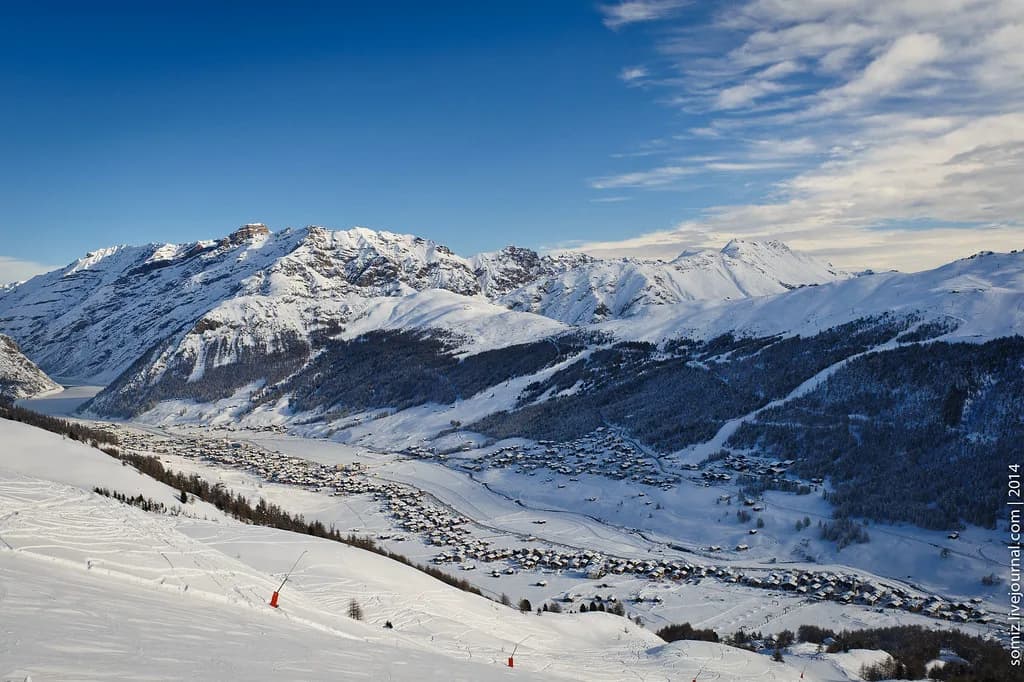
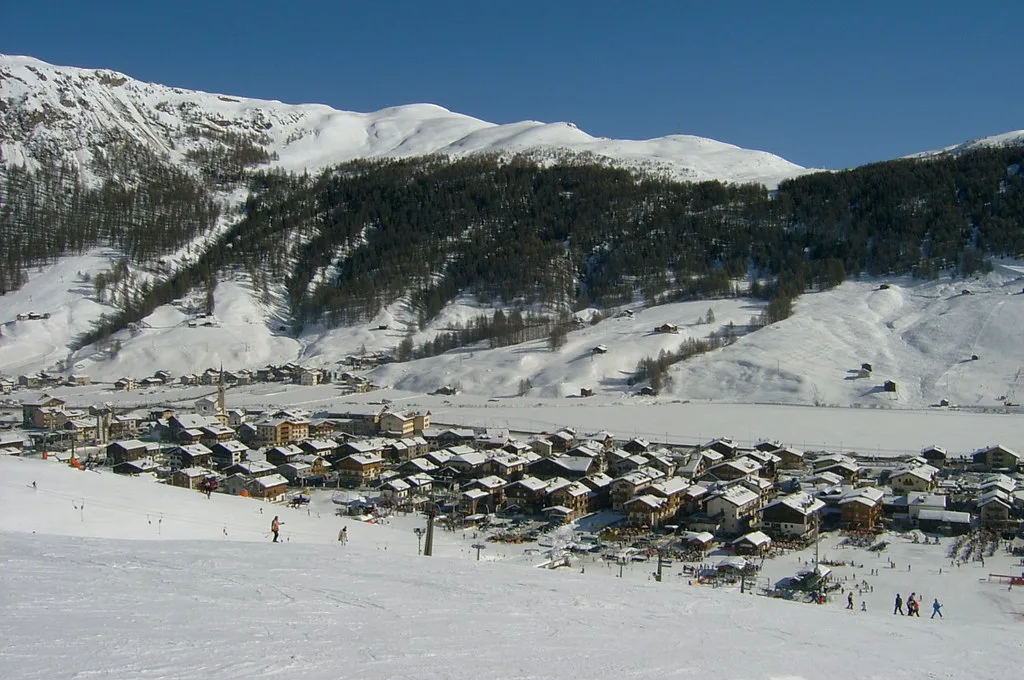
Livigno sits in a valley with skiable terrain on both flanks, which is why the resort describes two wide and sunny ski areas rather than one. The village base is 1,816 m, and slopes rise well above that on both sides. That matters because a low base with high top stations changes how a day is structured.
The two sides are Carosello 3000 and the Mottolino and Tagliede sector. Each has its own lift base, its own access points from the village and its own mix of runs, so you pick a side, ride it and return. The practical effect is that Livigno feels larger than a 115 km area normally would, because you are not traversing a single linked circuit.
The layout has a trade-off: you gain two distinct characters of skiing, but you lose the ability to flow from one side to the other mid-run. Skiers who like variety often split the trip by day rather than by hour. Skiers who like a single familiar loop may prefer to commit to one side for most of the week.
The Carosello 3000 side
Carosello 3000 is the higher of the two lift bases and is served by two stages of gondola, with the upper station reaching 2,749 m. That altitude makes it the natural side to start on in warmer or later-season conditions. The lifts page also lists hourly capacity and travel times that help you judge queue dynamics.
Because the upper gondola tops out close to 2,750 m, the Carosello side gives access to the resort's highest terrain and, in good conditions, the longest vertical. The lower station sits at 2,232 m, so even the mid-mountain base is well above the village. That combination suits skiers who want altitude without committing to the full top every run.
Carosello 3000 is a reasonable default for intermediates who want long, sweeping runs and for anyone skiing later in the season when lower snow is less reliable. It is also the side where beginners typically start, because the gentle lower slopes and the ski school base area sit on this flank. Commit to this side first if your group mixes abilities, then reassess.
The Mottolino and Tagliede side
Mottolino is the second major sector, served by a large-cabin gondola from a base just above the village. The Tagliede sector sits alongside it, with its own gondola and a mid-station at 2,358 m. Together they form the opposite flank to Carosello 3000, and they carry a different mix of terrain.
The Mottolino gondola is the highest-capacity lift listed in the resort's inventory, and it reaches 2,402 m. Tagliede's upper station at 2,358 m gives access to a broad area of intermediate runs. If your priority is long, wide cruising with plenty of lift capacity to absorb busy periods, this side is usually the better bet.
Tagliede also connects upward to the Valandrea-Vetta chairlift, which reaches 2,708 m. That link extends the vertical available on this side and gives access to higher terrain without returning to the village. Skiers who want to log altitude should note that Valandrea-Vetta's top station is close to Carosello's upper gondola height, so neither side holds a clear altitude monopoly.
Piste mix and difficulty distribution
The primary source lists the ski area as 115 km of slopes comprising 12 black, 37 red and 29 blue runs. That mix is heavily weighted toward intermediate terrain, with red runs forming the largest single group. The blue runs are the second-largest category, so confident beginners and early intermediates have meaningful choice on both sides.
A secondary guide describes 75 runs split as 26 percent blue, 57 percent red and 17 percent black, which conflicts with the primary counts. The counts differ because the sources define runs and sectors differently, not necessarily because either is careless. For trip planning, the primary run counts are the safer basis, and the practical takeaway from both is the same: red dominates.
The small black-run count of 12 matters for advanced skiers deciding whether Livigno is the right fit. It is a medium-sized alpine area with a strong intermediate bias rather than a steep-terrain destination. Advanced skiers who want a week of black runs should weigh that, while intermediates and mixed groups will find the weighting works in their favour.
Altitude and terrain spread
The village base is 1,816 m, which is high enough that the resort commonly describes skiing from late November into early May. Scheduled dates are conditional operations, not guarantees that every lift, link or piste will run on any given day. Treat any quoted season as a plan, not a promise.
On the Carosello side, the two-stage gondola climbs from 2,232 m to 2,749 m. On the Mottolino and Tagliede side, the gondolas reach 2,402 m and 2,358 m, with Valandrea-Vetta extending to 2,708 m. The vertical available per side is therefore broadly comparable, which is useful when conditions are better on one flank than the other.
Where you base your day has a practical effect on timing. Starting on the higher Carosello side makes sense in mild or late-season weather because the snow holds better at altitude. Starting on Mottolino and Tagliede makes sense on cold, clear mornings when the lower runs are firm and fast. Neither is universally better; it depends on the day.
Lifts and how the sectors connect
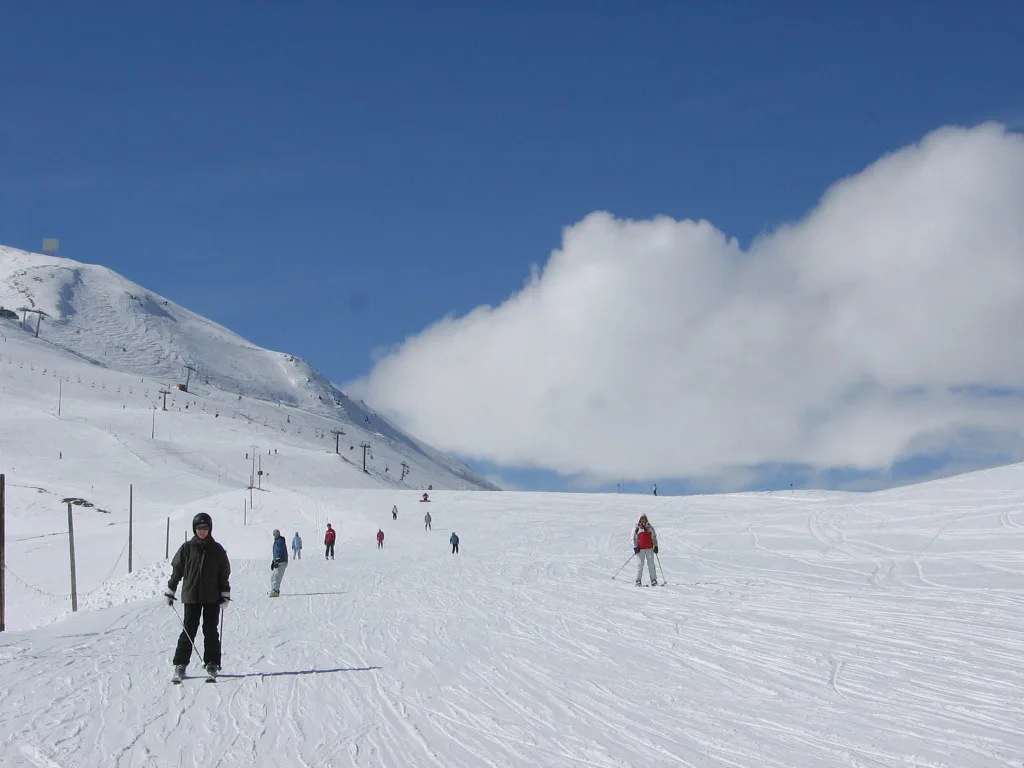
The primary slopes page and the ski area opening page both say the area is served by six gondolas, fourteen chairlifts and twelve ski lifts. The lifts page details only a subset of the total, but the official capacity figures are consistent across the resort's own pages.
What is consistent is the structure: gondolas handle the main climbs from the village, chairlifts extend the upper terrain and ski lifts serve shorter, lower sections. The lifts page lists individual lines with hourly flow, length and altitude difference, which is the most reliable way to understand capacity. For example, the Mottolino gondola is listed at 3,000 people per hour while several chairlifts run at 2,000 to 2,800.
Lift operating hours vary by line: most listed lifts open at 08:00 or 09:00 and close between 16:30 and 17:00. Those hours are seasonal and vary through the year, so they are best confirmed against the Livigno lifts live status page close to your dates. Do not build a tight schedule around a listed closing time, especially in shoulder weeks.
Pass boundaries and pass-product families
A Livigno ski pass is a single product covering the whole local ski area, including both valley sides and the connections between them. The resort does not sell separate Carosello and Mottolino passes, so you do not need to choose a side when buying. What you choose is duration and any applicable rate category.
Primary sources describe pass family structure rather than prices: an adult rate, a junior rate and promotional packages tied to accommodation. The slopes page lists skipass products alongside the ski area description, but the published page does not carry confirmed figures for the coming season. Our livigno ski pass guide covers how the products fit together; check the pass office directly for current terms and eligibility before you commit.
Reductions and promotions change between seasons and are tied to specific booking conditions. A promotion valid in one winter is not evidence of the same terms the following winter, so match any discount against the season you are actually travelling. Do not assume a rate category applied to a sibling last year will apply to yours.
Beginner and learning provision
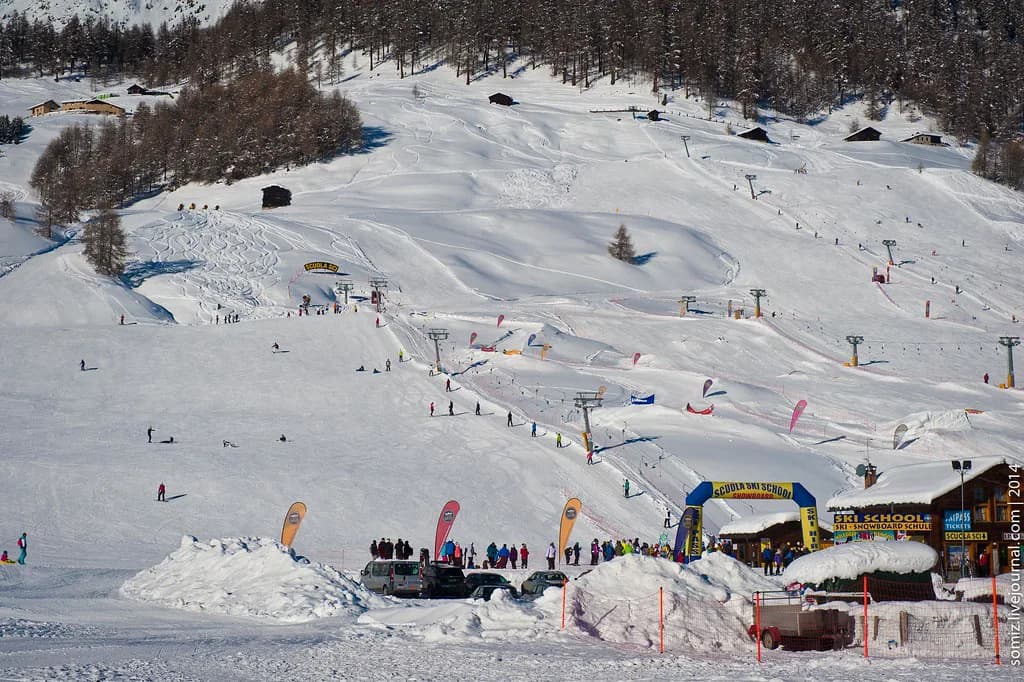
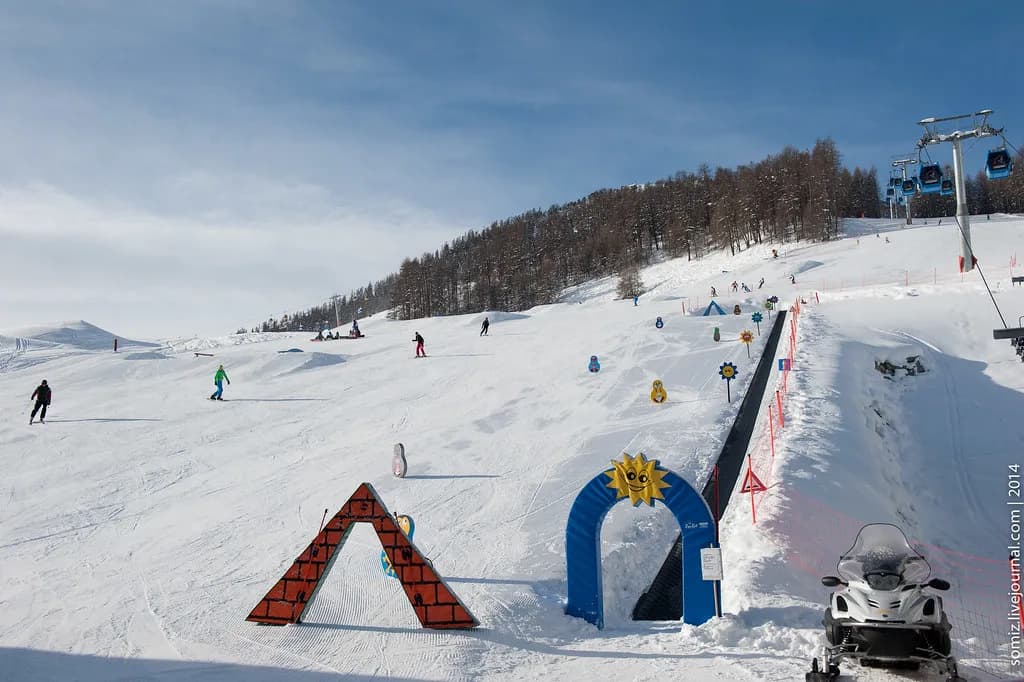
Livigno has dedicated beginner terrain rather than expecting newcomers to share main runs. The active-winter page describes a Kindergarten with entertainers for children aged 3 to 12, a special learning slope with baby lifts and magic carpets, and instruction from qualified ski instructors. That structured setup is the main reason families with first-time skiers choose the resort.
The resort reports more than 150 qualified ski instructors covering alpine, snowboard, telemark and Nordic disciplines. Lesson formats, group sizes and meeting arrangements vary by school and are not standardised across the resort. Our livigno ski lessons guide sets out how bookings usually work; each ski school keeps its own arrangements, so go by the one you choose.
Beginner provision on both flanks means you do not have to move the whole group to one side for the first days. That said, the lower nursery zones are the busiest areas in peak weeks, and magic-carpet capacity is limited relative to the main lifts. If your group includes first-timers, plan lesson times early in the day and build in slack.
Alternatives on the same trip
Not every day has to be downhill. The resort maintains cross-country trails, snowshoeing routes and fat-bike tracks as part of the same winter offer. The active-winter page states 30 km of groomed cross-country trails, while a third-party guide quotes 40 km. The primary figure of 30 km is the safer basis for planning.
Trail lengths and grooming schedules change through the season, and a trail open in January may not be open in April. The practical approach is to check the resort's own trail status rather than relying on a fixed figure from a guide. This is particularly true in low-snow periods, when some lower routes close.
If your group includes non-skiers, these alternatives let them stay in the same valley without needing downhill equipment. They also give skiers a rest day without leaving the resort. Budget for separate rental and any trail fees, since these are not covered by a downhill pass.
Getting around: ski-in, ski-out and the free bus
Livigno's layout supports ski-in, ski-out access because many hotels and apartments sit directly on or beside the slopes. The resort also runs a free local bus network, with more than 55 stops in the village and 12 in Trepalle. That coverage means you can reach either ski area without a car.
The bus is included with MyLivignoPass and runs daily, with increased frequency in high season. Trepalle sits above the main village and has its own connections, so staying there is viable if you plan around bus times. The trade-off is that you depend on the timetable rather than walking to a lift.
For skiers who want maximum flexibility, staying within walking distance of one of the gondola bases removes the bus from the daily routine. For skiers who want to sample both sides without moving accommodation, the bus is the practical link. Neither approach is wrong; it depends on how much you value door-to-lift convenience versus sector variety.
A practical planning sequence
First, decide which side to base each day. Carosello 3000 suits altitude-focused and later-season days, while Mottolino and Tagliede suit long cruising and higher lift capacity. Splitting the trip by day rather than trying to sample both in a morning is the more workable approach.
Second, match your pass duration to your actual mix of days. If you plan rest days, cross-country days or snowshoe days, a shorter downhill pass may fit better than a full-week product. Pass terms and prices should be confirmed with the Livigno ski pass office before you book, since published figures for the coming season are not available here.
Third, check conditions close to your travel dates. The resort's own live lift status is the only reliable source for what is actually running on a given day. Scheduled opening and closing dates describe intent, not a guarantee that every lift, link or piste will operate.
Finally, if you are comparing Livigno against other Italian options, it helps to look at how the surrounding areas structure their terrain. For a nearby alternative with a different valley layout, see bormio skiing; for a Dolomites comparison with a much larger linked area, see corvara skiing. Both offer a useful contrast to Livigno's two-sided arrangement.
Skiers weighing a Livigno trip against another Italian resort should also consider one more factor: Livigno is a compact, walkable valley rather than a large interconnected circuit. That compactness is a strength for mixed groups and a limitation for skiers seeking endless linked mileage. The choice depends on which of those you value more.
What to confirm before booking
Live lift status is the most important pre-trip check, because scheduled openings are conditional. The lifts page carries a live status indicator for individual lines and is updated by the ski pass office. Check it in the days before travel rather than months ahead.
Current-season pass terms and eligibility categories should be confirmed directly with the pass office. Promotions, junior rates and package conditions change between winters, and dated offers from a previous season are not evidence of the current terms. Ask for written confirmation of what your booking includes.
Finally, treat any quoted snow statistic as history rather than forecast. A strong past season does not predict the next one, and a poor one does not mean a poor trip. The resort's altitude and snowmaking infrastructure support the season, but conditions on your specific dates are only known close to travel.
Plan Your Livigno Ski Trip
Livigno rewards skiers who plan around its two-sided layout rather than fighting it. Choosing one sector per day, matching your pass to your actual skiing days and confirming lift status close to travel will do more for your trip than any single booking upgrade. The resort's intermediate-heavy piste mix and structured beginner provision make it a strong fit for mixed-ability groups.
The main cautions are the ones that apply to any alpine trip: scheduled dates are conditional, prices should be verified with the pass office, and no source can promise conditions on a specific week. Treat published statistics as context, not forecast, and check the resort's own live information before you travel. For the practical details, see the Livigno piste map guide.
Explore more Livigno guides
Frequently Asked Questions
How is Livigno skiing split between the two sides of the valley?
Livigno has two main ski sectors on opposite flanks of the valley: Carosello 3000 and the Mottolino and Tagliede area. Each has its own lift base and access points from the village, and the two are linked by the free local bus rather than by a continuous piste circuit. Most skiers pick one side per day and work it thoroughly.
Does one Livigno ski pass cover both valley sides?
A standard Livigno ski pass covers the whole local ski area, including both valley sides. The resort does not sell separate passes for Carosello and Mottolino, so your choice is duration and rate category rather than which sector to access. Check current terms and eligibility with the ski pass office.
How many blue, red and black runs does Livigno have?
The primary resort source lists 115 km of slopes comprising 12 black, 37 red and 29 blue runs. A third-party guide gives a different breakdown, but the primary counts are the more reliable basis for trip planning. The practical takeaway from either is that red runs form the largest group and black runs are relatively limited.
Can you get around Livigno without a car during a ski trip?
Yes. Livigno runs a free local bus network with more than 55 stops in the village and 12 in Trepalle, included with MyLivignoPass. It covers the main ski area access points and runs daily, with more frequent service in high season. Ski-in, ski-out accommodation also removes the daily commute for some visitors.
When does the Livigno ski season usually run?
The resort schedules its winter season from late November into early May, though specific dates vary by year. Those dates describe intended operation and are conditional; not every lift, link or piste is guaranteed to run throughout. Check the resort's live lift status before you travel.
Are there cross-country and non-downhill options in Livigno?
Yes. The resort maintains cross-country trails, snowshoeing routes and fat-bike tracks alongside its downhill terrain, with 30 km of groomed cross-country trails reported by the primary source. Trail availability and grooming change through the season, so check current status locally.
Sources
Useful notes for your next ski trip
Optional updates to our Alpine resort guides.
You might also like
Continue reading
More guides you'll find useful