
Mayrhofen Skiing: Ahorn, Penken and Zillertal Passes
Plan a Mayrhofen ski trip around two contrasting mountains, the Finkenberg link and pass choices that decide how far your lift ticket reaches.
On this page
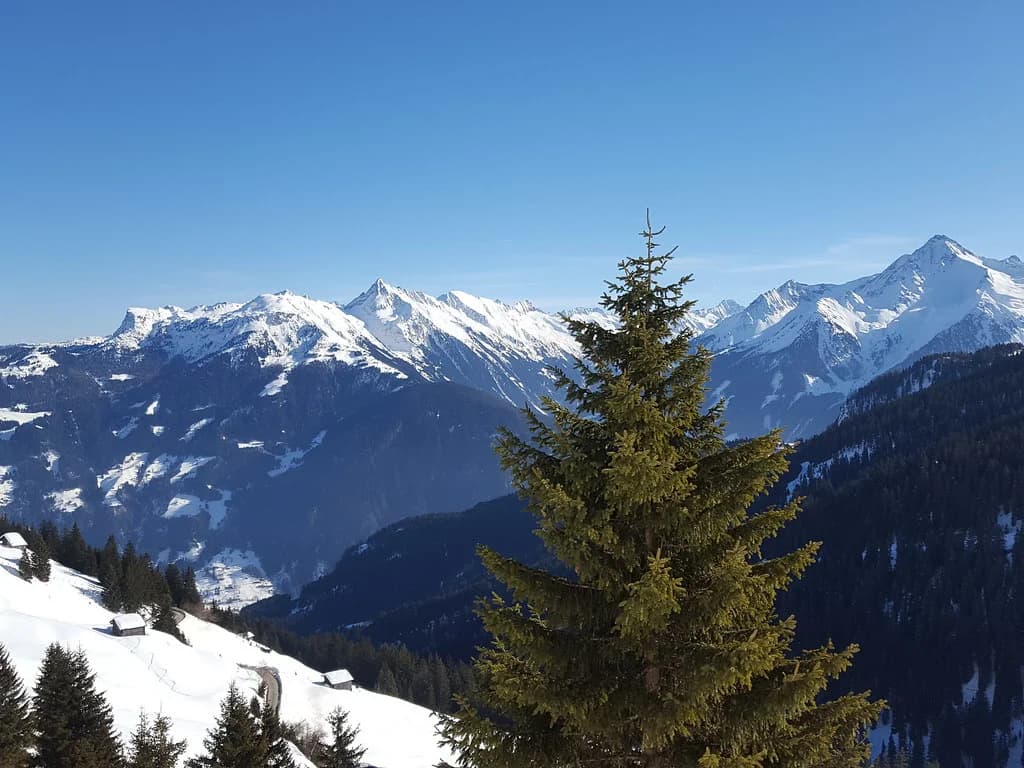
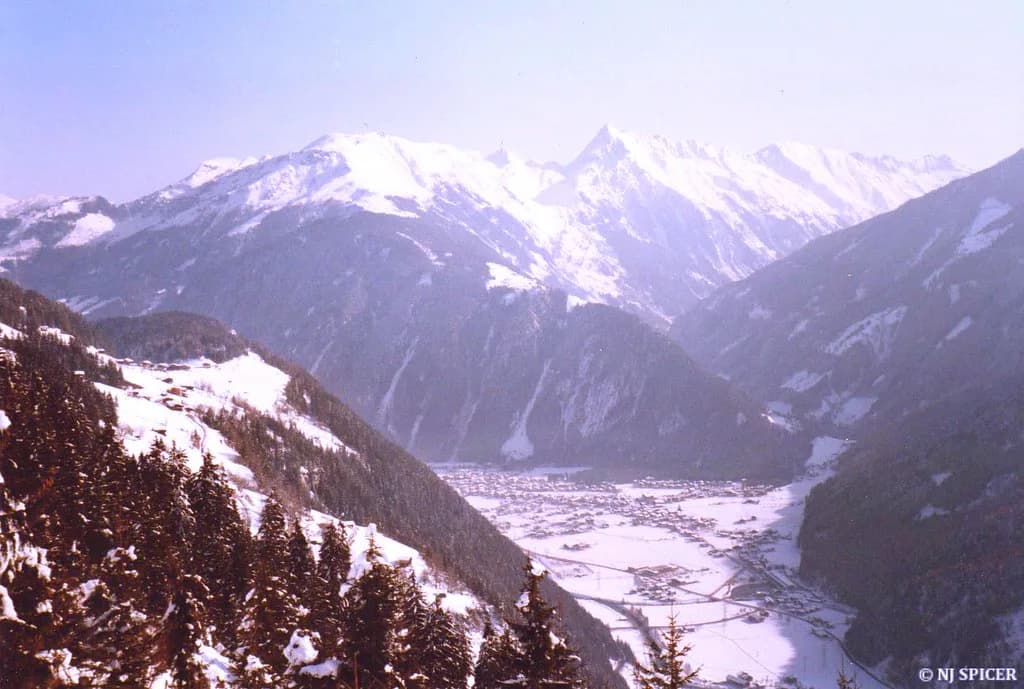
Mayrhofen sits in the Zillertal, the broad side valley south of the Inntal in Tyrol, and its skiing is built around two contrasting mountains rather than one uniform domain. The Ahorn is the gentler, sun-facing side, while the Penken carries the sportier terrain and links through to Finkenberg, Rastkogel and Eggalm. Between them the resort publishes 142 km of pistes and 61 lifts, a figure that covers both mountains and the linked sectors.
That two-mountain layout is the single most useful thing to understand before you book, because it shapes where you stay, which pass you buy and how you spend your first morning. A group of mixed ability can split across the valley and meet for lunch; a group of strong skiers will spend almost all their time on the Penken side. The village itself sits between the two base stations, so neither mountain is a long transfer away.
The Two Mountains at a Glance
The Ahorn is the mountain to choose for a first week on snow. Its wide, sun-drenched slopes suit beginners, families and leisure skiers, and the FunRide arena gives children something to play on between lessons. Confident skiers are not excluded: the 5.5 km valley run down from the top is a proper leg-stretcher at the end of the day.
The Penken is where the resort's reputation lives. It is the larger, more interconnected side, with the legendary Harakiri piste and its 78% gradient, the PenkenPark for snowboarders and freeskiers, and a spread of runs that keeps strong intermediates busy for a week. The Penken also carries the link into the Finkenberg, Rastkogel and Eggalm sectors, which is what turns Mayrhofen into a genuine domain rather than a single hill.
Think of the resort as one valley with two characters: the Ahorn for learning and cruising in the sun, the Penken for mileage, steepness and park laps. If you are booking a mixed group, that split is an advantage rather than a compromise, because everyone can ski at their own level and still share a base.
Penken in Detail: The Linked Domain
The Penken side is reached from the village by the Penkenbahn, with the Horbergbahn providing the second main access point further up the valley. From the top, the terrain spreads across the Penken proper and continues into the Finkenberg, Rastkogel and Eggalm areas, all covered by the local Mayrhofen pass. That link is what makes a five- or six-day ticket worthwhile here: you can spend a morning on the Penken and an afternoon exploring a sector you have not yet seen.
The Harakiri is the run most visitors want to see, and the resort quotes a 78% gradient, which puts it firmly in expert territory rather than in the reach of a confident intermediate. Treat it as a spectacle as much as a piste: watching from the lip is a legitimate way to spend ten minutes. The PenkenPark, by contrast, is built for progression, with lines aimed at riders from first-time park users up to experienced ones.
Away from the headline steepness, the Penken is a strong intermediate mountain. The sporty valley descents reward skiers who can hold an edge on tired legs, and the spread of groomed runs means you can chain lifts without repeating the same line all day. Use the Mayrhofen Piste Map to plan a loop that takes in the far sectors before committing to a route.
Ahorn in Detail: Learning and Off-Slope Hours
The Ahornbahn rises from the village to a mountain that is deliberately calmer than the Penken. Wide, sun-facing slopes make it the natural home for beginners and families, and the FunRide arena adds a play element that keeps children engaged after their lesson finishes. The gradient is forgiving enough that a first-timer can build confidence without being surrounded by fast traffic.
The 5.5 km valley run is the Ahorn's answer to anyone who assumes the gentle side has nothing for skiers with experience. It is a long, sustained descent that rewards good snow and reasonably fresh legs, so save it for the end of the day rather than the first run.
The Ahorn also carries the resort's best-known non-skiing draws, which matters for mixed groups. Winter walking trails and sun terraces give non-skiers a way up the mountain, the PistenBock toboggan ride adds an activity that does not require skis, and the WhiteLounge snow bar is a meeting point for the whole group at the end of the afternoon. Plan the day around that shared rendezvous rather than trying to keep everyone together on the slopes.
Which Sector Suits Which Ability
Complete beginners should start on the Ahorn and stay there for the first two or three days. The wide slopes and the children's play area are built for learning, and the absence of the Penken's traffic makes the early progression less intimidating. Book lessons for the morning, when snow is firmer and the teaching areas are quieter.
Early intermediates are the group most likely to be mis-sold on Mayrhofen. The Penken's easiest routes are genuinely accessible, but the mountain's character is sporty, and a skier who has just mastered linked turns will get more from a morning on the Ahorn before crossing over. Once you can handle a full blue-to-red progression, the Penken opens up properly.
Confident intermediates and advanced skiers should base themselves on the Penken and use the linked sectors to build distance. The Finkenberg, Rastkogel and Eggalm link means you can keep moving for most of the day without repeating terrain. Experts will gravitate to the Harakiri and the sportier descents, but the real value for a strong skier is the sheer variety of the linked domain rather than a single famous run.
Snowboarders and freeskiers have a clear home in the PenkenPark, which is laid out with features for riders at every level rather than a single expert line. Local ski and snowboard schools in the Mayrhofen-Hippach area offer tuition for riders who want to progress in the park rather than learn on their own.
Season Dates for 2026/27
The two access lifts do not start together, which matters if you are considering an early-December trip. For 2026/27 the Horbergbahn and Penkenbahn are scheduled from 4 December 2026 to 11 April 2027, while the Ahornbahn and Möslbahn do not open until 12 December 2026 and close on 4 April 2027. An early-December booking therefore gets you the Penken side but not the beginner mountain.
Lift operating hours vary by lift and change during the season. The Horbergbahn and Penkenbahn run from 08:30 to 17:00 before Christmas, then from 08:00 to 17:00 from 25 December; the Ahornbahn runs 07:30 to 17:00, and the Möslbahn shifts from an 08:30 start to 08:00 from 25 December. These times are subject to weather and operating conditions.
All dates and running times can be altered for weather, snow conditions or demand, and the resort warns that a later start or an earlier finish is possible. Build that flexibility into a late-season booking in particular, and check the operating status in the days before you travel rather than months ahead.
Lift Passes: Mayrhofen Versus the Superskipass
The core decision is between the local Ski Pass Mayrhofen, which covers Ahorn, Penken, Rastkogel and Eggalm, and the Zillertaler Superskipass, which covers all lifts in the Zillertal with the glacier included. For a week spent learning on the Ahorn and cruising the Penken, the local pass is sufficient and cheaper. Upgrade only if you genuinely intend to ski beyond Mayrhofen's linked sectors.
For 2026/27, a one-day Ski Pass Mayrhofen starts at 08:00 and costs 82 euros for adults, 65.50 for young people and 37 for children. The same day becomes cheaper the later you start: 74 euros from 11:00, 61.50 from 12:00 and 41 from 14:00, with a 13-euro deposit refund until 13:00. Those staggered times are the single most useful pricing detail for a late arrival, because an afternoon ticket is less than half the full-day rate.
The Superskipass is priced for people who want the whole valley. A two-day adult ticket for 2026/27 is 163.50 euros, a three-day is 241 euros and a seven-day is 458.50 euros, with reduced rates for young people and children. There are also flexible products, including a 4-in-6-day option at 317.50 euros and a 6-in-7-day option at 429.50 euros for adults, which suit skiers who want rest days without losing value.
If you are not skiing every day, the Mountain Experience Flexi tickets cover the Ahornbahn and Penkenbahn only: two ascents and descents within four days for 62 euros, three within six days for 88 euros, or four within eight days for 111 euros for adults. Two identical flexi tickets bought by both parents let all children of the same family join free. These are sightseeing and partial-use products rather than full ski passes, so they suit a mixed group with non-skiers in it.
A chip card deposit of 2 euros applies and is refunded in full when the card is returned intact to one of the drop-off points. Season prices can change, so confirm the current rate before you buy a multi-day product.
Buying and Collecting Passes
Sort your pass decision before you arrive, because the choice between the local pass and the Superskipass changes what you should buy for the whole week, not just day one. If you are travelling in a group, agree on the pass level together: upgrading one skier to the Superskipass while the rest stay local defeats the point of a shared mountain.
On the first morning, head to the Penkenbahn or Horbergbahn base station early enough to collect your card before the queues build. The Penkenbahn base sits in the village centre, so skiers staying centrally can walk to the lift in boots. If your accommodation is in Hippach or further up the valley, the Horbergbahn is often the quicker start.
Ski School and Lessons
Mayrhofen has several ski schools, and the practical difference between them is language provision, group format and where they teach. Skischule Mayrhofen 3000 offers group ski lessons in four-hour blocks, private lessons and children's courses, and its instructors teach in a wide spread of languages including English, Dutch, German and French. That matters if you are booking for a family that does not want to split across language groups.
Snowsports Mayrhofen runs a beginner and intermediate practice area directly in front of the Penkenlift mountain station, with ski school and ski rental under one roof. It guarantees an English-speaking instructor, which is a concrete promise to weigh against price. Its all-in-one lesson and rental packages start from 309 euros for children aged 5 to 9 and from 329 euros for adult and teen beginners, with advanced adult packages from 349 euros.
Book lessons well before peak weeks, particularly for children's groups and for English-language instruction. The strongest reason to book early is not price but allocation: popular morning group slots fill first, and a family that leaves it until arrival may end up with afternoon lessons and a disrupted day.
Ski Hire in the Village
Mayrhofen's rental shops cluster along the main street, with the strongest concentration directly opposite the Penkenbahn base station. Kaplenig Rent for Fun sits opposite the Penkenbahn valley station, opens daily from 08:00 to 17:30 without a lunch break, and stocks major brands including Atomic, Völkl, Head, Nordica and Fischer. It also offers a ski depot, which is worth paying for if you are staying centrally and do not want to carry equipment each morning.
Booking hire online before you travel usually beats walking in on the first morning, and some shops advertise meaningful discounts for online reservations. The bigger gain is boots fitted in person: collect your equipment the afternoon before your first ski day so a poor fit can be corrected without losing slope time. Compare the offers before committing.
Getting There and Getting Around
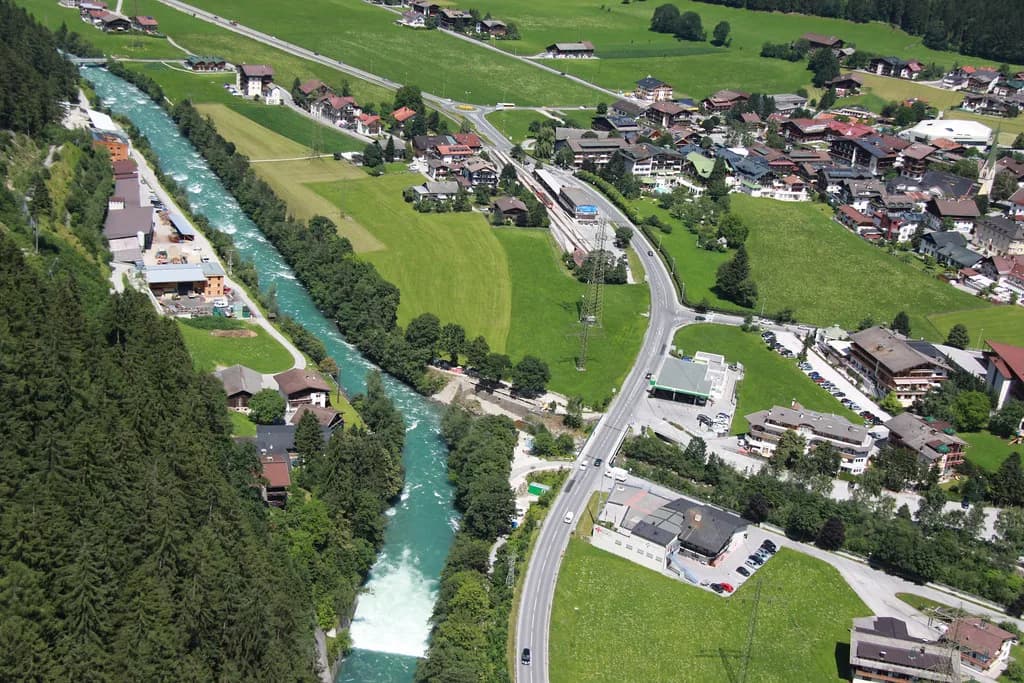
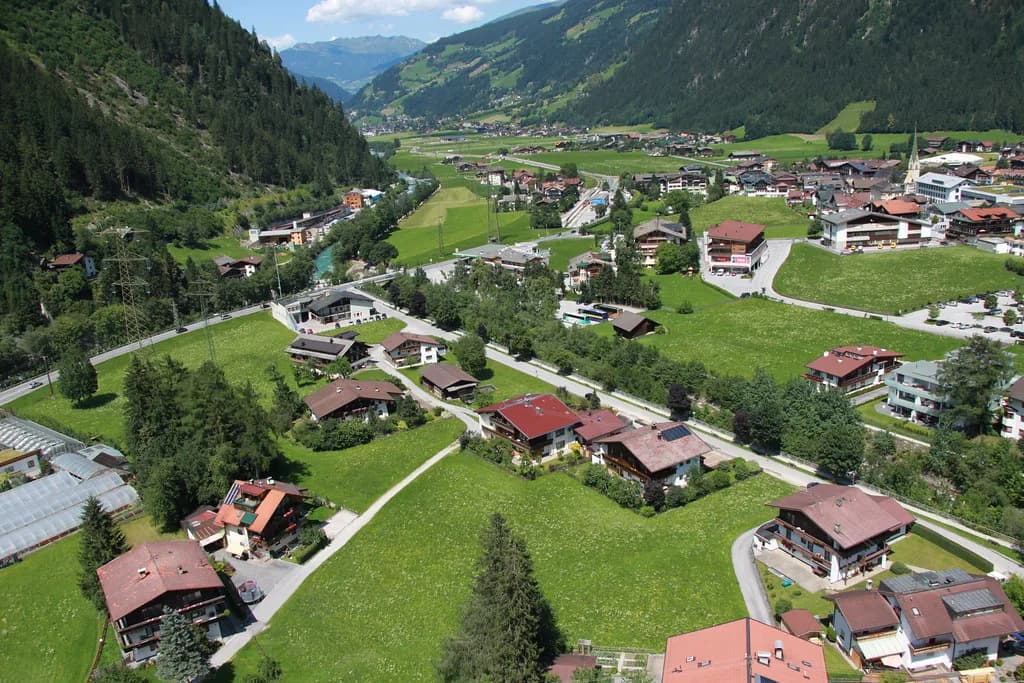
Mayrhofen is the main village at the head of the Zillertal, and the layout is simple enough to walk. The Penkenbahn base is in the centre, the Ahornbahn base is a short walk away, and the Horbergbahn sits further up the valley towards Hippach. That geography is the key to choosing accommodation: centre for the Penken and evening life, Hippach for quieter surroundings and quicker access to the Horbergbahn.
The valley has a bus network connecting the villages and the ski areas, so a car is not essential once you are in resort. If you drive, check parking arrangements at your accommodation before you arrive. A Kaprun Ski guide shows how a different Austrian resort handles the same base-station-versus-village trade-off if you are comparing options.
Après-Ski and Non-Skiing Hours
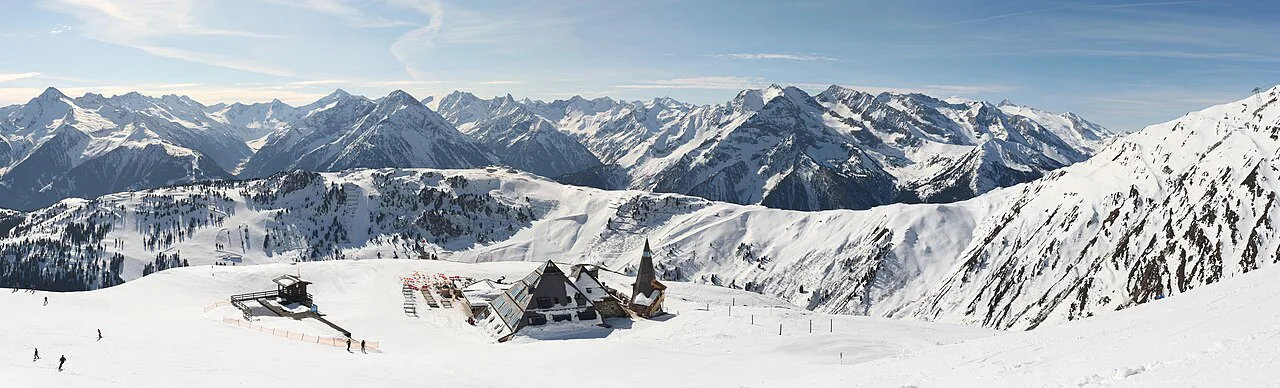
Mayrhofen has a long association with lively après-ski, and the village centre gets busy in the late afternoon. If you are on a short break, pace it: a big first evening costs you the next morning's snow, which is the best of the day. The Ahorn's WhiteLounge and its sun terraces give a calmer alternative for groups that want the mountain atmosphere without the volume.
For non-skiers, the Ahorn is the clear choice. Winter walking trails and terraces are reachable by cable car, the PistenBock toboggan run adds an activity, and the flexi tickets make repeated mountain visits affordable for people who are not skiing.
Suggested Day Plans
A first-timer's day belongs on the Ahorn: morning lesson in the beginner area, lunch on the mountain, then a gentle afternoon consolidating what was learned. Resist the temptation to cross to the Penken on day one; the move is better made once basic turns are reliable.
A sporty Penken day should start at the Horbergbahn or Penkenbahn early, work across to the Finkenberg and Rastkogel sectors before lunch, and return via the Eggalm side in the afternoon. Finish with one look at the Harakiri and, if you have the legs, the valley descent.
A Superskipass day is the day to leave Mayrhofen altogether. The pass covers all lifts in the Zillertal including the Hintertux Glacier, which runs year round, so a day trip to a different sector is the best test of whether the upgrade was worth it for your group. An Obergurgl ski guide offers a useful comparison if you are weighing a second Austrian resort for a future trip.
Where to Stay and What to Book First
Village-centre accommodation puts the Penkenbahn and Ahornbahn within walking distance and the evening scene on your doorstep, at the cost of noise and higher rates in peak weeks. Hippach and the hamlets up the valley trade that convenience for quieter surroundings and easier access to the Horbergbahn. Decide which mountain you will ski most before you choose, because it should drive the location.
Lock in accommodation and lessons for peak weeks months ahead, and book hire online once your dates are fixed. Lift passes can wait until closer to arrival, but decide the pass level early so your accommodation choice and ski plans match it.
Plan Your Mayrhofen Trip
Mayrhofen rewards a clear plan more than most resorts, because the Ahorn and Penken answer different questions. Choose your mountain first, then the pass that matches how far you intend to roam, and the rest of the trip falls into place.
Check the current season dates and prices on the official Mayrhofen and Zillertal pages before booking, since lift schedules and tariffs are published season by season and can shift with snow conditions.
Explore more Mayrhofen guides
- Mayrhofen Piste Map
- Mayrhofen Ski Hire
- Mayrhofen Ski Lessons
- Mayrhofen Ski Pass
- Mayrhofen Ski Season
- Mayrhofen Skiing in April
- Mayrhofen Skiing in December
- Mayrhofen Skiing in March
- Mayrhofen Snowboarding
- Zell am See Skiing Guide
- Obergurgl Skiing
- Ischgl Skiing
- St Anton Skiing
- Saalbach Skiing
- Kitzbühel Skiing
- Kaprun Ski Guide
- Sölden Skiing
- Lech Skiing
- Schladming Skiing
- Obertauern Skiing
- Alpbach Skiing
Frequently Asked Questions
Is Mayrhofen a good ski area for beginners?
Yes, provided you start on the Ahorn rather than the Penken. The Ahorn has wide, sun-facing slopes aimed at beginners, families and leisure skiers, plus the FunRide arena for children. The Penken side is sportier and busier, so most beginners are better off staying on the Ahorn for their first few days and crossing over once basic turns are reliable.
What is the difference between the Ahorn and Penken ski areas?
The Ahorn is the gentler mountain, with wide sunny slopes for beginners and families and a long valley run for stronger skiers. The Penken is larger and sportier, home to the Harakiri piste with its 78% gradient and the PenkenPark, and it connects onward into the Finkenberg, Rastkogel and Eggalm sectors. In practice the Ahorn is for learning and cruising, the Penken for mileage and steepness.
How many kilometres of piste are there in Mayrhofen?
The resort publishes 142 km of pistes and 61 lifts across the Ahorn and Penken ski areas. That figure includes the linked Finkenberg, Rastkogel and Eggalm sectors on the Penken side rather than just the two main mountains. For the wider valley, the Zillertal as a whole publishes 546 km of pistes across its four large ski areas.
Do I need the Zillertaler Superskipass or is the local Mayrhofen pass enough?
The local Ski Pass Mayrhofen covers Ahorn, Penken, Rastkogel and Eggalm, which is enough for most week-long trips built around Mayrhofen's own terrain. The Zillertaler Superskipass adds every lift in the Zillertal including the Hintertux Glacier, so it only pays off if you plan to ski well beyond the village. Decide as a group, since mixing pass levels undercuts a shared day.
Is December too early to go skiing in Mayrhofen?
It depends on the week. The Horbergbahn and Penkenbahn are scheduled from 4 December, but the Ahornbahn and Möslbahn do not open until 12 December, so an early-December trip gets the sporty side without the beginner mountain. Lift dates and times are subject to weather, snow and demand, and the resort notes that a later start or earlier finish is possible.
What is there to do in Mayrhofen for non-skiers?
The Ahorn is the focus. Winter walking trails and sun terraces are reachable by cable car, the PistenBock toboggan ride gives non-skiers a way to be on the snow, and the WhiteLounge snow bar is a natural meeting point. Mountain Experience Flexi tickets cover a set number of Ahornbahn and Penkenbahn ascents and descents within a window, which suits people going up only occasionally.
Sources
Useful notes for your next ski trip
Optional updates to our Alpine resort guides.
You might also like
Continue reading
More guides you'll find useful
.jpg)