Obergurgl Skiing Guide: Pistes, Lifts and When to Go
Plan a skiing trip to Obergurgl-Hochgurgl in Austria: 112km of pistes from 1,800 to 3,030m, a long mid-November to April season and how the villages link.
On this page
Obergurgl skiing is the choice for a group that wants altitude, a long season and a calm, high-mountain base rather than a sprawling lift network with a party scene attached. The ski area is officially measured at 1,800 to 3,030 metres and covers 112 kilometres of pistes served by 25 lifts, which makes it a generous but readable mountain to learn.
The practical question is rarely whether the snow will hold, but how you plan around two villages that share a single lift system. Decide that early and everything else — where you sleep, where you start your day, which pass you buy — falls into place.
Where Obergurgl Sits: The End of the Ötztal
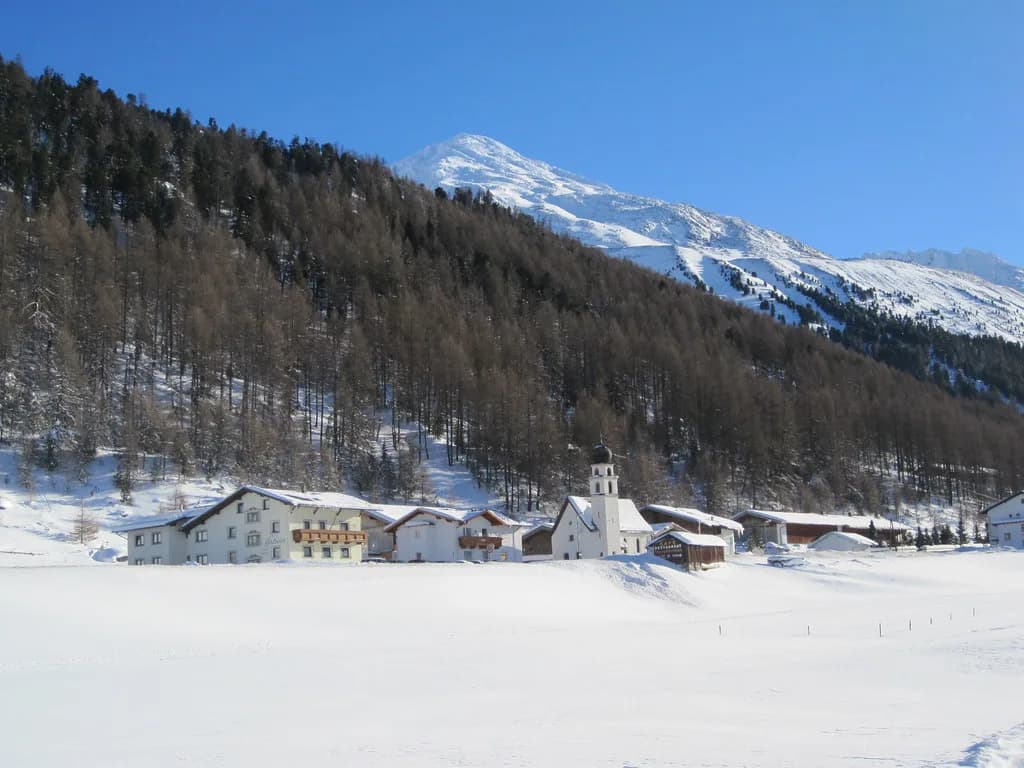
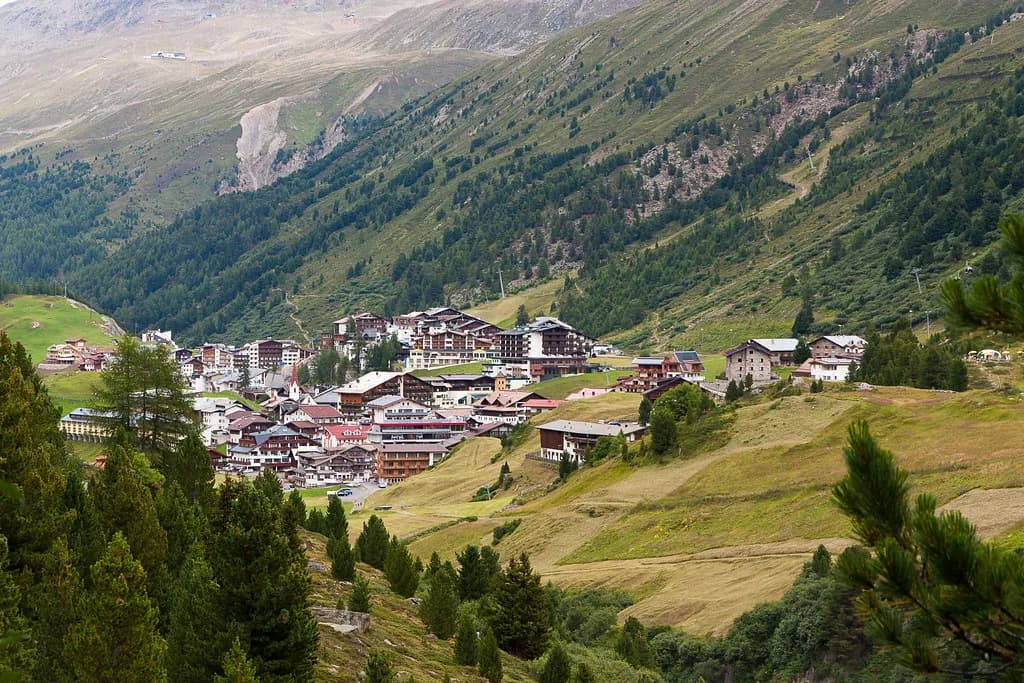
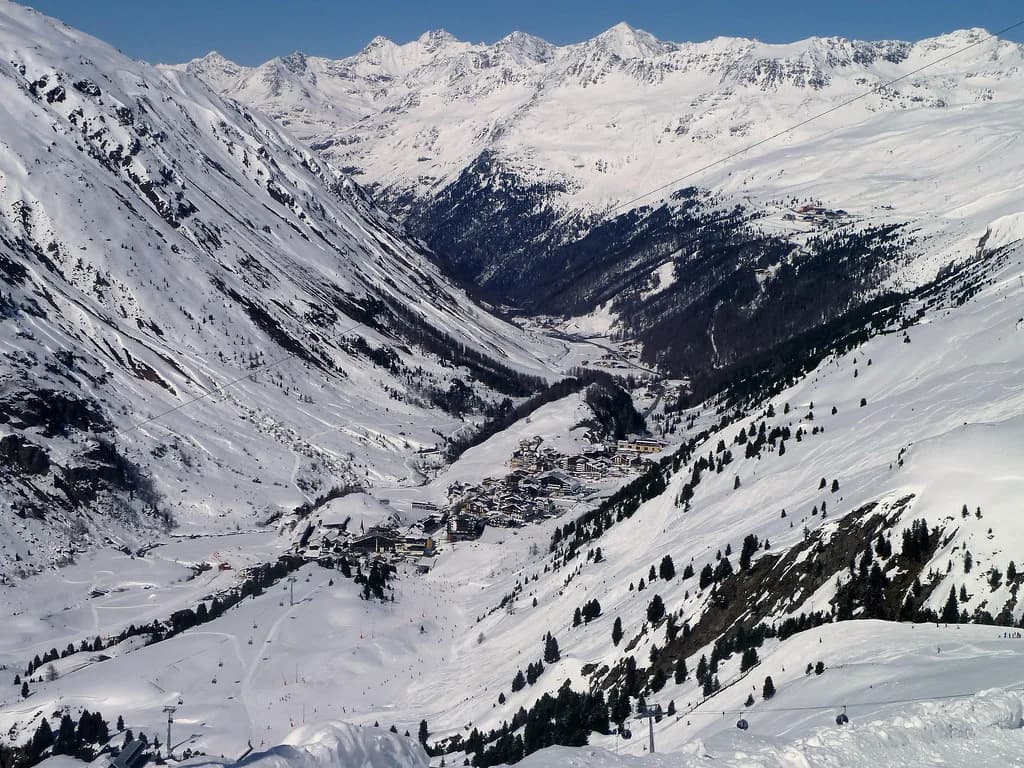
Obergurgl and Hochgurgl sit at the head of the Ötztal in Tirol, in western Austria, beyond the busier valley towns further down the road. The two villages are distinct bases, one slightly lower and more built-up, the other higher and quieter, and between them they form the single Obergurgl-Hochgurgl ski area.
Because the resort is closed off at the end of the valley, it feels contained rather than through-routed, which is why so much of the accommodation sits within a few minutes of a lift. The official resort notes that more than 90% of accommodation lies less than 250 metres from the slopes, a figure that matters more than any marketing label when you are choosing between hotels.
If you want a bigger, livelier Austrian network with a town attached, a Mayrhofen ski guide shows how a valley with several separate mountains and a strong apres scene compares. Obergurgl trades some of that variety for compactness and height.
The Ski Area at a Glance
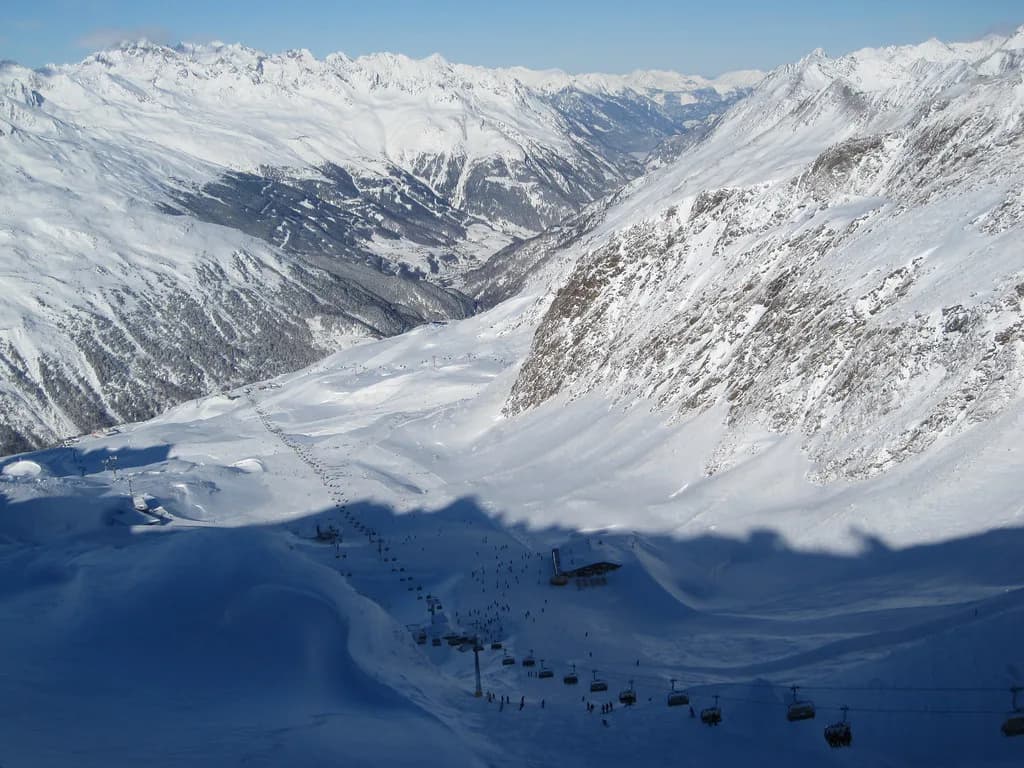
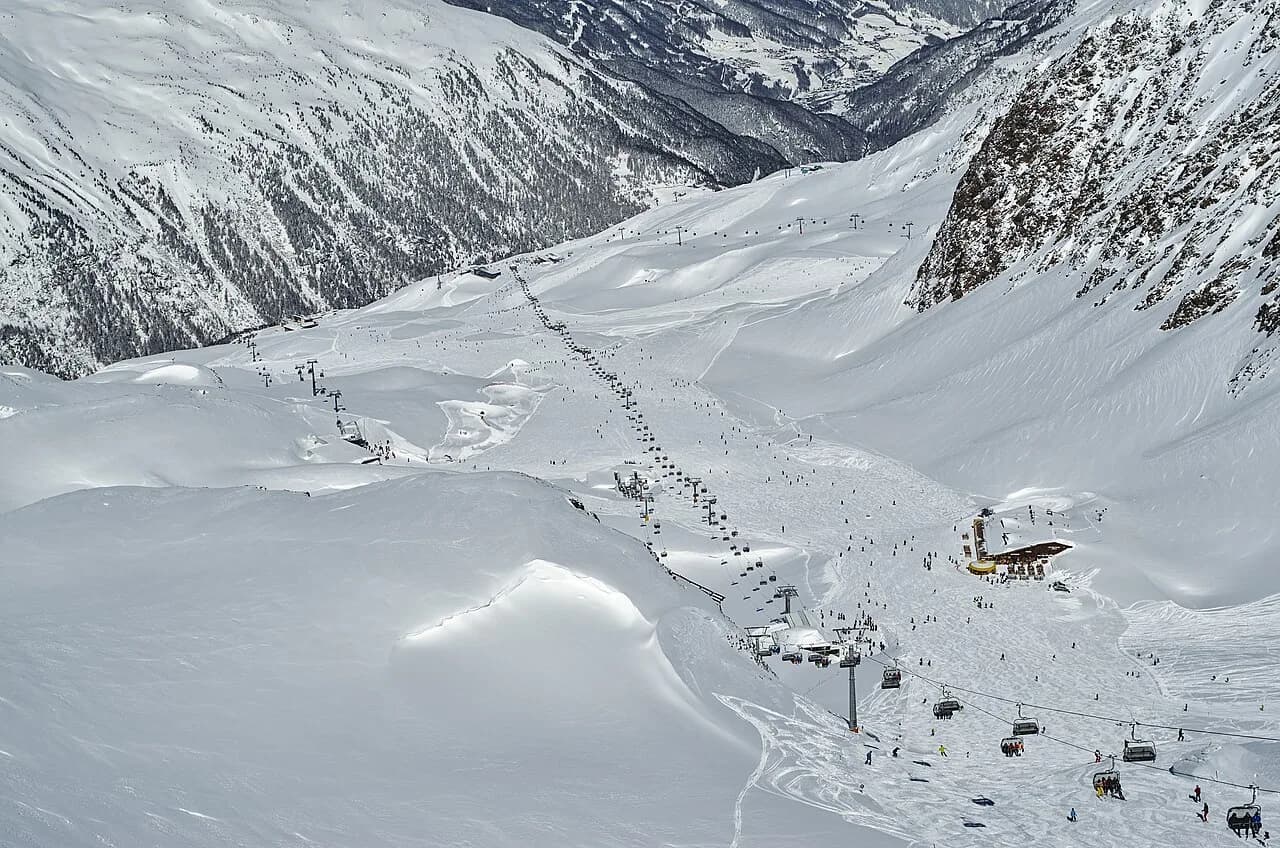
The mountain rises from 1,800 metres at village level to 3,030 metres at its top lift, with 112 kilometres of pistes and 25 lifts capable of moving around 43,000 people an hour. The resort presents this capacity as a zero-waiting-time proposition, and the lift count relative to the piste kilometres supports the idea that queues are rarely the constraint here.
Snowmaking covers more than 90% of the slopes, fed by five storage reservoirs and run on certified green electricity, according to the lift company's own description of its system. In practice that means early-season and late-season trips depend less on luck with storms and more on cold nights for the guns.
One detail worth knowing: the official range tops out at 3,030 metres, while some tour operators and hotels quote 3,080 metres. Treat the lower figure as the stated ski-area altitude when comparing resorts and don't build a trip around the difference.
Piste Breakdown by Difficulty
A tour-operator breakdown of the area gives roughly 36 kilometres of blue, 56 kilometres of red and 20 kilometres of black, with no green grading. That split is the most useful thing you can know before booking: more than half the mountain is intermediate cruising, a third is genuinely easy, and the steep stuff is a real but contained minority.
For mixed groups this is close to ideal. A confident beginner can spend a week on blues without repeating the same run all day, intermediates have the widest choice, and the black skiers in the party get enough gradient to stay interested without dragging everyone onto terrain the rest of the group dislikes.
The resort's own slope map is the final word on grading, and classifications occasionally shift with piste work and new lifts, so align your group's expectations with the current map rather than a tour operator's summary.
Named Sectors: Obergurgl Side Versus Hochgurgl Side
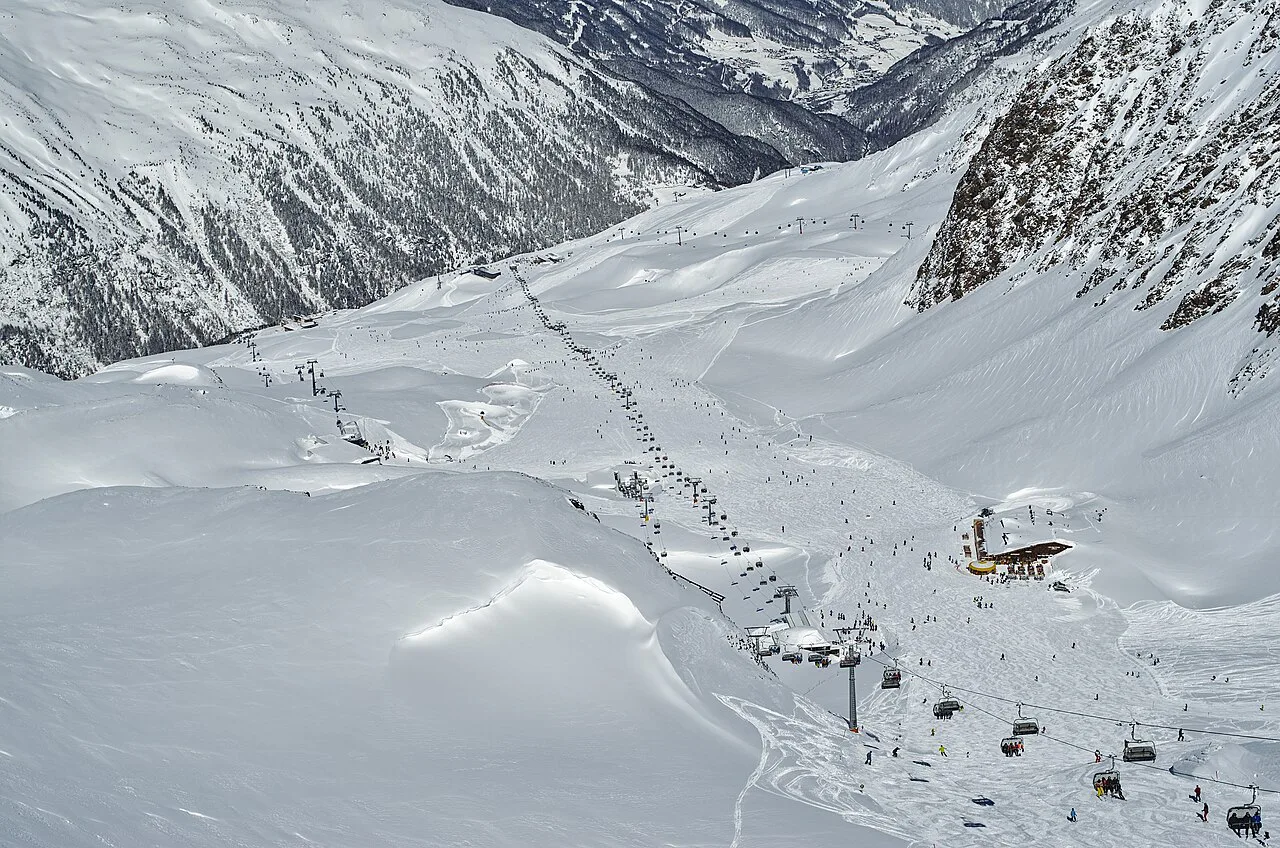
Think of the area as two halves joined by the mountain rather than by the valley road. The Obergurgl side is the larger, busier half and holds the main village base, with gondolas and chairlifts climbing from the edge of the buildings and a wide spread of blue and red pistes above.
The Hochgurgl side is higher and more exposed, reached by lift from the Obergurgl slopes or by road, and it holds the top station at 3,030 metres plus the steepest and most snow-sure terrain. The resort's stated aim is to move skiers quickly from the valley to the mountain with six lifts from village level, which shapes how you plan a day.
A sensible habit is to pick one side for the morning and cross once, rather than yo-yoing between the two. The crossing lifts are the busiest pinch points of the day, so time your transfer for late morning or after an early lunch.
Best Terrain for Beginners and Improvers
Beginners are well served by the blue kilometrage and by the layout: nursery slopes sit close to both villages, and the gentle progressions above Obergurgl let new skiers build confidence on wide, forgiving pistes. Families benefit most from the short distances between hotel, ski school meeting point and first lift, which is the resort's genuine structural advantage over valley-based areas.
Book lessons for the first morning rather than the second, so an instructor can place each skier on the right slope before bad habits set in. Group lessons for children usually fill first in peak weeks, so sort school and hire together when you book the trip.
Intermediate and Advanced Skiing
Intermediates get the best of Obergurgl: long, wide reds with enough vertical to make a run feel like a descent rather than a loop, and the option to follow the mountain across to Hochgurgl for a different pitch. The resort leans on wide pistes and quick lifts rather than headline steepness.
Advanced skiers should head high, where the black pistes and the exposed upper slopes hold the best snow and the sharpest gradients. The 20 black kilometres are not a huge playground, but they are enough for a strong skier to spend a morning on, and the altitude means they stay in condition late in the season.
Freeride and Ski Routes
Off-piste skiing here is genuine high-mountain terrain rather than sidecountry convenience, with ungroomed routes and freeride areas running off the upper lifts. A hotel-based summary of the area points to guided freeride tours, avalanche briefings and transceiver checkpoints as the sensible way in.
If you plan to leave the marked pistes, carry a transceiver, probe and shovel and know how to use them, and take a certified guide on your first day to learn the local terrain traps. The ski area publishes a safety section with current information, which is worth reading before a powder day rather than after.
Season Dates: When the Snow Is Reliable
Obergurgl opens as one of the first non-glacier resorts in the Alps, typically from mid-November, and the official line is that skiing runs until the end of April. One hotel page stretches that to early May. Plan your trip on mid-November to late April as the core season and confirm the exact dates for your year before booking travel.
The trade-off is straightforward. A pre-Christmas trip gives you quiet slopes and cheaper accommodation but shorter daylight and a thinner base off-piste; a late-April trip gives you spring snow, long days and warm terraces, with slushy lower runs by mid-afternoon.
Lift Passes: What to Buy and Where
Passes are sold by the Gurgl mountain railways as a single area ticket covering both villages, so you do not choose between an Obergurgl pass and a Hochgurgl pass. Multi-day tickets are the norm for a week's trip, and the official online shop is where prices and current products are listed.
Booking ahead online is worth doing for peak weeks: one hotel's ski page states that advance online purchase can save up to 20% and gives you a QR code for contactless collection at the lift terminals. Check the same claim on the official shop for your dates before you count on the discount.
Some package operators fold the lift pass into the holiday price, which simplifies budgeting but ties you to their accommodation list. Compare the bundled price against buying accommodation and passes separately, especially if you ski fewer than six days.
Ski Schools and Equipment Hire
Both villages have ski schools with children's group courses and private lessons, and the beginner zones are laid out so that school meeting points are a short walk from the main lifts. The resort highlights short distances between hotel, ski school and slopes as a reason families choose it, and that holds up on the ground.
For hire, several shops sit in and around the hotels, including rental directly in some ski-in, ski-out properties, which saves carrying skis across the village. Book boots and skis before you arrive in peak weeks and collect them the evening before your first day so you start on the mountain rather than in a queue.
Ski-In, Ski-Out Layout and Where to Stay
The proximity claim is the defining feature of an Obergurgl booking. With most beds within a few minutes of a lift and the official figure of over 90% of accommodation within 250 metres of the slopes, staying slightly back from the slopes buys you quiet and often a lower rate without adding a bus ride to your morning.
Obergurgl village is the livelier base, with more bars, restaurants and hotel choice plus lifts at the edge of the buildings. Hochgurgl is higher and calmer, better for early starts and for anyone who wants to be on the upper mountain before the village crowds arrive.
Choose based on your group, not on prestige: families with young children do better in Obergurgl for the walkable centre, while a group of strong skiers who want first lifts and quiet evenings will prefer Hochgurgl.
Getting There: Flights, Drives and Buses
The nearest practical airport is Innsbruck, with Munich and Zurich as longer alternatives; all three involve a road transfer up the Ötztal. The resort publishes ski bus and parking information, including short-stay zones and multi-day car parks, which is worth reading before you decide whether to hire a car.
A car gives you flexibility for arriving late and for day trips down the valley, but parking in the resort is limited and charged, and once you are there the lifts and local buses do the work. If you fly in, a pre-booked transfer is simpler than a self-drive hire for a week-long stay.
Skiing Beyond Obergurgl: The Sölden Question
You cannot ski across from Obergurgl to Sölden; they are separate ski areas further down the Ötztal with separate lift tickets. A day in Sölden means a road journey and a second pass, so treat it as an excursion rather than an extension of your ski day.
The better comparison for a second-resort day is whether your group would rather repeat the home mountain or spend a day travelling. For most week-long trips, 112 kilometres with a long season is enough, and the money saved on a second pass pays for a guided freeride day instead.
Who Obergurgl Suits, and the Trade-Offs
Obergurgl suits groups who value snow reliability, short transfers from bed to lift and a calm, high base over size and nightlife. It is particularly strong for families with children and for intermediate skiers who want mileage on wide pistes rather than a tick-list of famous runs.
The trade-offs are real: 112 kilometres is generous but well short of the mega-networks, the apres scene is modest, and the village is quiet in the evening. If your group wants a different mountain every day and a loud bar at the bottom of the gondola, a resort with several linked sectors will serve you better — a Kaprun Ski guide covers one compact alternative with a glacier and a similar high-altitude feel.
The resort describes itself as one of Austria's top 15 largest ski areas, which is fair as a description of scale rather than a claim to be the biggest or the best. Judge it on fit, not on superlatives.
Booking Timeline for a Peak-Season Trip
For a February half-term or New Year trip, lock in accommodation and ski school first, because family rooms and children's group places run out before lift passes do. Book passes online once your dates are fixed, and arrange hire and boots at the same time to avoid a separate queue on arrival.
For early-season or late-season trips, the decision order flips: confirm the lift operating dates for your week first, then book flexible accommodation, since the edges of the season are where schedules move. Travel insurance that covers winter sports should be in place before you commit to either.
Plan Your Visit
Obergurgl skiing works best when you treat it as a high, quiet, snow-sure base with a genuinely useful 112 kilometres of pistes and a long season, rather than as a smaller version of a mega-resort. Pick the village, lock in lessons and hire early, and build your days around crossing between the Obergurgl and Hochgurgl sides once rather than repeatedly.
Confirm the current season dates and lift pass products on the resort's own site before booking, then choose your accommodation by how close it puts you to the lift you plan to start from. For the practical details, see the Obergurgl piste map guide.
Explore more Obergurgl guides
- Is Obergurgl Expensive? Lift Passes, Season Timing and Trip Costs
- Is Obergurgl Good for Beginners? A First-Trip Guide to the Ski Area
- Obergurgl Ski Lessons
- Obergurgl Ski Map
- Obergurgl Ski Pass Guide
- Obergurgl Ski Season
- Obergurgl Snowboarding
- Ski Hire in Obergurgl
- Skiing in Obergurgl in April
- Zell am See Skiing Guide
- Ischgl Skiing
- St Anton Skiing
- Mayrhofen Skiing
- Saalbach Skiing
- Kitzbühel Skiing
- Kaprun Ski Guide
- Sölden Skiing
- Lech Skiing
- Schladming Skiing
- Obertauern Skiing
- Alpbach Skiing
Frequently Asked Questions
Is Obergurgl a good place to ski?
Yes, for the right group. Obergurgl-Hochgurgl offers 112 kilometres of pistes between 1,800 and 3,030 metres, served by 25 lifts, with a long season from mid-November to late April and most accommodation within a few minutes of a slope. It is strongest for families, beginners and intermediates who want reliable snow and short distances rather than a huge linked network.
Where do you fly into for Obergurgl?
Innsbruck is the nearest practical airport, with Munich and Zurich as longer alternatives; all involve a road transfer up the Ötztal to the resort at the end of the valley. The resort publishes bus and parking details, so check those before deciding between a transfer and a hire car.
How many kilometres of pistes are in Obergurgl-Hochgurgl?
The official figure is 112 kilometres of pistes served by 25 lifts. A tour operator breakdown puts roughly 36 kilometres at blue, 56 at red and 20 at black, which makes the mountain predominantly intermediate with a solid beginner base.
When does the Obergurgl ski season start and end?
The resort normally opens as one of the first non-glacier areas in the Alps from mid-November and runs to the end of April, with one hotel page mentioning early May. Confirm the exact dates for your week on the official site before booking travel.
Is Obergurgl good for beginners?
Yes. There are nursery zones close to both villages, around 36 kilometres of blue pistes and very short distances between hotels, ski school meeting points and lifts. Book children's group lessons early in peak weeks, when places fill first.
Can you ski from Obergurgl to Sölden?
No. Sölden is a separate ski area further down the Ötztal with its own lift ticket, so a day there involves a road journey and a second pass. Treat it as an excursion rather than a linked extension of the Obergurgl ski day.
Do you need a car in Obergurgl?
Not once you are there. Most accommodation sits within a few minutes of the slopes, and the resort runs ski buses. A car helps with a late arrival or valley day trips, but parking is limited and charged, so check the resort's parking information first.
How far in advance should I book an Obergurgl ski trip?
For February half-term or New Year, book accommodation and ski school as early as you can, then passes and hire once dates are fixed. For early- or late-season weeks, confirm lift operating dates first and choose flexible accommodation.
Sources
Useful notes for your next ski trip
Optional updates to our Alpine resort guides.
You might also like
Continue reading
More guides you'll find useful