Obergurgl Skiing in April: Late-Season Terrain Guide
Plan an April ski trip to Obergurgl: how the 112km area splits between the two villages, which terrain holds up late season, and when to book passes.
On this page
April skiing in Obergurgl rewards a different kind of planning. The resort publishes a long season running from mid-November into early May, but the lower village slopes sit around 1,800 to 1,930m while the top lifts reach roughly 3,030m, so a spring day here is a descent between two very different climates. Build your plan around the upper mountain and treat the valley runs as the bonus, not the objective.
This guide covers the practical pieces: how the ski area divides, which terrain suits which ability, how the lift pass decision works, where to sleep and how to reach the end of the Ötztal Valley. For the full resort picture beyond April, the Obergurgl ski guide covers pistes, sectors and passes in season-long detail.
Why April Is a Different Kind of Obergurgl Trip
By April the resort's own marketing material is already pointing at spring: the official destination site has published a Powder in April piece tied to the season-closing Skifinish event. That tells you two things useful for planning. First, April is a recognised part of the operating season rather than a leftover. Second, the atmosphere shifts from midwinter powder-chasing to sunny terrace skiing and end-of-season celebrations.
Practically, April means a narrower daily window. Slopes that face the sun soften through the afternoon while the high, north-facing terrain around the Top Mountain Star stays firm and grippy. A good April habit is to ride the upper lifts early, ski the higher reds through late morning, then move to terrace time when the lower runs turn slushy. The resort has not published hourly lift schedules, so pace yourself by conditions on the day rather than by a timetable.
The biggest single trade-off is volume versus quality. April brings smaller lift queues and easier accommodation availability, but you will ski fewer vertical metres per day than in January. If your group wants maximum mileage and hard, fast pistes, book December or January. If you want warm terraces, quiet gondolas and a long lunch at 2,000m, April delivers.
The Ski Area at a Glance
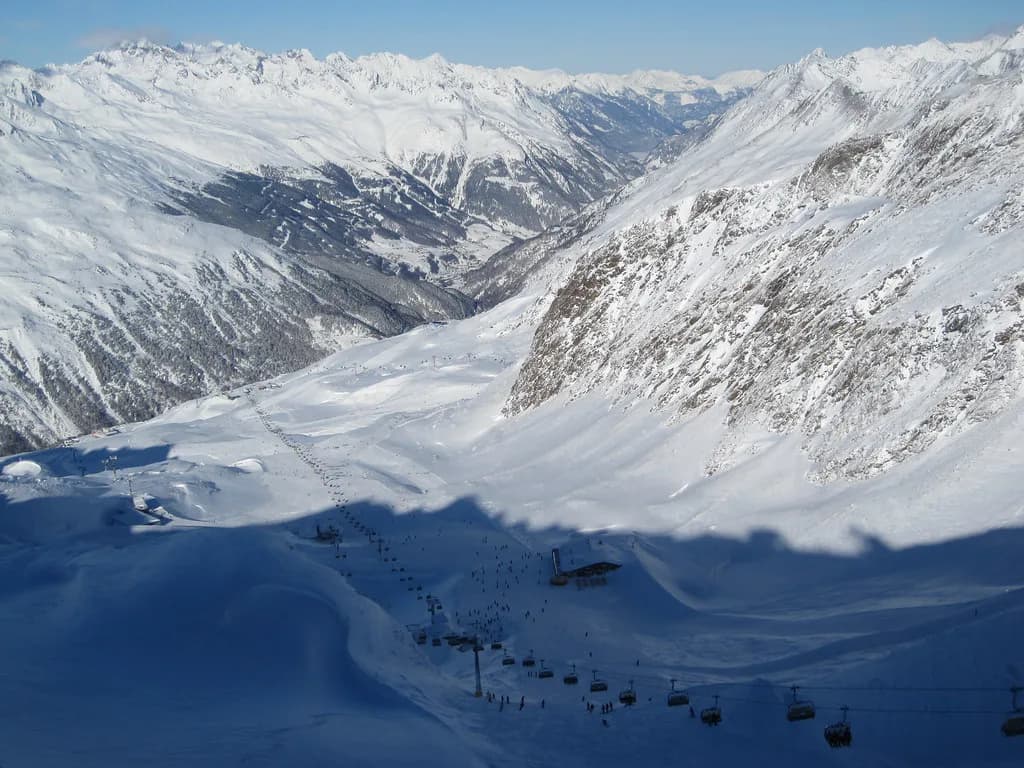
The combined Obergurgl-Hochgurgl area covers 112 kilometres of piste between roughly 1,800m and 3,030m, served by 25 modern lifts, with around 90% of slopes backed by snowmaking. Hotel Edelweiss & Gurgl, which sits directly on the slopes, publishes those figures for the ski resort. The snowmaking coverage is the detail that matters most in spring, because it lets the resort keep connecting runs open when natural snow is retreating.
Terrain is deliberately weighted towards easier skiing: Ski Independence lists 54% blue, 30% red and 16% black. For April that mix is an advantage, since the broad blue motorways at altitude stay skiable in soft snow while steep blacks become a morning-only proposition. It also means mixed-ability groups can share the same lifts without splitting up for the whole day.
Treat these numbers as the resort's and its agents' published claims rather than independently surveyed totals. They are reliable for judging scale and ability fit, which is what matters when you choose between Obergurgl and a larger neighbour. Confirm any figures that affect a specific decision, such as current pass validity, on the official Gurgl site.
Obergurgl vs Hochgurgl: Two Villages, Two Halves
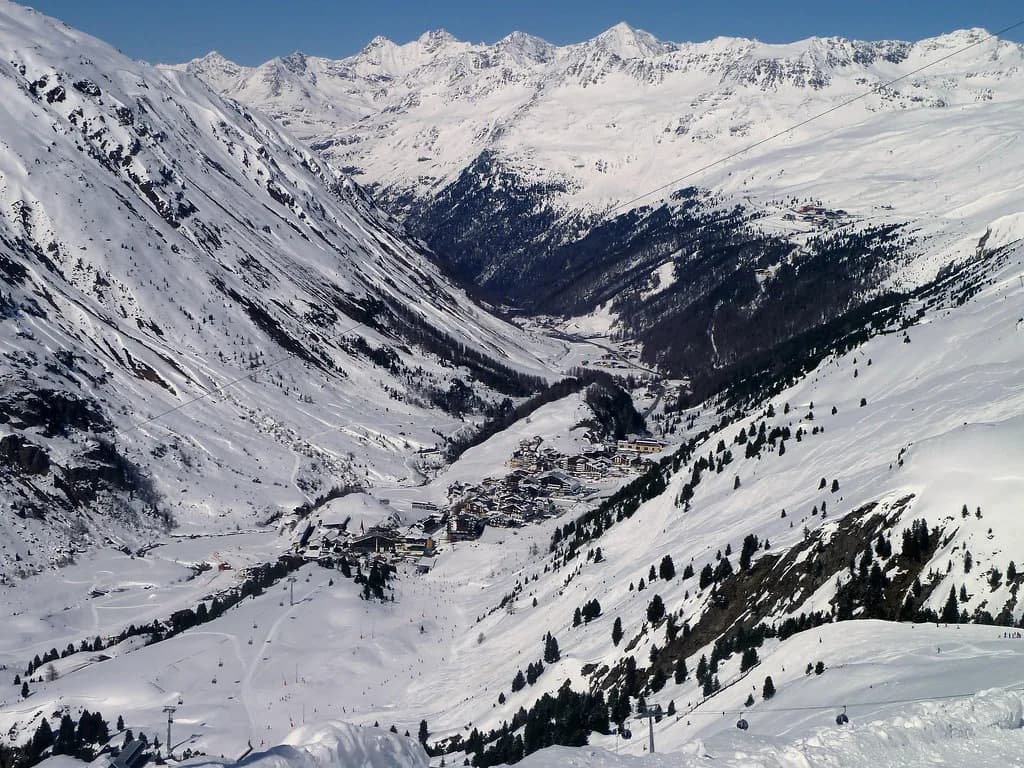
The area splits into two roughly equal halves of about 56km each. Obergurgl, the larger village, sits at around 1,930m; Hochgurgl is about six kilometres up the road at roughly 2,150m. The two are joined by the panoramic Top Express gondola, so you can ski both sectors on one ticket without a bus.
For an April trip, Hochgurgl's extra 200 metres of altitude is a genuine advantage. Staying higher puts you closer to the terrain that holds up best and shortens the morning commute to the good snow. The counter-argument is village life: Obergurgl has the larger spread of hotels, shops and evening options, which matters if you are travelling with non-skiers or a group that wants variety after 4pm.
A workable compromise is to base in Obergurgl for the amenities and use the Top Express as your daily launch pad towards the upper mountain. Ski-in, ski-out hotels around the Festkoglbahn and the gondola bases cut out the walk entirely, though they book earliest for Easter weeks. Decide your priority, altitude or village, before you compare properties, because the two villages rarely appear in the same shortlist.
Which Runs Hold Up Best in April
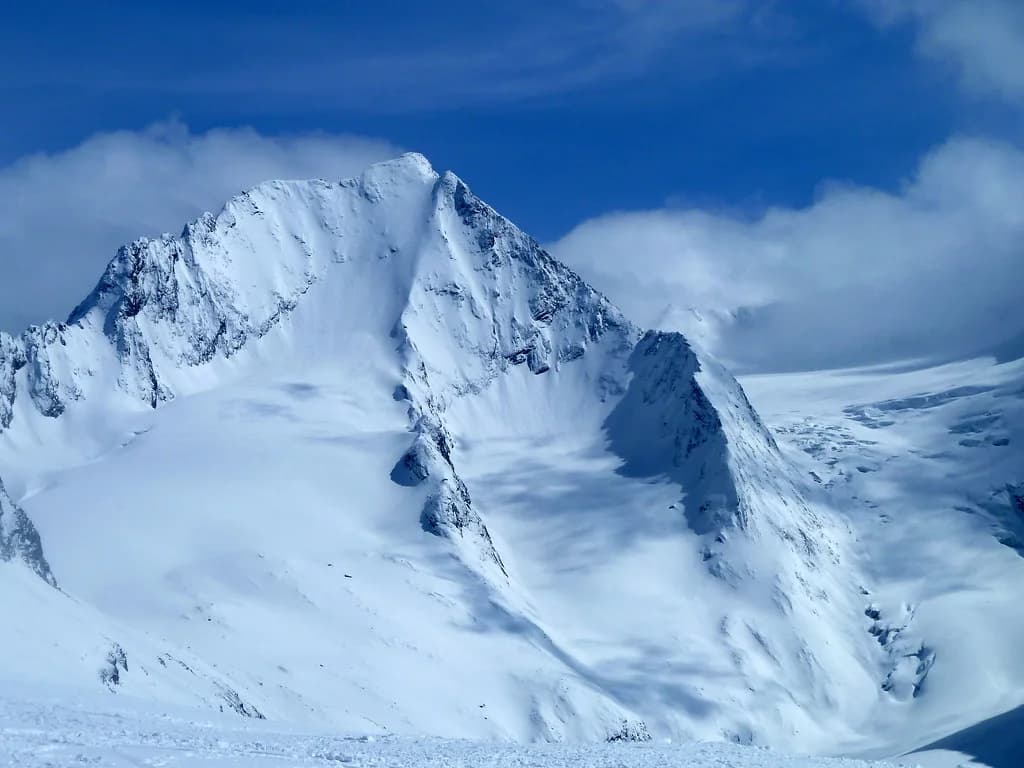
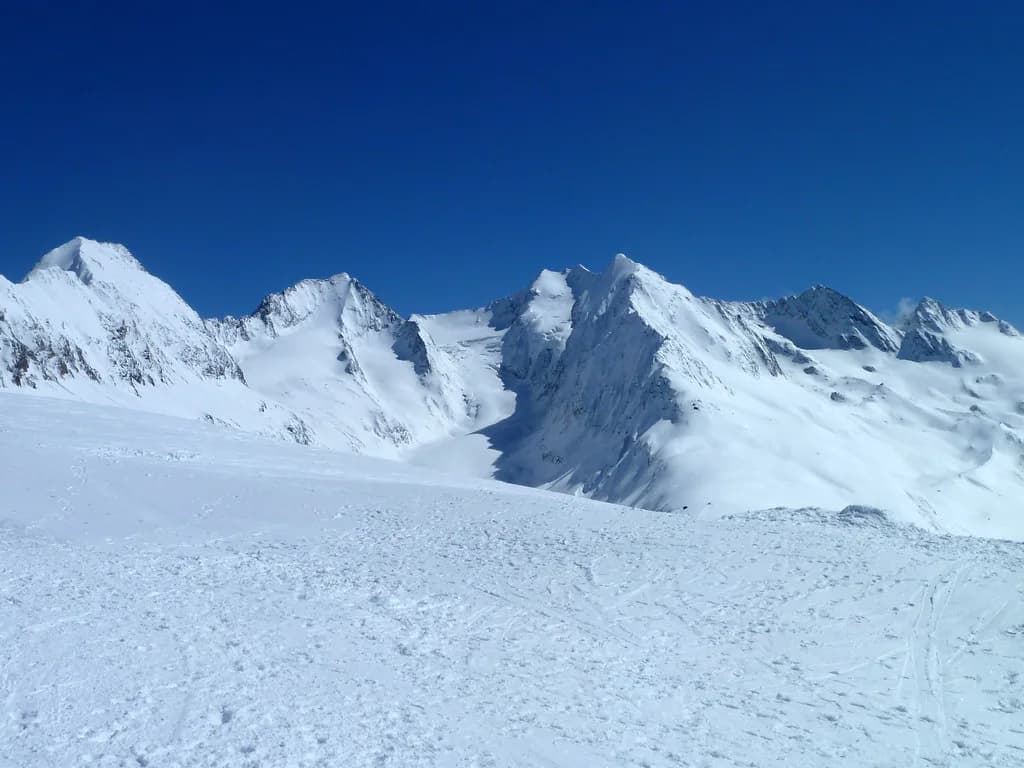
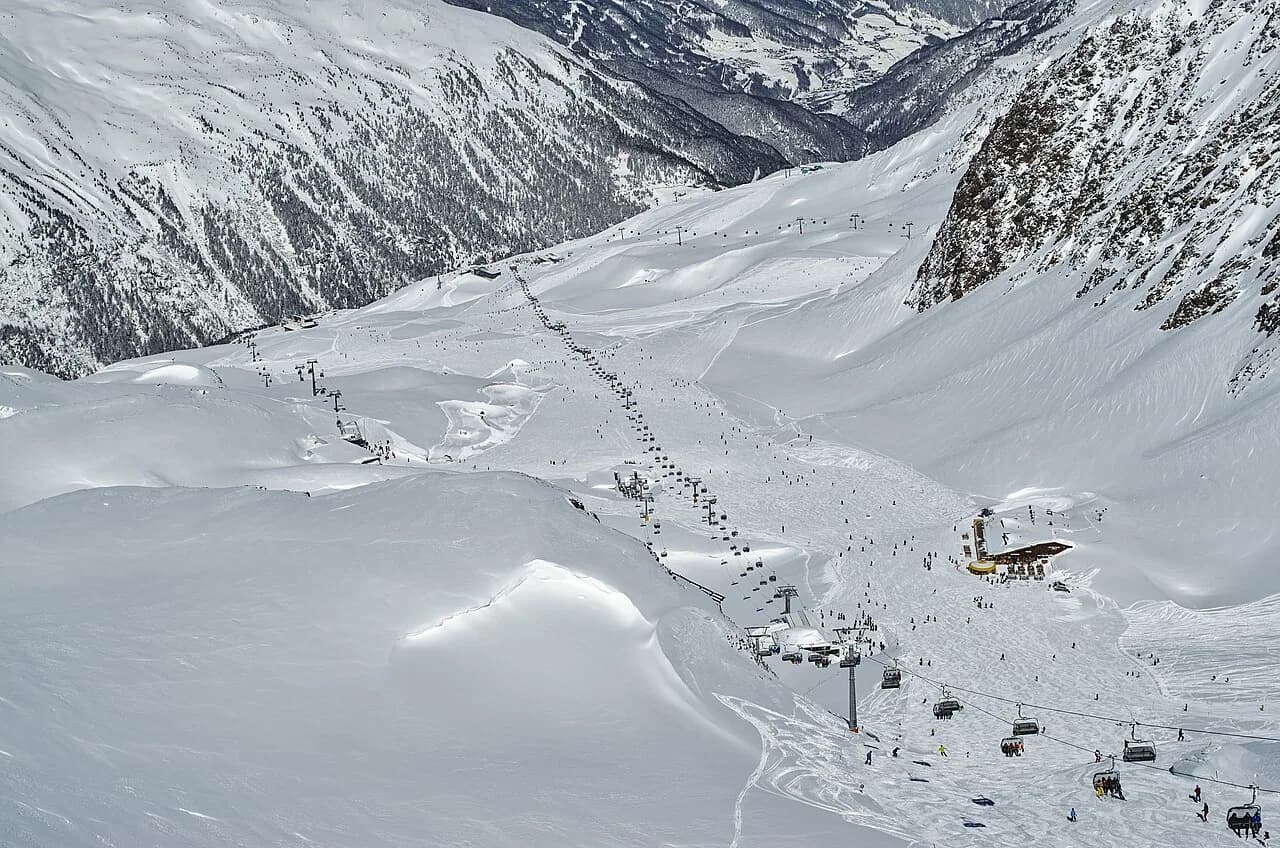
Structure the day around altitude and aspect rather than around a list of named runs. Start high: the terrain served by the upper lifts towards the Top Mountain Star at around 3,030m gives you the coldest snow and the widest views, and Ski Independence notes the 360-degree panorama from there. Ski these pitches while they are still firm, then work downwards as the sun softens the surface.
The blue-biased middle mountain is where April is most forgiving. Wide, groomed blues absorb afternoon slush far better than steep blacks, and the resort grooms intensively. Reds are best skied before lunch when the surface is still edgeable. Save the 16% of black terrain for the first couple of hours, and accept that a black run in soft spring snow is a leg-tester rather than a speed run.
Lower runs back into Obergurgl village are the first to suffer in a warm spell. Plan your final descent of the day deliberately, and be ready to download on the gondola if the valley run has turned to porridge. That flexibility is normal spring practice in Alpine resorts and is not a sign that the area is closing.
Beginner and Family Skiing in April
Gurgl is well set up for first-timers: gentle practice slopes, short distances between hotels and ski school meeting points, and instructors used to teaching children. The resort's own material highlights family-friendly beginner zones and the short hop from accommodation to lesson. If you are weighing up whether the resort suits a novice group at all, the beginner guide answers that question directly.
April changes the beginner calculation in one specific way: lesson timing. Morning slots give you firmer, more forgiving snow for first turns, while afternoon lessons in soft slush tire young legs quickly. Book morning lessons where the school offers a choice, and check what your chosen school's April programme actually includes before you commit, since spring schedules are often trimmed compared with peak weeks.
Families should also think about non-ski time. Spring afternoons suit sledging, winter walking and terrace lunches better than they suit long ski days for small children, and the resort's trail network supports all three. A pattern of ski until lunch, then switch activities, tends to work better in April than a full six-hour ski day.
Advanced and Freeride Options
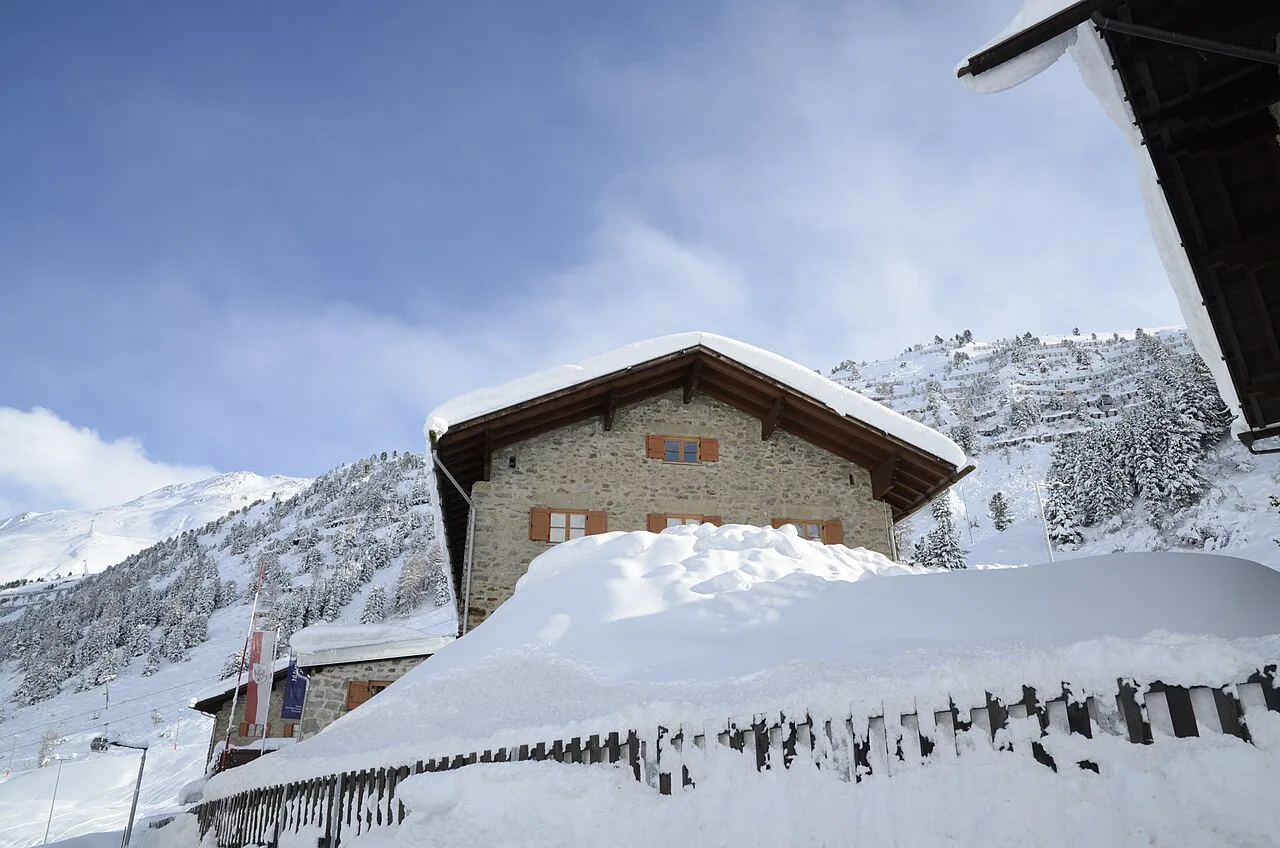
Advanced skiers should not write April off. The resort publishes freeride terrain including ungroomed routes beyond the pistes, guided freeride tours, safety training and transceiver checkpoints. Spring snowpack can offer good conditions on high, shaded slopes, but it also demands more judgement than a January powder day.
The sensible move for a visiting expert is to hire a certified guide for at least one day. A guide reads the day's snowpack, knows which aspects are holding cold snow and keeps you off terrain that has turned dangerous as temperatures rise. The resort explicitly recommends booking a certified guide for safety and technique, which is the right advice for anyone without local knowledge.
Off the snow, the 16% black share means advanced skiers will exhaust the groomed steeps fairly quickly and should plan on off-piste or on chasing the higher lifts. If you want a bigger bag of challenging terrain for the same trip, compare the area with Sölden before booking, since the Ötztal pass can open that up.
Lift Passes: The Gurgl Pass and the Ötztal Option
There are two pass decisions in Obergurgl, and they matter more in April when you may ski fewer hours per day. The first is the local Gurgl pass for the 112km area. The second is the Ötztal option: a pass of three days or more also covers neighbouring Sölden, which adds around 144km of piste including glacier terrain above 3,300m, reached by a bus that is included with the resort guest card.
The Ötztal upgrade is worth it if you are staying four nights or more and want variety, particularly in a spring week when lower Obergurgl runs may be marginal. It is poor value for a two- or three-day trip where you barely scratch the Gurgl area. The bus transfer to Sölden costs you part of a ski day in each direction, so treat it as a full-day excursion rather than an afternoon.
Buy passes online in advance. The resort's partner hotel notes that booking through the official online ticket shop saves up to 20% and issues a QR code for contactless pickup at lift terminals. Exact pass prices vary by date and duration, so check the current tariff on the official Gurgl site before you budget, and use the Obergurgl Ski Pass Guide for how the products compare.
Ski Schools, Hire and Equipment
Sort lessons and hire before you travel, especially for Easter weeks when school groups fill morning slots first. Ski schools in both villages run beginner and improver programmes, and meeting points sit close to the main lift bases. If you want a specific instructor or a private guide for freeride days, request it when you book rather than on arrival.
Hire is straightforward in both resorts, with shops at village level and at the lift stations. April conditions favour a slightly wider, more forgiving ski for intermediates and a carver for anyone sticking to firm morning pistes. Tell the shop you are skiing late season and ask them to set edges sharp, because soft afternoon snow hides ice underneath on shaded upper runs.
Travelling with your own boots is worth it if you ski more than three days; rental boots are fine for a first trip but add friction to a short spring break. Package anything you can with your accommodation, since some hotels run in-house rental and pass handling that saves a morning queue.
Getting There: Innsbruck, Salzburg and Munich
Innsbruck is the natural arrival airport, roughly 1 hour 35 minutes by road, with Salzburg and Munich each around 3 hours 20 minutes according to trade-press transfer estimates. Obergurgl sits at the head of the Ötztal Valley, so the final stretch is a valley drive with no ski resort beyond it. That dead-end geography keeps the village quiet but means you commit to a road transfer rather than a train-and-shuttle combination.
Innsbruck wins on convenience for a short April break, but flight choice is thinner than Munich's. If your dates are fixed to Easter and Innsbruck fares spike, Munich is a reasonable alternative at the cost of roughly two extra hours each way. Salzburg only makes sense if it unlocks a cheaper flight or a stopover you actually want.
A hire car gives flexibility between Obergurgl and Hochgurgl, but the two are linked by lift and by local transport, so a car is not essential. For a pure ski week, book a shared or private transfer and skip winter driving on an alpine pass road.
Where to Stay: Obergurgl Village or Hochgurgl
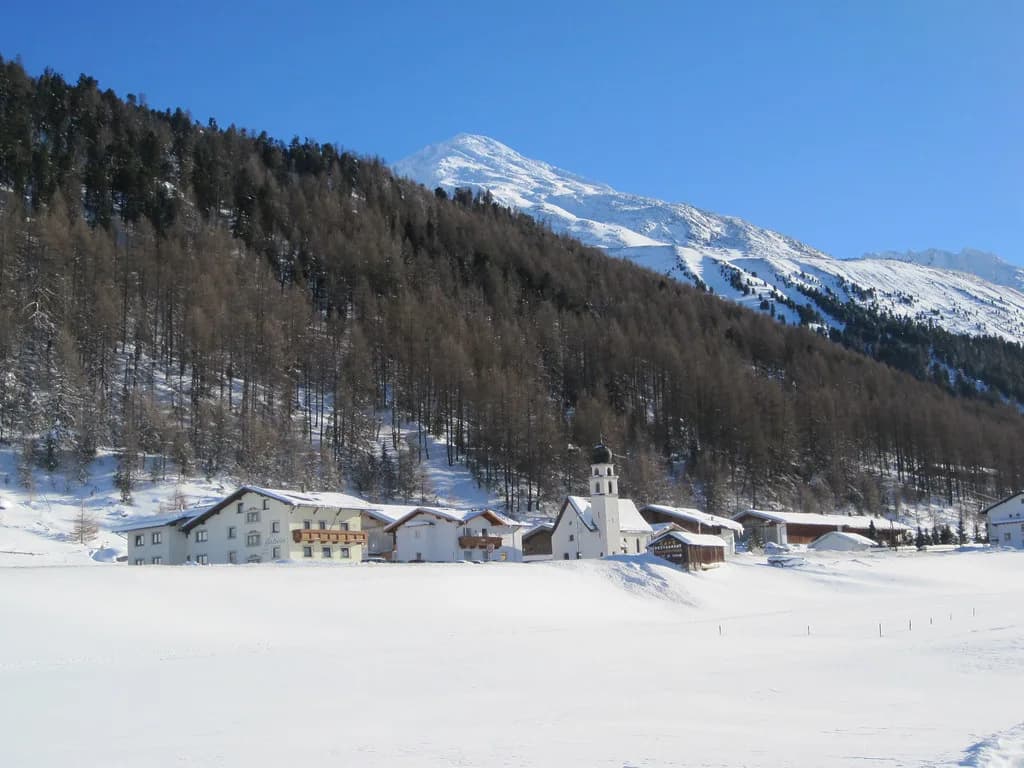
Obergurgl at around 1,930m offers the widest choice of hotels, from four-star superior properties such as Edelweiss & Gurgl, which has an in-house escalator from the ski cellar to the lift station, to simpler guesthouses. Ski-in, ski-out access here means stepping from boot room to piste, which is the single biggest quality-of-life upgrade on a short spring trip.
Hochgurgl at roughly 2,150m suits anyone whose priority is altitude and quiet. It is smaller, with its own lift base and a short link to the Top Express. The trade-off is a thinner choice of restaurants and shops, so families with mixed agendas often prefer the larger village and day-trip upwards.
Book early for Easter. Late-season deals appear, but the best-located ski-in properties go first because April inventory is smaller than in peak winter. If budget is the deciding factor, the cost guide explains what drives prices in Obergurgl and where the value sits.
April Booking Timing and Holiday Crowds
The single biggest variable in an April booking is when Easter falls. In years when the holiday lands early in the month, expect the first week to be busy with family groups and ski school places to fill fast. When Easter sits late, the run-up is quiet and the mountain empties after the holiday crowds leave, which is often the sweet spot for couples and experienced skiers.
Lock in accommodation and lessons as soon as your dates are fixed, then buy passes once you know how many ski days you will actually use. A common April mistake is over-buying a long pass for a week that turns into four ski days plus three terrace days. Match the pass duration to your realistic skiing plan, not to the length of your holiday.
Check the season's closing arrangements before booking anything non-refundable. The resort has not published a confirmed closing date for the coming season in its public material, so confirm the end-of-season date and any late-season lift closures on the official Gurgl site.
What April Conditions Mean for Packing and Daily Plan
Pack for two seasons in one day. Mornings at 2,000m and above can be well below freezing, while afternoon terraces at 1,900m can feel like early summer. A shell with a light mid-layer, a warm hat for the first lift and high-factor sun cream for the last run is a better April kit than a heavy insulated jacket.
Protect your skin and eyes properly: spring UV at altitude is strong, and snow reflects it. Goggles with a spare low-light lens help on the odd overcast morning, and a buff or neck tube is useful on cold upper lifts. Carry water, because warm days dehydrate skiers faster than they expect.
Plan a shorter ski day and a longer lunch. The best April days often finish with a descent around mid-afternoon rather than a final lift at close. If you want a comparison point for how another Austrian resort handles the same month, Mayrhofen skiing in April sets out its own calendar windows and pass checks.
Practical Bottom Line
Book Obergurgl for April if you want high, wide, blue-biased terrain, short lift queues, ski-in convenience and a season that runs into early May. Base in Hochgurgl for altitude and quiet, or in Obergurgl for choice and village life, and use the Top Express to reach the best-preserved snow.
Skip it, or move to December or January, if your group needs maximum daily vertical, hard fast pistes and full-day ski programmes. April rewards flexibility and a shorter day on the hill, and it punishes anyone who buys a long pass before checking how much they will really ski.
For the wider resort picture, including sectors, passes and terrain by ability, read the Obergurgl Skiing guide before you commit, then confirm current prices and season dates on the official Gurgl site.
Frequently Asked Questions
Is there still good skiing in Obergurgl in April?
April is part of the operating season, and the resort describes snow reliability from mid-November into early May. The upper terrain around 3,030m holds the best conditions, while lower runs into the villages soften faster in warm weather. Plan your day around altitude and aspect rather than a fixed run list, and be ready to download by gondola if the valley run turns slushy. Conditions vary year to year and no forecast is reliable this far out.
What is the altitude of the Obergurgl ski resort?
Published figures give a piste range from roughly 1,800m to about 3,030m, with Obergurgl village at around 1,930m and Hochgurgl at roughly 2,150m. The top lifts reach the Top Mountain Star area, where the panorama is a genuine reason to ride up even on a shorter ski day. Treat these as the resort's published figures and check them on the official site if a specific decision depends on them.
How many kilometres of piste does Obergurgl-Hochgurgl have?
The combined area is published as 112 kilometres, split into two sectors of roughly 56 kilometres each, Obergurgl and Hochgurgl, joined by the Top Express gondola. Around 25 lifts serve the area, with 90% snowmaking coverage. The run mix is weighted towards easier skiing, at 54% blue, 30% red and 16% black, which suits mixed-ability groups well.
Does an Obergurgl lift pass include Sölden?
A pass of three days or more includes access to neighbouring Sölden as part of the Ötztal offering, according to trade-press reporting. Sölden adds roughly 144km of piste including glacier terrain above 3,300m, and a bus link is included with the resort guest card. It is worth it for a longer trip but not for a two- or three-day break, since the transfer eats into your ski day. Check current validity terms before buying.
Where should beginners ski in Obergurgl?
Both villages have gentle practice slopes and ski school meeting points close to the lift bases. Obergurgl offers the shortest distances between hotels, hire shops and lesson meeting points, which matters most for families. Book morning lessons where you can, because firmer snow makes first turns easier than soft afternoon slush. Confirm your chosen school's spring programme before booking.
How do you get to Obergurgl from Innsbruck?
Innsbruck is around 1 hour 35 minutes by road in trade-press estimates, with Salzburg and Munich each roughly 3 hours 20 minutes. Obergurgl sits at the end of the Ötztal Valley, so the final leg is a valley drive with no resort beyond it. A shared or private transfer is simpler than a hire car for a pure ski week. Allow extra time on changeover Saturdays in peak weeks.
Should I stay in Obergurgl or Hochgurgl?
Obergurgl at around 1,930m has the larger choice of hotels, restaurants and shops, and the shortest walk from accommodation to lifts in the ski-in properties. Hochgurgl at roughly 2,150m is quieter and closer to the higher terrain that holds up best in spring. Families and groups with non-skiers tend to prefer Obergurgl; couples focused on snow quality often prefer Hochgurgl.
When does the Obergurgl ski season end?
The resort describes snow reliability into early May, and an April season-closing event is promoted on its destination site. A confirmed closing date for the coming season is not published in the material available, so check the official Gurgl site before booking non-refundable travel. Late-season lift closures can also affect specific runs, so ask your accommodation what is scheduled to run during your dates.
Sources
Useful notes for your next ski trip
Optional updates to our Alpine resort guides.
You might also like
Continue reading
More guides you'll find useful