Ischgl Skiing Guide: Which Sectors and Passes Fit You
Plan Ischgl skiing with a practical look at Silvretta Arena sectors, piste figures, pass boundaries, beginner provision, lessons and rental decisions.
On this page
Ischgl skiing suits groups who want a big, high, mostly linked circuit rather than a single village hill. The village sits in the Paznaun valley in Tyrol, and the lifts climb into the Silvretta Arena, which continues across the border to Samnaun in Switzerland. That cross-border layout shapes everything from daily routing to which pass product you need.
If your group is small, mostly beginner and wants a low-key base, a different Paznaun resort such as Galtür, Kappl or See can be a better fit. Those villages are covered by the wider Silvretta Ski Pass network, so you can compare them without changing region. Ischgl is the right anchor when the priority is variety of connected terrain and a long scheduled season.
The figures that matter are simple to state but easy to misuse. The Silvretta Arena has 239 km of pistes in winter sports terms, and the top station reaches 2,872 m; the valley base sits lower, so treat the altitude as a band from valley station to top station rather than a single resort elevation. Tyrol.com lists a lower piste total of 159 km, which is scoped differently or outdated; use the official Ischgl figure for planning.
Where Ischgl Sits and How the Border Shapes the Ski Day
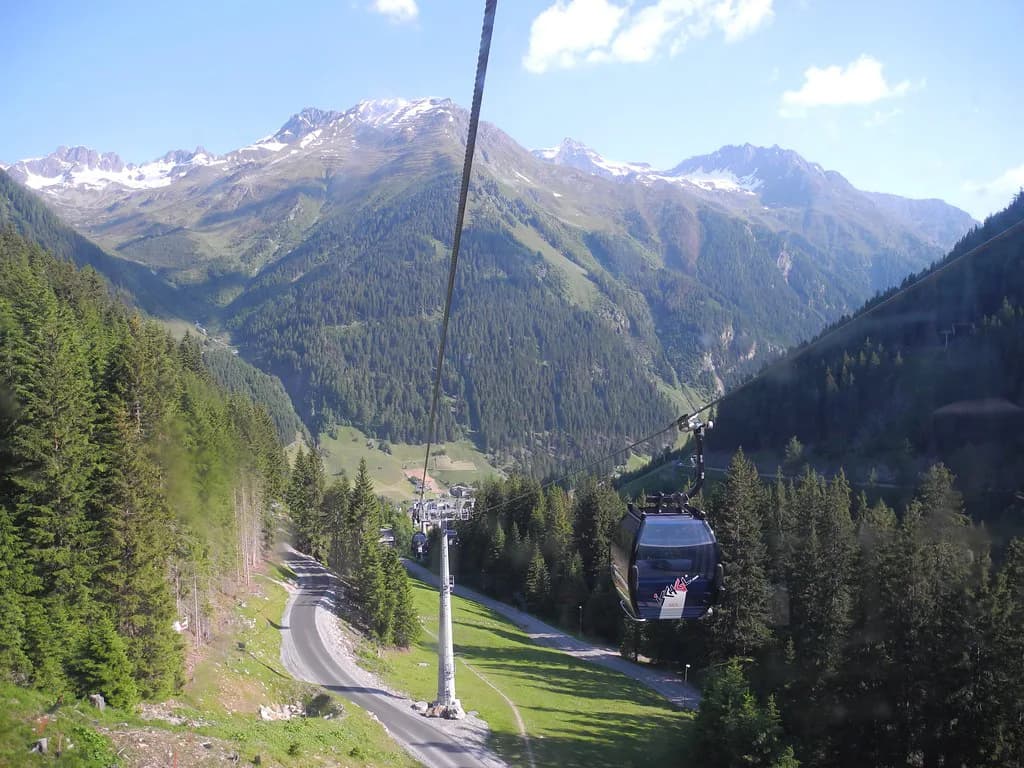
Ischgl is a compact village at the head of the Paznaun valley, with valley stations in the village itself and the ski area climbing from around 1,377 m at the valley base to 2,872 m at the top. The Austrian-Swiss border runs through the Silvretta Arena, so you can ski from Ischgl into Samnaun without a road transfer. That geometry makes a cross-border loop a realistic full-day objective rather than a special excursion.
The Samnaun side is not a mirror image of Ischgl. Samnaun is a separate village with its own base and its own return route back into Austria, so your day plan needs to account for both the outbound and the return. Check the lift and link status before you commit to a late-afternoon crossing.
For route planning, start with the ischgl ski map and identify the main lift axes before you study individual pistes. The map shows where the Ischgl valley stations connect to the upper sectors and where the Samnaun link sits relative to your accommodation. That overview prevents wasted morning laps in the wrong sector.
The village base is low enough that early- and late-season conditions can differ significantly from the top station. Plan your first and last runs of the day accordingly, and treat the upper sectors as the more reliable part of the circuit when the valley is marginal. This is a routing decision, not a snow guarantee.
How the Silvretta Arena Is Laid Out: Ischgl Side, Samnaun Return
The Ischgl side of the Silvretta Arena is broadly the Austrian half of the circuit, served by the gondolas and chairs that leave the village and climb toward the border ridge. Key upper sectors such as Idalp, Pardatschgrat, Greitspitze and Palinkopf are the natural orientation points on that side. The Samnaun side is the Swiss half, reached via the border link and returned from separately.
A practical day often starts on the Ischgl side to warm up, crosses to Samnaun around midday and returns before the afternoon lift system starts to wind down. The exact timing depends on which lifts are running and how quickly your group moves. Build in a buffer rather than treating the crossing as a fixed commute.
The Silvretta Arena is not a single connected bowl. It is a set of sectors linked by specific lifts, and some connections are more weather-exposed than others. If a link is closed, your day plan should have an alternative sector already identified rather than improvising at the top of a lift.
For snowboarders and skiers alike, the linking lifts matter more than any single run. The snowboarding guide covers the Silvretta Arena layout from a boarder's perspective, which is useful when you are deciding whether the cross-border circuit suits your group's pace.
Piste Figures and Altitude Band: What 239 km and 2,872 m Mean
The official figure for the Silvretta Arena is 239 km of pistes, with the top station reaching 2,872 m and the valley base sitting well below that. A lower figure of 159 km appears on Tyrol.com, but that is scoped differently or outdated, so use 239 km as your planning number. Both figures describe a large circuit, not a single village hill.
Altitude matters most for the edges of the season and for the top-to-bottom runs. The upper sectors around 2,000 m and above behave differently from the lowest valley runs, especially in the first and last weeks of the scheduled window. Plan your daily vertical around that band instead of expecting uniform conditions across 239 km.
Kilometres of piste are not all equally accessible from a single base. The figure includes runs in both Austria and Switzerland, and reaching them depends on the linking lifts being open. Treat the headline number as a measure of the circuit's size, not a promise that every run is reachable on any given day.
The lift count is another figure that needs care. The official Ischgl page describes 46 lifts in Ischgl/Samnaun, while the wider Silvretta Ski Pass covers 75 facilities across the network. Keep those two numbers separate when you are deciding which pass to buy.
Ability Split: Easy, Intermediate, Difficult and Ski Routes
The Tyrol.com breakdown gives roughly 24 percent easy pistes, 61 percent intermediate and 15 percent difficult, with ski routes making up a further portion. That is an intermediate-heavy profile, which is the honest headline for Ischgl. It is not a resort where beginners have the majority of the terrain to themselves, but it is not exclusively expert either.
For a mixed group, the practical move is to choose a sector with a genuine easy and intermediate overlap so that faster and slower skiers can share lifts. The Idalp area and the lower Ischgl-side runs are a common starting point for that reason. The map is the tool for finding those overlaps before you commit to a sector for the morning.
Ski routes are marked separately from pistes and are not groomed in the same way as the main runs. If your group is not experienced on ski routes, the route percentage should not be read as easy cruising terrain. Plan the day around the groomed pistes unless everyone is comfortable on routes.
The difficult share is meaningful but not dominant. Strong skiers will find steep terrain, but the bulk of the circuit is intermediate. If your group is mostly advanced and wants a resort dominated by steep runs, compare Ischgl with a more specialist destination, as 15 percent difficult terrain may not fill a full week for advanced skiers.
Beginner Provision: Practice Areas and First-Day Lessons
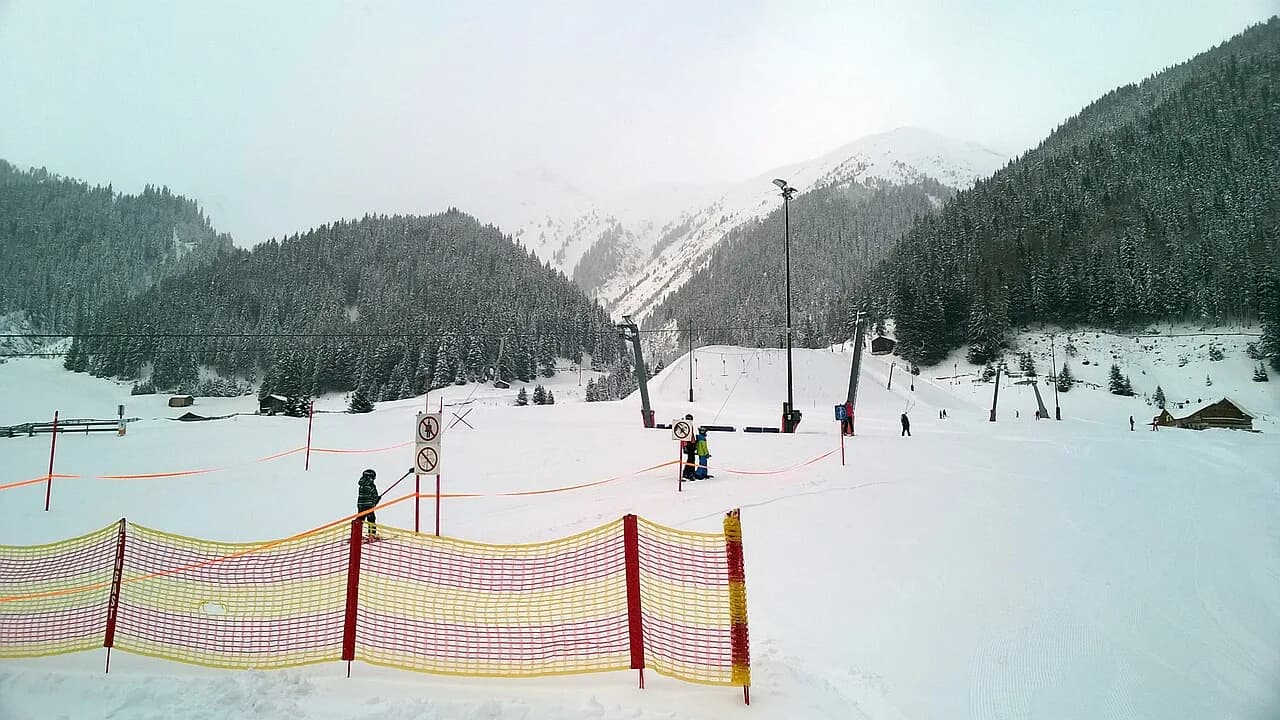
Ischgl has dedicated beginner provision, including separate practice areas and a ski kindergarten, and local ski schools offer courses for children and adults. The beginner areas are distinct from the main circuit, which means first-timers are not immediately exposed to the full Silvretta Arena. That separation is the main practical advantage for learn-to-ski groups.
Ski School Ischgl describes more than 100 qualified ski and snowboard instructors and offers courses for children, youths, adults, individuals, groups and people with disabilities. There are also four one-man ski schools in the village, which gives smaller groups an alternative to the larger school. Course levels and group sizes are the variables to ask about when you book.
The Ischgl tourism page states that ski courses are offered in German and English, with other languages available on request and depending on availability. That is useful for non-German-speaking families, but it is not a guarantee for every course date. Confirm language and level when you book, as the website list may not apply to your week.
A common mistake is to book a first-day lesson before confirming which meeting point and lift the school uses. The beginner areas are not necessarily at the same valley station as the main gondola your group will use later in the week. Ask the school directly for the meeting point and the lift your child or beginner will use on day one.
Lessons and Guiding: Private Versus Group and Booking Timing
Ischgl's ski schools offer both private and group lessons, and the tourism page notes there are courses for all skill levels as well as guided ski and freeride tours. For a family with mixed abilities, private lessons can be more efficient because the instructor adapts to one learner rather than a group pace. Group lessons are usually the better value for confident beginners who want a social format.
Booking timing matters most in peak weeks, when the larger schools fill their group levels first. If you need a specific language or a beginner level that matches your child's age, book that before you travel. The school can tell you which levels typically run in your week and whether a private lesson is the only way to guarantee a place.
Guiding is a separate decision from lessons. The local ski schools can arrange guided ski or freeride tours, but that is beyond the scope of a resort-planning guide. If your group specifically wants a guide, ask the school directly what is available in your week and what experience level is required.
The Alpine Experience Programme is mentioned by the tourism page as a way to find a course, which is a useful starting point for comparing options across the local schools. It does not replace confirming dates, levels and prices with the school itself. Treat it as a directory rather than a booking guarantee.
Pass Boundaries: Silvretta Ski Pass Coverage and When It Pays Off
The Silvretta Ski Pass is valid in Ischgl, Samnaun, Galtür, Kappl and See, covering 75 lifts across the network. That is broader than the 46 lifts in the Ischgl/Samnaun area alone. If your itinerary stays entirely within Ischgl and Samnaun, you are paying for network coverage you may not use.
The official Ischgl page notes that there is no price reduction when lifts in Galtür, Kappl and See are closed at the start and end of the season. That is a concrete reason to match the pass to your actual itinerary rather than buying the widest product by default. If you plan a day in Galtür or Kappl, the network pass earns its keep; if not, it may not.
Children under 8 travel free when accompanied by a parent on the Silvretta Ski Pass, and the VIP Ski Pass has a different age rule. That age threshold should drive which tariff your group buys, not the headline price. Check the terms at purchase, because Silvrettaseilbahn AG reserves the right to adjust them.
The ischgl ski pass guide explains the full product structure in more detail, including the different tariff types and validity rules. Use the official Ischgl page for the current terms and the guide for how the products compare. Do not rely on a remembered price from a previous season.
VIP Versus Silvretta Tariff: An Age Decision, Not a Price Comparison
The VIP Ski Pass and the Silvretta Ski Pass differ mainly in which lifts they cover and in the age rules for children. The VIP tariff covers 46 lifts in Ischgl/Samnaun and lets children under 10 travel free when accompanied by a parent. The Silvretta Ski Pass covers 75 facilities across the network and has a different child threshold.
For a family with children under 10, the VIP tariff can include them free, which changes the group calculation. For a group that wants to ski Galtür, Kappl or See, the Silvretta Ski Pass is the relevant product. The decision is about coverage and age rules first, and only then about the price difference.
The official Ischgl page states that prices are calculated in advance and may be recalculated before purchase, particularly in light of energy costs and inflation. That is why this guide does not quote day or season rates. See the Silvrettaseilbahn AG price page close to your travel date for the figure you will actually pay.
Discounts require official photo ID, and the disability discount applies from a documented degree of disability of 70 percent. If your group relies on any of those rates, bring the documentation and confirm the current terms with the lift company. Do not assume a discount from a name or reputation.
Season Shape: Scheduled Window and Operational Risk
The official Ischgl page gives the season window as 26 November 2026 to 2 May 2027 for the Silvretta Ski Pass. That is a scheduled operating window, not a guarantee that every lift, link or piste will open on every day within it. Early and late weeks carry more operational variability because the valley base is lower than the top station.
If you are booking a trip at the edges of that window, build flexibility into the itinerary rather than planning a strict cross-border circuit for day one. Check the lift and link status close to travel, and have an alternative sector in mind. The season dates tell you when the lifts are scheduled to run, not what will be open when you arrive.
The official page also notes that the company reserves the right to change prices, including on a daily basis, especially during events. That is another reason to confirm the current price at the point of purchase rather than budgeting from an older figure. Event periods can affect both price and availability.
Do not use historic snow statistics as a forecast for your week. The sources here do not support a snow-reliability claim, and a snow report showing low depth at one moment says nothing about your travel dates. Check the official snow report and lift status pages close to departure.
Rental and Depots: What Shops Provide and How Depots Change the Day
Ski rental shops in Ischgl offer skis and snowboards, and the official page notes that equipment is supplied freshly waxed and with sharp edges. Staff can help match gear to your ability and the conditions. Rental costs vary by equipment and duration, so the page advises consulting the shop on site for a detailed quote.
Ski depots are located in the centre of Ischgl and at Idalp, which changes the daily routine significantly if you use one. A central depot means you walk to the lift in normal footwear and collect your gear at the slope. An Idalp depot suits groups who start and finish their day in the upper sector rather than returning to the village.
The official rental page states that costs vary according to equipment and rental duration and directs readers to the on-site experts for a quote. It does not publish fixed rates, so this guide does not either. Check the shop's current terms and availability before you travel, especially in peak weeks.
A depot changes what you carry but not what you need to book. Decide whether your group will use a depot before you commit to accommodation, because the location of your lodging relative to the depot and the valley station shapes the morning routine. That is a logistics decision, not a gear recommendation.
Non-Skier and Mixed-Group Options: Pedestrian Uplift and Tickets
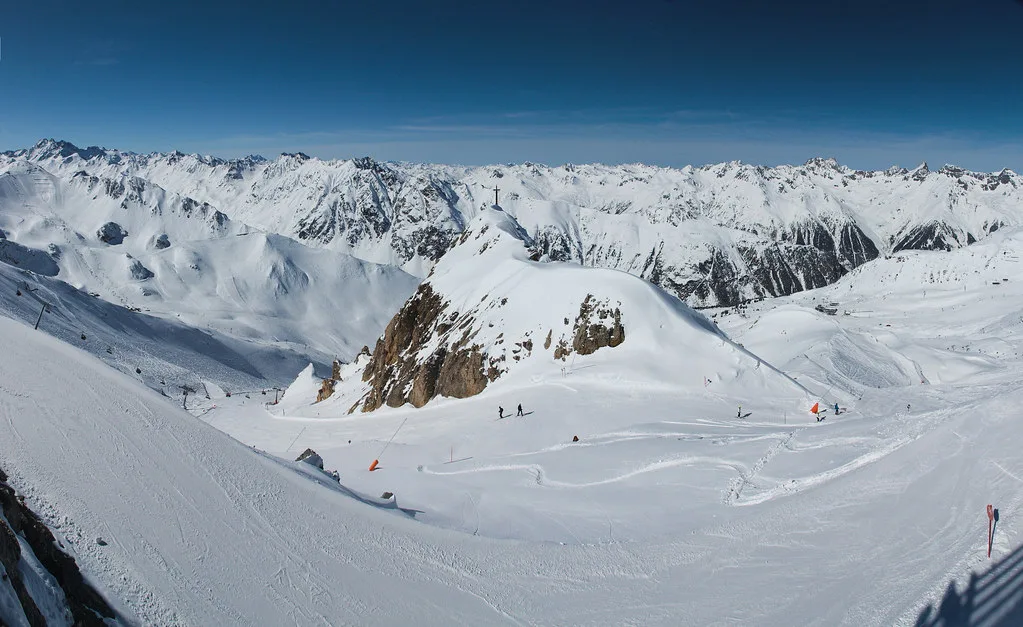
Non-skiers can buy ascent and descent tickets on the main Ischgl lifts, including Silvrettabahn, Pardatschgratbahn and Fimbabahn, with a connection via Gratbahn. There is also a pedestrian day pass that covers a wider set of lifts between Ischgl and Samnaun. These products let a mixed group share the mountain without everyone skiing.
The pedestrian day pass is valid on specific facilities and is intended for single use from Ischgl to Samnaun and back. If your group plans a cross-border lunch, check which lifts are included before you buy. Not every lift on the ski circuit is covered by the pedestrian product.
For mixed groups, the practical approach is to agree a meeting point and a time rather than trying to keep everyone on the same lift all day. Non-skiers can use the pedestrian uplift to reach a mountain restaurant while skiers do laps. That works best when the meeting point is on a lift covered by both products.
Ascent and descent tickets are priced per trip or in packs, and the official page lists the current options. Because prices can change, confirm the current rate when you buy rather than budgeting from this guide. The official page is the authoritative source for what is valid.
Planning Sequence: Trip Length, Pass Product and Booking Order
Start by deciding how many days you will actually ski, because that determines whether a day pass, a multi-day pass or a network product is the right shape. A three-day trip focused on Ischgl and Samnaun does not need the full Silvretta network. A week that includes Galtür or Kappl does.
Next, match the pass to your group's ages. Under-8s travel free on the Silvretta Ski Pass with a parent, while the VIP tariff has a different child rule. If your group includes teenagers or seniors, check which tariff applies before you compare options. The age rules often matter more than the headline rate.
Book lessons and rental before arrival if you need a specific level, language or equipment size. The local schools and rental shops fill up in peak weeks, and the on-site quote is the only reliable price for rental. Use the official Ischgl pages to see the latest terms rather than relying on an older figure.
Finally, decide whether you need a depot and where. A central depot and an Idalp depot suit different daily patterns, and the choice affects how much you carry. That decision is easier once you know which sector you will start from on most days.
What to Confirm Close to Travel
Check lift and link status before you travel, especially if your plan depends on the cross-border circuit to Samnaun. The scheduled season window does not guarantee that every link will be open on your dates. The official Ischgl operating times and snow report pages are the places to check.
Re-check pass prices and terms close to purchase, because Silvrettaseilbahn AG states that prices may be recalculated and can change during events. That applies to day tickets, multi-day products and season passes alike. Budget from the current published figure, not from a previous season.
Confirm lesson meeting points, language availability and rental collection details with the provider directly. Those are operational details that can change between seasons and are not always fully reflected on a summary page. A short email before departure avoids a first-morning scramble.
If your plans change and you are considering a different Austrian resort, the Alpbach Skiing Guide and the Kaprun Skiing Guide cover alternatives with different terrain profiles and village characters. They are useful for comparison, not as substitutes for checking current Ischgl conditions.
Plan Your Ischgl Ski Trip
Ischgl skiing is best understood as Silvretta Arena skiing: a cross-border circuit with 239 km of pistes, an intermediate-heavy profile and a pass network that reaches beyond the village. The right choice depends on your group's ability mix, whether you will use the wider Paznaun network, and how much flexibility you want at the edges of the scheduled season.
Work through the decisions in order: trip length, pass product, lesson and rental booking, then the daily routing that the ischgl ski map supports. Confirm current prices, lift status and lesson details with the official sources close to travel, because those are the figures that apply to your trip.
For the detail behind the pass and lesson choices, the ischgl ski pass and ischgl ski lessons guides expand on the operational points covered here. Use them alongside the official Ischgl pages rather than instead of them.
Explore more Ischgl guides
Frequently Asked Questions
Is Ischgl good for beginners?
Ischgl has dedicated beginner areas, a ski kindergarten and ski schools that teach children and adults, so it is workable for beginners. The wider Silvretta Arena is intermediate-heavy, which means first-timers will spend most of their early time in the practice areas rather than on the main circuit. If your group is entirely beginner and wants a quieter base, compare Galtür, Kappl or See before committing to Ischgl.
Does the Ischgl ski pass cover Samnaun and Galtür?
The Silvretta Ski Pass is valid in Ischgl, Samnaun, Galtür, Kappl and See, covering 75 lifts across the network. The VIP Ski Pass covers 46 lifts in the Ischgl/Samnaun area only. The official Ischgl page notes there is no price reduction when lifts in Galtür, Kappl and See are closed at the start and end of the season, so match the product to your actual itinerary.
How many kilometres of piste are in the Silvretta Arena?
The official Ischgl figure is 239 km of pistes, with the top station reaching 2,872 m. A lower figure of 159 km appears on Tyrol.com, which is scoped differently or outdated. Use 239 km as the planning number and treat the altitude as a band from valley station to top station rather than a single resort elevation.
When does the Ischgl ski season start and end?
The official Ischgl page gives the Silvretta Ski Pass season window as 26 November 2026 to 2 May 2027. That is a scheduled operating window, not a guarantee that every lift, link or piste will open on every day within it. Early and late weeks carry more operational variability, so check lift and link status close to travel.
Can non-skiers get up the mountain in Ischgl?
Yes. Ascent and descent tickets are available on the main Ischgl lifts, including Silvrettabahn, Pardatschgratbahn and Fimbabahn, and there is a pedestrian day pass covering a wider set of lifts between Ischgl and Samnaun. The pedestrian pass is valid on specific facilities for a single Ischgl-to-Samnaun return, so check which lifts are included before buying. Prices can change, so confirm the current rate at the point of purchase.
Do I need to book ski lessons in advance in Ischgl?
You should book before you travel if you need a specific level, language or a place for a child in a particular age group. The local schools offer German and English as standard, with other languages on request and subject to availability. Meeting points and lift access for beginner groups are worth confirming directly with the school, because they are operational details that can differ from a summary page.
Sources
Useful notes for your next ski trip
Optional updates to our Alpine resort guides.
You might also like
Continue reading
More guides you'll find useful