Skiing in Grindelwald: A Complete Guide to the Ski Area
An evergreen guide to skiing in Grindelwald, covering the First and Kleine Scheidegg-Männlichen sectors, Jungfrau Region pass boundaries and beginner provision.
On this page
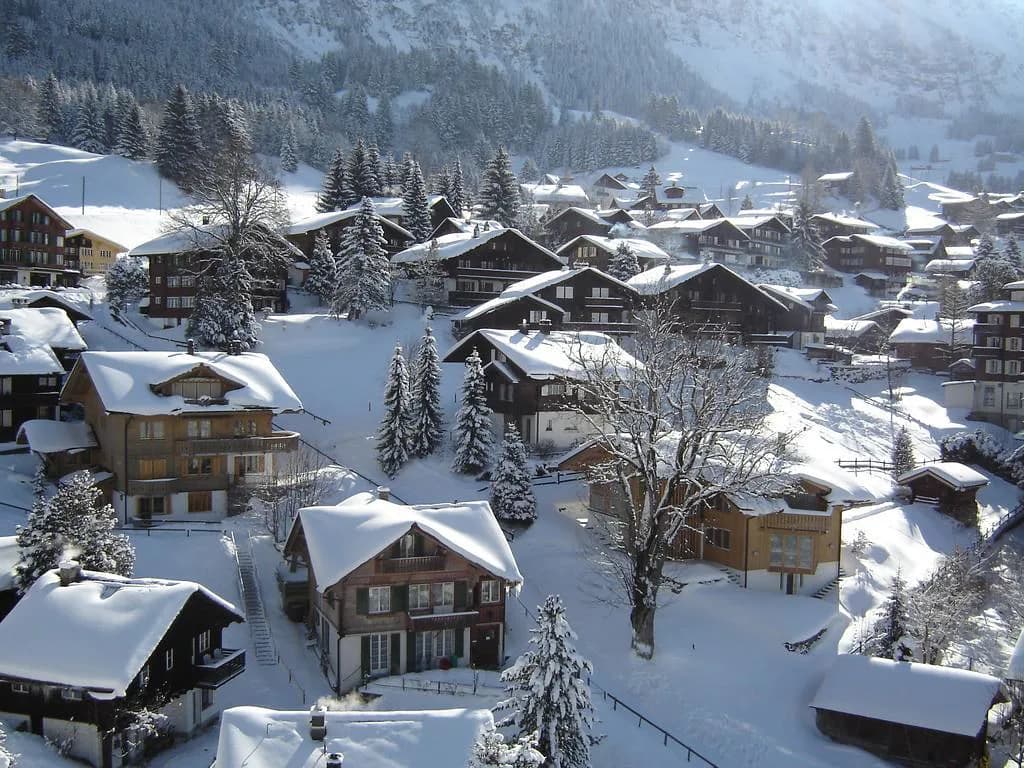
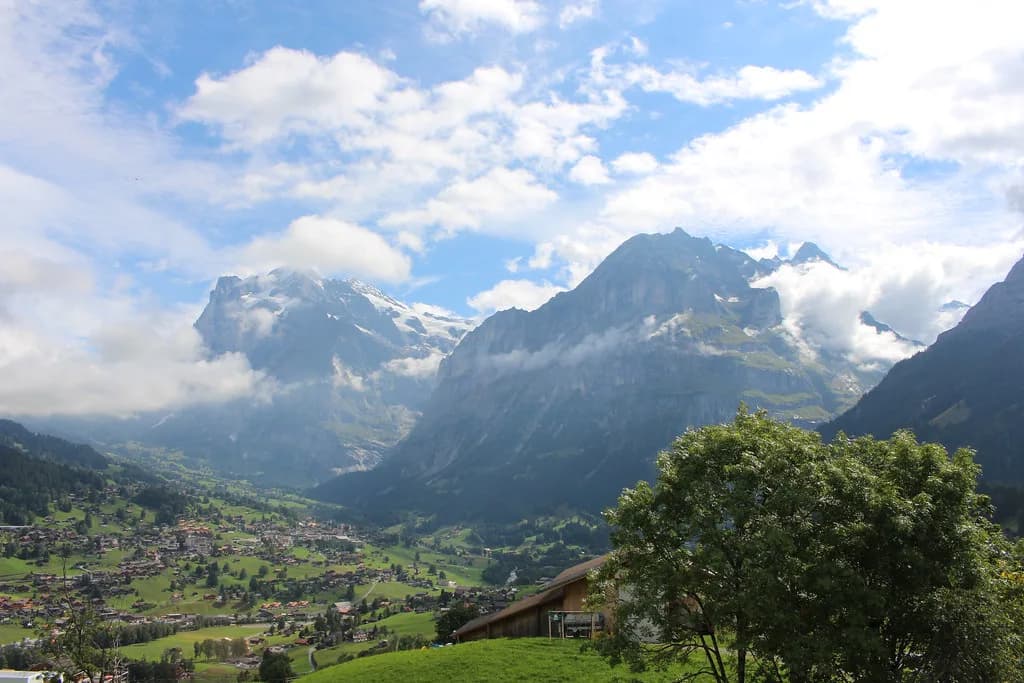
Grindelwald sits at roughly 1,034 m in the Bernese Oberland, a chalet-style village beneath the North Face of the Eiger within the Jungfrau Region. The skiing is not one mountain but a set of separate sectors, and which one you ride on any given day depends on the conditions and on how much time you are willing to spend in transit. That single choice, which side to base your days on, shapes everything else about the trip. Ski Weekends frames the area as three ski areas worth exploring, with Wengen and Grindelwald on the local pass and Mürren on the Jungfrau pass.
A common expectation is that the resort's size comes from one interconnected lift network, but the layout is more two-sided than that. On one side of the village, First offers long cruising red runs; on the other, skiers reach Kleine Scheidegg by mountain railway or by the Eiger Express tri-cable car, which connects Grindelwald Terminal to Eiger Glacier station in about fifteen minutes. Treating those as two different destinations, rather than one automatic circuit, is the basis for planning a day here.
This guide covers the practical decisions: the difference between the First and Kleine Scheidegg-Männlichen sectors, how pass boundaries affect where you can ride, what beginners can expect, and which operational details only the lift companies and tourism office can publish. Pass products, season dates and current prices are not treated as fixed here, because those are set per season and need checking directly.
The two-sided resort: First versus Kleine Scheidegg-Männlichen
Maison Sport describes the ski area as divided into two main sections, First and Kleine Scheidegg-Männlichen, both accessible from the village. That distinction is the most useful thing to grasp before booking, because each side has a different character and a different journey from your accommodation. First sits on one side of town and is described as the resort's own ski area, with long cruisy red runs.
The Kleine Scheidegg-Männlichen side opens up the rest of the Jungfrau Region, with direct access to Kleine Scheidegg via mountain railway and the Eiger Express. In practice, this means you decide in the morning whether you want a day of local cruisers or a day of link-and-travel to other valleys. Building both into a trip is normal, but trying to do both in one day usually means a lot of time in transit rather than on snow.
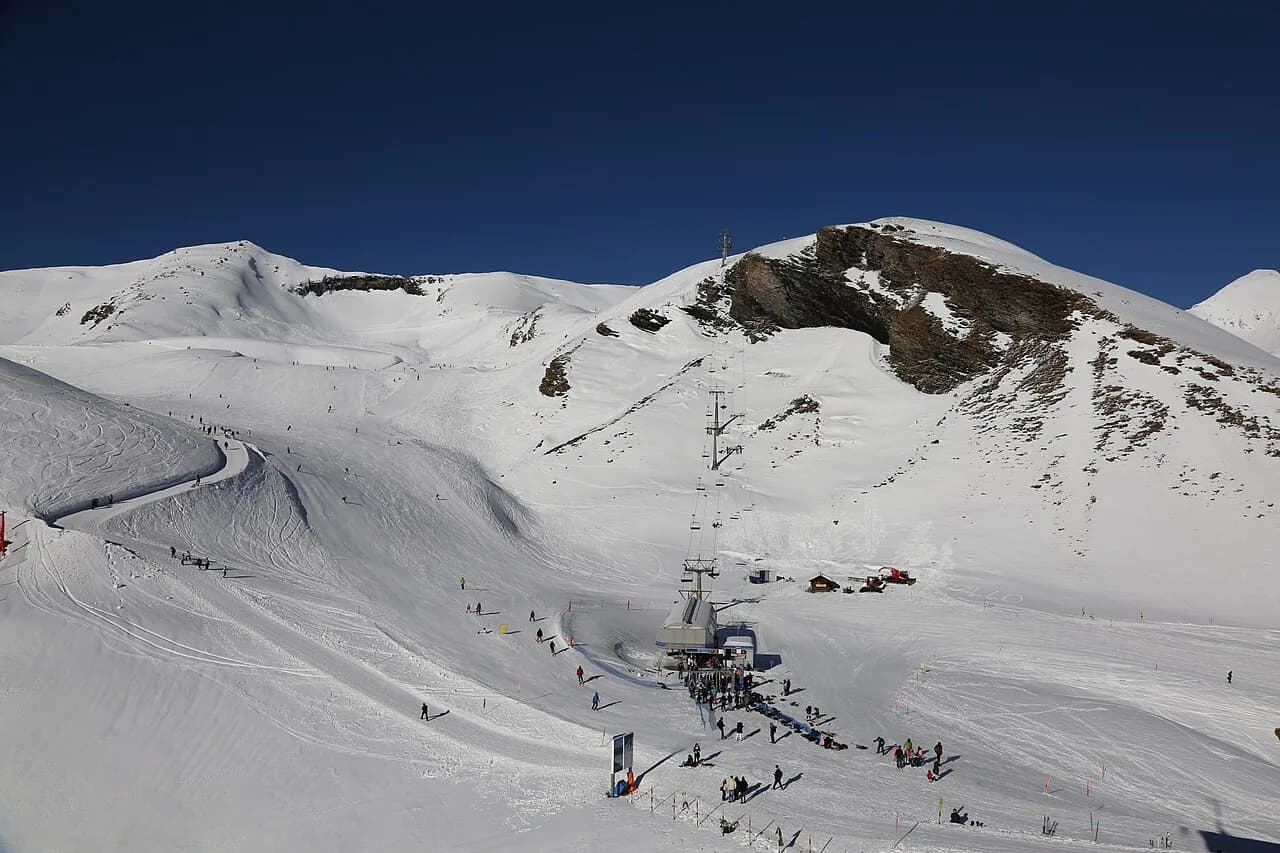
The Männlichen sector sits at 2,232 m and is reached by gondola cableway from Grindelwald or by aerial cableway from Wengen. According to the Grindelwald Tourismus listing, its practice area is located right next to the Männlichen cable car top station. That makes Männlichen a natural first stop if you want to start high without a long connection, while the main Kleine Scheidegg circuit is a short move onward.
Because the two sides are not one loop, the sensible approach is to group your days by sector rather than zig-zagging. Give First a full day, give Kleine Scheidegg-Männlichen a full day, and add Männlichen as either a starting point or a half-day. If your trip is short, that structure protects slope time and avoids spending your holiday in lift queues and trains.
Kleine Scheidegg and the Eiger Express link to the Jungfrau network
The Eiger Express is a tri-cable car running from Grindelwald Terminal to Eiger Glacier station, and it has changed how quickly you can reach the Kleine Scheidegg side. Ski Weekends notes the journey takes about fifteen minutes and that it is considerably faster than the previous route. For anyone staying in the village, that short upload time is the main reason to favour the Kleine Scheidegg side for long days.
From Eiger Glacier station, the Kleine Scheidegg-Männlichen area opens up, and beyond it lies the wider network that runs toward Wengen and the Mürren-Schilthorn side. Maison Sport describes the lift system as connecting seamlessly to neighbouring Wengen and Mürren, though the pass boundaries matter when you plan days across those links. Treat the network as connected for convenience, but check the pass before you cross a boundary.
One operational point worth understanding is that high connection lifts and low valley runs behave differently through the season. Much of the skiing here sits below 2,000 m, with snowmaking used to cover the lower ground, while upper stations such as Männlichen sit well above that line. That contrast is why two sides of the same resort can feel like different seasons on the same day. Resorts with a similar high-start, low-return profile, such as Andermatt, raise the same question, so the Andermatt ski guide is a useful comparison.
For a day on this side, plan around the Eiger Express upload and a mid-mountain circuit rather than a village-to-valley loop. If a lower run is on your list, keep an eye on the daily lift and piste status report from the Jungfrau lift companies, since those reports, not a guide written in advance, tell you which runs are actually open.
Männlichen: access, orientation and who it suits
Männlichen sits at 2,232 m and is served by gondola cableway from Grindelwald or aerial cableway from Wengen, so you can start there from either side of the valley. According to its Grindelwald Tourismus listing, the ski school's practice area is directly next to the Männlichen cable car top station. That position makes the sector an easy first upload for skiers who want to begin above the valley floor.
The same listing states that the Männlichen Ski and Snowboard School offers individual lessons for adults, teens and kids, with instructors who speak German, English, French, Italian, Spanish, Dutch and Russian. It also mentions supervised lunches for ski school children aged four and over in the Männlichen mountain restaurant. Those are the school's own stated details, and lesson formats and lunch arrangements may change from season to season.
Because Männlichen is a high start with a genuine practice area at the top station, it suits mixed-ability groups who want to begin together. Beginners can stay in the immediate area while stronger skiers move onward toward Kleine Scheidegg. The trade-off is that you commit to the Männlichen side first, so it works best on a day when you intend to continue across rather than return to First.
If you are travelling with children or first-timers, check whether the practice area you want is the one served by the school you booked. There are distinct meeting areas across the resort, and the Männlichen Ski and Snowboard School is not the same operation as the Swiss Ski School Grindelwald. When you reserve lessons, note the meeting point your chosen school assigns, since it will not be the same place for both.
The wider Jungfrau Region: Wengen and Mürren
The Jungfrau Region brings in neighbouring Wengen and Mürren, and Ski Weekends describes Wengen and Grindelwald as sitting on the local pass, while Mürren sits on the Jungfrau pass and is roughly an hour and a half from Grindelwald by train. That travel time is the key planning fact: Mürren is a genuine excursion rather than a spur of the moment extension. If a day there appeals, give it its own slot in the itinerary.
Wengen, by contrast, is much closer and connects through the Kleine Scheidegg area, so it fits naturally into a day on that side. Maison Sport refers to the wider area as the Jungfrau ski area and describes connecting seamlessly to Wengen and Mürren, but it does not set out the pass products in detail. Use the Jungfrau lift companies' pass information to decide whether your chosen ticket covers the day you are planning.
For a week-long trip, a realistic split might be two days on the First side, two to three days around Kleine Scheidegg and Männlichen, one day toward Wengen, and one excursion day to Mürren if your pass and the connections allow it. That leaves margin for weather and for the slower days that any high-alpine itinerary eventually produces. Adjust the order once you see the lift and piste status rather than locking every day in advance.
The published extent of the region's skiable terrain varies between the available summaries, so treat any figure you see as approximate rather than exact. What matters for planning is the shape of the network and the boundaries, not a single kilometre total.
Pass boundaries: local area versus Jungfrau Region pass
The single most common planning mistake here is assuming that one ticket covers everything you can see. The boundary that matters most is between the local-area coverage that includes Wengen and Grindelwald and the Jungfrau pass that extends to Mürren. That distinction comes from Ski Weekends, and it directly affects how you plan a Mürren day or a Wengen day.
The other trap is inferring coverage from a resort's reputation or from the fact that lifts physically connect. Maison Sport's description of seamless connection to Wengen and Mürren is about the network, not about which ticket you hold. Before buying, read the current product description on the lift companies' own pass pages and match it to the specific days you intend to ride.
Prices for ski passes are not stated in this guide because they change with the season and are set by the Jungfrau lift companies. The practical move is to work out your intended itinerary first, then buy the pass that matches it rather than the largest ticket available. If your plan is mostly First and Kleine Scheidegg with one Wengen day, a Jungfrau-wide product may not be the right default.
For current inclusions, prices and validity periods, the authoritative source is the lift companies' own ticketing information, cross-checked against the Grindelwald Tourismus destination site. Check both before you commit, especially if your trip straddles a season boundary.
Beginner provision: Bodmi and Schreckfeld nursery slopes
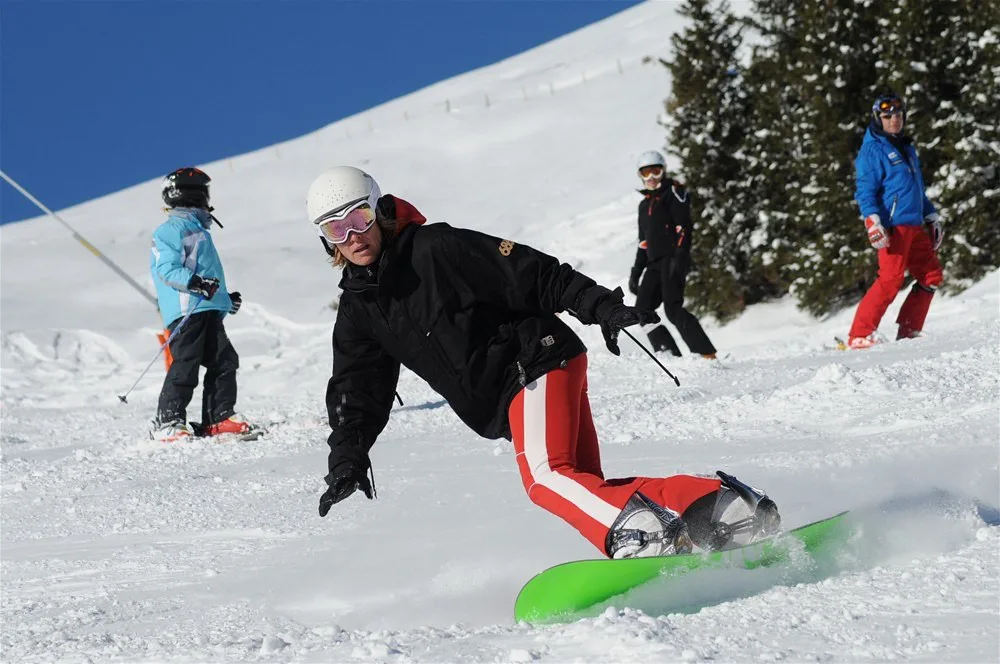
Grindelwald has two main nursery slopes, one at Bodmi and another at Schreckfeld, according to Maison Sport. Bodmi sits in the centre of the village, while Schreckfeld is up on the First side. That geography matters because your accommodation location determines which nursery is more convenient on a given morning.
The Swiss Ski School Grindelwald runs its own beginners' area, the bodmiARENA in the centre of Grindelwald, with a platter lift, magic carpet and sledging. According to the Grindelwald Tourismus listing, that area provides the infrastructure for beginners' lessons and is also used for sledging. It is the most convenient starting point if you are staying in the village core.
Progression from the nursery slopes generally moves onto blue runs such as Oberjoch and Bärgelegg, which Maison Sport lists as the next step once the basics are mastered. Maison Sport also advises that beginners take the lifts back down from higher terrain rather than attempting to descend, which is sensible given how much of the upper mountain is steep. Plan the first two days around the nursery area and let the next step follow your instructor's guidance.
A regular shuttle or bus between the village centre and the First lift station makes the Schreckfeld nursery reachable, but it is a different logistics decision from stepping out of your door at Bodmi. If your group includes a mix of beginners and stronger skiers, the Bodmi area lets the beginners stay local while the rest head up. That flexibility is one of the reasons Grindelwald works for mixed-ability groups.
Lessons: Swiss Ski School Grindelwald and Männlichen Ski School
The Swiss Ski School Grindelwald has been operating since 1937, teaches all levels in small groups under Swiss Snowsports guidelines, and offers private lessons for anyone who wants tailored instruction. Its own beginners' area at bodmiARENA uses a platter lift and magic carpet. Lessons can also be booked in other parts of the Jungfrau Region, including First, Männlichen, Kleine Scheidegg and the Mürren-Schilthorn area.
The Männlichen Ski and Snowboard School is a separate operation with a practice area beside the Männlichen cable car top station. Its listing emphasises individual lessons and multi-language instruction, and mentions supervised children's lunches at the mountain restaurant. Because the two schools have different meeting areas, the resort's two same-named school operations should not be treated as interchangeable.
Booking directly with the Swiss Ski School Grindelwald is the way to see current group sizes, languages, meeting points and whether lessons run on the day you want. Availability during peak weeks fills quickly, so decide your lesson days early and align them with the sector you plan to ski that day. If your lessons are on the First side, staying near the First lift station shortens the morning.
If you need equipment as well as instruction, arrange both before you travel so the first morning is not spent queueing. For a full picture of the resort's beginner pipeline, from nursery to first blue runs, see the Grindelwald skiing for beginners guide, which breaks the progression into individual steps. Then match your lesson bookings to that plan rather than the other way round.
Terrain grading and sector matching
First is described by Ski Weekends as a good place for long cruisy red runs, making it the natural first choice for confident intermediates. Kleine Scheidegg and Männlichen offer the more varied terrain, including the connections that make the resort feel larger than its own slopes. Matching your ability to the right sector each day is more useful than trying to cover everything.
Maison Sport notes that the grading system in Grindelwald leans toward the challenging end, so a red here may feel harder than a red elsewhere. That is worth knowing if you are progressing from blues, and it argues for building in a familiar warm-up run before committing to a long descent. Choose a sector with a good spread of grades rather than one dominated by a single colour.
Published run counts and difficulty percentages vary between the sources available, so this guide does not give a figure. What is reliable is the sector-level description: First for cruising, Kleine Scheidegg-Männlichen for variety and connections, Männlichen for a high start. Use those as your filter and check the lift companies' trail map for the specifics.
There is no fixed rule about which sector suits which skier, because conditions shift through the season and a blue run can be harder after fresh snow. The most practical approach is to pick a sector, ride a representative run, and adjust the following day. If you want a structured way to choose, read the detailed Grindelwald ski pass page, which maps pass choices to the terrain they unlock.
Low-altitude home slopes and surface conditions
Ski Weekends notes that a lot of the skiing sits below 2,000 m but that the area is well served by snow cannons. That combination is normal for a valley resort, and it means lower runs depend more on snowmaking than high-altitude pistes do. Early and late in the scheduled season, the high sectors are usually the safer bet.
Much of the valley floor around Grindelwald sits near 1,034 m, and the run back into the village is the lowest part of the system. That is where warm spells and rain show first, and it is the part most likely to be limited by marginal conditions. Planning your day to descend earlier rather than later is one way to reduce the risk of missing the last reliable route down.
Upper stations such as Männlichen at 2,232 m sit above the snowmaking-dependent zone, which is why the Männlichen side is often the more dependable starting point in a marginal week. This is not a snow guarantee for any period, merely a description of how the resort's elevation profile shapes the skiing. Always check the lift companies' current lift and piste status before setting out.
The practical translation is that your itinerary should stay flexible in the first and last weeks of the scheduled season. If the lower runs are limited, focus on the higher sectors and use the connections to stay up rather than returning to the village. That approach keeps the day productive even when the valley is under marginal conditions.
Non-ski winter activities and their place in the plan
Grindelwald offers a range of winter activities beyond downhill skiing, including 80 km of toboggan runs, cross-country skiing, snowshoe walking and sleigh rides, according to Ski Weekends. These are not filler for a bad-weather day; for some groups they are the reason to choose the resort. If you are travelling with non-skiers, put at least one of these in the plan before you arrive.
The bodmiARENA beginner area also includes sledging, so families with a mix of skiers and non-skiers can share a base during the day. That can simplify logistics considerably, because you are not splitting across two valleys. Sledging and other activities there are seasonal rather than year-round fixtures, so ask the Swiss Ski School Grindelwald or Grindelwald Tourismus about availability and any booking requirements when you arrive.
For mixed-ability groups, the sensible pattern is to align everyone's base each day rather than scheduling separate itineraries. Beginners and sledgers can share the Bodmi area while stronger skiers start from the same side and return to meet them. That avoids the classic problem of a group spending more time coordinating than skiing.
These activities also justify the resort for a non-skiing partner, which changes the economics of a trip. If that is your situation, build the non-ski day into the middle of the trip rather than saving it as a fallback. It makes the week feel balanced and gives tired legs a rest before the final days.
Practical planning sequence for a Grindelwald ski trip
Start by deciding which sector you will base your days on, because that determines where you should look for accommodation and how you buy passes. First and Kleine Scheidegg-Männlichen are on opposite sides of the village, so a location that is convenient for one is less so for the other. Work out your intended split before you book anything else.
Next, match your pass to that itinerary rather than buying the largest option by default. The local pass and the Jungfrau pass cover different areas, and the Mürren extension is only worth it if you genuinely intend to make that trip. For a detailed breakdown of which ticket suits which plan, see the dedicated Grindelwald ski pass guide and compare it against your day-by-day sketch.
Then secure lessons and equipment before you travel. Grindelwald has two separate ski school operations with different meeting areas, and equipment availability in peak weeks is tight, so early booking is the practical move. See the Grindelwald ski lessons guide for how the two schools differ and the Grindelwald ski hire guide for what to arrange in advance.
Finally, leave one day unplanned. Grindelwald's layout rewards flexibility, and a spare day lets you follow the better conditions or repeat a sector you enjoyed. Treat any winter season as a scheduled plan rather than a guarantee, and any trip will be easier to adapt.
Unresolved points and where to confirm details before booking
Several details cannot be settled from the available sources and are best checked directly rather than guessed. Current lift pass products, their inclusions and their prices are set per season, and the pass descriptions across secondary sources are inconsistent. Check the Jungfrau lift companies' own ticketing pages for the current season before you buy anything.
The same applies to season dates and to which lifts, links and pistes are open at any given time. A scheduled winter season is a plan, not a promise that every connection will operate every day, and that distinction matters when you are building an itinerary around specific sectors. The lift companies' daily status page is the reliable source once you are there.
Skiable terrain extent is reported differently across sources, so treat any single figure as approximate. Run counts and difficulty percentages are also inconsistent and unattributed in the material available, which is why this guide avoids stating them. Use the lift companies' trail map for piste-level detail rather than relying on a summary figure.
Finally, lesson formats, meeting points, children's arrangements and equipment availability all change between seasons and should be confirmed with the provider. This guide separates operator-stated facts from practical planning advice, and the second category is where your own checks matter most. If a detail is not published, assume it needs a direct enquiry rather than an assumption.
Plan Your Visit
Grindelwald works as a ski base because it combines a traditional valley village with two distinct ski sectors and a link into the wider Jungfrau Region. The decision that shapes the trip is not whether to visit but which sector to base your days on, and that answer depends on your ability, your group and the conditions in the week you travel. Get that right and the rest of the planning falls into place.
The sequence is straightforward: choose your sector split, match your pass to it, book lessons and equipment early, and leave room for at least one flexible day. Confirm passes, dates and operating status with the Jungfrau lift companies and the Grindelwald Tourismus site, since those details change season by season. Treat the winter season as a scheduled plan rather than a guarantee, and you will plan a better trip.
Explore more Grindelwald guides
Frequently Asked Questions
Is Grindelwald part of the Jungfrau ski area?
Yes. Grindelwald sits within the Jungfrau Region and connects to Wengen and Mürren through the wider network. The two local sectors, First and Kleine Scheidegg-Männlichen, are both accessible from the village, but pass coverage differs between the local product and the Jungfrau-wide product. Check current pass pages, as one ticket may not cover everything.
How do the First and Kleine Scheidegg-Männlichen sectors differ?
First is on one side of the village and offers long cruising red runs, while Kleine Scheidegg-Männlichen is reached by mountain railway or the Eiger Express and opens onto the wider network. They are separate destinations rather than one loop, so most visitors give each a full day. Check current lift and piste status on the day.
What does a Grindelwald ski pass cover?
Coverage depends on which product you buy. Wengen and Grindelwald sit on the local pass while Mürren sits on the Jungfrau pass, and Mürren is roughly an hour and a half from Grindelwald by train. Because products and inclusions are set per season, read the current pass description rather than inferring coverage from the resort's reputation.
Is Grindelwald suitable for beginners?
Yes. There are two main nursery slopes, at Bodmi in the village centre and at Schreckfeld on the First side, and the Swiss Ski School Grindelwald runs its own beginners' area at bodmiARENA with a platter lift and magic carpet. Progression moves onto blue runs such as Oberjoch and Bärgelegg. Book lessons in advance during peak weeks.
Can I ski from Grindelwald to Wengen and Mürren?
You can reach Wengen through the Kleine Scheidegg area, and Mürren is connected by the wider network, but the trip to Mürren takes roughly an hour and a half by train from Grindelwald. Whether your pass covers those areas on the day you travel is a separate question. Check current pass inclusions and travel connections before planning a day across those links.
Where are Grindelwald's nursery slopes?
The two main nursery slopes are at Bodmi, in the centre of the village, and at Schreckfeld on the First side. The bodmiARENA beginners' area at Bodmi includes a platter lift, magic carpet and sledging, and is run by the Swiss Ski School Grindelwald. Confirm current meeting points and lesson availability with the school when you book.
Is there much skiing below 2,000 metres in Grindelwald?
Yes, a significant share of the skiing sits below 2,000 m, and snowmaking is used to cover the lower ground. The village itself sits at around 1,034 m, so the lower runs are the first to be affected by marginal conditions. Higher sectors such as Männlichen, at 2,232 m, sit above that zone. Always check the operator's daily piste status before choosing a sector.
How does the Eiger Express change access to the Kleine Scheidegg side?
The Eiger Express is a tri-cable car running from Grindelwald Terminal to Eiger Glacier station in about fifteen minutes, considerably faster than the previous route. It makes the Kleine Scheidegg side practical for a full day from the village. Check current operating times and connections, since schedules are set per season.
Sources
Useful notes for your next ski trip
Optional updates to our Alpine resort guides.
You might also like
Continue reading
More guides you'll find useful