Saalbach Skiing Guide: Skicircus Sectors, Passes & Planning
Plan Saalbach skiing around the Skicircus lift zones, the Alpin Card pass boundary and the published winter operating window, with base and lesson decisions.
On this page
Saalbach is one of the entry points to the Skicircus Saalbach Hinterglemm Leogang Fieberbrunn, a lift-linked Austrian ski area spread across several villages in the Glemm Valley and beyond. The name is long because the area is genuinely a group of resorts sharing one lift network rather than a single compact mountain. That matters for planning: where you sleep changes which lift you reach first each morning, and how far you can realistically roam in a day.
This guide is written for the decision stage of a ski trip, before you commit to a base, a pass or a lesson booking. It covers the sector layout, the difference between the Skicircus pass and the wider Alpin Card network, beginner provision, and the published operating window. It deliberately avoids hotel recommendations, transfer logistics and off-piste guidance, which belong in dedicated articles.
One framing point before the detail: a planned winter season is conditional. Lifts, links and pistes can open later, close earlier or stay shut depending on conditions and operating decisions. Treat everything below as the structure you plan around, not a promise about what will run on your dates.
Opening Decision: What Kind of Ski Trip Saalbach Actually Is
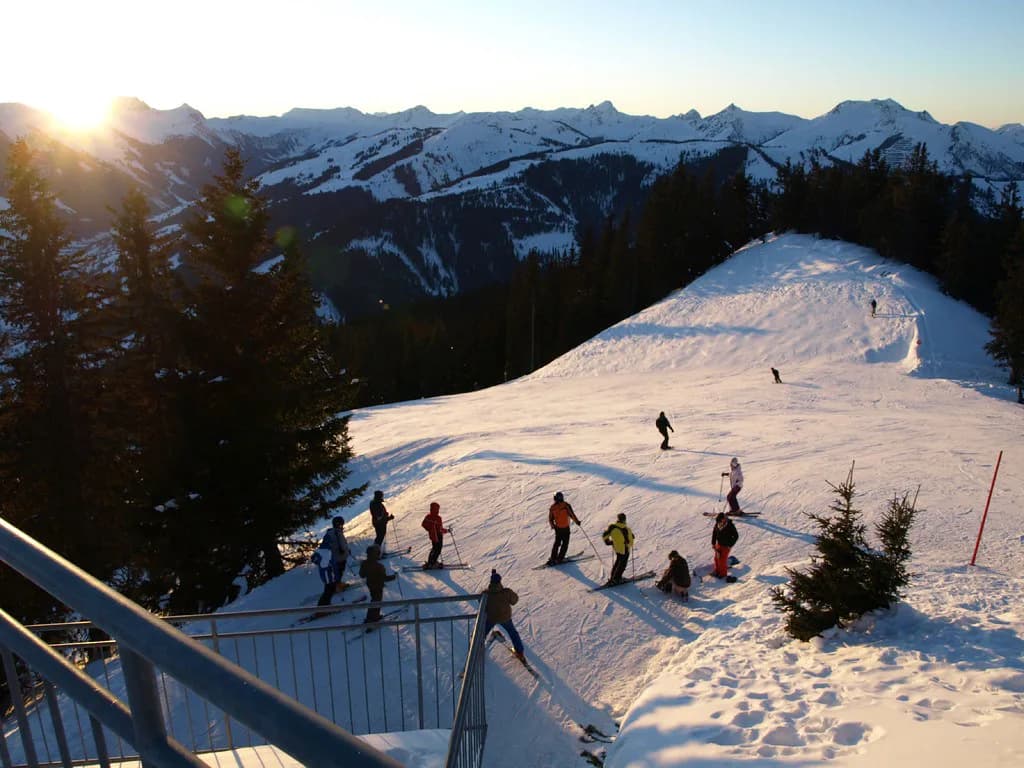
Saalbach suits skiers who want distance and variety over intensity. The terrain is arranged so that intermediates can spend a full day moving between villages, racking up long cruising runs rather than repeating one steep face. That is the core appeal, and it is also the main limitation if your priority is sustained steep skiing.
The resort is a strong fit if you want a large, interconnected area with several village bases and a pass decision that can be widened later. It is a weaker fit if you want a single compact mountain where every run returns to your hotel, or if you want a small, quiet village atmosphere. Saalbach and Hinterglemm are busy, well-developed resorts rather than hidden hamlets.
Practical editorial advice: decide first whether you want the Skicircus area alone or the wider Alpin Card network, because that choice shapes both your pass budget and how much travelling between sectors makes sense. If you plan to stay inside the Skicircus for most of the week, base location matters more than pass scope. If you intend to cross into the Zell am See side, plan those days deliberately rather than hoping to drift across.
Where Saalbach Sits: The Ski Area and How the Villages Relate
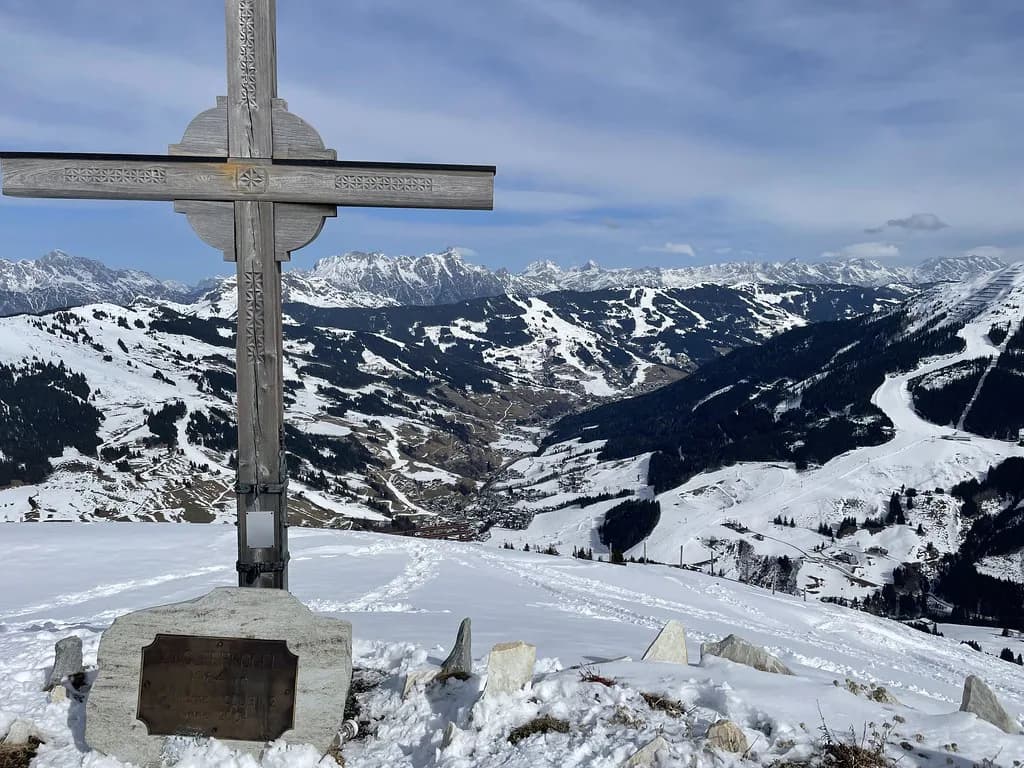
The villages do not all sit on one continuous valley floor. Saalbach and Hinterglemm occupy the Glemm Valley roughly four kilometres apart, with Saalbach the larger of the two and the more built-up centre. Leogang and Saalfelden lie to the north, while Fieberbrunn sits in the Pillersee Valley and joins the network through the lift system rather than by proximity.
That geography explains why the area is described as a group of linked resorts rather than one resort. Ski Club of Great Britain notes that Saalbach Hinterglemm, Leogang and Saalfelden and Fieberbrunn form the Skicircus, with Fieberbrunn reached by a short bus ride from Leogang when you are not travelling on skis. The lift network is what makes the group function as a single ski area.
For planning purposes, the useful mental model is a set of lift zones connected along ridges and valleys, not a ring you must complete. You can treat each zone as a half-day unit, then decide whether to link two zones or stay put. That approach survives weather and lift changes far better than a fixed circuit plan.
Sector Map for Planning: Ten Lift Zones Worth Knowing
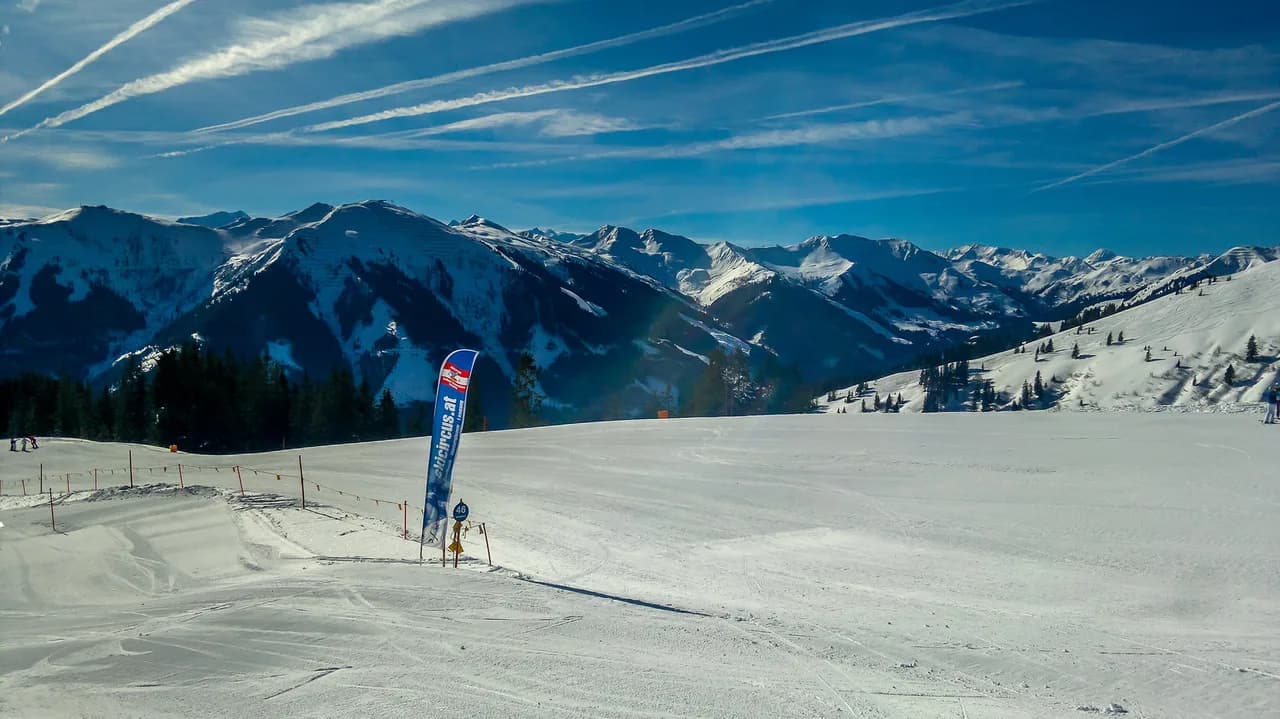
The official lift data groups the Skicircus into named zones: Schattberg, Zwölferkogel, Hochalm, Reiterkogel, Reckmoos, Streuböden, Bernkogel, Kohlmais, Schönleiten and Asitz. Each zone has its own base stations and its own character, and the zone names are the vocabulary you will see on piste signage and lift boards. Learning them before you travel makes the map far easier to read on the mountain.
Schattberg sits above Saalbach and is served by the Schattberg X-press, with the Westgipfel lifts continuing higher. Zwölferkogel rises above Hinterglemm and hosts the 12er KOGEL and 12er Express lifts. Hochalm, Reiterkogel and Kohlmais sit in the middle of the network and act as the natural connectors when you move between the two main villages.
The eastern and northern zones behave differently. Reckmoos and Streuböden serve the Leogang and Fieberbrunn side, Bernkogel and Schönleiten cover the Saalbach approaches and the link toward Zell am See, and Asitz anchors the Leogang sector. Practical consequence: a day spent in Asitz or Streuböden is a day largely away from Saalbach's village lifts, so plan it as a deliberate excursion rather than a casual loop.
Editorial advice: pick two adjacent zones per day and accept that you will not cover the whole area in a week without long transitions. The zones are linked, but linking them costs time, and the value of a large area is depth in a few sectors rather than a tick-list of all ten. Verify current zone operating status and any closed sections on the Skicircus Saalbach Hinterglemm Leogang Fieberbrunn pages before you build a day around a specific link.
Area Size and Piste Mix: What the Headline Figures Cover
Two different figures circulate, and mixing them up leads to unrealistic expectations. The Skicircus area itself is commonly quoted at around 270 kilometres of piste served by roughly 70 lifts. The Ski ALPIN CARD, by contrast, is quoted at around 408 kilometres of piste and 121 lifts because it also covers Schmittenhöhe in Zell am See and Kitzsteinhorn Kaprun.
Treat those two numbers as belonging to different products. If you buy a Skicircus-only pass, the 408-kilometre figure is irrelevant to your week. If you buy the Alpin Card, the extra terrain is real but it sits in separate ski areas that require travelling to reach, not runs you can ski into from the Glemm Valley.
The piste difficulty split sometimes quoted for the Skicircus, roughly 140 kilometres blue, 112 red and 18 black, appears in third-party holiday listings such as Inghams and is not confirmed on Saalbach Hinterglemm's own lift and operating pages. Use it as a rough indication that the area skews toward easier and intermediate terrain, not as a precisely sourced breakdown. If a precise split matters to your group, look for a published figure from the lift company before relying on it.
Base Choice: Saalbach Versus Hinterglemm
Saalbach and Hinterglemm share the same lift network but give you different first lifts and different evening surroundings. Saalbach is the larger settlement with the busier centre, and its lifts reach the Schattberg and Bernkogel sectors quickly. Hinterglemm is strung along the valley and puts you closer to the Zwölferkogel and the western end of the circuit.
Third-party resort information describes both as having village-centre nursery slopes, with easy gondola access from the village and short blue runs at the top of the Bernkogel for building confidence. That is a useful indication that beginner provision exists in both villages rather than only one, but it does not tell you which nursery slope suits your group. Ask the local ski school about current beginner area arrangements before booking, since teaching areas and their lifts can be reorganised between seasons.
Practical editorial advice: choose Hinterglemm if your group wants to spend most of the week on the western and central zones, and Saalbach if you want the shortest walk to the main valley lifts and the widest choice of village facilities. If your group splits by ability, base near a gondola that serves both easy top-of-mountain terrain and longer intermediate runs, so you can share a lift and separate at the top.
Do not over-weight the four-kilometre distance between the villages. A local bus and the lift network both connect them, but neither is instant at peak times. A base choice that looks central on a map can still add a transfer at each end of the day.
Pass Boundary: Skicircus Only Versus the Ski ALPIN CARD
The pass decision is the single biggest lever on how much terrain you can use. A Skicircus pass covers the Saalbach Hinterglemm Leogang Fieberbrunn network. The Ski ALPIN CARD extends coverage to Schmittenhöhe in Zell am See and Kitzsteinhorn Kaprun, which is why it carries the larger 408-kilometre and 121-lift figures.
The Zell am See side is reached by lift rather than by a continuous run from the Glemm Valley. Third-party resort information describes skiing down to the connection lift and taking the zellamsee xpress gondola up toward Schmittenhöhe, with a short bus link on the return leg. Because connection arrangements and operating status can change, ask the lift company how the link is running during your travel dates rather than expecting a seamless crossing.
Editorial advice: buy the wider card only for the days you will actually cross, or accept that you are paying for optionality. A seven-day Skicircus trip with one or two days on the Zell am See side rarely justifies a full-week upgrade unless your group specifically wants to tour the Kitzsteinhorn. Decide this before you book lessons, because a multi-area day and a lesson day compete for the same hours.
Beginner Terrain and Progression
Beginner provision in the Skicircus is anchored by village-level teaching areas rather than by a single dedicated beginner mountain. Third-party resort information places a nursery slope right in the Saalbach and Hinterglemm village centres, with English-speaking instruction available locally and easy gondola access from the village centre to the top of the mountain for progression.
The official lift data names several small practice lifts across the area, including the practice lift Kreuzkapelle in the Kohlmais zone, the practice lifts at Vorderglemm and Viehhofen in the Schönleiten zone, and the practice lift Asitz in the Leogang sector. These are small-surface lifts rather than mountain runs, and their presence confirms that beginner facilities are distributed across the area, not concentrated in one village.
Progression from those practice areas relies on easy terrain higher up. The short blue runs at the top of the Bernkogel are cited as confidence-building terrain, and the Bernkogel is served by a chairlift rather than only a drag. Editorial advice: plan your first two days on the practice areas and low blue runs, then move to the wider blue network once your group can link turns consistently, rather than committing to a long valley-to-valley route early.
Lessons: What You Can and Cannot Assume
Ski-school provision in Saalbach Hinterglemm is described in third-party resort information as well regarded, with friendly English-speaking instructors and instruction available locally. That is a general indication of provision rather than a statement about any specific school, qualification or programme.
What you cannot safely assume from a resort name is group sizes, languages other than English, meeting points, minimum ages, or how lessons are cancelled and refunded. Those are commercial terms set by each school, and they change. Check the school's own booking terms directly and ask where the group meets on the first morning, because meeting points at village level are often not at the lift you intend to use.
Editorial advice: book lessons before you fix your base, or at least ask where the ski school's teaching areas are first. A lesson meeting point on the far side of the valley can turn a convenient base into a daily commute. If your group mixes abilities, ask each school separately about levels and group splitting rather than expecting one booking to cover everyone.
Hire and Equipment Planning
Rental decisions in the Skicircus follow the same logic as anywhere in a multi-village area: proximity beats a marginal difference in shop choice. Hiring near the lift you use most mornings removes a daily walk with equipment and makes it easier to swap gear if conditions change. That is editorial advice, not an operator-stated fact, and it is the practical reason to settle your base before your hire booking.
The lift company's own pages do not publish a list of rental shops, brands or equipment ranges, so treat the choice as a local one to settle village by village. Ask rental providers in the base you pick about current availability, what a package includes, and whether they allow collection the evening before your first ski day. Those three questions resolve most equipment logistics before you travel.
One structural point worth noting if you ride or are booking for riders: the Skicircus lift network is chairlift and gondola based, and third-party information lists snowboarding among the area's fit categories alongside beginner, intermediate and advanced skiing. It does not follow that every lift or terrain feature suits every rider, so check the specifics for the zones you plan to use.
Season Timing and the Published Operating Window
The lift company publishes a planned winter operating window of 27 November 2026 to 4 April 2027 for ski operation in the Skicircus, with the explicit note that it is subject to change. That is the only season window used in this guide because it comes from the primary source rather than from a package listing.
A planned window is not a guarantee. Within those dates, individual lifts, sector links and pistes open and close according to conditions and operating decisions, and Saalbach Hinterglemm's own pages carry zone-level hours that differ from each other. The Unterschwarzach lift and several other facilities, for example, have their own scheduled times separate from the headline window. Read the zone tables, not just the season dates.
Editorial advice: book early-season and late-season trips with a flexible plan. In the opening and closing weeks, treat the area as a set of zones that may or may not be running rather than as a fully linked circuit. Mid-season trips reduce that uncertainty, but no date removes it entirely, and historic season patterns are not a forecast for your week.
Sector-by-Sector Planning Logic for a Ski Day
The most useful daily routine is to start on the lift nearest your accommodation, cross one zone boundary mid-morning, and return via a different sector so you see new terrain without committing to a full circuit. That pattern works because the zones connect in multiple directions, so you are never forced into one long traverse home.
An example of the logic rather than a fixed route: if you start in Saalbach, the Schattberg lifts put you high early, and the Bernkogel and Kohlmais zones sit between Saalbach and Hinterglemm as natural halfway points. From Hinterglemm, the Zwölferkogel and Hochalm zones give you a western focus. Pick the pair that matches the conditions you find on the day rather than the pair that looks best on a map.
Editorial advice: keep one excursion day for the far zones, such as Asitz or Streuböden on the Leogang and Fieberbrunn side, and check the current operating status of the connecting lifts before you set out. If a link is closed, the day becomes a long bus problem rather than a ski day. Build the plan so that a closed link costs you a sector, not the whole day.
Practical Planning Sequence: Base, Pass, Lessons, Hire
Lock the decisions in this order and each one narrows the next. First choose Saalbach or Hinterglemm as a base, because it determines your morning lift and how far you are from the central zones. Second decide whether you need the wider Alpin Card or a Skicircus pass, because that decides how many days are reserved for cross-area travel. Third book lessons, which fixes your morning meeting point. Fourth arrange equipment around that meeting point.
The reason for this order is that passes, lessons and hire are all sensitive to your base in a way that reversing the sequence does not fix. A pass is portable, but a lesson meeting point and a rental shop are not. Settling the base first means the later bookings reinforce each other instead of contradicting each other.
Finally, look up the season-specific details close to departure: the operating window note on the Saalbach Hinterglemm site, the zone hours for the sectors you plan to use, and your ski school's confirmed meeting arrangements. These are the items most likely to change and the ones least useful to research months in advance. Everything else can be settled when you book.
If you are comparing this trip against other Austrian options, judge Saalbach on its scale and its village-to-village movement rather than on a single terrain headline. That is the trade you are making: breadth and infrastructure in exchange for a busier, more spread-out resort layout.
What This Guide Leaves to Dedicated Articles
Several questions sit next to this one but need their own detail. Current pass pricing and what each ticket tier includes belong in a dedicated pass article, because prices move and eligibility rules are set by the lift company. Piste map reading, lesson booking specifics and rental logistics each deserve their own treatment rather than a paragraph here.
The short version of what this guide does cover: the sector layout, the two pass scopes, base choice between the two main villages, beginner provision, lesson and hire framing, and the published operating window. Use those to make the four big decisions, then hand the fine detail to the specific guides when you reach that stage of planning.
Plan Your Saalbach Ski Trip
Saalbach skiing rewards planning by sector rather than by headline figures. Decide whether Saalbach or Hinterglemm is your base, decide whether you need the wider Alpin Card or the Skicircus pass, then book lessons and equipment around that base. Those four choices settle most of what follows.
Treat the published winter window as a plan, not a promise, and check zone-level operating hours and any link status close to your departure. The area is large enough that a closed sector changes your day without ruining your week, provided you built the plan around zones in the first place. Before you book, check the Saalbach Ski Map for how the sectors connect and our Saalbach ski hire guide for where to rent.
Explore more Saalbach guides
Frequently Asked Questions
Is Saalbach good for skiing?
Saalbach suits skiers who want a large, lift-linked area with long cruising runs and several village bases to move between. It is less suited to anyone wanting a single compact mountain or a quiet, small-resort atmosphere. The terrain mix is best understood by studying the individual lift zones rather than by relying on a single area-wide figure.
What does the Skicircus ski area include?
The Skicircus Saalbach Hinterglemm Leogang Fieberbrunn is a group of linked Austrian resorts sharing one lift network, commonly described as around 270 kilometres of piste and roughly 70 lifts. The villages sit in different valleys, so parts of the area are reached by lift links and short local road connections rather than by one continuous run.
How do the Saalbach lift zones fit together for planning?
The official lift data names zones including Schattberg, Zwölferkogel, Hochalm, Reiterkogel, Reckmoos, Streuböden, Bernkogel, Kohlmais, Schönleiten and Asitz. They connect in multiple directions, so a practical approach is to pair two adjacent zones per day and keep any far-sector excursion as a separate plan. Check zone hours and link status close to your trip.
Does the Saalbach pass cover Zell am See?
A Skicircus pass covers Saalbach Hinterglemm Leogang Fieberbrunn. The wider Ski ALPIN CARD extends coverage to Schmittenhöhe in Zell am See and Kitzsteinhorn Kaprun, which is why it carries larger area and lift figures. The Zell am See side is reached by a lift connection and a short return transfer, so confirm how the link is running before planning a crossing.
Where do beginners ski in Saalbach and Hinterglemm?
Village-centre nursery slopes are described in both Saalbach and Hinterglemm, with easy gondola access from the village and short blue runs higher up for confidence building. The official lift data also lists small practice lifts in several zones, including Kreuzkapelle, Vorderglemm, Viehhofen and Asitz. Beginner areas can be reorganised between seasons, so check the current arrangements with the lift company or ski school.
When does the Saalbach ski season normally run?
The planned winter operating window is 27 November 2026 to 4 April 2027. Individual lifts and sector links have their own scheduled hours within that window and may not all run throughout. Check the operator's zone-level pages close to your travel dates, since the season dates are not a guarantee.
Do I need the Ski ALPIN CARD or is a Skicircus pass enough?
A Skicircus pass is enough if you plan to stay within the Saalbach Hinterglemm Leogang Fieberbrunn network for the whole trip. The wider card makes sense only if you will genuinely spend days on the Zell am See or Kaprun side. Decide this before booking lessons, since a cross-area day and a lesson day use the same hours.
Sources
Useful notes for your next ski trip
Optional updates to our Alpine resort guides.
You might also like
Continue reading
More guides you'll find useful