Megève Skiing Guide: Ski Areas, Passes & Terrain
Megève skiing explained: how Rochebrune, Mont d'Arbois and Le Jaillet fit together, which pass covers which area, and how to match terrain to ability.
On this page
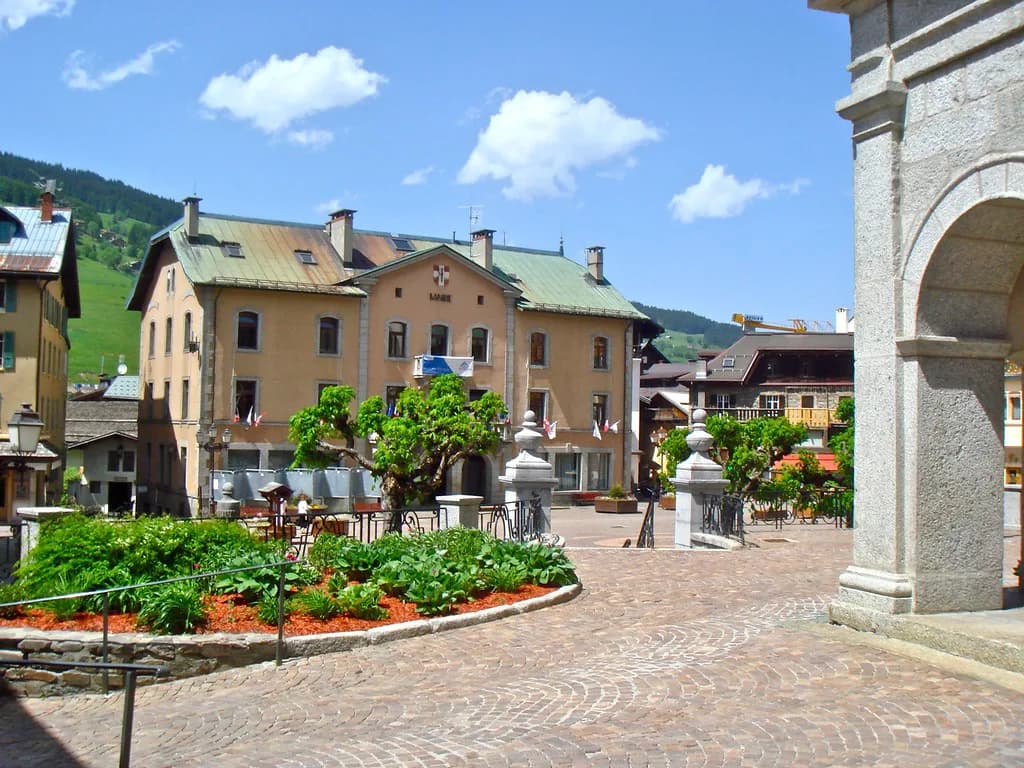
Megève is one of the oldest leisure ski destinations in the French Alps, and it skis differently from purpose-built resorts: the lifts rise out of a working Haute-Savoie town rather than a single car-park base. That shape is the appeal, and also the planning problem. Your day is shaped less by which run you pick than by which mountain you start on and which pass is in your pocket.
This guide treats pass boundary as the first decision and sector geography as the second. It compares the products sold for Megève by name and scope, explains how Rochebrune, Mont d'Arbois and Le Jaillet relate to each other, and flags where published sources disagree. Prices, season dates and daily opening status change constantly, so this page tells you what to verify and where rather than quoting figures that may already be out of date.
Is Megève the Right Ski Resort for This Trip?
Megève suits skiers who want a town with a ski area above it, not a resort built around a lift station. The operator describes the terrain as running from 1113m to 2350m, with the skiing split across distinct mountains rather than one continuous bowl. That range is modest by Alpine standards, so the resort's appeal rests on the variety and layout of its slopes more than on altitude.
The strongest argument for choosing Megève is a mixed group. Because the three sectors sit close together and share a valley floor, skiers of different speeds can split in the morning and reconvene for lunch without a long transfer. A group of confident cruisers and cautious intermediates will get more out of Megève than a group of experts chasing steep terrain.
The argument against is that Megève is not a high-altitude resort, and the town sits low. If your priority is guaranteed snow cover in a marginal week or a vast single interconnected circuit, a higher resort in the same region may serve you better. Megève rewards a carefully chosen week rather than a speculative one, and the operator publishes snow and lift status reports that let you check actual conditions before you commit.
If you want to compare the Megève model with a purpose-built alternative before deciding, a guide to la plagne skiing shows the opposite approach: a high, single-base resort designed around its lifts. For a high-altitude circuit in the northern Alps with its own pass structure, the Alpe d'Huez Skiing Guide offers a useful counterpoint. Neither model is better in the abstract; they simply reward different trip shapes.
How the Megève Ski Area Is Structured
Megève's skiing is organised on three main mountains: Rochebrune, Mont d'Arbois and Le Jaillet. Rochebrune rises directly from the town centre and connects by lift to Mont d'Arbois, so those two form the core of a normal ski day. Le Jaillet sits on the opposite side of the valley and is reached separately, which matters when you plan where to base yourself and where to leave a car or catch a shuttle.
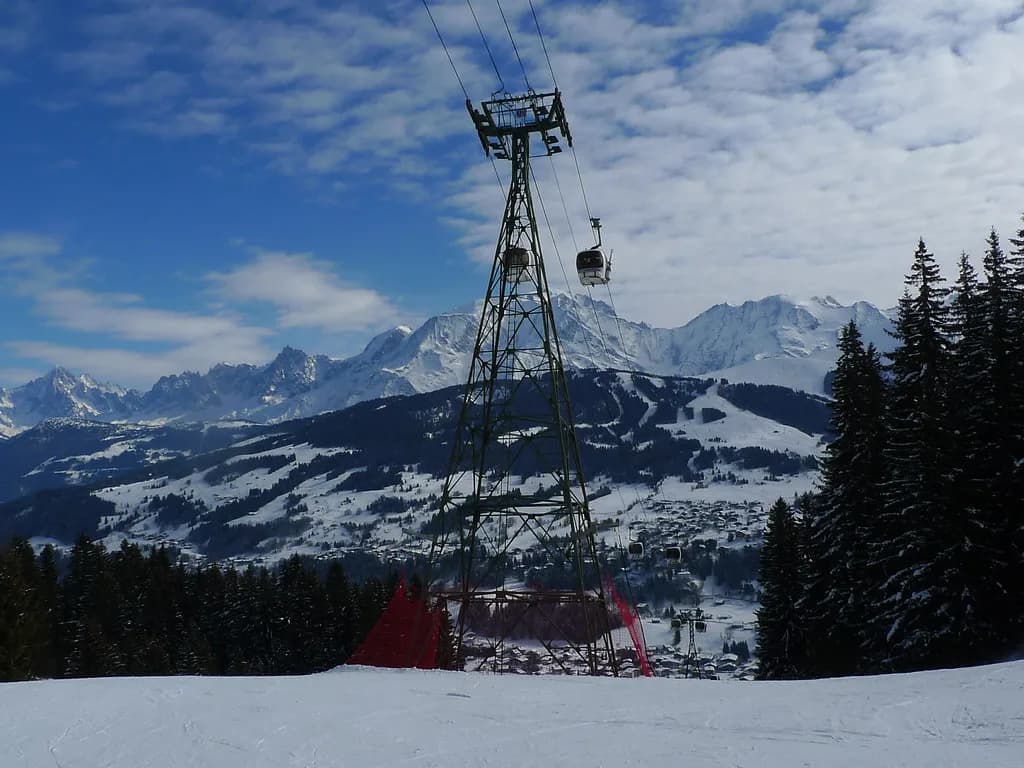
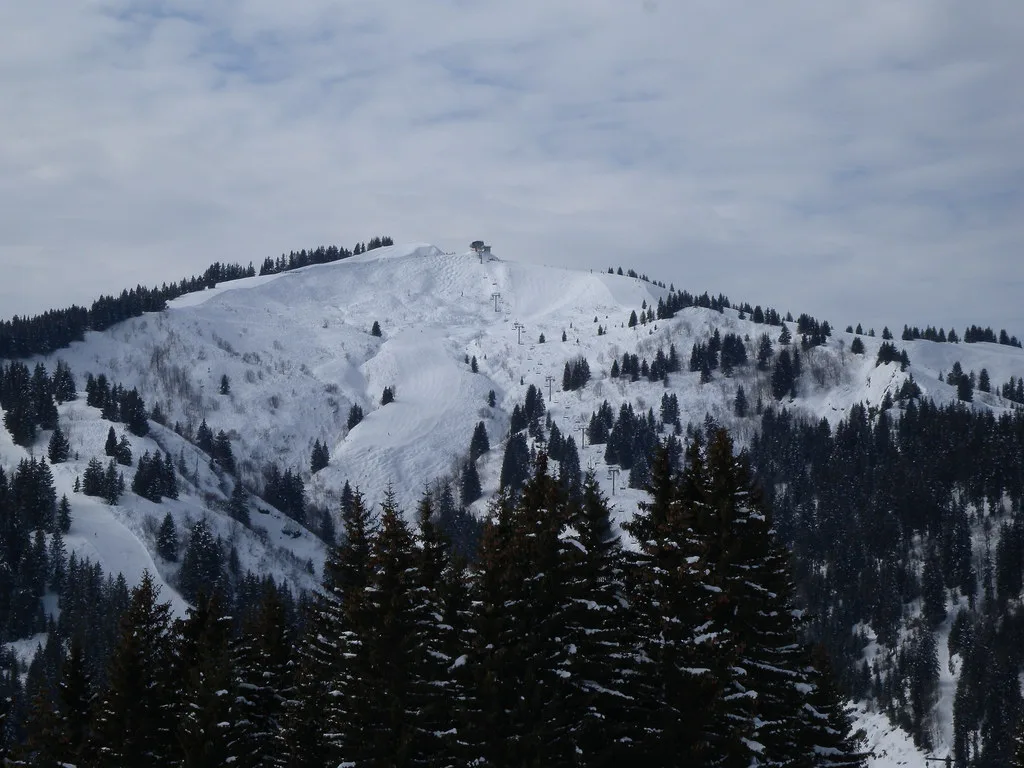
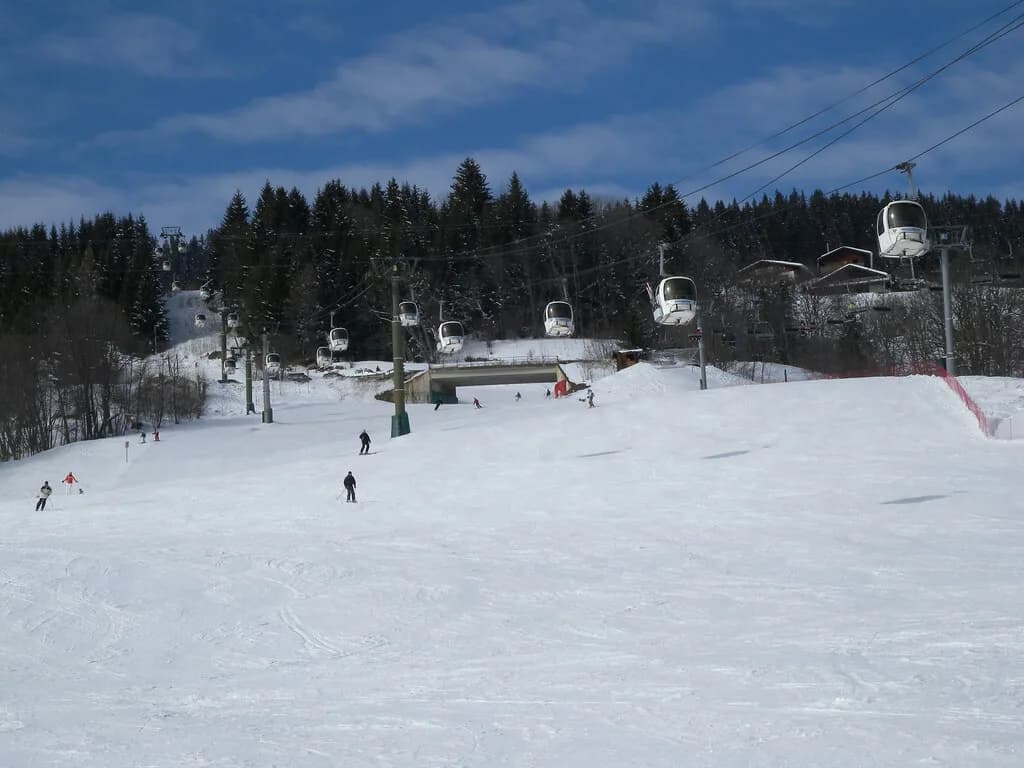
The opening-status pages on the Mont-Blanc Natural Resort site list the lifts and pistes sector by sector, which is the clearest way to see how the area is actually wired together. In the Rochebrune and Mont d'Arbois group you will find the main cable cars and gondolas, including Rochebrune, Rocharbois, Caboche, Chamois and Mont d'Arbois. Further out, lifts like Côte 2000 and the links toward the Jaillet side extend the day for skiers willing to move across the area.
The practical consequence is that Megève is not a resort where you can ski everything from one lift base without thinking. Choose a sector for the morning, then decide whether the afternoon is a transfer or a repeat. Groups that plan the split at breakfast lose less time than groups that improvise at the top of a lift.
A piste map is the fastest way to internalise this layout before you arrive, because the sector names, lift codes and connections are all mapped visually. Our megeve piste map guide walks through how to read the area so you can pick a base and a meeting point before the first morning.
What the Sources Say About Size and Altitude
Published figures for Megève do not agree, and the disagreements are large enough to change expectations. Mont-Blanc Natural Resort states that Megève runs from 1113m to 2350m and lists 235 slopes, within a wider Domaine Évasion Mont-Blanc described as 400km of secure, marked slopes. A third-party review on Snow Magazine instead gives a summit of 2,355m, a resort height of 1,100m, a vertical drop of 1,237m and a ski area of 325km.
Where the two conflict, treat the lift company as the authority on its own terrain. The 1113m to 2350m range is a straightforward description of the ski area, while the third-party vertical drop is an inferred calculation. On area size, the two numbers are answering different questions: 235 slopes is a count for Megève itself, while 400km describes the whole Évasion Mont-Blanc domain that a broader pass unlocks.
The lesson for planning is to stop treating a single headline figure as a measure of the resort. If you buy a Megève-only pass, you are skiing the local sectors; if you buy an Évasion Mont-Blanc pass, the relevant size is the larger domain. Match the number you care about to the pass you are actually buying, and ignore any figure that does not specify which boundary it covers.
Terrain Character by Sector
Rochebrune and Mont d'Arbois carry most of what a cruising intermediate will ski in a week. The terrain here is largely wooded and faces in different directions, so you can usually find a sheltered line when the weather closes in and a sunny one when it clears. The third-party review describes enjoyable motorway-style runs in this zone, with cruising blues lower down on Mont d'Arbois and steeper reds for confident skiers.
Le Jaillet and the outlying areas around La Giettaz tend to be quieter, which makes them useful when the main mountains feel busy. The trade-off is travel time: you commit more of the day to reaching them, so they suit a full morning rather than a quick hour. For a group that wants space over convenience, this is where to go.
Mixed-ability groups should split by sector rather than by run. A confident skier can loop the steeper side of Mont d'Arbois while a cautious one cruises the blues, and both can be back at the same mid-mountain restaurant by a set time. Agreeing the lunch point in advance matters more than agreeing the route.
None of this is a substitute for checking the mountain on the day. Mont-Blanc Natural Resort marks the live opening status of lifts and pistes, and a planned circuit across sectors is only viable if the connecting lifts are running. Treat any route plan as a draft until you have seen the morning status board.
Beginner Provision and Progression Zones
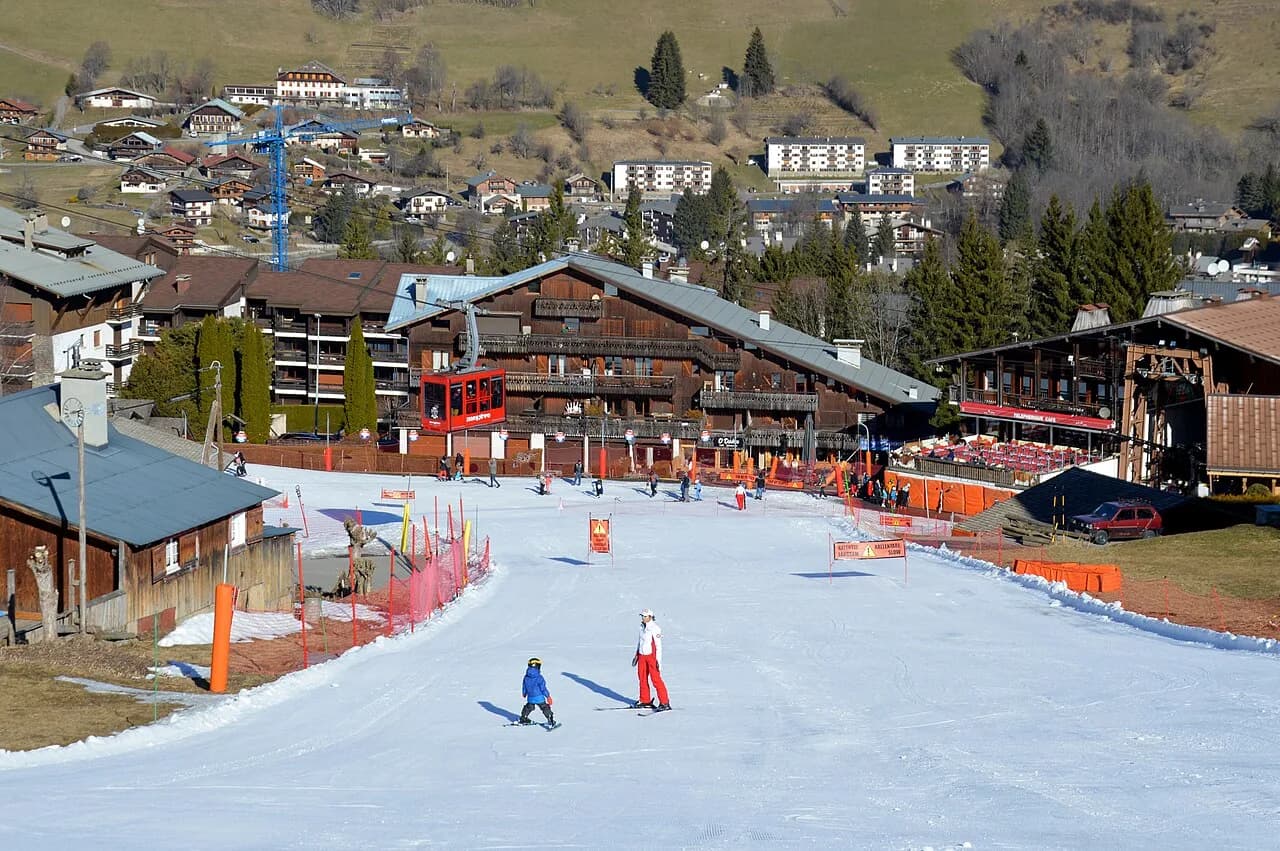
Mont-Blanc Natural Resort markets Megève as a resort with reassuring beginner areas, children's zones and freestyle areas across the domain. The published lift and piste list includes dedicated beginner lifts and nursery pistes near the village and at sector bases. Those facilities are the clearest evidence that the resort takes first-timers seriously, rather than treating them as an afterthought.
Third-party opinion is more cautious. The review notes that the nursery slopes sit in the valley, that beginners can progress to higher slopes on each mountain once they find their ski legs, and separately that the resort is not among the reviewer's highest recommendations for beginners. Those two statements sit awkwardly together, and they should not be flattened into a single verdict.
The reasonable way to read the conflict is that Megève's beginner provision exists and is spread across the sectors, but the progression from valley nursery slopes to confident cruising involves more moving around than in a compact beginner-focused resort. Beginners in a group that includes stronger skiers will still have a good week. A group of complete beginners looking for one self-contained learning zone should weigh whether the spread-out layout suits them.
Lesson logistics are a separate decision from terrain choice, because meeting points, group sizes and booking terms are set by the schools rather than by the lift company. Our Megève Ski Lessons guide covers how to choose and book, including what to confirm before you pay.
Cross-Country and Non-Ski Provision for Mixed Groups
Cross-country skiing is a genuine second option at Megève rather than a token offering. The third-party review describes around 40km of varied trails, and notes that some of them sit above the valley floor, so a cross-country skier can meet downhill skiers on the mountain for lunch instead of being confined to the town.
The live status on the Mont-Blanc Natural Resort site also lists pedestrian and walking routes that share the mountain with skiers, alongside sledging areas and pedestrian access on some lifts. That means a non-skiing member of the group can ride up, walk a marked route and join the midday meal. Check which pedestrian routes and lifts are operating on your dates, because these are season-dependent and not always available.
Pedestrian lift access is sold as its own product with its own terms, which is a common source of confusion. The Megève tourism office separates pedestrian rates from skier passes on its ticket information, and those rates are per day and per period. Look up the pedestrian rate for your exact dates rather than treating a skier pass as covering a non-skier.
Pass Products Compared by Boundary
The Megève tourism office groups the available passes into families by the area they cover, and the boundary is the part that matters. A Megève-only pass keeps you on the local lifts. A wider Évasion Mont-Blanc pass extends the domain to include neighbouring resorts such as Les Contamines and St Gervais, which is the pass the third-party review highlights for skiers who want more mileage.
Beyond that, the review also mentions a Mont-Blanc Unlimited pass that adds Chamonix and Courmayeur, while the tourism office lists a Portes du Mont-Blanc product alongside the Megève and Évasion Mont-Blanc options. These products differ in which lift companies accept them and in the number of days they cover, so they are not interchangeable upgrades of one another.
For most one-week trips based in Megève, the practical choice is between the local pass and Évasion Mont-Blanc. Buy the wider pass only if your itinerary includes days in the neighbouring resorts; otherwise you are paying for terrain you never reach. For a shorter break, staying local is almost always the better value because travel time eats into a short day.
A dedicated breakdown of the products, their validity periods and how the tiers relate is worth reading before you buy. Our megeve ski pass guide sets out those boundaries in more detail, including how to check that the pass you choose is valid on the lifts you plan to ride.
Why Pass Scope Must Be Verified, Not Assumed
Pass names are marketing labels, not contracts, and Megève's range of products makes that clear. A pass described as covering a domain does not automatically include every lift in that domain, every pedestrian route, or every neighbouring resort that shares the branding. Read the validity list for the specific product you are buying rather than the family name it belongs to.
The safest check is to compare the pass description against the published list of lifts and sectors on the Mont-Blanc Natural Resort site for the area you intend to ski. The Megève tourism office publishes which areas each pass family covers, and the lift company publishes the live status of the individual lifts. If a lift you want to ride does not appear under your pass, assume it is not included until you see written confirmation.
The same caution applies to inclusions beyond lifts. Do not assume a pass covers pedestrian travel, night skiing, cross-country trails or a shuttle connection because another pass in the same family does. Each of those is typically sold or regulated separately, and the tourism office's ticket pages exist precisely because the products are not uniform.
Lunch on the Mountain as Part of the Ski Day
Megève has an unusually large concentration of mountain restaurants for the size of its ski area, spread across the sectors rather than clustered at one mid-station. Mont-Blanc Natural Resort highlights a large choice of on-mountain tables as a feature of the resort, and the Snow Magazine review notes that the range of options suits both wealthy visitors and local families.
Treat lunch as a scheduling decision, not just a food decision. Pick your restaurant by which sector you will be skiing at midday, then plan the morning so you arrive there naturally. A group that agrees a restaurant in Rochebrune but spends the morning on the Jaillet side will lose an hour to the transfer.
Booking matters more than usual at peak periods, because popular terraces fill quickly on sunny weekends and during school holidays. Restaurants take reservations directly, so contact them ahead if a specific table matters to your group. This guide deliberately does not rank venues; the useful step is to choose one inside your sector and confirm it is open on your date.
Lessons and Equipment Hire as Separate Decisions
Booking ski school and arranging equipment are operational tasks that sit outside the terrain and pass questions, and both have their own terms. Lesson products differ by group size, duration, language and meeting point, while hire arrangements differ by collection location, fitting time and whether equipment can be changed during the week. Confirm each of those details with the provider rather than inferring them from a brand name.
Both decisions are easier once the pass and sector are fixed, because meeting points and collection depots cluster around the main lift bases. Choose your sector first, then pick the school and hire option that operates there. That sequence avoids the common mistake of booking a lesson whose meeting point is on the far side of the valley from where you are staying and skiing.
This pillar deliberately leaves the detail to separate guides. The Megève Ski Lessons guide covers how to choose a school and what to confirm before booking, while the megève ski hire guide covers fitting and collection logistics. Start there rather than relying on a resort-level overview to answer a provider-level question.
Season Timing and Why Conditions Are Conditional
Megève's relatively low altitude means its season is more sensitive to weather patterns than a high resort's, although the terrain is largely grassy, so it does not need a deep base to become skiable. The third-party review makes exactly this point: cover can come together quickly, but picking the right week matters. Neither statement is a snow guarantee, and none should be read as one.
A published winter season is a statement of intent, not a promise. Lifts, links between sectors and individual pistes can be closed for snow conditions, wind, maintenance or avalanche control on any given day, so a scheduled opening date tells you when the resort intends to operate rather than what will be running when you arrive. Plan around that uncertainty rather than against it.
The Mont-Blanc Natural Resort site carries live snow depth, recent snowfall, wind, avalanche risk, webcams and the current opening status of each lift. That is the only reliable source for conditions on your dates, because it reflects what is actually happening rather than what a brochure anticipated. Check it in the days before departure and again on the morning you ski.
If you are comparing Megève with another lower-altitude Savoyard resort for the same week, a look at le grand bornand skiing shows a similar terrain-and-town model with its own snow profile. Both resorts reward a flexible view of what will be open.
A Practical Planning Sequence for a Megève Ski Trip
Work through the decisions in order: pass boundary, then sector base, then lessons and hire, then opening status. Committing to a pass before you know which sectors you will ski is the most common planning error, and it is expensive to correct once you are on the mountain.
Start with the pass. Decide whether your week includes days outside the local area; if it does not, the local product is the right choice. Then pick a sector base, bearing in mind that Rochebrune and Mont d'Arbois share a lift connection while the Jaillet side is reached separately. Your base determines how much of each day you spend travelling rather than skiing.
Next, book lessons and hire once the sector is settled, because both are tied to lift bases. Finally, check opening status in the days before you travel. Mont-Blanc Natural Resort publishes which lifts and pistes are running, and the Megève tourism office publishes which pass covers which area, so between those two pages you can settle almost every assumption in your plan.
Plan Your Megève Ski Trip
Megève's skiing is best understood as three mountains above a town, joined by a small number of key lifts and divided by a pass boundary that you choose before you arrive. Get the boundary and the sector base right, and the rest of the week falls into place around a layout that suits mixed groups unusually well. Get them wrong, and you spend your holiday in transit between areas you cannot both ski.
Treat every published figure, opening time and season date as provisional and confirm it against the lift company's live status and the tourism office's pass pages for your own dates. Read the piste map before you book the pass, check the lessons and hire guides once the pass is settled, and leave the final confirmation of what is running to the days before departure.
Explore more Megeve guides
Frequently Asked Questions
Is Megève good for beginners?
Published sources disagree. The lift company promotes beginner areas, children's zones and nursery slopes, and the terrain does include dedicated learning provision. A third-party review notes that nursery slopes sit in the valley and that progression involves moving between mountains, and it stops short of a strong beginner recommendation. Beginners in a mixed group will manage well; complete beginners wanting one self-contained learning zone should weigh the spread-out layout.
Which ski pass do I need for Megève?
It depends on whether you plan to ski beyond the local area. A Megève-only pass covers the local lifts. A wider Évasion Mont-Blanc pass extends the domain to neighbouring resorts, and the tourism office also lists a Portes du Mont-Blanc product, while a Mont-Blanc Unlimited pass adds resorts including Chamonix and Courmayeur. Check the validity list for the specific product.
How big is the Megève ski area?
Figures differ by source and by what is being measured. 235 slopes for Megève are listed within a wider Évasion Mont-Blanc domain described as 400km of secure, marked slopes, while a third-party review cites a smaller ski area figure. The discrepancy is largely about whether the number describes Megève alone or the broader domain a wider pass unlocks. Match the figure to the pass you intend to buy.
Is Megève snow sure?
No resort can promise snow, and Megève's low altitude makes its season sensitive to weather patterns. The terrain is largely grassy, so it does not need a deep base to become skiable, which helps in marginal weeks. Check live snow depth, recent snowfall and opening status for your dates.
Does a Megève pass include Chamonix or Courmayeur?
Not necessarily. Chamonix and Courmayeur appear under a wider Mont-Blanc Unlimited product rather than the local Megève or Évasion Mont-Blanc passes. Pass scope must be verified per product on the tourism office's ticket pages, because similarly named products differ in which lift companies accept them and how many days they cover.
Where can I ski in Megève on a short break?
For a short break, staying on the local pass and one sector is usually the better use of time, because transfers between mountains consume a disproportionate share of a short day. Rochebrune and Mont d'Arbois are lift-connected and central, while the Jaillet side is reached separately. Confirm which lifts are running on your dates before committing to a route.
Sources
Useful notes for your next ski trip
Optional updates to our Alpine resort guides.
You might also like
Continue reading
More guides you'll find useful