Sestriere Skiing Guide: Which Slopes & Pass Suit You
Plan a Sestriere ski trip with clear detail on the Via Lattea sectors, local versus full-area passes, beginner zones, ski schools and equipment hire.
On this page
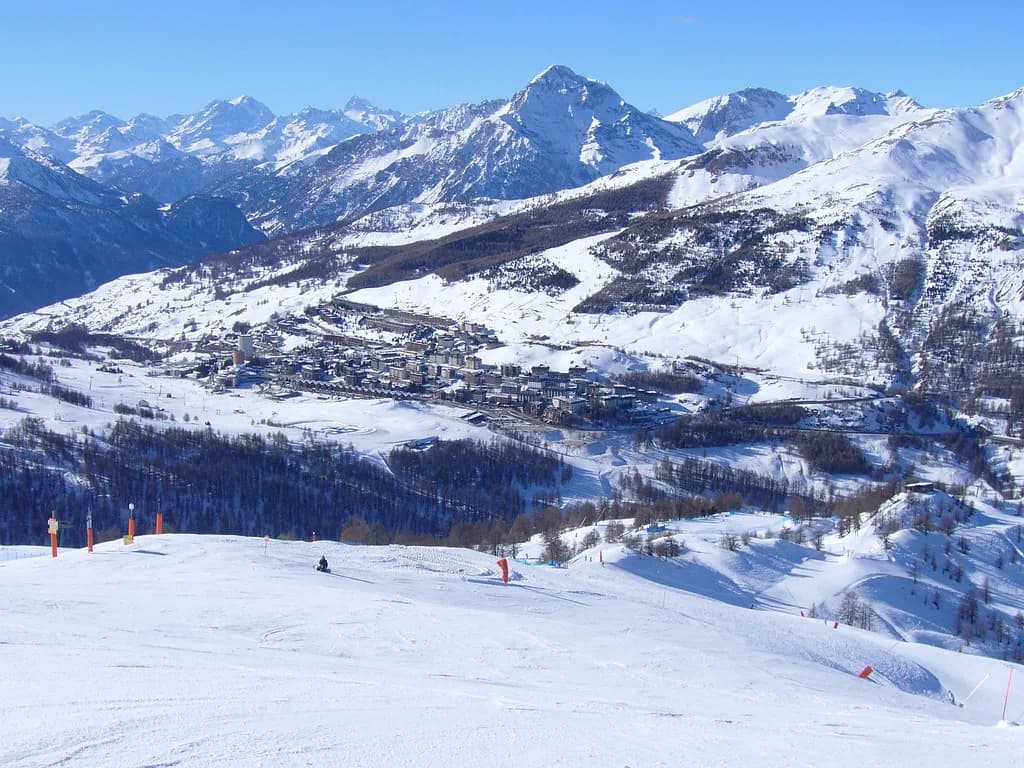
Sestriere suits skiers who want a high, purpose-built Italian base and the option to link across a very large cross-border area. The local slopes sit directly above the village, and the wider Via Lattea system reaches towards Sauze d'Oulx, Sansicario, Cesana, Claviere and Montgenèvre in France. The trade-off is that the biggest days depend on links operating, so plan both a local day and an area day.
This guide treats the resort choice first, then the operational decisions that shape a week: which sectors to ski, which pass boundary to buy, how beginners progress, and what to confirm when booking lessons or hire. Every claim about the area, pistes, lifts and altitude comes from the Vialattea resort pages rather than third-party summaries. Where sources disagree, the guide says so rather than picking a convenient figure.
Opening Decision: When Sestriere Fits a Ski Trip
Choose Sestriere when you want a high resort with a large linked area and an Italian base rather than a French or Austrian village. The Via Lattea operator describes a broad area with 400km of slopes across 300 interconnected slopes, which is enough to justify a week if you plan to move between sectors. The case for Sestriere weakens if you want a small, car-free village with everything within a few minutes' walk.
Sestriere works best for confident intermediates who can use the local sectors and then step up to the area links. It also suits groups with mixed ability, because a beginner can stay on the lower village terrain while stronger skiers take the higher lifts. Advanced skiers should treat the resort as an area base rather than a single steep mountain, and plan to move towards Sauze d'Oulx or Montgenèvre for variety.
Where Sestriere Sits: Altitude, Via Lattea Extent and the French Link
Sestriere sits at approximately 2,035m according to the official resort page, which is high enough to matter for planning but does not guarantee conditions. The same page counts 85 local pistes and 20 lifts serving the village, giving a concrete local inventory separate from the wider area. Some third-party sources state 2,040m or count 92 lifts, so use the official figures and treat the others as approximations.
The Via Lattea operator lists Sestriere, Sauze d'Oulx, Sansicario, Cesana, Sauze di Cesana, Claviere, Oulx, Pragelato and the French Montgenèvre as connected ski-on-ski-off areas. That is a wide definition, and it does not guarantee every link is open on any given day. A third-party guide describes the Milky Way as seven linked resorts, so treat the count as a naming convention rather than a fixed number.
Vialattea states that 80% of the ski area sits above 1900m and that the region runs from 1400m at Cesana to 2,800m at Motta peak. Those are the lift company's descriptions of the terrain, not a snow forecast and not a promise that the upper lifts will run. For a cross-border day, check the lift and link status before buying an upgrade.
How the Local Slopes Split: Sises, Motta and Fraiteve Sides
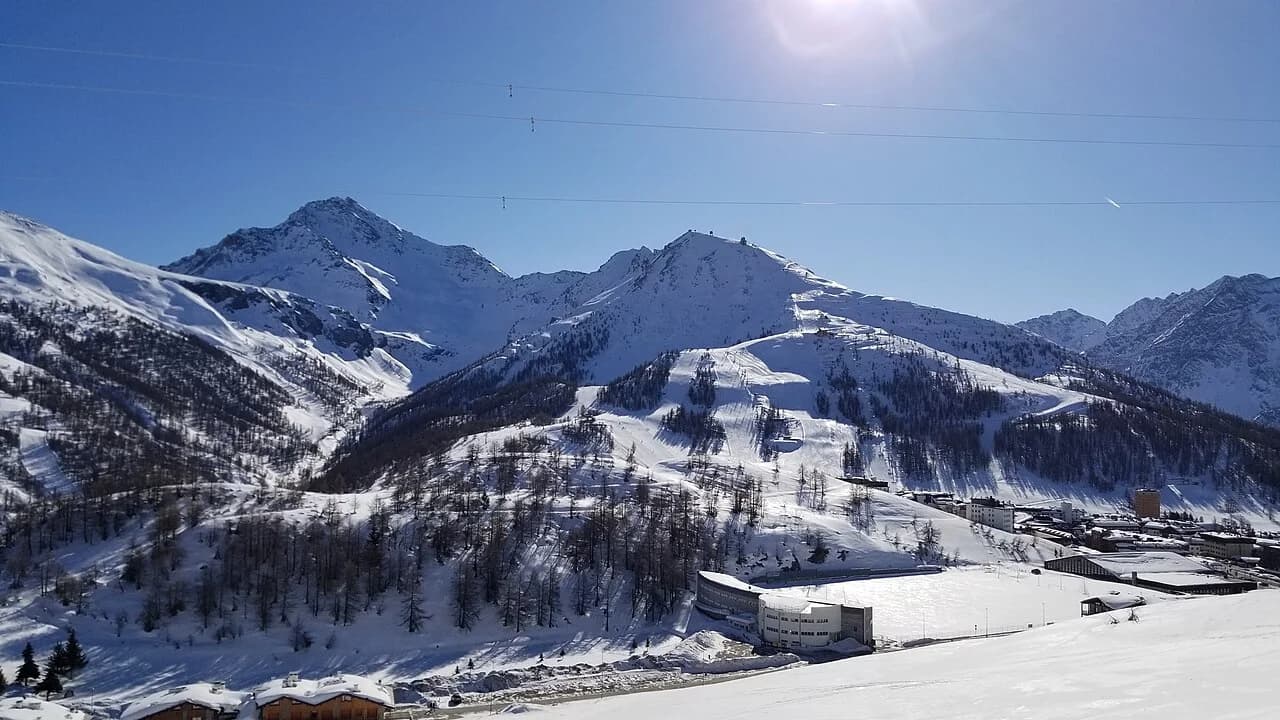
The local slopes divide into a few recognisable zones, and the official Sestriere page names Monte Motta, Monte Banchetta, Monte Fraiteve and the Pattemouche gondola among its landmarks. A third-party guide groups the terrain as Sises, Motta and Fraiteve, with Sises directly in front of the village and Motta above Borgata. Use those groupings as a planning language rather than an exact piste-by-piste map.
For a first morning, the village-facing Sises side is the obvious start because it keeps you close to the base and lets you test conditions before committing to a long link. The Motta side above Borgata is described in third-party sources as larger and steeper, which makes it a logical afternoon objective for stronger skiers. Fraiteve sits across the valley and is the connection point rather than a stand-alone local hill.
Sector names vary between sources, so treat any single label as provisional. The practical decision is whether your group wants short local laps or a long traverse, and that choice determines whether you stay on the lower lifts or head for the connecting gondola. If you are unsure, ski the village side first and ask at the lift station which links are running.
Monte Fraiteve and Monti della Luna: The Area's Connecting Hubs
The official Vialattea area page describes two main hubs: Monte Fraiteve, which connects Sestriere with Sauze d'Oulx and Sansicario, and the Monti della Luna, where the slopes of Cesana Torinese, Claviere and Montgenèvre sit. All the slopes in the ski area are interconnected through these connections, according to Vialattea. That makes Fraiteve the gateway for a westward day and Monti della Luna the gateway for the French side.
Plan a hub day by choosing one direction rather than trying to touch both in a single session. From Sestriere you can ride towards Fraiteve and drop into Sauze d'Oulx or Sansicario, or work east towards Cesana, Claviere and Montgenèvre. A third-party guide notes that the Fraiteve gondola gives panoramic views and a choice of dropping into Sauze d'Oulx or Sansicario, which supports treating it as a decision point.
Connections depend on operations and conditions, so a day that looks possible on a map may not be possible on the day. Build in a fallback: if the Fraiteve link is closed, the village sectors still give you a full day without a long return. Check the daily lift and link status before you set out instead of counting on the full circuit being open.
Sestriere-Only Pass Versus Full Via Lattea Pass
The central pass decision is whether to buy local access or the full linked area, because it changes both your daily range and your return planning. A Sestriere-only pass keeps you on the local slopes, while the full Via Lattea pass opens the linked resorts including Montgenèvre in France. Third-party sources describe this split, but pass names and inclusions can change, so confirm the current boundary at the ticket office or on the Vialattea site before you buy.
Buy the full-area upgrade only for the days you will genuinely use it. A cross-border day involves time on connecting lifts and a return leg, so if your group skis short mornings or has beginners, the local pass can be the better value. If you are planning two or more area days, the upgrade is easier to justify, especially if the Fraiteve and Monti della Luna links are running.
Do not assume a full-area pass covers every lift, link or cross-border route on every day, because operations are conditional. Ask at the point of sale whether the French link is included on your chosen ticket and whether any local sectors require a supplement. That single question prevents the most common surprise, which is reaching a connection that is not valid on your pass.
Lift and Piste Layout at Planning Level
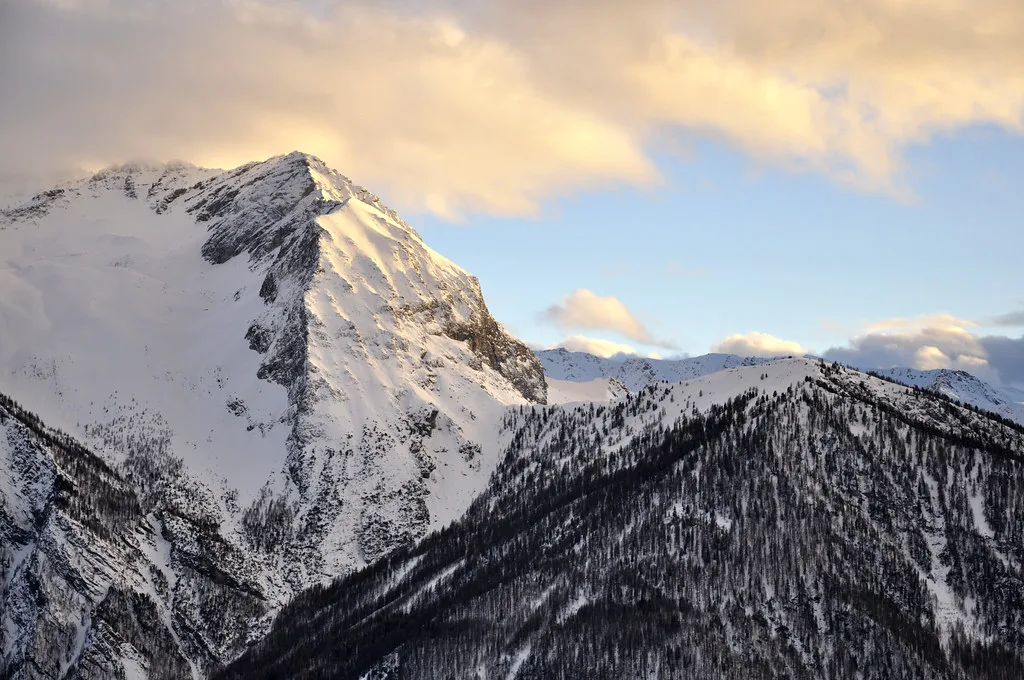
At planning level, Vialattea counts 73 lifts across the Via Lattea area with a transport capacity of over 75,000 people per hour, and 20 lifts for Sestriere itself. That difference is useful: it tells you the local village network is a compact subset of a much larger system. Third-party counts of 70 or 92 lifts should not be merged with these Vialattea figures.
Vialattea also gives a difficulty breakdown of 9 green, 99 blue, 173 red and 40 black slopes across the area, which is heavily weighted towards blue and red terrain. That suits groups who want long cruising rather than a single expert objective, and it explains why the area is often recommended for intermediates. A third-party source presents different run totals, so do not try to reconcile the two sets.
Match your daily plan to the sector rather than to a piste count. A local day can mix the village-facing slopes with the higher Motta terrain, while an area day should start early because the return leg takes time. If you are skiing with a mixed group, agree a meeting point and a latest return time before you split.
Beginner Provision: Village Nursery Terrain and the First Steps Area
Vialattea highlights beginner areas in Sansicario and Sauze d'Oulx, and a First Steps Area in Sestriere with a beginner slope, a snow-play and bob area and a sun terrace. That gives beginners a dedicated space close to the village rather than only a marked easy run. A third-party guide also places nursery slopes in front of the village and in the Borgata area.
Where you start depends on your group's tolerance for lift travel. The village nursery slopes keep first-timers close to the base, while the Borgata area is described as a quieter alternative in third-party guides. If your priority is a short day with easy exits, choose the village side and save the area links for later in the week.
Beginner provision here is about terrain and access, not a promise of progress. Lesson quality, group size and instructor language depend on the school you book, so treat the slope layout as the stable part of the plan. Confirm the meeting point and the level grouping before your first morning.
Progressing Beyond the Nursery: Sectors for Early Intermediates
Once you can link turns, the local sectors give you room to build confidence before you commit to the area links. A third-party guide describes longer greens and easy blues on the Alpette and Banchetta sectors as a progression step from the nursery zones. That is a useful sequence: repeat the lower slopes, then add one higher sector each day.
The heaviest concentration of terrain across the area is blue and red, which supports a gradual step-up rather than a sudden jump. If you are comfortable on reds, the Fraiteve side and the links towards Sauze d'Oulx become realistic objectives. Keep the first area day short so you learn the return route while you are fresh.
Do not infer difficulty from a piste name or from a resort's racing reputation. A slope marked red may suit you on one day and feel very different after a temperature change. Use the marked difficulty and your own first run of the day, not a name, to decide what to repeat.
Ski Schools and Booking Lessons: What to Confirm
Vialattea notes that the resort has ski and snowboard schools, and third-party guides list multiple schools with group and private options. Those listings change, and no source here confirms current prices, group sizes or instructor languages. Confirm those details directly with the school you choose rather than relying on a summary.
When you book, ask where the lesson meets, how the first-morning level assessment works and what happens if conditions close your chosen area. A third-party guide describes several schools operating in Sestriere and recommends booking ahead in peak weeks. Treat that as a scheduling prompt, not a claim about a specific school's quality.
For children, confirm the minimum age, the ratio of instructors to children and whether the school runs a separate beginner programme. The official area page mentions children's lessons but does not publish those terms, so the school is the only reliable source. Ask before you pay a deposit.
Ski and Snowboard Hire at Planning Level
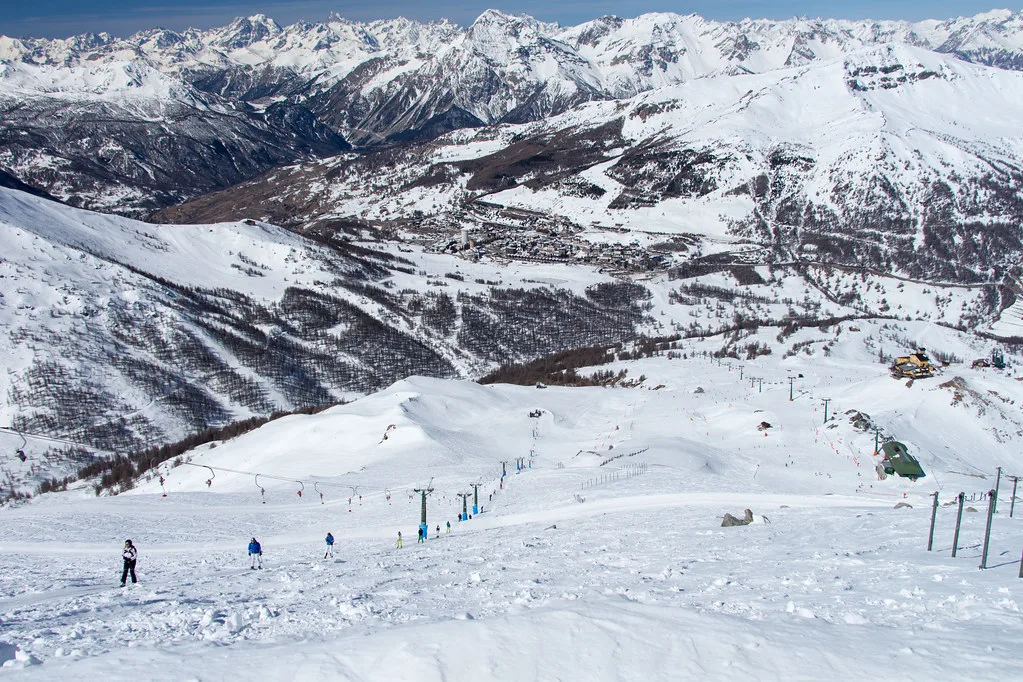
Hire is a booking-terms decision rather than a gear review. Third-party guides describe rental shops in the village with different tiers and the option to collect in resort, but no source here confirms current prices, stock or swap policies. Ask the shop directly about collection times, return timing and whether you can change equipment during the week.
If you are arriving late or leaving early, the practical question is whether the shop can fit collection and return around your travel. Third-party guides suggest booking ahead in peak weeks so your gear is ready on the first morning. Confirm that arrangement in writing if your arrival time is tight.
Do not assume a shop offers delivery, storage or a mid-week swap unless it confirms those services. Those features are not established by a shop's location or reputation. A short email before booking settles the questions that matter on your first morning.
Snow Parks, Racing Heritage and Event Legacy
Freestyle provision is the least settled part of the picture. The official area page names one snowpark in the Sauze d'Oulx area, while a third-party guide claims two or three parks in the area. Treat the number as unresolved and confirm what is currently shaped and open before you plan a park day.
The racing heritage is well documented and useful as context rather than as a terrain rating. Vialattea states that the slopes have hosted 70 Ski World Cup races since 1967, the 1997 Alpine Ski World Championships and events at the 2006 Turin Winter Olympics. The official Sestriere page confirms the resort hosted one of the three Olympic villages in 2006.
Use that history to understand why the resort has a race-oriented layout, not to assume a particular run is suitable for you. Event legacy does not guarantee current lift operations or snow conditions. Check the day's opening information before you build a plan around a specific sector.
A Practical Planning Sequence
Start by choosing your access boundary: local Sestriere or the full Via Lattea area. That decision determines how many area days you need, how early you start and how much return time you build into each afternoon. If your group is mixed, plan one local day and one area day and adjust after you see how the links are running.
Next, set the daily circuit by sector. Use the village-facing slopes on your first morning, add the Motta side once you are warm, and treat Fraiteve and the Monti della Luna as the gateways for longer days. Vialattea describes the area as interconnected through those hubs, which is the logic behind planning in one direction at a time.
Finally, confirm lessons and hire before you travel, and re-check lift and link status on the day. The stable facts are the sector layout and the official counts; the variable parts are operations, conditions and availability. For an alternative Italian area to compare against, you can read about alta badia skiing or bormio skiing, but compare pass boundaries rather than reputations. If you want another large linked Italian area to weigh against the Via Lattea, the La Thuile ski guide covers the Espace San Bernardo passes and lessons, and comparing those boundaries with Sestriere's is a useful exercise.
Plan Your Visit
Sestriere rewards planning by boundary and sector rather than by a single headline number. Decide whether you want local laps or the full Via Lattea circuit, then build days around the village side, the Motta terrain and the Fraiteve and Monti della Luna connections. Keep a fallback for the days when links are not running.
Before you book, confirm pass inclusions, lesson meeting points and hire terms directly with the lift company or the provider you choose, because those details are not fixed by a resort's reputation. Use the official Vialattea and Sestriere pages for counts and altitude, and treat third-party summaries as prompts for questions rather than as settled facts.
Explore more Sestriere guides
Frequently Asked Questions
What does the Sestriere-only ski pass cover compared with the full Via Lattea pass?
The local pass keeps you on the slopes served from Sestriere, while the full area pass opens the linked resorts across the Via Lattea, including the French side at Montgenèvre. Pass names and inclusions can change, so confirm the current boundary at the ticket office before you buy. If you only plan short local days, the smaller pass is usually easier to justify.
How do the Sises, Motta and Fraiteve sectors differ for a day's skiing?
Sises is the village-facing side and the simplest place to start, Motta sits above Borgata and is described as larger and steeper, and Fraiteve is the connection point across the valley. Sector names vary between sources, so use them as a planning language rather than a fixed map. Start locally and add one sector each day.
Where do beginners start in Sestriere, and how do they progress from there?
Beginners have village nursery terrain and a dedicated First Steps Area with a beginner slope, snow-play and bob area and a sun terrace. Once you can link turns, the Alpette and Banchetta sectors offer longer greens and easy blues as a step up. Progression depends on your lessons and the day's conditions, not on the slope name.
How much of the Via Lattea can you realistically reach from Sestriere in one day?
You can reach the linked resorts through Monte Fraiteve towards Sauze d'Oulx and Sansicario, or through the Monti della Luna towards Cesana, Claviere and Montgenèvre. A single day usually covers one direction well rather than the whole area, because return legs take time. Check that the relevant links are running before you commit.
What should you confirm when booking ski school or lessons in Sestriere?
Ask where the lesson meets, how the first-morning level assessment works, the group size, the instructor language and what happens if your chosen area closes. Several schools operate in the resort, and their terms are not published in one place. Booking ahead in peak weeks is sensible.
Is one snow park enough in the area, or should freestylers look further afield?
Snow park provision is not settled across sources: the official area page names one snowpark in the Sauze d'Oulx area, while a third-party guide claims more. If freestyle is your priority, plan to check what is currently shaped and open before a park day.
Sources
- Vialattea Ski Area: 400 Km Of Slopes In The Alps | Vialattea
- Sestriere: Piste, Impianti, Webcam E Ski Map | Vialattea
- Sestriere Ski Vacations - Sestriere Italy | WeSki
- Sestriere Ski Resort Guide & Reviews | Apres-Ski, Things to See & Do - Mychaletfinder
- Sestriere Ski Resort | Sestriere Skiing Holidays | Ski Solutions
Useful notes for your next ski trip
Optional updates to our Alpine resort guides.
You might also like
Continue reading
More guides you'll find useful