Sestriere Ski Season: Dates, Snow and When to Book
Plan your Sestriere ski season around altitude, Via Lattea links and snowmaking, with advice on December to April timing, school holidays and booking windows.
On this page
Sestriere sits at 2,035m in Piedmont, which is why its season is often discussed in terms of altitude rather than luck. The resort forms part of the Via Lattea, a 400km domain of pistes served by 70 lifts and shared with Sauze d'Oulx, Sansicario and Montgenèvre across the French border. That layout gives you choices throughout the winter, but the choices change as the season moves from December snowmaking to April sun.
Treat the season as three separate questions: when the resort plans to run lifts, what terrain is likely to be skiable, and what you personally want from a week. A December trip and a March trip to the same village deliver very different days. The resort and the Via Lattea publish their operating dates and pass prices, so confirm your specific week there rather than relying on a general season window.
What the Sestriere ski season covers
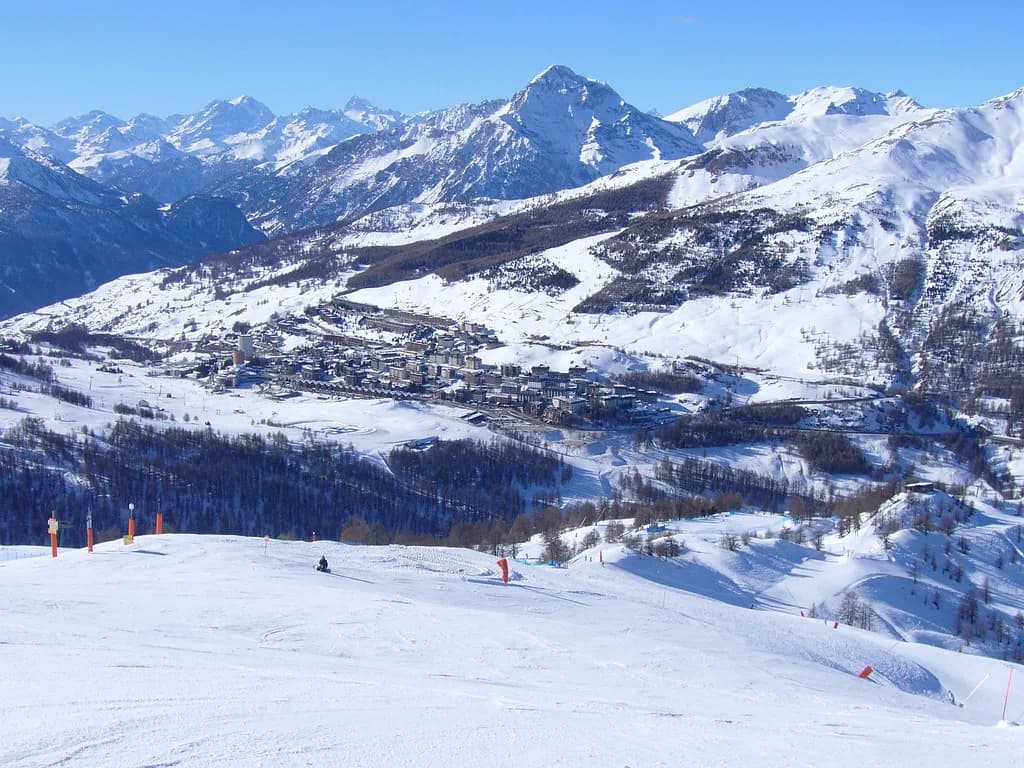
The resort village stands at 2,035m, and the wider Via Lattea terrain runs from roughly 1,350m up to about 2,800m on Mount Motta. That range is the single most useful fact for planning: the bottom of the system and the top of it behave like different resorts in marginal weeks. Sestriere's own layout is compact and largely ski-in, ski-out, so you waste little time reaching the snow once lifts turn.
The local piste count runs to 146 runs, split roughly 16% green, 42% blue, 33% red and 9% black. That mix is why the resort suits confident intermediates so well, and why the grading can feel a notch harder than other Italian areas. In early or late weeks, a blue here may ski like a steeper blue elsewhere, which matters when you are choosing dates around ability.
Season shape month by month
Early December is a high-altitude bet. Snowmaking covers a significant proportion of key slopes and is designed to support conditions from early December, but the resort has not published a fixed opening date for every sector in advance. Expect the upper Sises and Motta terrain near the village to come on stream before long traverses toward neighbouring villages. If your priority is mileage across the whole domain, this is not the week for it.
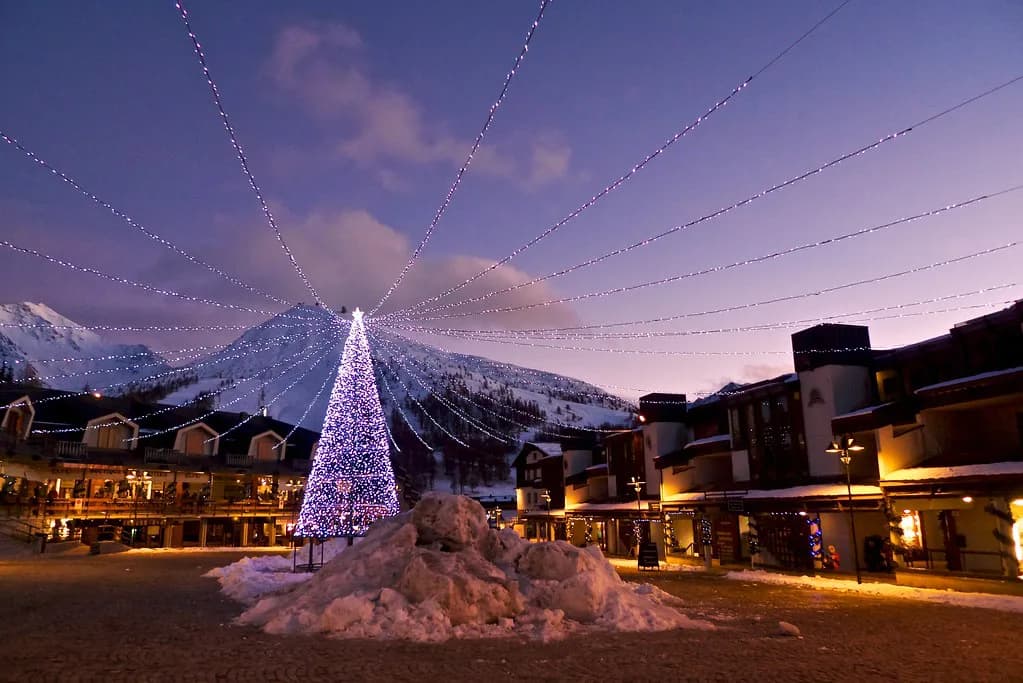
Christmas and New Year bring the fullest lift operation and the busiest pistes, with the bonus of a festive village atmosphere around the central square. Book ski school, hire and restaurant tables well before December if these weeks matter to you, because demand concentrates in a small resort core. January then delivers the same terrain with far thinner queues, making it the strongest choice for skiers who care about slope time rather than nightlife.
February is dominated by school holidays, first in Italy and then in the UK, so lift queues and hire desks feel the strain. March is the connoisseur's month: a deep snowpack, longer days and enough sun to make long lunches on terraces worthwhile. April still offers skiing on the upper mountain, but the lower runs soften early and links to lower villages become the first casualties of warm afternoons.
Snow reliability: altitude and snowmaking
Sestriere's reputation for reliable snow rests on two things: a village base above 2,000m and extensive snow production across the Via Lattea. That high-altitude position and comprehensive snowmaking help it hold cover through the season. None of that guarantees conditions in any given week, so check the official snow report shortly before departure rather than booking on reputation alone.
The practical consequence is that the top of Mount Motta and the Fraiteve bowls usually hold the best cover, while the return runs to 1,350m are the first to thin. If you are travelling in a shoulder week, plan your day to start high and finish early rather than chasing distance at low altitude. This is also the logic behind the resort's long-standing role as a late-season training base for racing teams.
Which sectors hold snow best
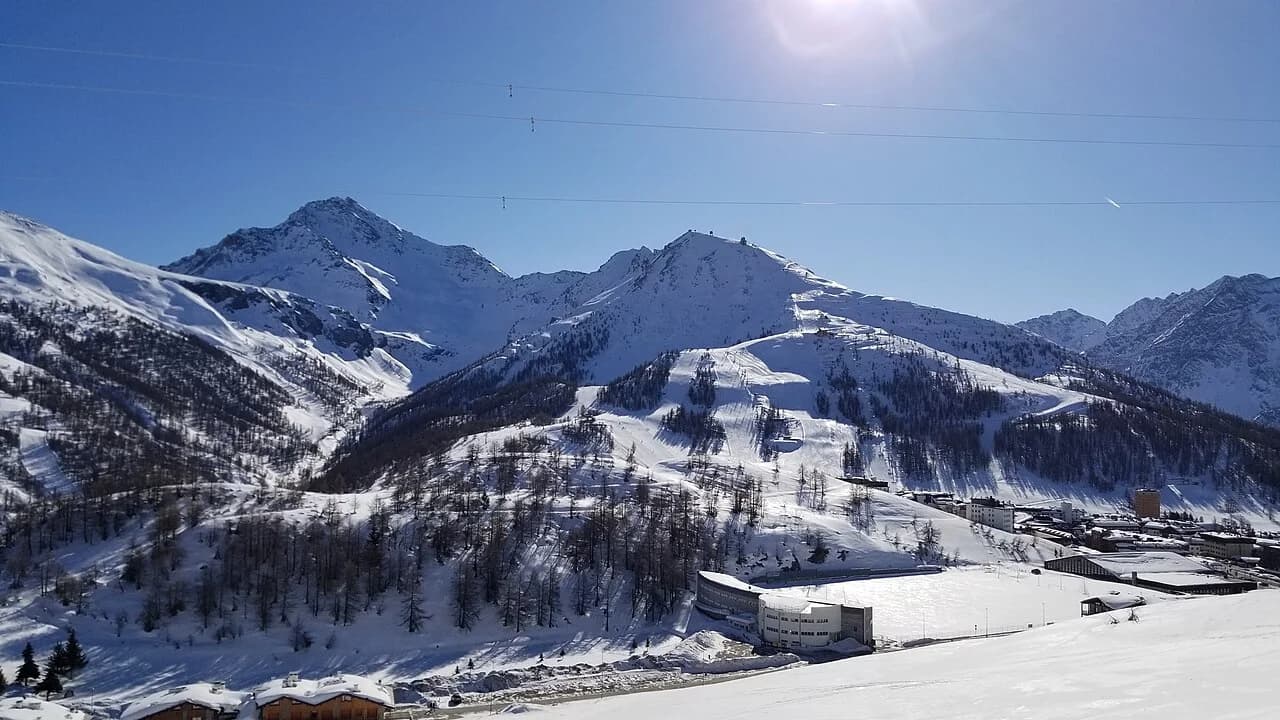
Sestriere's local terrain divides into two main sectors, Sises and Motta, both reachable directly from the resort centre. Sises tends to offer wide, rolling blues that suit lower intermediates, while Motta gives access to the steeper Olympic heritage runs and the route down toward Borgata. Knowing which sector you are heading for each morning saves wasted lift laps.
The Fraiteve area, served by a fast gondola, is the pivot between the local slopes and the wider domain, and its open bowls collect powder after storms. In spring, those same open slopes catch the sun earliest, so snow softens there before it does in shaded tree runs. A useful warm-week rhythm is Fraiteve and Motta in the morning, shaded terrain or a long lunch once the surface turns slushy.
The 9km descent to Sansicario is the classic intermediate objective and a good test of whether the whole link is running well. In lean weeks, the lower sections of that route are where you will notice thin cover first. Ask at the lift office or check the official piste status before committing to a one-way journey away from the village.
Early-season trade-offs
Book early December if you want quiet lifts, low accommodation rates and the pleasure of a village finding its rhythm. Accept in return that only part of the domain is likely to be prepared, and that off-piste is a guide-led gamble rather than a plan. The nursery slopes by the village and at the top of the Baby lift are usually among the first prepared areas, which makes the pre-Christmas window surprisingly good for first-timers.
Travelling before Christmas also means shorter days, so a late lunch eats into your skiing light. Plan a tighter radius, stay on the higher runs and treat any excursion toward Montgenèvre as a bonus rather than the purpose of the trip. If a full-domain week is what you are paying for, wait until January.
Late-season trade-offs
March is the sweet spot for most skiers: the snowpack is at its deepest, daylight stretches into the afternoon and the sun is strong enough to soften the surface pleasantly rather than ruin it. It is the best month for big mileage days across the Via Lattea, including the long cruise to Sansicario and the tree-lined runs above Sauze d'Oulx.
April changes the equation. The upper mountain and north-facing pitches stay firm and fast, but the lower returns and cross-valley links are the first to close or turn to porridge. Check whether the specific link you want is still scheduled to run before building a day around it. A late-season trip built on the high Sises and Motta terrain still delivers excellent skiing; one built on a grand tour may not.
Linking to Sauze d'Oulx, Sansicario and Montgenèvre
The Via Lattea's 400km and 70 lifts connect Sestriere with Sauze d'Oulx, Sansicario and, across the French border, Montgenèvre. Cross-border days make most sense in mid-season, from January through March, when the full circuit is running and daylight allows a comfortable return. A lunch in France and a ski back into Italy is one of the genuine pleasures of this domain.
Plan the direction of travel around the sun and the weather rather than the map. Wind can shut the higher connecting lifts, and spring warmth can close lower traverses, so keep a local alternative in reserve. Your pass needs to cover the whole domain, not just the local lifts, for these days to work.
Beginner timing
Beginners are best served by January and March, when the nursery areas are fully prepared and instructors have space to teach without dodging traffic. The two main learning zones sit in the village and at the top of the Baby lift, and progression routes include the gentle blues off the Fraiteve gondola. Because the easier runs sit higher up and the pistes steepen on the way home, many learners download by lift at the end of the day.
Book ski school before you travel for any holiday week, and specifically for Christmas, New Year and February half-term. English-speaking lessons with the Scuola Sci Sestriere and independent instructors fill quickly, and group placements are harder to secure on arrival. Pair the booking with hire collected the afternoon before your first lesson so the first morning is not lost to fittings.
Half-term and Italian holidays
If quiet pistes matter more than perfect timing, avoid the weeks when Italian and UK school holidays overlap. Italian families ski heavily around the Christmas period and in the weeks around Carnevale, while UK half-term concentrates demand in February. Late January and mid-March sit outside both and are the calmest windows for a family trip.
Accommodation in the village core is limited, so peak weeks sell out early and self-catered apartments near the lifts go first. Booking a year ahead is normal for February half-term; for March, a few months is usually enough. If your dates are fixed by school terms, secure the apartment before you shop around for passes or hire.
Lift passes: products and where to buy
Pass options range from local Sestriere lifts to the full Via Lattea and the international extension into France, and the right choice depends on whether you plan cross-border days. Buy before you travel if you want to avoid the ticket window queue on your first morning, particularly in holiday weeks. Prices and the current product list are published by the lift company, so check the official site for your dates before committing.
A common mistake is buying the full-domain pass for a short early-season trip when only part of the network is running. Match the product to what you will genuinely ski, and upgrade locally if the weather opens the whole area. Keep your pass somewhere secure and accessible; hands-free cards are easy to lose in a pocket full of lift snacks.
Ski school and hire booking windows
For Christmas, New Year and February, book lessons and equipment together as soon as your dates are fixed. Village rental shops such as Clataud Sport can fit you the evening before, which is far calmer than the first-morning scramble. If you have your own boots, bring them and hire only skis, since boot fit is where most of the comfort comes from.
In quieter weeks you can be more relaxed, though booking online still saves time and often secures a better range of models. Check the shop's location relative to your accommodation, because carrying skis across the village in boots is more tiring than it looks. Confirm the collection time and whether the shop stores skis overnight.
Getting there in winter
Turin is the closest major airport and the obvious gateway, with Milan Malpensa a longer but often cheaper alternative for package and low-cost flights. Road transfers wind up the Susa valley to the resort, and winter conditions can slow the final climb, so build slack into arrival day. Many holiday companies include transfers; independent travellers should book a shared or private transfer rather than relying on a bus connection that may not match a delayed flight.
A car gives flexibility for valley bases and for exploring neighbouring villages, but you will pay for parking and may still face chains or snow tyres requirements on the pass. For a straightforward week in the village, a transfer is usually the simpler option. Check road conditions and any winter equipment rules before you drive up.
Where to stay for season timing
Staying in Sestriere itself is the best call for early and late season, when you want the shortest possible journey to what is open. The village is purpose-built and compact, with hotels and apartments close to the lifts. A valley base such as Oulx or Cesana can be cheaper and more atmospheric, but adds daily driving and depends on the lower links running.
For a March trip built on mileage, a village base near the Fraiteve gondola reduces faff and lets you be high early. For a family week in February, proximity to the nursery slopes outweighs almost everything else. Choose the location around your daily plan rather than around the decor.
Cost planning across the season
Costs shift more by week than by resort: Christmas, New Year and February half-term carry the highest accommodation rates, while early December, late January and the middle of March are gentler on the budget. Pass and hire prices are set by the lift companies and hire shops and published each season, so build your budget from their current figures rather than last year's. An apartment with a kitchen offsets a chunk of the eating-out cost in a village where restaurants fill up.
Spending priorities vary by skier. Beginners get better value from a local-area pass and group lessons; strong intermediates who intend to cross to France should price the full-domain pass against the days they will realistically use it. Write the plan down before booking anything, and leave a small buffer for a guide day or a weather-driven change.
Two-day and long-weekend plans
Early season, keep it simple: two days on the higher Sises and Motta runs, a lesson if you are new or returning after a break, and a relaxed village evening. Do not build the weekend around a link to Montgenèvre. Late season, do the reverse and prioritise long cruises and high-altitude laps while the surface is good, finishing with a sunny terrace afternoon.
For a long weekend, fly into Turin, transfer up the same day and ski three full days rather than squeezing in a travel day on each side. Check the last lift times against your departure transfer, since an early flight can wipe out the final morning on the mountain.
Match Your Dates to Your Skiing
Sestriere's season is best understood as a set of trade-offs. Early December buys quiet slopes and lower rates at the cost of a partial domain; January and March deliver the full Via Lattea with fewer crowds; February suits families but not anyone seeking empty pistes; April rewards high-altitude skiing and punishes ambitious link-ups. If you are weighing this against another Dolomites trip, the Alta Badia ski season works on a similar shoulder-week logic.
Decide what you want most, then pick the week that delivers it, and check the resort's current operating dates and pass prices on the official Via Lattea site before you book. Secure ski school and rental gear early for holiday weeks, and keep your plan flexible enough to follow the snow.
Frequently Asked Questions
When does the Sestriere ski season start and finish?
The resort and the Via Lattea publish their planned opening and closing dates each winter, and snowmaking is designed to support skiing from early December. The exact dates vary by year and by sector, so confirm the current season dates on the official Via Lattea site before booking travel.
Is Sestriere good for beginners in early season?
Yes, relatively speaking. The nursery slopes in the village and at the top of the Baby lift are usually among the first areas prepared, so pre-Christmas can work well for first-timers who are happy to stay local. The easier runs sit higher up, and many learners take the lift back down rather than tackling the steeper return to the village.
What is the best month to ski in Sestriere?
March offers the best combination of a deep snowpack, long daylight and reliable coverage across the full Via Lattea, including the link to Sansicario. January is the pick for quiet pistes, while February is busiest because of school holidays in Italy and the UK.
Can you ski from Sestriere to Montgenèvre?
Yes, the Via Lattea connects Sestriere with Montgenèvre across the French border, but the crossing depends on the full circuit and connecting lifts running. Mid-season, from January through March, gives you the best chance, and you need a pass that covers the international domain rather than only the local lifts.
How high is Sestriere and does it get reliable snow?
The village sits at 2,035m, and the Via Lattea terrain runs from roughly 1,350m to about 2,800m on Mount Motta. That altitude, combined with extensive snowmaking, gives the resort a strong record for snow reliability, though conditions in any given week still vary and should be checked on the official snow report.
Is Sestriere in the Dolomites or the Alps?
Sestriere is in the Piedmont region of the Italian Alps, west of Turin near the French border, not in the Dolomites. It forms part of the Via Lattea alongside Sauze d'Oulx, Sansicario and Montgenèvre.
When should I book ski school and hire in Sestriere?
Book both as soon as your dates are fixed for Christmas, New Year and February half-term, when instructors and popular equipment models run out. For January and March you have more flexibility, but booking online still saves time and lets you collect gear the evening before your first morning on the snow.
Do I need a car to ski in Sestriere?
Not if you are staying in the village, which is compact and largely ski-in, ski-out, with transfers available from Turin. A car does help for valley bases and for visiting neighbouring resorts, but brings parking costs and winter driving requirements, so check current road rules before deciding.
Sources
Useful notes for your next ski trip
Optional updates to our Alpine resort guides.
You might also like
Continue reading
More guides you'll find useful