
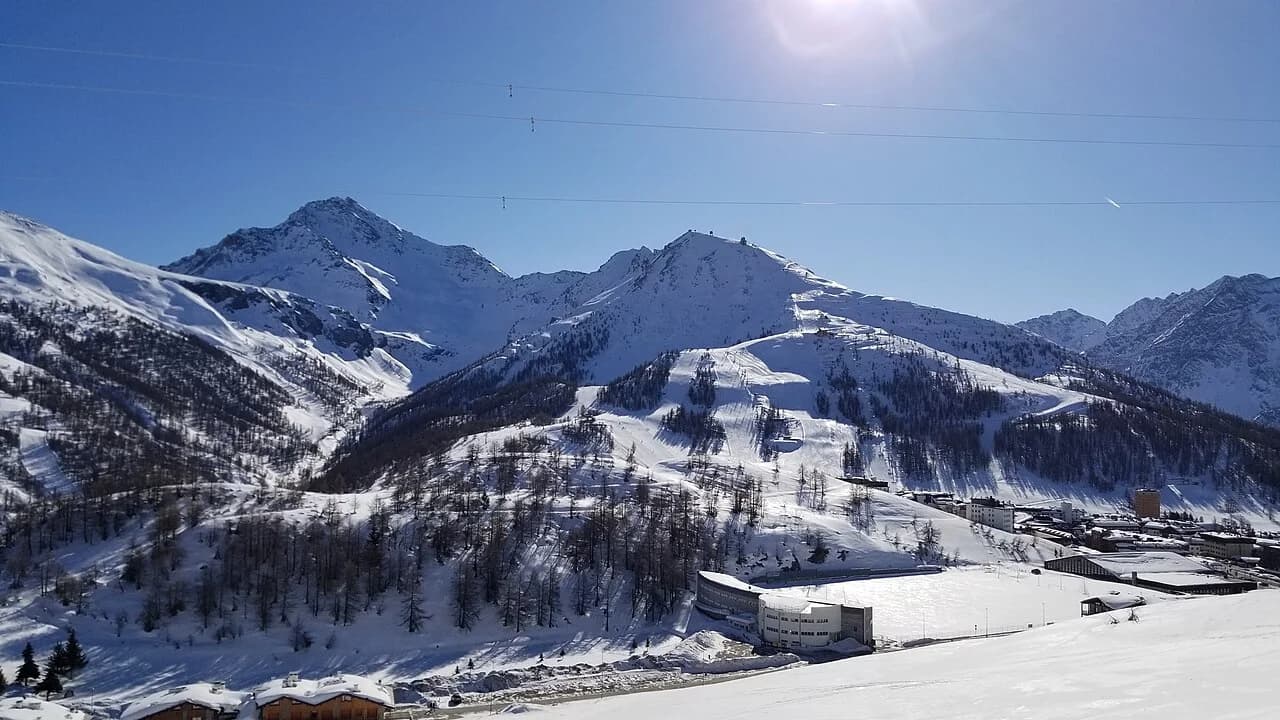
Is Sestriere Good for Beginners? First-Trip Guide
Sestriere suits first-timers, with a dedicated First Steps Area and a huge linked ski area to grow into. Here is how to plan lifts, lessons and days.
On this page
Sestriere works well as a first-ski week because the difficult decisions are limited: there is a designated learning zone in the village, a well-established ski school that runs fixed morning courses, and enough easy terrain around the linked Vialattea area to keep a new skier moving once lessons end. The trade-off is size. With hundreds of kilometres of interconnected pistes above and around the village, it is very easy to buy too much pass and plan too much ground for week one.
This guide sticks to what the lift company and the local ski school actually publish: the beginner areas in Sestriere, Sansicario and Sauze d'Oulx, how the resort connects around Monte Fraiteve and the Monti della Luna, and how lessons and passes are sold. Our broader Sestriere Skiing Guide covers the rest of the resort, and the Sestriere ski map is worth a look before you commit to a base.
Quick answer: how beginner-friendly Sestriere really is
Yes, Sestriere is a sensible choice for a first ski trip, but not because it is small or gentle. The village has a dedicated First Steps Area for beginners, while the wider Vialattea ski area offers room to progress from a nursery slope to long, forgiving blues and gentle reds over a week.
It suits skiers who want to learn in a proper mountain resort rather than a purpose-built beginner bubble: an Italian town with shops, a ski school on the doorstep and a lift network connecting it to Sauze d'Oulx, Sansicario, Claviere and Montgenèvre. It is less suited to groups where everyone wants a very small, entirely mellow ski area with no through traffic.
One point to settle early is your base. Sestriere is one of several linked villages, and staying here gives the closest access to the First Steps Area and the school meeting points, while staying elsewhere in the valley means a bus or lift connection each morning. The skiing here is one piece of a much bigger puzzle; weigh Sestriere against the neighbouring villages if you have not chosen yet.
Where Sestriere sits in the Vialattea ski area
The Vialattea lift company describes a connected international ski area linking Sestriere, Sauze d'Oulx, Sansicario, Cesana, Sauze di Cesana, Claviere, Oulx, Pragelato and the French resort of Montgenèvre with lifts that let you ski across without removing skis. That scale is the main reason to choose Sestriere: you get the infrastructure of a big domain, but the beginner plan stays local at the start.
Officially, the area covers around 400 km of slopes across roughly 300 marked runs, served by 73 lifts. Two hubs organise everything: Monte Fraiteve connects Sestriere with Sauze d'Oulx and Sansicario, while the Monti della Luna sector links Cesana Torinese, Claviere and Montgenèvre. For a beginner, that means the easy routes out of Sestriere radiate around Fraiteve rather than in every direction.
The altitude range runs from about 1,400 m at Cesana up to 2,800 m at Motta peak, and around 80 per cent of the ski area sits above 1,900 m. A high, linked domain makes weekend and holiday traffic on the main lifts a real consideration, so plan to ski under them early and let the fast skiers in your group head for the higher sectors.
The beginner layout: Sestriere's First Steps Area
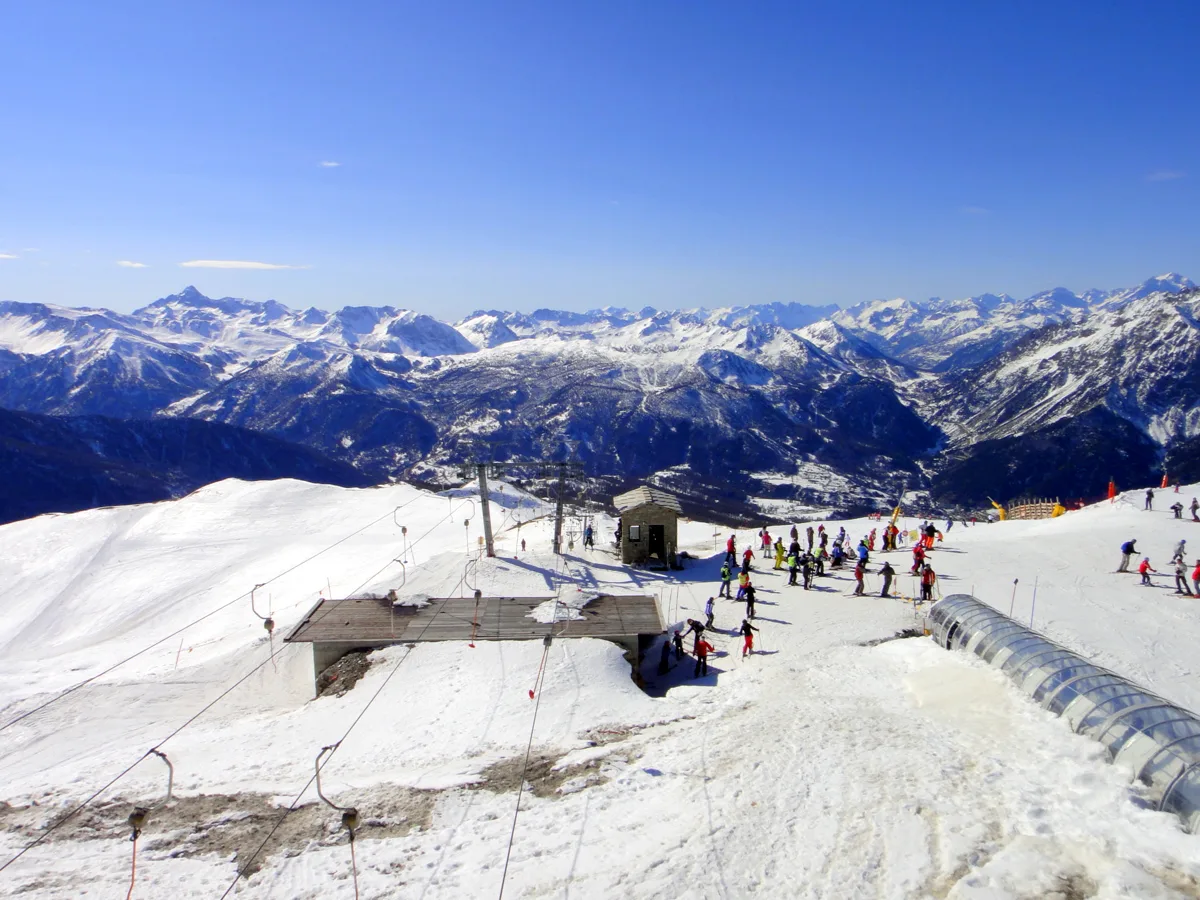
Sestriere's dedicated beginner space, the First Steps Area, is aimed squarely at children, families and complete beginners. The lift company describes it as including a beginner slope, a snow-play and bob area, and a sun terrace, so non-skiers can stay close while a lesson runs rather than driving back to the apartment.
The practical advantage of a defined learning zone is repetition. Your first two or three days are spent on the same short slope, on the same surface, with the same meeting point, which removes the logistics that eat into lesson time. Start there even if you are a confident intermediate in another sport; snowploughing to a stop is a different skill from anything you have done on dry land.
Ski schools also meet near the slopes in Sestriere, with the local school office reported to sit directly opposite the slopes and next to a partner ski hire shop. On the first morning, that proximity matters more than the size of your apartment; equipment collection and the lesson check-in should be walkable from each other.
Ski schools in Sestriere: group versus private lessons
Scuola Sci Vialattea Sestriere is the reference point for most first-timers: around 140 instructors, including 2 alpine guides, 7 snowboard instructors and 4 disability-trained instructors. Group courses run in the mornings from 10:00 to 12:50, start on Monday, and are offered to adults and children over either 3 or 5 days.
Children can join ski school from the age of 5, and snowboard group lessons start at 12. Some courses need a minimum number of participants; if a group does not fill, the school offers private tuition for a reduced number of hours instead of cancelling your booking. That is a reasonable outcome for a beginner, though it may mean less company on the slope.
Private lessons are the other side of the ledger: a one-hour private lesson for one person is listed from €58 in low season, €63 in mid season and €68 in high season, with an additional person charged at €15. If you are skiing as a couple with similar ability, sharing a private hour can be better value than two separate groups. Confirm the current rate with the school when you book.
What group lessons cost and when to book
The school's published 2026/27 group rates are €245 in low season, €275 in high season and €325 in peak season for five morning sessions; the three-morning course is €195, €225 and €265 respectively. Peak season covers 21/12/26 to 10/01/27, and high season covers 25/01/27 to 07/02/27 and 22/02/27 to 14/03/27. These are the school's listed prices, so confirm the current figure when you book.
Because courses begin on a Monday, a Saturday-to-Saturday holiday puts you on the snow the day after arrival. That is the cleanest rhythm: unpack, collect hire gear on the Saturday afternoon, and turn up for the 10:00 session without rushing. A Sunday arrival or midweek start can leave you waiting, so line up your travel dates with the school's start days.
Book the course before you travel rather than on the first morning. School places, not lift tickets, are the scarce item at a big resort, and booking online in advance also lets you lock in a date that starts on a Monday. If the school's online form is unclear on a specific point, ask about it before paying rather than after arrival.
Lift passes for beginners: what you actually need
The Vialattea lift company publishes the pass range for the cross-border ski area, but beginner pricing and the smaller local products are not fixed here, because they change with the season. Rather than assuming a full-area pass is necessary on day one, check the Vialattea official site for the current products, which typically include local and multi-day options alongside the full Vialattea pass.
The decision to make is how far you will realistically travel in your first week. With 400 km of linked slopes, a full-area pass only pays off once you can comfortably leave the First Steps Area and spend full days on the mountain. A pass that covers your early learning zone and the Sestriere lifts is usually the better first purchase; upgrade later if you progress faster than expected. If you would rather see how another resort handles the same question, our cortina skiing for beginners guide covers its learning areas and pass basics.
If you are travelling with a mixed group, older children and adults may want the larger pass while first-timers stay local. That works well in Sestriere because the learning areas sit inside the same network: everyone meets at lunch, then the more advanced skiers carry on up the mountain.
A realistic progression plan for a first week
Days one to three belong on the First Steps Area with a group course, no ambitions beyond turning and stopping. The morning lesson leaves the afternoon open: a short, low-stress session followed by an early finish will do more for you than a long afternoon fighting tired legs on an unfamiliar piste.
By midweek, most beginners are ready for the resort's easier blues, and Sestriere's position at Monte Fraiteve gives a natural first step out: the slopes below the hub toward the village. Ask your instructor which runs are least busy at your level, and treat the lift map as the planning tool, with numbered runs and colour coding making routes easy to follow.
Do not aim for Montgenèvre in week one. The French link is a highlight, but it is a full day of travel from Sestriere with lifts to catch in both directions, and a tired beginner is the worst person to be navigating back across the border at the end of the day. Save it for a return visit, when you know how the Vialattea system works.
Other beginner zones: Sansicario and Sauze d'Oulx
Sansicario and Sauze d'Oulx also have beginner areas designed for younger or newer skiers, according to the lift company, and the Sauze d'Oulx side holds the area's snowpark for freestyle and snowboard. For a Sestriere-based beginner, Sansicario is the more sensible day out: it is a short lift journey along the Fraiteve link and its learning slopes are a change of scenery without a big transfer.
Time the trip for later in the week, once you can use lifts confidently and are comfortable on blue runs. A day spent skiing gentle slopes at another village is a good confidence test, and it helps you judge whether a return trip should be based there instead. Genuinely advanced members of your group can make the longer trips to Claviere and Montgenèvre while you ski locally.
Snow, season and the altitude question
The official altitude figures, 1,400 m to 2,800 m with around 80 per cent of the terrain above 1,900 m, support what matters for a beginner: a resort where the learning terrain sits high enough for snowmaking and consistent winter temperatures. That is a reason to consider Sestriere for early and late trips rather than only for the January to March weeks.
The lift company has not published fixed opening and closing dates for the coming winter in this material, and those dates shift with the season, so check them before booking flights or transfers. The ski school's own season bands are a useful secondary signal: low season dates run from the start of December through 11 April, which gives a rough clue to when the resort expects to be operating.
For a first-trip planner, a late-January or early-March week usually promises the best combination of snow cover and quieter slopes. Early December is quieter still, but the beginner slopes may not be fully open and lessons may not be running.
Ski and boot hire near the slopes
Sestriere has a cluster of hire shops in and around the village, and the ski school office is described as sitting next to its partner hire shop and opposite the slopes. That arrangement makes it possible to collect boots and skis, walk to the lesson meeting point and be on the snow with less than a rental change of scene, so pick a shop near your accommodation and near the school.
Book hire online before you travel if you can; it gives you a real choice of boots and shortens the first morning. Bring the boot size and weight of each skier, and as a beginner opt for a shorter, softer ski than the model you might be rented by default.
Getting to Sestriere from Turin and beyond
Turin is the closest major airport and the natural gateway, with a transfer on mountain roads into the upper Susa valley. The lift company promotes good links between the resorts and Piedmont's capital, which makes Sestriere a realistic day, weekend or week-long base from the UK: fly into Turin, transfer to the village, and you are on the slopes the same afternoon.
The main choice is private transfer versus shared coach and rail. A private transfer is expensive for a lone traveller but convenient with family and ski bags; a rail connection to the valley plus a local bus is cheaper but slower and more awkward on a transfer day. Book your transfer when you book the holiday, because the good early Saturday slots fill up in half-term.
Common first-trip mistakes to avoid
The most common mistake is buying the biggest pass on day one. With hundreds of linked kilometres, a full Vialattea pass is only value for money if you spend most of the week travelling between villages. Learn on the local slopes, then upgrade if the group is ready.
Also common is treating the resort as a single village: it is part of a larger domain, and the beginner areas are distributed, so check whether your accommodation is closest to Sestriere's slopes or to another sector. And do not assume you can organise everything on arrival; book the school and hire before you travel, especially during peak season.
Verdict: is Sestriere right for a first ski trip?
For most first-timers, Sestriere is a strong choice. The First Steps Area gives beginners a real learning base, the ski school runs structured Monday-to-Friday mornings with published prices and start times, and the wider Vialattea network provides a genuine ladder of progression for a second or third trip.
It is less suited to a group that wants an entirely gentle, small ski area with no through traffic, or to families who will not book ski school and need an informal learn-at-your-own-pace setup. If you fit that profile, compare alternatives the way you would compare Sestriere with Sauze d'Oulx and the other Vialattea villages. For everyone else, book the lessons early, keep the pass modest, and plan the big link days for later in the week.
Frequently Asked Questions
Is Sestriere good for beginners?
Yes, in a specific way. Sestriere has a designated First Steps Area with a beginner slope, snow play and a terrace, and the local ski school runs Monday-start morning group courses for adults and children. The resort is part of a very large linked domain, so the sensible first week stays on the village learning slopes and nearby easy runs rather than chasing the far side of the map.
Where is the beginner area in Sestriere?
The First Steps Area sits in Sestriere itself and is the lift company's dedicated space for children, families and new skiers, with a beginner slope plus snow-play and bob areas. The wider ski area also has beginner zones at Sansicario and Sauze d'Oulx, which are worth a later-week visit once you can use lifts with confidence. The piste map shows the exact location of the learning slope.
What age can children start ski school in Sestriere?
Group ski lessons for children start from age 5, while snowboard group lessons begin at 12. Morning sessions run from 10:00 to 12:50 over either 3 or 5 days, starting on a Monday. Some groups need a minimum number of participants, and if a course does not fill the school may substitute a shorter block of private tuition, so confirm the arrangement when you book.
Do beginners need the full Vialattea lift pass?
Usually not on day one. The full pass covers around 400 km of linked slopes across Italy and France, which is far more than a first-week skier will use while learning in the village area. Start with a product that covers the Sestriere lifts and your learning zone, then upgrade later in the week if you are ready to travel further. Pass products and prices are listed on the official Vialattea site.
How much are group ski lessons in Sestriere?
The local school lists 2026/27 group courses differently by season: five morning sessions and three morning sessions each carry a low, high and peak rate, with peak weeks costing the most. Because those figures are seasonal and can change, the reliable move is to check the school's current price table when you book rather than rely on a figure quoted elsewhere.
How high is Sestriere and does it get good snow?
The Vialattea ski area runs from about 1,400 m at Cesana up to 2,800 m at Motta peak, and roughly 80 per cent of the terrain sits above 1,900 m. That height supports snowmaking and colder temperatures through the core of the winter, which helps early and late season trips. Snow varies year to year, so check the snow report and lift status shortly before you travel.
Sources
Useful notes for your next ski trip
Optional updates to our Alpine resort guides.
You might also like
Continue reading
More guides you'll find useful

.jpg)
.jpg)