
Sestriere Skiing in April: Late-Season Terrain and Planning
April skiing in Sestriere depends on published lift operations and altitude, not snow promises. Plan around connected Vialattea terrain and confirm dates.
On this page
Planning sestriere skiing in April comes down to one question: what the lift company expects to run, not what the snow might do. Sestriere sits at 2,035 m, and the surrounding Vialattea network spreads from roughly 1,400 m at Cesana up to about 2,800 m at Motta peak.
Because April operations vary year to year, treat any historic season summary as context rather than a promise. Your job before booking is to confirm which sectors, international links and pass types are published as running for your chosen week, then match that to the terrain you actually want.
Why April Changes the Sestriere Decision
Sestriere's altitude is the main reason late-season weeks are even discussable, since the village base is high and most of the Vialattea network sits above 1,900 m according to Vialattea. That does not guarantee snow or open terrain in any given April. General resort overviews describe a winter season running roughly December to April, but that describes a pattern, not a confirmed operating calendar for a specific year.
What changes in April is not the terrain's existence but the operating envelope: fewer lifts typically run, some link routes may close, and snowmaking becomes less effective as temperatures rise. Sources give slightly different altitude ranges, with Snowcarbon quoting 1,357–2,840 m and Neilson 1,380–2,800 m, while Vialattea describes Cesana at 1,400 m up to Motta peak at 2,800 m. Treat these as approximate and prefer Vialattea's figures when comparing sectors.
Sectors and Lift Hubs: Where April Skiing Concentrates
The Vialattea network hangs off two main hubs, and which of them operates matters more in April than in midwinter. Monte Fraiteve links Sestriere with Sauze d'Oulx and Sansicario, while the Monti della Luna group covers the slopes above Cesana, Claviere and Montgenèvre. Everything in the area is joined through those lift systems, so a closed hub removes whole sectors from a day rather than one run.
If your April week depends on skiing across borders or linking several villages in a day, ask the lift company directly whether the Montgenèvre connection is scheduled. A local Sestriere day uses different lifts from a Milky Way tour, and the two carry different risk of disappointment late in the season. High terrain above Sestriere and Sauze d'Oulx is the usual focus when lower link routes stop running.
Reading the Piste Map Before You Book
Slopes across the area are numbered and colour-graded, which makes it possible to trace which runs a late-season lift plan actually serves. Vialattea counts about 300 interconnected slopes and 73 lifts across the whole area, with 9 green, 99 blue, 173 red and 40 black runs. Third-party counts differ, so use Vialattea's numbers when judging what a sector offers.
Local Sestriere figures are smaller and more useful for a resort-based week: the Vialattea Sestriere page states 85 pistes and 20 lifts serving the village itself. Reading the sestriere ski map carefully before booking lets you check whether the numbered runs you want sit on high ground or on lower link terrain that April operations may not reach.
What Is Genuinely Sestriere-Local in April
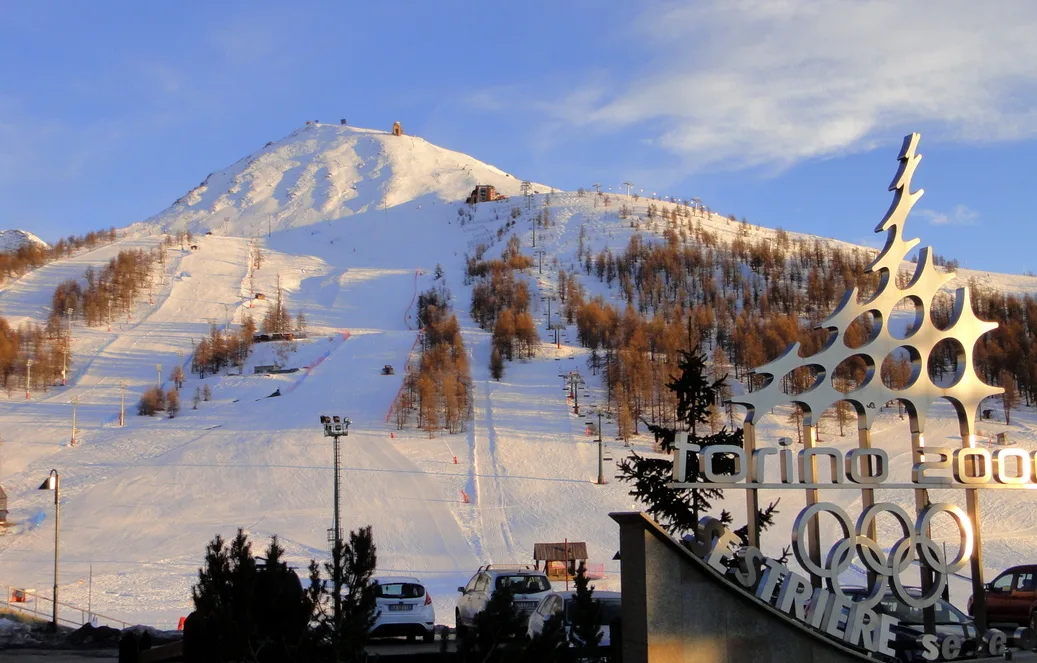
Sestriere's own terrain splits into three main areas on one side of the valley: Sises in front of the village, Motta above Borgata with steeper ground and more vertical, and Fraiteve reachable by gondola from the village side. A resort-based April week should therefore be judged on which of Sises, Motta and Fraiteve lifts are scheduled, not on the total Milky Way figure.
Beginner provision is a separate question, since Vialattea describes a First Steps Area in Sestriere with a beginner slope and a snow-play zone, plus beginner areas in Sansicario and Sauze d'Oulx. For snowboarders, Vialattea lists a snowpark in the Sauze d'Oulx area rather than in Sestriere, so freestyle plans depend on that sector running.
Pass Coverage and Cross-Border Links
Pass inclusions vary by product and season, so check what your specific late-season pass covers rather than assuming the whole network is included. Whether a Sestriere pass reaches Montgenèvre in April is exactly the sort of detail Vialattea publishes and third-party guides cannot settle. Neilson mentions a free Montgenèvre day on certain packages, but package terms change and should not be read as a current inclusion.
A workable sequence is to confirm the published operating dates first, then the sectors and lifts scheduled for those dates, then which pass tier covers them. Only after that does it make sense to decide whether an April week in Sestriere matches your ambitions. If Vialattea has not published these details yet, wait for them rather than booking around an assumption.
April Sestriere Week Versus a Lower Milky Way Base
Choosing between Sestriere and a lower Milky Way village such as Sauze d'Oulx or Cesana is an altitude-versus-village trade-off. Sestriere's 2,035 m base puts you closer to the higher terrain, while lower bases sit further from the runs most likely to operate late. Neilson notes easy lift links from Sestriere to Sauze d'Oulx and Sansicario, which matters if you want variety without moving base.
If guaranteed April skiing is the priority, no Sestriere base removes the operating risk entirely; the terrain simply makes it less likely that a week collapses if lower sectors close. A lower village may offer more character but leaves you dependent on links that April operations might not run. Check the ski map and Vialattea's published sector plans before committing either way, and for a cross-border alternative high on the same massif, compare skiing in Cervinia in April and how its season timing is planned.
Plan Your April Week in Sestriere
April skiing in Sestriere is a question of published operations, not snow statistics. Check the lift company's dates for your week, note which sectors and links are scheduled, then confirm your pass tier covers them before booking. Vialattea's Sestriere page and current map are the authoritative starting points.
If the details you need are not yet published, hold off rather than booking on assumption, and revisit once the season calendar appears. A late-season week works best when your plans follow confirmed lift operations rather than a hoped-for snowpack.
Frequently Asked Questions
Is there still good skiing in Sestriere in April?
That depends on which lifts and sectors are scheduled for your chosen week, and no source confirms a specific April calendar. Sestriere's 2,035 m base and terrain up to roughly 2,800 m give April skiing a plausible basis. Check current details before booking rather than relying on snow claims.
Which Vialattea sectors usually stay open late in the season?
The Vialattea network hangs off Monte Fraiteve, linking Sestriere with Sauze d'Oulx and Sansicario, and the Monti della Luna group above Cesana, Claviere and Montgenèvre. Which of these run into April varies by year, so ask the lift company which sectors are scheduled for your dates and check the current piste map.
Does a Sestriere lift pass in April cover Montgenèvre?
Pass inclusions change by product and season, so check the specific pass you intend to buy before assuming cross-border coverage. The lift company is the authority on what each tier includes for a given period, and third-party package mentions of free Montgenèvre days don't reflect current terms.
How high is the skiing in Sestriere?
The village sits at 2,035 m, and sources give slightly different top figures: the operator describes the network from about 1,400 m at Cesana to 2,800 m at Motta peak, while third-party guides quote ranges such as 1,357–2,840 m or 1,380–2,800 m. Treat all of these as approximate and prefer the operator's figures.
Sources
Useful notes for your next ski trip
Optional updates to our Alpine resort guides.
You might also like
Continue reading
More guides you'll find useful
_2012.jpg)
