Serre Chevalier Skiing Guide: Sectors, Passes and Terrain
Serre Chevalier skiing spans four linked sectors from Briançon to Monêtier. Compare terrain, pass boundaries and learner provision before you choose a base.
On this page
Serre Chevalier looks like a single resort on a trail map, but it functions as four bases strung along one valley, and that difference decides almost everything about your week. You are choosing both a place to sleep and a daily radius: how far you can travel on the pass you buy. Get those two choices aligned and the resort is straightforward; mismatch them and you either overpay or spend your mornings commuting.
This guide treats the pass boundary as the primary decision, then works through sector character, terrain counts, learner provision and season timing. Serre Chevalier Vallée publishes the authoritative detail on pass inclusions and season dates, so every operational claim here points you back to that source rather than asking you to trust a summary. Historic figures describe what has been built, not what will be open on your dates.
Serre Chevalier Skiing: One Ski Area, Four Distinct Bases
The resort spreads along the Guisane valley, and its official pass structure names four sites: Briançon, Chantemerle, Villeneuve and Monêtier. Each has its own lift base, its own access point into the wider area, and a different relationship to the town or village around it. None of them is a suburb of another; they are separate settlements connected by lifts and by the valley road.
Sector choice changes the shape of a day more than most skiers expect. Briançon sits at roughly 1,200 m at one end of the chain, while Monêtier sits higher up the valley toward the top end of the lift network. An independent guide describes three main traditional villages within a wider total of thirteen settlements, while Serre Chevalier Vallée treats four sites as the operational units. Both framings are useful: four bases for decisions, thirteen places for context.
Lift linking is the mechanism that makes any of this workable. Because the sectors connect through the lift system, the pass you hold determines whether you can cross between them or must stay inside one. Before booking anything, decide whether your trip is a single-sector week or an area-wide one; the rest of the planning follows from that answer.
How the Ski Area Fits Together Along the Guisane Valley
The four bases run roughly from southeast to northwest: Briançon at the valley's lower end, then Chantemerle, then Villeneuve, then Monêtier at the far end. Lifts climb from each base into a shared mountain, which is why the same trail map serves all four. The valley floor itself is a road corridor, not a ski run, so moving between bases on skis normally means using the lift network rather than dropping to the valley.
That layout produces a simple consequence: a full-area pass buys you reach, and a single-sector pass buys you depth in one place. A skier based at Villeneuve with an area pass can tour the whole system across a week; a skier with a Monêtier-only pass stays in the Monêtier sector, which Serre Chevalier Vallée sells as a six-day product in its own right. Neither is wrong, but they are different holidays.
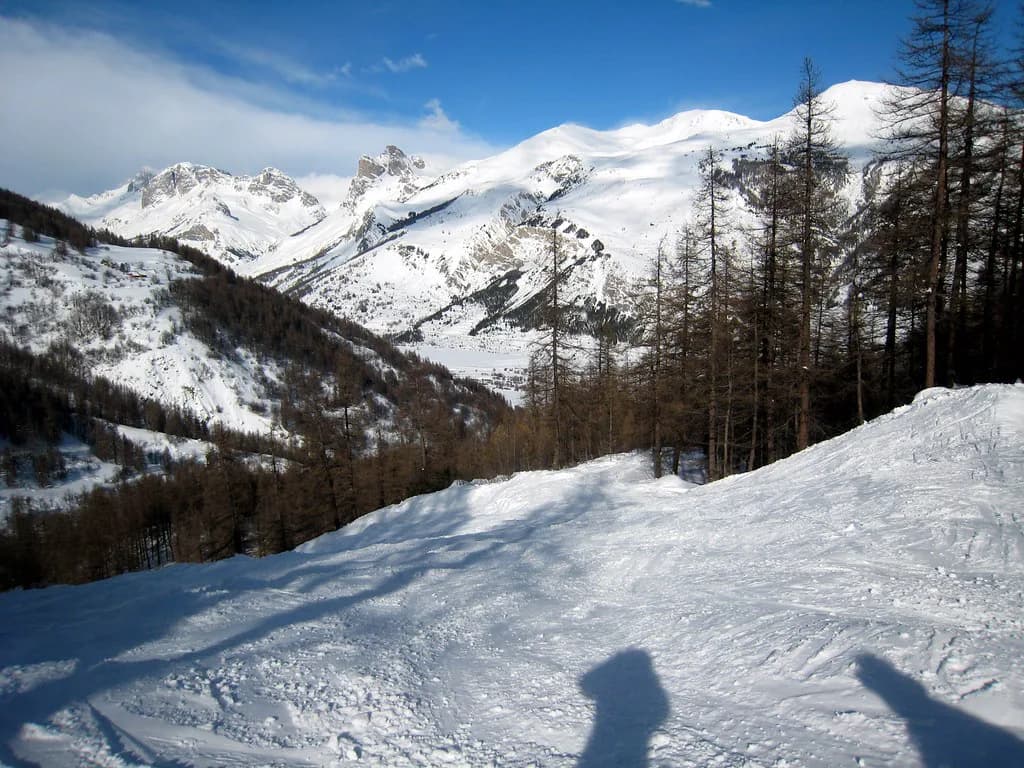
Terrain character changes as you move along the valley. An independent guide notes that wooded runs cover a large share of the mountain, which matters on days when the weather is poor, while the upper area sits higher and more open. Serre Chevalier Vallée states that most of the ski area lies above 1,800 m, which is a useful structural fact when you are weighing which base gives you the quickest access to the upper mountain.
Briançon: Skiing From a Working Town
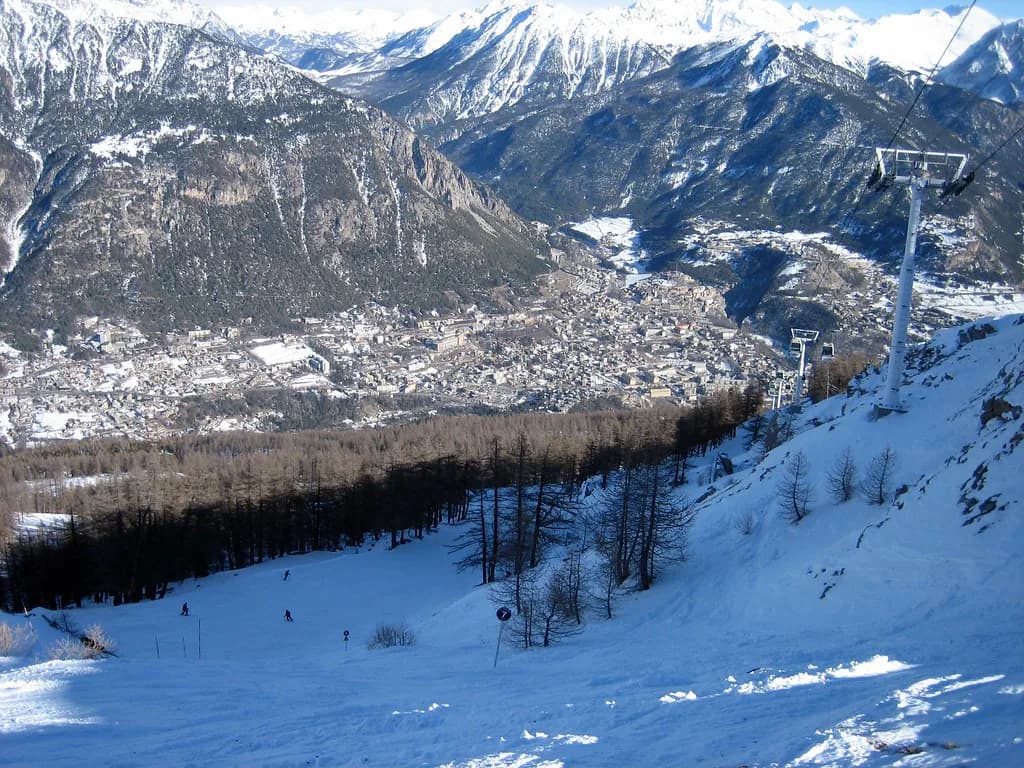
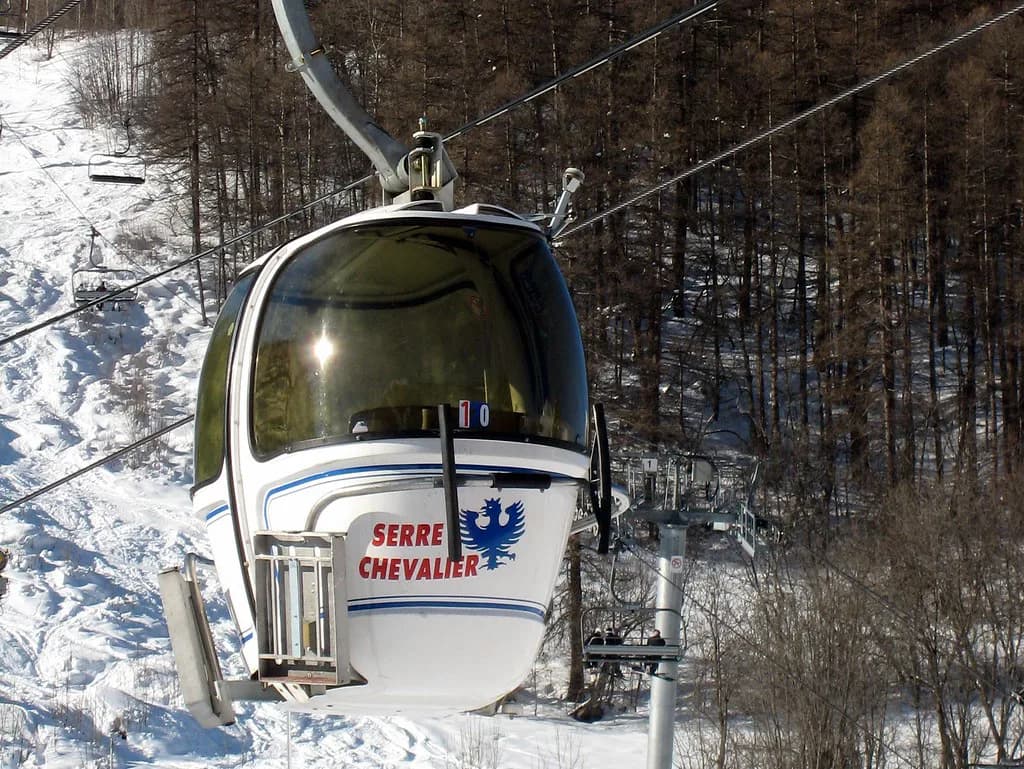
Briançon is the largest settlement in the valley and the only base that is a substantial town rather than a village. A gondola connects the centre into one end of the ski system, so you can start a ski day from the town itself. For skiers who prefer a town base with services on the doorstep, this is the sector that offers it.
Serre Chevalier Vallée's own beginner breakdown for the Briançon sector lists two green runs and three blue runs within the small-domain offering. That is the smallest documented count of the four bases, so it suits a short learning block rather than a week of progressive beginner terrain. Confident intermediates should read those numbers as a starting point, not a ceiling: the sector also connects into the wider area on a full pass.
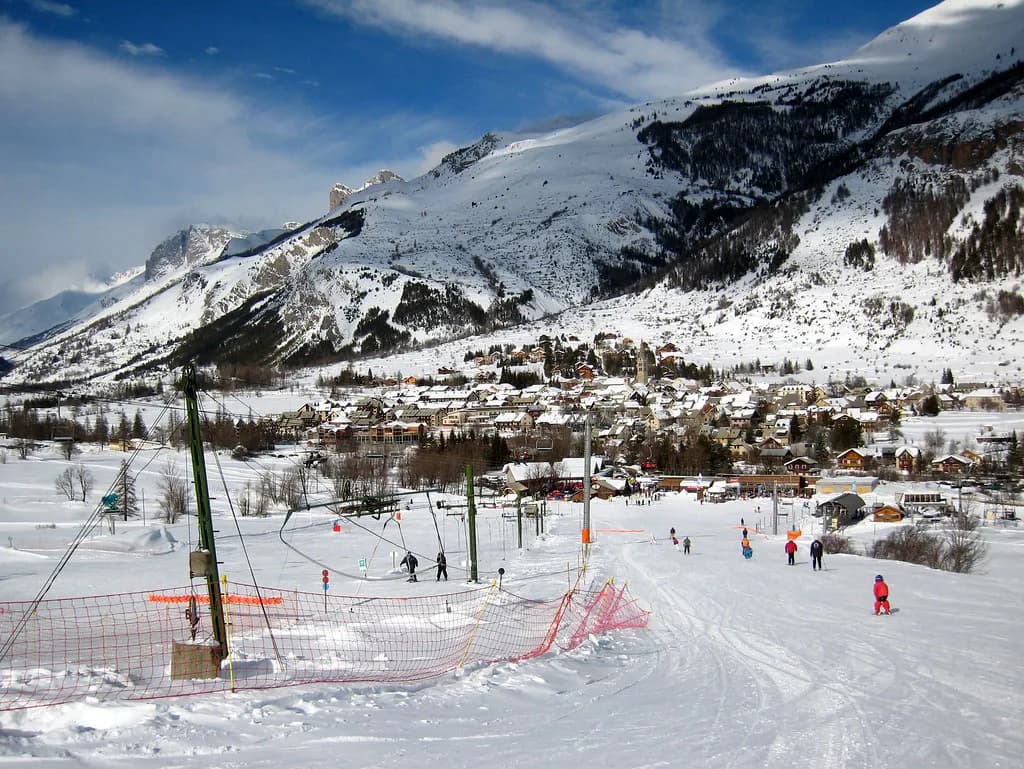
Briançon also provides easy-access learner terrain close to the base. Discovery Areas appear at each of the four sites, and they are set on the snow front or at altitude with short green runs. That combination, a town base plus a contained beginner zone, is the reason this sector often suits mixed groups where not everyone skis every day.
Chantemerle and Villeneuve: Central Bases With the Widest Access
Chantemerle and Villeneuve sit in the middle of the valley and between them cover a large share of the served terrain. Serre Chevalier Vallée counts seven green runs and five blue runs at Chantemerle, and six green runs and twelve blue runs at Villeneuve, within the small-domain offers. Villeneuve's higher blue count makes it the stronger of the two for early-intermediate progression on paper.
Small-domain passes for these two villages are sold as day passes, which shapes how they should be used. A day pass suits a sampler, a rest-day skier or someone adding a day to a longer trip; it is not a substitute for a full-area weekly pass. If your plan involves crossing to Monêtier or Briançon, the day pass will not carry you there.
For most skiers weighing a first trip, these central bases minimise time spent in transit on the wider network. That is an editorial judgement about lift geography, not a resort claim: Serre Chevalier Vallée states boundaries and inclusions, not which base is convenient. If your priority is maximum reach across a week, the central position is the practical argument for Chantemerle or Villeneuve.
Monêtier: The Upper-Valley Base and Its Own Pass
Monêtier-les-Bains sits at the top of the valley and is the quietest of the four bases, with the upper mountain and its higher-altitude terrain closest at hand. Serre Chevalier Vallée sells a dedicated Monêtier six-day pass alongside the full-area product, which is unusual in a resort of this size and tells you the sector can sustain a week on its own.
The trade-off is explicit in the pass name. A Monêtier pass gives access to the Monêtier sector only, so a full-area pass is the right purchase if you intend to ski in more than one sector. Serre Chevalier Vallée also lists a Monêtier beginner picture of six blue runs, alongside a three-hour, day or six-day pass option for that sector.
An independent guide describes Monêtier as the least developed of the main villages and the choice for skiers who want the older village character. That is a description of what a base feels like, not a claim about snow or terrain quality. Take it as a signal about atmosphere and scale.
Terrain in Numbers: What the Counts Do and Do Not Tell You
Serre Chevalier Vallée's area figures list 410 hectares of marked ski terrain, 82 slopes and 59 lifts, spanning roughly 1,200 to 2,800 m. An independent resort guide instead cites around 250 km of piste and a top altitude of about 2,735 m. These are not the same measurement expressed twice: one counts marked hectares and runs, the other piste distance.
When two sources describe a mountain differently, the sensible move is to attribute rather than merge. Use Serre Chevalier Vallée's slope and lift counts to judge how many separate runs and lifts exist, and use the kilometre figure to gauge overall scale. Quoting one merged number would hide the disagreement rather than resolve it.
What none of these numbers reveal is how the terrain is distributed across the four sectors. A slope count tells you how many runs exist somewhere in the area, not how many are reachable from your base or open on your dates. Serre Chevalier Vallée's per-sector beginner counts are the more decision-relevant figure for base selection, precisely because they are broken down by location.
Pass Boundaries: Full-Area vs Small-Domain Products
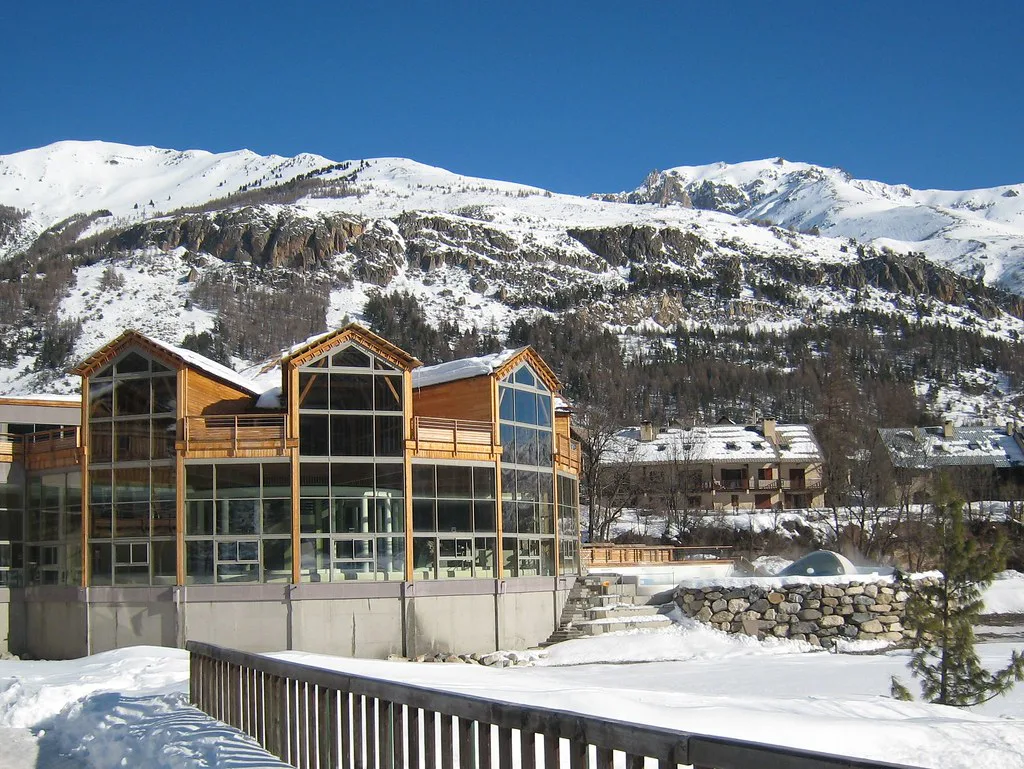
Serre Chevalier ski passes run from short express products up to 15-day packages, and the full-area version lets you ski the whole area from Briançon to Monêtier via Chantemerle and Villeneuve. The small-domains product is the constraint to understand: it covers one sector only, and the sectors are not interchangeable. Once you know that, the product range makes sense.
Availability differs by sector, which is easy to miss when comparing only headline durations. Serre Chevalier Vallée lists Briançon with three-hour and day passes, Chantemerle and Villeneuve with day passes, and Monêtier with three-hour, day and six-day options. A six-day single-sector product exists only at Monêtier, so a skier wanting a week at Chantemerle or Villeneuve is effectively buying the full-area pass.
Serre Chevalier Vallée adds benefits to longer full-area passes, including a six-day-and-over product with extras attached. Do not infer what is included from the pass name or from a benefit you have seen advertised previously; inclusions and the conditions attached to them change. The Serre Chevalier pass page is the place to see exactly what your chosen product covers before you pay.
Non-Consecutive Days and the Holiski Option
The standard Serre Chevalier Pass runs on consecutive days with sliding-scale rates by duration. Holiski is the scheduling alternative: it is sold as a ski-when-you-like product that works on non-consecutive days, which suits a trip mixing skiing with rest days or other plans. The difference is structural, not cosmetic.
Choose between them by looking at your actual week rather than the best-case version of it. If you will ski most days back to back, a consecutive pass matches the plan; if you expect gaps, the flexible product removes the pressure to ski on days you would rather not. Neither choice says anything about ability or terrain, so do not let either name push you toward a sector.
There is also a lift-pass product sold as an entry bundle, offered as one day with five entries or six days with thirty entries, valid across the area. It is a different model again: a set number of lift rides rather than unlimited days. That can suit a cautious skier building a rhythm, but it is a poor fit for anyone expecting full days on the mountain.
Beginner and Early-Intermediate Provision by Sector
Serre Chevalier Vallée documents beginner terrain per sector, which is far more useful than a general reputation. Briançon lists two green runs and three blue runs; Chantemerle lists seven green and five blue; Villeneuve lists six green and twelve blue; Monêtier lists six blue runs. Reading those counts side by side, the central sectors carry the bulk of the documented easy terrain.
Discovery Areas support the earliest learning stage at all four sites. They sit on the snow front or at altitude, use short green runs, and exist so beginners can build confidence gradually without committing to full-length runs. Serre Chevalier Vallée also sells beginner-area pass offers aimed specifically at first turns, which lets a new skier buy into a small zone rather than a full-area product.
For a mixed-ability group, the practical implication is that the base with the richest beginner counts also tends to be the one where stronger skiers can leave for the wider area without stranding anyone. That is editorial reasoning from the published counts, not an operator statement. Check the current per-sector figures before booking, since trail classifications can be reclassified between seasons.
Why Sector Choice Should Follow Lift Links and Learner Terrain
Reputation is a poor basis for choosing a base at Serre Chevalier, because the four sectors are genuinely different in ways that published data already captures. A base with more documented green and blue runs suits a group learning; a base at one end of the valley suits a skier who wants that end's terrain every day. Start from the numbers and the lift layout on the Serre Chevalier piste map rather than from which village sounds best.
The second filter is pass boundary. If your group includes beginners who will stay in one sector while others roam, the beginners do not need a full-area pass, and the stronger skiers do. Buy per person rather than buying one product for the whole group, and read each product's boundaries on the Serre Chevalier pass price list before purchase.
The third filter is how much transit time you are willing to accept. A base at the extreme of the system sits farther from the opposite end, so a daily plan that spans the whole area costs travel time. A central base reduces that. This is a planning judgement, not a claim about conditions or quality, and you can test it against the Serre Chevalier piste map.
Snowboarder-Relevant Layout and Lift Configuration
The layout that matters for snowboarders is the same layout that matters for everyone: valley-floor bases connected by lifts rather than by ski-down runs. Because the four bases are separate settlements, moving between them on a board means riding lifts, not cruising to the next village. Plan transitions around lift connections rather than treating the valley as one continuous run.
Lift configuration is the other factor, and it is the one most likely to shape your day. Serre Chevalier Vallée counts 59 lifts and the independent guide notes that the area includes slow chairs and gondolas, which affects how far you get in a session. Neither source publishes travel times per lift, so allow for slower links when you plan a circuit across the valley.
A fast-track option, &joy, exists as a paid addition to the pass, giving priority access at a set of equipped lifts. Whether it is worth it depends on your travel dates and tolerance for queues, and neither the Serre Chevalier page nor the independent guide supports a general recommendation. Treat it as a queue-management purchase, and check the current list of equipped lifts before adding it.
Season Timing and How It Changes the Trip You Plan
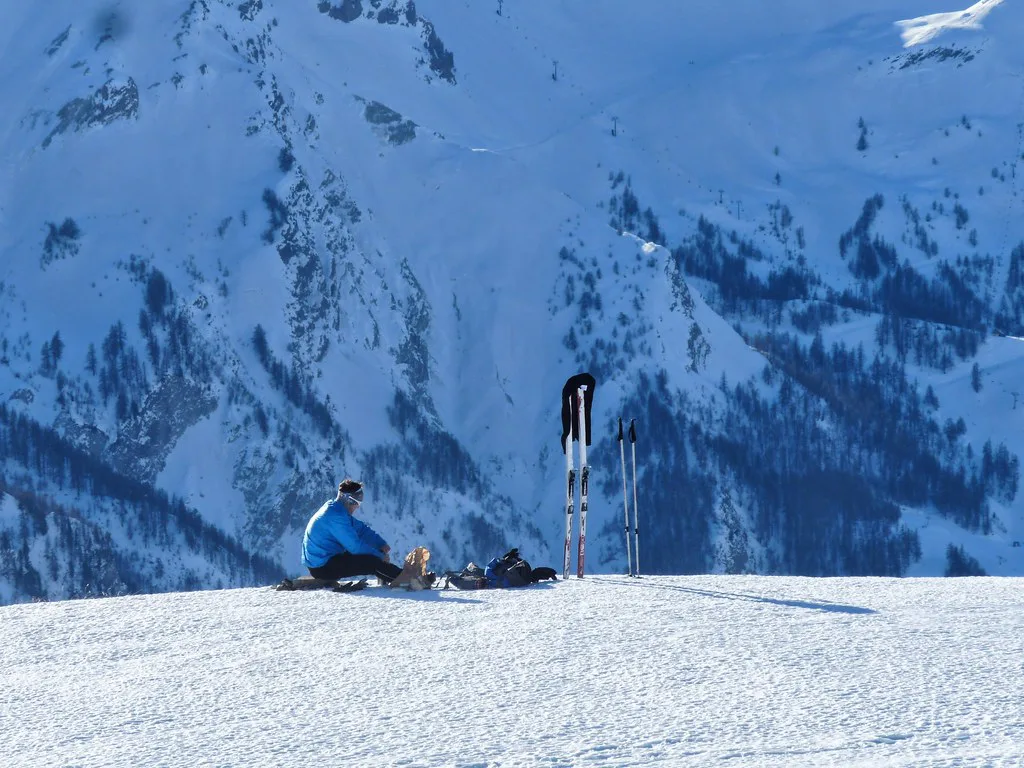
Serre Chevalier Vallée states a winter season from 5 December 2026 to 18 April 2027 for the coming winter. Treat that as a scheduled window rather than a promise: individual lifts, sector links and pistes can open or close within it depending on conditions and operational decisions. A season date tells you when the area intends to run, not what will be skiable on any given day.
Early and late dates carry different trade-offs in a valley resort. Serre Chevalier Vallée applies lower rates at the beginning and end of the season, which reflects demand rather than any guarantee about what is open. If you book at the edges of the window, build flexibility into your plans and look up which lifts and sectors are scheduled for your exact dates.
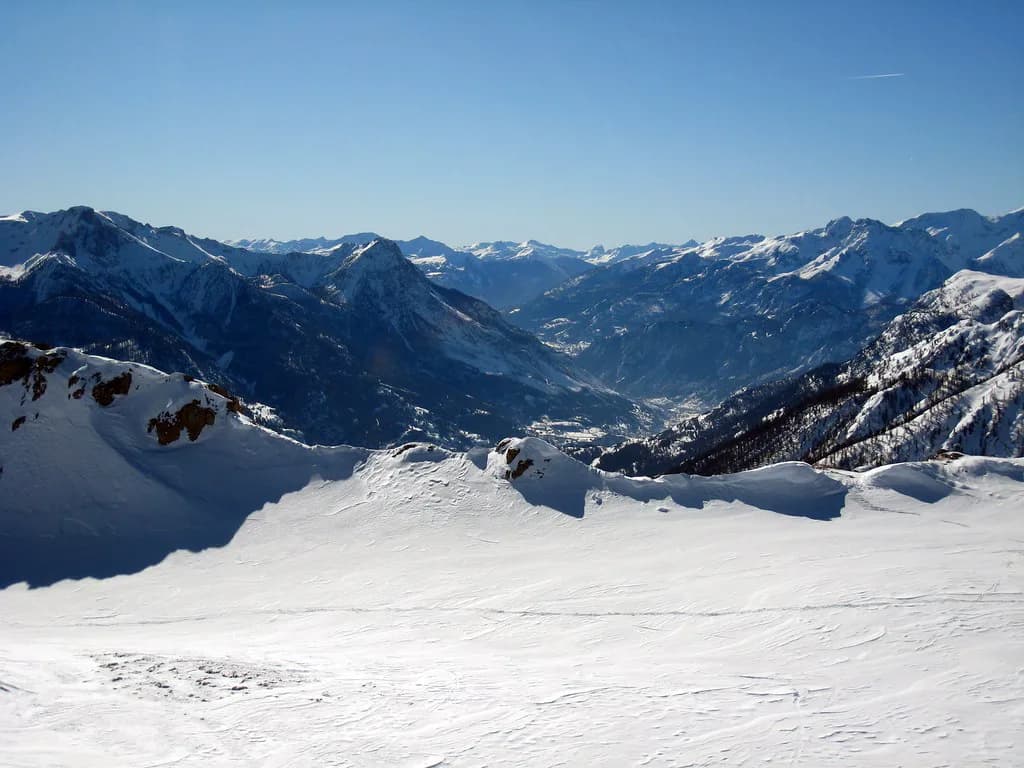
Snow-related claims should be handled with care in any resort guide. Serre Chevalier has substantial high-altitude terrain and an extensive snowmaking network, but past coverage patterns do not predict future conditions and no resort can guarantee skiing on a given day. Use altitude and snowmaking coverage as structural context when comparing dates, and check Serre Chevalier Vallée's live snow and lift information closer to travel.
Practical Planning Sequence: Base, Pass, Radius, Book
Start by deciding the number of bases you want access to across the week. If the answer is one, a small-domain or Monêtier-only pass can work and the base choice is largely about village character. If the answer is more than one, you need the full Serre Chevalier Pass and a base that connects well to the rest of the system.
Then set your daily radius from that base and check it against the pass. A skier based at one valley end who wants to ski the opposite end every day is committing to significant lift time; the Serre Chevalier piste map is the tool for testing this. Work out whether the full-area pass is required before you assume any crossing is included.
Add the dependent bookings once base and pass are settled. Hire and lessons follow from where you are staying and which terrain you are targeting, so line those up after the pass boundary is clear rather than before.
What to Confirm on the Operator Site Before You Commit
Pass boundaries and inclusions come first, because they decide which sectors your ticket actually opens. The Serre Chevalier pass page is the authority on what each product covers, and it is the only place where conditions and product definitions are set out for the current season. Compare the sector list with your intended plan before purchase.
Dates and opening scope are the second check, and they deserve a live look rather than a remembered figure. Scheduled seasons are conditional, so individual lifts and links can differ from the headline window. If your trip depends on a specific connection between sectors, look up whether it runs on your dates.
The third check is your own group's profile against the per-sector beginner counts. Those counts are published and comparable, so they answer the question of where learning terrain sits far better than any general impression. If your group is largely new to skiing, start from that page before choosing where to sleep.
Comparing Serre Chevalier With Other Alpine Choices
Serre Chevalier's distinguishing feature is that its ski area connects four bases, one of them a real town, rather than funnelling everything through a single resort centre. That structure rewards skiers who plan around pass boundaries and transit, and it suits groups whose members want different things from a day. Resorts built around one concentrated centre play a different game.
If you are weighing alternatives, compare on layout rather than on vague size rankings. Alpe d'Huez skiing is built around a single high-altitude settlement with its own terrain logic, and comparing that structure with Serre Chevalier's multi-base valley is more useful than comparing headline kilometre counts.
The same applies to any other French option you shortlist: identify where the lifts start, how the sectors connect, and what a pass actually opens before comparing anything else. Those three answers will tell you more about whether a resort fits your week than any summary of its reputation.
Plan Your Serre Chevalier Trip Around the Pass
The decision that shapes a Serre Chevalier trip is not which village is prettiest but which pass you hold and how far it lets you travel. Full-area products open the whole valley; small-domain and Monêtier-only products keep you in one sector, and Serre Chevalier Vallée's per-sector beginner counts show how unevenly the easy terrain is distributed. Settle the boundary first, then choose the base that fits it, using the Serre Chevalier Ski Pass Guide to work through the products in detail.
Season dates are scheduled, not assured, so check current opening scope and inclusions close to travel rather than relying on a figure from an earlier season. Nothing in this guide guarantees snow or specific runs, and Serre Chevalier's lift company remains the authority on what any ticket covers. Work through base, pass and daily radius in that order, and the rest of the booking falls into place.
Explore more Serre Chevalier guides
Frequently Asked Questions
What is Serre Chevalier like for skiing?
It is a multi-base ski area in the French Southern Alps, linking Briançon, Chantemerle, Villeneuve and Monêtier along the Guisane valley. The operator counts 410 hectares of marked terrain, 82 slopes and 59 lifts, while an independent resort guide cites around 250 km of piste, so the figures are different measurements rather than one number. Much of the mountain is wooded, and most of the area sits above 1,800 m.
Is Serre Chevalier good for beginners?
Per-sector beginner counts are the best evidence to work from: Chantemerle lists seven green and five blue runs, Villeneuve six green and twelve blue, Monêtier six blue, and Briançon two green and three blue. Discovery Areas at all four sites use short green runs on the snow front or at altitude for the earliest stage of learning. Which base suits a beginner depends on those counts rather than on general reputation.
Which sector of Serre Chevalier should I base in?
Base choice should follow the pass you intend to buy, the documented learner terrain you need, and how much transit you will accept. A skier with a Monêtier-only pass stays in the Monêtier sector, so choosing that base makes sense only if that sector is the plan. For maximum reach across a week, a central base at Chantemerle or Villeneuve reduces time spent travelling between the valley ends.
What is the difference between the Serre Chevalier Pass and the small-domain passes?
The full Serre Chevalier Pass opens the whole area from Briançon to Monêtier via Chantemerle and Villeneuve, while the small-domains product covers one sector only. Availability differs by sector: Briançon has three-hour and day passes, Chantemerle and Villeneuve have day passes, and Monêtier has three-hour, day and six-day options. Check current product definitions and conditions on the operator page.
Can you ski Serre Chevalier on non-consecutive days?
Yes, Holiski is sold as a ski-when-you-like product that works on non-consecutive days, as an alternative to the standard consecutive-day pass. It suits a trip that mixes skiing with rest days or other plans. The operator page sets out which days count and how the product is validated, so confirm the current terms there before buying.
How big is the Serre Chevalier ski area?
Sources describe it differently, so attribute rather than merge. The operator's area page lists 410 hectares of marked ski terrain, 82 slopes and 59 lifts from roughly 1,200 to 2,800 m. An independent resort guide instead cites around 250 km of piste and a top altitude near 2,735 m. Neither figure tells you how much will be open on your dates.
When does the Serre Chevalier winter season run?
The operator states a winter season from 5 December 2026 to 18 April 2027 for the coming winter. Treat that as a scheduled window rather than a guarantee: individual lifts, sector links and pistes can open or close within it depending on conditions and operational decisions. Confirm the planned opening scope for your exact dates closer to travel.
Sources
Useful notes for your next ski trip
Optional updates to our Alpine resort guides.
You might also like
Continue reading
More guides you'll find useful