Cervinia Skiing: Choosing Ski Area and Pass Options
Plan a Cervinia skiing trip by understanding the ski area sectors, the local versus cross-border pass decision, beginner slopes and booking terms.
On this page
Cervinia is a high, westerly-facing Italian resort at the head of the Aosta Valley, and the reason to choose it is usually the same: long, sunny, rolling pistes rather than steep technical terrain. It suits cruising intermediates, confident beginners moving up, and groups who value altitude and a long operating window over a compact expert playground. This guide sets out the decisions that actually shape a Cervinia trip: which sector you will spend your week in, which pass tier you need, and how to treat tuition, hire and wind closures in your planning.
Opening decision: what kind of skier is Cervinia actually for
Cervinia is best understood as a resort for people who want to cover distance on wide, manageable pistes rather than hunt steep gradients. The documented terrain mix leans heavily towards blue and red runs, with comparatively little genuinely demanding on-piste terrain inside the Italian sector. If your group is mostly early intermediates, mixed-ability families, or skiers who enjoy a long morning of linked cruising, the resort fits well.
What it does not offer is a large inventory of steep, technical pistes within the Cervinia area itself. Skiers who need sustained black-run challenge generally look across the border towards Zermatt, and that changes the pass you buy. The practical question, then, is not whether Cervinia is good but which version of it you are buying: a local Italian week or a cross-border week that uses the link. Ski Club resort guide describes the Cervinia slopes as suited to intermediates and notes the Zermatt upgrade as the route to more advanced terrain.
Where Cervinia sits, and why altitude shapes the season
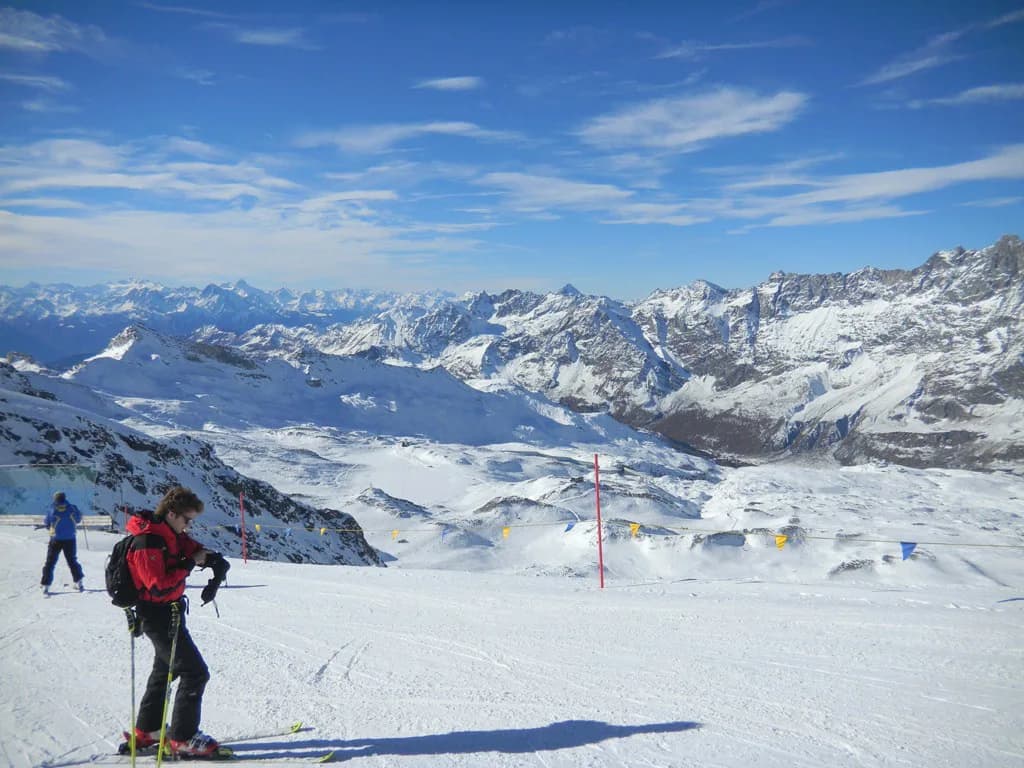
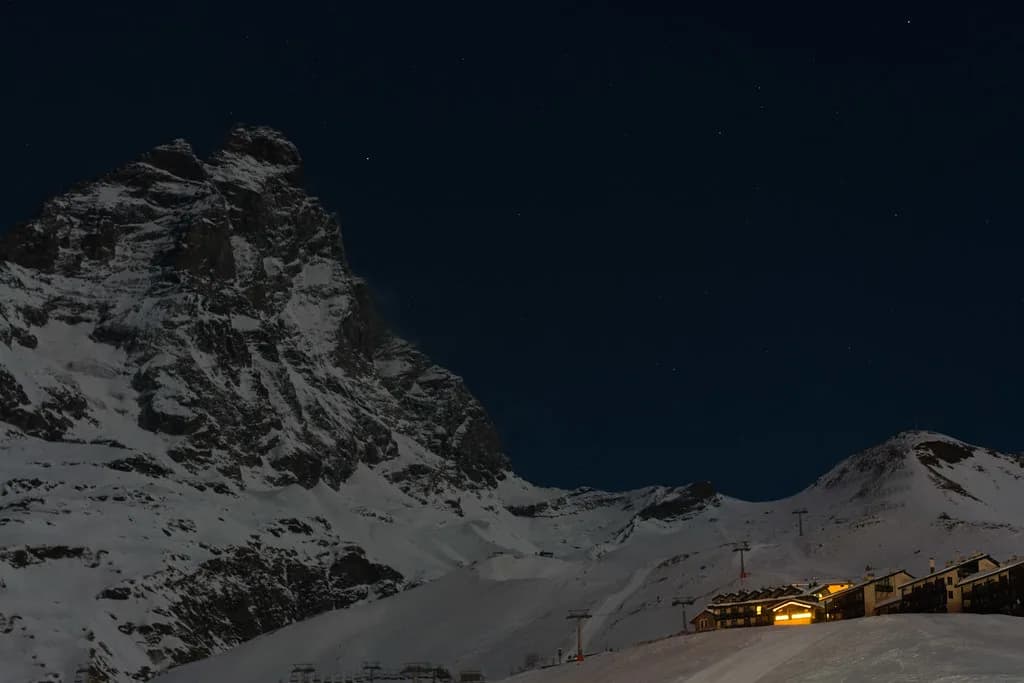
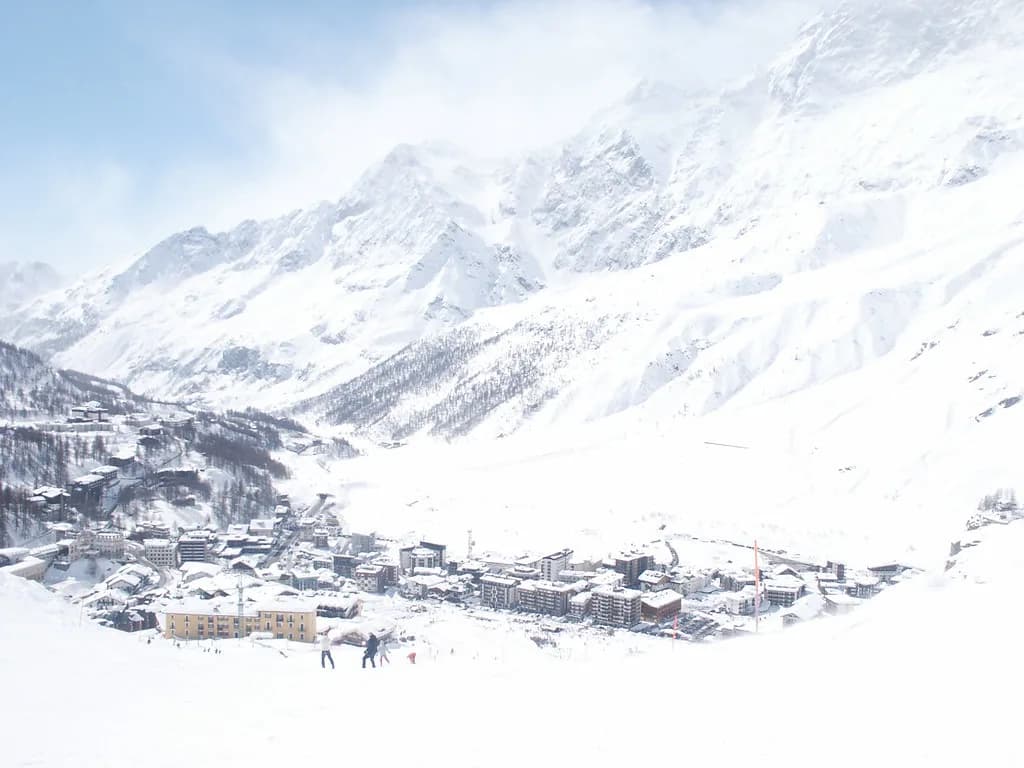
Breuil-Cervinia sits at the end of the Aosta Valley beneath the Matterhorn, on the Italian side of the massif, with the Swiss resort of Zermatt on the other side of the same mountain group. The village is the base; the skiing rises from it towards Plan Maison, the Plateau Rosa area and the border. That geography is the reason the resort can run a long season relative to many Alpine villages, because a large share of the terrain sits high.
Altitude here is planning information, not a snow promise. A high base and high upper stations support a long scheduled season, but they do not guarantee conditions on any particular date, and they do not override wind. Cervino S.p.A. states an intention to open the winter season from 24/10/2026; treat that as a scheduled and conditional start. Cervino Ski Paradise lift status publishes the live picture of what is running.
Resort elevation versus ski elevation: reading the numbers
Published figures for Cervinia do not agree, and you should read them as overlapping measurements rather than one settled range. Sources variously give a resort altitude around 2,050m, a base of roughly 1,524m, and a top station between 3,480m and 3,899m depending on whether the measurement includes the glacier sector reached via the cross-border link. The spread is a difference of definition, not necessarily of fact.
For trip planning, the useful reading is simpler: the village sits around the 2,000m mark, the mid-mountain sectors climb well above it, and the highest terrain is reached by the upper lifts towards the border. If you are choosing accommodation or judging how cold a week might feel, the village figure matters; if you are judging whether late-season snow is plausible, the upper figure matters more. Ski Club elevation data and AlpineAnswers resort statistics illustrate how differently these ranges can be quoted.
The ski area by sector: village, Plan Maison and the upper mountain
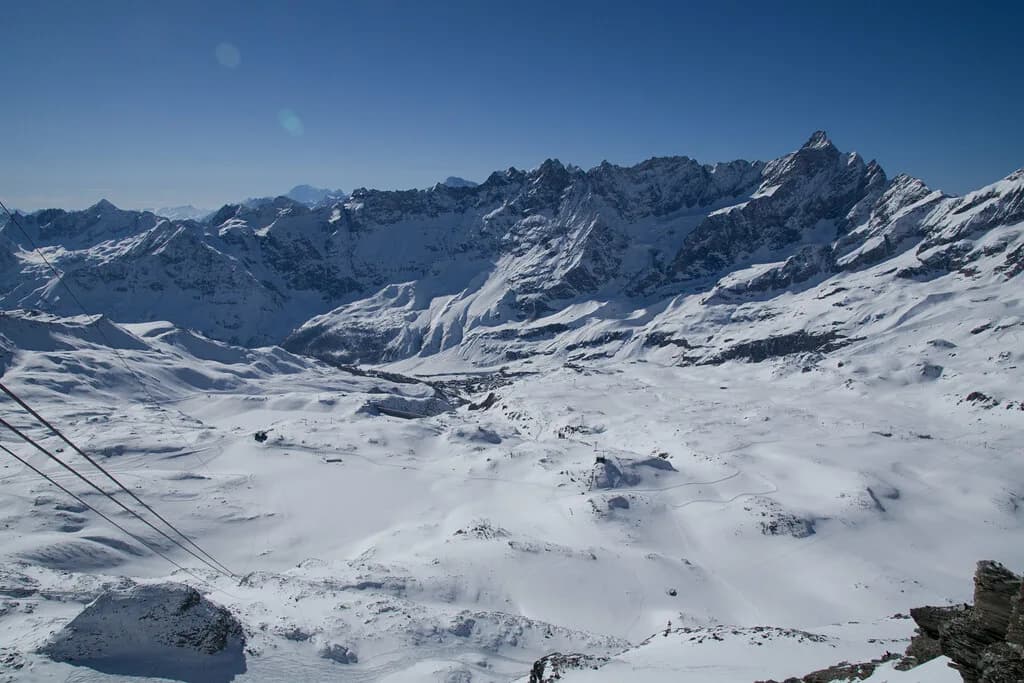
Cervinia is easier to plan if you think of it as several sectors rather than one number. The village sector holds the nursery slopes and the first lifts; the Plan Maison area above it is the broad mid-mountain hub where most progression happens; and the upper terrain towards Plateau Rosa and the border carries the high, open runs and the cross-border connection. Each sector serves a different kind of skier on a different day.
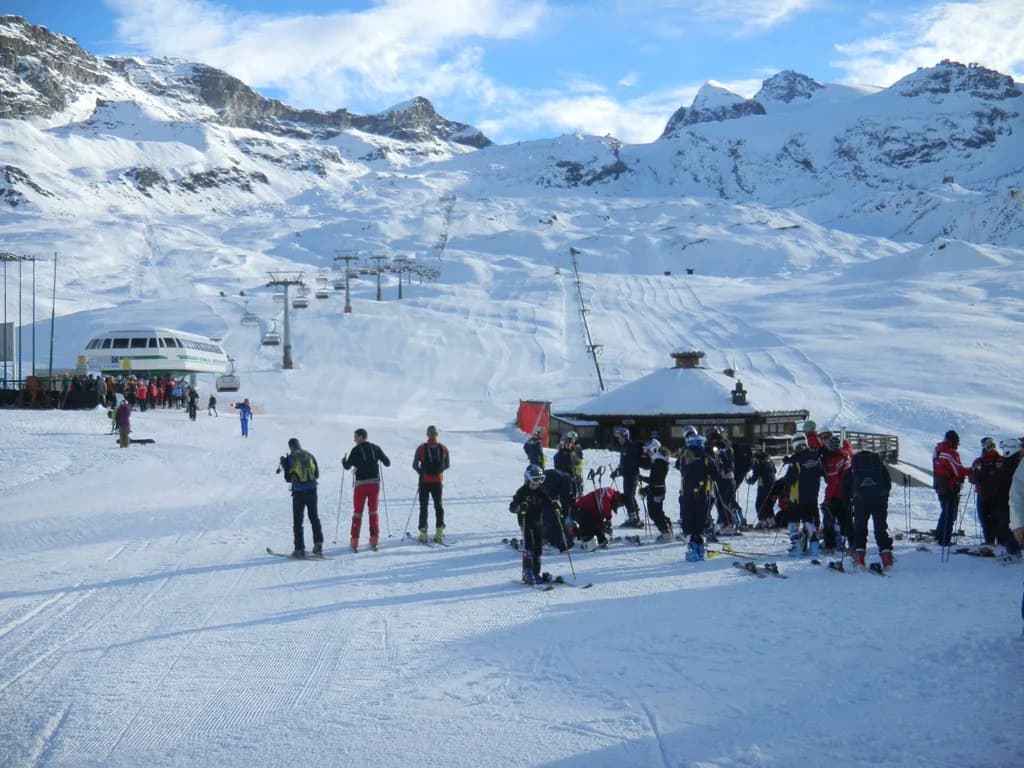
The village slopes are where beginners start and where short sessions work well, because you can return to the resort without committing to a full descent. Plan Maison is the step up: a wide, open area with gentler blues and the space to build confidence across a whole morning. The upper mountain is where the long cruising runs begin, and where weather exposure becomes the deciding factor. Cervino Ski Paradise pistes and lifts lists the individual lifts and runs, which is the most reliable way to see what sits in each sector.
The wider Cervino Ski Paradise circuit: Valtournenche, Chamois and Torgnon
Cervino Ski Paradise is the resort brand that covers more than Breuil-Cervinia alone. Valtournenche sits in the next valley and is connected by piste and lift from the Cervinia side; Chamois and Torgnon are separate linked areas under the same brand, each with its own character and access. The brand name groups them, but they are not a single continuous ski circuit in the way that a two-valley linked area might be.
The practical consequence is that a local pass gives you access across the Italian Cervino Ski Paradise areas, and the run down towards Valtournenche is one of the long descents that defines the resort. Whether Chamois and Torgnon are open on your dates, and whether they are reachable without a bus or car, is an operational question rather than a fixed feature. Cervino Ski Paradise news is where Cervino S.p.A. posts opening updates for these satellite areas.
The pass decision: local versus international upgrade
The single most consequential booking decision in Cervinia is the pass tier. The local pass covers the Italian Cervino Ski Paradise areas, including Valtournenche. The international upgrade adds the cross-border connection to Zermatt, which is the only way to reach the Swiss side and the terrain that stronger skiers tend to want.
How you decide depends on your group and your week. If everyone is cruising the Italian blues and reds, the local pass is sufficient and cheaper. If anyone in the group wants the long cross-border day, or you plan more than one day on the Swiss side, the upgrade starts to justify itself. Ski Club pass information explains the local-versus-international distinction, and current tariffs are published by Cervino S.p.A. before you buy.
How far a local pass stretches: the Aosta Valley question
Some published descriptions of the local pass mention an add-on allowing days at another Aosta Valley resort, and some mention a free child pass under certain conditions. These are pass products with terms attached, not fixed inclusions, and they vary by season. Treat them as terms to confirm with Cervino S.p.A. rather than as settled facts you can rely on when budgeting.
The safest approach is to decide your pass tier first, then ask specifically about any add-ons you think apply to your group. Age brackets, proof-of-age requirements and the number of add-on days are the kind of details that change between seasons. Inghams Cervinia lift pass details is one example of a secondary source describing these products, but Cervino S.p.A. remains the authority.
Beginner provision: the nursery slope and the Plan Maison step-up
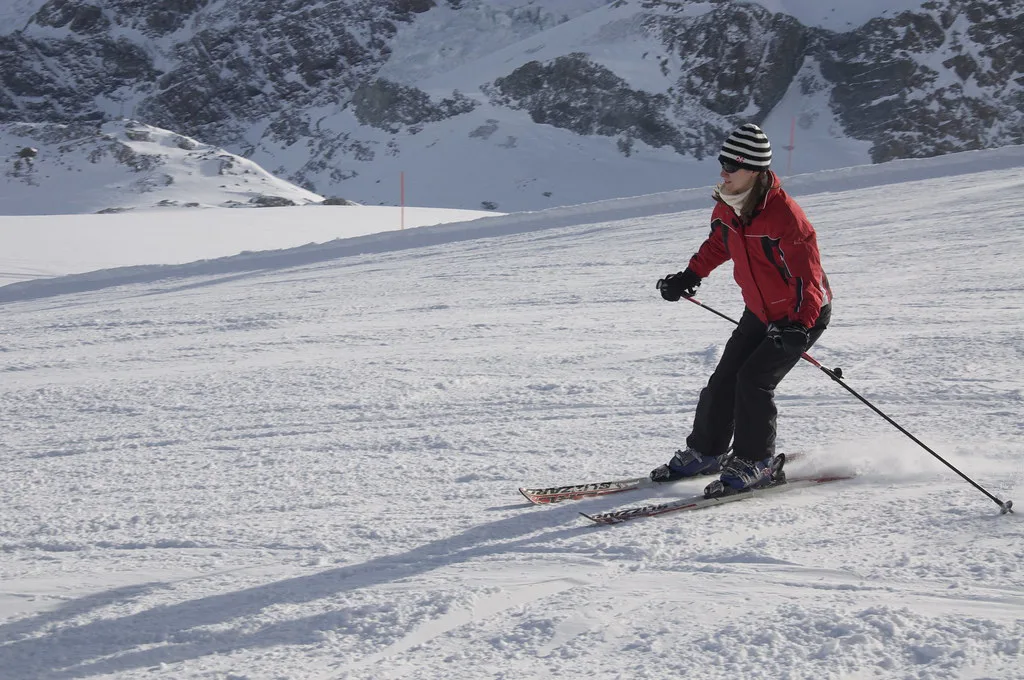
Cervinia's beginner story is a progression across named zones rather than a single claim. It starts on the village nursery slope, which has a magic carpet and a chairlift alongside it, so a complete beginner can learn on gentle ground without committing to a long lift ride. The area is sheltered and sunny, which makes early lessons more comfortable.
From there, the natural step is up to Plan Maison, where the terrain opens out into wide, forgiving pistes. The Cretaz chairlifts serve mellow blues just above the village, and these are usually the first runs a progressing beginner links together. A long blue run back to the village is a realistic goal for a confident first-week skier. Inghams beginner skiing description outlines this path from village slope to Plan Maison, and Inghams can advise on lift and piste status on your dates.
Progression terrain for early intermediates, and where it stops
For early intermediates, Cervinia is unusually generous. The bulk of the Italian terrain sits in the blue and red bands, with wide, rolling pistes dropping from the upper mountain towards the village. The long descent towards Valtournenche is the signature run, and it is a genuine full-morning or full-day objective rather than a quick lap. Stronger intermediates will find plenty of distance to cover before they run out.
Where the area stops being gentle is at the top end. There is comparatively little on-piste steep terrain inside the Italian sector, so skiers who want sustained challenge generally look to the cross-border link rather than to Cervinia itself. That is not a flaw in the resort so much as a reason to be honest about your group's ability before you choose a pass tier. AlpineAnswers Cervinia guide notes the intermediate focus and the additional terrain available via the upgrade.
Group and private tuition: what to check before you book
Ski and snowboard tuition in Cervinia is sold as a bookable product, with group and private options typically available. The published structure you will see from operators describes lessons running across a defined number of days, with prices varying by season and level. What matters for planning is that a group lesson depends on a minimum number of participants being reached; if the numbers are not there, the school may offer an alternative.
Do not assume meeting points, instructor qualifications or school capabilities from a school's name. Those are operational details to confirm directly with the school you book. Useful questions to settle in advance: where and when the group meets, what level the group is pitched at, what happens if the minimum is not met, and whether equipment is needed on day one. Inghams tuition details shows how one operator frames this product, but the school is the authority on its own arrangements.
Equipment hire as a product: questions to settle before you travel
Hire in Cervinia is typically organised by category rather than by brand, with different tiers of ski and snowboard equipment aimed at different ability levels. Broadly, softer skis suit beginners and early intermediates, while stiffer, higher-performance options suit stronger skiers. Snowboard hire is usually available alongside ski hire, with its own categories.
The questions worth asking before you commit are practical ones: whether the shop can hold your preferred level in stock during your week, whether you can swap equipment mid-week if your level changes, and whether boots are included at your chosen tier or priced separately. Do not infer a shop's range or service from its name. Inghams ski equipment section shows how one operator structures hire categories, and current prices should be confirmed at the point of booking.
Wind and upper-lift exposure: planning around closures
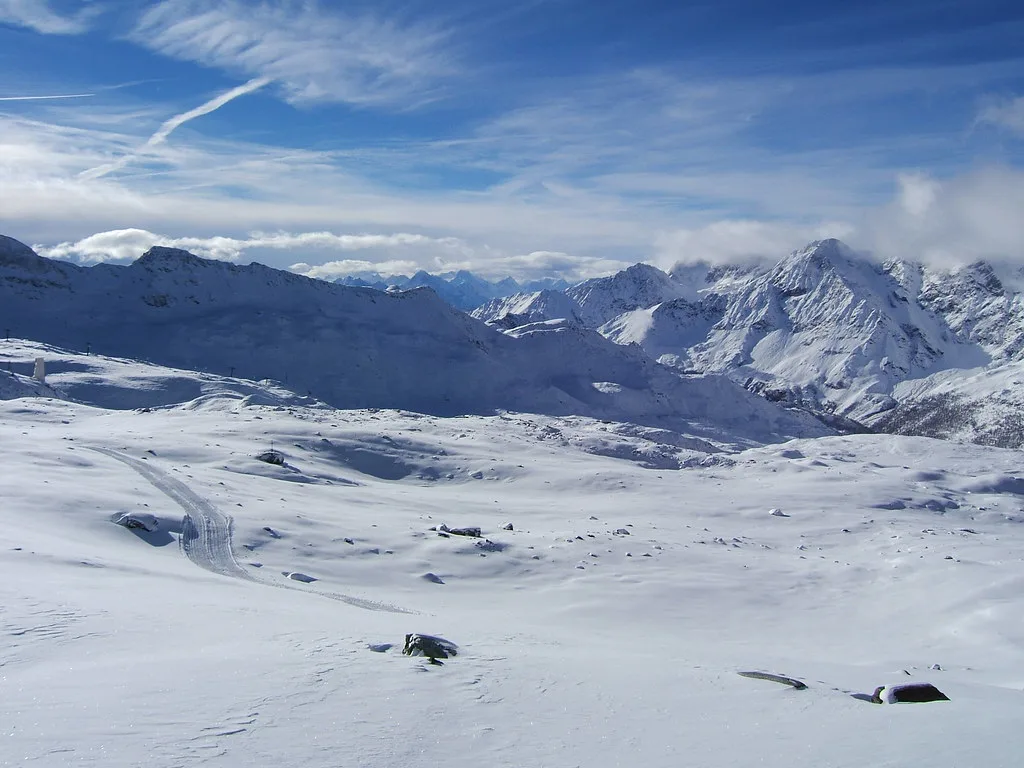
Cervinia's upper mountain is exposed, and wind is a documented operational factor. The lifts that reach the highest terrain, including the cross-border connection, are the ones most likely to be affected when the weather turns. This is a planning constraint rather than a rare exception, and it should shape how you allocate your days.
A sensible approach is to treat the upper mountain as a good-weather asset rather than a guaranteed daily fixture. If a cross-border day is central to your trip, plan it early in the week and keep a fallback plan for the Italian mid-mountain terrain, which is lower and more sheltered. Ski Club resort guide flags wind closures on the upper lifts as one of the resort's known limitations.
Linking across to Zermatt: what the cross-border decision means
The cross-border link to Zermatt is the feature that distinguishes a Cervinia trip from a purely Italian week. The connection runs via the upper terrain towards the border, and the Swiss side offers terrain that the Italian sector does not. The link is a pass-tier decision as much as a geographic one: without the international upgrade, the Swiss side is not accessible.
For a mixed-ability group, the cross-border question can be the hardest to settle. A confident skier may want multiple Zermatt days, while a beginner will not use the upgrade at all. The pragmatic answer is often to buy the upgrade for those who will use it and keep the local pass for those who will not, provided the ticketing system allows individual tiers within a group. Cervino Ski Paradise lift information and Ski Club pass information together set out the two products, and Cervino S.p.A. publishes the current terms.
A practical planning sequence: base, pass, tuition, hire
Build the trip in the order the decisions actually depend on each other. First, decide your resort base and dates, since the pass tier and the tuition booking both follow from how long you are staying and where you are sleeping. Second, choose your pass tier using the honest ability of the weakest and the strongest skier in your group, not an average.
Third, book tuition once you know your dates and your pass tier, and ask the school directly about meeting points, levels and minimum numbers. Fourth, arrange hire after tuition, so you can match equipment to the level your lessons are pitched at. Finally, check the resort's lift and piste status close to departure, and again on arrival, since opening patterns are conditional. Cervino Ski Paradise live status is the page to bookmark for that final check.
Where to go next: spokes that answer the operational questions
This guide has covered the resort as a whole, but several operational questions deserve their own treatment. A dedicated pass page can walk through the tier boundaries in more detail, a map-focused page can help you place the sectors, and a seasonal page can address month-specific differences. If you are comparing Italian resorts, Bormio skiing and Corvara skiing offer useful contrasts, though each has its own terrain character. For a Dolomites alternative built around linked cruising, the Canazei ski guide is a useful comparison.
Plan Your Visit
Cervinia rewards a trip that is planned around its actual strengths: high, sunny, cruising terrain, a genuine beginner-to-intermediate progression, and a long scheduled season. The decisions that shape the week are the pass tier, the honesty of your group about its ability, and the flexibility to work around wind on the upper mountain. Get those right, and the resort delivers exactly what it promises.
Before you book, check current pass tariffs and any add-ons directly with Cervino S.p.A., check the live lift and piste status close to departure, and ask any ski school you are considering about its own meeting arrangements and group levels. Prices and opening patterns change between seasons, so treat last year's information with care.
Explore more Cervinia guides
Frequently Asked Questions
Is Cervinia good for beginner skiers?
Cervinia has a well-defined beginner progression. The village nursery slope has a magic carpet and a chairlift, so complete beginners can learn on gentle ground, and the Plan Maison area above the village offers wide, forgiving pistes for the next step. The Cretaz chairlifts serve mellow blues that progressing skiers can link together. Confirming the current beginner lift and piste status with the operator before you travel is sensible, since openings are conditional.
What is the difference between a local and an international lift pass in Cervinia?
A local pass covers the Italian Cervino Ski Paradise areas, including Valtournenche. An international upgrade adds the cross-border connection to Zermatt on the Swiss side. The local pass is the cheaper option and is sufficient if your group is staying on the Italian terrain. The upgrade is worth considering if you want to ski into Zermatt at least once, or if stronger skiers in your group need the additional terrain. Check current tariffs and inclusions before you travel.
Can you ski from Cervinia to Zermatt and back on one pass?
Yes, provided you hold the international pass that includes the cross-border link. The connection runs via the upper terrain towards the border, and the return journey depends on those upper lifts being open. Wind is a documented factor at altitude, and the cross-border lifts are among those most likely to be affected. Planning your Zermatt day early in the week and keeping a fallback plan for the lower Italian terrain is a sensible approach.
Why do upper lifts in Cervinia close in windy weather?
The upper mountain is exposed, and high winds can make operating the highest lifts unsafe or impractical. This affects the terrain closest to the border, including the cross-border connection, more than the sheltered mid-mountain sectors. It is a normal operational constraint rather than an unusual event. Building flexibility into your itinerary, and checking live lift status before you set out each morning, is the practical way to manage it.
Sources
Useful notes for your next ski trip
Optional updates to our Alpine resort guides.
You might also like
Continue reading
More guides you'll find useful