Is Cervinia Expensive? Real Ski-Trip Costs for 2026/27
Cervinia sits at the cheaper Italian end of the Matterhorn ski area. Here are sourced lift pass, hire and lesson costs, plus where the money quietly goes.
On this page
Cervinia has a reputation problem in both directions. Some skiers arrive expecting bargain-basement Italy and are surprised by lift pass prices pitched at a big international ski area; others assume anything facing the Matterhorn must cost Zermatt money. The truth sits between the two, and it is easier to judge once you split a trip into its actual components: passes, hire, lessons, food, transport and the legal extras Italy requires. This guide prices those components from published 2026/27 figures and flags where the real variation sits.
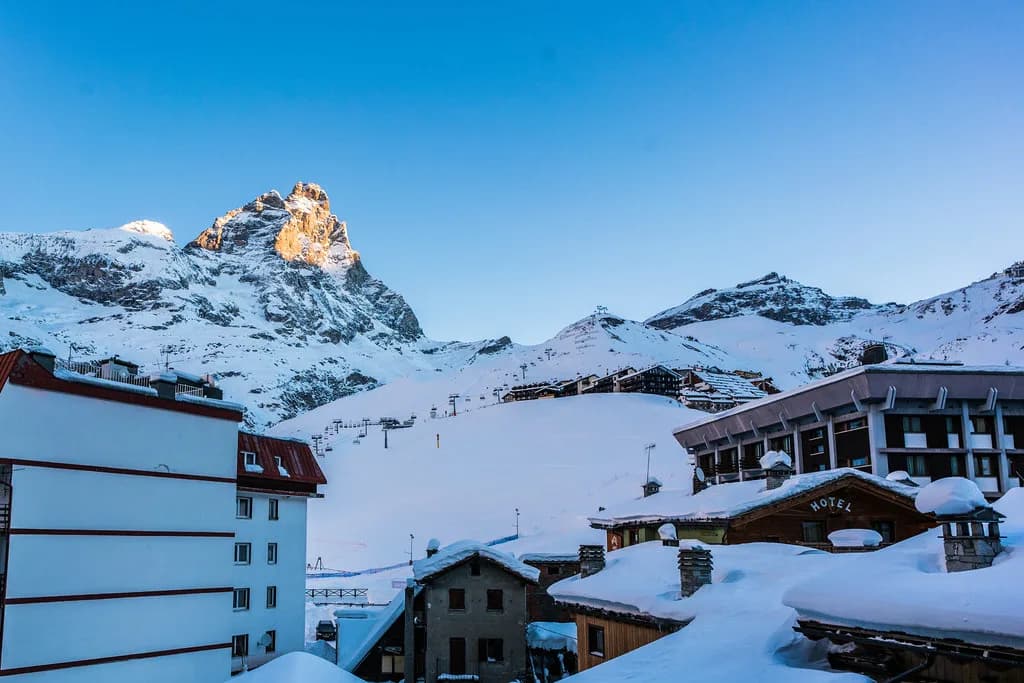
One thing to settle before you compare anything: Cervinia and Zermatt share a ski area but not a currency, a lift company or a price list. Cervinia, or Breuil-Cervinia to give it its full name, sits in the Aosta Valley at 2,050m, with the ski area running from 1,562m up to 3,899m on the Plateau Rosa glacier and around 350km of piste across the linked Italian and Swiss sectors. That scale is what you are paying for, so the useful question is not whether the resort is cheap in the abstract, but which pass and which extras you actually need.
Quick answer: where Cervinia lands on the Alpine price scale
Cervinia is mid-range for Italy and clearly cheaper than Zermatt for the same mountains. It is not a budget resort in the sense of a small French village station: the lift system is large, fast and glacier-linked, and passes are priced accordingly. Where Cervinia does save you money is on the ground: accommodation, lunches and equipment hire are Italian-priced rather than Swiss-priced, and a local pass costs meaningfully less than the full international one. If you want a benchmark for how Italian lift-pass pricing elsewhere compares, our breakdown of livigno ski resort prices is a useful contrast.
The practical upshot is that a Cervinia trip is expensive or reasonable depending on two decisions: whether you buy the local or international pass, and whether you eat on the mountain or down in the village. Get those two right and the resort compares well with most high-altitude Alpine destinations. Get them wrong and you will pay international-pass money for terrain you never ski.
Local pass vs international pass: the decision that sets your budget
Cervino Ski Paradise sells two six-day products: a local pass covering Cervinia and Valtournenche, and an international pass that adds full access to Zermatt on the Swiss side. The local pass also includes two days of skiing at another Aosta Valley resort, which is worth knowing if you fancy a change of valley without buying anything extra. That structure makes the choice fairly clean: if you plan to cross the Theodul Pass into Switzerland even once, the international upgrade is the one to price; if you are happy skiing Italian terrain all week, the local pass is the cheaper answer.
Indicative six-day prices published by the UK operator Inghams for 2026/27 put the international pass at £426 for adults, £341 for youth, £298 for children and £375 for seniors. The local pass comes in at £309 adult, £248 youth, £217 child and £272 senior. Those are operator-published figures in pounds rather than the resort's own euro tariff, so treat them as a sound comparison tool rather than a booking price, and check the live tariff before you commit.
So the international upgrade costs roughly £117 more per adult for six days, a difference calculated from those same operator figures. Whether that is worth it depends entirely on how much you value a day in Zermatt: the Swiss side brings long descents, a different village atmosphere and the cachet of skiing two countries, but it also brings Swiss prices for lunch and drinks the moment you cross. Many skiers buy the local pass and treat Zermatt as a separate day out only if the snow or the mood demands it.
The official Cervino Ski Paradise site is the place to confirm the current euro tariff, because it publishes downloadable winter price lists each season rather than leaving figures fixed on a web page. It has also confirmed the 2026/27 winter season runs from 24 October 2026 to 2 May 2027 on the Cervinia side, with Valtournenche opening on 28 November 2026 and closing on 25 April 2027. Chamois and Torgnon follow a later, more interrupted calendar that is worth reading before you plan a day trip to either.
Why Cervinia is cheaper than Zermatt
The simplest way to frame it: you ski the same glaciers and the same Matterhorn views, but you sleep, eat and hire equipment in Italy. That single fact moves most of a trip's variable costs down a tier, because accommodation, restaurant bills and equipment hire in the Aosta Valley are set by the Italian market rather than the Swiss one. The lift pass itself is the one component where the gap is narrower, since both resorts price their shared terrain as a premium product.
It is worth being precise about what you are not getting. The Italian pass does not give you Zermatt's village, its restaurants or its off-piste terrain, and the Swiss side is a genuinely different ski day rather than a minor add-on. If your reason for choosing Cervinia is a cheap way to ski the Matterhorn's Swiss face, the international upgrade is unavoidable and the saving narrows. If your reason is long, high, snow-sure cruising with Italian food, the local pass does the job.
Ski hire: what the equipment tiers cost for six days
Hire is where over-spending is easiest to avoid, because the tiers are clearly graded by ability. Published Inghams prices for six days run from £76 for blue skis, £107 for red and £140 for black for adults, with skis and boots packages at £116, £166 and £202 respectively. Youth and child rates sit below those figures. Blue suits beginners and early intermediates, red is aimed at confident intermediates who want more stability, and black is high-performance kit for strong skiers.
The sensible rule is to hire one tier above where you currently ski, not two. A skier who can link parallel turns on reds does not need black skis, and the extra stiffness makes a long day on the glacier more tiring than rewarding. Boots matter more than skis for most holiday skiers, so if you are going to spend up, spend it on a properly fitted boot rather than the top ski tier.
Cervinia has plenty of hire shops in the village and around the lift base, and the pedestrian main street is lined with sports shops if you need to buy gloves, goggles or a layer you forgot. Booking hire in advance is worth it in peak weeks, particularly around Christmas and the February half-term period, when the best-fitting boots go first. Equipment can generally be collected the evening before your first ski day, which saves queueing on the morning itself.
Lessons and ski school: what group tuition costs
Group tuition published by Inghams for six days sits in a range of £184 to £237 for both children and adults, with snowboard tuition over five days at £196 to £251. The spread reflects season timing rather than a difference in lesson length: high-season weeks cost more than early or late season, and prices vary through the winter. Lessons typically run Monday to Friday in the mornings, leaving afternoons free for practice.
Cervinia is unusually well set up for learning. There is a nursery slope in the village with a baby lift, a second beginner zone at Plan Maison at 2,550m served by a magic carpet, and the Cretaz chairlifts above the resort give access to gentle blues once you can turn. Blue 5 back down to the village is the classic first-week goal: long, forgiving and with enough variety to build confidence.
Group lessons need a minimum number of participants, and on quiet weeks that number is occasionally not reached. In that case schools generally try to offer private tuition to the value of what you booked, which is a decent outcome but worth knowing before you assume a small group. Book lessons at the same time as your pass so the two schedules line up, and check whether your lesson meeting point is in the village or at Plan Maison before your first morning.
On-mountain spending: the most variable line in the budget
Lunch is the cost that swings most, and it is also the one with the least reliable published figures. Mountain restaurants at 2,500m and above charge a premium for the view and the logistics, while the village has a wider spread from pizza to full Aosta Valley menus. A reasonable planning approach is to budget a sit-down mountain lunch as a treat two or three times in a week and use simpler refuelling stops the rest of the time, which keeps the daily total controllable without turning the holiday into a picnic every day.
Skiers used to Austrian mountain huts often ask how Italy compares. In practice the pattern is familiar: table-service mountain restaurants cost more than self-service, and the resort base is cheaper than the mid-mountain terrace. The difference in Cervinia is the quality of the food at the village end, where Aosta Valley specialities and Italian cooking are a genuine part of the trip rather than fuel. If budget matters, eat the main meal at lunch on the mountain once or twice and keep evenings in the village.
Getting there: Turin is the short transfer
Turin Caselle is the natural airport for Cervinia, with a coach transfer of roughly one hour and forty-five minutes according to Inghams. That short hop is one of the resort's quieter advantages: it means a Saturday flight can have you in the village the same afternoon, and it keeps transfer costs down compared with resorts two or three hours from the nearest airport. Milan Malpensa and Geneva are the other realistic options, both longer by road.
Self-drive is straightforward in summer conditions and more demanding in winter. The A5 motorway runs from Turin to Aosta, and you leave at Châtillon/Saint-Vincent for the 28km climb to Breuil-Cervinia on the regional road. Snow chains or winter tyres are essential on that final stretch, and the climb is slow in heavy weather. The nearest railway station is Châtillon/Saint-Vincent, with bus services from there and from Turin and Milan to the resort.
Once you are in the village, the layout is compact and the lifts are close to the main street, which reduces the need for a car. A local ski bus runs around the centre in peak season, and many hotels are within walking distance of the lift base. If you are staying on the outskirts, check whether your accommodation runs a shuttle before you assume you can walk in boots.
Season timing and altitude: why the long window matters
Cervinia's season is unusually long, and that is part of what you pay for. The resort has confirmed Breuil-Cervinia open from 24 October 2026 to 2 May 2027, with Valtournenche running from 28 November 2026 to 25 April 2027. The top station at 3,899m and the Plateau Rosa glacier keep snow reliable when lower resorts are struggling, which is why autumn and late-spring weeks are genuinely skiable here rather than a gamble.
The trade-off is that early and late season weeks come with a narrower lift network and a shorter daily window. In October and November you are largely skiing the upper mountain and the glacier, and lower runs may not yet be open. In late April and into May the reverse applies: the glacier holds up well but the runs back to the village can be slushy or closed. Mid-season gives you the full 350km and the best value for a pass you have already paid for.
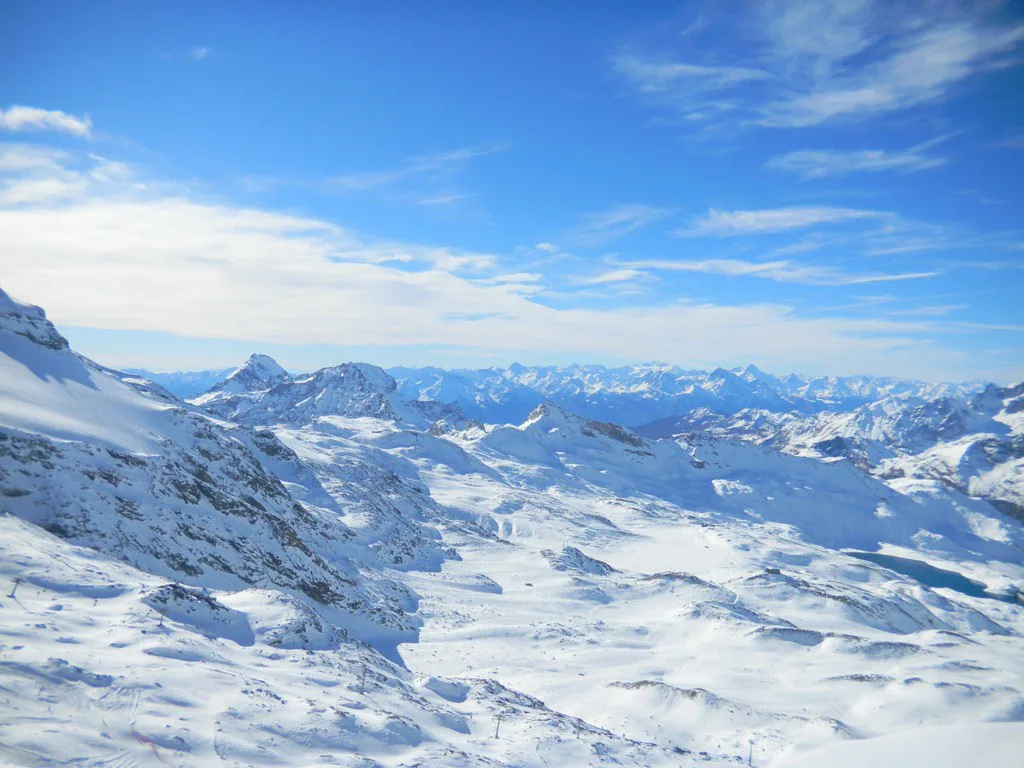
The high-altitude layout also changes how you spend a day. The cable car from the village to Plateau Rosa takes around 17 minutes, so you can be on the glacier shortly after opening and ski a long top-to-bottom descent without repeating the whole climb. Understanding which sectors link to which is the difference between a week of varied skiing and a week on the same three lifts.
Where costs creep up: Italian rules and insurance
Italian law requires third-party liability insurance for anyone skiing, snowboarding, sledging or tobogganing, and local authorities do carry out spot checks. Helmets are also compulsory for all of those activities, with the possibility of a fine or losing your lift pass if you are not wearing one. Both are real line items in an Italian budget: check whether your travel or home insurance already includes ski liability, and budget for helmet hire if you do not own one.
Neither cost is large on its own, but they are easy to overlook when you are comparing pass prices between countries. A skier who has only skied in Austria or France may not have liability cover in place and will need to add it before travelling. The helmet rule also catches out adults who normally ski without one, so check what your hire package includes before you assume a helmet is part of the deal.
How to keep a Cervinia trip affordable
The biggest single saving is choosing the local pass unless you genuinely plan to ski Zermatt. After that, hire one tier below your instinct, book lessons early to get the lower-season rate, and eat your main meal in the village rather than on the mountain every day. None of these choices spoils the trip; they simply put the money where it returns most, which for most skiers is more days on snow rather than a higher equipment grade.
Timing is the other lever. Peak weeks around Christmas, New Year and February half-term carry the highest pass, lesson and accommodation prices, while early December and late March often deliver full snow coverage at lower rates. The long season means late March and early April are viable here in a way they are not at lower resorts, so a spring week can combine good conditions with softer pricing.
One caution on comparison shopping: old reviews and forum posts about Cervinia's value for money date quickly, and a single complaint from years ago is not a reliable guide to current pricing. Use the resort's published tariffs and your operator's current figures instead, and check the official site once before booking rather than relying on second-hand summaries.
Verdict: who finds Cervinia good value
Cervinia is good value for intermediate skiers who want long, high, snow-sure cruising and Italian food, and who are content to ski the Italian side. It is poor value for anyone who buys the international pass and never crosses into Switzerland, or who assumes Italy means bargain prices and is surprised by a pass priced for a 350km international area. The resort rewards planning more than most: the pass choice alone can shift the cost of a week substantially.
Compared with Zermatt, the saving is real but concentrated in accommodation, food and hire rather than in the lift pass itself. Compared with smaller Italian resorts, Cervinia costs more but delivers glacier skiing, a long season and a genuinely large linked area. Whether that trade-off suits you comes down to how many days you will ski and how much of the mountain you intend to use.
Plan Your Visit
Build your budget around the pass first, then hire, then lessons, and treat food and transport as the flexible part. The local versus international decision is the one that matters most, and it is worth being honest with yourself about whether you will actually ski into Zermatt. If you will, buy the international pass and factor in Swiss prices for the day; if you will not, the local pass plus two days at another Aosta Valley resort is the better-value package.
Check the current euro tariff on the official Cervino Ski Paradise site before you book, since the published price lists are updated each season, and confirm the 2026/27 dates for the sectors you plan to ski. Then match your equipment tier and lesson booking to your actual ability rather than the top of the range. Do that and Cervinia sits comfortably at the reasonable end of the Alpine price scale, with the Matterhorn thrown in.
Frequently Asked Questions
Is Cervinia cheaper than Zermatt?
Yes, mainly on the ground rather than on the pass. Accommodation, restaurant bills and equipment hire are Italian-priced, while the lift pass for the shared ski area is a premium product in both resorts. You ski the same glaciers and see the same Matterhorn, but you sleep and eat in Italy.
How much is a Cervinia ski pass for six days?
The resort publishes its own winter tariff each season as a downloadable price list on the official Cervino Ski Paradise site, and that is the figure to budget from. UK operators also publish indicative six-day rates in pounds for both the local and the international product, split by age band. Compare the two before booking, since the international upgrade into Zermatt is the biggest single pass decision.
Do I need the international pass to ski to Zermatt?
Yes. The local pass covers Cervinia and Valtournenche plus two days at another Aosta Valley resort, but crossing into Switzerland requires the international upgrade. Decide before you buy whether a day in Zermatt is part of your week, because the upgrade is the single biggest pass decision.
How much are ski lessons in Cervinia?
Group ski and snowboard tuition is sold in six-day and five-day blocks, with lower rates in quieter weeks and higher rates in peak season. The resort's ski schools and UK operators publish their own current rates, and those are the numbers to compare rather than a single quoted average. Lessons usually run on weekday mornings, leaving afternoons free.
How much does ski hire cost in Cervinia?
Six-day hire is graded by ability, with blue skis cheapest and black performance skis dearest; skis and boots packages cost more than skis alone. Child and youth rates sit below adult prices. Hire one tier above your current level rather than two, and spend up on boots before skis.
Is food expensive on the slopes in Cervinia?
Mountain restaurants charge a premium for altitude and views, while the village offers a wider and cheaper spread. There is no reliable published average for on-mountain lunch, so plan a sit-down mountain meal as an occasional treat and use simpler stops the rest of the week.
What is the cheapest way to get to Cervinia from the UK?
Flying to Turin Caselle gives the shortest transfer, at roughly one hour and forty-five minutes by coach. Milan Malpensa and Geneva are the alternatives but involve longer road journeys. Self-drive via the A5 to Châtillon/Saint-Vincent works well but needs winter tyres or chains for the final climb.
What extra costs should I budget for in Italy?
Third-party liability insurance is a legal requirement for skiing and snowboarding in Italy, and helmets are compulsory for all slope users. Check whether your existing insurance covers ski liability and whether your hire package includes a helmet, since both are easy to overlook when comparing pass prices.
Sources
Useful notes for your next ski trip
Optional updates to our Alpine resort guides.
You might also like
Continue reading
More guides you'll find useful