Bormio Skiing Guide: Terrain, Sectors and Pass Buying
Plan a Bormio ski trip around lift-served sectors reached from the town, verified vertical drop and beginner zones, plus how passes and lessons are bought.
On this page
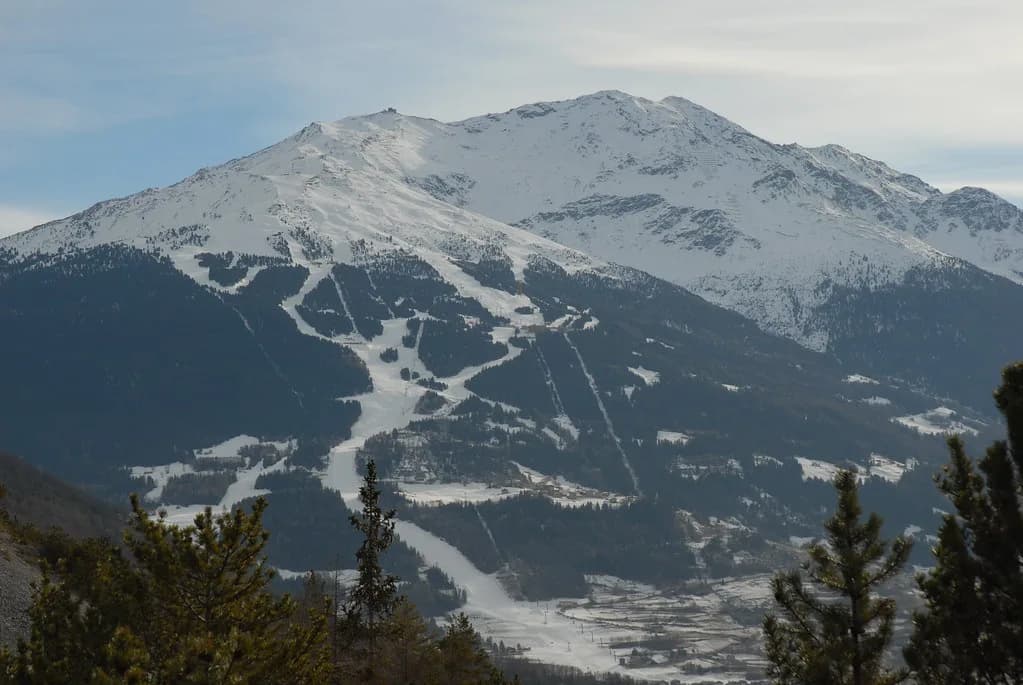
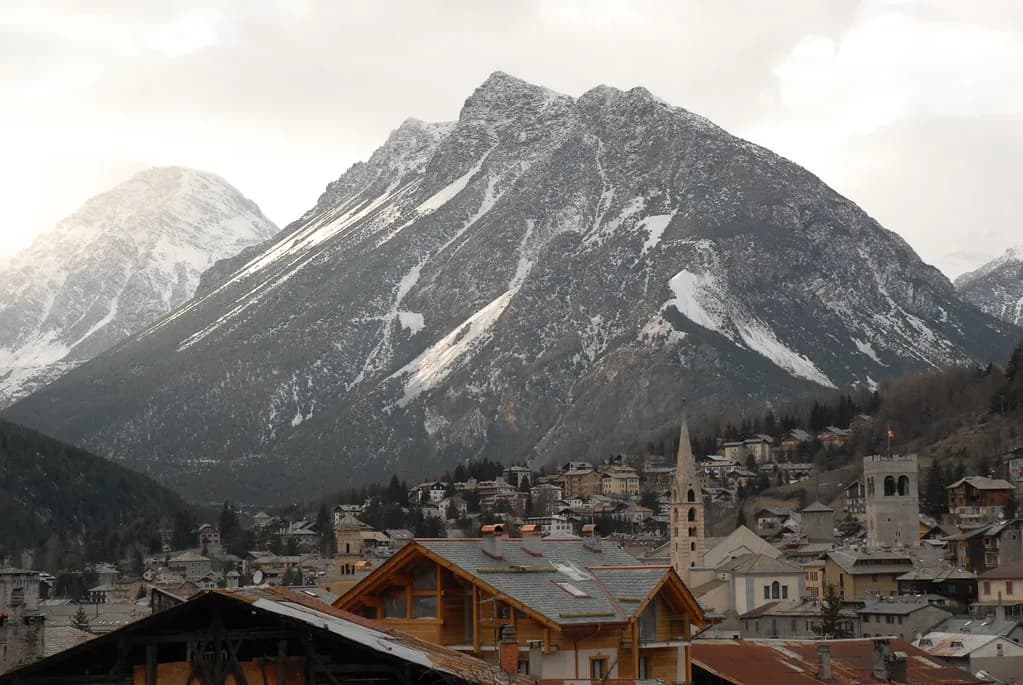
Bormio sits in the Alta Valtellina in Lombardy, and its ski area rises directly out of the town rather than from a purpose-built base station. That single fact shapes the whole trip: you sleep in a working Alpine town, walk or ride to the lift, and ski terrain that climbs from roughly town level to above 3,000 m. The official snow report records measurement points at Bormio (1,200 m), Bormio 2000 (1,945 m) and Bormio 3000 (3,017 m), which is a useful way to picture the vertical band you are covering each day.
Bormio Ski promotes the area around its summit-to-base descent and the Stelvio slope, and states a vertical drop of about 1,817 m on its homepage. Secondary sources round this to roughly 1,800 m, which is the same figure phrased loosely rather than a second measurement. Treat the Bormio Ski number as the one to quote, and treat the wider terrain statistics you will see elsewhere as unconfirmed.
This guide deliberately avoids pass prices, opening dates and product inclusions, because Bormio Ski's published pages do not lay out a complete, current product list. Where a figure exists but comes from a single secondary source, or where sources disagree, the guide says so and points you to the right place to look. That approach keeps the planning decisions useful without dressing up marketing language as fact.
Quick verdict: is Bormio the right Italian resort for your trip?
Bormio suits skiers who want genuine vertical, a town-based base and a mix of piste grades rather than a car-free purpose-built complex. It is a strong fit if you like the idea of finishing a run at village level and walking to a hotel, a restaurant or a spa, and if you are comfortable with the idea that some terrain sits in higher, more exposed bands. The trade-off is that a town base means you organise your own logistics around the village rather than stepping out of a hotel onto a lift.
It is a weaker fit if you want everything on one compact pedestrian plaza, or if you expect a fully interconnected mega-domain with no planning required. Bormio Ski describes the area as reaching over 3,000 m with lifts accessed from town, and a secondary guide describes three sectors accessed directly from the town centre. Read those two descriptions as complementary rather than contradictory: the same mountain, described at different levels of detail.
As a practical decision: choose Bormio if vertical drop and a real town matter more to you than ski-in, ski-out convenience. Choose it also if you want an Italian resort where the wellness side of the trip is part of the town's identity, since the thermal tradition here is long-established and documented by national tourism sources. Avoid committing on the assumption that every lift and link will run on every day of your stay.
Terrain and sectors at a glance
Bormio Ski frames the area around a substantial vertical drop and summit-to-base runs, and its snow-report page gives three measurement elevations that map neatly onto the sectors you will ski. Bormio sits at 1,200 m, the mid-station at 1,945 m, and the top at 3,017 m. Those three numbers are the cleanest way to understand how the terrain is distributed across elevation bands before you look at any piste map.
A secondary guide states that the resort offers 50 km of skiable terrain and 36 runs, with a difficulty split of about 30 per cent blue, 45 per cent red and 25 per cent black. Those figures are useful for calibration but they are single-source, and Bormio Ski's captured pages do not confirm the piste count or the kilometre total. If exact mileage matters to your group, study the bormio ski map rather than trusting any headline number, because the official cartography shows which runs and lifts actually exist.
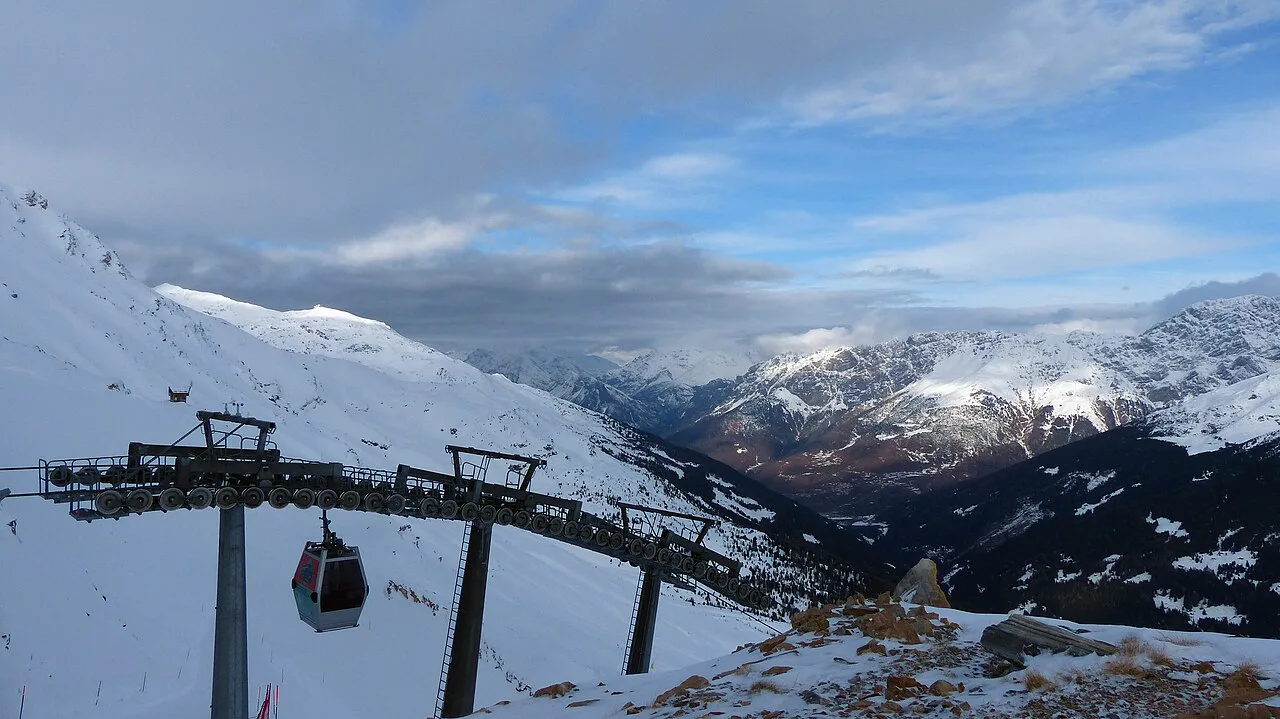
One planning consequence is easy to state: because the top station sits above 3,000 m, you should expect a meaningful temperature and wind difference between the village and the upper runs. That affects what you wear and when you schedule your highest section of the day. It does not tell you what will be open, which is a separate question answered only by Bormio Ski's daily reporting.
Sector by sector: Bormio 2000, Bormio 3000 and the Stelvio sector
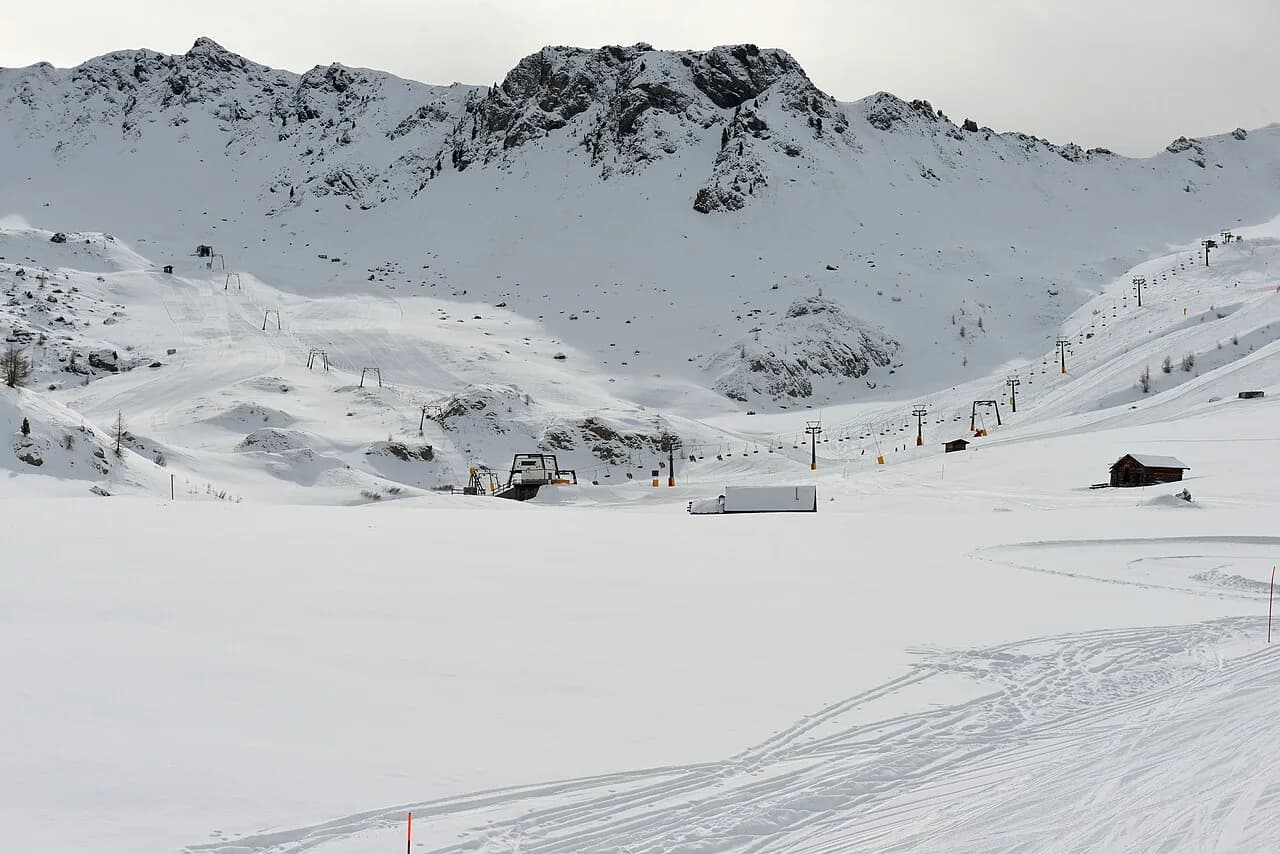
Bormio 2000 is the mid-mountain sector and, for many visitors, the working centre of the day. A secondary guide places two primary nursery slopes there and identifies beginner areas named Genziana and Nevada. It also places freestyle provision in that sector, which tells you the mid-station is where a lot of mixed-ability groups will naturally converge.
Bormio 3000 is the upper sector, and the elevation figure comes from Bormio Ski's own snow-reporting page rather than from a secondary summary. Practically, this is where the summit-to-base runs begin and where the resort's headline vertical claim is realised on snow. Plan your highest-altitude laps for the part of the day when you are freshest and the upper mountain is most likely to be comfortable.
The Stelvio sector takes its name from the slope that Bormio Ski identifies as an Olympic venue, and a secondary guide describes it as a long descent used as a World Cup downhill course. The cleanest planning approach is to treat the sectors as distinct areas within one lift-served mountain reached from town, and to check the current piste map for how they connect on the day you ski.
The Stelvio slope: length, venue status and what it means for your day
The Stelvio slope is the run most people have heard of before they arrive, and it carries two documented credentials: a World Cup downhill history and a role as an Olympic venue. A secondary guide describes it as descending for about 3 km, and Bormio Ski highlights it as the Olympic track. For a recreational skier, that length of continuous descent is a real commitment rather than a quick lap.
A secondary source calls the Stelvio suited to intermediate skiers as well as racers, which is a reasonable starting assumption for a long groomed course but not a guarantee of condition or difficulty on any given day. A race course on a racing day and the same piste as a cruising run are different experiences. Decide whether you want to ski it early in the day, when you have the legs for the full length, or later once you know how the surface is behaving.
The practical point is that venue status raises expectations without guaranteeing access. If the Stelvio is a priority, build flexibility into your itinerary rather than making it the fixed centrepiece of a short trip. One good strategy is to treat it as your first full run of the trip, so a closure or a poor surface does not undo a whole holiday.
Beginner provision: what is documented and what you should verify
Beginner provision here is more specific than the resort's reputation for steep terrain might suggest. A secondary guide identifies two nursery slopes at Bormio 2000 and names the Genziana and Nevada areas as beginner terrain. Those named areas are the documented starting points, and they sit in the mid-mountain sector rather than at village level, which matters for how you plan a first morning.
The family and fun zones add another layer. A national tourism source describes a Funslope at Bormio 2000 and a separate area at Valbella with features designed for children. These are gentle-terrain play areas rather than lessons, and they are not a substitute for instruction if a child has never skied.
Do not read the existence of nursery slopes as a promise that a beginner will progress to the upper mountain in a fixed number of days. Progression depends on the individual, the instruction and the conditions. Plan a first day entirely in the beginner zone, keep the second day flexible, and only then decide whether to move up.
Intermediate and advanced terrain: reading the difficulty split
The quoted difficulty split of roughly 30 per cent blue, 45 per cent red and 25 per cent black is the most useful single statistic for an intermediate skier, because it suggests the largest share of terrain is pitched at confident cruising level. That is a secondary-source figure and should be treated as indicative rather than exact. Even allowing for that, it points to a mountain where red runs dominate the mileage.
For stronger skiers, a secondary guide names the Betulle run as a steep black piste and the Vallone as a mogulled, steeper option. Those two names are worth noting as orientation markers when you read the piste map, not as endorsements. Grooming, mogul formation and surface change through the season, so a piste rated black in one week is not the same proposition as the same piste two months later.
The honest planning approach is to use the split to set expectations for a group, then use the piste map to find where the grade you want actually sits in the lift network. If you are skiing with a mixed group, the mid-mountain sector is the natural meeting point because it holds both beginner and freestyle provision. From there, stronger skiers can head up while others stay lower.
Freestyle and family snow zones as operational features
Bormio Ski lists freestyle and family features as named products, including a Jungle Snowpark and a Funslope, and describes the park as having two lines pitched at different levels. A national tourism source independently mentions a Funslope at Bormio 2000 and a separate children's area at Valbella. Taken together, these are documented features rather than reputation-based claims.
Operationally, snow parks and fun slopes are the features most likely to be reshaped, closed or rebuilt during a season, so they cannot be counted on as fixed amenities. If a park session is the reason for someone's trip, confirm its current status with Bormio Ski shortly before you travel. The same logic applies to family zones: their availability depends on snow and staffing on the day, not just on their existence on a marketing page.
For a group with mixed ambitions, these zones let freestyle skiers and cautious skiers share a sector rather than splitting across the mountain. That is the practical value: it reduces the coordination cost of a mixed-ability day. It does not eliminate the need to check what is open before you set out.
Pass and lift-ticket decisions: what to confirm before you book
Bormio Ski publishes a pay-per-ski product called SnowitPass, which lets you pay for the amount you ski rather than buying a lift pass in advance, and it states that once you reach a spending milestone the product converts into a season pass. That is the resort's own description, and it is the clearest signal that pass choice here is not simply a one-day or six-day decision.
Critically, no pass price, inclusion list, refund term or booking condition can be stated from the material available. Bormio Ski's captured pages do not publish a complete product list, and any figure you see quoted elsewhere may belong to a previous winter. Before you commit, check the Bormio Ski online shop and terms for the season you are travelling, and confirm what each product covers.
A sensible sequence is to decide your likely number of ski days first, then compare SnowitPass, the pay-as-you-ski product that turns into a season pass once you reach the spending milestone, against a conventional pre-purchased Bormio Ski pass, and only then buy. If your group includes people who may ski only a couple of days, the flexible model is easier to justify; if everyone is committed all week, a fixed product may be simpler to administer. Either way, check what is actually included rather than guessing that a pass covers every lift in the valley.
Lessons and hire: booking sequence and the questions that matter
Bormio Ski advertises professional ski and snowboard equipment rental and describes a Rossignol range, which tells you rental is offered on site but not what sizes, models or standards are stocked at a given moment. The same caution applies to ski schools: listing a service does not publish meeting points, group sizes, languages or ability-splitting policies.
Book lessons before you book equipment, because the lesson schedule fixes your daily shape and the meeting point determines where you want to collect gear. Ask the ski school directly where the group meets, how abilities are divided, and what happens if the weather closes a sector. Ask the rental shop whether they can adjust or swap equipment mid-week if something does not fit.
For families, sequence it slightly differently: secure a lesson slot first, then hire for the children, then hire for the adults. That order avoids a common mistake, which is arriving with equipment for everyone and discovering the children are in a different meeting place. Keep a margin in your first morning so nobody is rushing between the rental desk and the lesson start.
How many days the terrain justifies
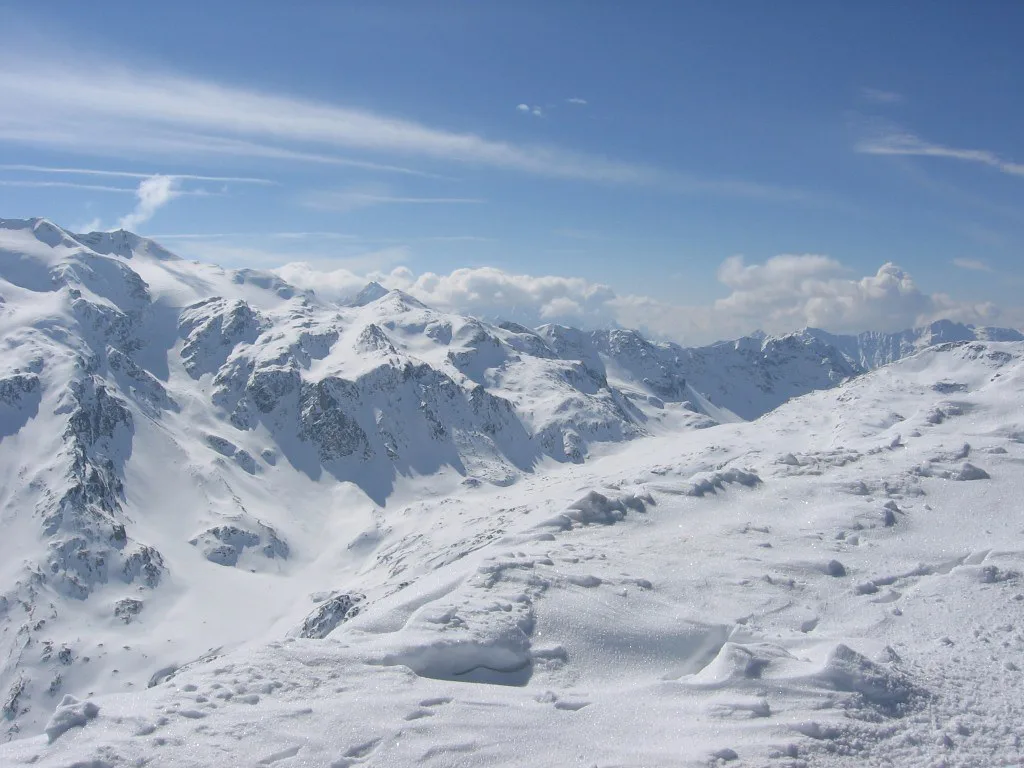
For most recreational skiers, three to four ski days is a reasonable starting point for a first visit, with the first day spent in the sector that matches your level and the later days used to explore the upper mountain. If the Stelvio slope is a priority and you are also a beginner or cautious intermediate, add a buffer day rather than compressing everything. If you are an advanced skier chasing length and vertical, the terrain can absorb more days than a small resort would.
A practical sequence for a week is to ski the mid-mountain sector on day one, the upper mountain on day two once you are acclimatised, then use day three for the long descent, and hold day four flexible for whatever looked best from the lift. That ordering protects the headline run from being spoiled by a slow start. It also means a closure on any single day disrupts one plan rather than the whole trip.
If your dates are fixed by flights or leave, accept that day count is really a choice between depth and coverage. Two days gives you a taste; four days gives you the sectors and the long run without rushing. Beyond that, additional days mostly add repetition and better conditions luck rather than new terrain.
Snow, season and condition limits you should understand
Bormio Ski maintains a snow archive going back more than a decade, with seasonal snowfall totals recorded at three elevations. Those totals vary widely between winters, which is exactly the point: they demonstrate variability, not a reliable expectation. A heavy winter in the record is a historical event, not a forecast for the winter you are booking.
Bormio Ski also notes that published season dates are scheduled and conditional, and its own news items show that wind and other conditions can affect whether the ski area opens as planned. Nothing in the official material promises that every lift, link or piste will run on every day. Plan for the mountain you get, not the mountain in the brochure.
This is not a reason to avoid Bormio; it is a reason to build flexibility into the plan. Keep one day unallocated, check Bormio Ski's daily snow report while you are there, and decide each morning rather than committing your whole week in advance. Historic records are for context only; the current report is the only thing that tells you about today.
Alta Valtellina context: how Bormio relates to neighbouring areas
Bormio sits in the Alta Valtellina, and a secondary guide claims the resort is connected to Santa Caterina and San Colombano. That interconnection is not confirmed in Bormio Ski's captured material, so treat it as unverified and do not plan around a single pass that carries you seamlessly between them. If linking areas matters to your trip, ask Bormio Ski directly.
A national tourism source places Bormio within the Stelvio National Park and notes that trips can extend to nearby towns, which is a useful reminder that the valley offers more than one ski destination. Whether those are separate tickets, separate days or genuinely linked areas is an operational question, and operational questions have to be answered by the lift companies concerned.
If you are comparing Italian resorts for this trip, it is worth understanding what makes Bormio distinct: real vertical, a town base and a long-established spa identity. Other Italian resorts trade those qualities for different ones, and the choice between them is a genuine trade-off rather than a ranking. For a contrast on vertical and linked-domain terrain, the Canazei ski guide covers a Dolomites alternative. Decide which quality you actually want before comparing prices or dates.
Practical planning sequence
Work in this order. First, decide the number of ski days and whether the group is committed all week or likely to ski intermittently, since that determines the pass question before anything else. Second, check Bormio Ski's online shop and terms for the season you are travelling, because no current price or inclusion list can be taken from older material. Third, revisit the pass comparison once you know your dates, since SnowitPass only becomes a season pass at a spending milestone.
Third, book lessons and then equipment, in that order, and ask the school about meeting points and ability grouping. Fourth, pull up the piste map and mark which sectors you want for which days, with the upper mountain and the long descent given early slots. Fifth, hold one day unallocated so wind or conditions cannot ruin the trip.
Finally, accept that season dates and lift openings are scheduled and conditional. Confirm what is running shortly before departure, and treat historic snowfall records as background rather than expectation. Plan the decisions you control, and check the ones you do not.
Explore more Bormio guides
Frequently Asked Questions
Is Bormio good for beginners?
Yes, with caveats. A secondary guide documents two nursery slopes at Bormio 2000 plus beginner areas named Genziana and Nevada, and a national tourism source describes family and fun zones at Bormio 2000 and Valbella. What is not documented is how quickly a beginner will progress beyond those zones. Plan the first day entirely in the beginner area and keep the second day flexible.
How much skiable terrain does Bormio have?
A secondary guide states 50 km of skiable terrain and 36 runs, with a split of roughly 30 per cent blue, 45 per cent red and 25 per cent black. The operator's captured pages do not confirm the kilometre total or the piste count, so treat these as single-source figures rather than official numbers. If exact mileage matters to your group, check the official piste map.
What is the vertical drop at Bormio?
The operator states a drop of about 1,817 m on its homepage, while secondary sources round this to roughly 1,800 m. Those describe the same mountain rather than two different measurements. The operator's snow report also lists measurement elevations at Bormio (1,200 m), Bormio 2000 (1,945 m) and Bormio 3000 (3,017 m), which is a useful way to picture the vertical band.
Which sectors make up the Bormio ski area?
A secondary guide divides the area into Bormio 2000, Bormio 3000 and the Stelvio sector, all accessed from the town centre. The operator's snow report gives matching elevation bands of 1,200 m, 1,945 m and 3,017 m. Treat these as the same mountain described from two angles, and use the current piste map to see how they connect on the day you ski.
How do you buy a Bormio ski pass?
The operator publishes a pay-per-ski product called SnowitPass, which charges for the amount you ski rather than requiring an advance pass purchase, and converts to a season pass once a spending milestone is reached. No price, inclusion list or refund term is published in the material available, so check the operator's own shop and terms for the season you are travelling.
Is the Stelvio slope suitable for intermediate skiers?
A secondary guide describes the Stelvio as suited to intermediate skiers as well as racers, and puts its length at about 3 km. That is a reasonable starting expectation for a long groomed course, not a guarantee of difficulty or surface on any given day. A race course on a racing day and the same piste as a cruising run are different prospects, so check conditions before committing to it.
Is Bormio connected to Santa Caterina by lift?
A secondary guide claims a lift connection to Santa Caterina and San Colombano, but the operator's captured material does not confirm any interconnection. Because that claim is unverified, do not plan around a single pass carrying you between the areas. If linking them matters to your trip, ask the operator directly.
How many days do you need in Bormio?
Three to four ski days is a sensible starting point for a first visit, with the first day in the sector matching your level and later days used for the upper mountain and the long descent. Advanced skiers chasing length and vertical can absorb more days than a small resort would justify. Beyond four days, extra time mostly adds repetition and better conditions luck rather than new terrain.
Sources
Useful notes for your next ski trip
Optional updates to our Alpine resort guides.
You might also like
Continue reading
More guides you'll find useful