Val di Fassa Ski Pass: Choosing and Buying Your Lift Ticket
Choose the right Val di Fassa ski pass: local valley coverage versus Dolomiti Superski, Sella Ronda needs, beginner tickets and where to buy and collect.
On this page
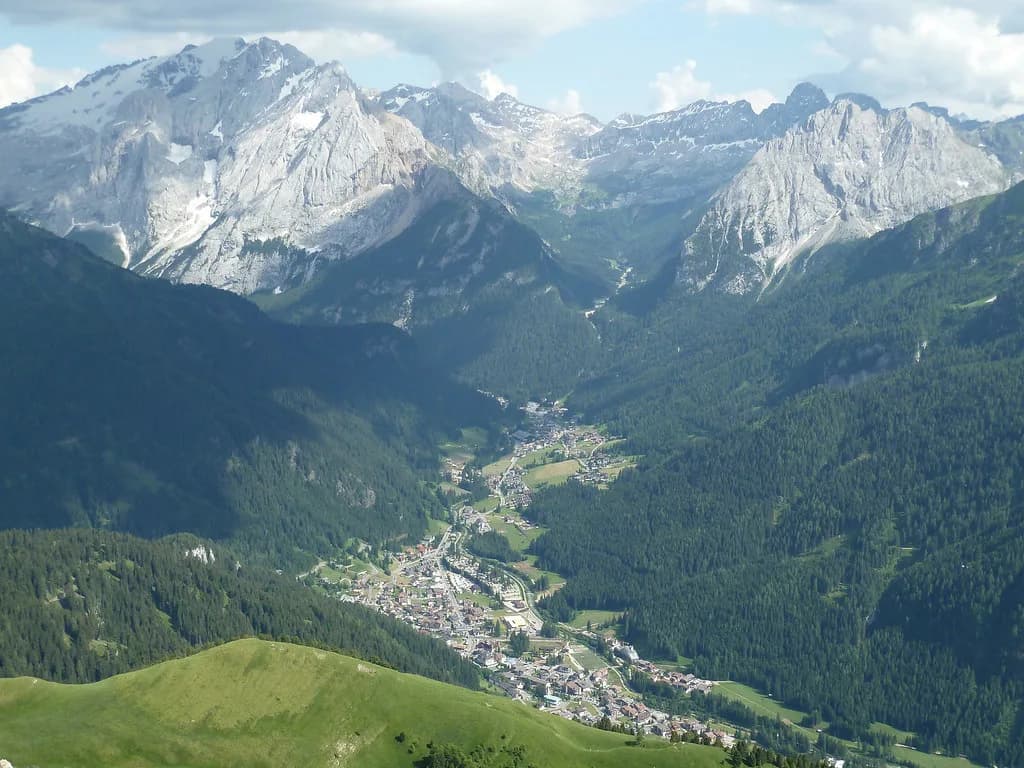
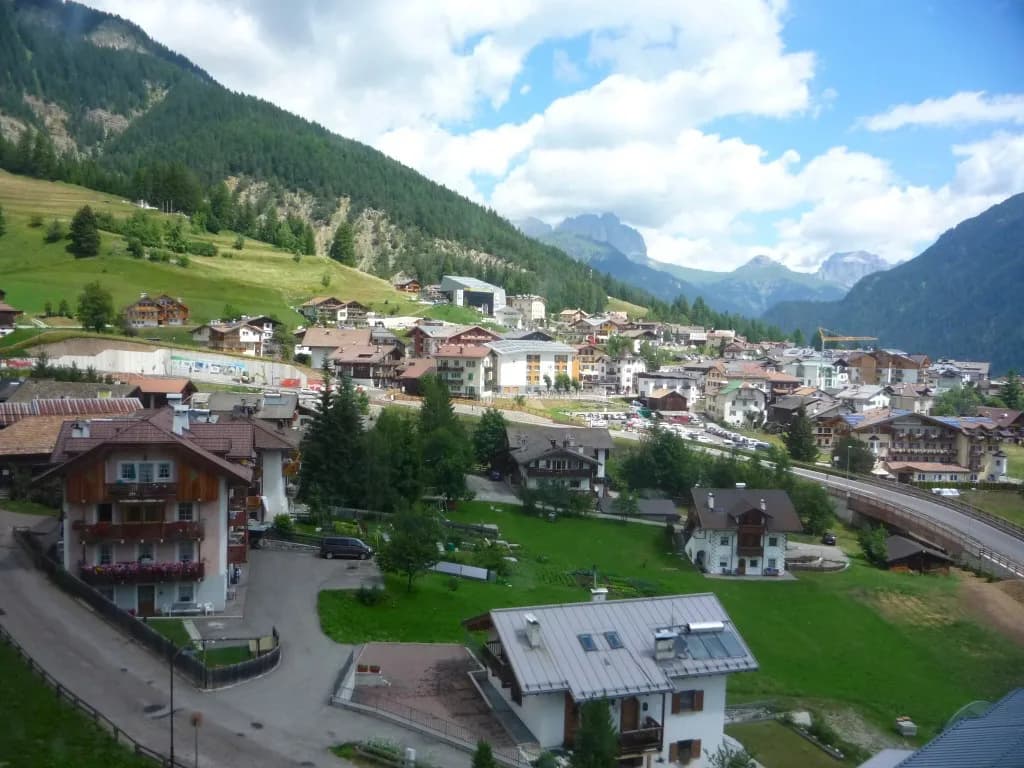
Val di Fassa spreads along a single valley floor from Moena in the west to Canazei in the east, with ski sectors stacked on both sides of the road. A lift pass here is less about one mountain and more about how much of that network you want to reach, so the coverage question comes before the price question.
Get the coverage right and the rest of the buying process falls into place: duration, chip card, online purchase and collection point. Get it wrong and you either pay for slopes you never touch or discover mid-week that the circuit you planned needs a different ticket entirely.
What the Val di Fassa ski pass covers
The valley's lifts are grouped into distinct sectors: Belvedere–Col Rodella above Canazei and Campitello, Ciampac–Buffaure above Alba and Pozza, Catinaccio above Vigo, Fedaia–Marmolada at the eastern end, and the western sectors around Alpe Lusia and San Pellegrino reached from Moena. A Val di Fassa pass is designed for skiing within this local grouping rather than the whole Dolomites network.
The valley sits at about 1,320 m, according to the Maison Sport resort guide, with the top lift around 2,625 m, which tells you the vertical spread is substantial even before you cross into neighbouring areas.
The layout matters for pass choice because the sectors are not all connected by lift. Some links require a bus or a drive along the valley, so a local pass buys you access, not necessarily seamless skiing from your door. Reading the val di fassa ski map before you buy shows which sectors link directly and which need a transfer.
Val di Fassa-only pass versus Dolomiti Superski
Dolomiti Superski is an association of twelve ski areas sharing one ticket, covering roughly 1,200 km of pistes according to Val Gardena's ski pass page. Val di Fassa is one of those twelve areas, which means a Superski ticket covers everything the local pass covers plus the neighbouring regions.
The decision rule is trip length and ambition. If you are skiing three or four days and want to explore the valley's own sectors properly, the local pass is the sensible buy. If you are staying a week or more and want variety, a day on the Sella Ronda, or the option of skiing Alta Badia or Arabba, the Superski upgrade pays for itself in flexibility.
Canazei is the natural base for anyone planning to range widely, since it sits closest to the Sella Ronda access points and the Fedaia–Marmolada sector. A Canazei ski pass tailored to that base gives more detail on coverage and duration choices for the eastern end of the valley.
The three pass tiers in practice
In practice you are choosing between three products: a beginner or restricted ticket valid on a limited set of lifts, the Val di Fassa local pass, and the full Dolomiti Superski pass. The beginner tier is not a scaled-down day ticket you buy by accident; it is a deliberate purchase for people staying on nursery slopes and should be matched to the zone where you will actually ski.
The local pass is the default for most valley skiers. The Superski pass is the one to buy if your plans include the Sella Ronda or any neighbouring area, and it is worth deciding this before you travel rather than upgrading mid-week. Skiing here rewards a plan: the val di fassa skiing guide covers how the sectors fit together across a week.
Sella Ronda days: what you need in your pocket
The Sella Ronda is a circular route around the Sella massif that crosses several ski areas, and Val Gardena's pass page confirms plainly that completing it requires the Dolomiti Superski ticket, not a single-area pass.
From Val di Fassa the circuit is usually joined at Col Rodella above Campitello or from the Belvedere side, which is why Campitello di Fassa is a practical base for a Sella Ronda day. Plan the loop as a full day rather than a morning outing, and check lift closing times on the day you go.
If you are building a holiday around the circuit, reading up on the Corvara ski pass clarifies the Alta Badia side of the loop and how the same Superski ticket works in the neighbouring valley.
Beginner zones and where a restricted ticket makes sense
The resort guide identifies the easy slopes at Fraine–Pera di Fassa as the beginner-friendly zone, with the Belvedere and Col Rodella areas better suited to intermediates working through blue and red runs.
A restricted beginner ticket makes sense when your day will be spent on one nursery area without riding the main valley lifts. Pozza's Buffaure and Ciampac sectors offer gentler terrain above the village, and Vigo's Ciampedìe side is another quieter option for early progress. If you are likely to move between two or three of these zones in a day, the local pass quickly becomes the better value.
Snowboarders face the same tiering decision, but with an extra consideration: some linking runs and drag lifts suit boards less well than skis. The val di fassa snowboarding guide covers which sectors flow best for a single plank and where a restricted ticket is genuinely enough.
Multi-day and flexible products
Dolomiti Superski sells flexible formats alongside consecutive-day passes: a 5-of-6 flexipass, a 10-of-14 option and Superski Family, which requires at least 10 skiing days per family member. These are described on the Val Gardena pass page and apply to the network as a whole rather than to Val di Fassa alone.
Flexible passes suit skiers who want a rest day or a bad-weather buffer without losing a paid day. Consecutive passes usually cost less per day, so the trade-off is simple: pay a premium for flexibility, or accept that a lost day is a lost day. If your group includes non-skiers or young children, build the rest day into the plan rather than buying flexibility you may not use.
Value cards, loaded with a number of lift units and deducted as you ride, are another option for occasional skiers. They are not a substitute for a multi-day pass if you ski every day, but for a mixed group where one person skis half-days, they avoid paying for unused time.
Prices: how day rates are banded by season
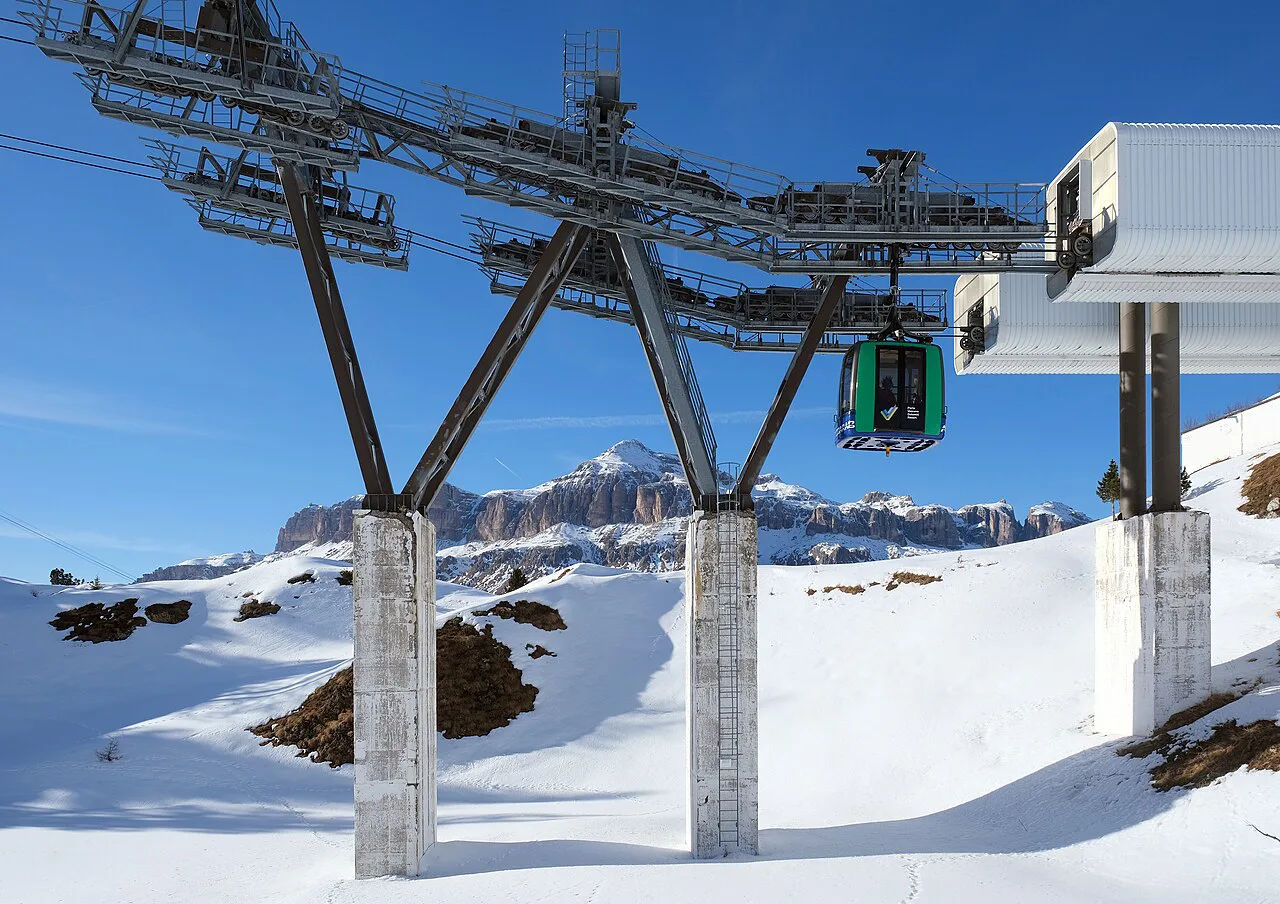
Dolomiti Superski day rates are banded by season rather than fixed. Val Gardena's pass page quotes an adult Superski day ticket at 90 euros in high season and 80 euros in low season for the 2026/27 winter, citing those as network-wide figures.
Treat that as an indicator, not a Val di Fassa price. The official Val di Fassa skipass page publishes the valley's own tariff, and that is the number to check before you budget.
What drives the range is straightforward: peak weeks and holiday periods cost more than quiet January or late-season dates, and multi-day tickets cost less per day than single days. If your dates are flexible, shifting a week away from the busiest period is the single biggest saving available on lift passes.
Discounts and family pricing: what to verify
Dolomiti Superski publishes a discount structure for children, juniors and seniors, and Val Gardena's page lists the age bands and family rules for the network, including a free child pass for one child when a parent buys. Those terms are network-wide and worth reading before you assume a discount applies.
The practical catch is collection: discounted passes often require in-person verification at a staffed ticket office, which means you cannot always buy the cheapest ticket entirely online. Bring ID and proof of age for anyone claiming a child, junior or senior rate, and allow extra time on your first morning.
Where to buy: online, ticket boxes and hotel collection
Val Gardena's pass page describes three buying routes that apply across the network: online purchase with a code collected at a ticket box, reloading an existing My Dolomiti Card chip card, or buying at a staffed office or major lift. Hotels increasingly offer a ski pass service that collects the ticket for you.
In Val di Fassa, offices and ticket machines sit at the main valley stations along the road between Canazei and Moena. Buying online before you travel saves queuing on arrival, but you still need to collect a physical pass unless you already hold a chip card. Ask your accommodation whether they offer collection, since this is the smoothest option for a first morning.
If you need to combine pass collection with equipment fitting, sort hire before your first ski day. The Val di Fassa ski hire guide covers where to rent and what to bring for fitting.
My Dolomiti Card and reusing a chip card
The My Dolomiti Card is a rechargeable chip card on which you load passes purchased online or on site. Registration in the MyDolomiti area is free, and the card can be reused season after season, which makes the second visit faster than the first.
One quirk: the card has to be personalised with a photo in person the first time, so factor in a visit to a ticket office on arrival even if you bought online. After that, loading a pass online and heading straight to the lift gate is the fastest routine available.
Ski schools and hire: what to sort first
Book ski school before you buy a multi-day pass, because lesson timings determine how much of the day you actually ski. A morning lesson plus an afternoon of free skiing uses a full day pass well; a two-hour lesson followed by a long lunch does not. Group lessons for beginners often start in a specific nursery zone, which should influence your ticket tier.
Equipment hire follows the same logic: fitting eats into your first morning, so arrange it for the afternoon or evening before your first ski day. If you are booking lessons, ask the school which lift area they meet at, then buy a pass that covers it rather than the widest one available.
Getting to Val di Fassa and moving between villages
The resort guide lists Innsbruck, Venice Marco Polo and Treviso as the nearest airports, with Bolzano the closest railway station served by regular buses to the valley. Those are the practical gateways; compare transfer options on cost and arrival time rather than assuming one airport is best for every trip.
Inside the valley, the villages run in a line along the main road, and local buses connect them. If your accommodation is in Moena but you plan to ski the Sella Ronda side, budget for daily travel time or choose a base further east. The Campitello-Mazzin-Col Rodella sector is the most convenient starting point for the circuit.
Practical pass-day tactics
Start your day at the sector closest to your accommodation rather than driving to the most famous lift. The valley's sectors are large enough that a full day in one area is a reasonable plan, and spreading yourself across three sectors means more time on buses and less time skiing.
Lift queues build fastest at the main valley stations in peak weeks, so arriving for opening is worth the early start. The ski map shows which lifts connect and which do not, so check it the night before rather than at the ticket gate. If you are doing the Sella Ronda, start early enough to complete the circuit before the last lifts close.
Common mistakes with Val di Fassa lift passes
The most expensive mistake is buying a local pass and then discovering you want the Sella Ronda or a day in a neighbouring area. Decide coverage before you buy, because upgrading mid-week costs more than buying the right ticket at the start. The second mistake is over-buying: a beginner who spends the week on nursery slopes does not need a Superski pass.
The third is timing. Buying online is only faster if you have a chip card or know where to collect; otherwise you queue anyway. And the fourth is assuming a quoted day rate is fixed: prices vary by season band, so check the official tariff for your dates rather than relying on a figure quoted for a different week.
Plan Your Visit
Choose coverage first: local pass for a valley-focused week, Superski if the Sella Ronda or neighbouring areas are part of the plan, and a beginner ticket only if you will stay in one nursery zone. Then match duration to your actual skiing days, and buy through the route that suits your arrival: online with a chip card, collection at a ticket box, or hotel service.
Check the official Val di Fassa skipass page for current prices and season bands before you budget, and confirm discount terms at the ticket office if anyone in your group qualifies. With the ticket sorted, the rest of the trip is about choosing the right sector for the day and starting early enough to enjoy it.
Frequently Asked Questions
Is the Val di Fassa ski pass the same as Dolomiti Superski?
No. The local Val di Fassa pass covers the valley's own ski sectors, while Dolomiti Superski is a network ticket covering twelve ski areas including Val di Fassa. If you want to ski the Sella Ronda or neighbouring areas, you need the Superski ticket.
Do I need a Dolomiti Superski pass to ski the Sella Ronda?
Yes. The Sella Ronda circuit crosses several ski areas, so a single-area pass is not enough. Val Gardena's pass page states plainly that the Superski ticket is required to complete the loop.
Can I buy a Val di Fassa ski pass online?
Yes, e-passes can be bought online in advance. You then either collect a physical pass at a ticket box using a code, or load it onto an existing My Dolomiti chip card. Some hotels also collect passes on guests' behalf.
What is the cheapest lift pass for beginners in Val di Fassa?
A restricted beginner ticket valid on a limited set of lifts is the cheapest option, and it makes sense if you will stay in one nursery area such as Fraine-Pera di Fassa or the gentler slopes at Buffaure and Ciampedìe. If you plan to move between zones, the local pass becomes better value.
Are there family or child discounts on Val di Fassa lift passes?
Dolomiti Superski publishes child, junior and senior discount bands, including a free child pass for one child when a parent buys. These terms are network-wide and often require in-person verification with ID at a staffed ticket office, so bring proof of age.
What is the closest airport to Val di Fassa?
Innsbruck, Venice Marco Polo and Treviso are the airports listed by the Maison Sport resort guide, with Bolzano the nearest railway station served by buses to the valley. Compare transfer options on cost and arrival time; check current details before booking.
Sources
Useful notes for your next ski trip
Optional updates to our Alpine resort guides.
You might also like
Continue reading
More guides you'll find useful