
Val di Fassa Snowboarding: Sectors, Lift Access and Lessons
Plan a snowboard trip to Val di Fassa: how the sectors are laid out, how the Sellaronda links them, where snowboard lessons run and what to confirm before booking.
On this page
Val di Fassa is not one ski area but a collection of sectors strung along a valley in the Italian Dolomites, and that layout shapes every snowboarding decision you make. The Belvedere-Col Rodella sector above Canazei and Campitello is the largest local piece and the one that connects into the Sellaronda circuit, while the Ciampac-Buffaure, Aloch, Ciampedie, Alpe Lusia, Carezza and San Pellegrino-Falcade areas sit elsewhere and require different access. Choosing where to sleep matters more here than in a resort with a single lift base.
The second decision is what kind of riding you actually want. The valley's documented piste counts lean heavily blue and red, with comparatively few black runs, so it suits riders who enjoy long groomed descents and lift-linked mileage rather than steep technical terrain. A complete overview of the valley's ski offering sits in the Val di Fassa skiing pillar, which is the natural starting point before you drill into individual sectors.
Base Villages and Their Lift Access
Canazei and its outlying hamlets of Alba and Penia give you the Belvedere-Col Rodella lifts on one side and the Ciampac-Buffaure sector on the other, which makes them the most flexible snowboarding base in the valley. Campitello di Fassa sits directly beneath the Campitello-Mazzin-Col Rodella access, a short ride from the same terrain. The Trentino snow bulletin records these two sectors separately, which is a useful reminder that they are distinct operations rather than one continuous lift network.
Pozza di Fassa, Vigo di Fassa and Pera sit lower down the valley and serve the Aloch-Buffaure and Ciampedie sectors, with Vigo-Pera-Ciampedie documented at roughly fourteen kilometres of piste and a blue-dominant split. Moena is the access point for Alpe Lusia, and the two pass areas at Costalunga-Carezza and San Pellegrino-Falcade sit at the valley's edges. None of these satellite sectors is large, but each has enough terrain for at least half a day, and moving between them by road or shuttle is part of the planning.
Terrain by Sector for Riders
The bulletin's own sector figures show where the riding sits. Canazei-Belvedere lists twenty-three kilometres of piste across eleven lifts, divided into five blue, sixteen red and two black runs. Campitello-Mazzin-Col Rodella lists ten kilometres with one blue and nine red. Those numbers describe a valley weighted towards intermediate cruising, and the broader picture across the resort is reported at roughly twenty-two per cent beginner, sixty-eight per cent intermediate and ten per cent advanced terrain. Snowboarders who want long, consistent groomed runs will find plenty; those chasing steep gradient will not.
Passo San Pellegrino-Falcade is the largest single sector in the bulletin at around sixty-two kilometres with twenty-four blue, thirty-two red and six black runs, and Alpe Lusia above Moena adds roughly twenty-six kilometres split almost evenly between blue and red. Alba-Ciampac and Pozza-Aloch-Buffaure are smaller, more red-focused pieces that work well as half-day options. Because these sectors are physically separate, a snowboard day is usually built around one or two of them rather than a single continuous circuit.
The Sellaronda Link and Pass Boundaries
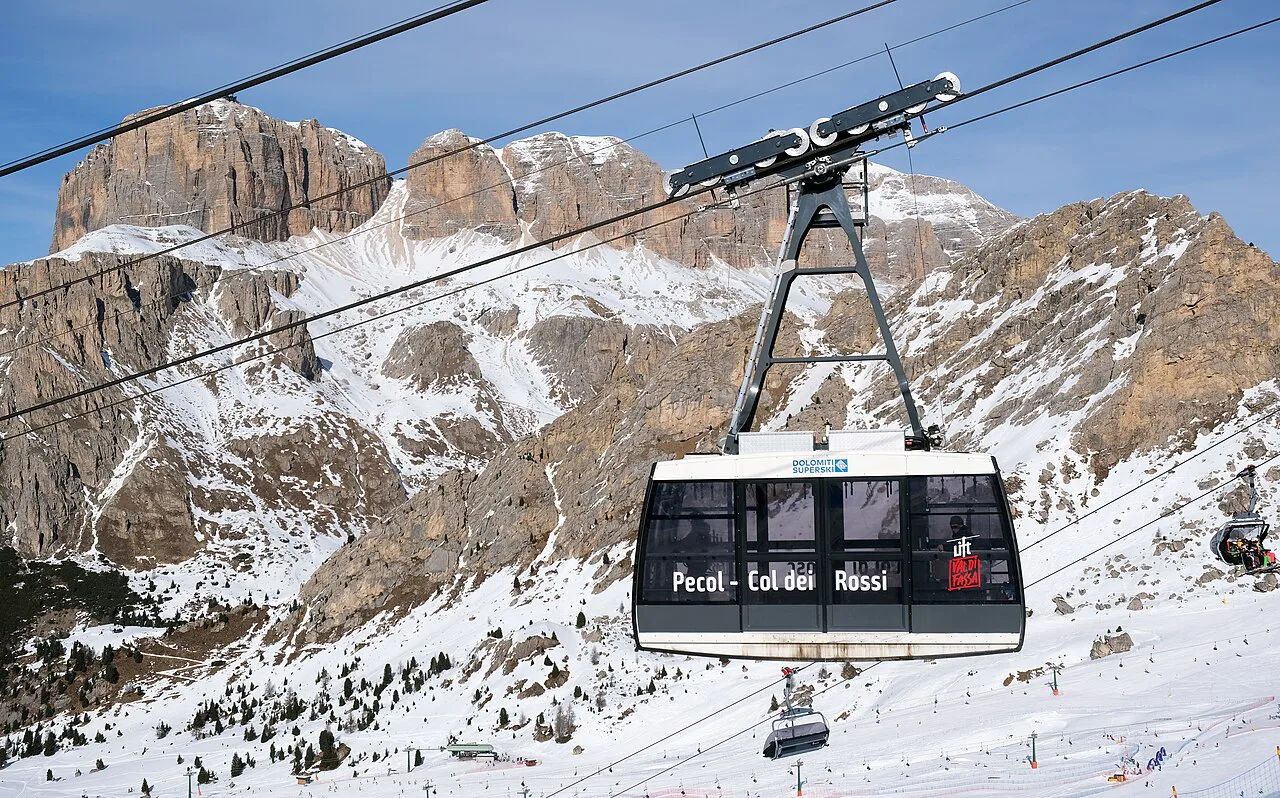
The Belvedere-Col Rodella-Pordoi sector connects into the Sellaronda, the lift-and-piste loop that circulates the Gruppo del Sella and reaches Val Gardena, Arabba and Alta Badia. That link is what turns Val di Fassa from a mid-sized local area into a much larger proposition, and it is the reason many snowboarders base themselves in Canazei or Campitello rather than further down the valley. If the loop appeals, it is worth reading our Alta Badia snowboarding guide for what waits on the other side of the circuit. The connection is conditional on the day's operating picture, so treat it as an available option to check rather than a fixed feature of your trip.
Pass coverage is a separate question from terrain. Dolomiti Superski is the umbrella pass covering the Sellaronda circuit and a long list of other resorts, while local area passes apply to narrower footprints. The practical trade-off is straightforward: if your week involves the Sellaronda and possibly a day trip within the Dolomiti Superski network, a valley-wide pass makes sense, but riders staying in one sector may not need it. Confirm exactly what each pass tier includes for your dates before committing, since inclusions are set by Dolomiti Superski.
Snowboard Schools and Meeting Points
Val di Fassa has several ski and snowboard schools with offices in the main villages, and snowboard tuition is documented at more than one of them. The Scuola Snowboard Val di Fassa, based in Canazei, is the dedicated snowboard school with its own instructor roster. Scuola Sci Campitello runs private and group lessons for both ski and snowboard from the village, and Scuola Sci Vajolet in Pozza di Fassa and Scuola Sci Vigo di Fassa also teach snowboarding alongside other disciplines. Riders regularly cross villages to reach the school that suits them.
Meeting points differ by school and matter for planning your morning. Vigo di Fassa's school assembles at Ciampedie at around two thousand metres, in view of the Rosengarten group, and the plateau above the village is used for classes. Campitello has a novices' area in the village centre and Canazei has a beginner area in the middle of the resort. The Vajolet school in Pozza has a beginners' area at Fraine in the village plus a mountain meeting point at Buffaure. Confirm the exact assembly point and time with your chosen school before you travel, because these arrangements can change between seasons.
Beginner Areas and Lower-Intermediate Riding
For snowboarders still building confidence, the value of a base village is largely about what sits immediately outside your accommodation. Canazei, Campitello and Pozza each have a dedicated beginners' area at village level, which means you can walk to the learning zone rather than ride a gondola before your first turn. Vigo's Ciampedie plateau serves the same purpose at altitude once you are ready to move up. Picking a base next to one of these areas changes the week more than picking the largest sector, especially in the early days.
Once you progress beyond the nursery slopes, the valley's blue and red groomers are the natural next step. The blue runs at Canazei-Belvedere, Vigo-Pera-Ciampedie and Alpe Lusia give a gentle introduction to longer descents, and the red runs take over from there across most sectors. The low proportion of black terrain is worth knowing if your group has mixed ability: confident intermediates will be comfortable almost everywhere, while advanced riders should plan their days around the steeper reds and the Sellaronda mileage rather than expecting dedicated expert pitches.
Booking Sequence and Checks Before You Commit
Work through the decisions in order. First fix your base village against the sectors you actually want to ride, then check how many days of valley-wide pass you need versus a narrower local option. Next, book snowboard lessons with a specific school and confirm the meeting point, group size, level split and language arrangements directly with them. Finally, check the live operating picture close to departure, because the winter season is scheduled and conditional rather than guaranteed, and lift links, circuit circulation and individual pistes can all be affected by weather and snow conditions.
The valley's own operating bulletin is the most reliable place to see which sectors and lifts are running on a given day, and it lists each area separately. Reading the val di fassa ski map before you book helps you judge travel times between sectors, since the distances involved are easy to underestimate on a map. A little time spent matching your base to your riding goals and your lesson logistics will do more for the week than any last-minute change once you arrive.
Plan Your Snowboarding Trip
Val di Fassa rewards snowboarders who plan around its layout rather than against it. The valley's sectors are separate, its terrain is intermediate-weighted and its headline asset is the connection into the Sellaronda, so the base you choose and the pass you buy shape the whole week. Riders who want groomed mileage and lift-linked variety will find it here; those seeking steep terrain should set their expectations accordingly.
Frequently Asked Questions
Is Val di Fassa good for snowboarders?
The valley suits snowboarders who want long groomed descents, lift-linked mileage and access to the Sellaronda, with the piste counts leaning blue and red. It has less steep and black terrain than some resorts, so advanced riders should plan around the steeper reds and circuit mileage rather than expecting dedicated expert pitches.
Which Val di Fassa sector should snowboarders base themselves in?
Canazei and Campitello give the most flexible access to the Belvedere-Col Rodella sector and the Sellaronda connection, while the Pozza, Vigo and Pera side serves the Aloch-Buffaure and Ciampedie areas. If you want a village learning area on your doorstep, Canazei, Campitello and Pozza each have one.
Can you snowboard the Sellaronda from Val di Fassa?
The Belvedere-Col Rodella-Pordoi sector connects into the Sellaronda, the loop that circulates the Gruppo del Sella and reaches Val Gardena, Arabba and Alta Badia. The connection depends on the day's operating picture, so check the live snow bulletin before planning a circuit day and treat the link as conditional.
Are there snowboard lessons and snowboard schools in Val di Fassa?
Yes. The Scuola Snowboard Val di Fassa in Canazei is the dedicated snowboard school with its own instructors, and Scuola Sci Campitello, Scuola Sci Vajolet in Pozza and Scuola Sci Vigo di Fassa also teach snowboarding. Meeting points, group sizes, level splits and language arrangements vary by school, so check current details with your chosen school.
Sources
Useful notes for your next ski trip
Optional updates to our Alpine resort guides.
You might also like
Continue reading
More guides you'll find useful

.jpg)