
Valloire Skiing Guide: Pistes, Passes & Lessons
Plan a Valloire ski trip with real detail on the Galibier-Thabor area, its pistes, beginner zones, lift passes, ski schools and equipment hire.
On this page
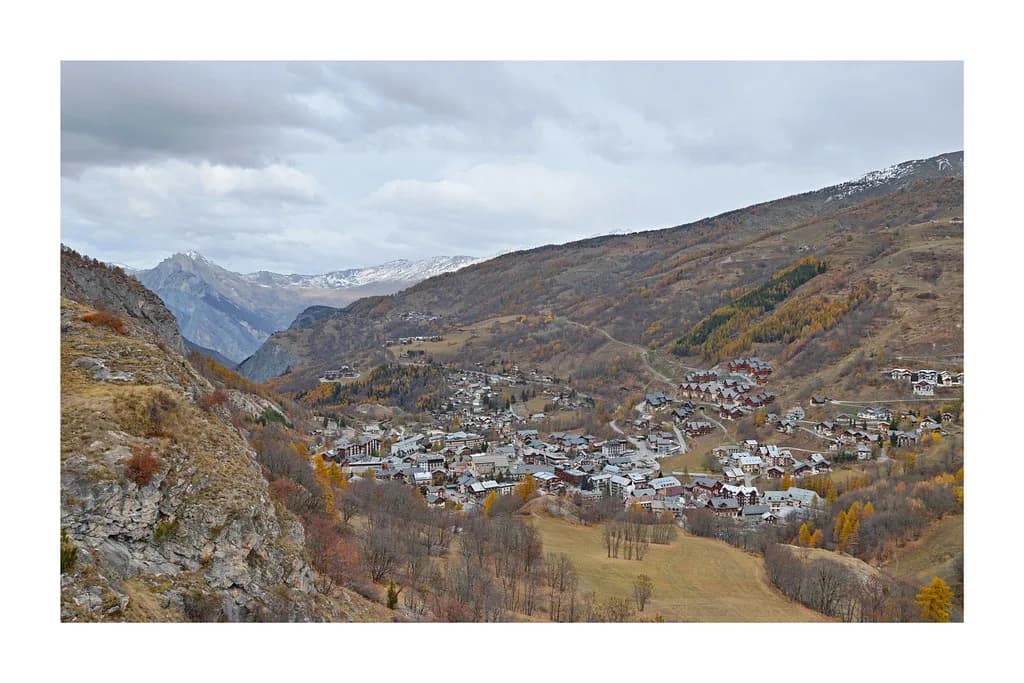
Valloire is a Savoyard village resort in the Maurienne, sitting between the Col du Télégraphe and the Col du Galibier on the Route des Grandes Alpes. It is not a purpose-built station at the foot of a single lift: the village spreads along the valley floor at around 1,450 m, and the skiing fans out above it onto several separate sectors. That layout is the single most useful thing to understand when choosing where to stay, because your address shapes which lift you use each morning. Check current prices and dates with Valloire Tourisme before booking passes or lessons.
The skiing itself comes as one package with Valmeinier under the Galibier-Thabor name, which is why you will see 160 km and 89 pistes quoted rather than a Valloire-only figure. This guide treats the area as that linked whole, then narrows down to the Valloire sectors, beginner zones, pass products and lesson formats that matter when you are actually choosing where to ski and what to buy.
What Valloire Skiing Actually Is
Valloire is a working Alpine village rather than a resort built around a lift station, and that changes the rhythm of a ski day. The centre holds the main lift-ticket office on Avenue de la Vallée d'Or, while the accommodation and the lift bases are spread out along the valley. You will ski from one of four main departure points rather than from a single hub, so your first decision each morning is which one to walk or shuttle to.
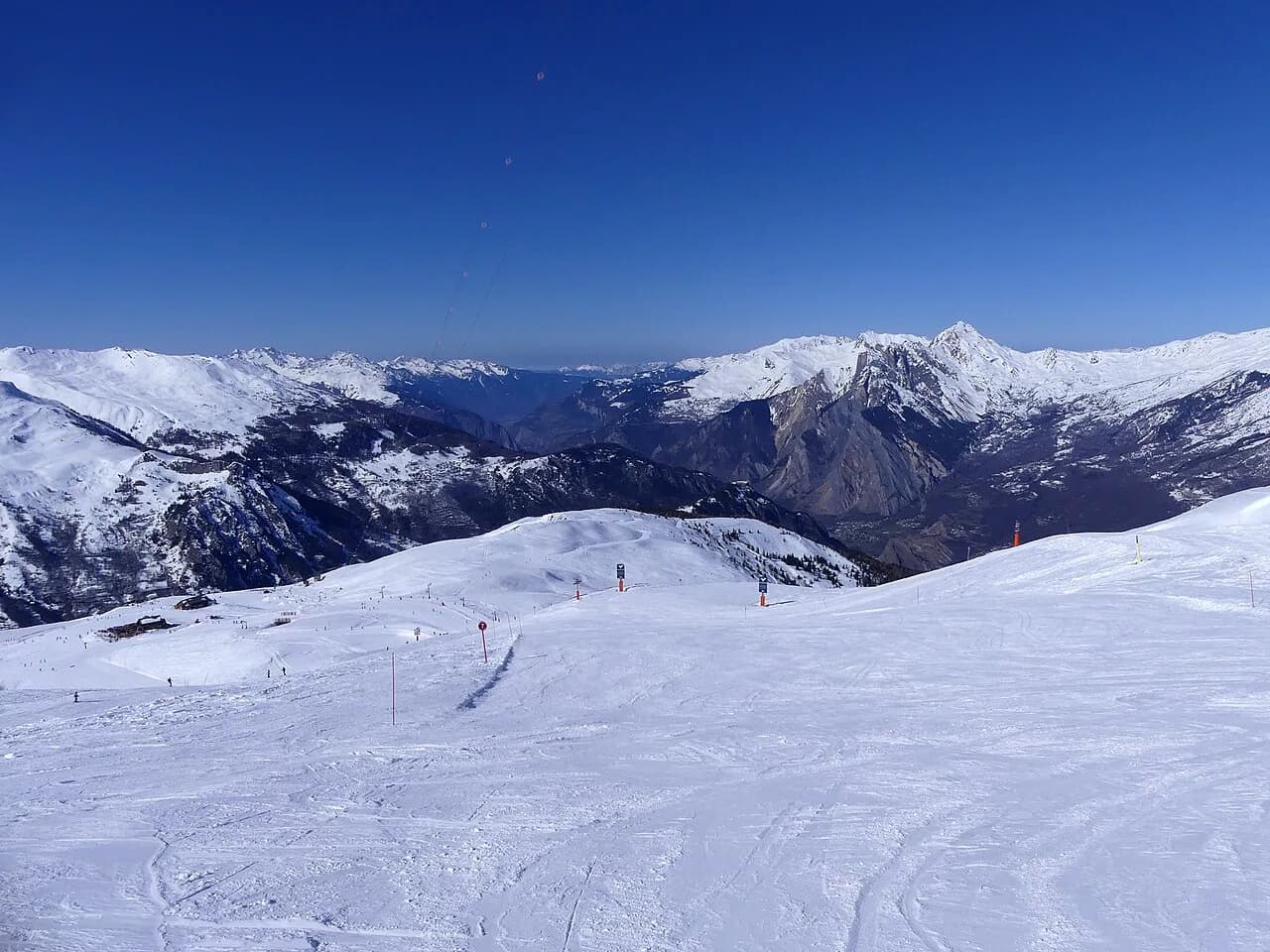
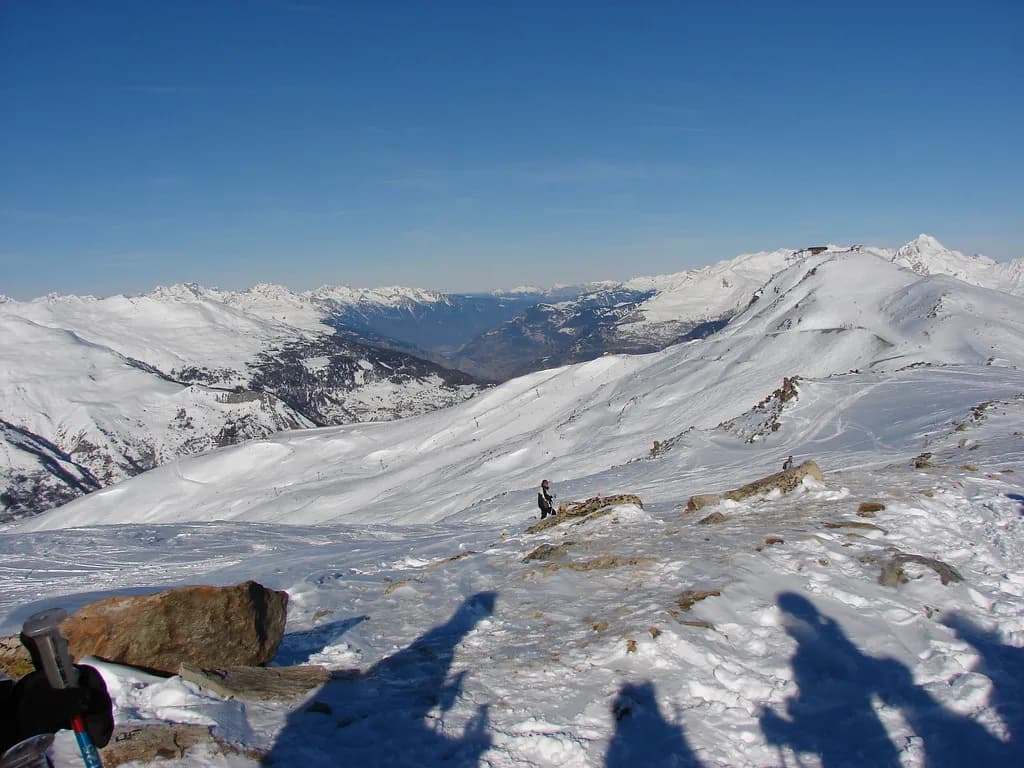
The village sits in the Savoie department of the Auvergne-Rhône-Alpes region, on the road that climbs towards the Galibier pass. The official piste page puts the village at 1,450 m, with the ski area topping out at 2,925 m. That vertical spread is what gives the area its range: lower, sheltered beginners' terrain near the village and high, open slopes above 2,000 m for the bulk of the season.
Valloire is best understood as the Valloire half of the Galibier-Thabor area, sharing the lift system and the piste count with Valmeinier on the far side. A full-area pass covers both, which is what makes the 160 km figure meaningful. If you are comparing Valloire with a standalone resort, weigh that linked terrain against the fact that the village stretches out and you will use a lift or a short drive to reach some of the access points. For a standalone alternative built around a single lift base, the Flaine Skiing Guide is a useful counterpoint.
The Ski Area at a Glance
The linked Galibier-Thabor area offers 89 pistes across 160 km, running between 1,430 m and 2,925 m of altitude. The resort's own piste page notes that around 70 per cent of the terrain sits above 2,000 m, which is the number that matters most for snow reliability through the season. In practice that means you can usually count on the upper sectors holding conditions long after the lower village runs have thinned. The same page carries the full breakdown of piste classifications and lifts if you want to cross-check specific runs.
For your legs, the size is mid-range rather than enormous: enough terrain to fill a week without long, repeated transfers, but not so vast that you spend the day traversing. The 160 km is spread across several sectors and two resorts, so a confident skier can cover a lot of ground in a day, while a beginner can stay in a compact area and never feel pushed onto terrain that is beyond them.
Think in terms of linked terrain rather than a single mountain. Because Valloire and Valmeinier share the pass and the lifts, a full-area ticket lets you cross from one side to the other on skis. That crossing is the area's signature move, but it is also a commitment: check the return lifts before you set off late in the day, and treat the piste map as your guide to which connections close first.
How the Mountain Splits: Sétaz and Crey du Quart
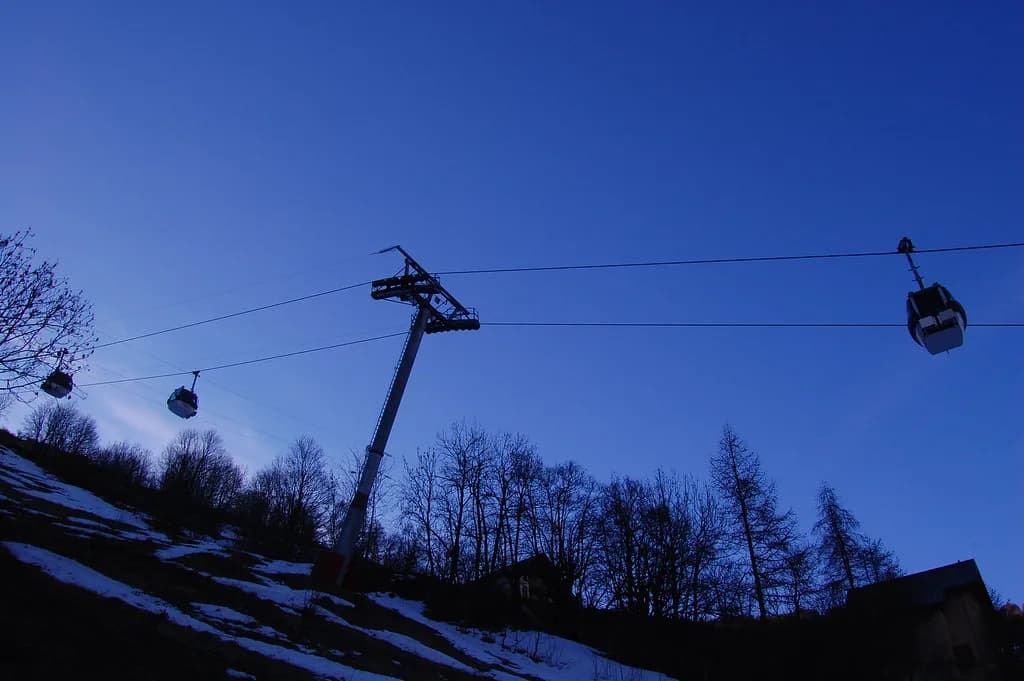
The printed Galibier-Thabor piste map labels four main zones: Valloire's Sétaz and Crey du Quart sectors, and Valmeinier's Crey du Quart and Gros Crey sectors. That four-way split is your mental map of the area. From the Valloire side you access the Sétaz sector by the Sétaz gondola and the Crey du Quart side via the Brive gondola, with two further access lifts at Moulin Benjamin and Verneys serving the lower, more local terrain.
The four main departure points in the resort, the Brive gondola, the Sétaz gondola, the Moulin Benjamin chairlift and the Verneys chairlift, are where you choose your day. Illuminated boards at each point show live lift and piste status, so you can adjust your plan on the walk up rather than committing to a sector blind. The live piste map and webcams do the same job from your phone before you leave the accommodation.
The practical consequence is that the Sétaz sector tends to be the natural base for beginners and improvers, because the Thimel learning area sits at the top of its gondola. The Brive side gives access to the Séa beginner zone and the Crey du Quart sector, which is also the route towards Valmeinier. The Verneys and Moulin Benjamin lifts serve lower terrain and are useful when you want a quieter, local ski morning rather than a full tour of the area.
Which Sector Suits Which Skier
Confident intermediates will get the most out of the high ground reached from Crey du Quart, where the area's long cruising and its steeper pitches sit above 2,000 m. The Grand Plateau is the classic staging point for stronger skiers, with black runs dropping off it towards Valmeinier and back into the Valloire valley. Plan to be there in the morning when the light and the snow are at their best, and leave the lower sectors for the end of the day.
Families and cautious skiers are better served by the lower, more sheltered terrain near the village, where the beginner zones and the long blue runs give room to build confidence. The Selles blue is the standout: it starts at 2,410 m and finishes at 1,725 m, a 6.8 km descent that the resort describes as family-friendly, with views over the Aiguille Noire valley. That length makes it a satisfying run for an improver without any technical difficulty.
If you want long cruising rather than steep challenge, treat the area as a series of linked blue and red runs above the tree line, and use the gondolas to gain height rather than to shuttle between distant sectors. The trade-off is that the most scenic high runs demand good visibility; on a cloudy day, the lower forested pistes near the village are the better bet. Match the sector to the weather rather than sticking to a fixed plan.
Beginner Zones in Detail
Valloire runs three separate beginner areas, which is more than many resorts of its size. The Thimel area sits at the top of the Sétaz gondola and uses a magic carpet, the Séa area at the top of the Brive gondola has a small beginner drag lift, and the Verneys hamlet has its own drag area away from the main traffic. That separation lets a first-timer learn without stronger skiers carving past at speed.
The trade-off between the three is about convenience versus calm. Thimel and Séa are up the gondolas, so you ride up with everyone else and descend to the village at the end of the day, which is fine once you can manage the easy run down. The Verneys drag area is the quieter option, deliberately kept away from the crowds, and is a good choice for a nervous beginner or a child who needs space to find their feet.
A dedicated beginner day pass exists as a restricted product rather than a full-area ticket, giving access to a single gondola plus the beginner lifts in one of the learning areas. The tourism office describes it at €23.90 per day for adults, children and seniors, but the exact lifts included depend on which option you choose, so confirm the inclusions when you buy. That structure suits someone on their first day or two who is not yet ready to roam the whole area.
Green and Blue Progression
Once you are off the learning areas, the area offers 17 green and 31 blue pistes out of the 89 total, so there is plenty of easier terrain to progress onto. The greens are short and gentle near the village; the blues are where the real learning happens, with enough length and varied gradient to build technique. That breadth is what makes Valloire a comfortable place to spend a second or third ski week rather than outgrowing it after a few days.
The Selles blue is the natural graduation run: 6.8 km from 2,410 m down to 1,725 m, wide and rolling rather than steep. Ski it early in the week to test your confidence, then use it as the return leg from the higher sectors later on. Its length means you can work on turns and rhythm without stopping constantly, which is exactly what an improver needs.
Use the illuminated boards at the four departure points to check which blues and greens are open before you commit to a sector, because early-season and late-season conditions can close runs at short notice. The live piste map and webcams give you the same information from your phone. Building a loose plan around the beginner zones in the morning and the Selles or the lower blues in the afternoon keeps a mixed-ability group together without anyone being bored.
Steeper Skiing: Blacks, Slalom and Timed Runs
Strong skiers should head for the Grand Plateau, where two black runs drop off the high ground: the Cotérieux towards Valmeinier and the Méregers back into the Valloire valley. These are the area's headline steeps, and they are best skied in the morning when the snow is still firm and the light is good. Plan your return carefully, because dropping towards Valmeinier commits you to the far side of the area.
Beyond the blacks, the area has four slalom runs and a timed downhill course, which gives a race-focused skier something to aim at beyond free skiing. Valloire's most famous skier is the Olympic slalom champion Jean-Baptiste Grange, and the slalom runs are a fitting way to test yourself on home ground. Reserve them for a day when the snow is grippy rather than soft.
The trade-off with the steeper terrain is that it sits high and exposed, so it is the first to suffer in poor visibility or wind. On a flat-light day, abandon the Grand Plateau and use the lower, tree-lined runs instead. Check the live status boards before you ride up, and treat the black runs as a bonus rather than the reason for the trip.
Snowparks and Play Areas
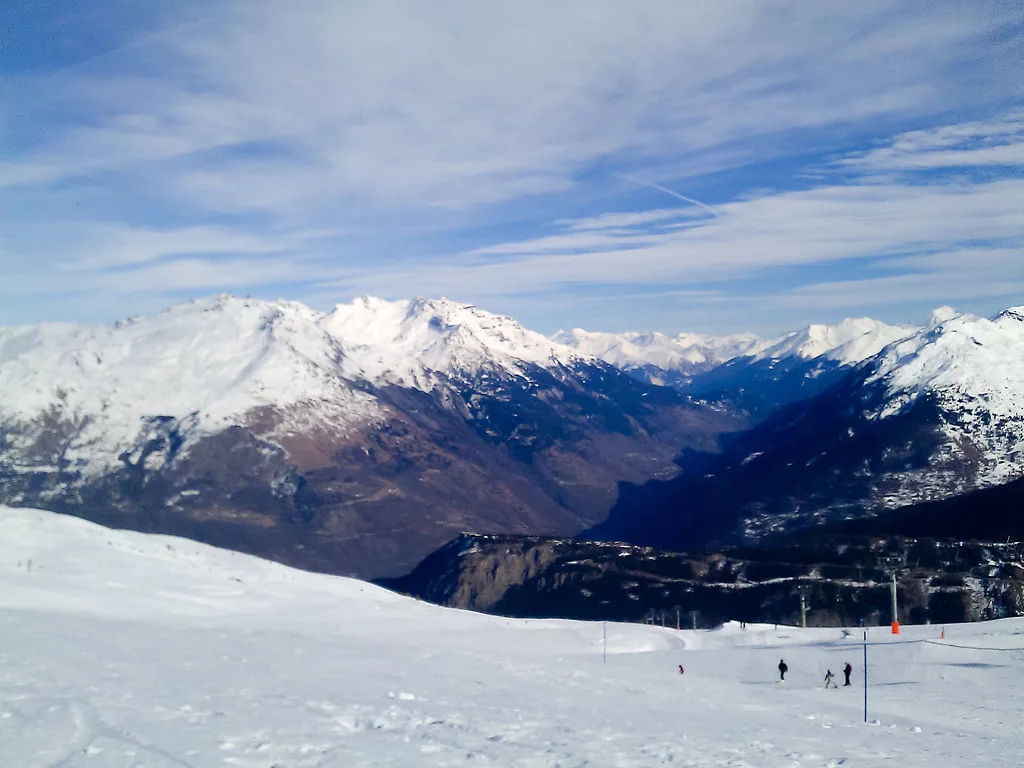
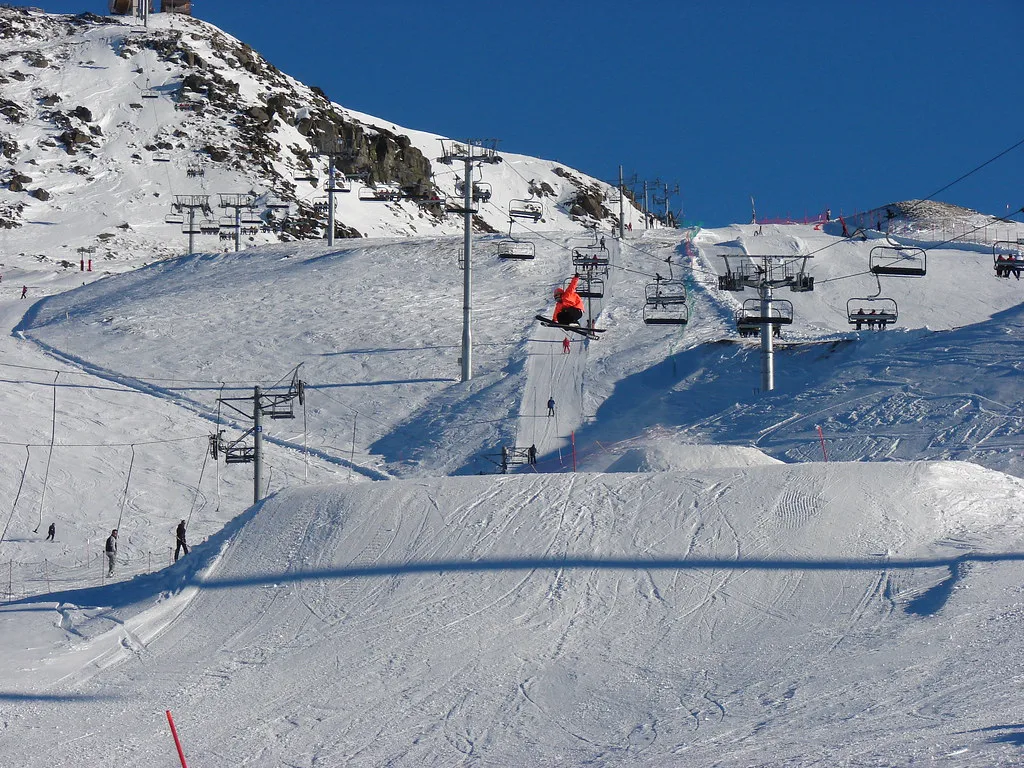
The Lac de la Vieille snowpark, reached from the Crey du Quart side, is split into several zones running from easy to difficult, so a first-time park skier and a seasoned jumper can use the same area. Alongside it, the area has a boardercross, a snowblide and a snowpark, plus the Easy Park for younger skiers wanting small bumps and banked turns. The Safari des animaux run gives the youngest children a themed route to follow.
For a family with mixed ages, the play areas are a good way to break up the day: a morning of lessons, a lunch stop, then an afternoon on the Easy Park or the Safari run rather than another full sector tour. The trade-off is that the park zones get busy during French school holidays, so go early if your child is keen to session a particular feature.
Freestyle lessons for children run from the ESF, with six afternoon sessions during the school holidays at a starting price of €200 for the standard freestyle course. These are aimed at skiers who already hold the Troisième Étoile level, so they are a natural next step for a confident child. The freestyle course runs only during the February school holidays, so plan around that window.
Ski Touring Routes
The Galibier-Thabor area has six marked uphill ski-touring itineraries, ranging from 2 km to 3.8 km with 370 m to 630 m of climb. They are designed so you can skin up and descend safely on piste, which makes them a good introduction to touring without committing to open backcountry. If you are new to touring, start on the shorter routes and build up.
Before heading out, the DVA Park at the top of the Sétaz massif is the place to practise with a transceiver, shovel and probe. The resort frames it as a training ground for the safety equipment rather than a substitute for a guide. For anyone moving from piste skiing into touring, a session there is a sensible first step.
The trade-off with touring in a resort is that the marked routes share the mountain with downhill traffic, so timing matters. Go early in the morning when the pistes are quiet and freshly groomed, and check that the route is open before you set off. The live piste map shows which itineraries are in condition on any given day.
Season Window and Lift Hours
The winter season runs from mid-December to mid-April, and the official dates for the coming winter are 12 December 2026 to 11 April 2027, with the lifts closing on 9 April 2027. Those dates anchor your booking: a week in early April will see the lower runs thinning while the high ground holds, and a Christmas week will have the full area open but the busiest lift queues.
Lift hours are 9:00 to 16:15 until the French February school holidays, after which they extend to 16:45. That late-February shift matters if you are booking a late-season trip and want the extra skiing time at the end of the day. Outside those published hours, treat the times as indicative and check on arrival.
For snow conditions, the resort publishes live piste status, webcams and a weather feed through its piste map page and app, which is more reliable than any pre-season forecast. Use those before you travel and again each morning. If you are weighing Valloire against another resort, compare the season dates and the proportion of terrain above 2,000 m rather than headline snowfall figures.
Lift Passes: The Products and Prices
Valloire's full-area passes are priced by age band, and for the coming season the published six-day rates are €278.50 for adults aged 13 to 64, €237 for children aged 5 to 12, and €250.50 for seniors aged 65 to 74. Children under 5 and skiers aged 75 and over ski free with proof of age, and students aged 18 to 25 get 10 per cent off the adult rate with a valid student card. The official pass page carries the full grid and the current-season rates.
Season passes run at €1,098 for adults, €933 for children and €988 for seniors, which is worth doing the maths on if you plan two weeks or more. The resort also runs a pre-season sale from 1 to 30 September, when the adult season pass drops to €439, a 60 per cent reduction. That is a time-limited promotion, so treat it as a reason to buy early rather than a standing price.
Buying online in advance is the norm here: the resort's own booking site lets you buy or top up a pass and collect it without queuing at the ticket office. The practical trade-off is that online rates and the Saturday-specific tiers can differ from the walk-up price, so if you are buying for a group, price the whole week online before you commit.
Beginner and Saturday Products
Two pass products are worth understanding before you buy for a mixed group. The beginner day pass, published by the tourism office at €23.90 per day for all ages, gives restricted access to one gondola plus the beginner lifts in a single learning area, which is enough for a first or second day but not for exploring the whole area. The Saturday online tiers are a separate saving for day-trippers booking ahead.
The Saturday rate runs as two tiers: booking by Wednesday midnight gives €27.40, while booking by Friday midnight gives €41.20. The saving is real if you plan ahead, but it is only available online at the resort's pass site, not at the ticket office window. If you are skiing a single Saturday, it is worth checking the tier before you decide whether to buy in advance.
For a family with one beginner, the calculation is whether the restricted beginner pass plus a full-area pass for everyone else beats buying full-area passes for all. It usually does on the first day or two, but by day three the beginner will want to ride the gondolas with the group. Plan your pass purchases around that progression rather than locking in the whole week at the beginner rate.
Where to Buy and Top Up
In resort, ski-lift ticket offices are at the resort centre on Avenue de la Vallée d'Or, at the Verneys chairlift and at the Moulin Benjamin chairlift, so you can buy or top up close to where you start your day. The resort-centre office is the main one and the obvious choice if you want to sort everything out before your first morning.
For the Carré Neige rescue insurance, expect to add €3.50 per person per day, or €49 for a season policy valid in Savoie. It covers rescue costs, initial transport, reimbursement of passes and lessons over three days, and medical and hospital costs, and it must be bought at the same time and for the same duration as your pass. For a family, that adds up quickly, so decide whether your travel insurance already covers on-piste rescue before you tick the box.
If you are buying online, remember that passes bought in advance usually need collecting or topping up on arrival, and the resort publishes how to do both. The simplest routine is to sort your passes the evening before your first ski day rather than queuing on the first morning. That also gives you time to add insurance or adjust the number of days if your plans change.
Ski Schools: ESF Formats and Prices
The ESF Valloire runs group lessons in six-session blocks, Sunday to Friday, with morning and afternoon options. Standard Flocon and Étoile groups start from €165 for six morning lessons or €200 for six afternoons, while the Top 8 and Top 10 formats with smaller groups cost more: Top 8 from €302 and Top 10 from €186. Those are 'from' prices and vary by period, so check the ESF site for the week you want.
Children need to hold the Ourson level or above for the Flocon and Étoile groups, which is the first decision point for a family. Meeting points are at Valloire Centre, Moulin Benjamin and Les Verneys, so you can pick the one closest to your accommodation. The morning sessions run from 9:00 to 11:30, with the afternoon sessions later, and the schedule shifts slightly after the February holidays.
Valloire also has the ESI ski school with around thirty instructors, plus independent instructors such as Valloire Freeride and Esprit Glisse, which gives you options if the ESF groups are full. The trade-off is that the ESF is the largest and the best known, but smaller schools can offer more flexible private lessons. Book lessons alongside your pass, because the popular weeks fill first.
Equipment Hire and Lockers
Sport 2000 has four shops in Valloire: Snow and Ski Village on the Route des Grandes Alpes, Martin Sports in the Crêt de Peré building, Snow and Ski in the Charbonnières zone, and Nagano Sport at Les Verneys. Opening hours vary by shop and by season, with some closing over lunch, so check before you walk to a specific branch. Booking online in advance is the easiest way to guarantee your size in a busy week.
Intersport Rent also operates in Valloire, offering online reservation with a seventh day free and the option to swap equipment as conditions change. That flexibility is useful for a mixed-ability group or a child moving up a level mid-week. The trade-off is that you need to plan the reservation before you travel to get the best value.
For storage, there are ski lockers at the Sétaz cable car and at the Grange Sport area, plus the Dry Box for skis and luggage in the Rochechâteau residence. Heated, secure lockers at the lift base are worth it if your accommodation is a walk from the gondola, because carrying boots each morning gets old quickly. The Valloire ski hire comparison sets out how the shops differ on handover and deposits, which is where the real choice lies once you have picked a location.
A Sample Three-Day Plan
Day one, keep everyone together on the lower mountain. Start at the Verneys drag area with a beginner or a nervous skier while the stronger members warm up on the lower blues, then meet for lunch. In the afternoon, take the Sétaz gondola and use the Thimel area for a first proper lesson. That gives you a feel for the snow and the lift layout without committing to a full sector tour.
Day two, split by ability. Confident skiers take the Brive gondola and head for the Grand Plateau, skiing the blacks towards Valmeinier in the morning and the long return to Valloire in the afternoon. Beginners stay on the Séa area and the lower blues, then join the group for a late lunch. Book lessons for this day if anyone wants structured coaching, because that is when the groups are most useful.
Day three, use the full-area pass to cross to Valmeinier. Ski the Selles blue on the way back if conditions allow, and finish on the Sétaz side for the gondola down. Build in a rest afternoon for anyone who has skied hard for two days, and check the live piste map in the morning before you commit to the crossing. If it is snowing hard, keep the day local and save the crossing for a clearer one.
Practical Booking Priorities
Book the pass and the lessons first, because those are the items that sell out for the popular French holiday weeks. The ESF groups and the Top 8 and Top 10 formats are limited in size, so reserving early is more important than reserving early for accommodation. Once those are fixed, you can plan hire around your lesson meeting point.
Equipment hire can wait until closer to the trip if you book online in the week before you arrive, but reserve the popular sizes for children early. Choose your accommodation based on which lift you will use most: near the Brive or Sétaz gondolas for families and beginners, or near the village centre if you want to be within walking distance of the ticket office and the ESF.
Finally, sort your snow insurance decision before you buy the pass. If your travel policy already covers on-piste rescue, skip the Carré Neige add-on; if not, the daily rate is a reasonable safeguard for a family. That decision is easier to make at home than at the ticket window on the first morning.
Plan Your Valloire Trip
Valloire works best when you treat it as the Valloire side of Galibier-Thabor and plan around the four departure points rather than a single base. Beginners get three separate learning areas and a long, gentle blue to graduate onto; stronger skiers get the Grand Plateau blacks and a full day's crossing to Valmeinier. The mid-range size is an advantage: you can cover it in a week without the transfer fatigue of a mega-resort.
Book the pass and any lessons before you travel, especially for French school holiday weeks, and buy online if you want the advance rates. Then use the resort's live piste map and webcams to make the daily call on which sector to ski. The official Valloire site is where the current-season prices and lift hours are confirmed, so check it as your travel date approaches.
Explore more Valloire guides
Frequently Asked Questions
How big is the Valloire ski area and how much is linked to Valmeinier?
Valloire shares the Galibier-Thabor area with Valmeinier, giving a combined 89 pistes and 160 km of terrain between 1,430 m and 2,925 m. A full-area pass covers both resorts, so you can ski from one side to the other. Around 70 per cent of the terrain is above 2,000 m, which helps snow reliability through the season.
Is Valloire good for beginners and where are the learning zones?
Valloire has three dedicated beginner areas: Thimel at the top of the Sétaz gondola, Séa at the top of the Brive gondola, and a separate drag area at the Verneys hamlet. The Verneys area is the quietest, while Thimel and Séa are convenient but busier. A restricted beginner day pass gives access to one gondola and the beginner lifts, and the Selles blue is the natural next step once you can link turns.
How much is a Valloire six-day lift pass for adults, children and seniors?
Rates are set by age band and change from season to season, so the resort's pass page is the place to check the current six-day figures for adults, children and seniors. Under-5s and over-75s ski free with proof of age, and students get a discount with a valid card. Read the grid before you buy so you know which band each member of your group falls into.
What are the hardest runs in the Galibier-Thabor area?
The Grand Plateau holds the area's headline blacks: the Cotérieux towards Valmeinier and the Méregers back into the Valloire valley. The area also has four slalom runs and a timed downhill course for race-focused skiers. The high ground is exposed, so save these runs for a clear morning and check the live status boards first.
When does the Valloire ski season start and finish?
The winter season runs from mid-December to mid-April. For the coming winter the published dates are 12 December 2026 to 11 April 2027, with the lifts closing on 9 April 2027. Early April favours the high ground, while a Christmas week has the full area open but the busiest lifts.
Do you need a full-area pass to ski Valloire as a beginner?
No. A restricted beginner day pass covers one gondola plus the beginner lifts in a single learning area, which is enough for the first day or two. Once you can link turns confidently and want to ride the gondolas with the rest of your group, move up to a full-area pass. It is usually cheaper to buy the beginner pass for the first days and upgrade later.
Which ski schools operate in Valloire and what do group lessons cost?
The ESF Valloire runs six-session group lessons with prices starting at a standard morning rate and rising for smaller-group formats such as Top 8 and Top 10, which cost more per session. Valloire also has the ESI ski school plus independent instructors. Lesson prices are 'from' rates that vary by week, and children need the Ourson level or above for the Flocon and Étoile groups.
Where can you hire skis in Valloire and are there lockers at the lifts?
Sport 2000 has four shops across Valloire and Intersport Rent also operates in the village, both with online booking. For storage, there are ski lockers at the Sétaz cable car and the Grange Sport area, plus the Dry Box for skis and luggage. Heated lockers at the lift base save carrying boots if your accommodation is a walk away.
Sources
- Valloire – Valloire Galibier ski passes
- Valloire – Valloire Galibier slope map
- Plan des pistes - Domaine skiable Valloire Galibier-Thabor
- Galibier-Thabor piste map linked by Valloire Tourism
- Flocon and étoiles ski lessons On the slopes - ESF Valloire
- Freestyle Ski or Snowboard - ESF Valloire
- Is Valloire a good destination for beginners to learn to ski? – Valloire Galibier
- Ski Hire VALLOIRE. Sport 2000, affordable ski and snowboard equipment
- Skiing & ski rental in Valloire | INTERSPORT Rent
Useful notes for your next ski trip
Optional updates to our Alpine resort guides.
You might also like
Continue reading
More guides you'll find useful
.JPG)
