St Moritz Skiing: Guide to the Engadin Ski Areas and Passes
St Moritz skiing explained: how Corviglia, Corvatsch, Diavolezza and the smaller Engadin areas differ, what a lift pass covers, and how to plan your days.
On this page
St Moritz suits skiers who want scale and variety across the Upper Engadin rather than a compact, single-base circuit. The resort is not one lift-linked mountain but a collection of separate ski areas, each with its own base, access point and character. This matters more than the famous name because your pass choice, daily route and lesson logistics all depend on which sector you choose first.
The official St. Moritz tourism page frames the local mountain as Corviglia, reached by the Chantarella funicular and Marguns gondola, while listing three other large areas and five smaller ski zones in the wider valley. A practical day therefore starts by deciding whether you want the convenience of slopes above St Moritz Dorf or the altitude and open terrain of a neighbouring sector that requires a bus or cable ride.
Another Engadin or Swiss base can fit better if you want a single connected ski circuit or a smaller, quieter learning area. St Moritz rewards people who are comfortable splitting their days, moving between valley bases, and accepting that a lift pass does not automatically join Corviglia, Corvatsch and Diavolezza into one continuous piste network. If a compact, single-valley layout appeals more, compare this with the Andermatt ski guide before booking.
Where St Moritz Skiing Sits in the Engadin
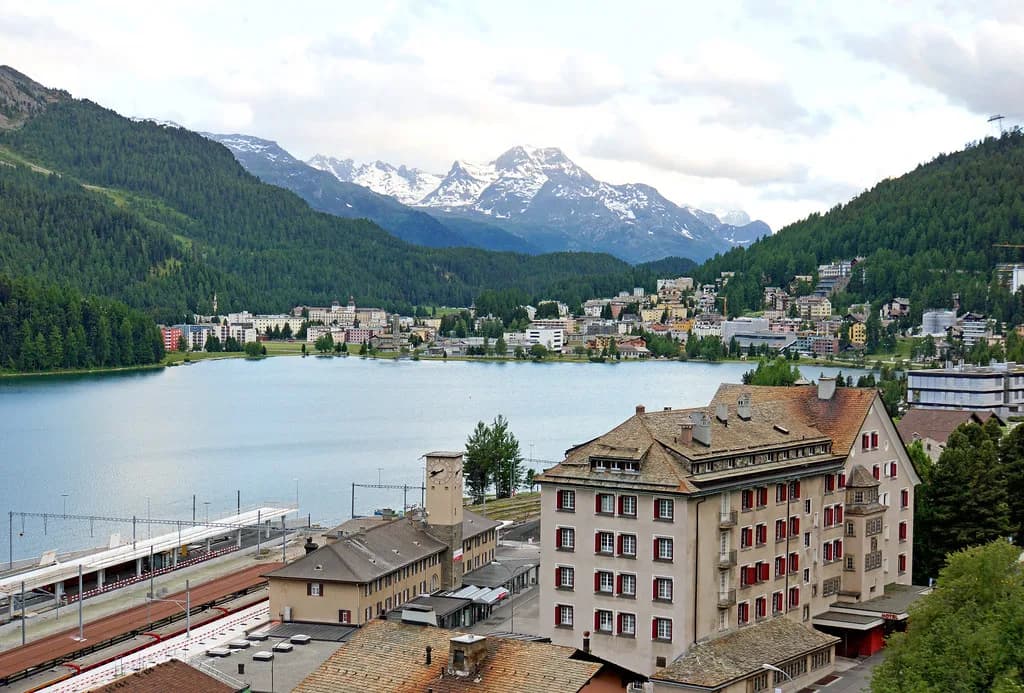
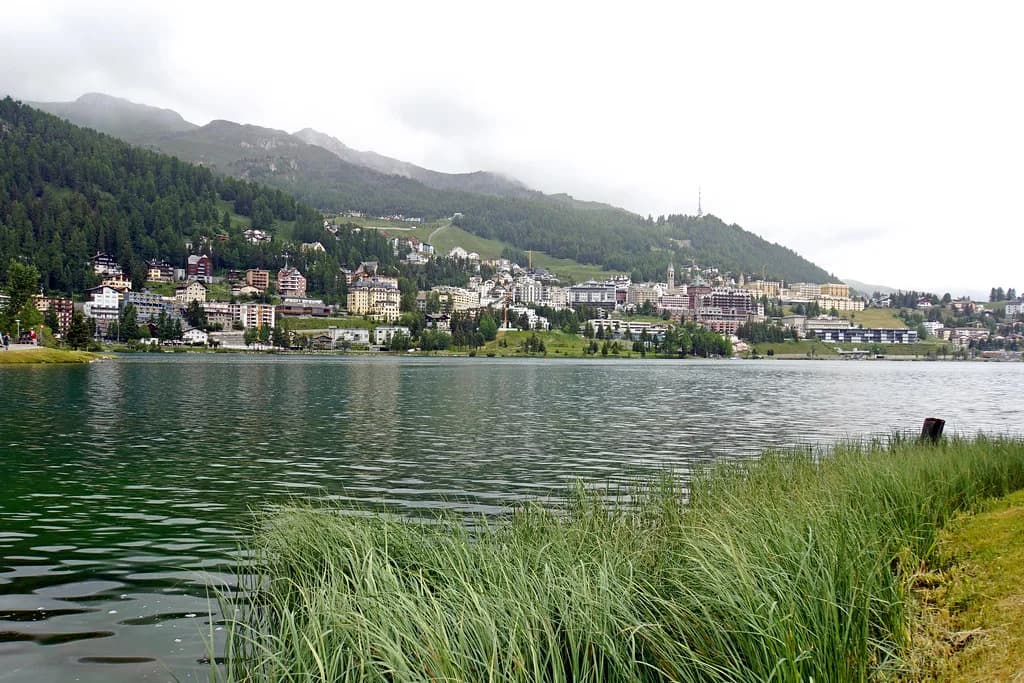
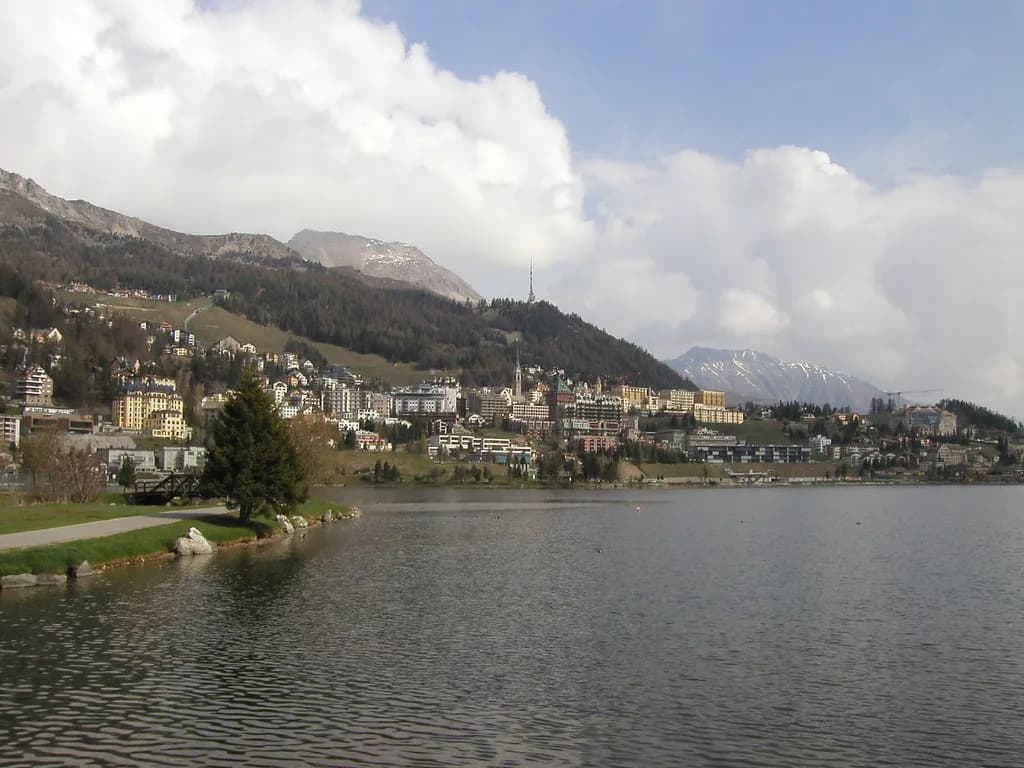
St Moritz sits in the Engadin valley of south-east Switzerland, close to the Italian border, and the town itself is split between St Moritz Dorf and St Moritz Bad. Dorf is the historic, higher part near the Chantarella funicular and the main pedestrian street, while Bad sits lower and flatter with its own cable-car access toward Corviglia. The split means your first run can start in either half of town, but where you base yourself changes how far you walk or ride before skiing.
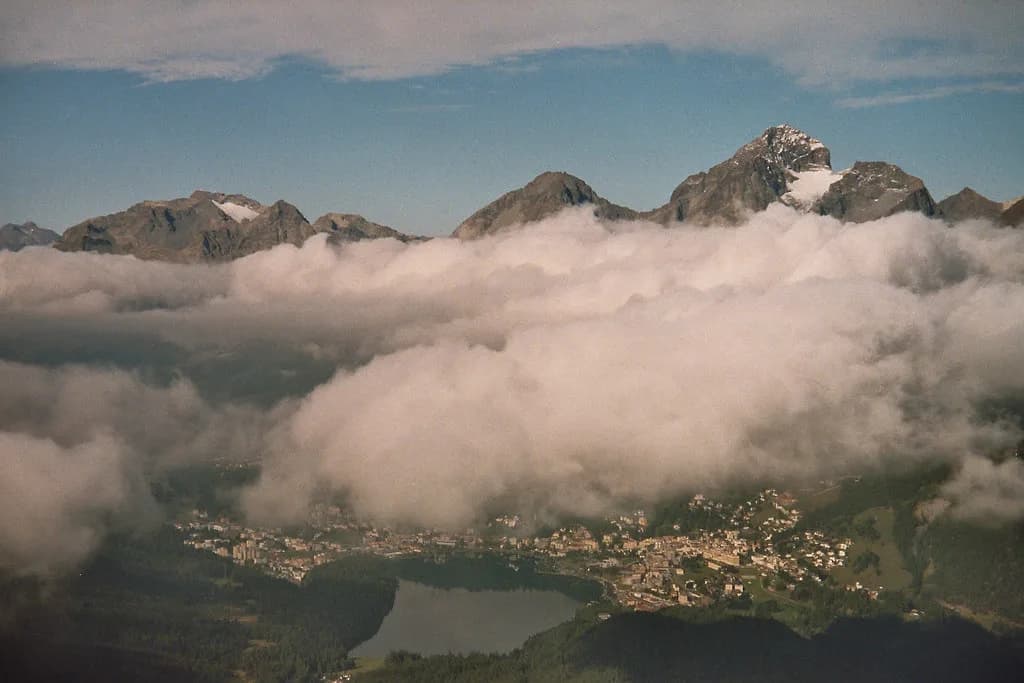
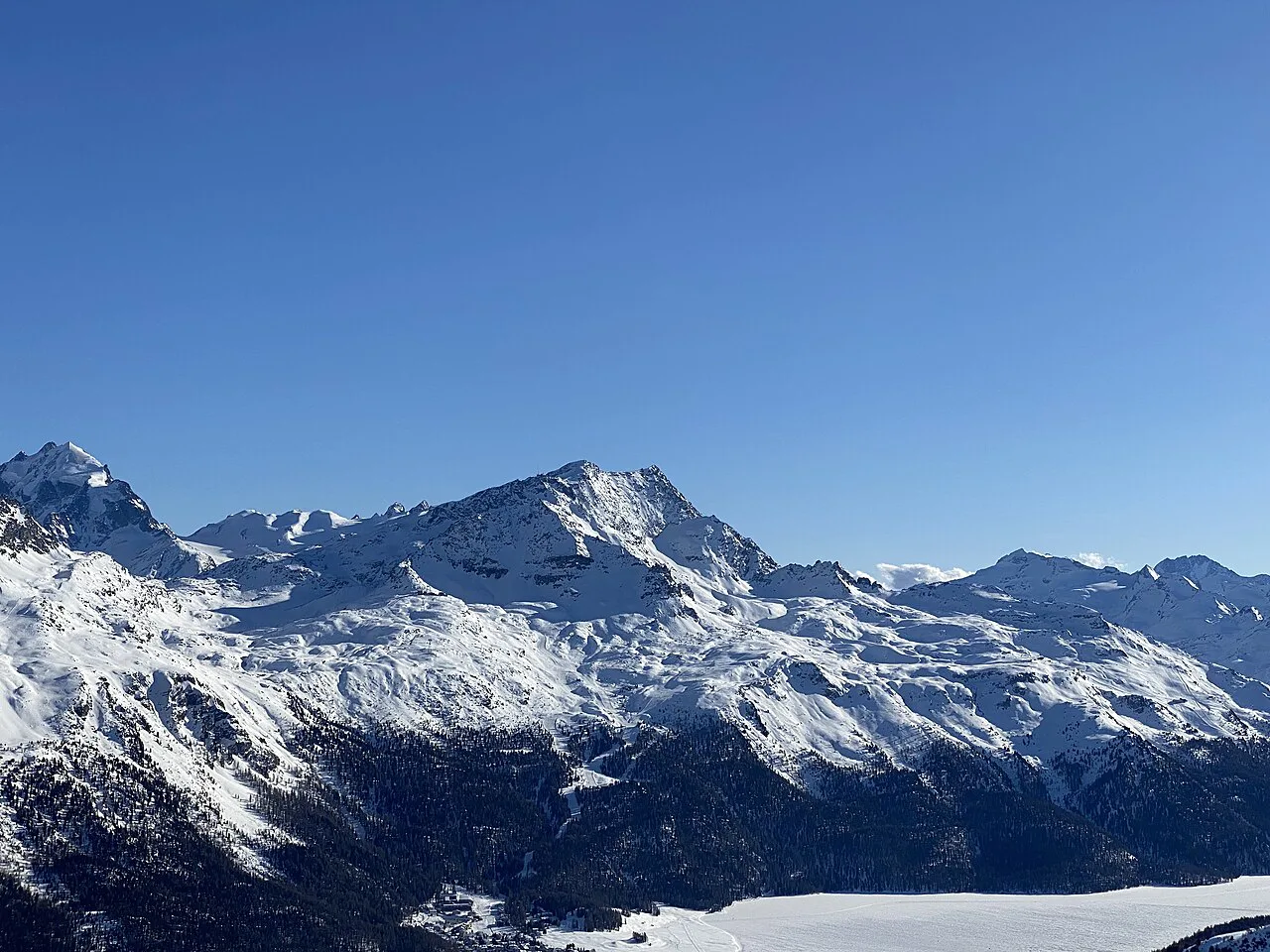
The valley layout shapes the ski day more than any single piste map. Corviglia is the only large area linked directly to the main town, while Corvatsch, Diavolezza and the smaller family slopes sit at separate valley bases reached by bus or cable car. Treat the Engadin as a cluster of ski destinations rather than one resort perimeter, because moving between sectors typically means leaving the slopes and riding a valley connection.
The Four Large Ski Areas at a Glance
The official ski page names four large Upper Engadine ski areas: Corviglia/Piz Nair, Corvatsch/Furtschellas, Diavolezza and Lagalb, plus five smaller ski areas. Each is a separate destination with separate access, so the most useful overview is not a single trail count but a short comparison of what each sector offers and how it is reached.
Corviglia/Piz Nair is the local mountain above St Moritz and the most extensive sector, with broad groomed runs and base options near Celerina and St Moritz Bad. Corvatsch/Furtschellas is the second large area, reached by cable car from Surlej and known for its 3303 m top station and glacier-side terrain. Diavolezza is the smallest and farthest of the main three, with strong north-facing pistes and a long descent toward Morteratsch, while Lagalb is often treated as a compact complement nearby.
Do not read these four as one linked circuit. St. Moritz Tourismus presents them as distinct areas, and the Engadin St. Moritz Mountain Pool's daily lift-status page lists each mountain railway separately, which is a more reliable planning view than a single resort badge. Check that status page before choosing a sector because not every lift or piste is open on every scheduled day.
Corviglia, Piz Nair and Snowboarding Provision
Corviglia is the natural first choice for many visitors because it starts directly from St Moritz Dorf via the Chantarella funicular and from St Moritz Bad via a cable car, with further base access at Celerina. The sector is best known for long, open intermediate groomed runs and the high point around Piz Nair, which gives a dramatic backdrop above the prepared slopes.
Advanced on-piste terrain here is limited, so strong skiers often use Corviglia for fast cruising rather than searching for steep groomed challenges. The western side of Piz Nair is described by the official page as freeride terrain, which means it should be treated as off-piste and guide territory, not a marked run. For most skiers, the practical point is that Corviglia offers the easiest base-to-slopes connection but not the most demanding marked descent.
Snowboarders should read St Moritz the same way skiers do: as separate sectors rather than one linked playground. The official page locates the Crowland snowpark on Corviglia, with a fun slope, an easy park for beginners, and blue and medium lines. That makes Corviglia the natural home base for freestyle progression, even if a boarder later adds Corvatsch for altitude or different snow.
A boarder who wants park laps should prioritise a Corviglia pass and a base that makes repeated rides on the Chantarella funicular or Marguns gondola simple. A boarder who values open groomed cruising can still enjoy the Corviglia network, while powder-seekers need to accept that off-piste terrain is guide territory rather than signed freeride infrastructure. Match the pass and base to the type of snowboarding you actually plan to do, not to the resort's overall reputation.
Corvatsch and Furtschellas
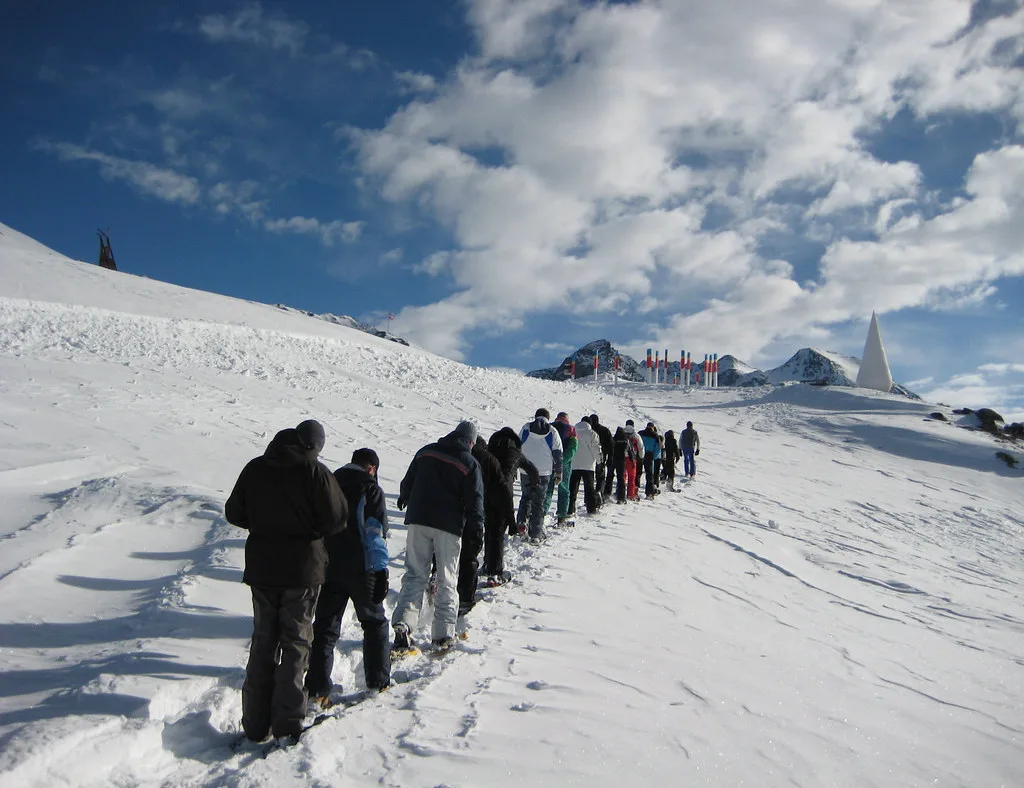
Corvatsch is reached by cable car from Surlej, which then connects to St Moritz Dorf and Bad by bus rather than by a lift-linked piste network. Two cable cars carry skiers up to the Corvatsch top station at 3303 m, the highest point commonly cited for the St Moritz ski region. That altitude means the area often holds snow differently from lower sectors, but it does not remove the need to check daily lift and piste status.
From the top you can ski the Corvatsch side or continue toward the Furtschellas sector, which gives the area a broader spread than a single cable-car sightline suggests. The terrain suits skiers who want altitude and a more naturally varied feel than Corviglia, but access is less immediate, and you should not plan it as a quick morning extension from the Dorf funicular.
Diavolezza and Lagalb
Diavolezza is the smallest of the main St Moritz areas and sits farthest from town, roughly a 50-minute bus ride from St Moritz. Its distinct feature is steep north-facing terrain under the cable car, which makes it the most advanced marked skiing among the three principal sectors. The route from the top toward the valley floor train station is a long glacier-side descent that should be treated as guide territory, not as an ordinary piste connection.
Lagalb is usually grouped with Diavolezza and functions as a smaller, separate area rather than a continuation of the same piste circuit. Because the bus trip is longer, a Diavolezza day only makes sense when you want its specific advanced character or a change of scene from the main Corviglia network. Check lift opening and connections before committing a full day, since the Engadin St. Moritz Mountain Pool's seasonal status page can show Diavolezza and Lagalb on a different footing from the nearer areas.
The Smaller Engadin Areas
Beyond the four large areas, the official page names five smaller ski zones, and the most useful role of these smaller slopes is learning and local convenience rather than adding serious mileage to a week. Pontresina has the Languard family area, Celerina has the child-friendly Provulér nursery slope, and Samedan offers the Survih lift and magic carpet near the village edge. Each is a separate little base, so parents and beginners should choose one close to their lodging instead of treating them as interchangeable stops.
Other small areas include Müsella at La Punt Chamues-ch, Bügls at S-chanf and Aela at Maloja, but their documented value lies in short, manageable slopes and beginner lifts rather than headline skiable terrain. A family staying at one end of the valley can use these slopes productively, while skiers focused on vertical drop and piste variety should look first at Corviglia and Corvatsch.
Terrain Character Across the Sectors
Corviglia reads as a continuous groomed network with long blue and red cruising runs, which makes it the easiest sector to navigate visually and the most natural base for intermediates. Its black-marked runs are not the main reason to visit, and the strongest challenge sits outside the marked piste on the Piz Nair freeride side. By contrast, Corvatsch offers altitude and a slightly more remote feel, while Diavolezza concentrates advanced north-facing terrain under a single lift line.
St. Moritz Tourismus publishes a figure of 87 pistes for the St Moritz ski page, but that count covers a spread of sectors and should not be read as 87 pistes in one connected area. A more useful planning measure is which sector matches your level: beginners and intermediates choose Corviglia or a named learning slope, while skiers seeking steeper marked terrain or altitude look to Corvatsch and Diavolezza. Always separate the idea of piste quantity from the reality of separate access points and bus rides between sectors.
Lift Pass Boundaries and Choosing a Pass
The biggest pass mistake is to assume that one St Moritz ticket opens every Engadin sector automatically. The official page describes day and halfday ski tickets, rental equipment and ski lessons as separate products, and the lift-status page lists each mountain railway independently, which points to distinct area boundaries. Before buying, identify which sector you will actually ski on each day and then ask whether a local area ticket or a wider Engadin product better matches that plan.
For a short trip based in St Moritz Dorf or Bad, a Corviglia-focused ticket may be enough, while a longer stay that includes Corvatsch and Diavolezza needs a different conversation about multi-area validity. The Engadin St. Moritz Mountain Pool is the body behind the area's mountain railways, but the sources do not state current pass pricing, inclusions or cross-area entitlements, so avoid quoting a price or assuming shared access. Ask the official ticket point whether the pass covers the specific mountain railways you plan to use on each date.
Getting Between the Ski Areas
St Moritz is not built as one lift circuit, and the practical connection between Corviglia, Corvatsch and Diavolezza is the valley bus. Corviglia is the only large sector joined directly to the main town, while Corvatsch starts from Surlej and Diavolezza requires a much longer ride from St Moritz. Treat those journeys as part of the ski day, not as a short transfer, and avoid planning two far-apart sectors in one morning unless you accept the time cost.
A realistic day plan is to stay within one sector, return to the valley, and choose a different base the next day if you want variety. The official live page lists each mountain railway status separately, so use that page to see which lifts are operating before you set out. A scheduled season does not promise that every link, piste or base connection will be open on your chosen date, so check the day's reality rather than trusting a continuous network.
Beginner Zones, Ski Schools and Lesson Logistics
Beginners should not be sent to the largest or highest sector by default. The official page names specific learning slopes: Salastrains in Corviglia, Languard in Pontresina, Provulér near Celerina, Cristins at the Corvatsch lift base, Survih in Samedan, Müsella at La Punt Chamues-ch, Bügls at S-chanf and Aela at Maloja. Each is a defined location, so the first decision is which base you can reach easily and how much walking or lifting is involved before the first turn.
For a first-time skier staying in St Moritz, Salastrains is the most obvious starting point because it sits within the Corviglia area reached from town. Families based in Pontresina or Celerina may prefer Languard or Provulér for a shorter, child-safe setup, while visitors near Samedan or the lower valley can use Survih or one of the smaller village slopes. The point is to pick a learning zone by daily convenience, not by the most impressive mountain name.
The official page lists ski lessons and snowsports schools as a bookable category, but it does not state level groupings, language availability or exactly where each school meets. That makes lesson choice a practical booking question: schools do not all meet at the same lift or follow the same structure. Ask the school which beginner zone it uses, whether the meeting point matches your chosen base, and how groups are split before you pay.
Independent ski schools in the Engadin often adapt lessons to individual skill levels, but specific programme names should be verified with the school rather than inferred from a general market description. If you are booking a lesson in one sector and a lift pass in another, confirm that the meeting point and learning slope are actually in the same area. A small mismatch between base and lesson zone can eat an hour of a ski day.
Equipment Hire and Practical Trip Preparation
The official site presents rental equipment as something to reserve in advance, but it does not list per-shop inventory, fitting policies or where each depot sits relative to the slopes. The useful step is to ask whether the hire shop has a base at the sector you plan to ski, and whether you can swap or adjust equipment after the first day without returning to a distant depot.
St Moritz has a range of independent rental businesses rather than a single centralised hire system, which means service and location vary. Before arriving, settle two questions: which sector will be your primary base, and whether the shop can store gear overnight so you do not carry boots and skis between Dorf, Bad and the valley bus each morning. Those logistics matter more than choosing the newest model in the catalogue.
Start with ski level and trip length, then choose a primary sector rather than starting from a hotel name. If you ski four days and are an intermediate, a Corviglia-first plan gives the easiest access, with one day at Corvatsch and possibly one at Diavolezza if you want contrast. If you are a beginner, choose the learning slope nearest your base—Salastrains, Languard or another named zone—and build the pass around that single decision.
Once the primary area is chosen, settle the pass boundary question, then lesson timing and hire location. A useful order is: pick the sector, ask whether the pass covers it, book a lesson at a slope inside that sector, and reserve equipment from a depot you can reach without a long detour. Leave the final lift and piste check to the Engadin St. Moritz Mountain Pool's live status page on the morning of each ski day, because a scheduled season is not a guarantee of full operation.
Season Timing Without a Snow Guarantee
Published season dates for St Moritz vary too much to use as a promise: some sources suggest Diavolezza can run from October, while broader areas are described from late November or even late December, with closing dates anywhere from March to early May. The correct planning statement is that the season is scheduled and conditional, and that not every lift, link or piste will open on a given date. Use the official lift-status page as your day-to-day check rather than a calendar assumption.
High-altitude sectors such as Corvatsch and Diavolezza can behave differently from the lower slopes, but altitude is not a written snow guarantee. The same applies to snowmaking: kilometre claims or average snowfall figures quoted by third-party guides do not tell you what will be open on your specific week. Check the live status close to travel, and keep plans flexible enough to swap between Corviglia and the bus-served sectors if conditions or lift availability change.
Plan Your Visit
A good St Moritz ski trip is built around the valley's spaced-out sector structure, not around the idea of one continuous resort. Decide early whether you are a Corviglia skier, a Corvatsch altitude seeker, or a Diavolezza advanced-terrain specialist, then let that choice drive your pass, lesson and hire questions.
Before committing money, check current lift status and the exact pass validity for the sectors you intend to use, and confirm any lesson or rental arrangement against your chosen base rather than a generic St Moritz description.
Explore more St Moritz guides
Frequently Asked Questions
Is St Moritz good for beginner skiers?
Yes, if you choose a documented learning zone close to your base. The official page names beginner slopes such as Salastrains in Corviglia, Languard in Pontresina, Provulér near Celerina, Cristins at Corvatsch base, Survih in Samedan, Müsella at La Punt, Bügls at S-chanf and Aela at Maloja. A beginner's best choice depends on access and lesson meeting point, not on skiing the most famous mountain.
Are St Moritz's ski areas connected by lifts?
No. Corviglia/Piz Nair, Corvatsch/Furtschellas, Diavolezza and Lagalb are separate destinations with separate base stations and valley bus connections in many cases. Corviglia is joined to St Moritz town, while Corvatsch starts at Surlej and Diavolezza is much farther from St Moritz by road.
How many ski areas make up St Moritz and the Engadin?
The official St Moritz ski page names four large ski areas—Corviglia/Piz Nair, Corvatsch/Furtschellas, Diavolezza and Lagalb—and five smaller ski areas. They are best counted as separate sectors rather than as one resort, because piste counts and terrain do not form a single linked network.
Do you need a car to ski the different St Moritz areas?
A car is not essential, but you do need to plan around bus and base-station journeys. Corviglia is the easiest to reach from St Moritz Dorf or Bad, while Corvatsch and Diavolezza involve longer valley connections. Check the daily lift-status page before setting out for any sector.
When does the St Moritz ski season usually run?
Published dates vary, with some sources suggesting early season running from October or late November and closing from March to early May. The season is scheduled and conditional, not a promise. Check live lift and piste status on the official page close to your travel dates.
Can you ski St Moritz on a single lift pass?
The pass boundary is not clearly confirmed in the current sources, so don't assume one ticket covers every Engadin sector automatically. The operator lists day and halfday tickets and separate ski school and rental products, while the lift-status page shows each mountain railway individually. Ask the official ticket point which areas and dates your chosen pass includes before buying.
Sources
Useful notes for your next ski trip
Optional updates to our Alpine resort guides.
You might also like
Continue reading
More guides you'll find useful