St Moritz Skiing for Beginners: What to Know First
Plan a beginner ski trip to St Moritz with the Salastrains, Marguns and Celerina learning zones, plus how lessons, ski hire and lift passes fit together.
On this page
St Moritz has a reputation built on black runs, World Cup racing and a clientele that arrives with its own boot fitters. That reputation oversells the difficulty. Underneath it sits a genuinely gentle local mountain, Corviglia, with dedicated nursery zones and a lift system that starts early. The trick for a first-timer is understanding that you are not choosing one resort but a valley of separate ski areas.
The first decision is not which run to ski but where you sleep. St Moritz Dorf, St Moritz Bad, Celerina and Suvretta each give you a different first lift, a different walk to lessons and a different bus ride home. Get that wrong and you spend the week commuting; get it right and your beginner day is a five-minute stroll from the hotel.
How the St Moritz Ski Area Is Laid Out
The Upper Engadine ski region is made up of four large areas: Corviglia with Piz Nair above St Moritz itself, Corvatsch and Furtschellas above Silvaplana and Sils, Diavolezza, and Lagalb. Around them sit five smaller local lifts. The official tourism site counts 87 pistes across the whole region, which is why the place feels enormous even when you are only using a fraction of it.
For a beginner, Corviglia matters more than the rest. It rises directly from St Moritz Dorf via the Chantarella funicular and from St Moritz Bad via the Signalbahn, with the Marguns gondola serving the Celerina side. Corvatsch and Diavolezza are worth a day later in the week for the scenery, but they are not where you take your first turns.
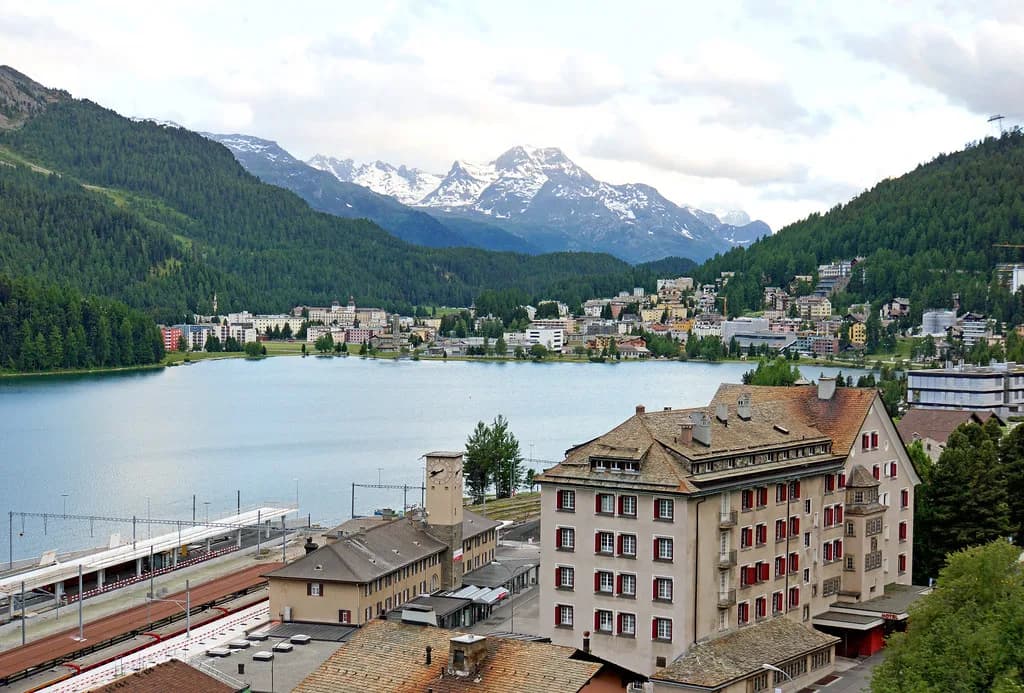
Treat the resort as a set of villages rather than a single base. St Moritz Dorf gives you the funicular and the shops; St Moritz Bad gives you the Signalbahn and a flatter walk to the lift; Celerina gives you the Marguns gondola and a quieter, more residential feel. Suvretta sits west of the town and has its own small beginner area and chairlift.
What Beginner Terrain Looks Like in Numbers
The resort's beginner offer is large by any Alpine standard. Skiresort's test report credits St Moritz–Corviglia with 42 km of easy pistes, a 27 per cent share of the local total, and awards it full marks for beginner-friendliness. The same report lists 155 km of blue slopes across the wider area, a figure that includes long easy traverses rather than only nursery ground.
That test report names the beginner zones explicitly: Corviglia, Marguns, Celerina, Salastrains and Suvretta. It also flags the easy runs from Las Trais Fluors, Marguns, Corviglia, Signal, Munt da San Murezzan and Salastrains down to Chantarella, plus the valley descents to St Moritz Bad and Dorf. Those valley runs are partly flat, so they suit a confident first-week skier rather than a complete novice.
A third-party guide puts the regional split at roughly 20 per cent blue, 70 per cent red and 10 per cent black across some 88 runs, against around 350 km of terrain. Use that as a rough shape rather than a precise figure: it tells you the region is intermediate-heavy, which is exactly why the designated learning zones matter more than the headline kilometres.
Corviglia and Salastrains: The Core Learning Zone
Salastrains is the beginner hub closest to St Moritz Dorf. It has its own beginner lift, a gentle piste and a direct link down from Corviglia, so you can progress from the nursery slope onto the Moritz run back into Salastrains without committing to a long descent. The Runzöl practice slope on Corviglia and the easy Mountys Adventure Slope in Celerina give children a change of scene.
Above Salastrains, the Corviglia plateau opens into wide, forgiving blues around Marguns, Corviglia and Signal. This is where a second- or third-day skier builds confidence, linking short lifts and cruising blue runs rather than repeating the nursery slope. The Snowpark on Corviglia includes a fun slope and an easy beginner park, useful if you are travelling with a teenager who wants something other than gates and drills.
The practical advantage of learning here is lift access. The Chantarella funicular and the Marguns gondola run daily from 07:45 according to the official tourism site, which means you can be on the snow shortly after breakfast and off the mountain before the afternoon crowds build. Ask your ski school where to meet before you buy anything, because meeting points differ between the Dorf and Bad sides.
Marguns, Celerina and the Provulér Nursery
Celerina is the quiet alternative to staying in St Moritz itself. The Marguns gondola lifts you straight into the Corviglia sector, and the Provulér slope above Celerina is served by one of the first child-safe four-seat chairlifts, with a nursery area at the top. For a family with small children, this removes a chunk of the morning logistics.
The wider valley has more first-timer options than most visitors realise. The Languard family area in Pontresina lets children up to 15 ski free, the Cristins lift sits beside the Corvatsch bottom station, and Samedan has the Survih nursery lift and a magic carpet at the edge of the village. Müsella in La Punt Chamues-ch offers a button lift and two short slopes, while Maloja's Aela area caters for the youngest beginners.
These small areas are worth knowing if your group splits by ability. A non-skiing partner can base up at one of them with a beginner child while you take a lesson on Corviglia, then meet for lunch. Check locally which of these lifts are running during your week, since small village lifts often operate on shorter calendars than the main mountains.
Suvretta and St Moritz Bad: Learning Closest to Your Hotel
Suvretta has its own beginner area and a chairlift serving the Randolins side, which makes it the obvious choice if you are staying in that western corner of town. The trade-off is that you are further from the main Corviglia circuit, so progressing beyond the nursery slopes means riding across to Salastrains or up to Marguns.
St Moritz Bad is the better base if you want a short walk to the Signalbahn and an easier gradient back to the hotel at the end of the day. The valley run down to Bad is classified easy, though it includes flat sections where snowboarders in particular will need to keep speed. Staying here also puts you closer to the bus network that links the villages along the valley floor.
Why Piz Nair Is Not First-Day Terrain
Piz Nair tops out above 3,000 m and the terrain beneath it is steep, high and exposed. The beginner assessment of St Moritz–Corviglia states plainly that Piz Nair is not recommended for beginners, and that judgement holds even for skiers with a few weeks under their belt. Riding the cable car up for the view is a fine idea on a clear day; skiing down is not.
The graduation route is more rewarding than it looks. Once you can link turns on blue gradients, the long easy runs from Corviglia and Marguns towards Chantarella and Celerina give you distance without exposure. Save the descent to St Moritz Bad for a day when you are comfortable on flatter traverses, and save Piz Nair for a future trip entirely.
Choosing a Ski School and Booking Lessons
Several schools operate on this mountain, including Skischule St. Moritz, Suvretta Sports School, Engadinsnowsports, Skischule PassionSki and a handful of independent instructors. The right choice depends less on branding than on where you are staying and which meeting point you can reach on foot in boots. A school based at Salastrains is awkward if you are lodged in Celerina, and vice versa.
Before you book, settle four points in writing with the snowsports school you choose — Skischule St. Moritz, Suvretta Sports, School Engadinsnowsports, Skischule PassionSki or one of the others listed above: the meeting point, the language of instruction, the maximum group size and whether lift pass and equipment are included. Group lessons keep costs down and give children company; private lessons compress the learning curve and suit adults with limited days. Book weeks ahead for peak holiday weeks, when the best slots go first.
Ask also how the school handles mixed-ability families. Many will run a morning children's group and an afternoon adult session from the same base, which avoids splitting the day into separate commutes. If your group includes a non-skier, ask whether the school offers a taster session on the nursery slope rather than a full-day booking.
Kit and Hire: Reserve Before You Travel
Hire is plentiful in St Moritz Dorf and around the lift stations, but the best-fitting boots disappear first in busy weeks. Reserve online before you travel and collect the evening before your first lesson so you are not queuing at 08:30 with a nervous beginner in tow. Village shops tend to offer more time for fitting; slope-side depots win on convenience.
You need less than you think for a first week. Helmet, goggles, gloves and a warm mid-layer matter more than technical outerwear, and a beginner does not need performance skis. If you plan to progress onto longer blues by day three, hire one step up from the absolute entry tier rather than the cheapest pair on the rack.
Lift Passes for Beginners: Buy for the Terrain You Will Ski
The full Upper Engadine pass covers Corviglia, Corvatsch, Diavolezza, Lagalb and the village lifts, and it is priced accordingly. A beginner skiing the Salastrains nursery slope for two days does not need it. Look instead at the half-day and local products the lift company publishes, and match the ticket to the terrain you will realistically use.
A sensible pattern is a local or half-day ticket for the first day or two, then a full-area pass once you are linking turns and want the run from Marguns or a day at Corvatsch. The official St Moritz tourism site sells day and half-day tickets online, and booking early is worth doing in holiday weeks. Current prices and product names change by season, so confirm them on the lift company's own pages before you commit.
One cost trap: buying a full-area pass for a five-day trip when you will only ski three mornings. Beginners tire faster than they expect, and a morning lesson plus an afternoon off is a normal pattern. Buy in shorter blocks and top up, rather than locking the whole week into a single ticket.
Getting to the Slopes Each Morning
Your daily route depends entirely on your base. From St Moritz Dorf, the Chantarella funicular starts the day from 07:45. From St Moritz Bad, the Signalbahn is the quickest way onto Corviglia. From Celerina, the Marguns gondola is on your doorstep, and the local bus network connects the valley villages for anyone staying further out.
Build ten extra minutes into a first morning. You are navigating an unfamilar ticket office, a hire collection and a ski school meeting point simultaneously, and the funicular queues build once lessons start. Use the valley map to plan your walk in boots the night before, rather than discovering on the day that your hotel is on the wrong side of the tracks.
A Realistic Three-Day Plan for a First-Timer
Day one belongs on the nursery slope, wherever you are staying: Salastrains, Suvretta, Provulér or one of the village lifts. Book a morning group lesson and stop when your legs tell you to. The goal is standing comfortably, not covering distance, and an afternoon off the snow will make day two considerably better.
Day two, move up to the Corviglia plateau and link short blue runs around Marguns and Signal. Day three, take the long easy descent towards Chantarella or Celerina and see how a full run feels. If the weather closes in or you are flagging, repeat day two instead of forcing progress; the mountain is not going anywhere.
Snowparks and Non-Ski Distractions for Mixed Groups
The Crowland snowpark on Corviglia gives freestyle-minded teenagers somewhere to play while the rest of the family cruises blues, and the Paradiso slope offers an easy scenic run with rest areas along the way. St Moritz also lays on yoga on snow sessions, which is a better option for a non-skiing companion than sitting in a café all morning.
Beyond the slopes, the valley has cross-country trails, winter walking paths and the Engadin villages themselves, all connected by train and bus. If your group spans abilities, plan one shared lunch on the mountain and let everyone choose their own morning. The funicular and gondola make meeting at a mid-mountain restaurant straightforward.
Where to Stay for Easy Slope Access
St Moritz Dorf suits anyone who wants the funicular, shops and restaurants within a short walk, at the cost of higher room rates and a hillier walk in boots. St Moritz Bad is flatter and well placed for the Signalbahn, though the village centre is a short bus or cab ride away. Celerina is quieter and cheaper, and the Marguns gondola puts you straight onto the beginner-friendly side of Corviglia.
Suvretta works for families who value the local beginner area and a calmer setting, accepting that you will travel to reach the main Corviglia circuit. Whichever you choose, prioritise a short walk to the lift over a larger room: for a beginner in stiff boots, 300 m of pavement in the morning is a real cost.
What to Check Before You Book
Lift opening and closing dates vary by season and by sector, and the small village lifts often run on shorter calendars than Corviglia or Corvatsch. The resort publishes season information and live lift status online, so confirm the dates for your week and whether the nursery lifts you plan to use are open. Snow conditions at the start and end of the season are genuinely variable at this altitude.
Also confirm the ski school's meeting point, your hire collection time and whether your accommodation offers a ski room, before you travel. These are the details that quietly decide whether a first morning feels calm or chaotic.
Is St Moritz Right for Your First Ski Trip?
St Moritz is a strong beginner resort if you want range, reliable snow and a proper mountain town behind the slopes. The designated zones at Salastrains, Marguns, Celerina and Suvretta do the heavy lifting, and the Chantarella funicular and Marguns gondola get you onto the snow early. If you compare it with smaller Swiss resorts, St Moritz is a different proposition on cost and scale, and that is worth weighing before you book.
If your budget is tight or your group is entirely new to skiing, a smaller resort may give you more slope time per franc. If you are travelling with mixed abilities and want the non-skiers to have a real town to enjoy, St Moritz earns its reputation. Decide on your base village first, then book lessons and hire, and the rest of the week falls into place. For a like-for-like look at another Swiss valley, our guide to Davos skiing for beginners covers a comparable learning scene.
Frequently Asked Questions
Is St Moritz difficult to ski for beginners?
No, provided you stay in the right zones. Corviglia has dedicated beginner areas at Salastrains, Marguns, Celerina and Suvretta, and the resort carries a top beginner-friendliness rating. Piz Nair and the steeper valley descents are not first-day terrain, so keep those for a later trip.
Where are the beginner slopes in St Moritz?
The main learning zones are Salastrains above St Moritz Dorf, the Runzöl practice slope on Corviglia, the Provulér nursery above Celerina, and the beginner areas at Marguns and Suvretta. Smaller village lifts in Pontresina, Samedan, La Punt and Maloja give extra options for children.
Do you need a full lift pass as a beginner in St Moritz?
Usually not for the first days. A local or half-day ticket covering the nursery slopes is cheaper than the full Upper Engadine pass, which only pays off once you are linking turns across Corviglia or visiting Corvatsch. Buy in short blocks and top up rather than committing to a full week.
Which St Moritz base is best for a first ski trip?
St Moritz Dorf suits anyone who wants the funicular on the doorstep; St Moritz Bad is flatter and close to the Signalbahn; Celerina is quieter with the Marguns gondola into the beginner side of Corviglia. Suvretta works for families who value its own small beginner area. Choose by walking distance to your first lift.
When does the St Moritz ski season start and end?
Dates vary by season and by sector, and the small village lifts run shorter calendars than Corviglia or Corvatsch. The resort publishes current season dates and live lift status online, so check those for your specific week before booking travel.
How much does a beginner ski trip to St Moritz cost?
Lift passes, lessons and hire are priced separately, and none of those figures are fixed from season to season. The lift company and the ski schools publish current rates on their own sites, so check those before you budget, and compare a local ticket with the full-area pass.
Sources
Useful notes for your next ski trip
Optional updates to our Alpine resort guides.
You might also like
Continue reading
More guides you'll find useful