Saas-Fee Skiing: Glacier Slopes, Sectors and Passes
Plan skiing in Saas-Fee: the valley's 150 km of piste, high glacier terrain, sector layouts, beginner slopes and the village versus valley pass choice.
On this page
Saas-Fee sits at roughly 1,800 m in the Saas Valley, and its skiable terrain climbs to about 3,600 m. The official tourism source puts the valley's combined offering at 150 km of blue, red, black and yellow pistes, with skiable areas spanning roughly 1,500 m to 3,600 m. That band, not a marketing promise, is the core of the case for choosing this resort.
This guide covers what the resort publishes about its sectors and how to decide between a village pass and a valley-wide product. It deliberately stays away from pricing and opening dates, because those belong to Saas-Fee Bergbahnen and change between seasons. A scheduled winter season is conditional: individual lifts, links and pistes may not run on the day you arrive.
If you want the practical groundwork first, that falls to the resort overview, while detailed decisions on ski lessons saas-fee and ski hire saas-fee live in their own guides. Read this page to understand the mountain, then those pages to book the pieces around it.
Why Choose Saas-Fee for a Ski Trip
The strongest argument for Saas-Fee is vertical range rather than sheer size. Because the terrain stretches from valley level near 1,500 m to a summit around 3,600 m, a single day can move through very different conditions. That range is what Saas-Fee Tourismus and the lift company's own material emphasises.
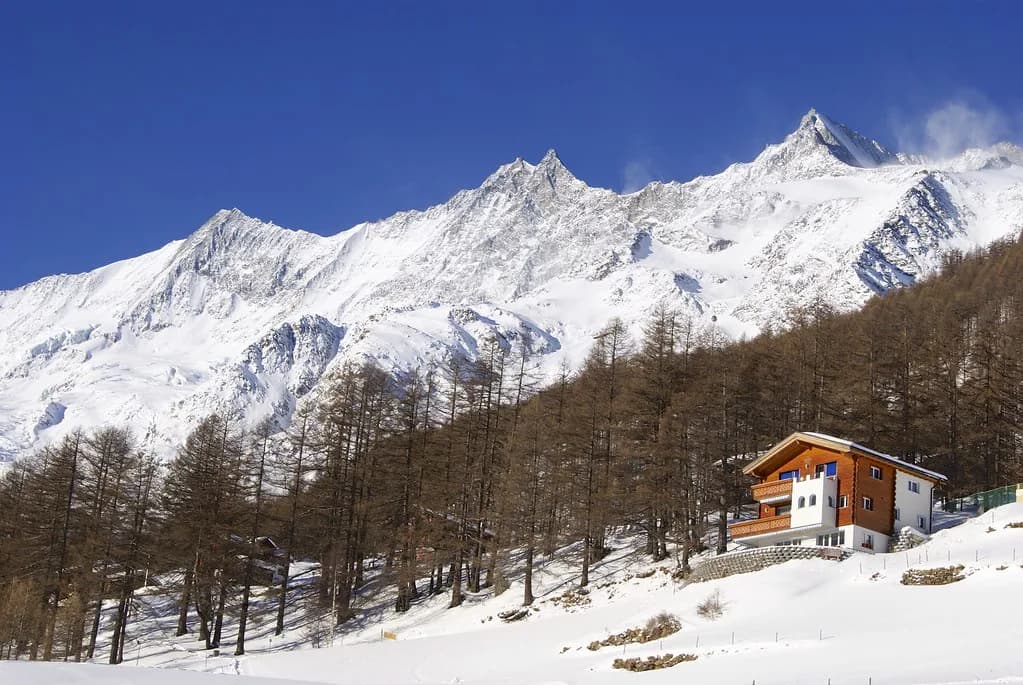
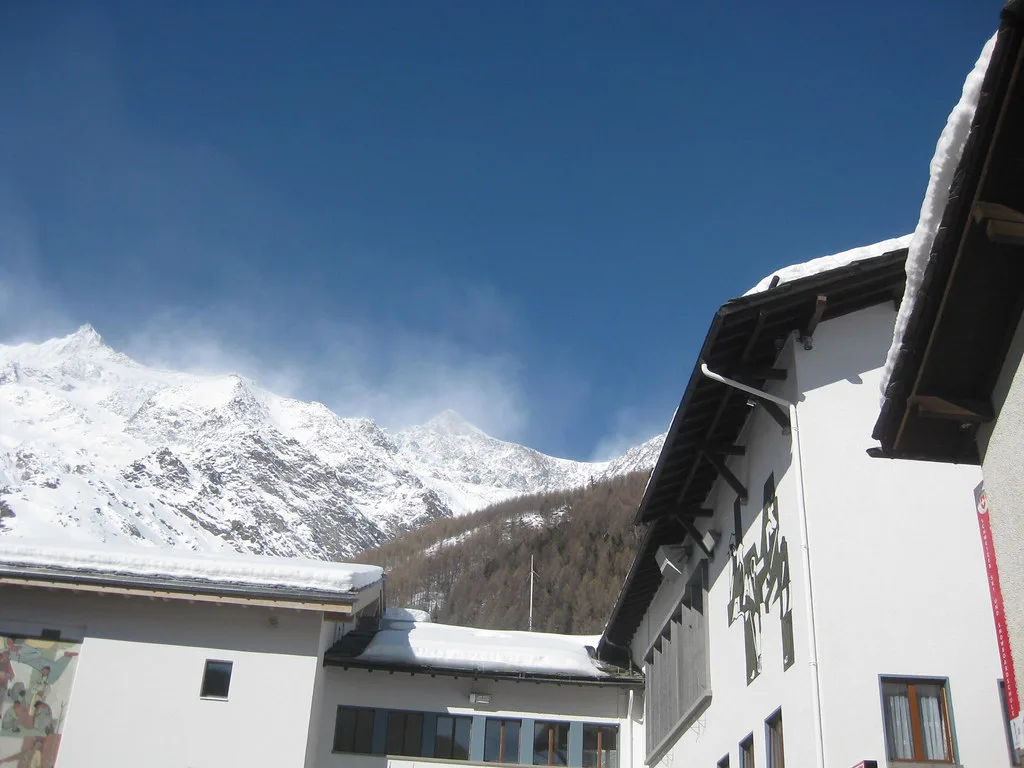
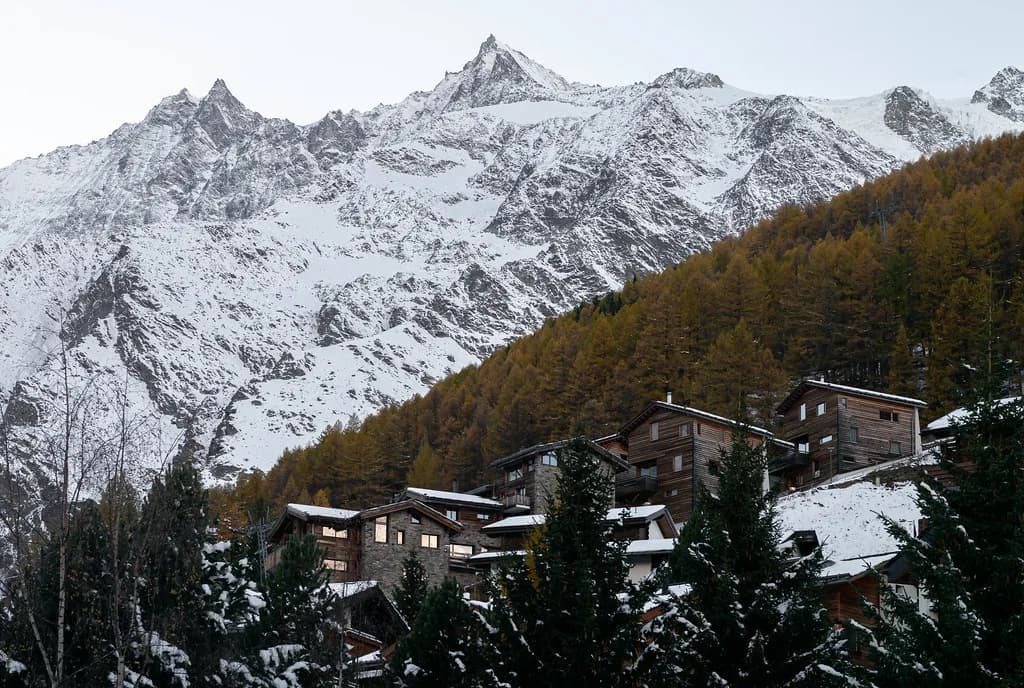
The village itself is compact and car-free, which changes how a ski day feels: you walk or ride between base points rather than driving between car parks. This is a genuine planning consideration, not decoration. It also means your choice of base inside the valley matters more than in a drive-in resort.
What Saas-Fee is not: a mega-domain where you can ski a week without repeating runs. It is a high, focused area with satellite sectors and two neighbouring villages. Skiers who want constant novelty should weigh whether day trips across the valley are part of the plan.
The Saas Valley Ski Layout
Saas-Fee is one of several resorts in the Saas Valley, alongside Saas-Grund, Saas-Almagell and Saas-Balen. The 150 km figure refers to the whole valley, not Saas-Fee alone. Getting this right is the single most useful correction to make before you buy anything.
Within Saas-Fee itself, the piste map is organised around a handful of sectors: Felskinn and Morenia high on the mountain, the Allalin glacier above them, Längfluh, and Plattjen. Each has a different character and a different height band. Reading the map by sector, rather than by total kilometres, tells you more about a day.
The neighbouring areas, Saas-Grund with its Hohsaas terrain and Saas-Almagell with Furggstalden, are separate lift systems rather than linked pistes. You reach them by bus or short drive, not by skiing across. That distinction drives the pass decision later in this guide.
Saas-Fee Local Slopes: Felskinn, Morenia and the Allalin Glacier
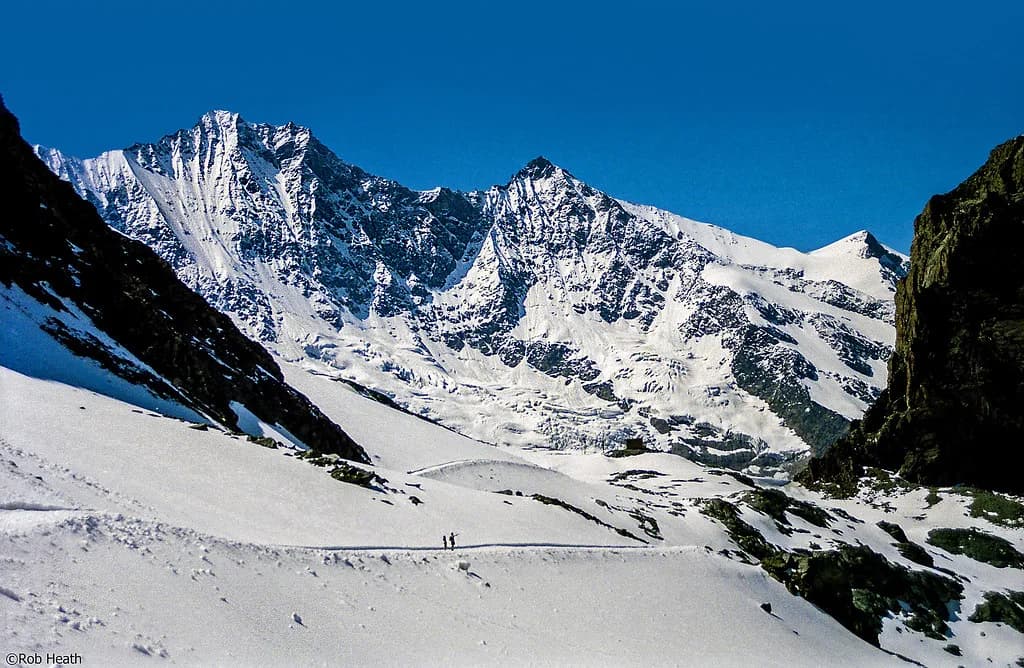
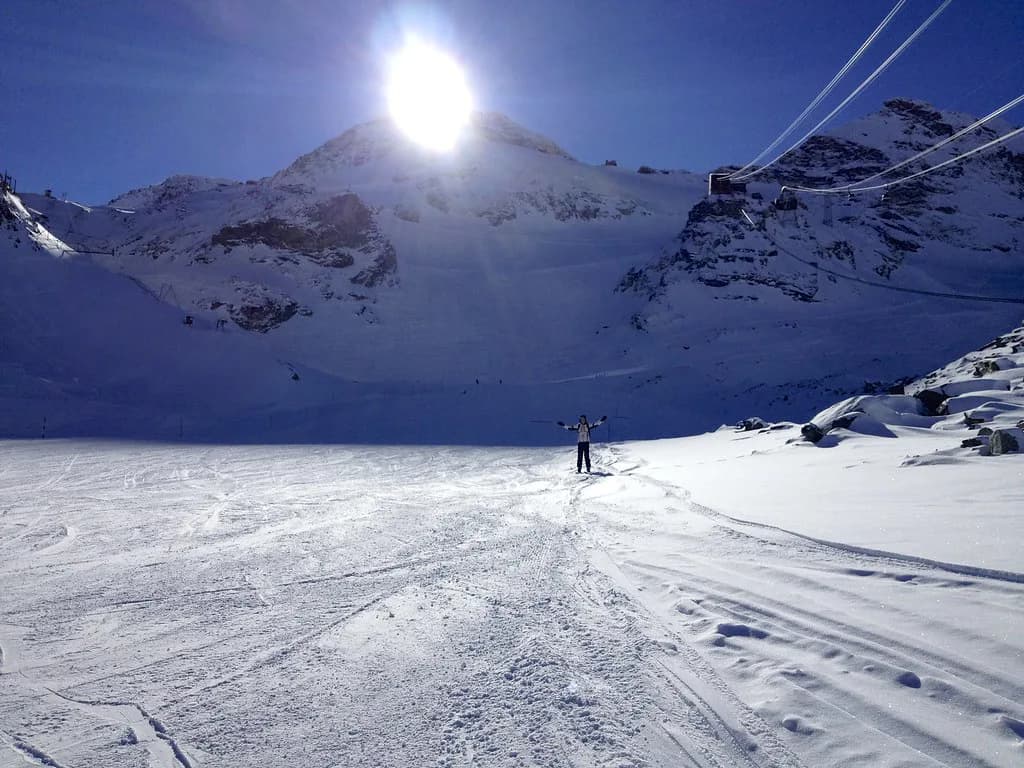
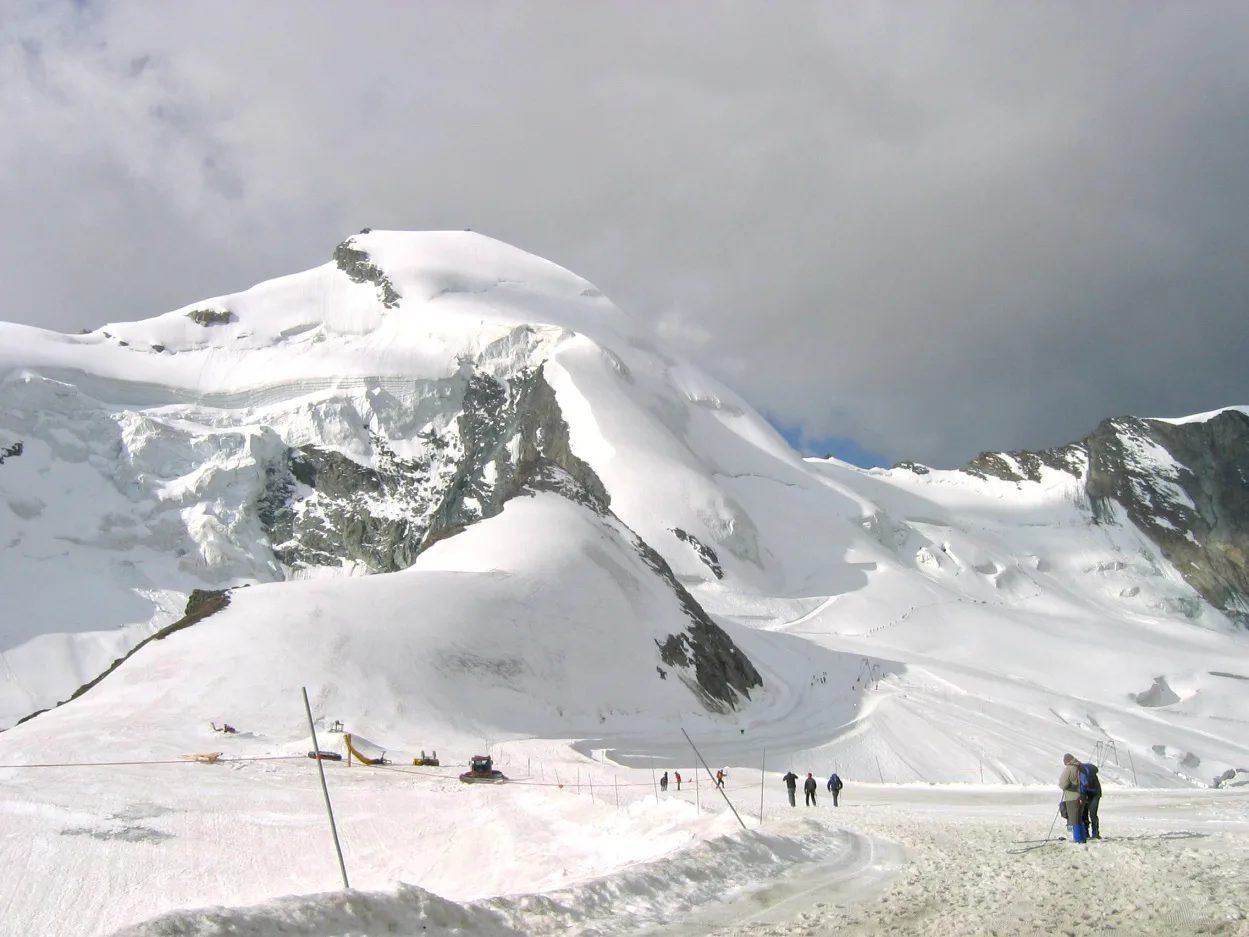
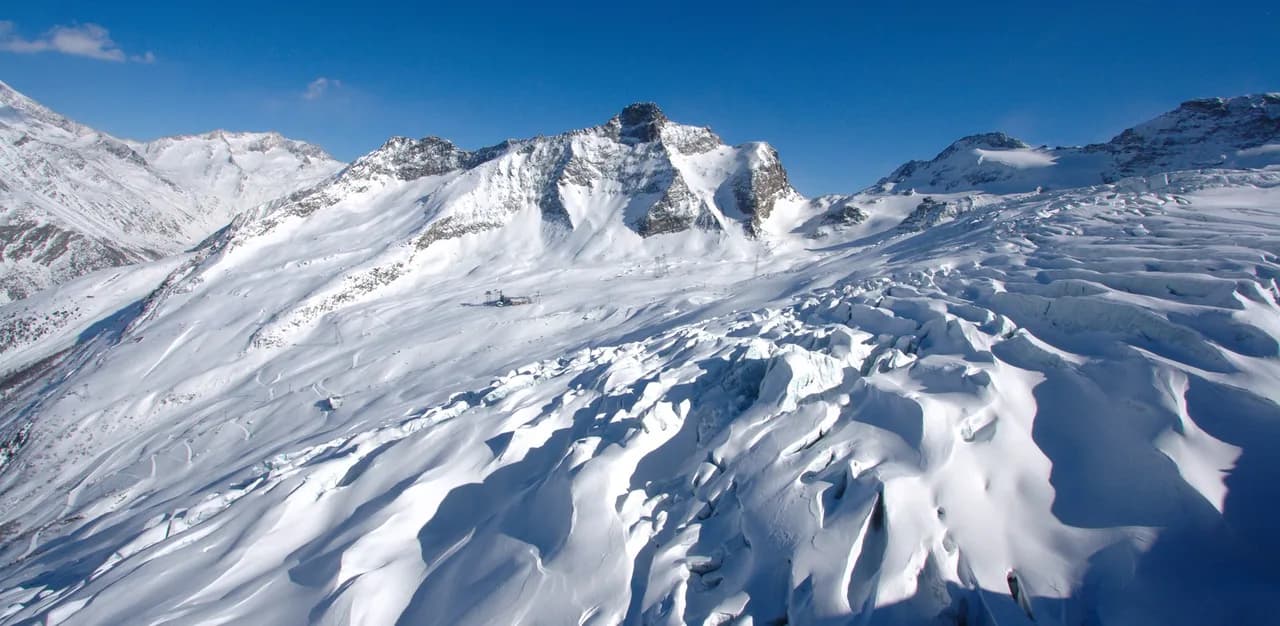
The high terrain is the resort's signature. Felskinn and Morenia form the mid-to-upper sector, and the Allalin glacier sits above them at the top of the lift system. This is where most of the vertical lives and where the altitude advantage is most obvious.
For intermediates, the upper reds and blues are the reason to come: long, groomed descents with the surrounding four-thousand-metre peaks in view. Saas-Fee Tourismus describes the terrain as blue, red, black and yellow pistes, so graded runs exist across the ability range. Treat the glacier sector as the centrepiece of a high day, not an afterthought.
One planning caution: the top-station altitude is not the same as conditions in the village. Midwinter shade and lower temperatures are commonly reported in the valley floor, so layers and timing matter. What runs on any given day is a live operational question for the resort to answer.
Mid-Mountain Sectors Worth Planning Around
Längfluh and Plattjen are the two sectors that often get overlooked by first-time visitors. Both sit below the glacier and offer descents that are easier to fit into a half day. Skiing them deliberately, rather than by accident, is how you avoid repeating the same runs all week.
Plattjen is typically less busy, which is worth knowing if you want space rather than company. On days when the exposed upper mountain is affected by weather, these lower sectors become the practical fallback. That is a decision about where to start the day, not a guarantee about what is open.
Between the glacier and the village, the pistes form a continuous spine down the mountain. Use it to plan a descent sequence rather than a tour: up high in the morning, mid-mountain after lunch, village-base finish. Confirm sector access on the Saas-Fee Bergbahnen live page before you commit the day.
Saas-Grund and Hohsaas: What the Neighbouring Area Adds
Saas-Grund is the quieter resort down the valley, and its ski area, Hohsaas, rises to around 3,200 m. Its long, rolling reds and blues make it a genuine change of scene rather than a duplicate of Saas-Fee. For a multi-day trip, that variety justifies a day away from the main area.
Beginners and cautious intermediates often find Saas-Grund less pressured, and Kreuzboden above the village is a known progression area. The trade-off is that you give up a day on Saas-Fee's high terrain to get it. Decide in advance how many valley days you actually want.
Access matters here: Saas-Grund is not linked to Saas-Fee by piste, so a day there involves transport. That single fact should shape both your base and your pass. If a day trip to Hohsaas is unlikely, the wider pass is probably not the right purchase.
Saas-Almagell and Furggstalden: The Third Valley Area
Saas-Almagell runs its own small area at Furggstalden, best known for Kian's adventure land aimed at younger skiers. It is the third distinct lift system in the valley and the third reason a whole-valley pass exists. Treat it as an add-on for a specific type of trip rather than a default day.
For groups with children who are new to skiing, a day at Furggstalden can be a calmer alternative to the main mountain. For everyone else, the honest question is whether a third area earns a day out of a short trip. If you are in the valley for four days or fewer, the answer is often no.
The logistics are the same as for Saas-Grund: separate lifts, transport required, separate terrain. Check what Saas-Almagell is actually operating before you build a day around it. Its smaller scale means closures have a proportionally bigger effect on a planned visit.
Pass Decisions: Village Pass Versus Valley-Wide Pass
The pass structure is the decision that most affects your week. Historically, each village in the Saas Valley has had its own lift pass, with an alternative whole-area product covering Saas-Fee, Saas-Grund, Saas-Almagell and Saas-Balen. The exact range and name of current products should be checked with Saas-Fee Bergbahnen before purchase.
The useful test is simple: will you actually ski a day outside your base village? If yes, the wider pass is worth costing out against a village pass plus a separate day ticket. If no, you are paying for terrain you will not use. Run that comparison with current prices rather than any figure quoted in older material.
Beginners should separate the nursery slope product from the mountain pass entirely. There is a large machine-assisted beginner area at the edge of the village covered by a cheaper dedicated pass, so buying a full mountain pass on day one can be a waste. Start with what you will genuinely ski, then upgrade if the week goes well.
Pass products, package deals and purchase options change between seasons, and Saas-Fee Tourismus publishes them on its own pages. Our saas-fee ski pass guide walks through how the products relate to each other. Read the current list on saas-fee.ch, since a pass name alone tells you nothing about refund terms or access.
Beginner Provision and Progression Routes
Saas-Fee handles beginners well because the nursery area is genuinely at village level, not a token patch. It is described as a large beginner zone at the edge of the village, and it sits in the sunnier part of town. That combination of convenience and light makes early learning days easier to plan.
Progression generally moves from the nursery slopes up towards Felskinn and Morenia, with Kreuzboden above Saas-Grund as another option. That gives a beginner two directions to develop in rather than one. Which of those runs is suitable on a given day is a question for the snowsports school, not for an article.
A common mistake is buying a high-mountain pass for the whole trip before anyone in the group can use it. Buy for the first two days, then reassess. That approach works particularly well here because the beginner product and the mountain product are separate.
Lessons, Snowsports Schools and Accessible Provision
Saas-Fee Tourismus signposts snowsports schools across the Saas Valley rather than running a single central booking desk. That means school choice is yours, and arrangements sit with each school. Look at the official schools listing to see what is offered before you commit.
Accessible skiing has dedicated provision through Para-Alpine Skiing Saas-Fee, which Saas-Fee Tourismus points to for information on adapted lessons. This is a real, specific service rather than a general claim of inclusivity. Contact Para-Alpine Skiing Saas-Fee directly for programme details and requirements.
Lesson formats, group sizes, meeting points and languages vary by school, so verify these when you book rather than assuming. Two schools in the same valley can operate quite differently. Our ski lessons saas-fee guide covers how to compare what schools publish.
Equipment Hire and Sports Shops in the Valley
Saas-Fee Tourismus notes sports shops across the Saas Valley where you can arrange ski and snowboard equipment. Because the village is compact and car-free, collecting and returning gear on foot is realistic. That reduces the usual friction of a hire morning.
Stock, fitting standards and swap policies differ by shop, so these need checking directly rather than inferred from a shop's size or location. Book ahead during busy weeks if you have specific requirements. Our ski hire saas-fee guide walks through what to confirm before you reserve.
One practical point for beginners: you do not need high-end equipment for nursery slopes. Match the hire to the terrain you will actually ski in the first days. Upgrading later in the week is usually easier than starting with gear you cannot yet use.
Snowboarders, Funparks and Race Courses
Saas-Fee does have park facilities, so the answer to whether the resort suits snowboarding is yes. Saas-Fee Tourismus lists the Funpark Morenia in Saas-Fee and the Funslope Hohsaas in Saas-Grund among its freestyle offerings. Exact features and opening are seasonal, so check the Funpark Morenia listing before travelling for the park specifically.
There are also organised race courses in Saas-Fee, which give the mountain a competitive dimension beyond free riding. These are bookable experiences rather than permanent piste features. Availability and format should be confirmed with Saas-Fee Tourismus.
For riders, the high glacier terrain and the park cover different needs, so plan days around one or the other rather than trying to do both. Our saas fee snowboarding guide looks at the rider-specific planning in more depth. Terrain park features are built and rebuilt through the season, so no article can promise a given set-up.
Season Shape, Altitude and Reading the Numbers
Altitude is the reason Saas-Fee appears on shortlists in the first place. Saas-Fee Tourismus describes skiable areas between roughly 1,500 m and 3,600 m, with the top of the system on the Allalin glacier. That vertical band supports a longer usable window than a low-altitude resort.
A scheduled season is conditional, not a promise. A published opening or closing period does not guarantee that every lift, link or piste will be running, or that snow will suit your level on your dates. Anything historical about snow patterns is past observation, never a forecast.
For current operating status, Saas-Fee Tourismus and Saas-Fee Bergbahnen carry live information on open lifts, weather and tariffs on their own pages. Use those rather than any third-party summary. That is also where you check whether specific sectors are running on your dates.
Village shade early in the season and spring conditions later are documented patterns, not guarantees either way. If your trip depends on a specific sector being open, build in flexibility. The altitude helps but does not remove variability.
Beyond Skiing: Hannig and Non-Ski Options
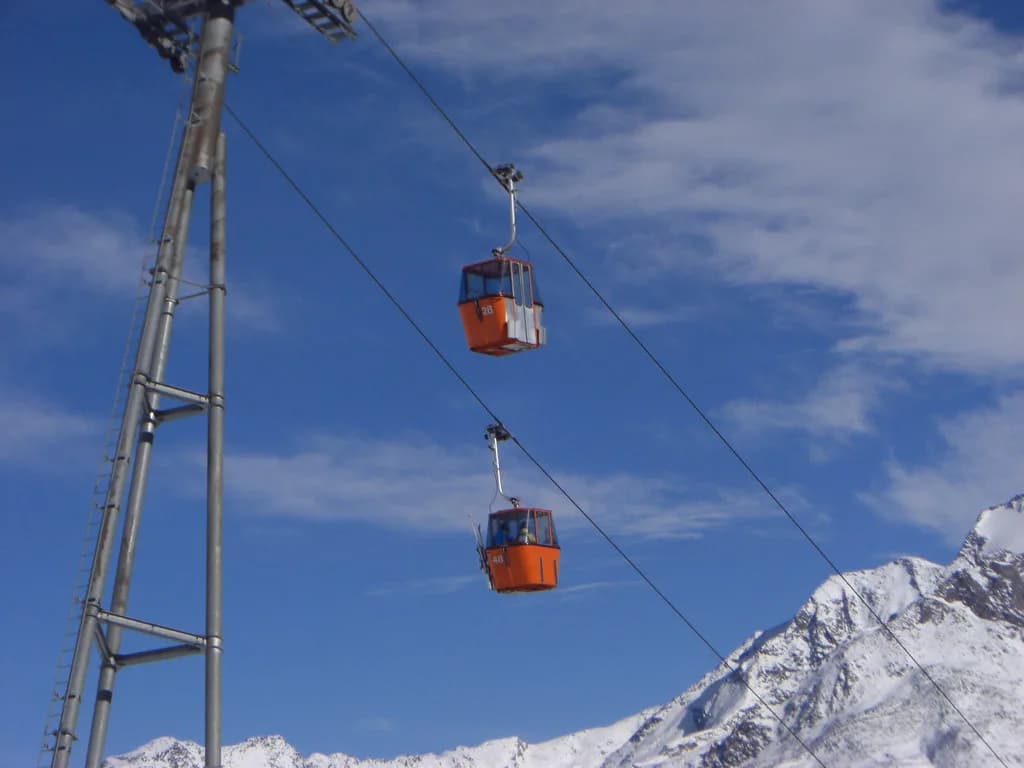
Hannig is served by its own gondola and is set aside for non-skiing winter activities such as tobogganing and winter walking. This matters for mixed groups where not everyone skis every day. It gives non-skiers a genuine mountain day rather than waiting in the village.
The car-free village itself supports a slower day: walking the streets, riding the electric taxis, or taking in the valley scenery. That is a real option for rest days, not filler. It also means a non-skiing companion has something to do beyond the hotel.
Plan non-ski days around the same transport question as everything else in the valley: what is running and when. Check the Saastal Bergbahnen lift status pages for a gondola or trail before you set out. Our saas-fee ski season guide covers how seasonal patterns affect these choices.
Practical Planning Sequence for a First Trip
Start with the pass question, because it determines everything else. Decide whether your group will realistically ski outside the base village, and choose between a village product and a valley-wide one on that basis. Check current products, prices and inclusions with Saas-Fee Bergbahnen before booking.
Second, match your accommodation base to your skiing level. Beginners benefit from staying close to the village nursery area; confident intermediates may prefer to be nearer the main lift access. The car-free layout makes walking distances a real factor in that choice.
Third, book lessons and hire early if you need them, since both are arranged directly with schools and shops rather than through the lift operator. Our ski lessons saas-fee and ski hire saas-fee guides set out what to confirm. Do this before you lock in a pass, because a school's programme may shape which terrain you use.
Finally, plan around the weather rather than a fixed itinerary. Keeping one flexible day lets you swap a high glacier day for a lower sector if conditions change. That is how the resort's altitude band becomes an advantage rather than a gamble.
Plan Your Saas-Fee Ski Trip
Saas-Fee rewards a decision made before you arrive: whether you are buying for one village or the whole valley. The terrain supports both answers, but only one of them matches your actual week. Settle that first and the rest of the planning falls into place.
Use the official Saas-Fee pages for anything operational, including what is running and current pass products, and check them before you book rather than relying on older summaries. The saas fee ski map is the other document worth reading closely, because it shows how the sectors and neighbouring areas sit apart. Conditions and products change between seasons.
If Saas-Fee's high, compact profile is not quite the right fit, compare it against other Swiss options before committing. Davos skiing and crans montana skiing offer different terrain shapes and pass structures worth weighing against the Saas Valley. The right resort is the one that matches how you actually ski.
Explore more Saas Fee guides
Frequently Asked Questions
How is skiing in Saas-Fee?
Saas-Fee offers high-altitude terrain within a compact, car-free village. The Saas Valley's skiable areas stretch from roughly 1,500 m to about 3,600 m, with glacier terrain at the top of the system. That altitude band is the main reason people choose it, but the season is scheduled, and individual lifts or pistes may not run on your dates.
How much piste is there across the Saas Valley?
The official tourism source states 150 km of blue, red, black and yellow pistes across the Saas Valley. That figure covers the wider valley, including neighbouring villages, not Saas-Fee alone. Confirming what applies to your pass and target sectors is a question for the operator before you book.
Do I need a separate pass for Saas-Grund and Saas-Almagell?
Saas-Grund and Saas-Almagell are separate lift systems rather than pistes linked to Saas-Fee. Historically each village has had its own pass, with a whole-area product covering the valley. Check the current product list and inclusions directly, because naming and structure can change between seasons.
Is Saas-Fee good for beginners?
There is a large beginner area at the edge of the village, covered by a cheaper dedicated pass, and progression terrain higher up. That separation means beginners do not need to buy the full mountain pass on day one. Lesson formats and progression suitability should be confirmed with the snowsports schools you book with.
Does Saas-Fee have a ski park?
Yes. The Funpark Morenia in Saas-Fee and the Funslope Hohsaas in Saas-Grund are among the freestyle offerings, along with organised race courses. Park features are built and adjusted through the season, so check current status if the park is the reason for your trip.
What is the altitude range of the Saas-Fee ski area?
The official source describes the valley's snow-assured areas as sitting between about 1,500 m and 3,600 m, with the top of the system on the Allalin glacier. Note that the village sits at roughly 1,800 m, which is not the same as the valley skiing low point.
Is Saas-Fee ski resort open?
Opening and closing periods are published, but a scheduled season is conditional rather than a promise that every lift or piste will operate. Live status pages show what is actually running. Check those shortly before travel.
Sources
Useful notes for your next ski trip
Optional updates to our Alpine resort guides.
You might also like
Continue reading
More guides you'll find useful