Wengen Skiing: Jungfrau Region Guide to Sectors and Passes
Wengen skiing explained: how the Jungfrau Region sectors connect, what one lift pass covers, and where beginners and intermediates actually ski.
On this page
Wengen skiing is not a single, self-contained area. The car-free village sits on a shelf above the Lauterbrunnen valley and plugs into a network of sectors, some reached by cog railway, some by cable car, and some only via a train ride across the mountains. That matters because your day, your lift pass and your lesson plans all depend on which sectors you can realistically reach.
The one decision that shapes a Wengen trip is simple: base yourself in Wengen and accept that part of every ski day is spent moving between sectors. In exchange you get a traffic-free village, long intermediate runs and one Jungfrau Region pass that covers Grindelwald, Wengen and Mürren rather than separate area tickets. This guide sets out how to plan around that trade-off.
It is written for trip planning, not for a snow forecast. Every season date, piste and link below is a scheduled operation that depends on snow and decisions made by the Grindelwald-Wengen lift company, so check current prices and dates before you book anything that cannot be changed. The sections that follow move from location and sector geography through passes, terrain, lessons, hire, season structure and on to a practical planning sequence.
Where Wengen Fits in the Jungfrau Region
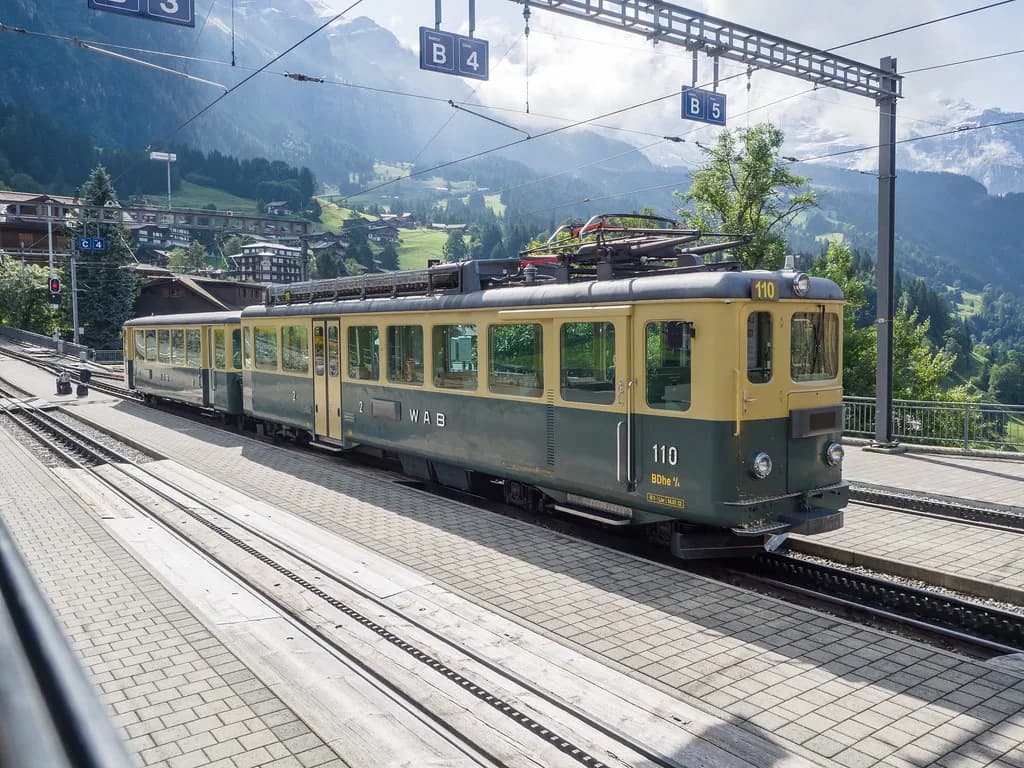
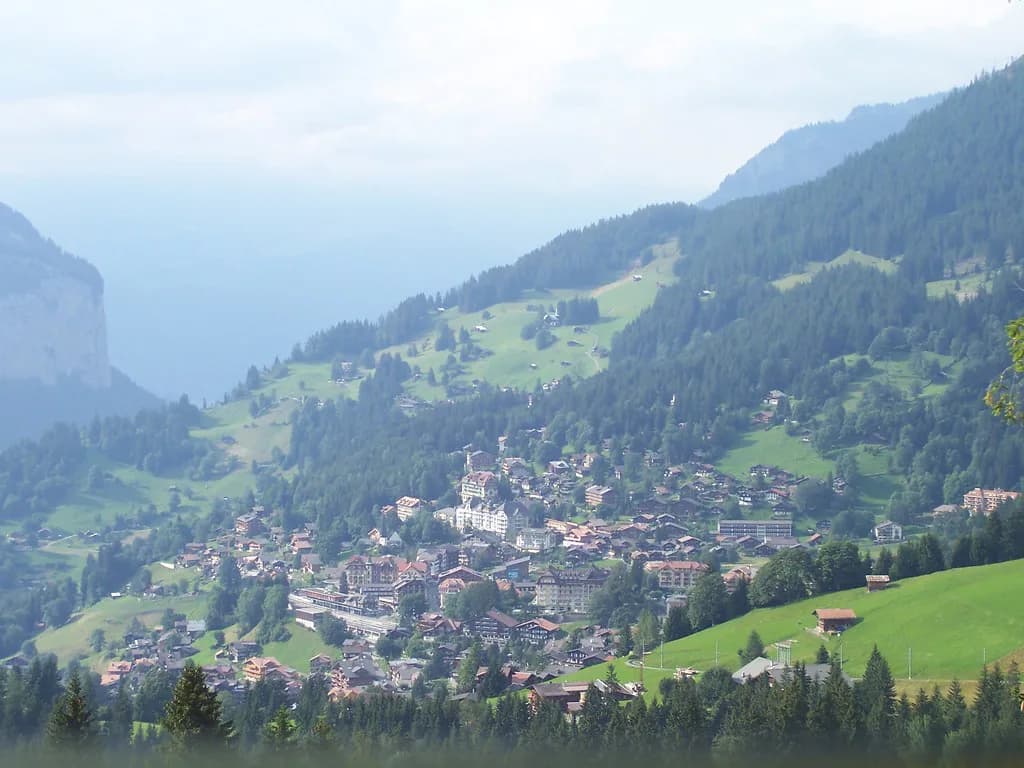
Wengen occupies a shelf above the Lauterbrunnen valley, facing Mürren across the valley and separated from Grindelwald by the Männlichen ridge. It has no through road for visitors, so the uphill link from the valley floor is the Wengernalpbahn cog railway, and that single fact shapes arrivals, day trips and equipment logistics. Trains run up from Lauterbrunnen, where cars stop, and the village itself is compact enough to walk end to end.
Within the region, Wengen's local slopes sit below Kleine Scheidegg and the Männlichen area, which in turn connect across to the Grindelwald side. Grindelwald-First and Mürren-Schilthorn are separate sectors with their own access points, and reaching them from Wengen means a train or a cable car plus time rather than a straightforward ski-down. Treat the region as a cluster of linked zones and plan which ones you will actually use on each day.
Altitudes and area sizes are published inconsistently across sources: the resort is commonly listed with a village altitude in the 900m to 1,275m range, while area totals vary between roughly 200km and 224km of slopes depending on who is counting. Because no single official count is agreed, this guide avoids quoting a definitive region total. Compare the figures published by Wengen Tourismus and Jungfraubahnen if you need them for a specific decision.
There is also a difference between the skiing altitude and the village altitude: the highest lifted terrain in the region sits far above the village, while Wengen itself is a mid-altitude base. That gap is why you should judge terrain access sector by sector rather than inferring it from a single number. If a low-altitude village run matters to you, confirm its current status with the lift company, since village runs can be closed even when higher terrain is open.
The Sector Map for Trip Planning
The working sector map for a Wengen trip has five parts: the Wengen village slopes, Kleine Scheidegg, Männlichen, Grindelwald-First and Mürren-Schilthorn. Kleine Scheidegg and Männlichen are the two sectors you will reach directly from Wengen, by train and cable car respectively, and they carry most of the terrain you will ski. Grindelwald-First and Mürren-Schilthorn sit further out and need a deliberate plan.
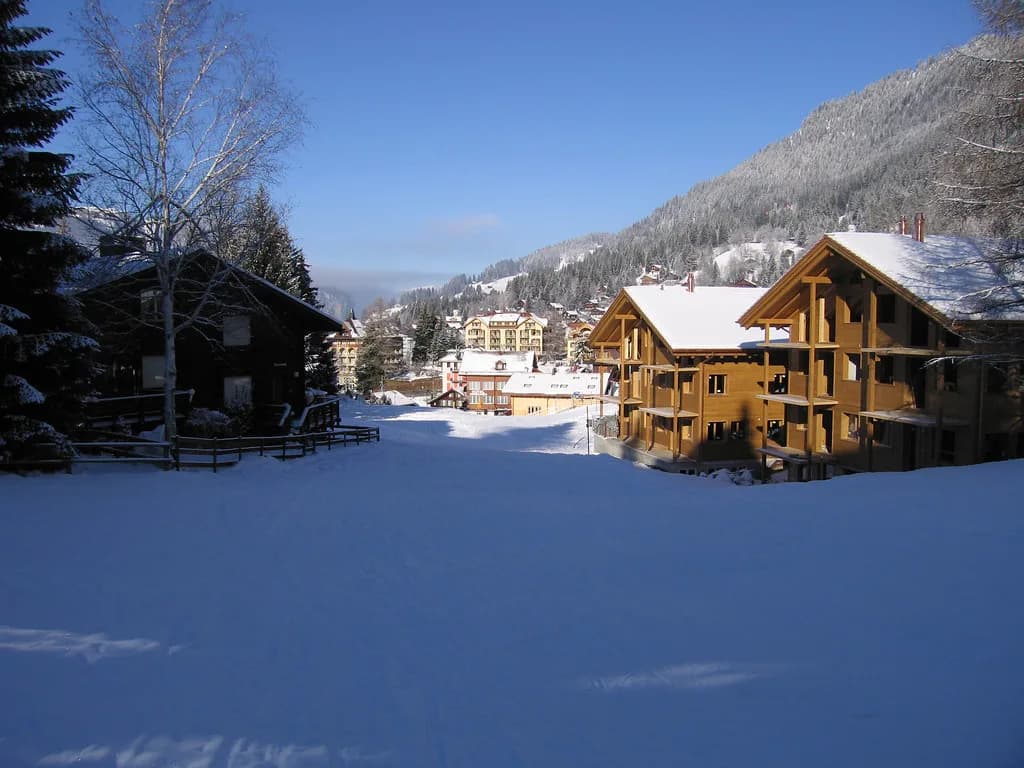
Wengen's own slopes sit low and close to the village, served by lifts out of the centre and by the railway. They are the easiest terrain to reach, but they are also the most exposed to warm spells and rain, which matters more than the map suggests. The village is also almost traffic-free, with the short main street acting as the hub for the nursery slope, shops and the station.
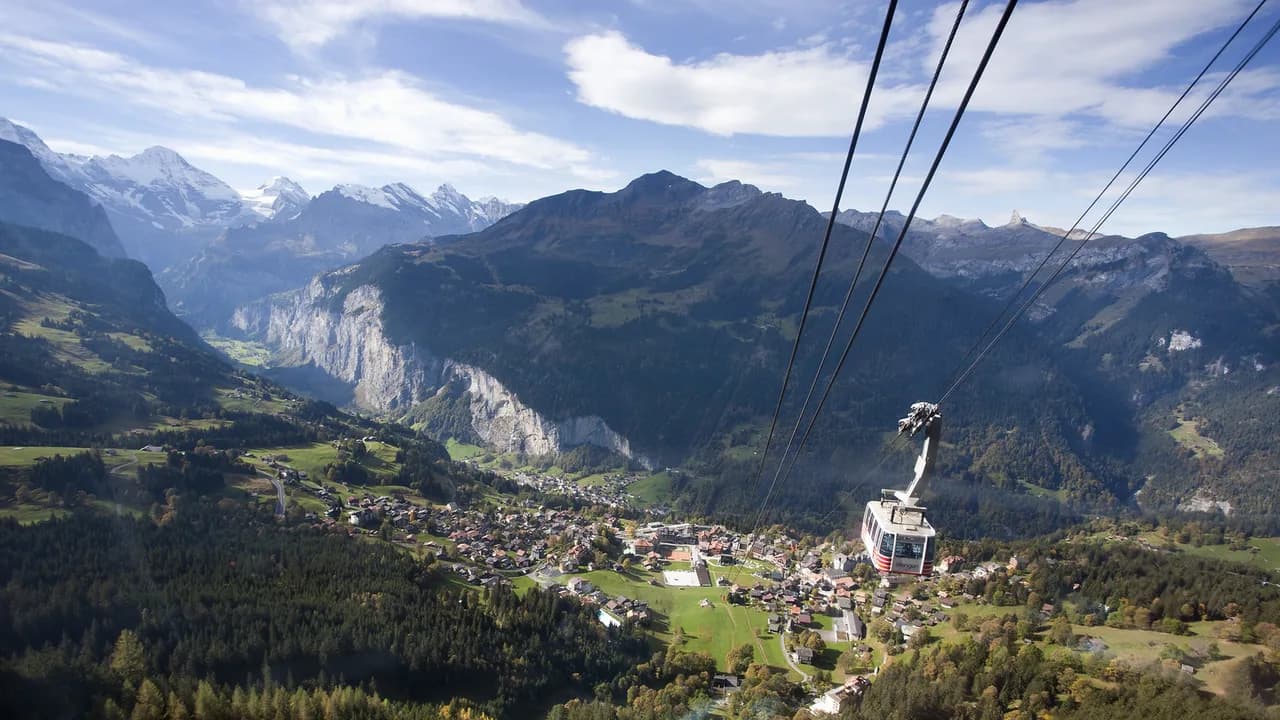
Männlichen above Grindelwald is the natural link between the Wengen and Grindelwald sides, and the cable car is the fastest way up from Wengen when the queue is short. That cable car can have long waits at peak times, so build slack into your morning if you are aiming for first lifts on the Grindelwald side. Otherwise, the train to Kleine Scheidegg is the more predictable option, if slower.
Grindelwald-First and Mürren-Schilthorn are day trips rather than default sectors because both require a change of valley or a long transit. First is reached from the Grindelwald side, so a Wengen skier has to travel there and back through the connecting systems. Mürren-Schilthorn faces Wengen across the Lauterbrunnen valley, but getting there still takes time by train and cable car, which is why it belongs in a single planned day rather than a quick morning.
A useful planning habit is to group sectors by which uplift they depend on. Train-served sectors are stable in timing but not fast; cable-car sectors are fast but queue-prone; remote sectors need a full day. That is more reliable than picking sectors by reputation, because conditions and opening status can change week to week. Keep the Jungfrau Ski Region map to hand as you shortlist sectors, so you can see which links are skiable and which are rail hops.
Pass Boundaries and the Single Region Ticket
For Wengen, the central pass decision is that individual area tickets are no longer the model: one lift pass now covers the Jungfrau resorts of Grindelwald, Wengen and Mürren. That removes the old question of which area to buy into and replaces it with a question about how far you can realistically travel. You are not choosing between areas at the ticket window; you are choosing where to spend your time.
This matters for budgeting, because a pass covering several sectors means you get no direct saving by staying local, so the value comes from using the spread. Conversely, if your group plans to ski only the Wengen and Kleine Scheidegg slopes, part of the pass goes unused. Decide before you commit how many days you will genuinely travel, and price your trip around that, not around a single area's tariff.
Pass products are published season by season, and durations, age bands and conditions change. Do not carry forward figures you saw for a previous winter, because day and multi-day rates are exactly the numbers that shift between seasons. Read the current tariff and terms on the operator's own ticket pages before you build a budget, and treat any older figure as background only. This is also where you will find how the single pass handles child, youth and senior categories.
Read the pass terms for what you are actually buying: whether it is a region-wide ticket, whether any sectors need a supplement, and whether any local bus, train or pedestrian lift is included. Do not infer inclusions from the pass name or from the resort's reputation, because inclusion rules are administrative decisions set by the lift company each season. If a specific railway hop matters to your itinerary, confirm whether it is covered before you rely on it.
There is also the question of the season ticket, which the tourism authority promotes alongside daily products. Season passes are aimed at people staying for long periods or returning repeatedly, and their terms are separate from short-break tickets. If you are weighing a season product against multi-day tickets, read both sets of conditions on the Wengen Tourismus and Jungfraubahnen pages, because the comparison rests on duration and usage rules rather than on headline pricing alone.
Beginner Provision in Wengen
Beginners in Wengen start at the nursery slope in the centre of the village, which is gentle and convenient but sits at a modest altitude. Because it gets afternoon sun, snow quality there can suffer later in the day, so morning sessions are usually a better bet. Being able to walk to the slope from your accommodation is a real advantage if you are carrying first-day nerves as well as equipment.
Once you can turn and control speed, there are higher beginner areas at both Männlichen and Kleine Scheidegg. Moving up to these gives you better snow and longer, gentler runs than the village slope can offer, and it sets you up for the progression terrain on the Grindelwald side. The catch is the journey: you take the train to Kleine Scheidegg or the cable car to Männlichen, so a lesson or a practice session up there starts with a transit leg.
The progression from first turns to longer cruising runs is one of Wengen's genuine strengths, because large parts of the Wengen and Grindelwald shared terrain are rated blue or easy red. That gives beginners somewhere to go after the nursery slope rather than a dead end. Keep expectations about the village slope realistic in mild spells, and plan to move higher as soon as your ability allows.
For children and non-skiers, off-slope provision exists in and around the village, including childcare arrangements, but details change by season and by provider. Check ages accepted, daily hours and booking terms directly with the Playhouse kindergarten in the tourist office rather than assuming from a listing. If your trip depends on childcare, treat it as a booking-critical item alongside the pass and lessons.
Intermediate Terrain and Progression Runs
Wengen is best understood as an intermediate resort. The great majority of runs in the Wengen and Grindelwald area are rated blue or red, and it is the length and shape of those runs, rather than their difficulty, that makes them good. Long, rolling blue and easy red pistes let you cover ground and build mileage day after day without constantly stopping to solve a hard pitch.
For a step up, the usual route is to head toward the top of the Lauberhorn chair or follow the start of the downhill course toward the Wixi area. These are where the terrain gets more serious without leaving the groomed system. Shady runs dropping from Eigergletscher are another option for confident intermediates and often hold snow later in the season than lower pistes.
The working pattern for a mixed-ability group is to base early skiing on the long blues around Kleine Scheidegg and Männlichen, then let stronger skiers test themselves on the reds above the village. Because the area is largely made up of cruising terrain, differences in ability are mostly managed by pace rather than by splitting into separate sectors. That keeps a group together for more of the day than a resort with fragmented difficulty bands would allow.
Grindelwald-First adds another dimension, but it is best treated as a planned day rather than a routine extension of a Wengen morning. If you are already comfortable covering distance, using one day there trades travel time for variety. Whether it repays that trade depends on your group's appetite for moving, not on the terrain alone.
Advanced Terrain and Its Limits
Expert terrain around Wengen is limited and concentrated, which is the single most important expectation to set before booking. The genuine black runs are essentially parts of the Lauberhorn World Cup downhill line and a couple of pistes descending from Eigergletscher toward Wixi. Away from those, much of what looks demanding is really fast, sustained intermediate cruising.
Because of that concentration, advanced skiers often look beyond Wengen for harder days, with Mürren an established answer for those willing to make the journey. The trade-off is real: you gain steeper and more varied terrain, but you lose flexibility, since a Mürren day consumes travel time in both directions. Plan it as a dedicated day rather than an afternoon bolt-on.
Snow history is sometimes cited to suggest how challenging the resort is, but historic snowfall says nothing reliable about the season you are booking. Treat any claim about expert terrain as conditional on the snow and opening status of that specific week. If hard skiing is central to your trip, build in an alternative sector plan from the start.
Before committing, obtain the current piste map and mark the runs that genuinely interest you. A quick count of the black-graded options will tell you more than any description, because the map is a factual document while reputation is not. Checking the Wengen piste map before you book is the honest way to decide whether the expert offering is enough for your group.
Snowboarding in Wengen
Kleine Scheidegg offers plenty of wide open red runs, which suit boarders who want space to build technique and practise carving. That width is the main attraction, because it lets you ride at speed without threading between obstacles or crowds. It also means snowboarders can use much of the same intermediate terrain that makes the area work for skiers.
The counterpoint is the linking terrain. Some connecting sections between pistes are flat and narrow, and those can be a genuine nuisance on a board, especially for less experienced riders. If you are new to snowboarding, factor in the possibility of unclipping and walking short stretches rather than treating every link as rideable. Choosing sectors with fewer of these links will make your day smoother.
Park provision differs between the two sides of the region. Wengen has a beginner's snowpark, while Grindelwald offers a much larger park with a longer line of features. Exactly which features are built in any given season is something to confirm with the lift company before you plan a trip around them. Do not assume a park's size or features from a previous season's description.
Equipment hire matters more for snowboarders than many realise, because board and boot fit affects control and comfort all day. Hire outlets in Wengen cover boards as well as skis, and reserving ahead is the realistic option in peak weeks when popular sizes run short. If your riding depends on specific gear, arrange it before you travel rather than on arrival.
Lessons and Ski School Booking
Several ski schools operate in Wengen, with instructors covering a range of ability levels, and demand is concentrated in peak weeks. The practical consequence is that group lessons and popular private slots sell out, so booking well ahead matters more than comparing marketing copy. If your dates fall in a school holiday period, treat lessons as a fixed item to secure early.
When comparing schools, ask how they group by ability and how they assess skiers on the first morning. Group size and the level split matter more than a school's name, because the wrong group wastes a week regardless of the instructor's reputation. Ask directly what happens when a skier is misplaced, and what reallocation looks like.
Meeting points and start times are operational details that schools set and change, so get them in writing with your confirmation rather than inferring them from a village location. Languages spoken and the balance between group and private formats are also worth confirming for your specific dates. Comparing wengen ski lessons by group size and level split tells you more than any brochure, because those details decide whether a week of lessons runs smoothly.
For children and complete beginners, check the school's minimum age, the progression route from the village nursery slope to the higher beginner areas, and whether a lift pass is needed during lessons. These are booking terms, and they vary by provider and by product. Confirm them with the school rather than relying on a general resort description.
Equipment Hire Practicalities
Wengen has a range of sports shops and hire outlets offering skis, snowboards, boots, helmets and other winter equipment. Because the village is compact and largely car-free, picking up and returning gear is straightforward once you are there, which is a genuine advantage over larger bases. The constraint is stock rather than distance, so the practical step is to reserve in advance.
Reserving ahead matters most for boots and for boards, where fit and size options are narrower than for skis. In peak weeks, the most common sizes and the performance categories go first, so leaving it to arrival day narrows your choice. Reading up on wengen ski hire before you travel lets you compare shops and reserve the sizes you actually need.
Terms vary by shop and by season: deposit rules, swap options, damage policies and whether you can change equipment mid-week are all things to settle with the hire outlet directly. Do not assume a shop's policy from its name or from a generic description. Read the shop's own booking conditions, and ask whether you can collect the evening before your first ski day.
There is also the transport angle: because cars stop in the valley at Lauterbrunnen, anything you hire in the valley has to come up by train. That is manageable but adds friction on arrival day. Hiring in Wengen itself avoids the extra leg, so weigh the convenience against price and range before deciding.
Season Structure for 2026/27
The Jungfrau area's sectors do not open and close on the same dates, and that is the core season fact for planning. For 2026/27, Wengen Tourismus lists Grindelwald-Männlichen as open from 21 November 2026 to 25 April 2027, Grindelwald-First from 19 December 2026 to 29 March 2027, and Mürren-Schilthorn from 21 November 2026 to 2 May 2027. Those windows are materially different, so a trip at the edge of the season depends heavily on which sector you need.
Later closing dates in a neighbouring sector do not mean every link from Wengen is open on the same schedule, and an early opening date does not guarantee full terrain. Treat each window as a conditional operating plan rather than a promise about your week. This is the correct way to read any published date, whether from an official page or a third-party guide.
Practical planning for the edges of the season means choosing your Wengen dates relative to the sectors you actually want. Early December and late April weeks are when the difference between a broad region and a limited sector really bites. Build flexibility into your plan for those periods, and prefer dates in the core winter if your group needs maximum terrain.
Crowd patterns, snow history and weather statistics are all secondary to the sector calendar for a first planning pass. They can inform where you go once you have chosen dates, but they cannot substitute for knowing which lifts and links are scheduled to run. Look at the Wengen Tourismus and Jungfraubahnen status pages close to departure, because that is where changes are published first.
How to Sequence a Wengen Ski Day
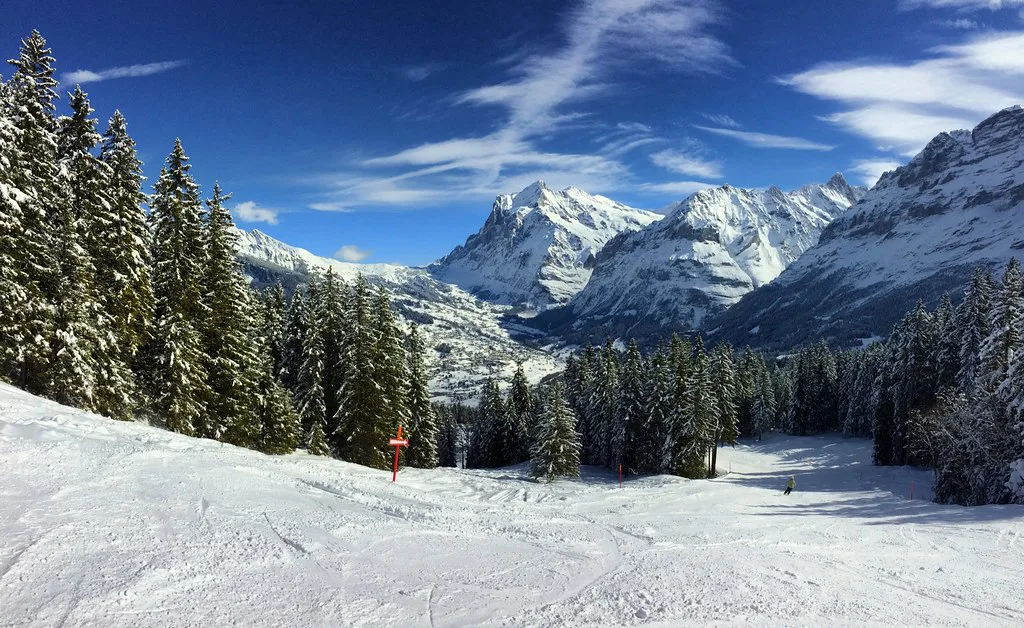
A realistic Wengen ski day starts with an honest assessment of your uplift. Going up by the Männlichen cable car is fast, but it can mean waiting at the queue if you pick a peak departure time, so an early start or a slightly later one may work better than the busiest middle. Taking the train to Kleine Scheidegg is slower but more predictable, and that often matters more when you have a lesson or a fixed meeting point.
Ski from your chosen sector and use the railway as your return leg rather than trying to link every part of the region on skis. The geometry of the area means some connections are genuinely skiable and others are train journeys, and trying to force the latter into a ski descent is how days get long. Decide in advance which legs are skis and which are trains.
A Mürren day trip is worth planning as a full day, because travelling there and back from Wengen consumes real time. It is a poor candidate for a half-day or for a day when your group has mixed energy levels. If you want to include it, pick a day with a settled plan and an early start rather than squeezing it in at the end of a week.
Keep a copy of the piste map with you, because the network is easier to navigate when you can see how the sectors connect. It also lets you adapt on the day if a link or lift is not running, which is always a possibility. Paper or a downloaded file both work, and checking it before you set out beats deciphering it on a slope.
Wengen Against Grindelwald and Mürren
The comparison between Wengen, Grindelwald and Mürren is really a comparison of base towns, because the pass covers all three and the terrain overlaps. Wengen is compact, traditional and almost traffic-free, with a single main street and the railway as its link to the wider world. That character is a genuine part of the offer, and it suits people who value a quiet, walkable base.
Grindelwald is larger and connected more directly to the First sector, which changes the shape of a week for people who want variety without a long transit. Wengen and Grindelwald share terrain across the Männlichen and Kleine Scheidegg sectors, so the terrain argument between them is weaker than the logistics argument. Choose based on which sectors you intend to use most, and how much travelling you are willing to do.
Mürren, on the far side of the Lauterbrunnen valley, is a day-trip target rather than a rival base for most Wengen skiers. Its terrain adds the harder, steeper options that Wengen lacks, which is exactly why it appears in this guide as an outlet for expert skiers. If hard terrain is your priority, you should weigh basing on the Mürren side instead.
For anyone whose main concern is a big linked ski circuit, none of these villages behaves like a single mega-resort. The honest test is whether you enjoy the shift between sectors, the railway journeys and the quieter evenings. If you want maximum distance covered with minimum uplift time, a different valley may suit you better.
Planning Sequence From Booking to Ski Day
Work through the plan in order: choose your dates, confirm which sectors are scheduled and how the pass works, book lessons and hire, then build a day-by-day sector plan. Each step constrains the next, so doing them out of order leads to a fixed hotel booking that doesn't match the sector availability you actually need. Start with dates and availability, not with accommodation.
When choosing dates, match them to the sectors you want rather than to a single opening date. A week when the Männlichen side is open but the First side is not may suit some groups and not others, and that distinction only becomes visible when you compare the sector calendars. Write down which two or three sectors matter most, then check them against the published windows.
Once dates are fixed, secure lessons and hire before booking optional extras, because those are the items with genuine capacity limits in peak weeks. Then build a plan that accounts for travel time, including the train and the cable car, rather than assuming a full day of skiing. Finally, leave room to adapt: one non-skiing day in a week makes a far more resilient plan than a schedule with no slack.
If your wider trip involves comparing Swiss options, it helps to look at other regions with a similar rail-linked, sector-based layout. Davos skiing offers a different terrain profile and base-town character, so it is a useful reference point when you are deciding whether Wengen's mix of gentle terrain and car-free village life is the right fit.
What to Verify Before You Book
Before you commit, check the season dates and pass terms for your specific week on the Wengen Tourismus and Jungfraubahnen pages, because published windows are conditional and can change. Then check that the sectors you care about are scheduled to operate across your dates, not just that the resort is open. These two checks catch most of the expensive mistakes before they happen.
Read the pass conditions carefully, including what the region-wide ticket includes and whether any transport or sector needs a supplement. Pass terms are set season by season, so older descriptions may not reflect the product you will be sold. If a specific link matters to your plan, ask about that link rather than about the pass in general.
For lessons and hire, confirm booking, cancellation and equipment-swap terms in writing with the provider before you pay. These policies vary and cannot be inferred from a provider's name or reputation. Getting them in writing also gives you a clear reference if your plans change.
Finally, check the operators' status pages in the days before departure for changes to piste or lift operation. Scheduled seasons do not guarantee that every lift, link or piste will open, and late changes are normal in the mountains. Booking flexible where you can, and keeping an alternative sector plan ready, is the most reliable approach.
Your Wengen Ski Trip Decision
Wengen is the right choice for a largely intermediate group that values long blue and red cruising runs, a traffic-free village and a base with genuine off-slope character. It is a weaker choice for anyone whose holiday depends on hard terrain or on covering a single large linked circuit without uplift time. Match the resort to the trip, not the other way round.
If you go, plan around the sectors, buy the season's pass on its current terms, and book lessons and hire before peak-week stock disappears. Confirm dates and conditions close to departure, because published windows are conditional operations rather than promises. Nail those four points and the rest of the trip will run with far fewer surprises.
Explore more Wengen guides
Frequently Asked Questions
Is skiing in Wengen good for intermediates?
Yes, this is where Wengen is strongest. The great majority of runs in the Wengen and Grindelwald area are rated blue or red, and the long, rolling cruising runs suit people who want to cover distance and build confidence. The terrain is more about volume and length than about steep challenge.
Does one lift pass cover Wengen, Grindelwald and Mürren?
One Jungfrau region lift pass covers Grindelwald, Wengen and Mürren; individual area tickets are no longer sold. Specific inclusions, age categories, durations and any supplements are set each season, so check the operator's own ticket pages for the current product and its terms before buying.
Where do beginners ski in Wengen?
Beginners start at the central nursery slope in the village, which is convenient and gentle but low and sun-exposed later in the day. Once you can control your speed, the higher beginner areas at Männlichen and Kleine Scheidegg offer better snow and longer, easier runs, though reaching them takes a train or a cable car.
How much expert terrain is there in Wengen?
Genuinely hard terrain is limited. The main black runs are parts of the Lauberhorn World Cup downhill line and a couple of pistes from Eigergletscher toward Wixi. Advanced skiers who want more variety usually plan a day in the Mürren area, accepting that travel time is part of the trade.
How do you get between the Wengen ski sectors?
Sectors are reached by uplift rather than by a single connected ski circuit. The cog railway links Wengen to Kleine Scheidegg, and a cable car connects to Männlichen. Grindelwald-First and Mürren-Schilthorn are separate sectors that require a deliberate trip, so treat those as planned days rather than routine extensions.
Which is better, Wengen or Grindelwald?
It depends on the base you want rather than the terrain, because the pass covers both and the sectors overlap. Wengen is small, traditional and almost traffic-free, with the railway as its main link. Grindelwald is larger and better placed for the First sector. Choose based on how much sector travel you are willing to do.
When does the Wengen ski season run?
Each Jungfrau sector opens and closes on its own schedule. Published 2026/27 dates from the tourism authority list Grindelwald-Männlichen from 21 November 2026 to 25 April 2027, Grindelwald-First from 19 December 2026 to 29 March 2027, and Mürren-Schilthorn from 21 November 2026 to 2 May 2027. Check current status close to departure.
Do you need to book ski lessons in advance in Wengen?
In peak weeks, yes. Several schools operate in Wengen and demand concentrates in school holiday periods, so group lessons and popular private slots fill up. Confirm ability grouping, meeting points, start times and minimum ages with the school directly, and treat those details as booking terms rather than things you can assume.
Sources
Useful notes for your next ski trip
Optional updates to our Alpine resort guides.
You might also like
Continue reading
More guides you'll find useful