Arosa Skiing Guide: Ski Area, Passes, Beginners & Season
Plan a skiing trip to Arosa: how the ski area links to Lenzerheide, which sectors suit which ability, how passes and beginner areas work, and when to go.
On this page
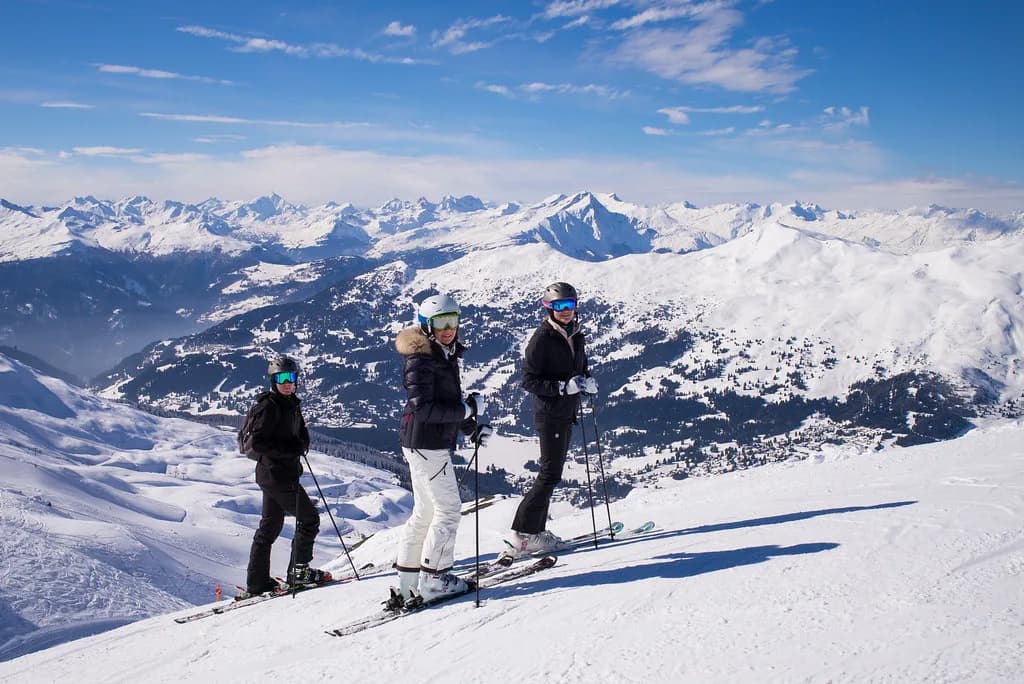
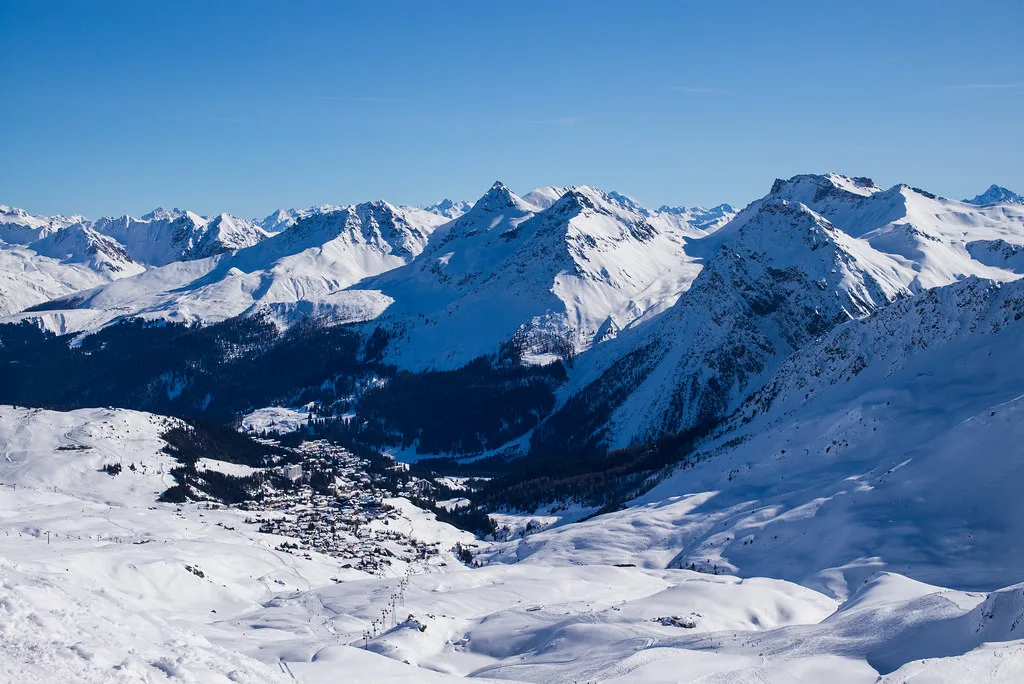
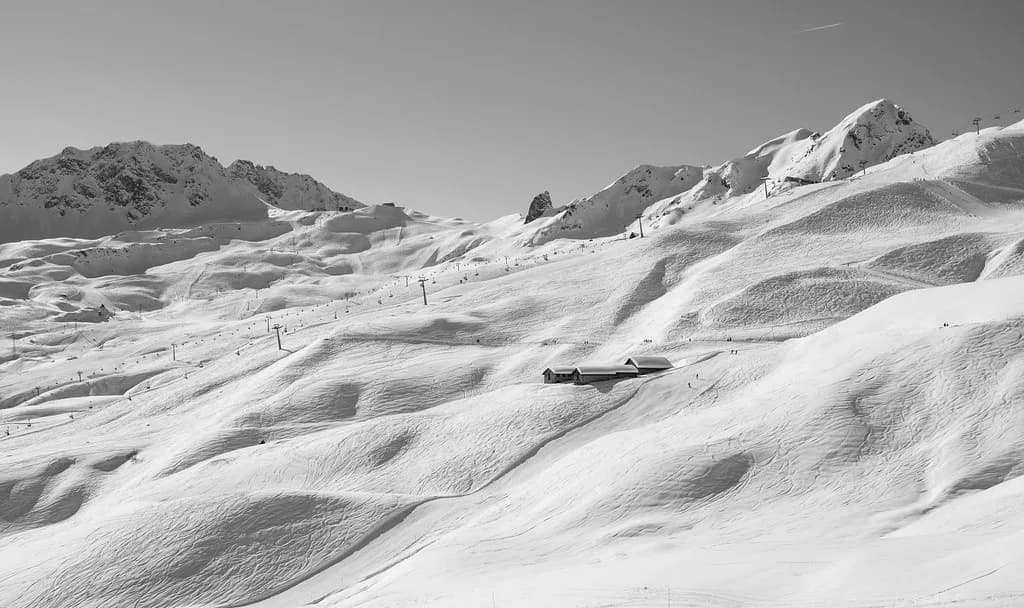
Arosa sits at around 1,800 m at the head of the Schanfigg valley in Graubünden, a village that happens to have a serious ski area above it. The two-part Arosa Lenzerheide region publishes 225 km of pistes and 43 lifts across both valleys, with the top of the Weisshorn at 2,865 m. Booking a week here means choosing between a quieter, sunnier base and a much larger linked network you can reach without a bus.
This guide treats the Arosa–Lenzerheide link as the central planning decision rather than a footnote. It walks through the sectors on the Arosa side, explains how a two-valley day works with the Urdenbahn, and sets out what the pass products actually include. Prices and live opening status change, so the figures here are the mechanics; the rates themselves live on the Arosa Lenzerheide Bergbahnen pages.
Where Arosa Sits and Why It Works as a Base
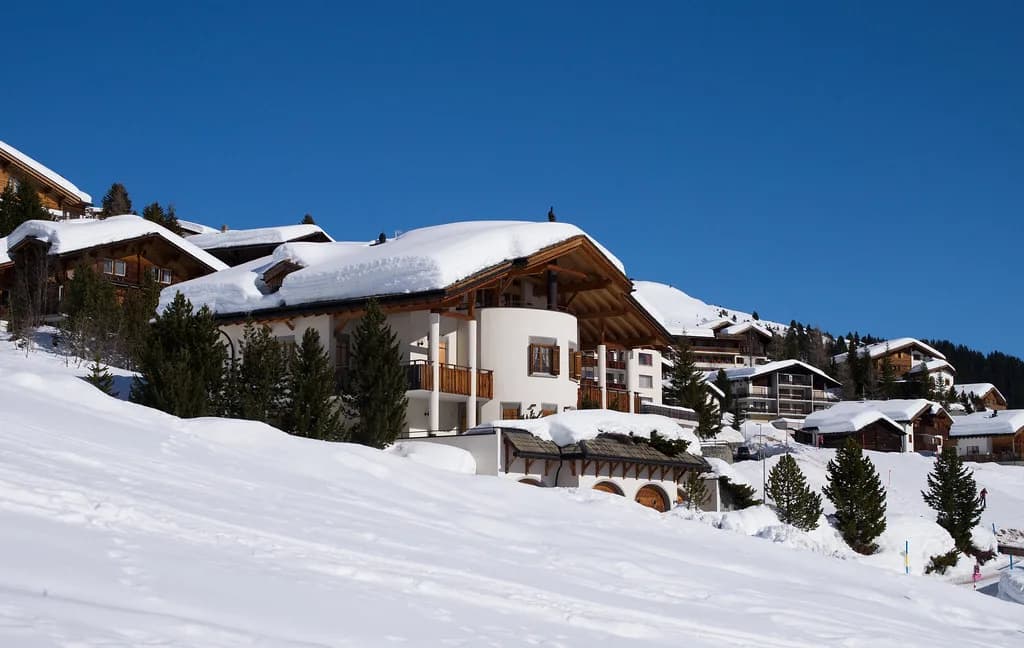
The village sits at the end of the road up from Chur, in a valley that narrows as it climbs. That geography matters: Arosa is a destination, not a hill you tack onto a city break, so most skiers stay two nights or more. The upside is a compact resort with the lifts close to the hotels and a genuine village centre.
Arosa's altitude, around 1,800 m at village level, gives it a head start on snow compared with lower resorts, and the ski area climbs to 2,865 m at the Weisshorn. Arosa Lenzerheide markets the region on sunshine hours as much as snow depth, which fits the valley's sheltered, south-facing orientation. If you want a base where you can walk to the lifts and ski home at the end of the day, this layout is hard to beat.
The trade-off is scale. Arosa alone accounts for 14 of the region's 43 lifts, with the remaining 29 on the Lenzerheide side. Plan at least one full day across the link or you are skiing roughly a third of what your pass covers.
Arosa Lenzerheide in Numbers
Arosa Lenzerheide publishes 225 km of pistes and 43 lifts for the combined area, with the live counters on its ski map pages varying through the season as terrain opens and closes. Treat those totals as the region's published capacity rather than a promise for your week. The Arosa Piste Map is worth reading before you book, because it shows how the two halves sit relative to each other and where the connecting lift lands.
Two hubs, two characters. Arosa is the higher, smaller, more village-scaled half, with its main sectors clustered above the resort. Lenzerheide is the broader western half, spreading across the Rothorn, Scalottas, Stätz and Heidbüel sectors with a long valley run back to the village. Your pass covers both, so the real question is how many days you want to spend crossing rather than lapping.
The official piste panorama is the clearest single document for understanding the layout: it marks the Urdenbahn crossing between Hörnli and Urdenfürggli and colour-codes slopes blue, red and black, with yellow for marked but ungroomed downhill routes. Print it or keep it on your phone for the first morning, when the geography is still unfamiliar.
The Arosa Side, Sector by Sector
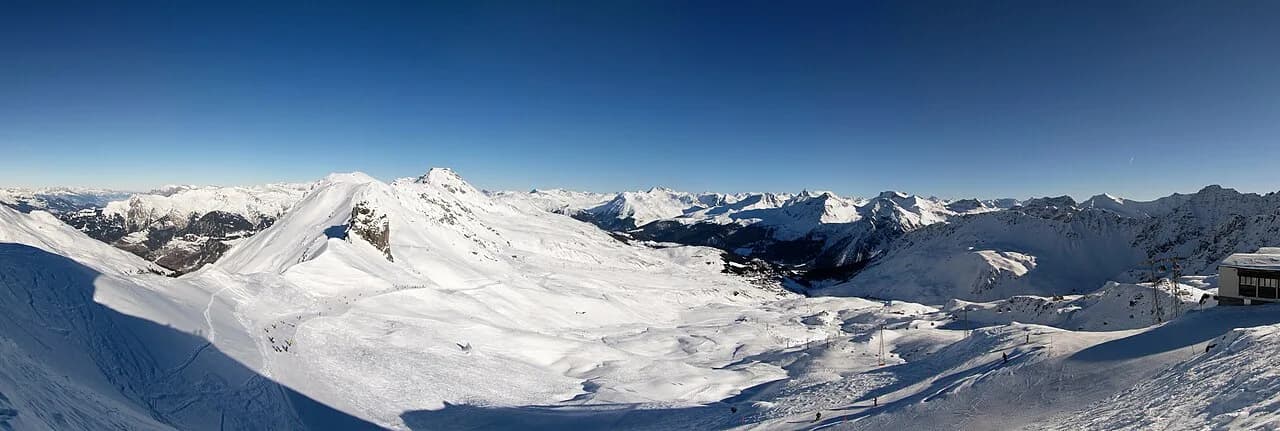
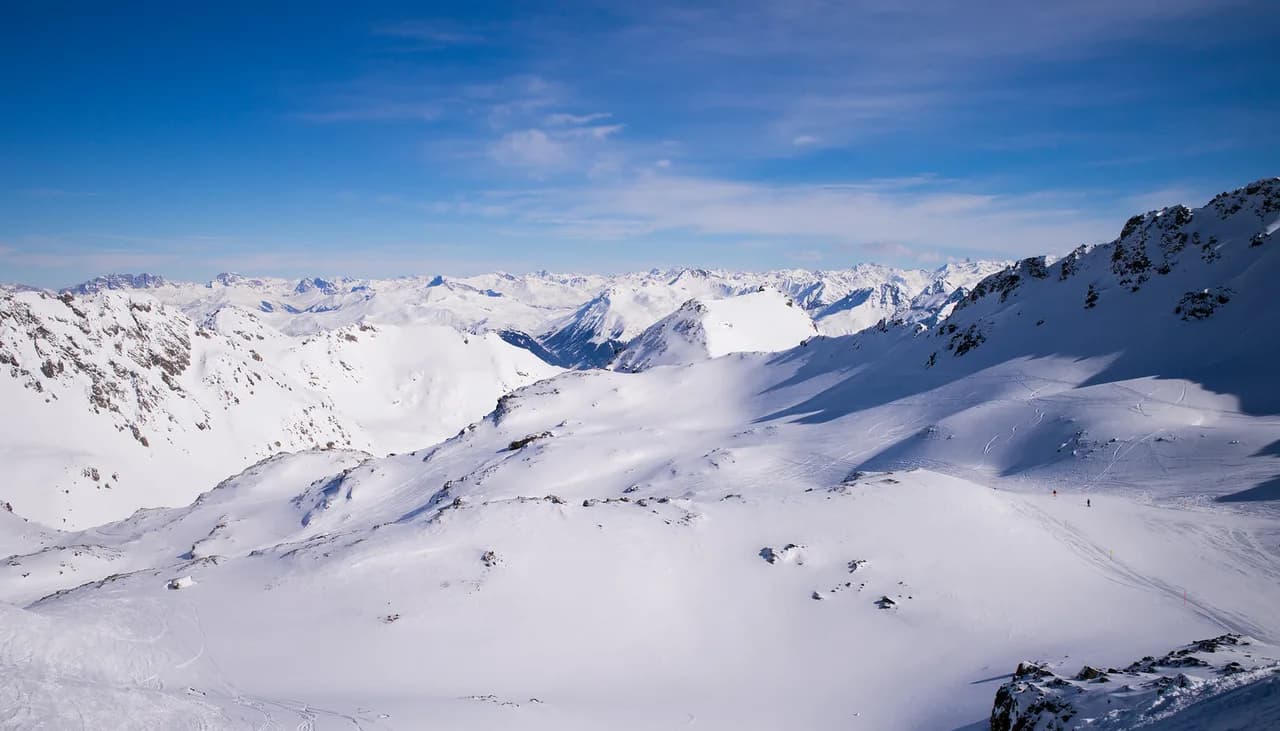
Weisshorn is the headline. The two-section cable car from the village climbs to the summit at 2,865 m, and the terrain below it mixes long red runs with the short, steep Diamond Slope and the Brüggerhorn area. Strong skiers head here first on a clear morning; the views from the top station are the reason many people ride up without skis at all.
Hörnli is the link sector and the gateway to Lenzerheide. The Hörnli-Express from Inner-Arosa serves a cluster of red and black runs, including the Direttissima and the Hundschopf area, and the six-seat chair keeps queues short even at peak times. This is where confident intermediates should base themselves if they want both the Arosa steeps and quick access to the crossing.
Carmenna and Plattenhorn sit mid-mountain and serve as the connective tissue of the Arosa side. The Carmenna chair gives access to the Carmennahang and the popular Carmenna Hütte, with the option of getting off at the halfway point. When the upper mountain is wind-affected, these sheltered runs are often the ones still skiable.
Tschuggen is the beginner and improver sector, served by the Tschuggen Ost and West lifts and a cluster of drag lifts on gentle slopes above the village. Kulm and Prätschli round out the Arosa side: Kulm feeds the Ried area and Tschuggenhütte runs, while Prätschli is where the free Honigland beginner zone sits. Each lift's published hours differ, so check the operator's overview rather than assuming a single resort-wide schedule.
Crossing to Lenzerheide on the Urdenbahn
The Urdenbahn is a five-minute cable car from Hörnli in Arosa to Urdenfürggli in Lenzerheide, spanning the Urdental valley. It turned two separate resorts into one ski area, and for anyone staying in Arosa it roughly doubles the terrain on your pass. Ride it early: the crossing is a highlight in its own right, and the queue builds once the morning rush arrives.
Plan the return leg before you commit to the day. Urdenfürggli is a high, exposed station, and in poor visibility or strong wind the crossing can be the first thing to close. If you are skiing back to Arosa in the afternoon, aim to be at the Lenzerheide side of the link with at least an hour of buffer, and keep an eye on the live lift status. The alternative is a bus or taxi around the valley, which is slow and expensive.
On the Lenzerheide side, Rothorn is the main access from the village and the gateway to the long reds around Scharmoin and the world cup descent. Scalottas and Stätz serve the western sector, where the Stätz JibArea sits; these lifts open later in the morning in some periods, and in spring they often run earlier at weekends. Build your day around Rothorn first and treat the west as an afternoon add-on.
Beginners and Families
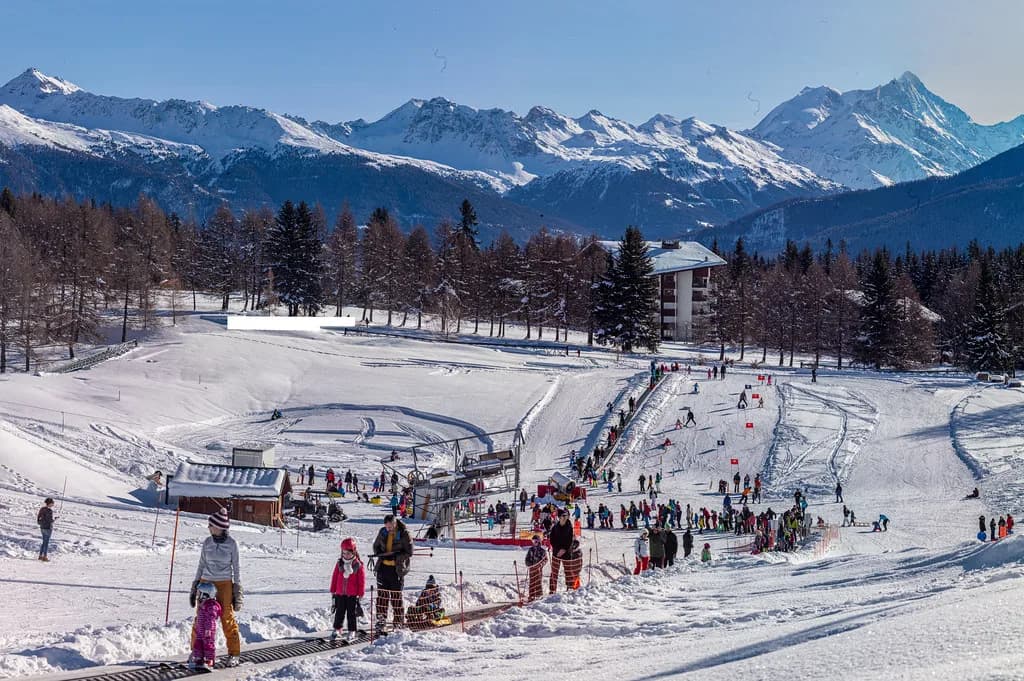
Arosa is a genuinely good beginner resort, and not only because the slopes are gentle. Honigland Prätschli, next to the Prätschli ski lift, is a free-to-access beginner area with a 45-metre conveyor belt, which changes the cost case for first-timers: you can teach the basics without buying a lift pass. The Tschuggen nursery slopes then take over as confidence grows, served by drag lifts on wide, forgiving terrain.
The Bärensnowpark at the Ried ski lift is aimed at children aged six to twelve and is free to use, with four themed adventure lines and simple obstacles. It is a good way to break up a morning of lessons for a child who is starting to enjoy the mountain rather than endure it. Combine it with the Honigland zone and you have a full day of beginner-friendly skiing on the Arosa side alone.
The family ticket structure rewards planning. A young-families ticket covers two adults with children under four, and for stays over four days Arosa Lenzerheide suggests a multi-day pass used alternately by the two parents, so one can ski while the other looks after a toddler. The fourth and each additional child then adds a nominal daily charge on top of the family's multi-day ticket.
For lessons, book in the busy weeks before you travel. The resort's ski schools publish their own group and private options, and the January and February holiday weeks fill first. Kit hire in the village is plentiful, so renting on arrival is realistic outside peak dates; in peak weeks, reserve boots and skis in advance to avoid a morning spent queueing. Your Arosa Ski pass choice affects how much of this matters, since a restricted beginner ticket keeps costs down if you stay on the nursery slopes.
Intermediates and Advanced Skiers
Intermediates have the most choice. The long reds under the Weisshorn, the Carmennahang runs and the Rothorn side in Lenzerheide all offer wide, cruisy terrain that holds up well through the day. The world cup descent on the Lenzerheide side, the Silvano Beltrametti course, is a marker of the terrain's quality: steep, long and groomed to race standard, it rewards a confident edge.
Advanced skiers should head for the Hörnli steeps and the Brüggerhorn area for short, sharp pitches, and the Diamond Slope for a genuine test. Over in Lenzerheide, the Stätzerhorn sector has steeper blacks including Die Rote and Black Viper, while the Rothorn 2 section holds the Totälpli and the Caracciola-Weg. Off-piste is excellent after fresh snow, but the marked but ungroomed yellow routes on the panorama map are not patrolled in the same way as groomed pistes.
The Urdenbahn matters most for this group. The crossing opens up the Rothorn blacks and the Lenzerheide steeps on the same pass, and a strong skier can lap both valleys in a day without repeating a run. Two- and three-day plans should therefore split the days: one to learn the Arosa sectors, one for the Lenzerheide crossing, and one to revisit whatever worked best.
Freestyle: The Five Snowparks
The area publishes five snowparks, and the right one depends on your level. Snowpark Tschuggen, to the right of slope 15, has two lines with waves, moguls, obstacles and kickers, suited to all levels. Wood Ranch, built from Arosa fir on the descent to the Weisshornbahn valley station near slope 15a, is a creative crowdfunded line worth a look even if you are only spectating.
Beginners should start at the Fadail Garden on the Lenzerheide side, built for first park experiences with simple boxes, tubes and small jumps. The Stätz JibArea on the Heidbüel side is the step up: 1.4 km long, up to 20 obstacles in a single line and around 45 takeoffs, with boxes, rails and kickers in a range of sizes. The Arosa snowboarding guide covers how these parks fit a rider's progression.
Park opening depends on snow and build progress, so check the snowpark status page on the morning you plan to ride. The Bärensnowpark is the exception for families: it is free and designed for children, so it doubles as a first freestyle session without a park ticket.
Season Dates and What Each Period Delivers
Arosa Lenzerheide publishes indicative seasonal windows, labelled as the earliest possible opening rather than fixed dates. For winter 2026/27 the pattern runs from a pre-season period starting 28 November through full operation from 19 December to 4 April, then an off-season from 5 to 11 April with reduced lift service. The Arosa Ski season dates page tracks how these phases affect what is actually open.
November Bonus Days offer weekend operations from 31 October to 22 November 2026, with winter activities up top and summer down below, depending on weather. Pre-season from 28 November to 18 December is partial: the ski area is under construction, and lift openings shift up to three days in advance with snow. If you book early December, treat it as a gamble on conditions rather than a guaranteed full mountain.
Peak season from 19 December to 11 March delivers full daily operation with all facilities and most slopes open, conditions permitting. The second peak window, 12 March to 4 April 2027, keeps full operation going with some western Lenzerheide lifts running earlier, particularly at weekends. The April off-season keeps most Arosa lifts and the eastern Lenzerheide side open, which is when you get the sun and the quieter pistes.
Lift Passes: How the Pricing Works
Arosa Lenzerheide sells day passes, multi-day passes and the TOPCARD annual pass. Buying earlier online lowers the price, and the range of rates sits in PDF documents on the tickets page rather than in a single published figure, so check the current season's rates before you budget. A one-day ski ticket covers the whole area and also works for winter hiking and tobogganing where transport is allowed.
The age bands are adults from 27, young adults 18 to 26, youths 13 to 17, children 6 to 12, and infants under six free, with the birthday as the reference date. Multi-day tickets run on consecutive days, with the exception of the 4-in-7 option, and from four days the card needs a photo. Extension days can be added to an existing multi-day ticket from day four onwards.
Two add-ons change the value calculation. A multi-day ticket of four or more days lets you ski free on the previous afternoon from 1 pm, which effectively buys you a half day. And the pass includes free public transport on the RhB route between Arosa and Chur and the PostBus between Chur, Lenzerheide and Tiefencastel, with the booking confirmation and photo ID presented at inspection.
Beginners may not need a full-area pass at all. The Honigland zone is free, and the Tschuggen nursery slopes are covered by a restricted pass. Reports suggest a Tschuggen-only product costs roughly two-thirds of the standard pass, so confirm the current offering at the ticket office if you plan to stay on the beginner slopes.
Ski Schools and Kit Hire
Lessons and hire are two separate bookings, and both benefit from being sorted before peak weeks. Ski schools run group courses that usually start on Sunday or Monday, so a midweek arrival is often better for private lessons and easier to place in a group. Book through the resort's official pages, which list the schools operating in Arosa and Lenzerheide.
For kit, the village has several rental shops within walking distance of the lifts. Reserve online for the busy weeks and collect the evening before your first ski day, which saves the morning queue. If you are crossing to Lenzerheide for a day, you do not need a second set of gear: your hire stays with you and the lifts run on the same pass.
Getting There and Getting Around
The classic approach is by rail: the RhB narrow-gauge line runs from Chur up the Schanfigg valley to Arosa, a scenic climb that drops you in the village. Your ski pass covers the second-class fare on that route, and the PostBus between Chur, Lenzerheide and Tiefencastel is also included. That combination makes a car unnecessary for a ski week based in Arosa.
By car, Chur is the last major junction and the road up to Arosa is a mountain climb best driven in daylight on arrival day. Parking at the valley stations fills in peak weeks, so ask your accommodation about village parking before you commit. If you are combining Arosa with Lenzerheide, the two are linked by road around the valley as well as by the Urdenbahn on skis.
Once in the village, everything is walkable: the main lift stations, the ski schools and the rental shops sit within a short radius of the centre. That is a large part of Arosa's appeal as a base, and it means you can leave the car parked for the week.
Where to Stay in Arosa
The village centre is the best base for a first trip. You are within a short walk of the Weisshorn cable car, the bus stops and the restaurants, and you can ski back to the village on the lower runs when snow allows. The trade-off is a busier feel and higher prices in peak weeks.
Staying near the Hörnli-Express suits skiers who plan to spend most of their time crossing to Lenzerheide, because you start the day at the link rather than working across the mountain to reach it. The Prätschli area is quieter and close to Honigland, which makes it the obvious choice for families with very young children. Wherever you stay, book early for the December and February holiday weeks, when the village fills.
Sample Plans for Two or Three Days
Two days: spend day one on the Arosa side, starting at Weisshorn for the views and working across to Hörnli and Carmenna. On day two, cross early on the Urdenbahn, ski the Rothorn reds and the world cup descent, then return with an afternoon buffer. That gives you the two characters of the area without overcommitting to either.
Three days: repeat day one for a warm-up and a confident lap of the Arosa sectors, then dedicate day two to a full Lenzerheide crossing, including the Stätz JibArea or the western steeps depending on your level. Save day three for a mixed day: a morning of park or lessons and a relaxed afternoon on the Tschuggen or Prätschli slopes. Beginners should swap the Lenzerheide day for a second day of lessons and Honigland until the basics are solid.
What to Check Before You Book
Two things move most between seasons: the lift-pass rates and the exact opening dates for each period. Check the current-season rates, and confirm the seasonal windows against the Arosa Lenzerheide lift company's summary, before you commit to flights or a hotel. Build your booking around the peak windows if you want the full mountain, and treat the pre-season and April dates as a bet on snow.
Beyond that, the plan writes itself: base in the village, buy online early, ski the Arosa sectors first and cross to Lenzerheide at least once. If you want a bigger resort contrast on another trip, the Andermatt ski guide and the Davos Skiing Guide cover two very different Swiss alternatives.
Explore more Arosa guides
Frequently Asked Questions
How big is the Arosa Lenzerheide ski area?
The area publishes 225 km of pistes and 43 lifts for the combined Arosa Lenzerheide area, with the top station at 2,865 m on the Weisshorn. Arosa alone accounts for 14 of the lifts and Lenzerheide the other 29, which is why the Urdenbahn link matters for a week-long trip.
Is Arosa good for beginners?
Yes. Honigland Prätschli is a free-to-access beginner zone with a conveyor belt, and the Tschuggen nursery slopes offer wide, gentle terrain served by drag lifts. The Bärensnowpark at the Ried lift is free for children aged six to twelve.
Can you ski from Arosa to Lenzerheide?
Yes, via the Urdenbahn cable car from Hörnli in Arosa to Urdenfürggli in Lenzerheide, a five-minute crossing over the Urdental valley. Plan the return leg before committing to the day, because the exposed crossing can close in poor weather.
When does the Arosa ski season start and end?
Indicative windows are: pre-season from 28 November, full daily operation from 19 December, and an off-season from 5 to 11 April with reduced service. These are earliest-possible openings that shift with snow; check current details before booking.
Is Arosa snow sure?
The village sits around 1,800 m and the skiing climbs to 2,865 m, so the upper mountain generally holds snow through the season. The lower runs back to the village are more variable, especially late in the season and in warm spells.
Where are the Arosa snowparks?
There are five: Snowpark Tschuggen, Wood Ranch and Bärensnowpark on the Arosa side, plus the Stätz JibArea and Fadail Garden on the Lenzerheide side. Bärensnowpark and Fadail Garden suit first-timers, while Stätz is the larger step-up park.
How do you get to Arosa from Chur?
The RhB narrow-gauge railway runs from Chur up the Schanfigg valley to Arosa, and second-class travel on that route is covered by a valid Arosa Lenzerheide ski pass. Purchased online, your booking confirmation plus photo ID is presented at inspection.
How much is a day ski pass in Arosa?
Current rates are published on the tickets page and in PDF price lists, and prices are lower when you buy online earlier. Rates change between seasons, so check current-season prices before you budget.
Sources
- Arosa | Holiday region in Grisons | Switzerland
- Ski maps and interactive 2D map | Arosa Lenzerheide
- Arosa Lenzerheide English piste panorama linked by the operator
- Operating hours & opening times mountain railways | Arosa Lenzerheide
- All tickets for Arosa Lenzerheide – Winter & Summer
- Tickets & Rates Winter | Ski area Arosa Lenzerheide
- Snowpark Areas in the ski area | Arosa Lenzerheide
- Overview of the Arosa ski area Lenzerheide
- Arosa Ski Lifts - Arosa List Passes | Ultimate Ski
Useful notes for your next ski trip
Optional updates to our Alpine resort guides.
You might also like
Continue reading
More guides you'll find useful