Arosa Ski Season: Winter Dates, Snow Cover and Opening Plans
Plan around the Arosa Lenzerheide ski season: published winter dates, pre-season and peak phases, late-season skiing and how the linked areas open up.
On this page
The Arosa ski season is not a single switch-on date. The lifts that serve Arosa and Lenzerheide are published in phases, each with its own operating pattern, so a trip in late November looks very different from one in mid-January or early April.
This guide works through those phases, explains which parts of the network tend to come alive first, and shows how the Urdenbahn link shapes where you should sleep. It also covers passes, family products and late-season terrain, so you can choose a week rather than simply a resort.
Arosa Lenzerheide in one paragraph
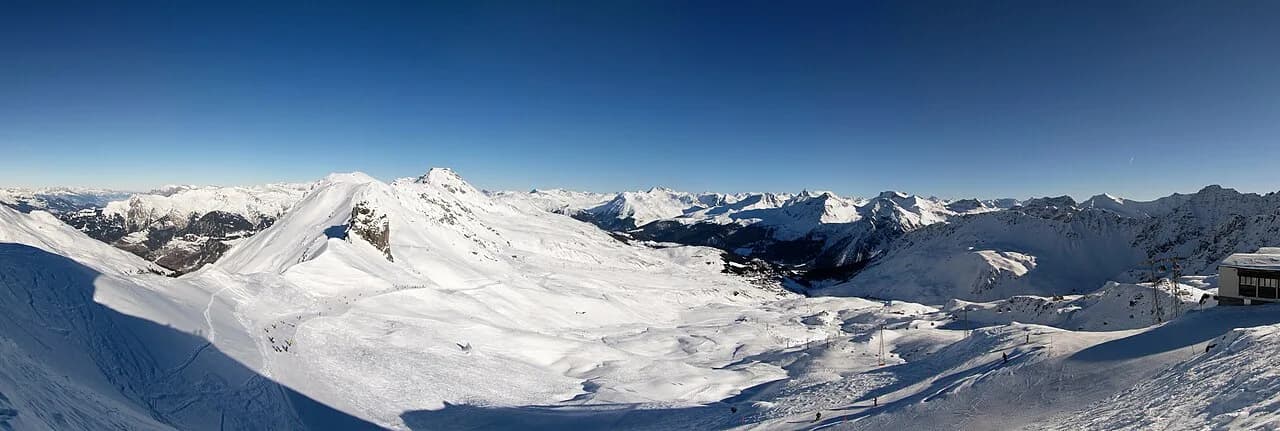
Arosa and Lenzerheide are two valley hubs joined into one ski area, with pistes spread across roughly 225 kilometres and high points reaching about 2,865 metres. Over 40 mountain huts and restaurants sit across the network, and the layout gives the area unusually generous sunshine for a Swiss resort of this size.
The two halves are not a single village with a big mountain attached. Arosa sits at the end of its own valley and Lenzerheide occupies a broad bowl to the east, with the Urdenbahn cable car spanning the Urdental between Hörnli on the Arosa side and Urdenfürggli above Lenzerheide. That five-minute crossing is what turns two separate resorts into a combined day out.
For route planning, treat the network as several sectors: Arosa's own slopes around the Weisshorn and Hörnli, the Rothorn side above Lenzerheide, and the western Lenzerheide lifts towards Scalottas and Stätz. The terrain spans wide cruising pistes, beginner zones and marked freeride options, which is why the area suits mixed-ability groups better than a single-terrain resort.
Winter season calendar: the published phases
The lift company publishes the winter in four named windows for 2026/27. Pre-season runs from 28 November to 18 December 2026, peak season from 19 December 2026 to 11 March 2027, a second peak phase from 12 March to 4 April 2027, and off-season from 5 to 11 April 2027.
Those dates describe the plan, not a guarantee. The official overview shows the earliest possible opening for each facility and is updated close to the day in line with forecasts, with adjustments often made at the start of the season. Daily lift hours and live open-lift reports are separate from the seasonal calendar and are where you confirm what is actually running.
This is worth holding in mind when you compare resorts. A neighbouring valley may publish a firmer opening weekend, but the practical question is the same everywhere: which lifts and runs are spinning in the week you booked. The Arosa Lenzerheide approach simply makes that conditional nature explicit.
Pre-season, 28 November to 18 December
The pre-season window is described officially as a construction phase for the ski area, with daily partial operation depending on weather and snow. In plain terms, you should expect a working resort rather than a finished one: some lifts running, some slopes being built out, and the network growing as temperatures allow.
That makes early December a good fit for skiers who value quiet slopes and lower accommodation demand over a complete circuit. It is a poor fit for anyone whose trip depends on crossing between Arosa and Lenzerheide or completing a long linked loop, because the link and outlying lifts may not yet be part of the day.
Check the pre-season slope map, which the lift company publishes alongside the operating hours, before booking. It shows the intended early network and helps you judge whether the terrain near your hotel will be enough for the group's ability. If your trip only works with the full area open, target the second half of December instead.
Peak season, 19 December to 11 March
From 19 December the plan switches to full daily operation with all facilities and most slopes running as far as weather and snow allow. This is the core of the Arosa ski season and the period when the whole linked circuit, including the Urdenbahn crossing, is intended to function.
The trade-off is demand. Christmas, New Year and the February half-term weeks fill beds and lift queues in both valleys, so book accommodation and any ski school places well ahead. If your dates are flexible, mid-January and the weeks outside school holidays give you the full network with noticeably more breathing room.
Pass buying matters here too. The lift company sells online in advance at lower prices than at the ticket window, and the earlier you buy, the better the price, so the peak weeks reward anyone who commits early. The official rates page sets out the current products in Swiss francs, including VAT.
Second peak phase, 12 March to 4 April
Full daily operation continues through 4 April 2027, but with a local nuance worth knowing. Some lifts on the western side of Lenzerheide, around Scalottas and Stätz, open earlier in this window, particularly at weekends, so spring days can begin out west before the rest of the circuit fills in.
This is one of the best-value stretches of the season for confident skiers. Days are longer, the snowpack is usually at its deepest after a winter of accumulation, and the crowds thin once the February holidays end. The compromise is that lower, sun-facing runs soften quickly in the afternoon, so plan a north-facing or high-altitude finish.
Use the piste map to identify which runs feed back towards your base before lunch, since afternoon snow slows return legs. Our Arosa piste map guide explains how to read the published labels and the live status report together, which is the practical way to plan a spring circuit.
Off-season, 5 to 11 April
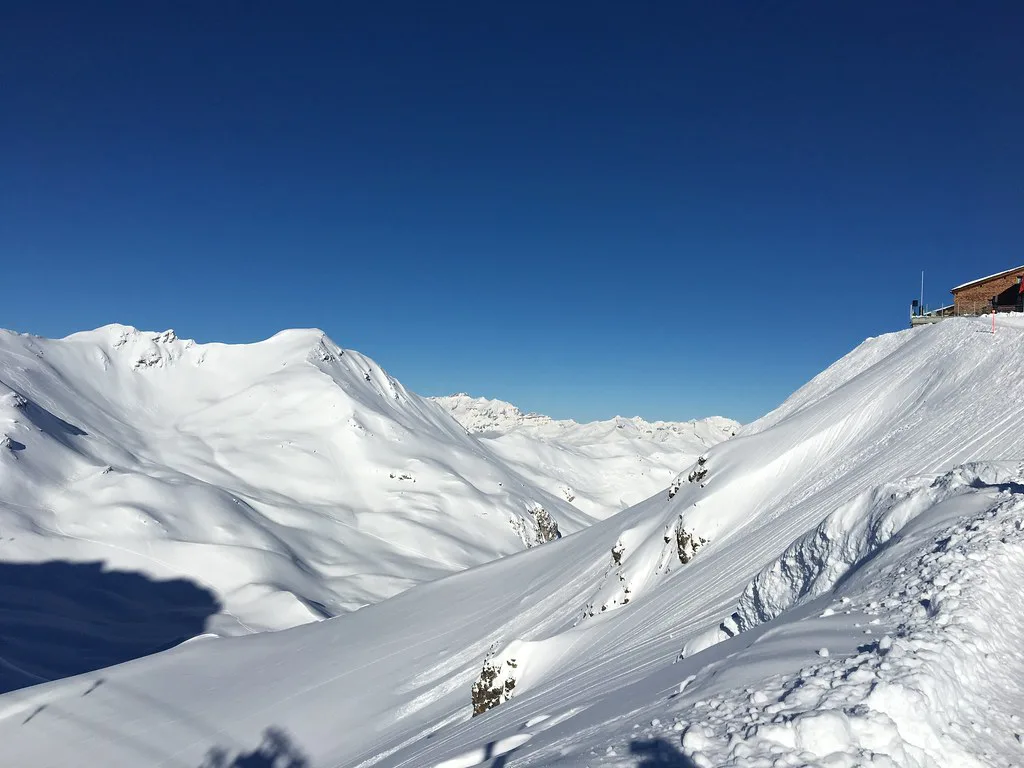
The final published window is limited daily operation, with most lifts in Arosa and on the eastern Lenzerheide side around Rothorn open, subject to last-minute changes as conditions shift. The western Lenzerheide lifts and the full linked circuit are less likely to be part of the day.
For a late trip, staying in Arosa is the safer bet, because the lifts on your doorstep are the ones most likely to be spinning. A Lenzerheide base still works, but you should confirm the Rothorn access and the Urdenbahn before committing, and treat any plan to ski both valleys in one day as a bonus rather than the point of the trip.
Spring snow also rewards timing more than terrain. Start early, follow the sun through the morning and stop when the surface turns slushy, rather than chasing distance. That approach suits this window better than a big-mileage plan that assumes everything is open.
What the calendar means for snow cover
Altitude does much of the work in Arosa. With terrain rising to about 2,865 metres and a layout that spans both high ridges and valley floors, the upper slopes hold snow well while the lower runs are more exposed to mild spells. That split explains why the official calendar leans on conditional language rather than firm guarantees.
The resort markets itself as snowsure through the season with above-average sunshine, and the combination is genuinely useful: sunny, cold high pressure is common, and the high start points mean you can often ski even when the valley looks green. Still, no published plan can promise a given date, so treat snow sure as a tendency rather than a booking guarantee.
If snow reliability is the deciding factor, January and February are the safest choices, with March close behind for depth. Late November and the first half of December carry the most uncertainty, and April depends on how the winter has run. That ranking, not a single season date, is what should shape your booking.
How the two hubs open up through the winter
The Urdenbahn defines how the ski area works in practice. It connects Hörnli in Arosa with Urdenfürggli in Lenzerheide in about five minutes, which makes a genuine two-valley day possible without a bus or a car. When it is running, you can sleep in one valley and ski the other without losing half a morning.
Where you stay therefore matters less for access than for evening atmosphere. Arosa is compact and end-of-valley, with the Weisshorn lifts close at hand. Lenzerheide spreads across a wider bowl with the Rothorn above it and the Scalottas and Stätz lifts to the west. Both give you a full day out, but the first lifts you reach in the morning differ.
In the shoulder phases the link becomes the deciding factor. Pre-season and April trips should assume the crossing may not be part of your day, so pick the valley whose own slopes match your ability and treat the other side as optional. That single decision removes most of the risk from a fringe-season booking.
Terrain by ability, from first turns to spring miles
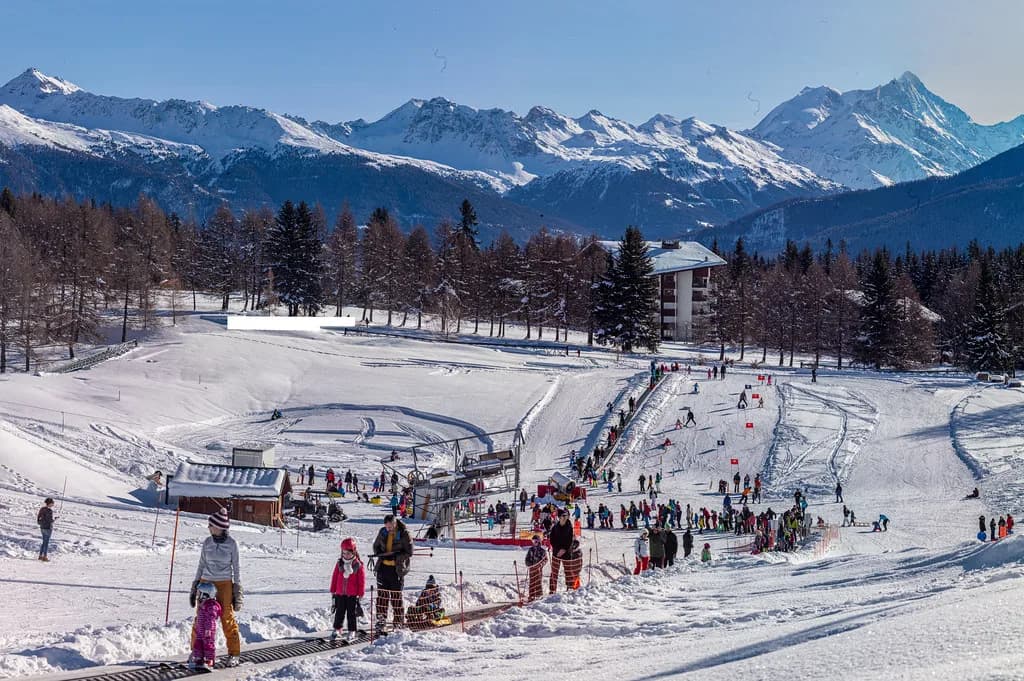
Beginners have an unusually good entry point. Honigland Prätschli, next to the Prätschli lift in Arosa, is a free beginners' and children's area with a 45-metre conveyor belt, which lowers the cost of a first day considerably. The catch is that a free area still needs a lift pass for the rest of the mountain, so budget for that separately.
Intermediates are the biggest winners from the linked layout. The wide cruising pistes on both sides of the Urdenbahn reward mileage, and a two-valley circuit is realistic once the full network runs. If you are returning to skiing after a break, this is terrain that builds confidence rather than draining it.
Advanced skiers should look at the Rothorn sector and the marked freeride and touring options the resort highlights. Late season, the high, north-facing terrain holds up best, while the lower sun-facing runs soften first. It is also worth knowing that the resort maintains snow parks and hosts events such as SnowNight and full-moon skiing, which can change evening plans.
Passes, family products and buying early
The lift company publishes individual, group and school rates as separate documents, all in Swiss francs and including VAT, so the exact figures change and belong on the official page rather than in a planning guide. Age bands run from infants up to five years free through children, youths, young adults and adults, with the birthday as the reference date.
Two incentives genuinely affect timing. A multi-day ticket of four or more days lets you ski free from 1pm on the previous day if you collect it at a point of sale, and the family bonus prices the fourth and each additional child at CHF 5.00 per day on family multi-day tickets of four days or more.
Families with very young children have a specific product: a ticket for two adults with children under four, which can be shared alternately on trips longer than four days. Booking it correctly means selecting pickup and the adult group in the shop, then collecting in person with the toddler's ID.
If you want the detail on products, participants and issuing options, our Arosa Ski pass overview is the companion piece. For everything else about the resort, from tickets to terrain, the Arosa ski guide covers the wider planning picture.
Where to buy and how to collect
Buying online in advance is cheaper, and the earlier you buy, the better the price. It also avoids ticket-office queues, which matters most in the peak weeks. Online tickets are issued personally in the buyer's name and cannot be exchanged, so get names and dates right before paying.
From four days onwards the card carries a photo, so either upload one or visit a point of sale in person. Everyone must carry a valid ticket matching their age band and be able to identify themselves with official documents, and online bookings need the confirmation printed and brought along.
Multi-day passes must run on consecutive days, with the 4-in-7 option as the exception, and extension days can be added from a four-day ticket. Pick-up points have their own opening hours, listed by point of sale on the official site, so check yours before travelling rather than assuming late-evening collection.
Getting there and around in winter
Arosa sits at the end of its valley on a scenic branch line from Chur, which puts car-free arrivals within easy reach of the lifts. Lenzerheide is reached by road and postbus from the Chur direction and sits on the opposite side of the linked area. Travelling between the two in winter is quickest on skis via the Urdenbahn, not by road.
That has a practical consequence for accommodation. If you plan to ski both halves, base yourself in the valley you want for evenings and accept a morning transfer or a ski crossing during the day. If you want maximum time on snow with minimum logistics, choose the valley whose terrain matches your ability and ski the other side on the days the link is open.
Parking is the other winter variable. The lift company publishes live operational notices, and major events can close car parks and change access, so check the current status before driving to a specific base station. For a season-planning overview of the resort as a whole, our Arosa ski guide keeps the pieces in one place.
When to book and when to stay flexible
Lock in Christmas, New Year and the February school holidays early, because beds and ski school places in both valleys fill first. Mid-January and the weeks between the holiday blocks are the sweet spot for full operation with less pressure, and they reward anyone who can move their dates by a week or two.
Treat early December and the April off-season differently. Book accommodation with flexible terms and decide on the pass close to arrival, once the operating hours and live lift report show what is actually running. The saving on quieter weeks is real, but only if you can accept a partial network.
If you are comparing options across the Alps, it helps to see how other resorts publish their calendars. Our Davos ski season dates piece is a nearby benchmark for opening weekends, and the Crans-Montana ski season overview shows how a different Swiss resort structures its winter.
Plan Your Winter in Arosa
The Arosa ski season works best when you match the week to the published phase: full operation from mid-December to early April, a growing network before that, and a limited Arosa-and-Rothorn finale in the last week. Decide which of those you are booking before you choose a bed.
Then buy the pass early online, check the photo and identification rules, and confirm the live lift report in the days before you travel. That routine gets you the lower price and an honest picture of what will be running when you arrive.
Frequently Asked Questions
When does the Arosa ski season start and finish?
The lift company publishes winter 2026/27 in four phases: pre-season from 28 November to 18 December 2026, peak season from 19 December 2026 to 11 March 2027, a second peak phase from 12 March to 4 April 2027, and off-season from 5 to 11 April 2027. These are planned windows, and individual lifts open on the earliest possible date shown in the official overview, which is adjusted as forecasts develop.
Is Arosa snow sure?
Arosa has altitude on its side, with terrain rising to around 2,865 metres, and the resort promotes itself as snowsure with above-average sunshine. That makes January, February and March the most dependable weeks for cover, while late November, early December and April carry more uncertainty. Confirm conditions through the live lift and slope report before you commit to a fringe-season trip.
Can you ski in Arosa in November?
The published winter season begins on 28 November 2026, so November skiing is limited to early-season openings. Before that, the resort runs November Bonus Days at weekends from 31 October 2026, weather permitting. Check the operating hours and open-facilities report.
What is open in Arosa during the pre-season?
Pre-season is officially described as a construction phase, with daily partial operation depending on weather and snow. Some lifts and slopes run while the network is still being built out, and the lift company publishes a pre-season slope map showing the intended early terrain. The full linked circuit, including the Urdenbahn crossing to Lenzerheide, should not be assumed during this window.
How many kilometres of pistes does Arosa Lenzerheide have?
The combined Arosa Lenzerheide area covers roughly 225 kilometres of pistes, served by more than 40 mountain huts and restaurants and reaching about 2,865 metres at its high point. The two hubs are linked by the Urdenbahn cable car across the Urdental, which takes about five minutes between Hörnli and Urdenfürggli.
Is the Arosa ski pass valid in Lenzerheide?
Yes. Arosa and Lenzerheide operate as one ski area on a shared lift network, so a standard area pass covers lifts on both sides, including the Urdenbahn link. Products differ by duration and age band, and the official rates page lists them all in Swiss francs including VAT. Check the current rates document before buying.
When is the cheapest time to ski in Arosa?
Value comes from two things: quieter weeks and early online purchase. Mid-January and the weeks outside school holidays combine full operation with lower accommodation demand, and buying online in advance costs less than at the ticket window, with the price improving the earlier you book. A multi-day pass of four or more days also includes free skiing from 1pm the previous day when collected at a point of sale.
Sources
Useful notes for your next ski trip
Optional updates to our Alpine resort guides.
You might also like
Continue reading
More guides you'll find useful