La Clusaz Skiing: A Complete Guide to the Ski Area
La Clusaz skiing explained: five massifs from 1,100m to 2,600m, 85 runs, 125km of slopes, sector opening patterns and how to choose your pass.
On this page
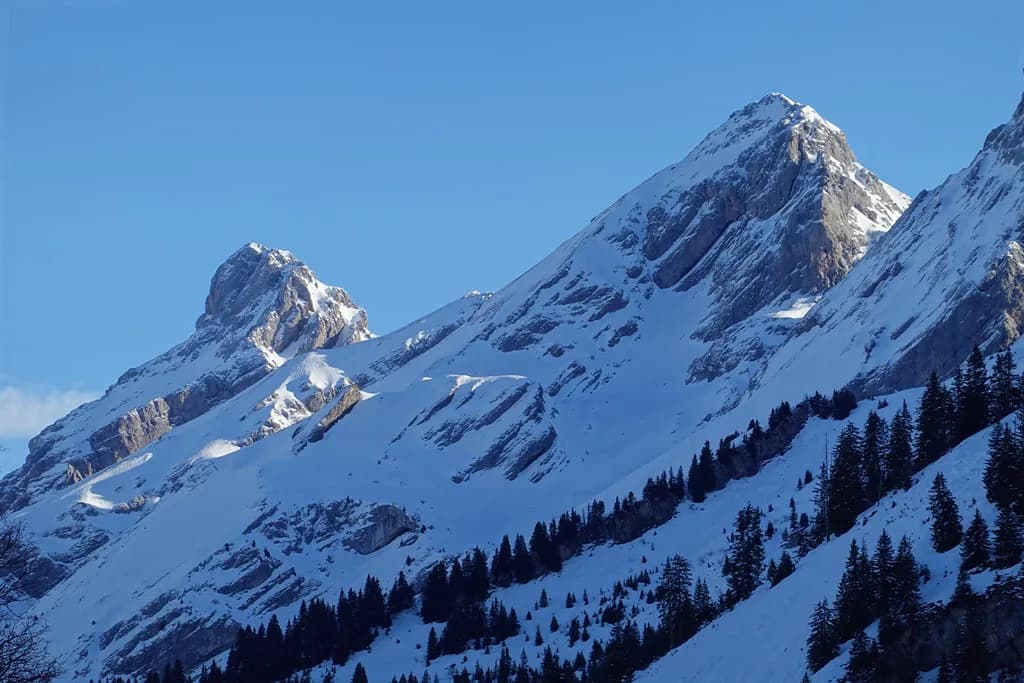
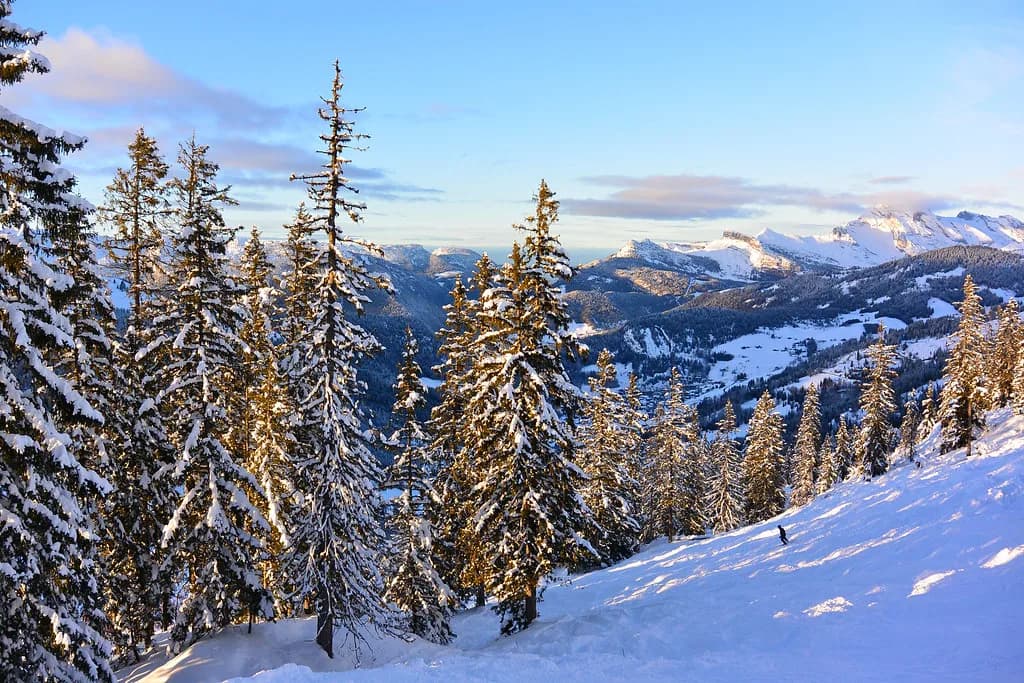
La Clusaz skiing works differently from a purpose-built resort with one lift hub. Five massifs — Balme, Aiguille, Beauregard, Étale and the La Clusaz-Manigod link — rise from a working Savoyard village at roughly 1,100m to a summit around 2,600m, which means your day is shaped by which sector you start from rather than by a single base station.
The practical consequence is that two people staying a kilometre apart can ski completely different terrain without ever sharing a lift. Before choosing accommodation or a pass, decide which sectors match your ability and how much moving between them you actually want to do, because crossing the resort takes time out of a short break.
This guide covers the resort's published terrain figures, the sector-by-sector character of the skiing, the difference between local and wider area pass scope, learning provision and the planned season pattern. It does not cover off-piste routes, technique, accommodation, transfers or après-ski.
How La Clusaz Is Laid Out
La Clusaz's ski area is organised around five distinct massifs rather than a single concentric bowl. Balme sits at the top of the valley and carries the highest terrain, Aiguille and Beauregard cover the mid-mountain above the village, Étale occupies the sector on the far side, and a link extends the network toward Manigod.
Because the sectors are separated by valley geography, they do not all connect by lift in the same way or open on the same schedule. The resort's own alpine skiing page groups opening dates by massif, which tells you that sector boundaries matter operationally and not just on paper.
For a short trip, the sensible approach is to pick one or two adjacent sectors and ski them properly rather than attempting to sample all five. Linking Balme to Étale in a single morning is possible on paper but eats into ski time, particularly for intermediates still building confidence on red terrain.
If you are staying in the village centre, Aiguille and Beauregard are the most accessible starting points. Staying closer to the Balme side shortens the morning approach to the highest terrain, which matters most on days when lower slopes are softer.
Altitude, Runs and Slopes in Practice
The official figures describe a ski area running from approximately 1,100m to 2,600m, with 85 runs and 125km of slopes. Those runs break down as 16 green, 31 blue, 30 red and 8 black, plus a snowpark, a Family Run and a themed run. The trail map page lists 49 ski lifts, and the alpine skiing page does too.
The descent from the 2,600m summit to the village at roughly 1,100m gives more than 1,500m of vertical, one of the larger descents available in this part of the Alps, and it is the reason Balme feels significantly colder and more exposed than the lower village sectors. On a marginal snow day, that altitude difference between the base and the summit is often the deciding factor in where you spend your time.
The 125km indicates the measured length of runs, not the size of the terrain between them. Practically, that means 125km of slopes can be skied in fewer lift rides than the raw figure suggests, because the mileage includes the curves and traverses a skier actually travels.
The run distribution is worth reading carefully: over half the network is green and blue, which tells you the resort is genuinely weighted toward newer and intermediate skiers. The 8 black runs are a small share of the total, so advanced skiers should plan their day around quality over quantity rather than expecting extensive expert terrain.
If your group spans abilities, the 47 green-blue runs mean you can keep less confident skiers on terrain suited to them while stronger skiers work the reds. Agreeing a meeting point per sector in advance avoids the classic problem of losing an hour regrouping across a valley.
Sector by Sector: Matching Terrain to Ability
Balme holds the highest and most demanding terrain in the resort, including the black runs and the long descent back toward the valley. It suits confident skiers who want altitude and length, but on windy or low-visibility days its exposure makes it a less forgiving place to be.
Aiguille and Beauregard occupy the middle of the resort and form the natural home ground for most intermediate skiers. Their mix of blue and red runs gives you room to build pace without committing to the longest descents, and they are generally the easiest sectors to return to the village from at the end of the day.
Étale sits on the opposite side of the resort and offers a quieter, more self-contained day away from the main flow of traffic. Its run count is smaller, so it rewards skiers who are happy to repeat good terrain rather than constantly moving on.
The resort's own description notes that skiers follow the sun around the massifs across the day, which is a useful planning principle. Choosing your sector by aspect means warmer conditions and better light in the afternoon, and it is often more valuable than chasing a specific lift.
The Manigod link extends the network beyond the immediate village area, and it is the sector most likely to be unfamiliar to first-time visitors. Check which lifts are running before committing to that direction, because a link is only usable when both ends are operating.
A realistic three-day pattern is one day in Balme, one day across Aiguille and Beauregard, and one day in Étale or toward Manigod. That sequence avoids criss-crossing the resort and gives each sector enough time to be skied properly.
Reading the Terrain Distribution
With 16 green runs, La Clusaz provides genuine beginner terrain rather than a token nursery slope. Beauregard and the Plateau de Beauregard area are the usual starting points, and the volume of green and blue terrain means a first-week skier can progress across multiple days without immediately being pushed onto red runs.
Thirty-one blue runs form the largest single category, making the resort's centre of gravity intermediate. This is the terrain most visitors will spend their week on, and it is the reason La Clusaz works well for mixed-ability groups where one or two members are not yet comfortable on steeper groomed slopes.
Thirty red runs provide the step up, and because they are spread across several sectors they are not all the same character. Treat the red grading as a starting point and check conditions on the day, since a red that is straightforward in good snow can feel considerably harder after a warm spell or heavy traffic.
The 8 black runs are concentrated rather than distributed evenly, so advanced skiers looking for sustained challenge should plan around Balme specifically. If your priority is steep groomed terrain, be honest that this is not a resort with a large expert footprint, and choose your expectations accordingly.
Families with young children should note the separate Family Run and themed run, which are designed for a different pace from the main network. They are listed as fun zones, so treat them as a supplement to the green runs rather than a replacement for them.
Snowboard and Freestyle Provision
The resort publishes a snowpark plus a Family Run and a Reblochon-themed run as its designated fun zones. That confirms freestyle provision exists, but it does not tell you the size, features or current condition of the park, so check the live conditions and the park's own page before planning a session around it.
Freestyle has a strong local history at La Clusaz, and the Balme massif is the area associated with that reputation. For visiting snowboarders, the practical point is that park access is usually concentrated in one sector, so check which lifts serve it; it is not reachable from every base.
Snowboarders should also consider the resort's sector layout when choosing where to stay. Boards handle long flat connecting traverses less comfortably than skis, so the amount of cross-resort movement required is a genuine factor in how enjoyable the day feels.
Feature availability and park configuration change through the season and with snow conditions. Confirm what is currently open on the day rather than booking around a specific feature you saw in an earlier report.
Pass Boundaries: What Your Ticket Covers
This is the single most important booking decision in the resort, and it is also the one most often assumed rather than checked. La Clusaz operates its own local pass, and separate entitlements exist for wider area coverage, but you should not infer area coverage from a pass name alone.
The wider Aravis picture includes the neighbouring village of Le Grand-Bornand, and secondary sources have described combined area totals under a shared full-area pass. Treat that as a question to put to the lift company directly, not as a confirmed inclusion, because the scope of what a given product covers varies by ticket type and season.
Before you buy, ask three specific questions: does this ticket cover all five La Clusaz massifs, does it include the Manigod link, and does it extend to any linked area outside the valley? Get the answers in writing from the lift operator rather than relying on a comparison site's summary.
If you are skiing four days or fewer and plan to stay within one or two sectors, a local pass is likely to be sufficient and simpler to manage. If your group intends to explore toward Manigod or beyond, the value calculation changes, and that is the point at which the wider product becomes worth investigating.
Buying in advance can affect both price and collection arrangements, but the specific terms attached to any offer vary and change. Check the current conditions on the official lift pass page rather than assuming the deal structure that applied previously still holds.
Beginner Terrain and Learning on the Ground
The Beauregard plateau is the area most clearly suited to beginners, and the 16 green and 31 blue runs give it genuine depth. A beginner can progress across several days using green runs before moving onto easy blues, which is a rarer proposition than the marketing of most resorts suggests.
Ski schools and guides operate in the resort, and the official pages list them as a distinct category alongside equipment hire. If you are booking lessons, ask the school directly about meeting points, group sizes and the terrain used for each level, because none of that is standardised across providers.
Lesson formats and level groupings are set by each school and are not published in a way that allows comparison from the resort's main pages. Contact two or three providers and ask how they assess ability on the first morning, since that determines whether you spend the week with the right group.
Book lessons before arrival during peak weeks, particularly around the Christmas and February periods when demand exceeds instructor availability. Note that the planned festive-period offer mentioned by the resort is a seasonal promotion and its conditions should be verified rather than assumed.
Complete beginners should ask specifically whether a lesson includes lift access for the beginner area and where the meeting point is. These are operational details each school handles differently, and getting them wrong on day one costs you a morning.
Season Timing and Sector Opening Patterns
For 2026/27, the resort's published plan shows anticipated weekend opening on the Balme massif on 5–6 December, with continuous operation from 12 December to 25 April. Aiguille and Beauregard are listed for continuous opening from 12 December to 11 April, and the Étale sector from 19 December to 4 April.
These are planned operating windows, not guarantees. The resort states plainly that sector openings and closures can vary with snow conditions, which means a scheduled date is an intention rather than a commitment that every lift, link or piste will run.
The practical implication is that early-December and late-April trips carry more operational risk than mid-season ones. If your dates sit at the edge of the season, build in flexibility about which sectors you ski rather than booking around a specific lift or run.
Historical snowfall is not a forecast for your trip dates. Past seasons tell you about the resort's general altitude profile, not about what will happen in a given week; the only reliable guide close to travel is the live conditions and lift status.
If you are weighing a late-season date, see our notes on la clusaz skiing in march for how the sector pattern typically plays out, though conditions vary year to year and the resort's opening schedule remains conditional throughout.
Equipment Hire and Village Logistics
Equipment hire is listed by the resort as one of the main services alongside ski schools and mountain restaurants. The practical choice is between hiring in the village and hiring at the lift base, and the deciding factor is usually how far you are prepared to walk in ski boots each morning.
Hiring in the village centre usually gives you a wider choice of shops and sizes and lets you swap gear across a multi-day rental. Base-level hire shortens the morning walk but narrows your options, which matters most if you need a specific boot size or board.
Reserve in advance for peak weeks and for any non-standard sizing. Rental capacity in a village-based resort is finite, and the widest selection disappears first over the Christmas and February school holidays.
Ask about swap terms and late-return arrangements when you book, as these vary by shop rather than being set centrally by the resort. Check what happens if a binding fails mid-trip, because that determines whether you lose a morning or just a few minutes.
Planning Sequence for a La Clusaz Ski Trip
Start by fixing your dates and then reading the published sector opening windows against them. If you are travelling at the edges of the season, prioritise a sector that is scheduled for continuous operation rather than one with a shorter window.
Next, match your group's ability to a sector before choosing where to base yourself. A beginner-heavy group belongs near Beauregard, an advanced group near Balme, and a mixed group is best served by the central Aiguille area where everyone can meet easily.
Then resolve the pass question directly with the lift operator, confirming which massifs, links and any external areas your chosen ticket actually covers. This is the step where assumptions are most expensive, particularly if you are counting on a link to ski a neighbouring village.
Only after those three decisions should you book lessons and equipment hire. Both depend on where you are skiing and when, and booking them first often means re-arranging them once you understand the sector layout; our ski lessons la clusaz guide covers how the schools differ.
Finally, treat the live conditions and lift status as the authority once you arrive. A planned season is a framework for booking, not a promise about any individual day, and the resort's own webcams and status pages are the honest source of truth.
Before you finalise which sectors to ski, open our la clusaz piste map walkthrough to see how the massifs sit against each other and which runs form natural loops within a single sector.
Plan Your Visit
La Clusaz rewards a decision made before you arrive: choose your sector by ability and aspect, confirm what your pass actually covers, and book lessons and gear only once those two things are settled. The resort's five massifs are genuinely distinct, and treating them as one interchangeable ski area is the most common way to waste a short trip.
The terrain distribution tells a clear story — 16 green and 31 blue runs against 8 black — so set expectations accordingly whether you are a first-week skier or looking for sustained expert challenge. Check the published 2026/27 sector windows against your dates and confirm current operating status before you travel.
If you are still weighing options elsewhere, the same sector-first logic applies to Alpe d'Huez Skiing and other French resorts, and the detailed checks remain the same regardless of where you book.
Explore more La Clusaz guides
Frequently Asked Questions
Where can you ski in La Clusaz and how many runs are there?
The resort publishes 85 runs across five massifs — Balme, Aiguille, Beauregard, Étale and the La Clusaz-Manigod link — covering 125km of slopes from roughly 1,100m to 2,600m. The runs break down as 16 green, 31 blue, 30 red and 8 black, plus designated fun zones and a snowpark. The massifs are separate sectors rather than one connected bowl, so the one you ski from shapes your day.
Is La Clusaz suitable for beginners and intermediates?
Yes, and the published terrain mix supports that rather than just the resort's reputation. Over half the network is green and blue, with 16 green runs giving beginners a genuine progression route across multiple days, and the Beauregard plateau is the natural base for learning. Intermediates have the largest single category in the 31 blue runs, spread across several sectors.
Does a La Clusaz lift pass cover the wider Aravis area?
The resort operates its own local pass, and separate products exist for wider area coverage, but you should not assume the scope from the pass name. Ask the lift operator directly whether your chosen ticket covers all five La Clusaz massifs, includes the Manigod link, and extends to any linked area outside the valley. Get the answer in writing before buying.
When does the La Clusaz ski season start and finish?
For 2026/27 the published plan shows Balme open at weekends from early December and continuously from mid-December to late April, Aiguille and Beauregard continuously from mid-December to mid-April, and Étale continuously from mid-December to early April. Sector openings and closures can vary with snow conditions, so these dates are planned operating windows rather than guarantees. Check current lift status close to travel.
Sources
Useful notes for your next ski trip
Optional updates to our Alpine resort guides.
You might also like
Continue reading
More guides you'll find useful