
La Clusaz Snowboarding Guide: Terrain, Parks and Lifts
Plan a La Clusaz snowboarding trip: the linked La Clusaz-Manigod terrain, 49 lifts, snowpark zones, altitude and how to choose the right sector for your riding.
On this page
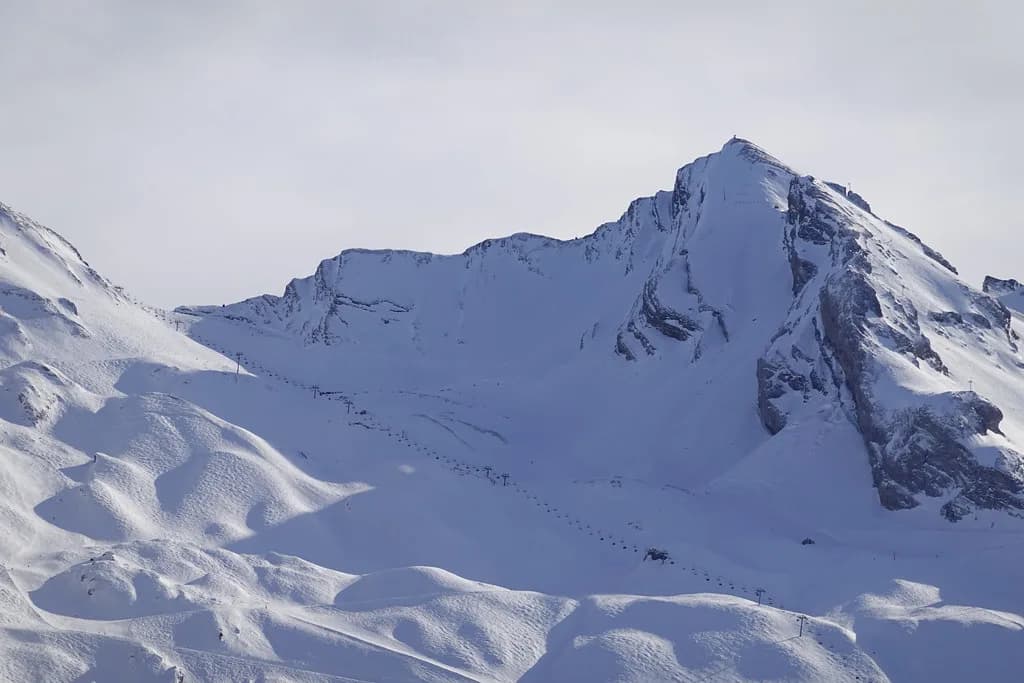
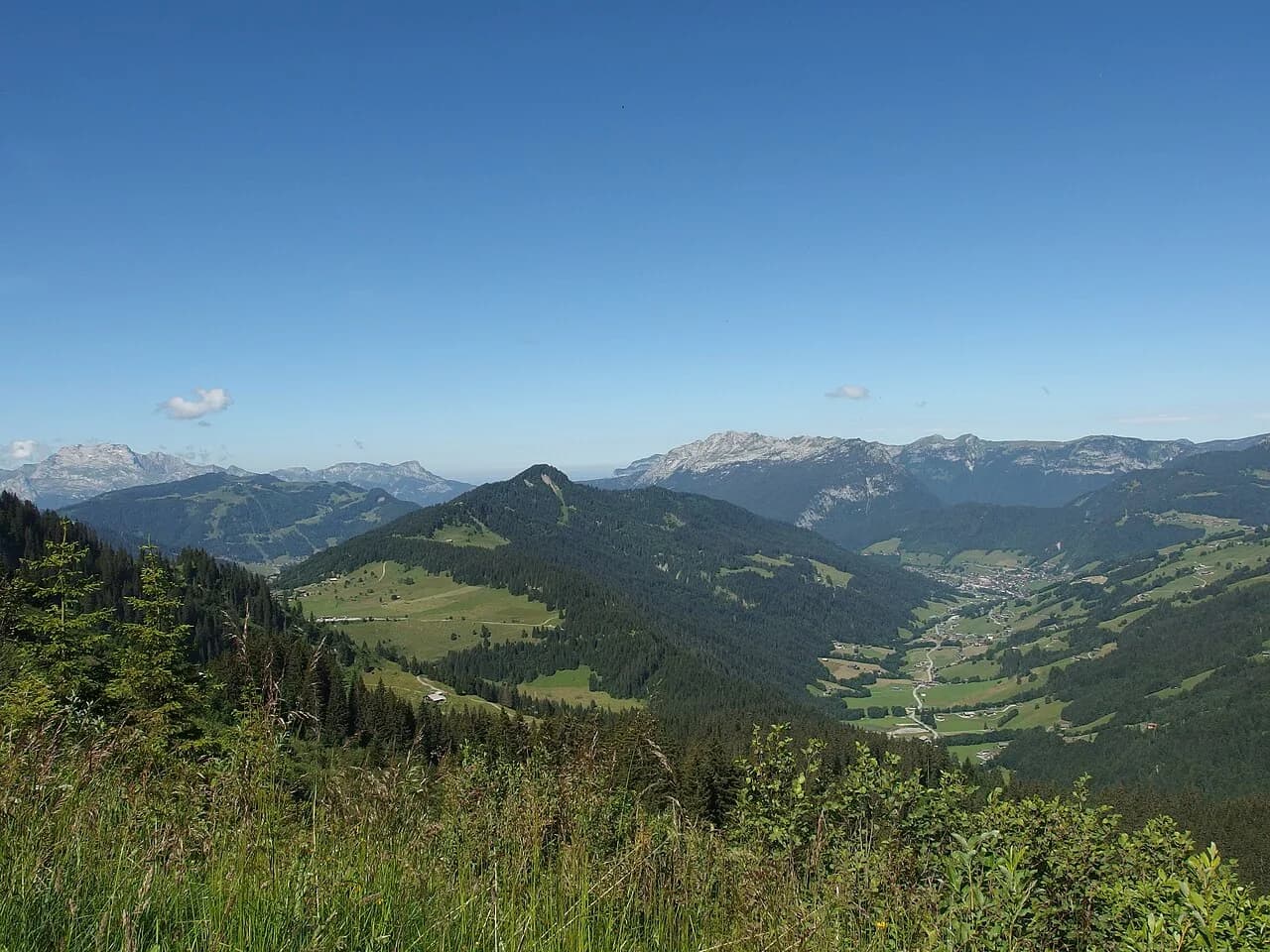
La Clusaz is a working Savoyard village at the foot of the Aravis range, an hour or so from Geneva, and it makes a convincing snowboarding base: a genuine town rather than a purpose-built station, with the lifts starting close to the centre. The riding is spread over five massifs, so the main planning decision is not whether to go but which sector to base yourself on and how to move between them.
This guide treats the resort the way a boarder needs to see it: named sectors rather than one amorphous ski area, with the flat linking runs, drag lifts and park zones that shape how a day actually flows. Figures on altitude, runs and lifts come from the resort's own trail information, so you can compare sectors honestly before you commit to accommodation.
What La Clusaz Offers Snowboarders
The official trail map describes the La Clusaz–Manigod ski area as running from 1,100 m to 2,600 m, with five massifs, 85 runs and 49 ski lifts. The run split is 16 green, 31 blue, 30 red and 8 black, which tells you the terrain leans strongly towards beginners and intermediates rather than experts.
The resort's stated 125 km of slopes carries a caveat worth knowing: La Clusaz notes that, per the Domaines Skiables de France method, the mileage corresponds to piste length measured down the middle of the slope and increased by 30 per cent to account for the trajectories skiers and riders actually take. Treat it as the resort's own measure of the area, not a strict groomed-piste total.
Independently compiled resort data puts the same La Clusaz/Manigod area at roughly 1050–2485 m with 50 lifts, which shows how figures shift depending on what gets counted. For snowboarding purposes the useful takeaway is consistent: a mid-altitude area with a long vertical range and a lot of lifts packed into a compact valley.
Snow arrives reliably here by Alpine standards because the resort sits on the north-west flank of the Aravis massif, and operator summaries note combined average snowfall of more than six metres at 1,860 m. That orientation matters on a board: north-west faces hold snow well, but lower village-level runs can turn slushy late in the day.
How the La Clusaz–Manigod Area Is Laid Out
La Clusaz and Manigod sit on the same north-west flank and are marketed as one lift-linked area, with the La Clusaz side organised into Beauregard, L'Étale, L'Aiguille and La Balme. On the Manigod side the sectors are La Croix-Fry and Merdassier. The practical consequence is that your lift pass, not your accommodation, determines how much of this you see.
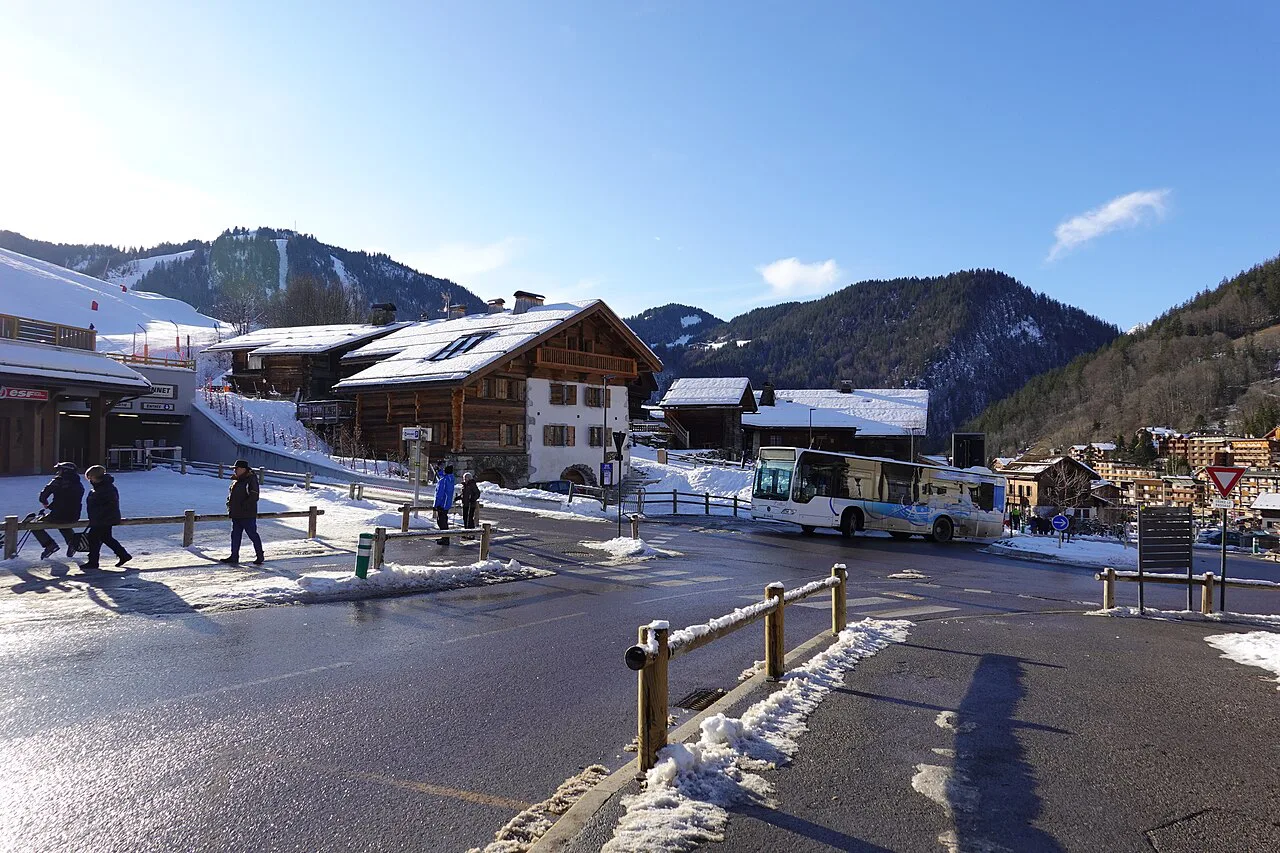
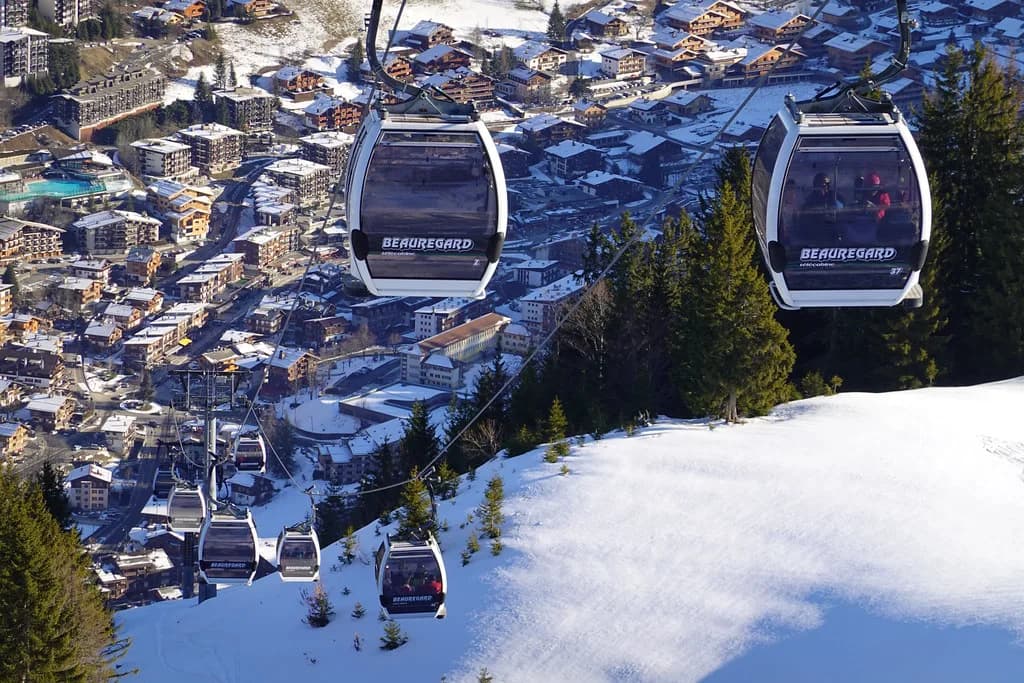
The village sits at the bottom of the L'Étale and Aiguille access points, so riders staying in the centre can walk or shuttle to lifts rather than drive. Beauregard is the sector on the opposite side of the valley and works as its own self-contained pod, which makes it a good choice for a family or beginner group that wants short, sheltered days.
Moving between sectors usually means returning towards the valley floor, and some of those connecting runs are the flatter, more tedious stretches on a board. Plan your day as a loop within one massif and one crossing at most, rather than trying to tick off all five in a morning.
Matching Each Massif to Your Riding Level
Beauregard and L'Étale are the friendliest starting points, with wide groomed terrain and plenty of blue mileage, so a first-time boarder can spend a whole morning on one pod without repeating the same run. L'Aiguille adds more reds and is where improvers start to build confidence on steeper, longer pitches.
La Balme is the high point of the La Clusaz side and the place to head when you want altitude and longer descents rather than park laps. It also serves as the natural gateway for riders with a guide who want to look at the Aravis cols, though the marked terrain there stays within the 8 black and 30 red runs the resort lists.
Manigod's La Croix-Fry and Merdassier sectors are quieter and more tree-lined, which makes them a sensible pick on windy or low-visibility days when the upper lifts shut. They are linked into the same area, so check the day's lift status before committing to the crossing.
Snowpark, Family Run and Theme Run
The resort confirms one snowpark, one Family Run and one Reblochon theme run across the area, without publishing feature sizes or a park-specific lift. Riders who care most about park laps should therefore check the live open-slopes map on the day rather than assume the park is running from the first week of the season.
Because there is a single park, it is not a reason on its own to choose a particular base, and you will ride everything else the area offers regardless. Base yourself on convenience and snow conditions, then ride over to the park when it is open and shaped. If you are weighing La Clusaz against a bigger purpose-built park resort, our Alpe d Huez snowboarding guide sets out how that area's park and terrain compare.
The Family Run and the Reblochon theme run are gentle, themed trails rather than freestyle zones, and they suit mixed groups where some riders want a slow cruise and others want laps. They are also a decent warm-up on arrival day, when legs and rental boards are both unfamiliar.
Beginner Snowboarders: Where to Start
With 16 green and 31 blue runs, La Clusaz has genuine novice terrain rather than a token nursery slope, and the Beauregard plateau is the most sheltered place to learn. Beginner zones sit near the village and on the gentler plateau areas, so you can choose between convenience and quiet depending on how crowded the valley lifts are.
Book lessons through the resort's own ski school listings rather than picking a provider from a search result, and ask specifically whether the instructor teaches snowboarding at your level; French schools often run separate ski and snowboard groups. Morning slots are usually the better bet for beginners because groomed snow is fresher and the drag lifts are less busy.
Sort board and boot hire before you travel if your dates fall in a school holiday week, when the village shops get busy. A badly fitted board is the most common reason a first trip goes badly, so allow time for a proper fitting rather than grabbing whatever is left on the rack.
Intermediate and Advanced Terrain
Thirty red runs and eight blacks spread across the massifs give strong intermediates plenty to work with, and the vertical range from 1,100 m to 2,600 m means long top-to-bottom descents are possible when the lower runs hold snow. The steeper pitches cluster in the Aiguille and La Balme sectors, while the long blues suit riders building speed control on a board.
Advanced riders should not expect a huge freeride playground inside the marked area; the appeal is the Aravis cols and off-piste lines beyond it, which need a guide and appropriate equipment. Operator summaries recommend booking a guide for exactly that reason, and it is money well spent on a board where a wrong traverse can leave you hiking.
On a snowboard, the practical limit on steeper terrain is often the flat run-outs and traverses between pitches rather than the gradient itself. Ask locally which itineraries keep you riding rather than skating, and expect to walk short sections on the classic valley descents.
Off-Piste and Freeride Boarding
The Aravis range offers real backcountry terrain around the cols, and operator material notes the off-piste opportunities along the many cols while advising a guide. For a snowboarder this is not a formality: the exits from some lines involve traverses that are far harder on a board than on skis, so a guide's local knowledge saves considerable effort.
The resort separates backcountry skiing around Beauregard and L'Étale on its own trail map, which is a useful signal that these are recognised itineraries rather than casual side-country. Check snow stability and your insurance cover before heading out, and carry a transceiver, probe and shovel regardless of how short the line looks.
Lifts and Layout: What Matters on a Board
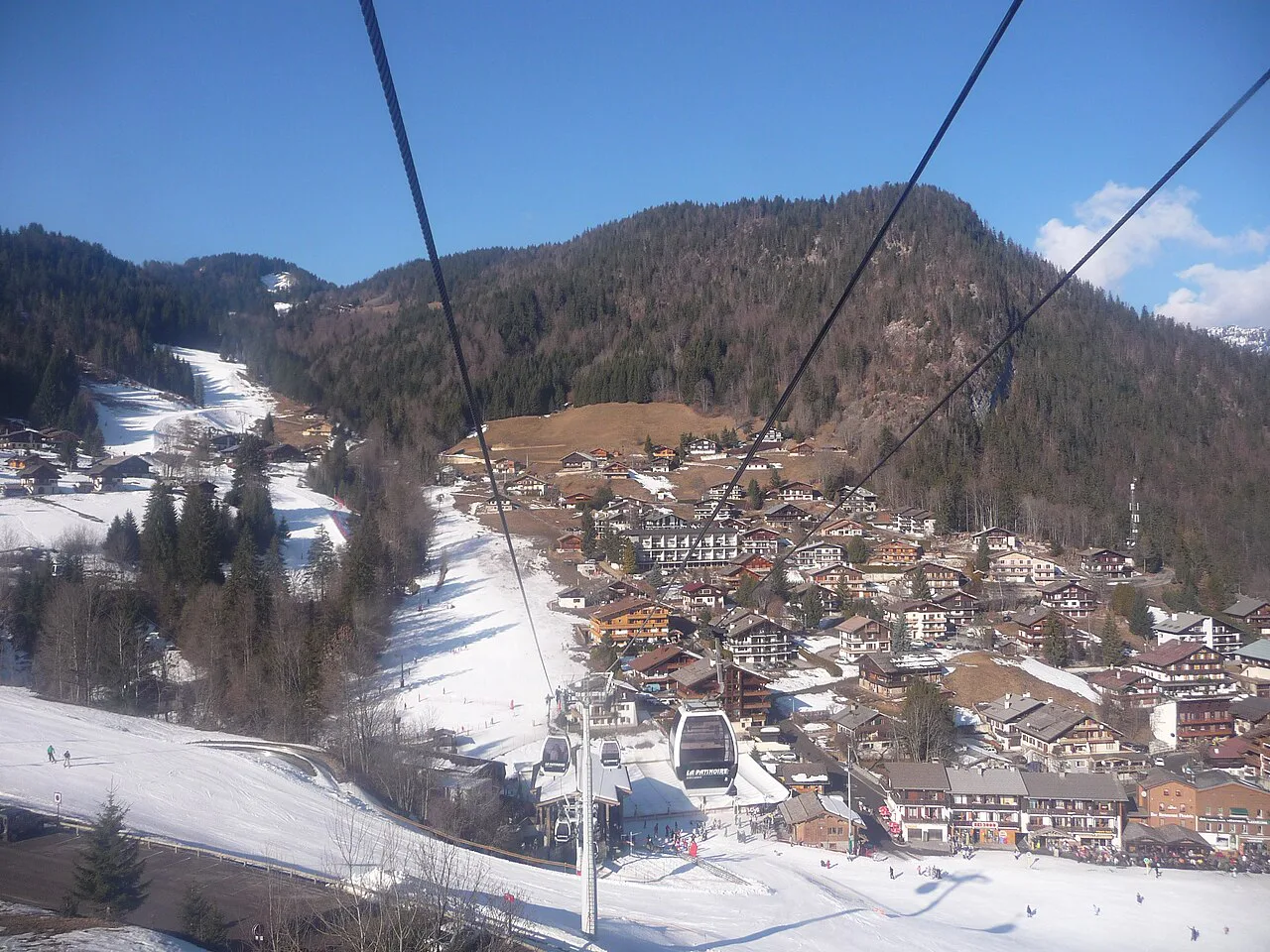
With 49 lifts serving 85 runs across five massifs, the network is dense and mostly short-hop, which means plenty of transitions rather than a few big cable cars. Gondolas and chairlifts dominate the main access points, but you should expect surface lifts in the beginner and higher sectors.
Drag lifts are rideable on a board if you are comfortable with them, but they are the point where a tired beginner loses the most time, so plan your first days around chairlift-served terrain. Ask at the lift station which specific lifts are surface lifts if you are unsure, and build your route to avoid them where possible.
Flat linking runs are the other board-specific consideration: the connections back towards the village and between pods can require unstrapping and skating. Riding with a small group and keeping momentum on these stretches is more efficient than stopping repeatedly, and it keeps you out of the way of faster traffic.
Lift Passes: What to Decide Before You Arrive
The core choice is between the La Clusaz–Manigod area pass and the wider Aravis pass, which operator material describes as covering neighbouring Le Grand-Bornand. If you plan to ride only one valley for a short break, the local area pass is enough; if you want variety, price the Aravis option against the days you will realistically travel.
Independently compiled resort data lists a ski pass figure for the area, but pass prices are volatile and depend on season length, age bands and how many days you buy. Check the current tariff on the official resort site before you budget, and consider buying online in advance if your dates are fixed.
Passes are usually sold in the village and at the main lift stations, and short-break visitors should weigh a multi-day pass against single days if they plan a rest day or an off-snow excursion. Buying the smaller product and upgrading later is often possible, but ask before you commit.
Hire, Lessons and Booking Ahead
Hire shops cluster in the village centre near the main lift access points, and snowboard rental is widely available alongside ski gear. Book online ahead of a peak week to secure a specific board size, and collect the evening before your first riding day so you are not queuing while the lifts are running.
Lessons are best arranged through the resort's own sports and ski school listings, and you should confirm at booking whether snowboard groups run at your level and in your language. Group lessons are cheaper and sociable; private sessions make more sense for a rider working on one specific skill.
The busiest weeks are the usual French school holidays, when the village fills and equipment sizes run short. If your dates fall in those weeks, book both hire and lessons before you travel rather than leaving it to arrival day.
Getting There and Getting Around
Geneva is the practical airport for La Clusaz, and operator material puts the transfer at roughly an hour, which makes it viable as a long weekend destination. Annecy is the nearest station if you travel by rail, reached via Paris with a change between Gare du Nord and Gare de Lyon.
A car is not essential if you stay in the village and ride the local lifts, but it helps if you want to reach Le Grand-Bornand or ride multiple sectors without returning through the centre. Operator material mentions a free bus service towards Le Grand-Bornand, so check the current timetable before relying on it with a board bag.
Rail plus a shared transfer produces a far lower carbon footprint than flying, and the same operator's figures put the train-plus-minibus return at 12.9 kg of CO2 per person against 219.3 kg for flight plus transfer. If you are weighing cost against time, that is the clearest case for taking the train to Annecy.
Season Timing and Snow Reliability
The resort has not published fixed opening and closing dates in its trail information, and snow conditions vary year to year, so plan around the general Alpine pattern rather than a guaranteed calendar. The high point at 2,600 m holds snow longer than the village at around 1,100 m, which means late-season trips should focus on La Balme and the upper lifts.
As a north-west-facing area with substantial average snowfall, La Clusaz is a safer early-season bet than many mid-altitude French resorts, but the lower return runs to the village are the first to suffer in a warm spell. Check the live slope status on the official site in the days before you travel and pack for wet snow at village level.
For a snowboarding trip, the sweet spot is usually mid-January to late March, when base depths are settled and the park has been shaped. Avoid the French holiday weeks if you want quiet lifts, and expect the village to be lively and the rental shops stretched during them.
A Sample Three-Day Plan
Day one should stay low and local: Beauregard or L'Étale for warm-up laps, a lesson or a hire collection, and an early finish to sort kit and passes. Keep the mileage modest and use the day to learn the lift layout rather than chasing the far side of the area.
Day two is the big one: head for La Balme and L'Aiguille for altitude and longer descents, with a crossing towards Manigod if the links are open and your legs are fresh. Day three depends on conditions — park laps if the snowpark is shaped, or La Croix-Fry and Merdassier if the upper mountain is wind-affected.
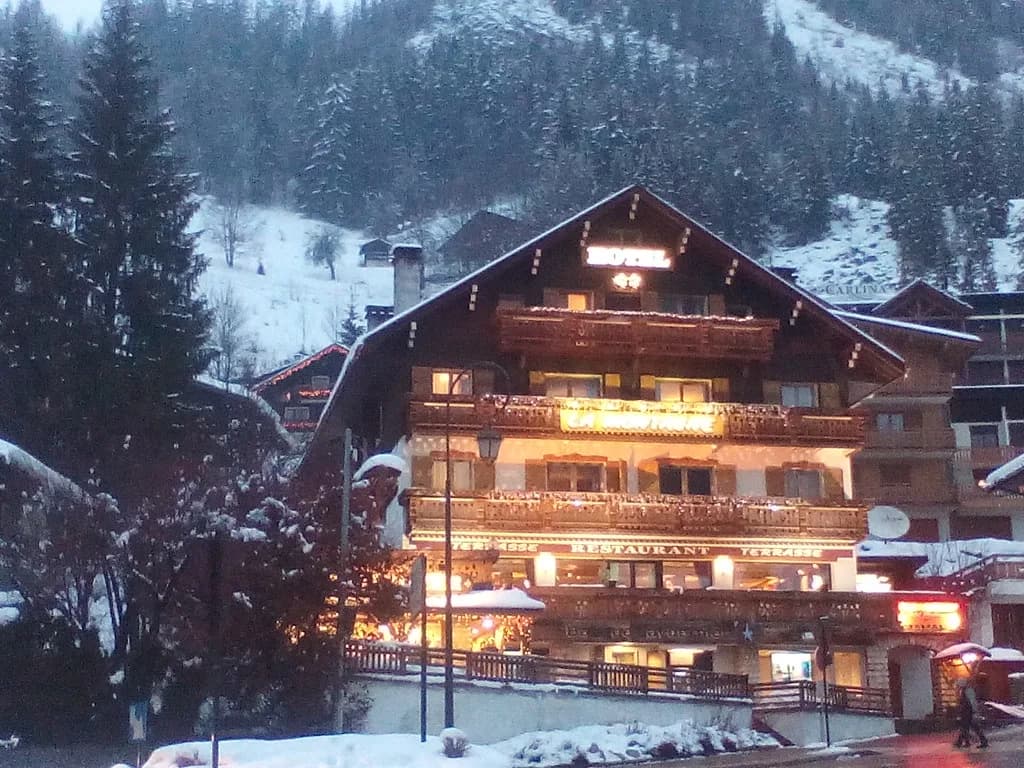
Book your final day loosely so you can follow the snow rather than a fixed itinerary, and keep one afternoon free for the village itself. La Clusaz rewards a slow hour or two in the old centre, which is the part most short-break visitors underestimate.
Common Mistakes on a First Trip
The biggest planning error is treating La Clusaz as one ski area and booking a base far from the lifts you actually want, then spending the week commuting. Decide first whether you are a Beauregard learner, an Aiguille and La Balme rider, or a park-focused visitor, and choose accommodation accordingly.
The second is underestimating how much traversing and skating a snowboard day involves across five linked massifs, especially late in the day on the return runs. Build in a mid-afternoon return rather than being caught on a flat traverse as the lifts close.
The third is leaving hire and lessons to arrival day in a peak week, when the good boards and the instructors' schedules are already taken. If you only fix two things before travelling, make them a properly fitted board and a confirmed lesson slot.
Plan Your La Clusaz Snowboarding Trip
La Clusaz suits snowboarders who want a real French mountain town, a lift network that starts near the centre and a terrain mix weighted towards beginner and intermediate riding. The decision that shapes your trip is which massif you base yourself on, and the second is whether you need the local area pass or the wider Aravis option.
Fix your hire and lessons before travelling if you are visiting during French school holidays, and leave room in the plan to follow the snow to La Balme or shelter in the trees at Manigod. Check current pass prices and opening dates with the La Clusaz tourist office before you book, then commit to the trip.
Frequently Asked Questions
Is La Clusaz good for snowboarding?
Yes, particularly for beginners and intermediates. The area runs from 1,100 m to 2,600 m with 85 runs and 49 lifts, and the terrain is weighted towards greens and blues. Boarders should expect some flat linking runs and surface lifts between the five massifs, which is the main practical difference from a ski trip.
How big is the La Clusaz ski area?
The resort describes La Clusaz–Manigod as five massifs, 85 runs and 49 lifts covering a stated 125 km of slopes between 1,100 m and 2,600 m. That figure uses the French method that adds 30 per cent for skier trajectories, so treat it as an area measure rather than precisely groomed piste length.
Does La Clusaz have a snowpark?
Yes, the resort lists one snowpark, one Family Run and one Reblochon theme run across the area. It does not publish park feature details with the trail map, so check the live open-slopes map on the day to see whether the park is shaped and open before you plan around it.
Where do beginners snowboard in La Clusaz?
The Beauregard and L'Étale sectors offer the gentlest, most sheltered groomed terrain, with beginner zones near the village. With 16 green and 31 blue runs across the area, there is enough novice terrain for several days without repeating the same slope.
Can you ski La Clusaz and Le Grand-Bornand on one lift pass?
An Aravis pass covers Le Grand-Bornand alongside La Clusaz, while a local area pass covers only La Clusaz–Manigod. The value depends on whether you will realistically make the journey, so check current pass coverage and the bus connection before buying.
What altitude is La Clusaz and does it get reliable snow?
The ski area runs from 1,100 m at village level to 2,600 m, on the north-west flank of the Aravis massif, and operator summaries cite average snowfall above six metres at 1,860 m. Early and late season, expect the upper lifts to hold snow better than the runs back to the village.
How far is La Clusaz from Geneva airport?
Operator material puts the transfer from Geneva at roughly an hour, which makes La Clusaz workable as a long weekend. By rail, Annecy is the nearest station, reached from Paris with a change between Gare du Nord and Gare de Lyon.
Do you need a car for a La Clusaz snowboarding holiday?
Not if you stay in the village and ride the local lifts, since access points are close to the centre. A car helps if you want to reach Le Grand-Bornand or move between sectors without returning through the village, and there is also a bus service towards Le Grand-Bornand.
Sources
Useful notes for your next ski trip
Optional updates to our Alpine resort guides.
You might also like
Continue reading
More guides you'll find useful
.jpg)
