Les Gets Skiing Guide: Ski Area, Passes and Trip Planning
Plan Les Gets skiing: the Chavannes and Mont Chéry sectors, the local Les Gets–Morzine pass versus the full Portes du Soleil, and beginner provision.
On this page
Les Gets sits at 1,172 m in the Haute-Savoie department of France, between Lake Geneva and Mont Blanc, and the village spreads along the floor of a valley with skiable slopes rising on both sides. That shape matters more than any single statistic, because it means the resort offers two genuinely different sectors facing each other rather than one continuous mountainside. It also positions Les Gets as a gateway into the Portes du Soleil, the cross-border ski area that links French and Swiss resorts.
The practical question for most trips is not whether Les Gets is worth skiing but which pass boundary and which side of the valley suits your group. The local Les Gets–Morzine area and the full Portes du Soleil area are sold separately, and they attract different skiers. This guide works through the sectors, the beginner provision, the timing trade-offs and the booking decisions in sequence.
Why Choose Les Gets for a Ski Trip
Les Gets offers a compact village base with lifts leaving directly from the centre, which the resort's official tourism site describes as genuine ski-in, ski-out convenience. The village splits into an eastern side served by the Chavannes lifts and a western end reached from Perrières and La Turche. Where you stay in the village therefore changes which lift you use first each morning, a detail worth settling before booking anything else.
The resort's position as a Portes du Soleil gateway is the other reason people choose it. Les Gets is one of the French resorts in that cross-border network, so a full-area pass opens connections towards Morzine, Avoriaz and beyond into Switzerland. That is a strong draw for confident skiers, but it should not be the deciding factor for a group that will mostly stay close to the village.
Altitude is moderate by Alpine standards, which shapes what kind of trip this is. The village base at 1,172 m and the surrounding summits make Les Gets a mid-mountain resort rather than a high-altitude one, so conditions vary through the season. Treat that as a planning consideration, not a prediction, and read the snow reports published by the Les Gets lift company and the Tourist Office before committing to a particular week.
How the Local Ski Area Is Structured
The Les Gets–Morzine ski area is presented by the official Les Gets pass site as 120 km of marked slopes across two complementary sides, served by 50 ski lifts. Those two sides are the Chavannes sector on one flank of the valley and Mont Chéry on the other. The same source counts 74 runs and 15 fun zones within that local area.
Some published counts differ slightly from those official figures, with lower lists referring to 71 slopes or a different number of lifts across the same 120 km. Where sources disagree, it is worth anchoring your expectations to the official Les Gets–Morzine figures rather than to a third-party summary. The kilometre total is consistent across them, so plan around roughly 120 km locally and check run and lift counts on the current piste map.
Understanding that the local area is a pairing of Les Gets and Morzine, not Les Gets alone, matters for pass decisions. Morzine sits lower in the neighbouring valley, and its slopes are part of the same local ticket. If you buy the local pass expecting only Les Gets terrain, you are effectively getting a second resort included.
The Chavannes Side: Main Access and Beginner Zones
Chavannes is the first sector you meet coming up from the village, and it functions as both the main way out in the morning and the main route home at the end of the day. The official ski area page notes a learning area for beginners, alongside fun zones including a snowpark, mini-boarder area and timed slalom. That combination makes Chavannes the default starting sector for most groups.
The beginner provision here is specific rather than general. Les Gets tourism lists the Espace Grand Cry, a themed children's area built around a Native American world with games and challenges, as one of the family-focused zones on the Chavannes side. A separate page describes the area's tepees, make-up workshops and mountain legends, confirming it is designed for children rather than adults.
Because Chavannes carries the main traffic flow, timing within the sector matters. The route back to the village is used by almost everyone at the end of the day, so it can be busier and more churned late on. If you are staying on this side, skiing the home run earlier or accepting the busier final descent is a straightforward trade-off to plan for.
The Les Gets Bowl: Cruising Terrain and Ski-School Traffic
Above and beyond the first Chavannes slopes lies the bowl that forms the heart of the local cruising terrain. It is described as a wide basin with three sides carrying a mix of blues, reds, one black, tree runs and paths, with several chairlifts converging on a single base point. For intermediate skiers, that convergence makes it easy to lap different runs without committing to a long traverse.
The bowl's weakness is its popularity with ski schools. Morning lessons concentrate here, so the slopes can be crowded early and quieter in the middle of the afternoon. If your group wants space rather than company, treating the bowl as an afternoon sector rather than a first-thing destination is a reasonable adjustment.
The Perrières link is the practical reason the bowl matters for itinerary planning. A red run from the back of the bowl leads down towards the Perrières section of the village, giving a direct route home for anyone staying at the western end. Knowing which descent returns you to your accommodation saves a lift ride at the end of the day.
Perrières and La Turche: Western Village Access
Perrières and La Turche serve the western end of the valley and are the natural starting point for anyone staying at that side of the village. The main lift here is a fast chair, complemented by the Turche drag lift. This is a small sector compared with Chavannes, so it functions as an access route as much as a destination in its own right.
The Turche lift is unusual in being privately owned rather than operated as part of the standard lift company estate, though it remains covered by the normal lift pass. That detail is worth knowing if you ever see it listed separately. For practical purposes, treat it as part of the local network and look for its status on the day's lift board rather than taking a run for granted.
Because this sector is on north-facing slopes, it holds conditions differently from the south-facing Mont Chéry side across the valley. If you are choosing where to base your ski day rather than where to sleep, the aspect of each sector is a more useful sorting criterion than raw distance from the village centre.
Mont Chéry: The Isolated Hill Across the Valley
Mont Chéry is the ski hill on the opposite side of the valley from Chavannes, and it does not connect into any other part of the ski area by piste. That isolation keeps it quieter than the main sector and gives it a distinct character. It is reached by its own gondola from the village, with further chairs above.
The terrain here leans towards harder blues and reds, which the official booking page also notes as including mainly red and black runs on the Mont Chéry side. That makes it a sector for confident intermediates and above rather than for first-timers. Beginners should generally look to the Chavannes learning areas instead, and treat Mont Chéry as somewhere to graduate to.
Aspect is the key trade-off on this side. Mont Chéry faces south, so the descent back down to the village can soften later in the season and later in the day. Because the gondola runs in both directions, riding down rather than skiing down is a legitimate option when the lower slopes are past their best.
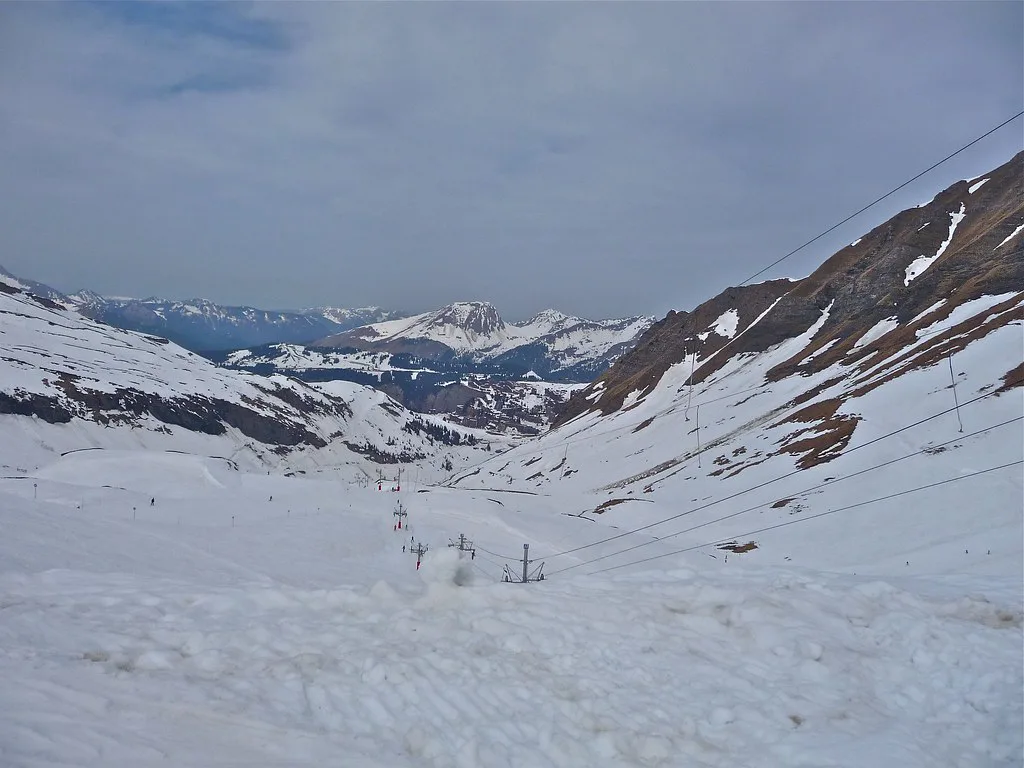
Pointe de Nyon and Chamossière: The Back-of-Area Mountains
Pointe de Nyon and Chamossière are the two highest local mountains at the back of the ski area, and they hold the most demanding on-piste terrain in the Les Gets–Morzine sector. The official altitude figures place the Pointe de Nyon summit at 2,019 m and Chamossière at 2,002 m, both above the village by roughly 800 m or more.
These summits are where stronger skiers in a mixed-ability group will want to spend their time, and they are the reason a full-area pass can be justified even for a group that mostly cruises. Views from the top of Chamossière are wide-ranging, taking in the Mont Blanc massif on one side. The descent from the summit is at the harder end of the red spectrum, so it is not a gentle introduction.
There is a restaurant at Pointe de Nyon that is reachable by lower-intermediate skiers, which gives the sector a role beyond expert terrain. That makes it a viable meet-up point for a mixed group: the confident skiers can use the steeper runs while others use the accessible viewpoint and eating options. Lift access to the back of the area varies, so look at the day's lift status before setting out.
The Morzine and Pleney Side
The Morzine side of the local pass covers the ridge above Morzine and the runs descending into the town itself, including the Pleney sector. These slopes are north-facing and reach the lowest elevations in the local area. In good conditions they offer long, winding forest runs with varied gradient.
North-facing terrain at low altitude has a specific behaviour pattern. It can be hard-packed or icy after warm spells, particularly on the lower sections, and it does not soften in the same way as south-facing slopes. That makes the Morzine side a better morning choice when you want reliable grip rather than soft snow.
Ski-school traffic concentrates here too, with Morzine's lessons largely based around these slopes. Early morning and mid-afternoon are generally quieter windows, based on the insiders guide's observation of how the sector fills. Building your day around those windows rather than fighting them is one of the easier planning wins in Les Gets.
Local Area Pass Versus Portes du Soleil Pass
The core pass decision in Les Gets is whether to buy the local Les Gets–Morzine ticket or the full Portes du Soleil pass. The official ski area page gives about 120 km of marked slopes for the local area, while the full Portes du Soleil extends to around 650 km straddling France and Switzerland. Those are very different propositions in scale and in price, so the choice should follow your group's ability mix rather than ambition alone. The Les Gets ski pass guide works through the ticket types and add-on options in more detail.
For beginners and lower intermediates, the local pass is usually the better fit. The learning areas, gentle blues and easier reds are concentrated within Les Gets–Morzine, and the extra terrain of the full area adds travel time rather than useful skiing for that group. Buying the bigger pass and never using it is a common way to waste money.
For stronger intermediates and above, the full pass opens genuine day-trip destinations. The booking page lists the cross-border resorts included, from Abondance and Avoriaz to Champéry, Morgins and Les Crosets, and confirms that ski passes are cancellable and refundable without fees until your arrival day in the resort. That refund policy is worth knowing when booking early, though you should check it on the booking page's own current terms at purchase.
Deciding How Many Days to Buy
Pass length should follow realistic usage rather than the size of the area. A group of beginners on a week's trip will rarely exhaust the local Les Gets–Morzine terrain, so a full-area pass for the whole week is often unnecessary. Buying the local pass for most days and adding a single full-area day is a flexible way to cover both needs.
Linked to this is the operational reality that inter-resort connections can be closed. The official piste map page notes that the interactive map and illuminated signs at the start of lifts show the status of links between resorts in real time. This means a full-area pass is not a guarantee of a full-area day: a link can shut while you are on the mountain.
The practical approach is to buy for the terrain you will actually ski and treat any wider excursions as a bonus. If you plan a full-area day, check the link status before you set off rather than after you have committed to a one-way itinerary. Keeping a fallback sector in mind protects the day if a connection closes.
Learning Provision in Les Gets
Beginner provision in Les Gets is centred on the Chavannes side, where the learning area sits near the top of the main gondola. The official ski area page describes a dedicated learning zone, and the resort operator's fun-zone page confirms a children's area with games and activities. That is the operational picture for early skiers; the specifics of lesson booking sit with the ski schools.
What the sources do not establish is the detail of lesson formats, group sizes, meeting points, pricing or instructor qualifications. Those vary by school and change between seasons, so any figures you see quoted elsewhere should be checked against the school you plan to use. Before booking anything, confirm the meeting point, the group's ability level and the cancellation terms directly.
For adults learning from scratch, the same Chavannes learning zones are the natural starting point, with progression typically moving into the bowl as confidence builds. The jump from beginner slopes to easy blues and reds is what makes Les Gets forgiving for new skiers. If you are booking lessons, ask which lifts the school uses so you can match your accommodation end of the village to the meeting point.
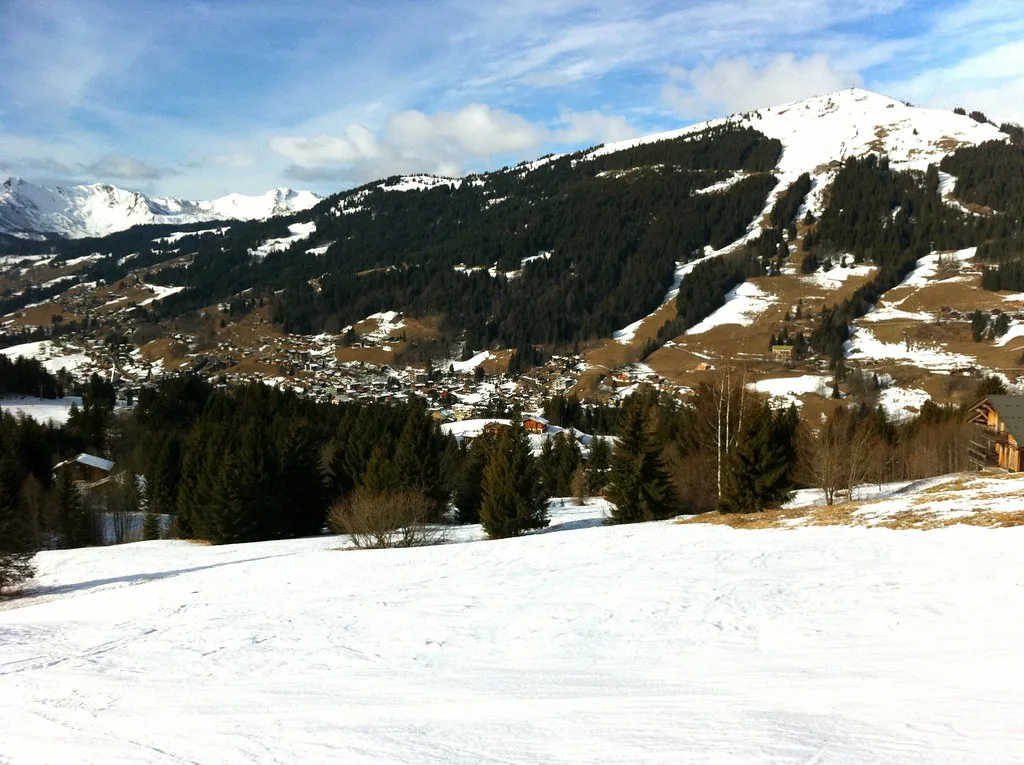
Equipment Hire in Les Gets
Hire shops are spread through the village and, according to the official piste map page, also stock free paper maps alongside the tourist office and lift ticket offices. That means you can combine a hire fitting with collecting a map and checking the piste layout. Booking ahead is generally sensible for peak weeks, but availability and terms are set by individual shops.
Equipment hire is one of those topics where published details vary widely and prices change between seasons. The reliable approach is to contact the shop directly with your ski level, boot size, and the days you need, rather than relying on a headline rate. Ask about fitting time, swap policy if the boot or ski does not work, and whether they store gear overnight.
Season Timing and Operational Variability
Winter operation in Les Gets is scheduled but conditional, and the opening and closing of lifts depend on snow conditions and lift-company decisions. Skiing in the region is typically possible from mid-December into mid-April, but dates shift, and the Mont Chéry side in particular may close before the wider area. Treat any published season window as a plan rather than a promise.
Historic snow statistics are not forecasts. A good season last year tells you nothing about next year's snow, and a strong December does not guarantee a strong February. The sensible use of snow history is to understand general patterns, not to pick a week on the assumption that the same will repeat.
Before booking anything, check the lift company's own seasonal information and the status of individual lifts close to your travel date. Webcams, snow reports and the interactive piste map are the sources that reflect current reality rather than a static plan. If a specific lift matters to your trip, such as a link into Morzine or the Mont Chéry gondola, check it separately.
Practical Planning Sequence for a Les Gets Ski Trip
A sensible order for planning is pass boundary first, then sector plan, then lessons and hire, then daily timing. Choosing the pass before anything else focuses the rest of the decisions, because the terrain you have access to shapes where you will ski and what you should book. Les Gets works well for this because the two local sectors are clearly distinct and each has a different character.
If your group is mixed, plan sectors rather than whole days. Strong skiers can spend mornings on Pointe de Nyon and Chamossière or the Mont Chéry reds, while beginners use the Chavannes learning zones and the bowl's easier blues. Meeting back at an identified mountain restaurant or lift base at lunchtime prevents the group fragmenting without forcing everyone onto the same runs.
Finally, build slack into the itinerary. Links can close, weather can shut upper lifts, and the south-facing Mont Chéry descent can soften by mid-afternoon. Having a fallback sector for each day, and accepting that the plan may change, is more useful than trying to schedule every hour in advance.
Where to Read Next
Once the pass decision is made, the Les Gets piste map guide unpacks how the sectors connect and how to plan a day across them. Reading it alongside the ski pass guide, which covers the boundary between the local and full-area tickets, gives you a clear picture before booking. Together they answer the two questions that most often stall trip planning.
If you are weighing Les Gets against another resort, the Alpe d'Huez skiing guide and the Flaine skiing guide cover comparable decision points for French Alpine trips. Flaine sits in the Grand Massif rather than the Portes du Soleil, so the comparison sharpens what a cross-border pass actually buys you.
Plan Your Les Gets Ski Trip
Les Gets is a strong choice for groups with a mix of abilities, because the local area pairs dedicated beginner zones on the Chavannes side with tougher terrain on Mont Chéry, Pointe de Nyon and Chamossière. That range works in the resort's favour: you can keep a group together in the same valley without forcing everyone onto the same gradients.
The key decisions are the pass boundary, the side of the village you base yourself on, and how much slack to leave in the schedule for closed links and changing conditions. Settle those three and the trip largely plans itself. Verify seasonal dates, lift status and any prices with the Les Gets lift company and Tourist Office before you commit, since the sources cited here intentionally avoid quoting figures that change.
Explore more Les Gets guides
Frequently Asked Questions
Is Les Gets good for skiing?
Les Gets offers a local ski area of about 120 km shared with Morzine, served by around 50 lifts across two contrasting sectors. The Chavannes side carries the beginner zones and cruising terrain, while Mont Chéry across the valley holds harder blues and reds. For a mixed-ability group, that spread is a genuine advantage.
Is Les Gets better than Morzine?
They share the same local lift pass and the two resorts sit next to each other, so the comparison is less about one being better and more about which suits your group. Les Gets has the village-based lift access and the primary beginner provision on the Chavannes side. Morzine's slopes, including the Pleney sector, are north-facing forest runs that can be harder-packed. Both are part of the same local area.
Do you need the full Portes du Soleil pass in Les Gets?
Not necessarily. The local Les Gets–Morzine pass covers about 120 km of marked slopes, which is substantial for beginners and most intermediates. The full Portes du Soleil pass extends to roughly 650 km across France and Switzerland, and suits stronger skiers who want to travel between resorts. A flexible approach is to buy local for most days and add a single full-area day.
Which side of Les Gets is best for beginners?
The Chavannes side is the main area for early skiers, with the learning area near the top of the main gondola and a themed children's zone, Espace Grand Cry. Mont Chéry leans towards harder blues and reds and is better suited to skiers who have progressed beyond beginner runs. That distinction is useful when planning where a mixed group meets.
How big is the Les Gets ski area?
The local Les Gets–Morzine area covers about 120 km of marked slopes served by around 50 ski lifts, according to the official Les Gets pass site. The wider Portes du Soleil, of which Les Gets is a part, extends to roughly 650 km across France and Switzerland. Some third-party summaries publish slightly different run or lift counts for the local area, so check the current piste map for the figures you plan around.
When does the Les Gets ski season start and finish?
Les Gets' winter operation is scheduled but conditional: opening and closing dates depend on snow conditions and lift-company decisions. A typical season runs from mid-December into mid-April, and Mont Chéry may close before the wider area. Check the operator's current season information.
How much is ski hire in Les Gets?
Rental pricing varies by shop, by the equipment level you choose, and by the length of hire, so a single figure would be misleading. The practical approach is to contact the shop you intend to use, or check its current booking system, with your ski level and required dates. Confirm fitting time, boot swap policy and overnight storage before you commit.
Sources
Useful notes for your next ski trip
Optional updates to our Alpine resort guides.
You might also like
Continue reading
More guides you'll find useful