
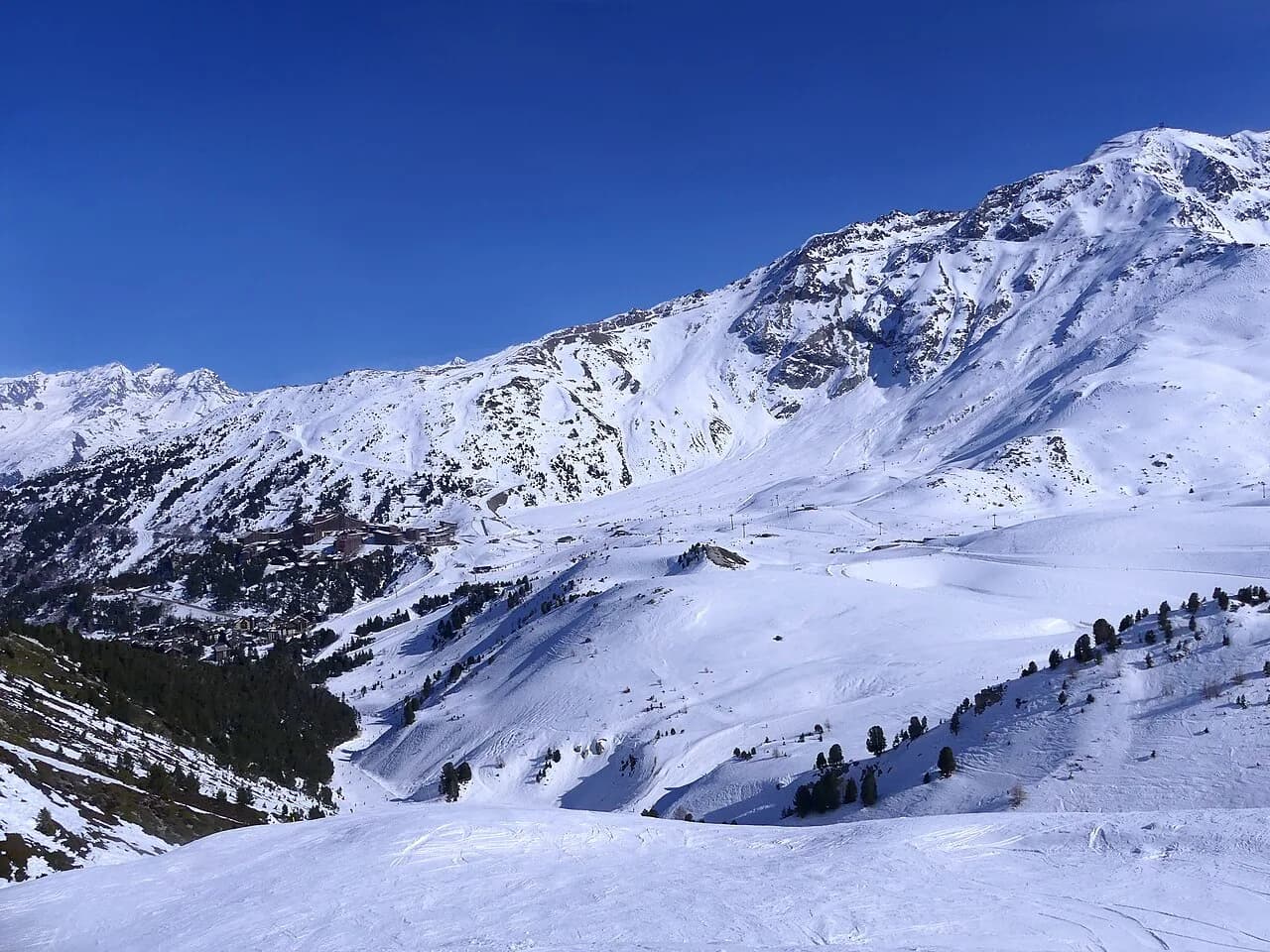
Les Arcs Skiing Guide: Paradiski Sectors and Passes
Plan a skiing trip to Les Arcs: village sectors, 200 km of pistes, the Paradiski link, lift-pass choices, ski schools, hire and season dates.
On this page
Les Arcs suits skiers who want a big, high ski area without the friction of a single crowded hub. The resort spreads across four Arc villages plus Peisey-Vallandry and Villaroger, all on one lift network, and the whole thing plugs into Paradiski via the Vanoise Express. Choosing where to sleep matters more here than in most French resorts, because each base gives you a different first run of the day.
The terrain runs from 1,200 m at the valley end up to the 3,226 m Aiguille Rouge, and the resort reports 200 km of piste within Les Arcs, expanding to 425 km across Paradiski. That scale is the appeal and the trap: you can ski big days without leaving Les Arcs, but you need a plan if you intend to cross to La Plagne and still get home before the last lift.
What Les Arcs skiing actually is
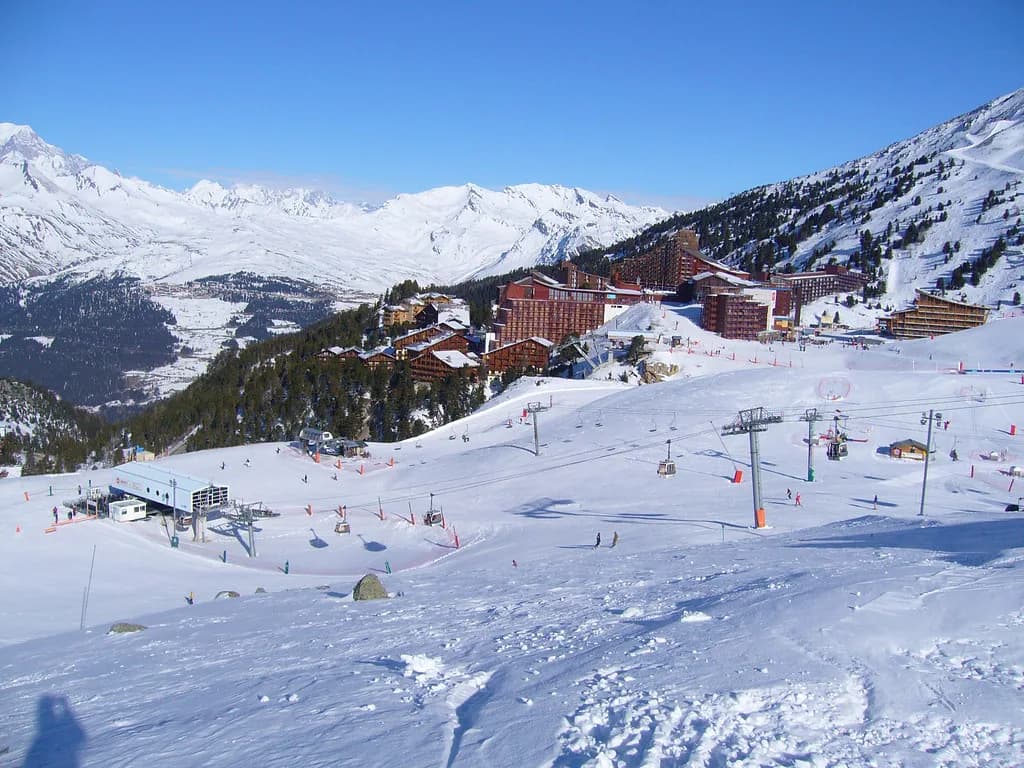
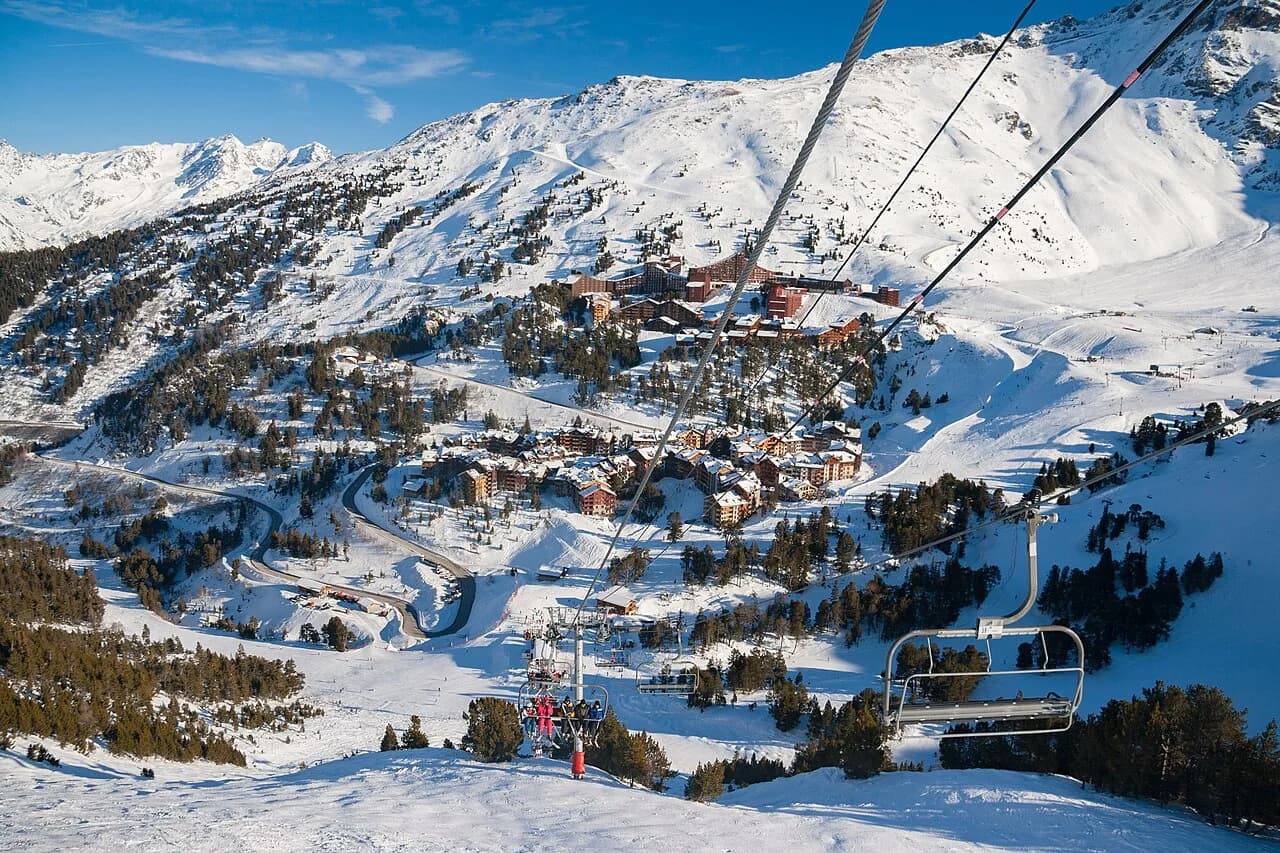
Les Arcs is a purpose-built ski domain above Bourg-Saint-Maurice in the Savoie, arranged in altitude steps rather than around a single square. Arc 1600 sits in the trees, Arc 1800 straddles the treeline, and Arc 1950 and Arc 2000 climb to the upper slopes beneath the Aiguille Rouge. Peisey-Vallandry occupies the quieter side of the valley and Villaroger sits lowest, near the bottom of the long Aiguille Rouge descent.
Within its own boundaries the resort counts 200 km of piste split into 14 green, 51 blue, 35 red and 17 black runs, which is a generous ratio for anyone in their first few weeks on snow. Around 70 per cent of the skiing sits above 2,000 m, and the vertical drop exceeds 2,000 m from the top lift down to Villaroger.
The piste count and kilometre figures vary slightly between published sources, so treat the resort's own numbers as the reference point and use the lift map when you plan a route. A piste map is genuinely useful here because the villages are strung out along the mountainside and a wrong turn can leave you a long way from your chalet. The Les Arcs piste map guide breaks down the sectors and named lifts before you travel.
Altitude and terrain: 1,200 m to the 3,226 m Aiguille Rouge
The ski area starts at 1,200 m and tops out at 3,226 m on the Aiguille Rouge, which gives the resort a genuine high-altitude half and a sheltered lower half. That range is why it holds up in both midwinter storms and spring sunshine, though the runs back to Villaroger and the valley can thin out late in the season.
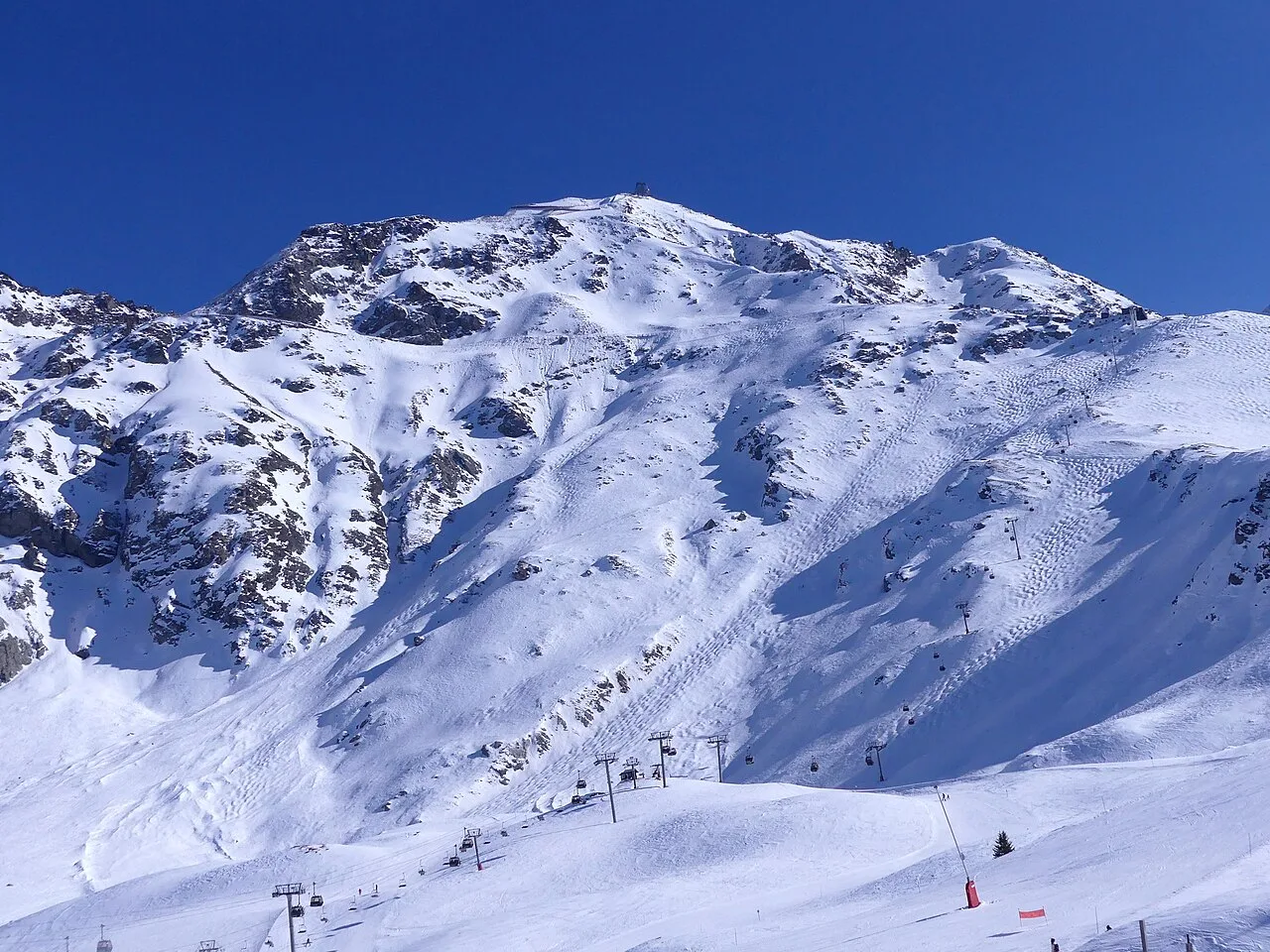
The signature run is the Aiguille Rouge descent: roughly 7 km with close to 2,000 m of vertical, dropping from the cable car at Arc 2000 towards Villaroger. It is a proper leg-burner rather than a quick lap, and the Villaroger side is a one-way exit from the main network, so plan your return before you commit.
Intermediate skiers spend most of their time on the wide blues and reds above Arc 1800 and Arc 2000, while advanced skiers gravitate to the steeper blacks and the Grand Col sector for off-piste. Snowmaking is extensive on the return runs, which is what keeps skiing back to the villages viable through the season.
Arc 1600: tree-lined blues and the funicular link
Arc 1600 is the lowest of the Arc villages and the one that skis best in poor visibility, with tree-lined runs and good snow retention. Its blues run down towards the old villages below resort level, which makes it a sensible base for a mixed-ability group who want shelter on storm days.
The funicular ties Arc 1600 to Bourg-Saint-Maurice, and rail passengers get a free return on presentation of a train ticket to Bourg-Saint-Maurice across the 2026–27 season. That makes arriving by train unusually practical: you step off the mainline service and ride up into the resort instead of transferring by road.
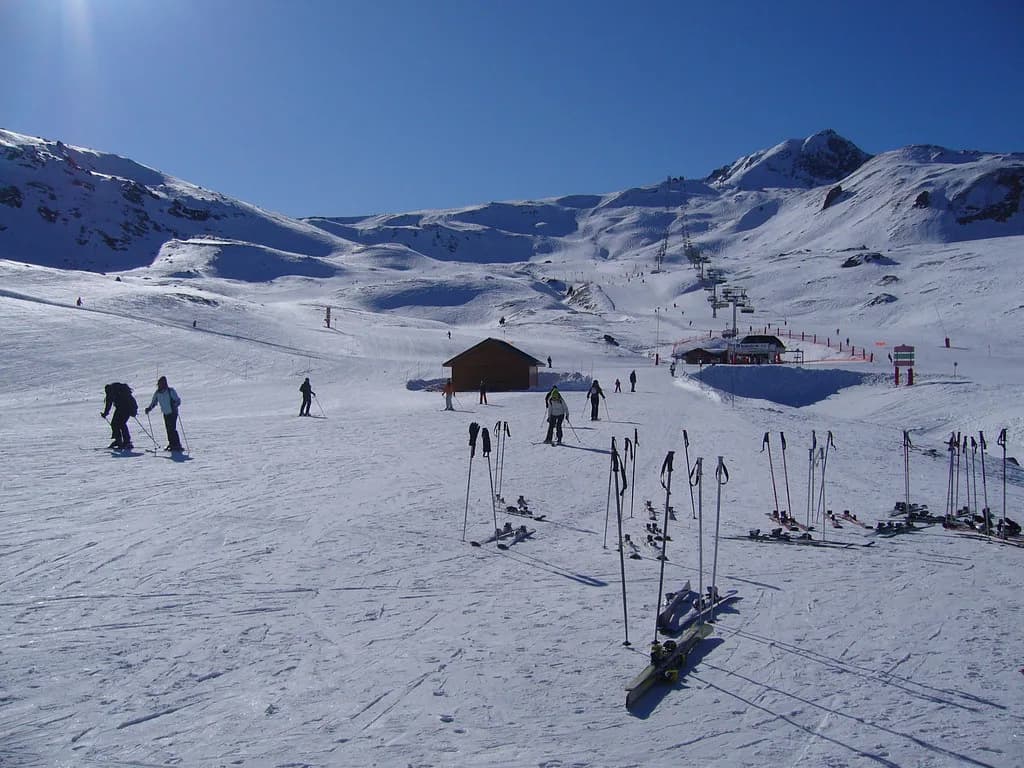
Beginners based at 1600 can lap the Cachette and Vezaille lifts, which serve gentle pitches before you step up to longer blues. The trade-off is altitude: you are lower here than at Arc 2000, so spring snow on the final runs home can soften early, and you will ride up the mountain each morning for the best conditions.
Arc 1800: the beginner and intermediate base
Arc 1800 is the natural choice for a first ski trip, because around 90 per cent of the runs back into the village are graded blue and the terrain spreads across wide, sunny slopes. The Mille8 area adds nursery slopes, tree-lined pitches and ski school meeting points served by the Carrely and Villards chairs.
One specific pinch point is worth knowing before you arrive. The bottom of the Maïtaz, Villards and Charmettoger runs converge at the Transarc gondola, where crowds build and the surface turns icy; using the Transarc mid-station gets you up and over towards 2,000 m without joining the crush.
Arc 1800 also hosts the ESF and Privilège ski schools, both based in the village, so lessons start close to the accommodation rather than requiring an early transfer. If you are weighing group lessons against private coaching, the Les Arcs Ski lessons guide sets out the formats and booking questions.
Arc 1950 and Arc 2000: altitude and ski-in convenience
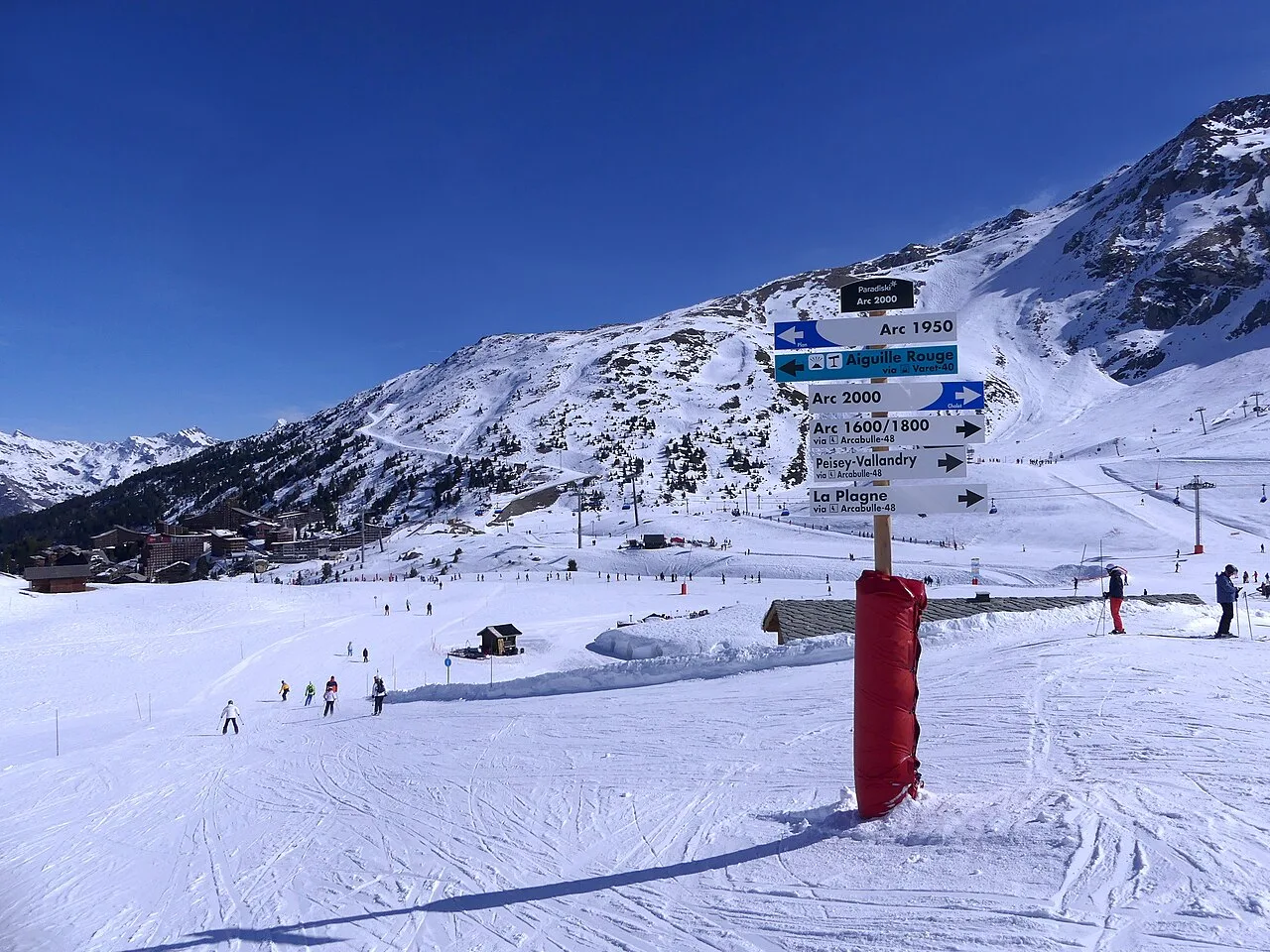
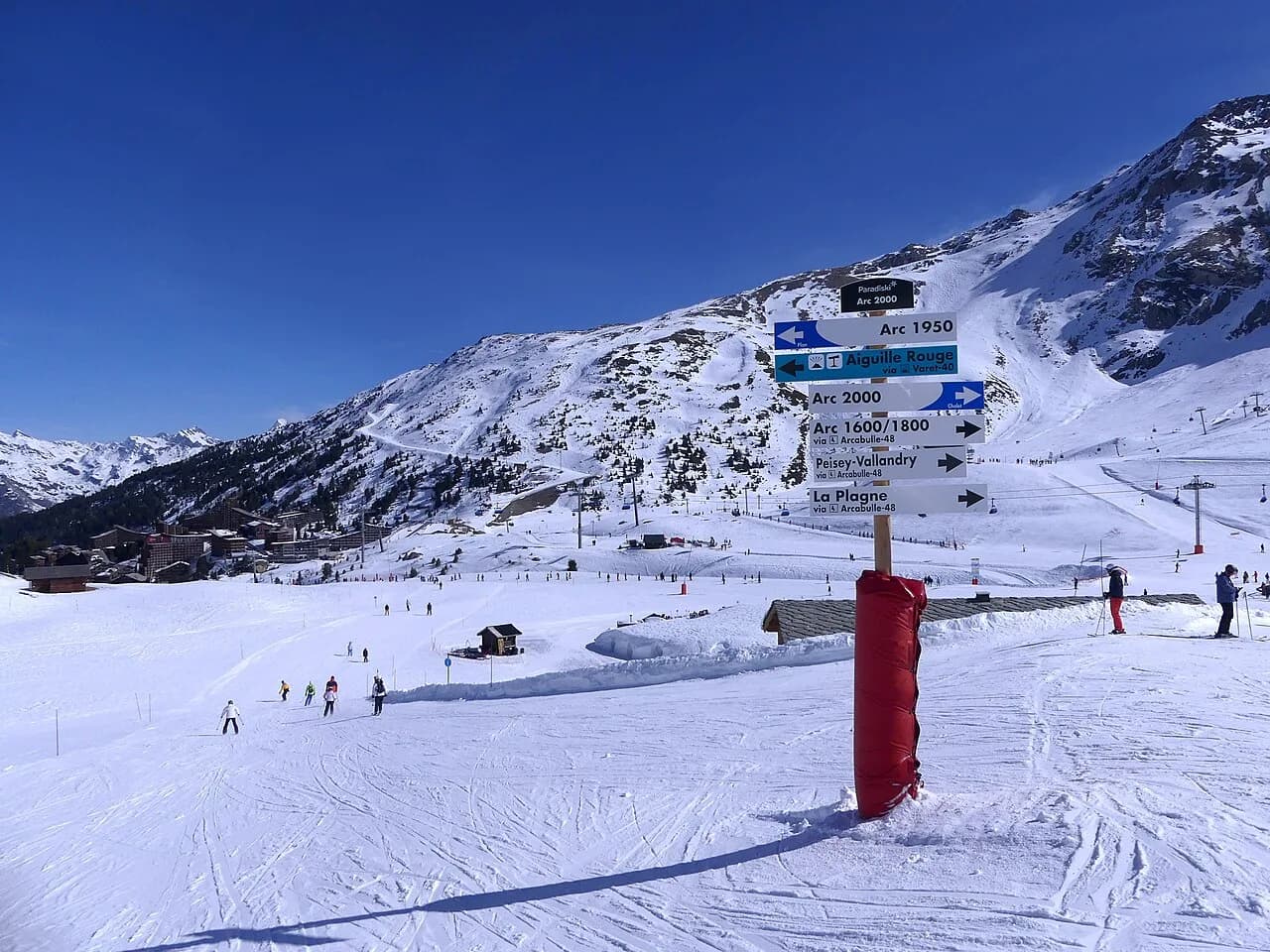
Arc 1950 was built for convenience, with accommodation arranged so you can step out of your skis at the door, and it gives quick access to the challenging terrain above. Arc 2000 is the highest village and the one to pick if you want reds and blacks on your doorstep rather than a morning commute up the mountain.
Do not write off Arc 2000 for beginners, though. The rolling blues of Plan Vert and Cascades are shallow enough for learning, and the Aiguille Rouge cable car, Varet and Arcabulle lifts all start from the village, so strong and weak skiers can share a base without long separations.
The trade-off is atmosphere as much as cost: 1950 and 2000 are the most purpose-built villages and sit above the trees, so storm days are bleaker than at 1600 or 1800. They pay you back on short breaks, when time spent moving between villages is time not spent skiing.
Peisey-Vallandry and Villaroger: quiet tree skiing
Peisey-Vallandry is the quieter side of the valley, with a good mix of blue and red runs and plenty of tree-lined skiing that holds up when the weather closes in. The Peisey and Vallandry lifts give access to the Vanoise Express, so you can be on your way to La Plagne without first skiing across the Arc villages.
Villaroger is the lowest village, with a handful of short blue runs easily lapped from the Replat chair, and it marks the bottom of the Aiguille Rouge descent. Staying here suits anyone who values a village feel and easy access to one of the great long runs, but you will spend more time on lifts reaching the rest of the network.
Crossing to La Plagne: when a Paradiski day is worth it
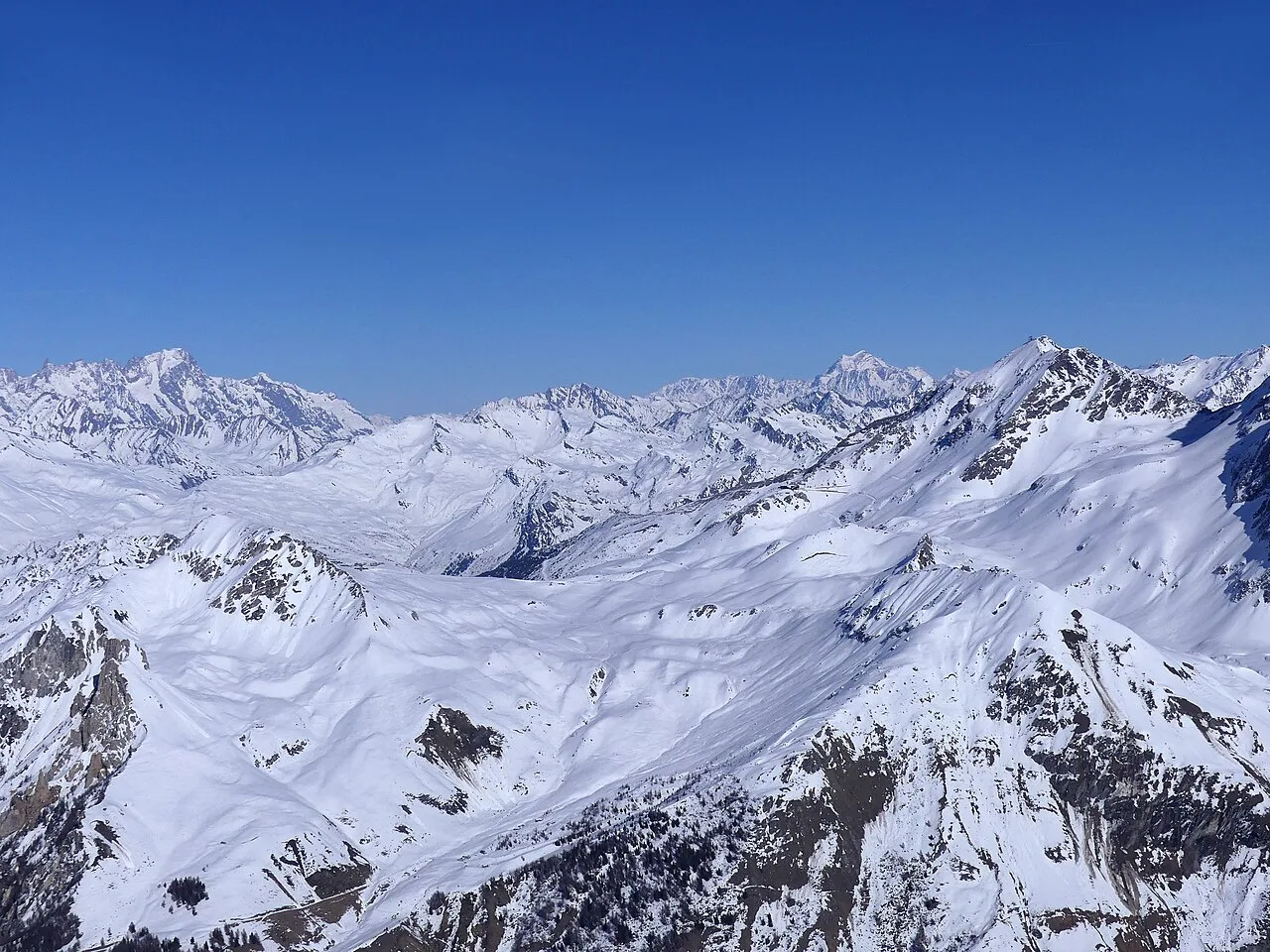
Paradiski links Les Arcs, Peisey-Vallandry and La Plagne into 425 km of piste and 258 runs, joined by the Vanoise Express cable car. The crossing is the point of the whole system, but it is a day out rather than a casual detour, and the return journey has to be timed against the last lifts.
The Vanoise Express runs on a shorter season than the rest of the lifts, opening on 12 December 2026 and closing on 17 April 2027, while the Les Arcs lifts continue to 24 April 2027. If your trip falls in the final week, plan on skiing Les Arcs only.
The practical question is whether you will genuinely cross. La Plagne offers long cruising slopes, several snowparks and about 80 km of cross-country skiing, plus an Olympic bobsleigh track, but a beginner or a family with young children may never use the link. If you are weighing a French resort with a similar linked-area decision, our Alpe d'Huez Skiing Guide covers how its sectors and passes compare. Match the pass to the plan rather than buying the biggest option by default.
Beginner zones and ski schools
Every village has beginner provision, but the character differs. Arc 1600 offers tree-lined blues for progressing from blue to red, Arc 1800 has the nursery slopes and meeting points around Mille8, and Peisey-Vallandry has gentle tree runs served from Peisey and Vallandry. Group beginners by the terrain they will actually ski, not by village prestige.
Privilège ski school is based at Arc 1800 and teaches ski courses in small clusters of one to five people, with off-piste outings in groups of up to six including safety equipment. Its private lesson tariffs show how sharply prices step up in school holidays: a two-hour one-person lesson is 100 € outside holiday dates and 120 € during them, while a full day for up to eight people rises from 460 € to 520 €.
Those figures are Privilège's own published rates and should not be read across to the ESF or other schools, which set their own pricing. If you want private coaching, book before the school holiday weeks rather than leaving it to arrange on arrival.
Lift passes: Classic, Essential, Premium and Beginner
The pass range splits along one line: whether you ski Les Arcs and Peisey-Vallandry only, or all of Paradiski. The Classic Pass covers the Les Arcs / Peisey-Vallandry area and the funicular; the Essential Pass adds La Plagne and the Vanoise Express, along with express lanes, a free half-day from 12:30 on your arrival day, pool entry and discounts on activities.
The Premium Pass goes further, adding a free zip-line run on a six-day pass and unlimited sledging at 1800 and Luge 2000. Discounted activity prices for Essential holders include the zip line at 40 € instead of 60 €, First Tracks at 27 € instead of 37 €, Luge 2000 at 7 € and sledging at Arc 1800 at 4.50 €.
There is also a Beginner Pass sold on site only, covering specific learning areas with progressive courses, plus pedestrian passes for non-skiers using the funicular and a set of viewing lifts. Passes are free for children under five, and reduced rates require proof of age at purchase.
The official passes page sets out the tiers and benefits but does not display figures, so look up the rates on the official site before you budget. Our Les Arcs Ski Pass guide compares the products and the booking checks that matter.
Season dates, opening weeks and late-season discounts
The 2026–27 winter runs from 12 December 2026 to 24 April 2027 for the Les Arcs lifts, with the Vanoise Express closing a week earlier on 17 April 2027. Treat those dates as this season's plan only, because the resort publishes new dates each year.
Two discount windows reward flexible dates. The first week of the season, 12 to 18 December 2026, takes 15 per cent off Classic and Essential passes, and the final week, 17 to 24 April 2027, takes 15 per cent off Classic passes only. Shifting your trip by a week can therefore change both the price and the terrain available to you.
Snow conditions vary through the season, and the resort grooms both natural and artificial snow to keep runs open. March and April usually mean sunnier pistes on the upper mountain, while January is the better bet for quiet slopes and fresh snow.
Hire, kit and where to sort it
Rental is spread across the villages, so you can usually collect gear where you are staying. At Arc 1950, Intersport Ski Service sits in the village square opposite the ESF, opens daily from 9 am to 7 pm across the 2026–27 season, and offers downhill and snowboard hire plus clothing sales.
Arc 1800 has its own options, including Intersport Le Chantel at Edenarc, which handles ski and snowboard rental, accessory sales and a repair workshop at the foot of the residence blocks. Privilège's partner Skimium runs six stores across Bourg-Saint-Maurice, Arc 1600, Arc 1800 and Arc 2000, which helps if you want to collect kit on the way up.
Bourg-Saint-Maurice is the practical alternative if you arrive by train or want a wider choice of shops before the final climb. The trade-off is carrying gear up the mountain, so collect on arrival day rather than planning a mid-stay trip down. Our Les Arcs Ski hire guide covers the named branches and booking channels.
Snowpark and off-piste
Les Arcs Snowpark covers 7.5 hectares, with four runs and feature lines ranging from beginner rails to an expert line with a hip, wall and table. The SPARK makeover adds a themed tunnel and redesigned start lines, and access is included in the ski pass.
Reaching it takes a little navigation: from Arc 1600 take the Cachette chair and the Belvédère trail to the park's T-bar, from Arc 1800 use the Vagère chair and the Arpette trail, or from Arc 2000 ride the Bois de l'Ours chair. The park opens from 10 am to 5 pm across the season and is subject to snow and lift hours.
Off-piste skiers head for the Grand Col above 2,500 m, where snow tends to last longer, and for tree runs near the Vanoise Express between 1,950 m and 1,300 m when visibility is poor. The resort's snow lasts well compared with many Alpine areas, but a guide is worth the cost for the bigger lines and for avalanche judgement.
Getting there and moving between villages
Les Arcs is reachable by air, rail, coach and car, with the funicular connecting Bourg-Saint-Maurice to Arc 1600 and onward lifts into the resort. Rail travellers get a free funicular return on presentation of a ticket to Bourg-Saint-Maurice for the 2026–27 season, which makes the train-and-funicular route genuinely attractive.
Once you are in resort, each village has its own lift base and the free shuttle network links the Arc villages, with the YUGE app showing geolocated buses, lift status and trail conditions. Expect 20 to 30 minutes between villages if you are moving by shuttle or lift, and build that into dinner plans and lesson starts.
Bad-weather days and low-visibility skiing
When the cloud sits low, head for the trees. Arc 1600, Arc 1800, Plan Peisey and Vallandry all have tree-lined slopes and rolling blues, such as the runs from 1800 down to 1600 via the Chantel or Les Villards lifts, where contrast holds up better than on the open upper mountain.
Rain in the valley often means snow higher up, so a wet morning in Bourg-Saint-Maurice can be a powder day at 2,000 m. Check the resort webcams before committing to a village, since the tops can sit in sunshine while the valleys are fogged in.
A two-day and a five-day plan
With two days, stay in your own valley and resist the crossing. Ski the terrain above your village on day one, then use day two to work the Aiguille Rouge descent and the Arc 2000 blues or blacks depending on your level. If you are based in Peisey-Vallandry, take the Vanoise Express on day two only if you are confident of the return lift times.
Over five days, give the first two days to the Arc villages, a third to the Peisey-Vallandry trees and a fourth to La Plagne across the Vanoise Express. Keep the final day flexible: the link closes before the main lifts, and tired legs often prefer the groomed blues above 1800.
Plan your days around the piste map and download it before you go so you know which lifts close the loop between villages. That planning also helps you decide the pass: a five-day trip with one Paradiski crossing may be better served by a Classic pass for the bulk of the week, so compare options rather than buying the largest one out of caution.
Plan Your Visit
Les Arcs rewards a deliberate choice of base. Pick Arc 1800 for easy blue terrain and ski school access, Arc 1600 for tree-lined protection, Arc 1950 or Arc 2000 for altitude and ski-in convenience, and Peisey-Vallandry for quieter forest runs close to the Vanoise Express.
Book lessons and hire early if you are travelling in school holidays, and decide before you buy whether your week needs Paradiski or just Les Arcs. Confirm current pass prices and season dates on the official Les Arcs site, then build your days around the sectors rather than trying to cover the whole map.
Explore more Les Arcs guides
Frequently Asked Questions
Is Les Arcs good for skiing?
Yes, particularly for mixed-ability groups. The resort has 200 km of piste within Les Arcs, around 70 per cent of it above 2,000 m, with a strong spread of blue runs and a genuine high-altitude circuit up to 3,226 m. It joins Paradiski for 425 km when you want a bigger day out.
Which Les Arcs village is best for beginners?
Arc 1800 is the easiest base for a first week, with nursery slopes at Mille8, ski school meeting points and about 90 per cent of the runs back into the village graded blue. Arc 1600 and Peisey-Vallandry are good alternatives for tree-lined beginner runs, while Arc 2000 has rolling blues at higher altitude.
Do I need the Paradiski pass or is the Les Arcs pass enough?
The Classic Pass covers Les Arcs and Peisey-Vallandry; the Essential Pass adds La Plagne and the Vanoise Express. If you plan a real day crossing to La Plagne, the Essential tier makes sense. If you will stay in the Les Arcs valley, the Classic pass is the simpler choice.
Can you ski back to the door in Arc 1950?
Yes. Arc 1950 was designed so you can ski back and step out of your skis at your accommodation, and the resort notes ski-in, ski-out access from most accommodation across the domain. Arc 2000 offers similar convenience with direct access to the higher lifts.
Is Les Arcs good for a late-season ski holiday?
The lifts run to 24 April 2027, but the Vanoise Express closes on 17 April, so the final week is Les Arcs only. The final week also earns 15 per cent off Classic passes. Upper slopes hold snow better than the lower runs to Villaroger, so plan around altitude.
Where do you hire skis in Les Arcs?
Each Arc village has rental shops, including Intersport branches at Arc 1950 and Arc 1800, plus partner stores run by Skimium across Bourg-Saint-Maurice, Arc 1600, Arc 1800 and Arc 2000. Collect gear on arrival day, especially if you are staying above the valley.
Sources
- Les Arcs / Peisey-Vallandry Mountain Resort: skiing, activities, and Paradiski
- Ski Area in Les Arcs
- Packages and Passes | Les Arcs
- Skiing and Snowboarding in Les Arcs: 200 km of slopes to explore
- PRIVILEGE SKI SCHOOL, Les Arcs
- PRIVILEGE SKI SCHOOL, Les Arcs
- Ski Service, Intersport Arc 1950 | Les Arcs
- INTERSPORT Le Chantel - Edenarc | Les Arcs
- Les Arcs Snowpark | Freestyle Ski & Snowboard (SPARK Area)
- Ski resorts and ski lifts | Les Arcs
Useful notes for your next ski trip
Optional updates to our Alpine resort guides.
You might also like
Continue reading
More guides you'll find useful
.JPG)
.JPG)
.JPG)
.JPG)