Le Grand Bornand Skiing: Resort Guide for Trip Planning
Planning Le Grand Bornand skiing? Compare the village and Chinaillon bases, pass boundaries, beginner areas, lessons and hire before you book.
On this page
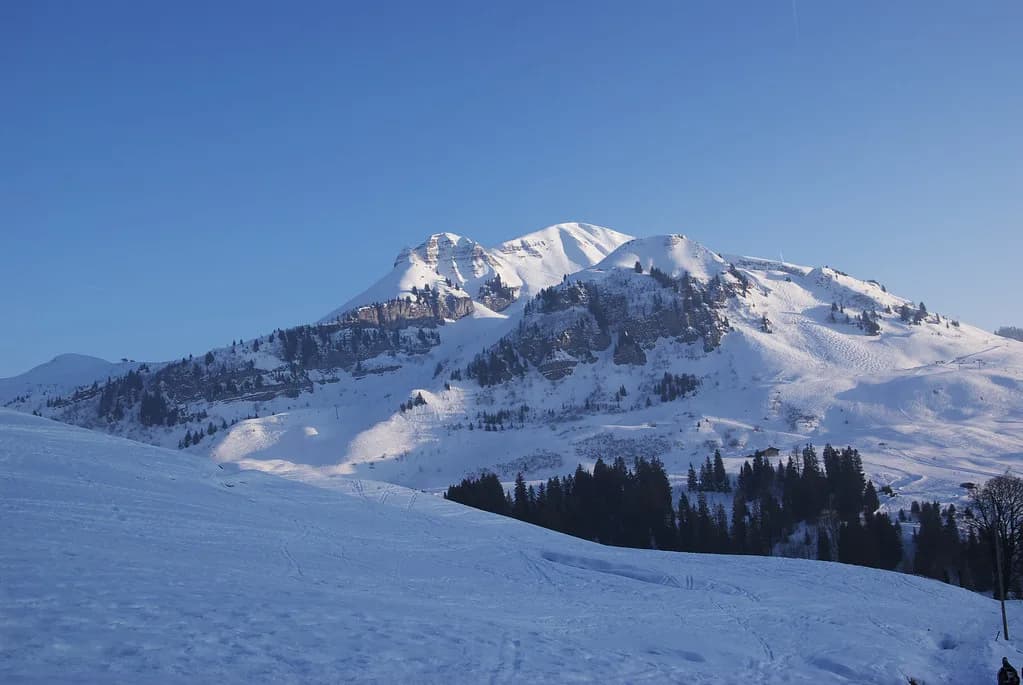
Le Grand Bornand is a working Savoyard village in the Aravis range of Haute-Savoie, sitting between Lake Annecy and Mont Blanc, and it has quietly become a serious option for skiers who want a real village rather than a purpose-built station. Its alpine area runs to around 90km of runs spread across two separate bases, which is the fact that shapes almost every other booking decision. Read this as a planning guide, not a snow report: it explains layout, passes, beginner provision and season timing so you can compare this resort fairly against others on your shortlist.
The single most consequential choice is where you base yourself. Le Grand-Bornand village and the satellite settlement of Chinaillon are roughly 6km apart up the valley, and each gives you a different relationship to the lifts, the beginners' terrain and the local atmosphere. Get that decision right and the rest of the trip — pass type, lesson timing, where you leave your skis — tends to fall into place. Get it wrong and you spend your week driving or busing between the two.
At a glance: what Le Grand-Bornand skiing actually is
The alpine domain is built around two access points in the same valley, with the historic village base at roughly 1000m and Chinaillon sitting higher at around 1300m. Lifts rise from both, and the skiable terrain spans a vertical range of about 1000m to 2100m. That mid-altitude profile is worth noting honestly: it is not a high-altitude resort, and conditions vary through the winter accordingly.
Le Grand-Bornand Tourisme puts the total alpine area at 90km of runs, a figure a third-party resort overview also uses, so it is a reasonable working number for comparing scale. A run-by-run breakdown widely circulated online gives 15 green, 14 blue, 13 red and 5 black runs across 47 marked runs, but the Le Grand-Bornand Tourisme pages do not publish that classification, so treat the counts as third-party data rather than an official breakdown. What matters for planning is the shape: a broad spread of easier terrain with a smaller amount of genuinely steep ground.
Because the area is mid-altitude and split across two bases, how you move around on a given day depends heavily on where you start. Skiers based in Chinaillon are already inside the upper part of the domain and can work across it more directly, while those based in the village accept a lift ride or a short transfer before covering the same ground. Neither is wrong; they simply produce different days. If you want to compare lift-by-lift routing while planning, the le grand bornand ski map is the piece to study alongside this guide.
Village base or Chinaillon: the decision that shapes the trip
Le Grand-Bornand village is the historic settlement, with the old chalets and the working-village feel, and it sits lowest on the access road at around 1000m. Staying here puts you in the main village for shopping and everyday services, but it means the lifts you use first are the ones serving the lower slopes. For a short break, that arrangement is often perfectly adequate, because you are not trying to cover maximum ground every day.
Chinaillon is roughly 6km up the valley at about 1300m and is the more ski-convenient base, sitting closer to the heart of the terrain. A third-party overview makes exactly this point: the slopes are reachable from both settlements, and Chinaillon is better placed for skiing, though the same source prefers the old village for atmosphere. If your priority is time on snow rather than village evenings, Chinaillon removes a daily transfer from your routine.
The practical test is how many days you are skiing and whether anyone in your group needs to be on snow early each morning. A full week of skiing with keen skiers favours Chinaillon; a shorter break with mixed priorities, or a group that values being in the historic village, favours the valley floor. Both bases are legitimate, and the difference is about daily logistics rather than quality of skiing.
Size, altitude and how the day works
A 90km domain split between two lift bases behaves differently from a single integrated circuit of the same size. Because you start in one place and may range widely, it is worth thinking in terms of sectors rather than runs: a morning working one side of the valley, lunch at a fixed point, then a return leg. That structure prevents the classic mistake of spending the day traversing rather than skiing.
Altitude is a genuine planning variable rather than a detail. Terrain from about 1000m to 2100m means lower slopes can differ noticeably from upper ones during mild spells, and returns to the valley are exposed to whatever the season is doing. That is normal for a mid-altitude Aravis resort, and it is a reason to watch the Domaine Skiable du Grand-Bornand piste and lift openings page rather than relying on any general reputation for snow.
Because the domain is genuinely spread out, the official Alpine interactive piste map and downloadable plan are the tools to use before you commit to a base. Reading the map first shows you which lifts serve which sectors and where the two access points connect, and it makes the village-versus-Chinaillon trade-off concrete rather than theoretical. Do that map work before booking rather than after you arrive.
Terrain by ability: what a mixed group can realistically do
The third-party stat block suggests a domain weighted towards easier and intermediate terrain, with a much smaller number of black runs. If it is accurate, that profile suits mixed-ability groups well, because confident beginners and low intermediates have plenty of ground while stronger skiers still find some testing pitches. The honest caveat is that these counts come from a third-party overview rather than Le Grand-Bornand Tourisme, so treat them as indicative.
That shape has a practical consequence: a group containing one expert and three intermediates will likely spend most of its time on shared ground, with the expert peeling off occasionally, rather than splitting permanently. Groups of roughly matched intermediates get the most out of this kind of domain. If your plan requires extensive sustained steep terrain for every member every day, compare carefully against other resorts before committing.
Because exact run classification is third-party data, avoid making a booking decision on individual run numbers alone. Use the official piste map to check which sectors hold the grades your group actually needs, and query the Domaine Skiable du Grand-Bornand lift company directly if a specific run's grade matters to your plans. Names and reputations do not tell you how a piste skis on a given day.
Beginner provision and where a first-timer should start
Beginner provision here is not a single nursery slope but a set of dedicated areas, including the Môm'Park beginners' zone in the alpine domain and a separate Nordic beginners' area for cross-country. Because these sit in different parts of the resort, the base you choose determines which one is your default and how much of your day is spent travelling to it.
Le Grand-Bornand Tourisme also publishes dedicated pages for its beginners' areas, north-facing terrain parks and sledging zones, which is where you should look for what exists for the season you are booking. Do not assume a particular lift, magic carpet or learning area will be open from a name alone; availability is operational and can differ from one winter week to the next. The official slopes and lifts page is the place to see what is actually running.
For a first-time skier, the sensible sequence is to pick the base whose beginner terrain you can reach without a long transfer, then book lessons through the local ski school for that area. Lesson meeting points, group sizes and level groupings are school-specific and change between seasons, so confirm them with the school directly rather than inferring them from a brochure or a booking platform. This is one of the few areas where a phone call or a direct email genuinely saves trouble.
Pass boundaries: compare like with like
The alpine pass is sold in several formats, and there are separate passes for the Nordic cross-country area, meaning a single headline price comparison rarely compares the same product. A third-party overview notes that a pass covering the neighbouring resort of La Clusaz exists, but coverage details of that kind must be read on the official pass page for the winter you are booking, because inclusions and boundaries are set by the lift company, not by reputation.
Before deciding, work out how many days you will actually ski, whether anyone in the group needs Nordic access, and whether you intend to travel to another domain at all. A pass that looks more expensive can be better value if it matches the days and terrain you will really use, while a local alpine pass is cheaper to buy if you plan to stay within Le Grand-Bornand. The decision is arithmetic once the boundaries are clear, and Choosing a Le Grand-Bornand Ski Pass walks through the product types in more detail.
Season passes, pre-sales and any discounted products carry conditions and deadlines that differ from day passes, and those terms change between winters. Read the official pass pages for the current selling period instead of trusting an old price or a summary from a previous season. Because price and inclusion rules shift from year to year, this guide deliberately quotes no figures; the official pass pages are the only reliable source.
Lessons and equipment hire on the ground
Ski-school provision and sports shops are part of the resort's everyday infrastructure in both the village and Chinaillon, and beginner packages that bundle lessons with equipment exist through the tourism operator's booking channels. That bundle structure is a commercial arrangement, not a guarantee about what any individual lesson includes, so check what a package actually covers before paying.
Handiski guiding is available locally, and Le Grand-Bornand Tourisme publishes handiski pass information alongside its other lift products. Provision of that kind is specialised and availability varies by date, so ask the tourist office directly and well ahead if it matters to your trip. Do not assume a service runs daily just because it appears somewhere on the resort's winter activity pages.
Rental shop features, sizes, boot-fitting services and refund or amendment terms are set shop by shop and cannot be inferred from a name or from a resort-wide reputation. If you want a specific type of rental, such as performance skis or children's equipment, confirm stock and conditions with the shop you intend to use. For the broader picture of where shops sit in the resort, see this guide to le grand bornand ski hire.
Season timing and what is conditional
The official Le Grand-Bornand page states that the alpine ski area is scheduled for a pre-season opening on 5 and 6 December 2026 and then continuous operation from 12 December 2026 to 11 April 2027. Those dates describe an intended operating window rather than a promise that every lift, piste or link will run on every one of those days. For the cross-country area, Le Grand-Bornand Tourisme says opening is subject to weather and snow conditions, which is a useful reminder that Nordic skiing is more condition-dependent than the alpine domain.
Treat the season window as the frame for your booking and the daily lift status as the thing you check closer to travel. Early-season dates in particular can involve partial openings even when the resort is nominally operating, and late-season dates can see lower runs close first. Neither outcome is a flaw in the resort; it is simply how a mid-altitude, two-base area behaves.
If your trip depends on a specific sector or on Nordic trails being open, say so when you enquire and check again in the days before departure. Nothing published months in advance can promise that. Plan flexible activities for the first and last days of the season, and hold the middle of your trip for the skiing you care most about.
Gauging conditions responsibly
Published snow depths, snow-quality labels and avalanche-bulletin values describe a moment, not a forecast, and the official openings page displays figures that are updated through the season. Numbers like these should never be used to predict what you will find weeks later. If conditions matter to your decision, read the live page on the day and treat everything older as history.
Historic snow statistics are equally unhelpful as a planning tool. A resort with a decent past record can still have a thin week, and a mid-altitude Aravis valley is exposed to that variability by geography. Le Grand-Bornand Tourisme's own framing is instructive here: even the cross-country area's opening is described as subject to weather and snow conditions, which is the honest position for any resort.
Avalanche risk information applies to terrain outside marked and open pistes and is published by the relevant authorities for a reason. This guide does not provide off-piste, ski-touring or safety guidance, and no article should substitute for the official bulletin and local advice. Use the bulletin published for the day you are skiing, and make decisions about where to ski accordingly.
Dates that change demand in the winter
The French leg of the Biathlon World Cup is scheduled at the Sylvie Becaert International Stadium from 7 to 13 December 2026, according to the tourism operator. That falls immediately after the start of the continuous alpine season, and a major event of that kind concentrates visitors, accommodation demand and local activity into one week. If your dates are flexible, knowing it exists helps you decide whether you want that atmosphere or want to avoid it.
Le Grand-Bornand Tourisme also lists an end-of-year Christmas and New Year programme in the village, and a sport-shop sell-off from 23 to 25 October 2026 before the season starts. Each of these is tied to its stated dates and should be treated as specific to that winter rather than as a fixture you can assume recurs annually. Check the current calendar on the tourist office site for the season you are booking.
Fixed-date events mainly affect demand rather than terrain: they can tighten availability in a specific week and change the feel of the resort during it. If you are booking a peak period, book earlier and accept that the week will be busier. If you want a quieter week, choose dates outside both the event window and the school holiday pattern.
How Le Grand-Bornand compares with other resorts
Against a high-altitude purpose-built resort, Le Grand-Bornand trades scale and altitude for a genuine working village and a compact, readable domain. The 90km area is respectable rather than vast, and the two-base layout means you are choosing a relationship to the lifts as well as a place to sleep. That combination suits skiers who value the village as much as the vertical.
If your group needs guaranteed high-altitude terrain and extensive linked skiing, a larger domain such as the one covered in this Alpe d'Huez Skiing Guide may fit better, and Avoriaz Skiing Guide is another comparison worth making if you want a bigger, purpose-built base. Neither is inherently superior; they answer a different question. The point of comparing is to check that your priorities match what the resort is actually built around.
The strongest case for Le Grand-Bornand is a mixed-ability group that wants easy-to-read terrain, a real village, and a base decision they can make deliberately. It is a weaker case for a group chasing maximum vertical and guaranteed snow at altitude. Being honest about which group you are in is more useful than any ranking.
A practical planning sequence
Start with the base decision, because it determines your daily routine and possibly your transfer arrangements: village at around 1000m for atmosphere and services, or Chinaillon at around 1300m for quicker access to the heart of the terrain. Once that is settled, choose the pass boundary that matches how many days you will ski and whether you need Nordic access at all. Then book lessons and equipment hire for the area you have chosen, checking inclusions and meeting arrangements directly.
Only then fix your dates, checking them against the scheduled window of 12 December 2026 to 11 April 2027 and the pre-season weekend of 5 and 6 December 2026, and against the event calendar if a busy week matters to you. Read the le grand bornand ski map before booking anything non-refundable, so you can see for yourself which lifts serve which sectors. Look up current pass products and terms on the official Le Grand-Bornand pages rather than on a summary from a previous season.
Finally, accept the residual uncertainty that comes with a mid-altitude resort, and build flexibility into the first and last days of the trip. That is not a warning about the resort so much as a description of how alpine skiing works anywhere at this altitude. Plan the decisions you can control, and check the ones you cannot close to departure.
Plan Your Visit
Le Grand-Bornand skiing rewards a little preparation, because almost everything downstream depends on two choices: which base you sleep in and which pass boundary you buy. Settle those, then book lessons and hire, then fix dates against the season window published by Le Grand-Bornand Tourisme. Done in that order, the trip tends to arrange itself.
What the resort does not offer is certainty about conditions weeks in advance, and no published figure can supply it. Check current lift status, pass products and season dates with the Domaine Skiable du Grand-Bornand and the Le Grand-Bornand tourist office, and treat everything else as background. That is the honest basis for comparing this Aravis village against the other resorts on your list.
Explore more Le Grand Bornand guides
Frequently Asked Questions
Is Le Grand-Bornand good for skiing?
It is a solid, readable 90km alpine area spanning roughly 1000m to 2100m across two bases, the village and Chinaillon. It suits intermediates and mixed-ability groups who want a working Savoyard village rather than a purpose-built station. Expert skiers looking for sustained steep terrain should compare larger, higher resorts before committing.
Is Le Grand-Bornand good for beginners?
Yes. The alpine domain includes the Môm'Park beginners' zone, and there is a separate Nordic beginners' area for cross-country. Where you sleep matters: pick the base whose learning terrain you can reach without a long transfer each morning, and confirm with the ski school that teaches there.
Should I stay in Le Grand-Bornand village or Chinaillon?
Chinaillon sits about 6km up the valley at around 1300m, closer to the heart of the ski area, so it removes a daily transfer for keen skiers. The village at around 1000m puts you in the historic settlement with everyday services. A short break or a group that values village life often suits the valley floor.
How big is the Le Grand-Bornand ski area?
Le Grand-Bornand publishes a total of 90km of alpine runs, spread over terrain from roughly 1000m to 2100m and reached from two lift bases. A third-party overview lists 47 marked runs across the grades, but that breakdown is not published officially, so use the piste map to check which sectors hold the grades your group needs.
Does the Le Grand-Bornand ski pass cover La Clusaz?
A pass covering the neighbouring resort of La Clusaz exists, but it is one product among several rather than a default inclusion. Coverage boundaries are set by the lift company and change with the product and the winter, so check the official pass page for the season you are booking before comparing prices.
When does the Le Grand-Bornand ski season open and close?
The scheduled alpine window is a pre-season weekend on 5 and 6 December 2026, then continuous operation from 12 December 2026 to 11 April 2027. These are intended dates, not a promise that every lift and piste runs throughout. The Nordic area opens subject to weather and snow conditions.
Are there separate passes for alpine and Nordic skiing at Le Grand-Bornand?
Yes. The downhill domain and the cross-country area are sold separately, and the Nordic season pass has its own pre-sale period. Work out whether anyone in your group needs Nordic access before you compare products, because a headline alpine price does not include it.
Sources
Useful notes for your next ski trip
Optional updates to our Alpine resort guides.
You might also like
Continue reading
More guides you'll find useful