
La Rosière Skiing: Espace San Bernardo Guide
Plan La Rosière skiing around the binational Espace San Bernardo, two village bases, beginner zones and pass boundaries before choosing your sector.
On this page
La Rosière sits on the French side of the Col du Petit-Saint-Bernard and shares the Espace San Bernardo ski area with La Thuile in Italy's Aosta Valley. For skiers, the practical appeal is a single pass covering both sides, which lets you choose between French local slopes and the Italian valley without buying a second ticket. The decision that shapes the rest of your trip is which of the two village bases you stay in and which pass product you actually need.
Why La Rosière for skiing: a binational area on the French-Italian border
Most Alpine resorts sell you one country's terrain. La Rosière's defining feature is that its ski area crosses a national border, linking the French slopes above the resort with La Thuile in Italy. The resort describes Espace San Bernardo as the only ski area in the Northern Alps offering a genuine Franco-Italian experience on a single lift pass. That matters less as a novelty and more as a practical choice: you can follow better conditions or simply different terrain without changing resorts.
The border crossing is not a marketing add-on but a lift-linked route between two valleys, and the return from Italy is by chairlift. Snowboarders should note that part of the cross-border link involves a draglift, which is a genuine consideration for anyone who avoids surface lifts. Treat the link as terrain that may not operate every day of the season, and check the day's lift status before committing to a cross-border plan.
La Rosière also gives you two aspects on one mountain, with south-facing local slopes and higher terrain that holds different snow. A third-party overview notes that the south-facing local slopes can become soft on sunny afternoons, which is useful when you are deciding whether to ski the French side in the morning and cross to Italy later. The resort's own summary lists 156 km of certified pistes and an altitude range from 1,176 m to 2,800 m. If you are weighing this area against other French options, our Alpe d'Huez Skiing Guide covers a comparable sunny, intermediate-friendly resort with its own sector structure.
Espace San Bernardo key figures: piste length, altitude range and lift count
The official resort source gives 156 km of certified pistes, making Espace San Bernardo one of the few areas with officially measured runs. It lists 39 lifts across France and Italy, including 22 chairlifts, and an altitude range from 1,176 m to 2,800 m. Independent resort profiles quote slightly different figures, typically around 156 km of piste and around 38 lifts, so treat the resort's certified number as the primary one and expect small variations between guides.
Run counts help you picture the shape of the area: a third-party profile lists 8 green, 25 blue, 36 red and 14 black runs, giving 83 marked runs in total. That is a terrain profile weighted towards intermediate cruising, with enough black terrain to keep advanced skiers interested but not a resort built around expert steeps. The resort's own breakdown puts roughly 45 percent of pistes in the green and blue categories, 40 percent red and 15 percent black.
The resort is based at around 1,850 m according to several third-party profiles, although the official terrain figures run from 1,176 m at the lower end. That gap matters when you are choosing accommodation: lower-lying parts of the resort and valley can see rain when the upper slopes are still snow, especially in early and late season. Plan your skiing around the upper lifts if you are visiting at the margins of the season.
Two village bases: La Rosière Centre versus Les Eucherts
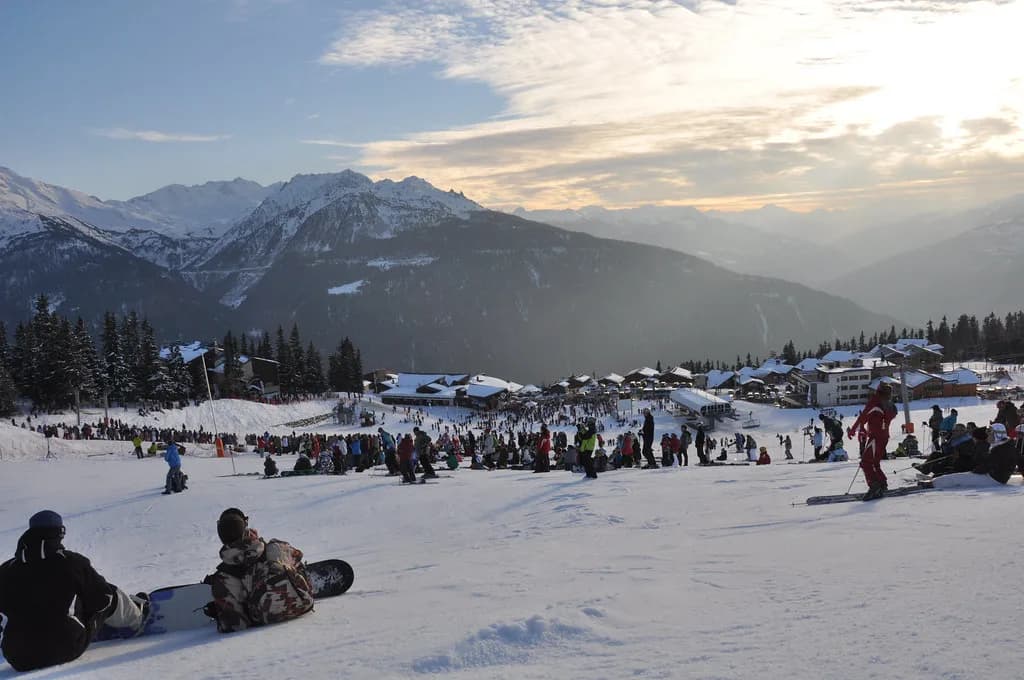
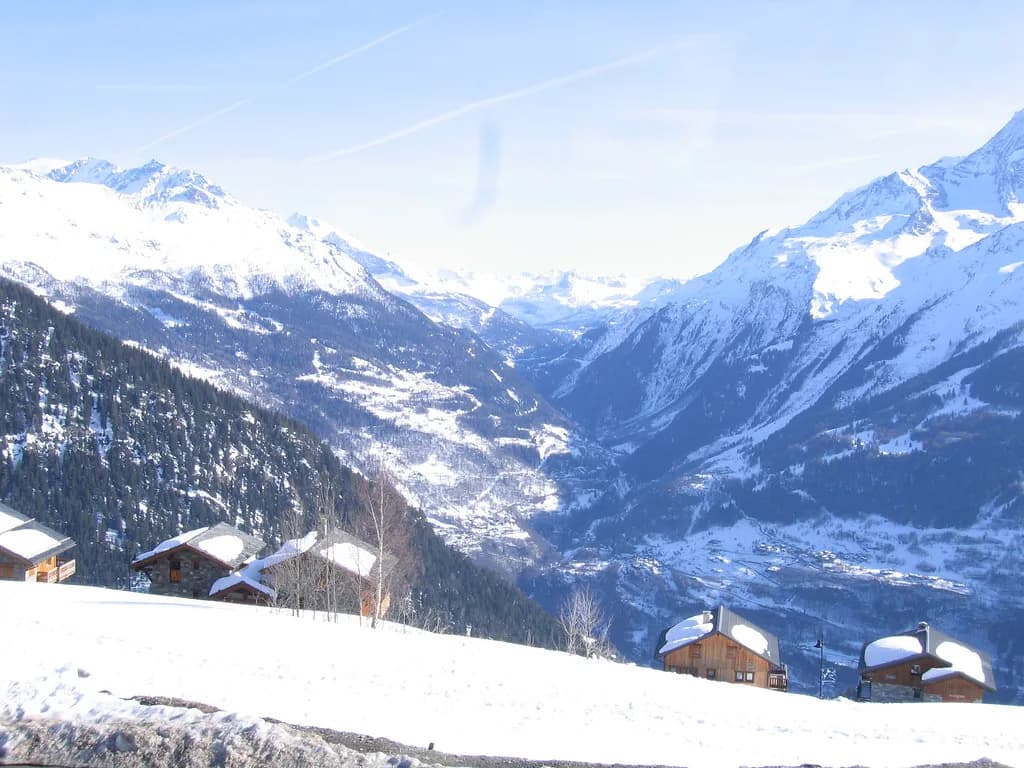
La Rosière has two separate bases: the original village, often called La Rosière Centre or La Rosière 1850, and the newer Les Eucherts development. The two are roughly a 15-minute walk apart, and a shuttle connects them through the day. Both have lifts departing from the base and both have ski-school meeting points, so neither is a bad choice—but they feel different and they change your daily routine.
La Rosière Centre is the older, chalet-style settlement with more of the resort's shops and restaurants clustered around it. Les Eucherts is purpose-built in a traditional style and, according to third-party profiles, tends to be quieter with more residence-style accommodation alongside amenities such as the bowling centre and ice rink. If your priority is being close to the evening buzz of the main village, Centre is the more practical base; if you prefer a calm, modern base with its own beginner area, Les Eucherts is worth considering.
For families with beginners, the choice is more than aesthetic. The beginner area at Les Eucherts tends to be quieter than the main nursery slopes near La Rosière Centre, which can mean more space for first turns. Check which base your ski school uses before booking accommodation, because a 15-minute walk or shuttle ride in ski boots with a five-year-old is a real daily cost.
Sector breakdown: French local slopes and the Italian link to La Thuile
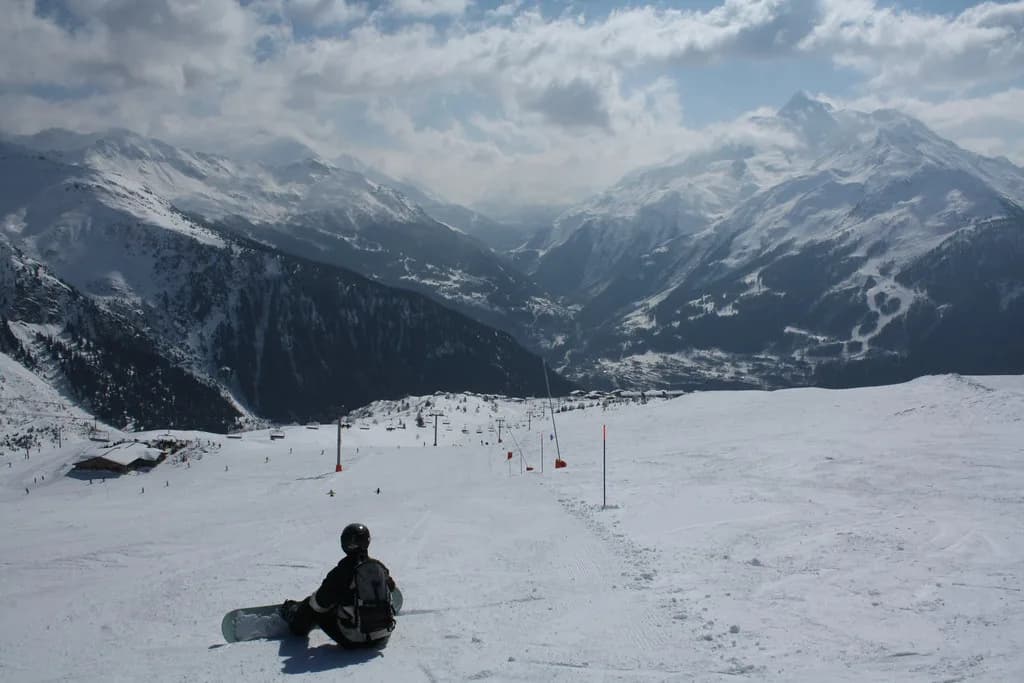
The French side of Espace San Bernardo offers the terrain most skiers will use on day one: wide blues and greens on the lower slopes near both village bases, with steeper reds higher up below Le Roc Noir and the Col de la Traversette. Third-party guides describe the lower slopes as mainly cruisy blues and greens ideal for early intermediates, with the more interesting red terrain sitting above. That shape suits groups who want an easy warm-up before moving higher.
The Italian side, reached via the Col de la Traversette crossing, changes character noticeably. A resort guide notes that the Italian terrain has steeper pitches and different views, with the Belvedere sector providing the most sustained steep skiing on that side. The border link makes a genuine terrain decision possible: stay in France for a gentler day, or cross into Italy for steeper runs and a different valley.
Timing the crossing matters. The cross-border link can get busy around mid-morning as day-trippers head over, so an early start on the Italian side can mean quieter pistes. In the 2025-26 season the resort published a season from 13 December 2025 to 18 April 2026, with the full France-Italy connection scheduled until 12 April 2026. Dates like these describe scheduled operations, not a guarantee that the link runs every day within that window.
Beginner provision: nursery slopes, play areas and progression terrain
La Rosière concentrates beginner terrain near the villages, which keeps first days simple. The resort describes learner areas from the Petit Saint-Bernard course to the family Funcross, with fun zones accessible even to beginners. Both village bases have nursery slopes, and the dedicated areas mean you are not riding a long gondola before your first lesson.
Progressing beyond the nursery slopes, La Rosière's lower mountain is built around gentle blue runs, and the resort carries the Famille Plus label for family provision. The Club des Galopins offers supervised activities, meals and ski lessons as an all-inclusive package, which is one route for parents who want their children in structured care. What each package includes is set out by the Club des Galopins itself, not implied by the Famille Plus label.
Once a learner is comfortable on blues, the practical next step is exploring the wider blue network on the French side before attempting the Italian crossing. Third-party analysis rates La Rosière strongly for beginners, partly because the sunny aspect softens the snow through the day. Before booking, confirm which meeting point and terrain your ski school uses, as lesson provision is organised by the schools rather than the lift company.
Terrain mix by level: what the green, blue, red and black percentages mean
The official piste breakdown of 45 percent green and blue, 40 percent red and 15 percent black tells you La Rosière is primarily an intermediate resort with solid beginner provision. In practice, that means a confident skier can spend a week on reds without repeating much, while a beginner has enough green and blue terrain to progress. It is not, however, a resort where experts will find endless steep faces.
Advanced skiers should look to the Italian side and the higher French sectors. Third-party guides identify the Belvedere sector in Italy as delivering the steepest sustained pitches, with the runs from Col de la Traversette and Fort du Truc providing the most demanding marked terrain on the French side. There are 14 black runs in total, a modest number compared with larger resorts in the Tarentaise.
Intermediates are the group La Rosière suits best. The blue and red network flows well between sectors, and the resort's south-facing aspect means long, sunlit descents for much of the day. If your group mixes confident intermediates with tentative beginners, the two-base structure helps: beginners can stay low near the village while stronger skiers head higher or cross the border.
Pass boundaries: Espace San Bernardo, La Rosière-only and beginner products
The central pass decision is whether you need the full Espace San Bernardo pass or a France-only product. A single Espace San Bernardo pass covers both the French and Italian sides, which is what allows cross-border skiing to La Thuile on one ticket. The resort also lists a La Rosière-only pass for the French side and a beginner pass covering four consecutive hours from your first lift ride, aimed at learners staying close to the village.
Other products include hiking and snowshoeing passes, a Vermeil pass, and a Tribu-Family discount of 8 percent off standard individual rates on selected 6- to 8-day passes and the Espace San Bernardo season pass when four or more people buy together. Prices vary by season and product, and La Rosière publishes current rates on its booking pages, so use those rather than last season's figures. The pass page also notes that payment is accepted in euros and that a rechargeable card costs a small fee.
Decide on the pass based on your planned terrain, not on the price difference alone. If you intend to cross to La Thuile even once, the France-only pass is the wrong product. If you are a beginner who will stay on the village slopes all week, the beginner pass may cover your needs. Child and senior discounts require proof of age, so bring documentation if you are booking a reduced rate.
Lessons and equipment hire across two bases
Ski and snowboard hire shops are found in both La Rosière Centre and Les Eucherts, so you can arrange equipment near your accommodation rather than crossing the resort on your first morning. Booking in advance is the practical step: fitting the evening before lets you start skiing straight away instead of queuing while the lifts open. Third-party guides list both ESF and independent ski schools operating in the resort, but lesson content and instructor availability should be confirmed with the school you book.
Lesson provision is not uniform across the resort. Club des Galopins packages include ski lessons as part of a supervised all-inclusive arrangement, which is a different model from booking standalone group lessons with a ski school. If your children are in a club programme, their meeting point will be tied to that programme rather than to a general ski-school rendezvous. Confirm the meeting point in writing before you arrive.
For adults and older children, the choice between group lessons and private tuition usually comes down to how much individual feedback you want and how fixed your daily schedule is. Group lessons generally run on a set weekly pattern, while private sessions can be arranged around your plans. Both approaches exist in La Rosière, but specific school names, prices and availability need to be checked with the providers themselves.
Ski-school meeting points as a booking decision
Ski-school meeting points exist at both La Rosière Centre and Les Eucherts, because lifts serve both bases. That is good news for flexibility but it means the base you book can determine your morning routine. If your accommodation is in Les Eucherts and your ski school meets at La Rosière Centre, you have added a transfer to every lesson day.
The straightforward approach is to ask your school which meeting point applies to your course and then book accommodation within walking distance of it. The shuttle between the two bases reduces the problem but does not eliminate it during peak weeks, when buses fill up. Families with young children should treat this as a primary booking criterion, not an afterthought.
Lesson start times and meeting arrangements vary by school and by course type, and these are operational details the schools publish themselves. If you are booking a Club des Galopins package, the meeting arrangements are part of the package rather than a separate booking. Either way, get the meeting point confirmed before you travel so the first morning is not spent searching.
Snowpark and fun zones: Poletta, boardercross and family areas
La Rosière has four snow fun zones rather than a single terrain park. Third-party guides describe the Poletta snowpark as the centrepiece, with green, blue and red lines of jumps, rails and boxes that build in difficulty, plus a big airbag. There are also two boardercross runs, one of them on the cross-border link to Italy, and a themed forest trail with tunnels and playful features aimed at younger children.
For families, the resort lists the family Funcross and the Petit Saint-Bernard course among its beginner-friendly play areas, alongside the Famille Plus label. These are progression features rather than competition facilities, which suits children building confidence. The resort also lists activities such as snowshoeing, sledging and the X'Treme Luge run for time away from skiing.
A practical note for freestyle skiers and snowboarders: the fun zones are distributed across the area, so check the piste map to see which are closest to your base. The park features and boardercross lines are maintained through the season, but individual features can close depending on conditions. If a particular park is central to your trip, look for La Rosière's daily status information.
Season timing and connection windows: why planning matters
The resort published a 2025-26 season running from 13 December 2025 to 18 April 2026, with the full French-Italian connection scheduled until 12 April 2026. For the coming winter, the pricing page gives 12 December 2026 to 17 April 2027, with the entire Espace San Bernardo connection open through 11 April 2027. These are scheduled windows, not guarantees: lifts, links and pistes can close for weather, maintenance or snow conditions at any point.
The connection window is shorter than the overall season, which is a detail worth noting if crossing to Italy is a priority. Booking late-season dates after the connection closes means the binational skiing that defines La Rosière may not be available. Aim for mid-season dates if the Italian link is central to your plan.
Early and late season also affect which terrain is usable. The lower slopes around 1,176 m to 1,190 m can be marginal when the upper mountain is fine, so early-December and mid-April trips should focus on the higher lifts. The resort's south-facing aspect helps afternoon softening but does not remove the altitude difference between the valley floor and the top station at 2,800 m.
Helmet and insurance rules on the Italian side
Crossing into Italy brings a rule change that affects every skier in your group. The resort states that wearing a helmet is mandatory for everyone on Italian slopes, under a law in force from winter 2025-26. The pass terms add that on the Italian side, helmets and liability insurance are required for all skiers. This is not optional advice for the Italian terrain.
Liability insurance for on-mountain rescue is a separate consideration; La Rosière notes that rescue services are subject to a fee and recommends arranging cover before you travel. Check whether your existing travel or winter-sports policy covers skiing in both France and Italy, since a France-only policy may not apply on the Italian side. Arrange cover before departure rather than trying to sort it out in resort.
The resort also prohibits smoking in lift queues, on chairlifts and on the ski slopes, and dogs are not permitted in the ski area. These are operational rules published by the resort, not suggestions. If you plan to cross the border, build the helmet and insurance requirements into your packing and booking checklist.
Practical planning sequence for a La Rosière ski trip
Start by deciding whether you need the binational area at all. If your group wants to ski to La Thuile, you need the full Espace San Bernardo pass and dates inside the France-Italy connection window. If everyone is a beginner staying near the village, a France-only or beginner pass may be sufficient, and your dates are less constrained by the connection. This single decision shapes pass choice, dates and to some extent which side of the resort you book.
Next, choose between La Rosière Centre and Les Eucherts based on your daily routine. Centre suits those who want restaurants and shops within walking distance; Les Eucherts suits those who value a quieter base and its own beginner area. Then confirm your ski-school meeting point and book equipment hire at the same base, so your first morning does not involve a cross-resort transfer.
Finally, check the requirements that apply to your specific plan: helmet and liability insurance if you will cross into Italy, proof of age for child or senior pass discounts, and the current season dates on La Rosière's booking pages. These checks take minutes and prevent problems on arrival. Build them into your booking process rather than leaving them to the last week.
Plan Your La Rosière Ski Trip
La Rosière skiing works best when you match the pass and the base to the terrain you actually plan to use. The binational Espace San Bernardo area gives intermediates and confident beginners a large, sunny playground with a genuine Italian option, while experts will find their steepest terrain on the Italian side and in the higher French sectors. Decide on the cross-border element first, because it determines your pass and your dates.
Once the pass and base are settled, confirm the operational details directly with the providers: ski-school meeting points, equipment hire fitting times, and current pass prices on the official booking pages. Check the season and connection windows before booking late-season dates. With those decisions made, La Rosière is a straightforward resort to plan around, and the two-base layout keeps daily logistics manageable.
Explore more La Rosiere guides
Frequently Asked Questions
How high is the La Rosière ski area?
The official Espace San Bernardo figures put the terrain between about 1,176 m and 2,800 m. Several third-party profiles quote the resort base at around 1,850 m and the lower ski limit at around 1,190 m. The difference matters mainly in early and late season, when the lower slopes can be marginal while the upper mountain remains skiable.
How many pistes and lifts does Espace San Bernardo have?
The resort publishes 156 km of certified pistes and 39 lifts across France and Italy, including 22 chairlifts. Third-party profiles quote slightly different totals, typically around 38 lifts and 83 marked runs. Run counts are commonly listed as 8 green, 25 blue, 36 red and 14 black.
Can you ski from La Rosière to La Thuile on one lift pass?
Yes, the Espace San Bernardo pass covers both the French and Italian sides, so cross-border skiing to La Thuile is included on one ticket. The link relies on specific lifts and a draglift on part of the route, so check the daily lift status before planning a crossing. The full France-Italy connection also has a shorter scheduled window than the overall season.
What is the difference between La Rosière Centre and Les Eucherts?
La Rosière Centre is the older village with more shops and restaurants, while Les Eucherts is a newer, quieter base with its own beginner area and lifts. The two are roughly a 15-minute walk apart and are linked by a shuttle. Your choice affects your daily routine, especially if your ski school meets at one base and you are staying at the other.
Is La Rosière suitable for beginners?
Yes, beginner provision is concentrated near both village bases, with nursery slopes and family play areas including the Petit Saint-Bernard course and the family Funcross. The resort carries the Famille Plus label and runs the Club des Galopins with supervised activities and ski lessons. Beginners can progress on the extensive green and blue terrain without needing the higher or Italian sectors.
When does the La Rosière ski season normally run?
In the 2025-26 season the resort ran from 13 December 2025 to 18 April 2026, with the full France-Italy connection scheduled until 12 April 2026. For winter 2026-27 the dates are 12 December 2026 to 17 April 2027, with the whole Espace San Bernardo connection open through 11 April 2027. These are scheduled windows, not guarantees that every lift or piste will operate.
What ski-school meeting points are there in La Rosière?
There are ski-school meeting points at both La Rosière Centre and Les Eucherts, since lifts serve both bases. Which one applies to you depends on the school and the course you book. Confirm the meeting point with your provider before travelling and, if possible, book accommodation within walking distance of it.
Where can I hire skis in La Rosière?
Equipment hire shops are located in both La Rosière Centre and Les Eucherts, so you can arrange gear near your accommodation. Booking in advance and fitting the evening before saves time on your first morning. Specific shop names and equipment ranges should be checked directly with the providers, as these vary by season.
Sources
Useful notes for your next ski trip
Optional updates to our Alpine resort guides.
You might also like
Continue reading
More guides you'll find useful
.JPG)