
Zell am See Ski Pass: Which Ticket to Buy and Why
The Zell am See ski pass is the Ski ALPIN CARD, covering Schmittenhöhe, Kitzsteinhorn and the Skicircus. Compare durations, bands and cheaper options.
On this page
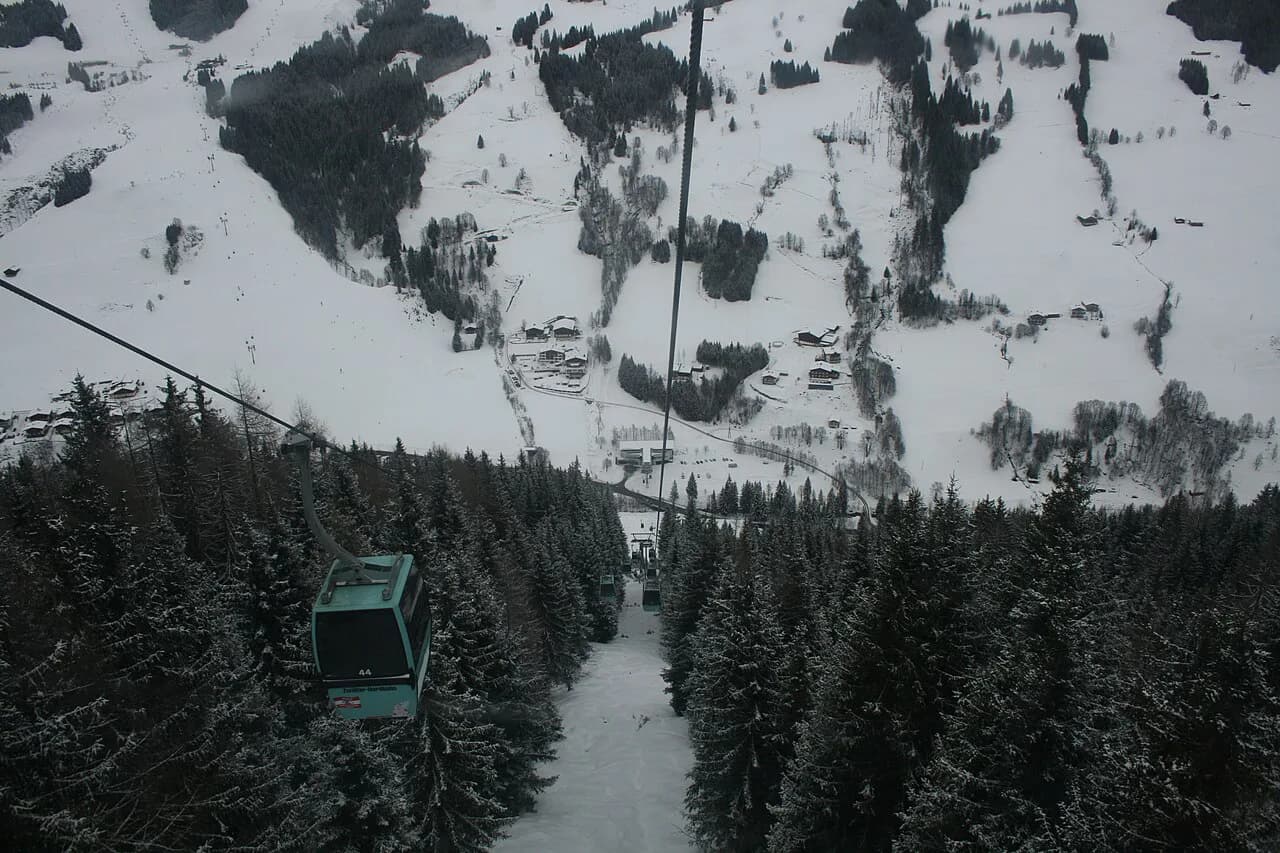
In Zell am See the lift pass question has a short answer and a long one. The short answer is the Ski ALPIN CARD, which opens the Schmittenhöhe above the lake, the Kitzsteinhorn glacier above Kaprun and the whole Skicircus circuit across the valley. The long answer is about which version of that card fits your dates, because the ticket is priced by season band and duration rather than by ability.
Start with your dates rather than your budget. If your week falls inside the card's winter calendar, the only real decision is how many days to load and whether a flexible product suits a rest day. If it falls outside, you are buying a glacier ticket for one mountain, and that is a different holiday. Skiers weighing a single premium pass against an alliance card may find our Ischgl Ski Pass Guide a useful comparison for how the two pricing models differ.
What the Zell am See Ski Pass Actually Is
The Ski ALPIN CARD is an alliance ticket spanning three premium regions: the Skicircus Saalbach Hinterglemm Leogang Fieberbrunn, the Schmittenhöhe in Zell am See and the Kitzsteinhorn Kaprun. Together they add up to up to 408 kilometres of piste and up to 121 lifts on one pass. What it is not is a single lift-linked domain: the Schmittenhöhe and the Skicircus are joined by bus and the Viehhofen link, not by a lift you can ski straight onto, so treat the 408 km as a network you travel around rather than a circuit you loop.
The card is sold as one-day and multi-day tickets, and separately as season and year passes. For a normal holiday week, the multi-day ticket is the product that matters. There are also 365 Action and 365 Classic annual versions and a Hike card for non-skiers, but those only make sense if you are in the region repeatedly.
Coverage in Kilometres and Lifts
The Skicircus is the biggest single piece of the network, with 270 km of slopes and 70 lifts on its own, plus the mountain huts, snow parks, floodlit slopes and freeride terrain that make the circuit work for a week. The Schmittenhöhe is a smaller, family-oriented mountain above Zell am See with its own parks and long valley runs. The Kitzsteinhorn is the high-altitude piece, topping out around 3,000 m and offering the most reliable snow of the three.
Figured as a whole region around both villages, the Zell am See–Kaprun side alone carries roughly 138 km of piste with about 54 lifts, split across blue, red and black grades. These counts describe the local mountains rather than the full card, which is why the Skicircus figure should be treated as a separate area you reach by bus or by the Viehhofen connection.
Schmittenhöhe: Zell am See's Own Mountain
The Schmittenhöhe is where most Zell am See skiers start their day, simply because the lifts leave from the edge of town. It handles beginners well through the Dragon Park and Kidsslope, and it adds the XXL Funslope and Austria's only Audi Ski Run for skiers who want more than cruising. The mountain's five long valley runs are the draw for confident skiers, including the Trass at over 4 km with a 70% gradient, and the layout means most accommodation in Zell am See is effectively ski-in, ski-out.
The trade-off is scale: the Schmittenhöhe is one mountain rather than a circuit, so a strong skier will cover its main runs in two or three days and then want the bus to Kaprun or the Skicircus. Keep the ski map to hand when you plan which days go where.
Where Kaprun Fits In
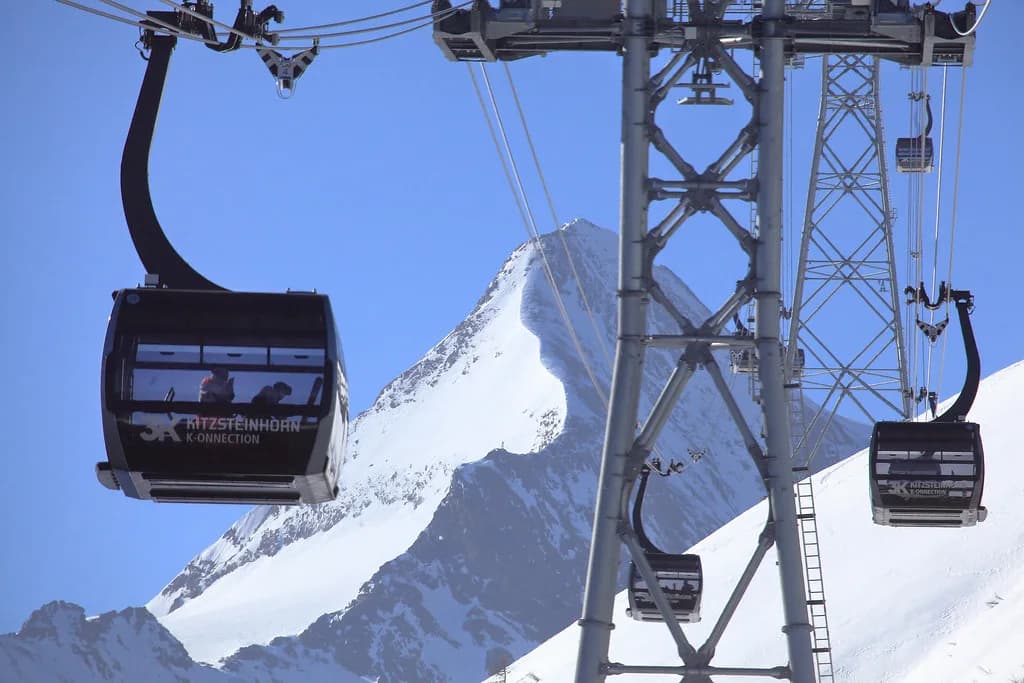
Kaprun brings two things the Schmittenhöhe cannot: altitude and beginner ground. The Kitzsteinhorn is the glacier, reached by the Gletscherjet I and II cable cars, with mostly blue terrain up top and high snow reliability from autumn into spring. The Maiskogel is the gentle family mountain above the village, long and forgiving enough for a first-week skier to make real runs rather than lap a nursery slope, and the Lechnerberg is a small village hill with two button lifts, two easy blues and a children's area used by the Kaprun ski schools.
For a mixed group this is the strongest card in the region's hand. One parent can ski the glacier, a beginner can take laps on the Maiskogel, and a child can be in a class in the village, all on the same ticket in the same valley. The cost is the morning commute: you ride a chain of lifts from the village to the glacier, so a late start eats into your skiing.
Three Price Bands: Dates First, Prices Second
The card's calendar splits into a winter start window from late November to mid-December, a peak season running from just before Christmas to mid-March, and a spring window after that. Adult rates for 2026/27 show what that means in practice: a single peak day is €82, six peak days €440 and seven €489, while the same six days in a quieter band drop to €396. The per-day rate falls both with duration and with a quieter week, so moving your dates saves more than shopping around for where to buy.
Those are adult rates for one season, and they are the figures to plan a budget from rather than a fixed promise. Children, youths and older skiers pay reduced rates set by the lift company, and the bands shift with birth year, so check the live tariff on the Kitzsteinhorn and Ski ALPIN CARD pages before you commit four full tickets.
Sample Adult Rates by Duration, and the Flexi Options
The duration curve is worth seeing laid out. On 2026/27 adult rates, the card runs from €82 for one day through €161 for two, €240 for three, €316 for four and €381 for five, then €440 for six, €489 for seven, €525 for eight, €551 for nine, and €577 for ten days; a fortnight is €692. Low-season rates for the same durations sit meaningfully lower, from €74 for a day to €623 for fourteen.
A straight multi-day pass has to be used on consecutive days, which is where the flexi products earn their place. Five days inside seven costs €400 and ten days inside a fortnight costs €636 at adult peak rates. If your group already plans a spa afternoon, a transfer day or a bad-weather rest, price the flexi card before the standard one, because you cannot pause the standard pass.
When the Card Does Not Run: October and Late-April Weeks
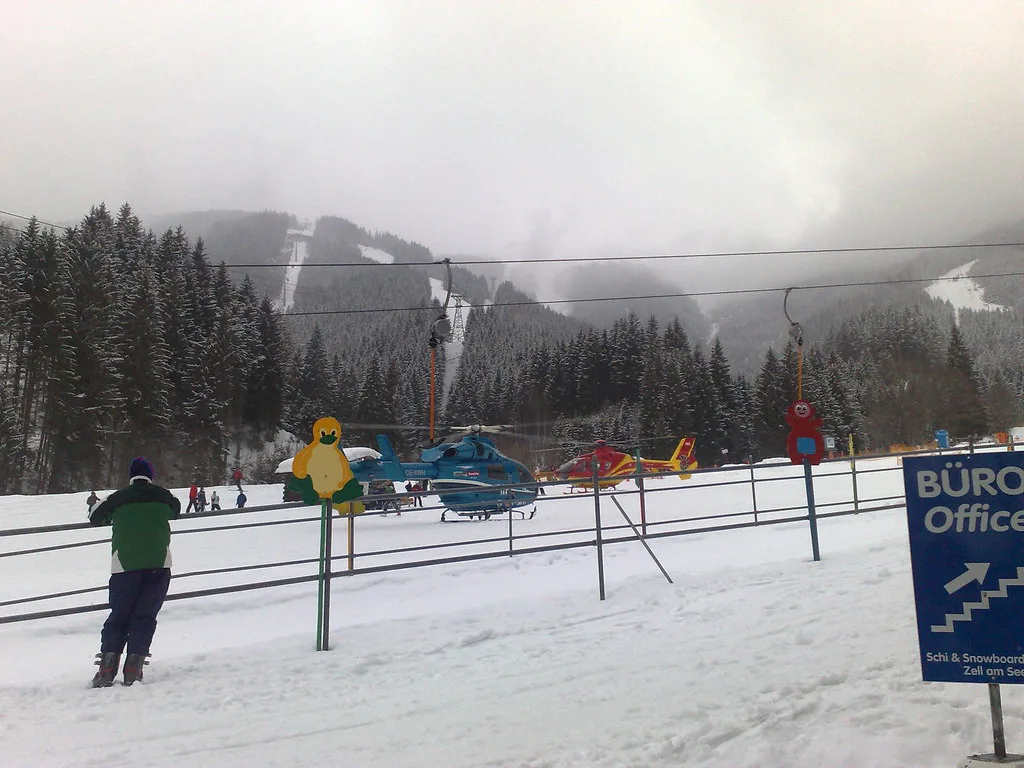
The skiing season here is longer than the card that covers it. In the 2026/27 winter the Kitzsteinhorn was scheduled to run from 10 October to 17 May, while the ALPIN CARD's own price bands began in late November and ended in early April. In the weeks at either end you bought the Kitzsteinhorn's own glacier ticket instead, which covered that one mountain and nothing else, so there was no Zell am See skiing and no Skicircus on it.
If you are weighing an autumn or late-spring week, plan it as a glacier holiday: high, open, above the tree line and weather-dependent in flat light. It is excellent value for early snow, but it is not the week the brochure describes. Check the Kitzsteinhorn's own tariff page and operating dates for the coming season before you book flights, since the calendar is published by the Kitzsteinhorn lift company rather than fixed by the ALPIN CARD.
The Maiskogel Day Pass and Who Should Buy It
Not everyone in a ski party needs the full card. The Maiskogel day pass covers the Maiskogel and Lechnerberg in Kaprun only, and it is sold in full-day, half-day and afternoon versions. That makes it the honest buy for a first-timer, a parent standing at the bottom of a nursery slope, or anyone taking a quiet day while the rest of the group goes up the glacier.
Nobody at a ticket window will steer you towards it, because the ALPIN CARD is the headline product. Decide before you arrive who is skiing what. If a beginner plans to stay on the Maiskogel all week, buying them a card they barely use is the most common wasted cost in the valley.
Child, Youth and Senior Rates, Family Schemes and the KeyCard
Reduced bands for children, youths and older skiers exist, and they are checked at the window on proof of age, so carry a passport or ID card rather than relying on a date of birth in conversation. The Kitzsteinhorn lift company also runs family-friendly schemes in some seasons, including free passes for the youngest children with a paying adult and a cut-price Saturday ticket for children and teenagers. Dates and eligibility for those change, so read the small print on the Kitzsteinhorn tariff page before counting on a discount.
The pass itself loads onto a reusable KeyCard, which carries a small refundable deposit the first time you buy it. Longer passes, roughly beyond a week, need a photograph, so sort that at home rather than at a counter with a queue.
Season Dates Versus Ticket Dates
Plan around two calendars, not one. The first is snow: the glacier is the earliest secure skiing in the region and the reason October weeks exist at all. The second is money: the card's bands, published on the ticket page, decide whether your chosen week is peak or quiet. An early-December or mid-March week lands in a cheaper band while the glacier is generally still in good shape.
If your week is fixed, the calendar is settled and the only lever left is duration. If it can move, shifting out of the peak block changes the pass price, the accommodation and the flight at once, and the pass is usually the largest single line. That is the saving worth doing the arithmetic on.
Buying and Collecting Without Losing a Morning
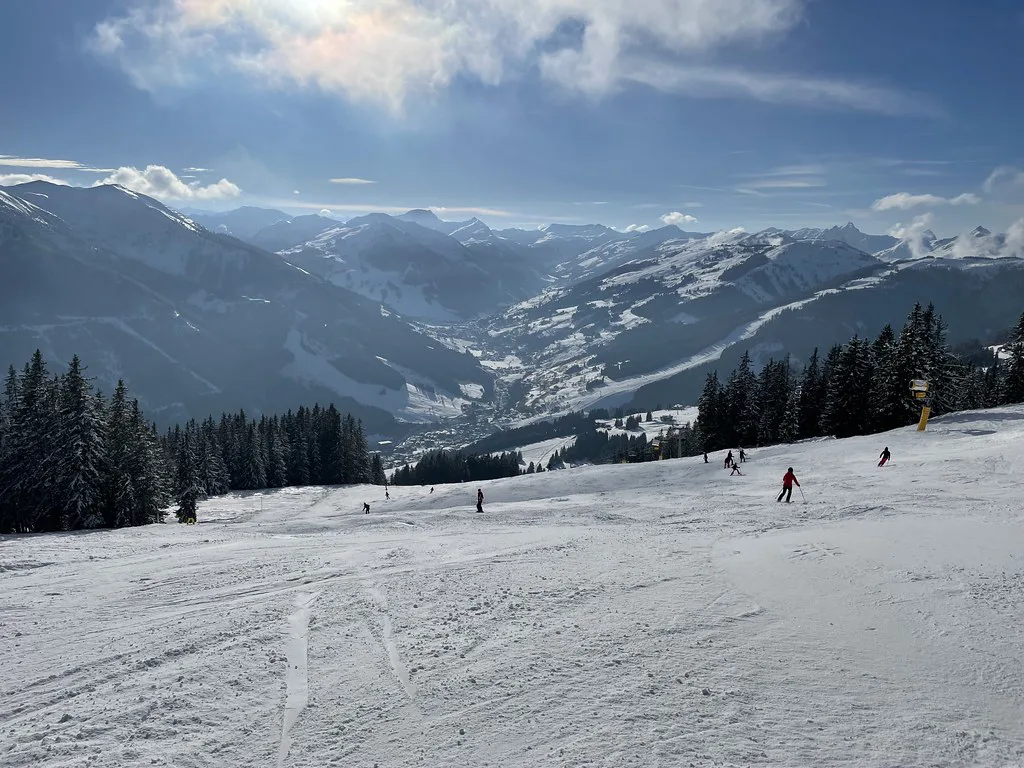
The card is sold through the ALPIN CARD online shop and at several desks in the valley, including the Kaprun Center in the village, the valley station out at the Kitzsteinhorn, an information desk up at the Alpincenter and the Kaprun office. For a first-lift start, buy in the village the evening before, so your morning begins at a lift rather than a counter. Ordering online is mainly about avoiding the queue rather than a lower price, and it is worth checking current prices and dates before you travel.
Multi-day and day passes become valid partway through the afternoon before your first ski day. That is genuinely useful on arrival: if your transfer from Salzburg gets you in early enough, the pass you bought for tomorrow will already take you up for a look at no extra cost.
Getting Between the Three Areas
Ski buses inside Saalbach Hinterglemm, Viehhofen, Leogang, Fieberbrunn, Zell am See and Kaprun are free for ALPIN CARD holders, and extra connections run between Saalbach and Viehhofen, Fieberbrunn and Leogang, Leogang and Saalfelden, and Zell am See and Kaprun. The Viehhofen shuttle that links Zell am See to the Skicircus relies on the zellamseeXpress running or slope 168 towards Viehhofen being open, and buses run every ten to twenty minutes when it operates.
Know the gaps before you plan a day across the region. There is no ski bus between Saalbach Hinterglemm and Leogang, none between Saalbach Hinterglemm and Fieberbrunn, and none between the Skicircus and Zell am See–Kaprun. The Leogang to Fieberbrunn bus runs only in peak season, so a car helps if your plan involves hopping between those sectors in a quiet week.
Ski Schools and Hire in Zell am See and Kaprun
Both villages have ski schools that take beginners from first slides to parallel turns, and Kaprun's schools run the children's area on the Lechnerberg in the centre of town. Book lessons before you travel if your group includes a first-timer, because class places in the peak weeks fill first. Our guide to Zell am See ski lessons explains how to choose between the village schools and the mountain-based options.
Hire follows the same logic: reserve before the first morning rather than walking into a shop at nine o'clock on a Saturday changeover. Kaprun has rental shops at the valley station and up at the Alpincenter on the glacier, and picking by where your day starts saves a gondola ride with skis. See ski hire zell am see options if you are basing yourself on the lake side instead.
Matching the Pass to Your Group
For a mixed-ability party staying a week, the ALPIN CARD is the right default. You get the glacier for snow certainty, the Maiskogel and Lechnerberg for learners, the Schmittenhöhe for long valley runs and the Skicircus for a day or two of bigger-mileage skiing. Buy the duration that matches your actual ski days rather than the length of your holiday, and use a flexi product if a rest day is likely.
For strong skiers, the pass is best used as a tour of the three regions rather than a single-mountain ticket: a glacier morning, a Schmittenhöhe valley-run afternoon, and a bus day into the Skicircus. Compare the shape of the day with other Austrian options only if you are still choosing a resort; once you have booked Zell am See, the card is the only sensible buy inside its calendar.
Plan Your Visit
Work in this order: dates against the card's bands, then ski days against durations, then who in the group needs the full card and who would be better served by a Maiskogel day ticket. That sequence gets you to the right product before you look at a price list, and it is the part most people skip.
Then sort the logistics that cost you skiing time: buy the pass the evening before, book lessons and hire before you land, and check the bus links for the days you plan to cross the valley. For the wider picture of sectors, terrain and timing, the Zell am See Ski guide covers the rest of the planning.
Frequently Asked Questions
How much is a Zell am See ski pass?
It depends on your dates and how many days you buy. On published 2026/27 adult rates, the Ski ALPIN CARD ranges from a single peak-season day up to a fortnight ticket, with a lower scale for quieter bands and a flexible version for five days inside seven or ten inside fourteen. Children, youths and seniors pay reduced rates set by the lift company.
Does the Zell am See ski pass include Kaprun and Saalbach?
Yes, within the card's winter calendar. The Ski ALPIN CARD covers the Schmittenhöhe in Zell am See, the Kitzsteinhorn and the Maiskogel and Lechnerberg in Kaprun, and the whole Skicircus Saalbach Hinterglemm Leogang Fieberbrunn. The Schmittenhöhe and the Skicircus are connected by ski bus and the Viehhofen link rather than by lift, so plan travel time between them.
Can you ski Zell am See and Saalbach on the same ticket?
You can, on the Ski ALPIN CARD. The usual route is the bus link through Viehhofen, which runs frequently when the zellamseeXpress is operating or slope 168 towards Viehhofen is open. There is no direct lift between the two areas, and there is no ski bus between the Skicircus villages and Zell am See–Kaprun, so build the transfer into your day.
Is the Ski ALPIN CARD worth it for a week in Zell am See?
For most week-long visitors, yes. It gives you three distinct regions, snow certainty on the glacier, gentle ground for beginners and long valley runs for confident skiers, all on one pass. The exceptions are people who will only ever ski the Maiskogel, who are better off with the cheaper local day pass, and weeks outside the card's calendar, when a glacier ticket applies instead.
What is the cheapest lift pass for a beginner in Zell am See?
A beginner who plans to stay on gentle ground should look at the Maiskogel day pass in Kaprun, sold in full-day, half-day and afternoon versions and covering the Maiskogel and Lechnerberg only. The Lechnerberg's two button lifts and easy blues sit in the middle of Kaprun village. Compare that against the full card before buying a week-long pass a beginner will not use.
When does the Zell am See ski season start and end?
The Kitzsteinhorn glacier runs from mid-October to mid-May, which makes it one of the longest lift-served seasons in Austria. The ALPIN CARD's own price calendar starts later, in late November, and ends in early April. Outside those months you buy the Kitzsteinhorn's glacier ticket rather than the card.
Do you need a pass to ride the bus between Zell am See and Kaprun?
The Zell am See to Kaprun ski bus is free with a valid Ski ALPIN CARD during lift operating hours, and buses inside Kaprun village are free for everyone. Other connections, such as Saalbach Hinterglemm to Viehhofen, are also covered for card holders. Timetables are set season by season, so check the resort's bus information for your week.
Is there a cheaper pass for skiing only the Kitzsteinhorn glacier?
Yes. Outside the ALPIN CARD's price bands, in October and late April, the lift company sells a Kitzsteinhorn glacier pass that covers its own mountains only. It is the cheapest lift-served option in the valley and the reason autumn skiing here works, but it excludes Zell am See and the Skicircus, so a week on it is a glacier holiday rather than a three-region one.
Sources
Useful notes for your next ski trip
Optional updates to our Alpine resort guides.
You might also like
Continue reading
More guides you'll find useful
_(2).jpg)