Is Zell am See Expensive? Real Ski Trip Costs Explained
Is Zell am See expensive to ski? See what passes, hire and lessons cover, how the Ski ALPIN CARD works, and where the real costs sit in your budget.
On this page
Zell am See sits in the middle of the Salzburg ski market rather than at the top of it. The resort's own cost story is really a question of how you use one ticket: the Ski ALPIN CARD covers the Schmittenhöhe above Zell am See, the Kitzsteinhorn glacier and Maiskogel at Kaprun, and the huge Skicircus at Saalbach Hinterglemm Leogang Fieberbrunn. That means value depends less on the resort's reputation and more on whether you ski enough terrain to justify the pass you buy.
The biggest lever is your dates. Austrian lift passes are priced by calendar band, and the difference between an early-December week and a late-December week is usually far larger than any saving you can make on equipment or lunches. The second lever is how much of the network you actually use: a cautious beginner on the Schmittenhöhe and a strong skier lapping the Trass or the glacier are paying for the same card.
Below, costs are broken into the parts you can fix before you travel and the parts that move day by day. Prices change each season, so the figures to check are the live ones in the official ticket shop rather than anything quoted second-hand. For the wider layout of the resort, the Zell am See Ski guide covers sectors, access points and how the areas fit together.
Quick verdict: where Zell am See sits on the Alpine cost scale
Zell am See is not a budget resort, but it is not a premium one either. You are paying for a genuinely large network: the official resort pages put the Ski ALPIN CARD at 408 kilometres of pistes and 121 cable cars and lifts across three ski areas. Compare that with a single small Austrian hill and the day rate starts to look reasonable, provided you ski a decent spread of it. If you are cross-checking costs against another Tirol resort, is obergurgl expensive makes a useful comparison on pass prices and season timing.
The expensive version of a Zell am See trip is easy to describe: peak-season dates, a hotel booked late, a pass bought for the full network, and most of the week spent on one family slope. The reasonable version uses the same resort but matches the ticket and the calendar to the skiing you will actually do. That is the trade-off worth understanding before booking anything.
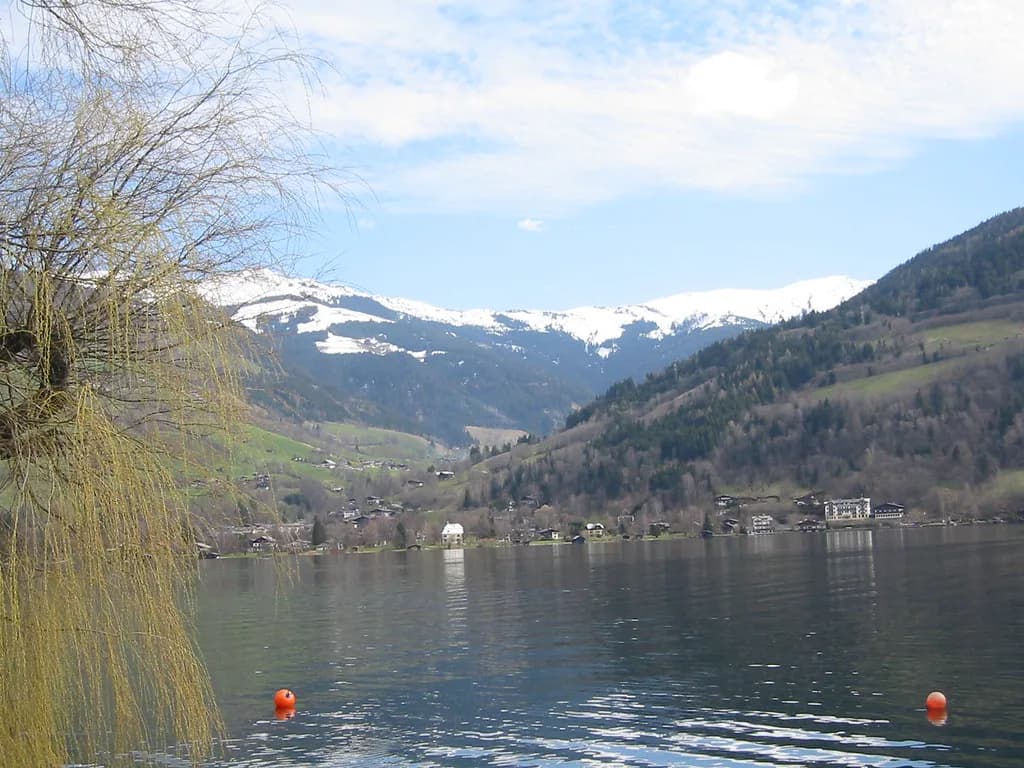
Where the resort does cost more is convenience. Zell am See is a lakeside town with a compact centre, which means accommodation close to the lifts and the lake carries a premium over villages up the valley. You are buying walking distance and a town setting rather than cheaper skiing.
What the lift pass covers: Ski ALPIN CARD, 408 km and 121 lifts across three areas
One card covers three distinct ski areas. The Kitzsteinhorn and Maiskogel at Kaprun form one, the Schmittenhöhe above Zell am See is the second, and the Skicircus Saalbach Hinterglemm Leogang Fieberbrunn is the third. The resort describes the card as valid across all three, so the pass you buy is not a Zell am See-only product unless you deliberately choose a smaller local ticket.
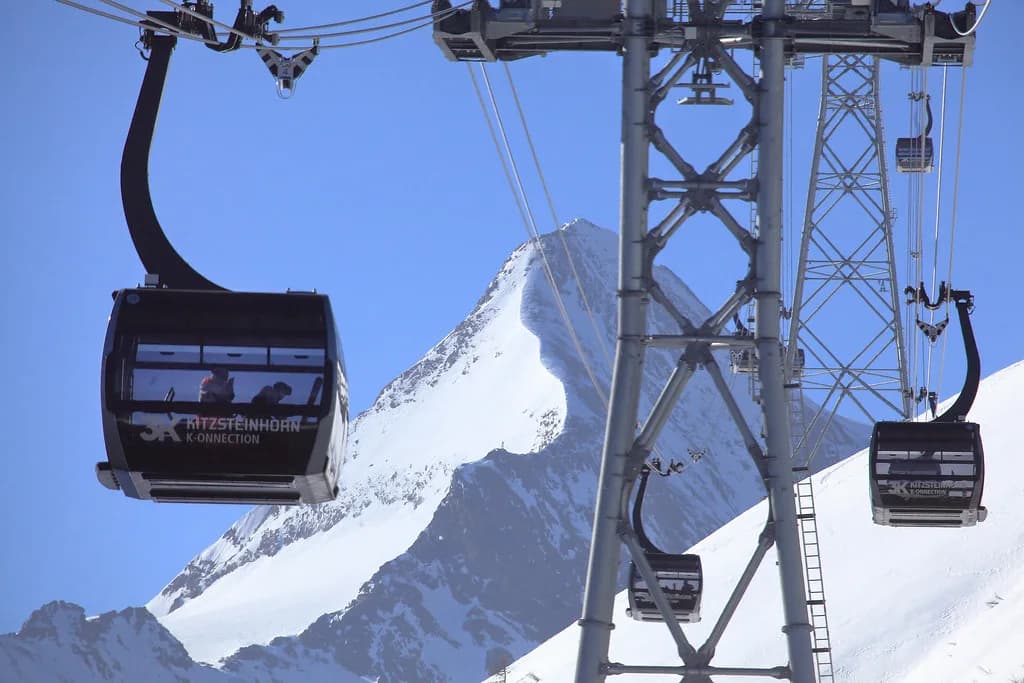
The Kitzsteinhorn end of the network is reached from Kaprun village, where the MK Maiskogelbahn lower terminus is a short walk from the centre or a ski-bus ride away. From there a two-stage cable-car link, marketed as the K-ONNECTION, carries you up towards the glacier. That layout matters for cost because it puts high-altitude skiing within a village-based trip rather than requiring a separate excursion.
The practical point is that a single pass here is a multi-area product, so judge it per skiing day rather than per resort. If you plan five or six days, the network gives you a different area for most of them without buying anything extra. If you plan two or three days, the arithmetic is less flattering and a smaller ticket may serve you better. The Zell am See Ski pass comparison breaks down the coverage bands before you commit.
Schmittenhöhe in numbers: 77 km of pistes, 70% Trass, family zones and beginner areas
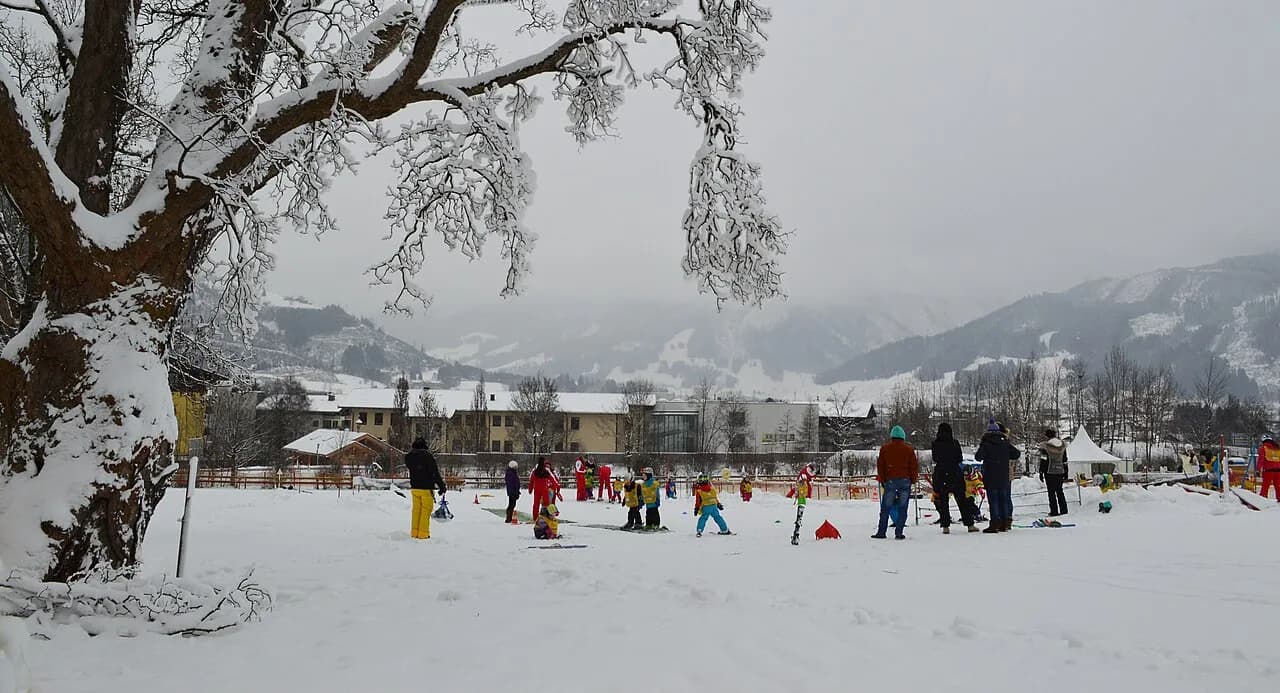
The Schmittenhöhe is Zell am See's local mountain and the area most visitors see first. It has 77 kilometres of pistes, a snow park and Funslope XXL, plus a children's area and kid's slope built around Schmidolin's Dragon Park. Five valley runs come back down to the town, including ski-in and ski-out options, which keeps logistics simple and cheap: you can start and finish the day without a bus or a car.
For beginners and families this is the value end of the resort. The terrain is described as wide, groomed family pistes with a panoramic outlook over Lake Zell and more than 30 three-thousand-metre peaks. A learner who spends the week on these slopes is still using the pass, but is not getting the full network's worth, so a shorter or restricted ticket is worth considering.
Strong skiers get the Trass, a run of over 4 kilometres with a gradient reaching 70%. That single run tells you the mountain is not only a family hill, and it gives advanced skiers a reason to stay local on poor-weather days when the glacier is windbound. If your group spans abilities, the Schmittenhöhe lets everyone ski from the same base.
Access is unusually flexible: there are three access points in Zell am See plus a lower terminus in the Glemmtal valley, and the zellamseeXpress connects directly from the Skicircus side. Where you stay therefore changes your daily routine more than your pass price. A base near any of these lifts saves bus time and morning friction.
Kitzsteinhorn and Maiskogel: 61 km, the glacier season and four snow parks
The Kitzsteinhorn glacier is the reason Zell am See can sell a long season. The resort publishes a planned window of 10 October 2026 to 17 May 2027, dependent on weather and snow conditions, and notes that the season can start as early as October. For anyone flexible on dates, autumn glacier skiing or a late-April week is a different proposition from midwinter, both in snow reliability and in what the resort charges.
The glacier area itself has 61 kilometres of pistes, five freeride lines, four snow parks and a superpipe. Black Mamba, with gradients up to 63%, is the headline steep run. This is high-alpine terrain at around 3,000 metres, so it suits confident skiers and riders, and the altitude also means colder, more variable weather than the valley.
Families are pointed towards the Maiskogel, which is part of the same Kitzsteinhorn ski area and linked by cable car from Kaprun. That split is useful for budgeting: a household can put beginners on the Maiskogel and advanced skiers on the glacier from one village base, with no second pass and no long transfer.
Skicircus Saalbach Hinterglemm Leogang Fieberbrunn: 270 km on the same ticket
The third area is the largest. The Skicircus Saalbach Hinterglemm Leogang Fieberbrunn has 270 kilometres of pistes, 70 lifts and more than 60 mountain huts, plus snow parks, floodlit slopes and a freeride park. Including it in the same pass is what makes the Ski ALPIN CARD defensible on cost: you are buying a very large linked network, not a single resort hill.
The catch is connection. There is no direct lift link between the Schmittenhöhe and the Skicircus in the way skiers might assume; the bridge is the zellamseeXpress at Viehhofen plus bus line 680 to the Schönleiten lifts at Saalbach. Buses run roughly every ten to twenty minutes, but the free shuttle only operates when the zellamseeXpress is running or slope 168 towards Viehhofen is open.
That makes the Skicircus a day out rather than an extension of your local hill. Plan it for a settled-weather day when the link is running, and check the connection before committing the whole group to it. The zellamsee ski map makes the geography obvious and is worth studying before you decide how many days to allocate to each area.
Lift pass products and how to choose between them
The Ski ALPIN CARD is sold as day and multi-day tickets and as season passes, and the resort also offers a 365 Action and 365 Classic version valid across the three areas. The card can be bought online before you travel, and the resort has introduced a smartphone ticket bought through the web shop or app, activated in the Zell am See-Kaprun app and read at the turnstile without a keycard. Buying ahead avoids the ticket-window queue rather than saving you a fixed percentage.
There is also a Junior Xplore Card aimed at younger skiers, listed by the resort at €15 without wider context on what it covers or when it applies. Treat that as a category to ask about rather than a full price for a child's week, and confirm the age bands and validity in the official shop before you budget.
Choose by days, not by ambition. A three-day trip rarely justifies the full network, especially if you are staying in Zell am See and skiing the Schmittenhöhe. Five or more days swings the decision the other way, because the glacier and the Skicircus become usable without rushing.
Where to buy is straightforward: the ALPIN CARD online shop, or the ticket desks at the valley stations. Kitzsteinhorn, Schmittenhöhe and Skicircus all publish their own lift information, and the Zell am See Skiing Guide ties the areas, the passes and the planning together if you want the fuller picture.
How the winter calendar affects what you pay
The clearest cost divider in Zell am See is the date. The resort splits the winter into a winter-start window from 27 November to 18 December 2026 and peak season from 19 December 2026 to 12 March 2027. Passes, accommodation and hire all sit lower outside the peak band, and the pre-Christmas weeks are usually the quietest terrain on the mountain.
The trade-off is snow and terrain. Early December may leave the lower Schmittenhöhe runs thin while the glacier is fully open, and late-season weeks can be warm at valley level. If your priority is cost, aim for the winter-start window and plan to ski high; if your priority is everything open, accept the peak band. Either way, the planned Kitzsteinhorn season running into May gives you a genuinely long shoulder at both ends.
Mid-December through early January and the February half-term weeks are the busiest and most expensive combination. Shifting a family trip by a week or two either side changes the price of passes, beds and lessons at once. If you can only travel in peak season, book the fixed items early so the only costs left to manage are daily ones.
Ski hire, depots and boot fitting: what you rent versus what you bring
Hire is widely available in both Zell am See and Kaprun, with shops offering current-season skis, boots and poles, and many allowing you to book equipment online from home by choosing a ski category. Extras such as avalanche equipment can be added to the booking. Renting locally also means you can swap a boot or a ski midweek if the fit is wrong, which is harder with gear brought from home.
Depots are the quiet cost saver. Equipment can be stored at ski depots directly at the lower stations of several lifts, including the Schmittenhöhe valley station, the areitXpress, cityXpress and the Maiskogelbahn, plus a depot up at the Kitzsteinhorn Alpincenter. That removes the daily carry and the bus trip with skis, and many depots can be booked online. The ski hire zellam see page lists the shops and depots in more detail.
The rent-or-bring decision is usually about frequency, not price. If you ski once a year, hiring modern skis and boots is the sensible route; if you ski several weeks, your own boots are the item worth owning even when you rent skis. Boot fit is where money is wasted: a bad hire boot ruins a week faster than any lift queue.
Ski school and lessons: group versus private, and the beginner lessons worth booking
Ski schools operate across the region, with instructors and guides offering lessons from first turns to technique work. Group lessons are the cheaper way to get a beginner moving and give children company; private lessons cost more per hour but usually progress a nervous adult faster because the pace is set by one person. For a family with mixed levels, a morning group lesson for the children and a private block for an adult often works better than booking everyone together.
Book lessons before you travel in peak weeks. Instructors are finite and the busiest dates fill first, particularly around the Christmas and February holidays. Beginners should also match the lesson to the area: the Schmittenhöhe family zones and the Maiskogel are gentler places to learn than the glacier, where altitude and cold add difficulty. If you are weighing up a first trip, is zell am see good for beginners sets out the learning areas and what to book.
A short course is usually better value than a single day. Two or three consecutive mornings build enough confidence to use the mountain independently for the rest of the week, which is what turns a lesson into a saving on the overall trip.
Getting there and getting around: ski buses included with the pass
Ski buses in the region are included with the Ski ALPIN CARD, covering the villages of Saalbach Hinterglemm, Viehhofen, Leogang, Fieberbrunn, Zell am See and Kaprun, plus connections between them. For a car-free trip this is significant: you can base in one village and reach the lifts without paying daily parking or hiring a vehicle.
The limits matter as much as the coverage. There are no ski-bus connections between Saalbach Hinterglemm and Leogang, between Saalbach Hinterglemm and Fieberbrunn, or between the Skicircus and Zell am See-Kaprun. The Leogang to Fieberbrunn bus runs only in peak season, and the free shuttle over the Viehhofen link depends on the zellamseeXpress running or slope 168 being open.
So a car is not necessary for a Zell am See and Kaprun trip, but it does buy flexibility if you want to ski the Skicircus on your own schedule. The compromise is to stay car-free and treat the Skicircus as one planned day using the 680 bus, rather than paying for a vehicle all week to use it once.
Food, huts and the lake-town setting: why staying in Zell am See shapes your daily spend
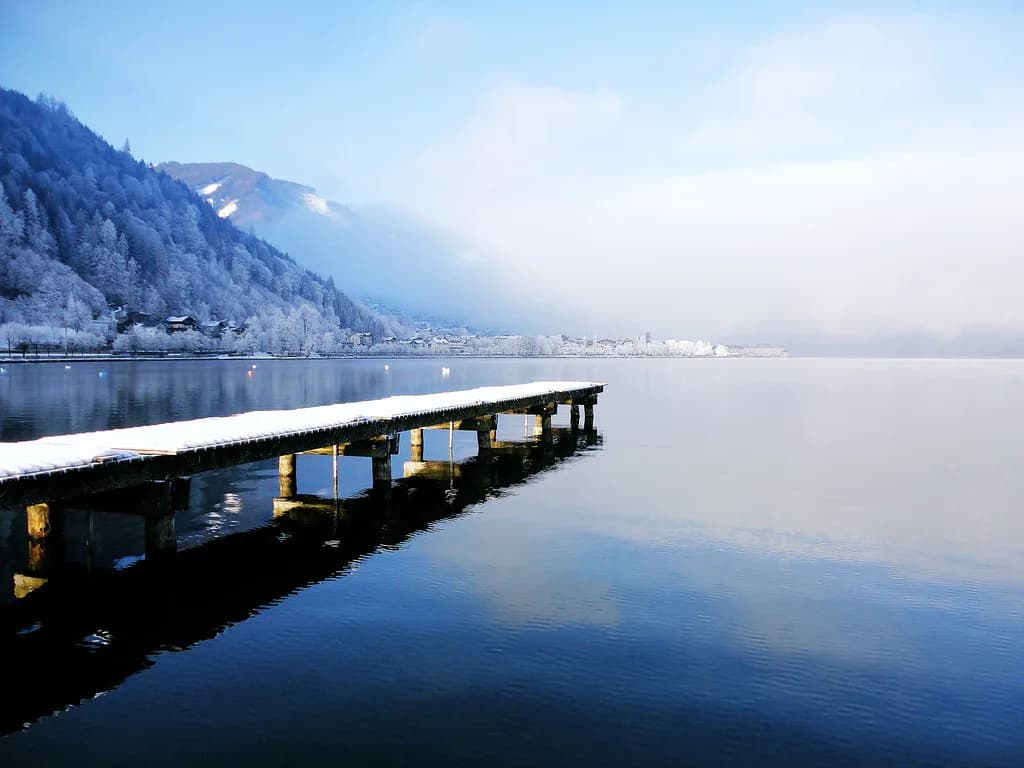
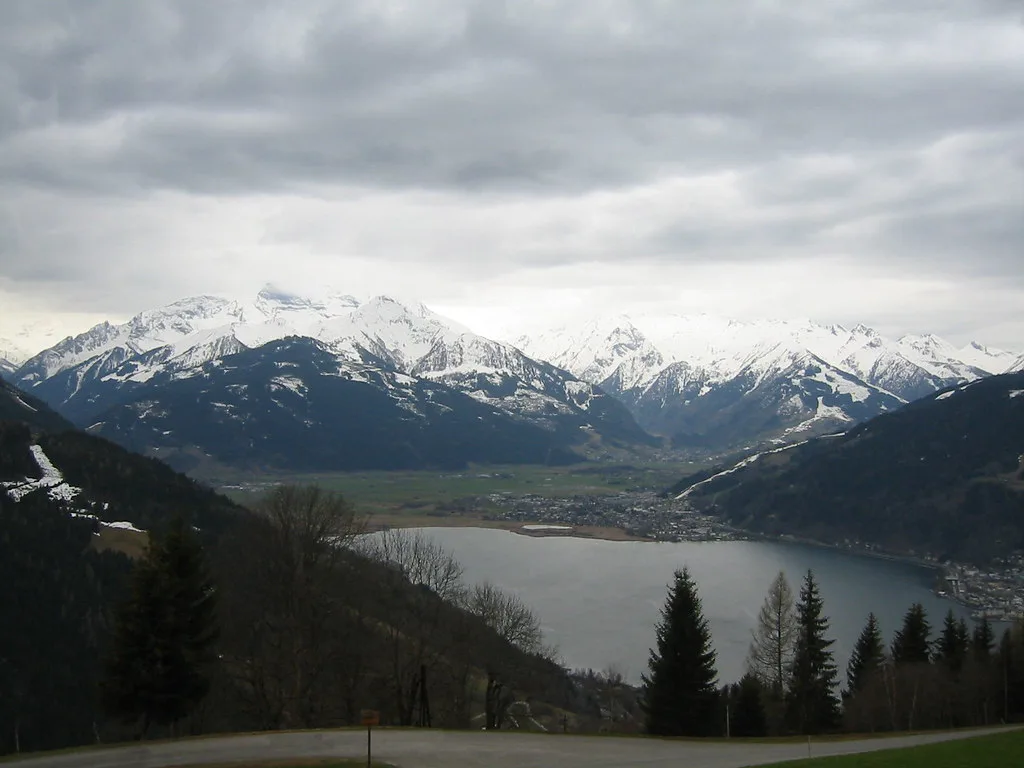
Zell am See is a town with a lake, a compact centre and a spread of restaurants, not a purpose-built ski station. That gives you more choice at more price points, from mountain huts with sun terraces to town restaurants away from the lifts. The Schmittenhöhe is known for its huts and gourmet stations, and the Skicircus has more than 60 mountain huts, so on-mountain lunches are part of the experience rather than an afterthought.
Daily spend is where budgets quietly drift. Buying lunch on the mountain every day, adding a coffee stop and a few drinks at altitude is the pattern that makes a trip feel expensive, regardless of what the pass cost. Self-catering breakfast, a packed snack and one proper hut lunch is the standard compromise, and it also frees you from timed lunch reservations.
Staying in Zell am See itself costs more than staying slightly out, but it saves bus fares and time and puts the lake, shops and restaurants on foot. Kaprun is the alternative base for glacier access, quieter and closer to the Kitzsteinhorn lifts. Neither is cheaper in every case; the right choice depends on which area you plan to ski most.
Where costs add up: four trade-offs that decide an expensive trip from a reasonable one
First, dates against terrain. A winter-start week with the glacier open can be excellent value, but only if you are willing to ski high and accept that some valley runs may be limited. Second, pass scope against days. Buying the full network for a short trip is the most common way to overspend here.
Third, location against transport. A base near a valley station cuts bus time and morning cost, while a cheaper base further out depends on the included ski buses running when you need them. Fourth, lessons against independence. Two or three mornings of instruction can move a beginner onto the wider mountain for the rest of the week, which is often better value than a single expensive private day.
The one thing not to economise on is boot fit. Hire boots that hurt will cut your skiing short whatever pass you hold, and a fitting session or a boot upgrade is usually worth more than a discounted lift ticket.
Sample budget structure for a week
Build the budget in two columns: fixed and daily. Fixed items are the lift pass, hire and any lessons, all of which you can price in the official shops before you travel and lock in early. Daily items are food, drinks, travel extras and any equipment swaps, which you control by choosing self-catering breakfasts, hut lunches and the number of on-mountain coffees.
A reasonable week uses the pass across several areas rather than one, books hire and lessons ahead, and stays somewhere that lets you walk or ride the included bus to a lift. An expensive week pays peak-season rates, buys the largest pass for the shortest trip and eats lunch on the mountain every day. The difference is choice rather than resort.
It also helps to know what you are not paying for. Buses within the resort villages are covered by the pass, depots at the valley stations remove the need to carry skis, and the smartphone ticket removes the physical card. Small conveniences, but each one removes a separate charge or queue.
Final verdict: is Zell am See expensive for the skiing you get?
Zell am See is expensive if you buy a peak-season pass for the full network and spend the week on one slope. It is reasonable, and sometimes good value, if you match the ticket to your days, use the shoulder season, and move between the Schmittenhöhe, the glacier and the Skicircus. The resort's three-area structure is its main selling point, and it is also where the budget is won or lost.
The practical sequence is simple: choose your dates, decide how many days you will ski and where, then pick the pass that covers exactly that. Fix hire, lessons and any depots before you travel, and leave the daily decisions to the mountain. Prices and season dates change, so check the live ones in the official Ski ALPIN CARD online shop before you book. For the full picture of sectors and access, return to the Zell am See Skiing Guide.
Frequently Asked Questions
Is Zell am See expensive compared with other Austrian ski resorts?
It sits mid-market. You are paying for a large linked network rather than a single hill, so the pass looks dearer than a small resort but covers far more terrain. Whether that feels expensive depends on how many days you ski and whether you use more than one of the three areas.
How much does a ski pass in Zell am See cost?
Prices are set by season band and ticket length, so they change each winter and mid-season. Check the Ski ALPIN CARD shop for live day, multi-day and season rates rather than relying on second-hand figures. The resort also lists a Junior Xplore Card category worth asking about for younger skiers.
Is the Ski ALPIN CARD good value?
It is good value if you ski five or more days and move between the Schmittenhöhe, the Kitzsteinhorn and the Skicircus. For a short trip focused on one area, a smaller ticket is usually better value. Judge it per skiing day rather than per resort.
Do you need a car in Zell am See?
Not for a Zell am See and Kaprun trip. Ski buses within the villages are included with the pass and the smartphone ticket removes the card queue. A car mainly buys flexibility for reaching the Skicircus, which can be done as a planned day using the bus link instead.
Are ski buses free with the lift pass?
Ski buses within Saalbach Hinterglemm, Viehhofen, Leogang, Fieberbrunn, Zell am See and Kaprun are included with the Ski ALPIN CARD. There are no bus links between some areas, and the Viehhofen shuttle only runs when the link lift or slope is open.
Is Zell am See good for beginners on a budget?
Yes, if you stay on the local mountain. The Schmittenhöhe and the Maiskogel have wide family slopes and children's areas, so beginners can learn without paying for terrain they will not use. A shorter pass plus a few mornings of group lessons is the sensible combination.
When is the cheapest time to ski in Zell am See?
The winter-start window from late November to mid-December usually carries lower rates than peak season from mid-December to mid-March. Early and late glacier skiing are also options thanks to the long Kitzsteinhorn season, which is planned to run from October into May.
How many days do you need to justify a multi-day pass?
Around five days. That gives you time on the Schmittenhöhe, a day on the glacier and at least one outing to the Skicircus without rushing. Below three days, a local ticket focused on one area is usually the better buy.
Sources
Useful notes for your next ski trip
Optional updates to our Alpine resort guides.
You might also like
Continue reading
More guides you'll find useful