Villars Ski Season: Dates, Terrain and Timing Your Trip
Plan a Villars ski trip around the season: how the Villars-Gryon-Les Diablerets terrain is split, which sectors suit which skier, and when to book.
On this page
Villars-sur-Ollon sits above Lake Geneva in the Vaud Alps, and its season is best understood as a terrain question rather than a date on a calendar. The lift network spreads across three villages and a linked high area, so where you base yourself and which sector you ski on a given day matter more than the total kilometre figure. This guide walks through the layout, the piste split, and how to time a trip for beginners, intermediates and stronger skiers in the same group.
Quick answer: how the Villars ski season is structured
The season follows a simple pattern: the high terrain around Bretaye and the linked sector toward Les Diablerets holds snow first and lasts longest, while the lower runs back into the villages are the most weather-dependent part of the area. That means early and late weeks are about choosing altitude and aspect, not about whether the whole resort is open. Build your day around the upper lifts and treat valley runs as a bonus rather than the plan.
Your best week depends on who is skiing. Mixed-ability groups get the most from mid-season, when the widest choice of runs is likely to be available across all three village sectors. Strong skiers chasing steeps are better served by a later booking that coincides with the best conditions on the Chaux Ronde and Croix des Chaux terrain, and by keeping a high-altitude day in reserve. For the full resort overview, start with the villars skiing guide and then narrow your dates.
The ski area in one paragraph
The area is really two main lift sectors, Villars-Bretaye and Gryon, with Les Diablerets connected to Villars/Gryon by a fast chairlift. Crucially, that link carries you between sectors but has no piste beneath it, so you plan a day in one sector and travel across rather than skiing a continuous circuit. Skiers who understand this stop trying to 'ski everything' in a morning and instead pick a sector per day.
Villars itself sits around 1,300 m, with the skiing extending well above the village toward Bretaye and the ridges above Gryon. The panorama runs to the Dents du Midi and, on clear days, Mont Blanc, which is part of why the area suits leisurely cruising as much as hard charging. The linked terrain is covered in more detail in the Villars-Gryon-Les Diablerets ski map overview, which is worth reading before you commit to a base. If you are still weighing which resort to base your trip around, the Davos ski season dates offer a useful comparison for timing.
Piste breakdown: 87 km of marked runs plus 16 km of ski routes
One widely used breakdown lists 87 km of marked pistes, split into 66 km easy (76%), 18 km intermediate (21%) and 3 km difficult (3%), plus 16 km of ski routes. Other sources quote around 125 km of skiable terrain for the wider area, a figure that includes routes and off-piste rather than graded pistes alone. Both numbers are useful: the first tells you what is groomed and signposted, the second tells you how much ground the lift system reaches.
The 76% easy share is the defining fact about Villars. This is a resort where a confident beginner can tour a large part of the mountain on blue runs, and where a group of mixed ability can spend a whole day on the same sector without anyone being bored or terrified. If you are an expert pair looking for a week of steep, technical skiing, the marked terrain will run out quickly and you should plan around the ski routes, off-piste and a day at Glacier 3000 instead.
Early season in Villars: what opens first
In the first weeks, expect the higher terrain above Bretaye and the upper Gryon lifts to be the focus, with snowmaking doing much of the work. The area reports 253 snow cannons covering 44% of the slopes, which is meaningful but far from total coverage, so lower runs and valley descents should be treated as uncertain until conditions settle. A 44% figure tells you the resort can protect key arteries, not that every piste will be white in December.
The practical early-season move is to book accommodation in Villars-sur-Ollon or Bretaye rather than down the valley, so you are close to the lifts that are most likely to run. Keep your first day flexible and use the live snow report from OnTheSnow to see which lifts and runs are actually open before you buy a multi-day pass. Note also that Swiss grading is often steeper in feel than skiers expect from other countries, so a blue here may ski like a red elsewhere.
Mid-season: the strongest weeks for mixed-ability groups
Mid-season is when Villars makes most sense for a group with different abilities. The Bretaye sector gives beginners wide, gentle slopes to progress on, while the Gryon side offers rolling blues that suit lower intermediates building confidence and mileage. Meanwhile the stronger skiers in the group can head for the steeper pitches around Chaux Ronde and the Croix des Chaux runs, then rejoin the others for lunch.
The resort's layout rewards this approach because each sector has its own base and lift access, so you are not locked into a single meeting point. Base near the Roc d'Orsay gondola or in the village centre and you can reach both beginner zones easily, which matters when you are ferrying children to lessons. Mid-season also gives you the best odds of the full lift network running, including the chairlift link across to Les Diablerets.
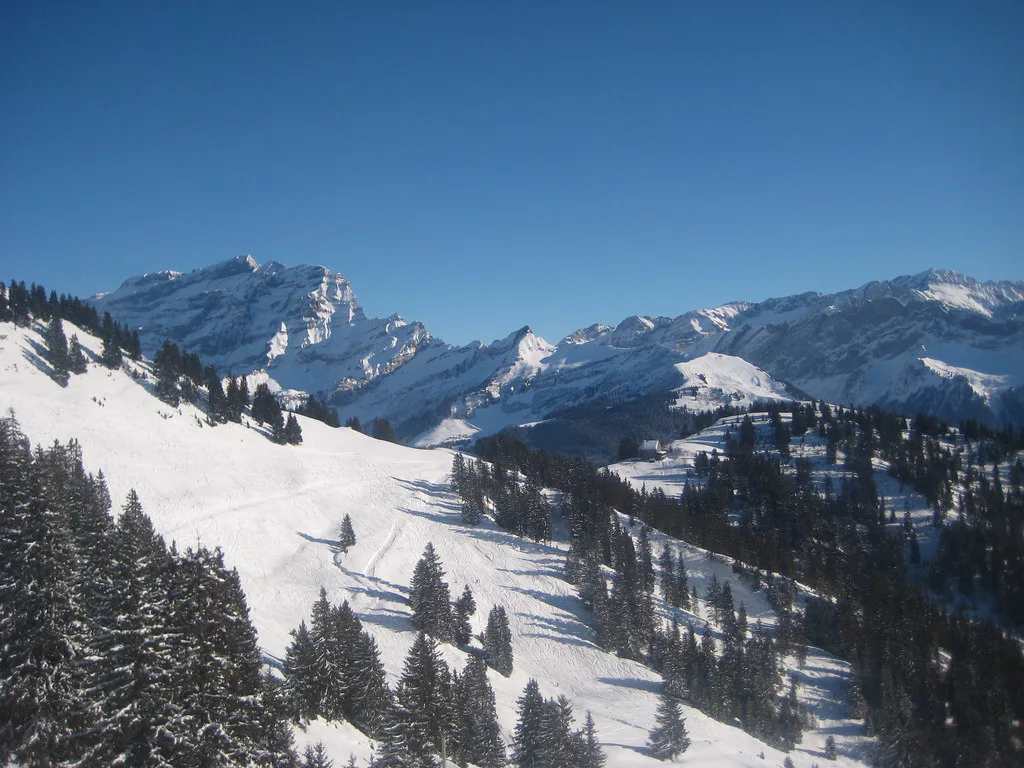
Late season and spring snow
As the season wears on, the valley runs back to Villars, Gryon and Les Diablerets are the first to suffer, and the long descents such as the Croix des Chaux to Barboleuse run become patchy. That run is listed at 6.6 km with a 900 m vertical drop, which tells you how much lower-altitude terrain is at stake when the freezing level rises. In spring, plan to ski the upper mountain in the morning and be back at the base before the snow turns to slush.
Spring is still a good time to visit if you value quiet lifts, softer snow and long lunches on terraces with the lake in view. The trade-off is that you should not count on the lower half of the mountain being skiable, and you should check whether the link to Les Diablerets is running before planning a day across there. A late booking with flexible dates protects you far better than committing to a fixed week in April.
Which sector for which ability
Beginners are best served at Bretaye and in the village-centre nursery area, with the Roc d'Orsay gondola giving quick access to the upper beginner zone. Once you can link turns, the wide blues of the Bretaye sector are the natural next step, and lessons with a local instructor will speed this up considerably. Just be aware that runs steepen as you descend toward the village, so take the lifts down at the end of the day while your legs are fresh.
Lower intermediates should head to Gryon, where the blues are wide and rolling and the pace is calmer than on the Villars side. More confident intermediates can step up to reds such as the Combe run in the Bretaye sector, which adds gradient and views over Lake Geneva without going full black. Advanced skiers should target the Chaux Ronde area and the Croix des Chaux terrain, including the 1.3 km Croix des Chaux to Frience run with its 475 m drop, and treat the steep, ungroomed Olden as a test piece rather than a warm-up.
Off-piste skiers gravitate to the Grand Chamossaire peak for steeper descents and big views, but the terrain there demands a local guide and stable conditions. Snowpark provision is reported inconsistently — one ski-area guide notes two snowparks, while the official slope listing shows none — so if freestyle is central to your trip, check what is built for your dates. For hire and equipment logistics, the villars ski hire options cover the main villages.
Glacier 3000 and high-altitude options
When Villars is short of snow, Glacier 3000 above Les Diablerets is the fallback. It offers high-altitude skiing with a vertical drop of around 1,600 m, which is a different order of magnitude from the village-side terrain. The trade-off is cost, travel time and a separate lift ticket in most cases, so it works best as a planned day out rather than an improvised rescue.
The glacier also suits strong skiers who want sustained steep skiing and a high-altitude day when the lower resort is soft or thin. Groups with beginners should think carefully before committing, because the terrain and the exposure are not beginner-friendly. Build the glacier into your week as one day, keep the rest of the plan flexible, and you get the best of both.
Season pass products and where to buy
Villars is one of several Swiss resorts covered by the Magic Pass, a multi-resort product that many regular skiers buy before the season starts. For a one-week trip, compare the local Villars pass against the Magic Pass only if you plan to ski other participating resorts on the same trip; otherwise the local pass is usually the simpler choice. The villars ski pass guide sets out the products and how they work across the sectors.
Buy your pass online before you travel and collect it at the lift base, which saves queueing on the first morning. Prices and product names change each winter, so use the resort's own ticket pages for the current season rather than relying on last year's figures. If you are skiing the glacier, check whether it is included or sold separately, because that single detail can change which pass is better value.
Ski schools, hire and booking lead times
Book ski school and equipment hire well before peak weeks. Villars has ski schools operating from Bretaye and Villars-sur-Ollon, and private lessons fill first during school holidays. For children, group lessons from the village centre are convenient if you are staying in town, while Bretaye-based lessons save the morning commute up the mountain. Reserve both lessons and hire online in advance to get the sizes and languages you want.
For hire, the main villages each have shops at or near the lift bases, with a cluster at Villars-sur-Ollon and further options in Gryon and Les Diablerets. Picking up gear near your accommodation is usually better than at the lift if you are walking with children. If you want your own boots fitted properly, allow a day at the start of the trip rather than doing it on the morning of a lesson.
Getting there and getting around
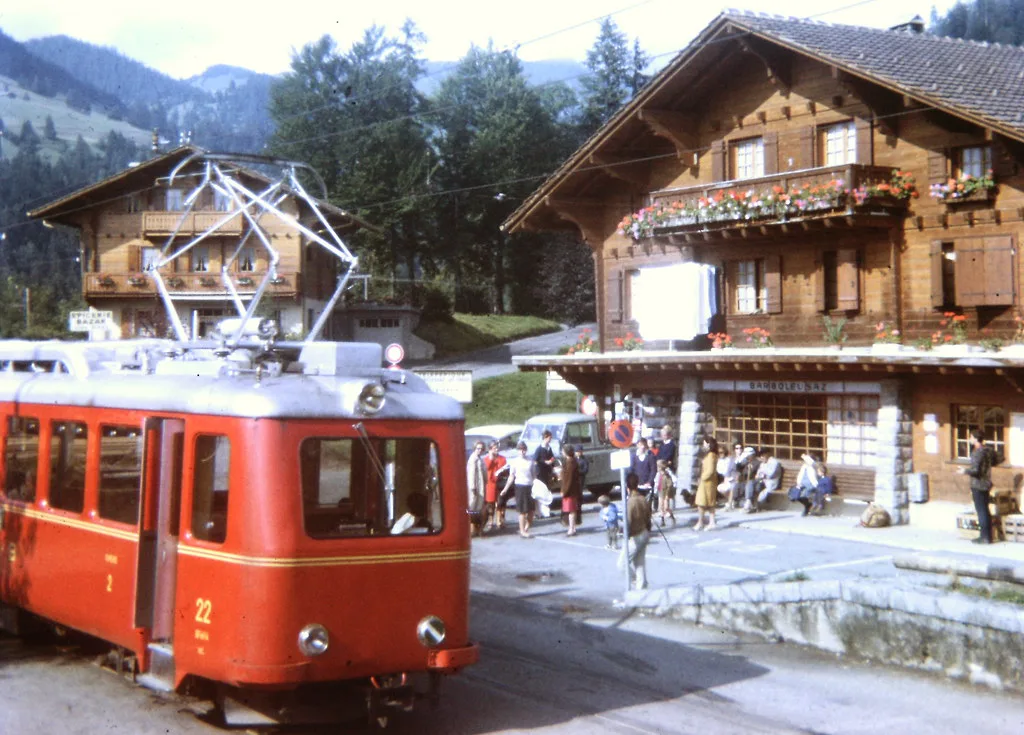
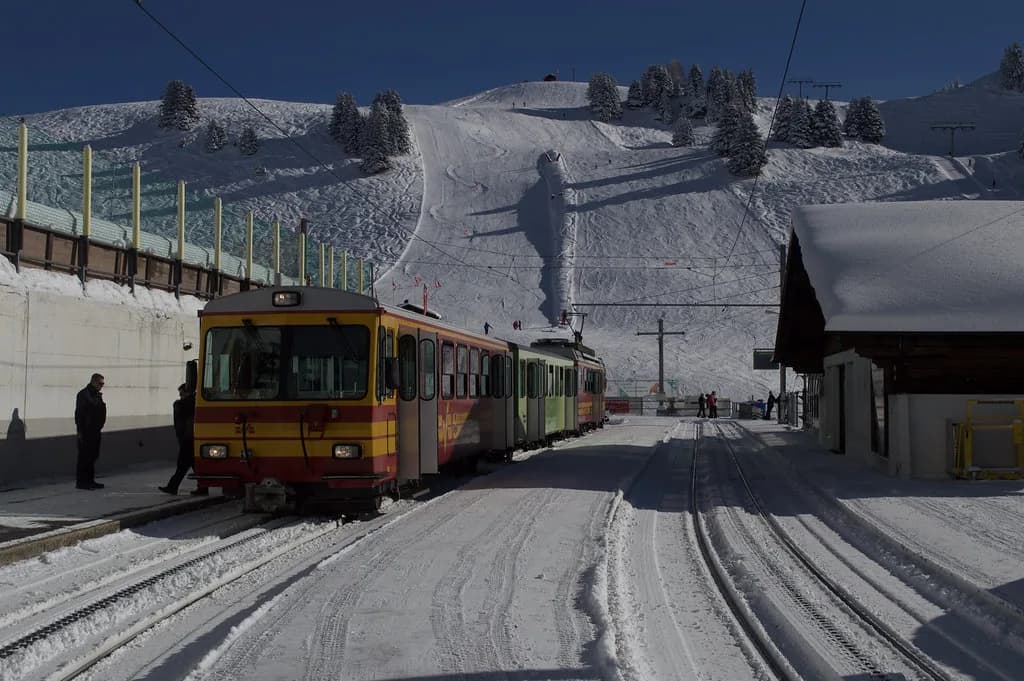
Villars is reached by road from the Rhône valley or by rail via the Villars-Bretaye narrow-gauge line, which climbs from Bex and connects the villages. Trains make the resort genuinely car-free for many visitors, and the mountain railway itself is part of the skiing infrastructure rather than just transport. Bringing a car gives flexibility for arriving late or exploring the region, but parking in the village centres is limited and often charged.
Once in resort, the layout means you will mostly move between villages by lift, train or shuttle rather than by car. The link between Villars/Gryon and Les Diablerets by fast chairlift is the key connection, and the BVB railway serves the valley villages. If you are staying in Gryon, plan for a short transfer to the lifts each morning rather than assuming ski-in access.
Who should pick Villars for the season
Choose Villars if you are travelling with beginners, young families or a mixed group where most people want blue and red cruising with big views and a civilised village. The 76% easy share is an asset, not a weakness, and the linked sectors give enough variety for a week. Skiers who want to rack up serious vertical on steep terrain every day should look at higher, steeper Swiss resorts.
If your group has one or two experts and several intermediates, Villars works well provided you plan a glacier day and use the ski routes for extra challenge. Book mid-season for the best odds of full operation, base yourself near the lifts you will use daily, and keep one flexible day for conditions. That combination delivers far more than chasing a single headline kilometre figure.
Plan Your Visit
Villars is at its best when you treat the season as a series of choices: which sector on which day, which base for your group, and whether to add a high-altitude day at Glacier 3000. Get those right and the resort's easy-going terrain and lake views do the rest.
Book lessons and hire early, buy passes online, and check the resort's own pages for confirmed dates and current prices before you commit. Then build a flexible plan around the sectors that suit your group best.
Frequently Asked Questions
When does the ski season start in Villars?
Villars has not published a fixed opening date far enough ahead to plan around, and the start varies with early snow and snowmaking. The high terrain above Bretaye and the upper Gryon lifts typically come on stream first, while lower runs follow. Check the resort's own winter information for confirmed opening dates before booking.
When does the Villars ski season end?
The season usually winds down on the upper mountain first, with the lower valley runs to Villars, Gryon and Les Diablerets giving up earliest as temperatures rise. Spring skiing concentrates on the higher terrain above Bretaye. The resort publishes its closing dates each winter; check current details before a late trip.
How much terrain is there in Villars?
One common breakdown lists 87 km of marked pistes plus 16 km of ski routes in Villars-Gryon-Les Diablerets. Other sources quote around 125 km of skiable terrain for the wider area, which includes routes and off-piste. Both figures are useful, so read them alongside a piste map rather than comparing the resort on a single number.
Is Villars good for beginners?
Yes. Around three-quarters of the marked runs are graded easy, and there are dedicated beginner zones in the village centre and at the top of the Roc d'Orsay gondola. The main caution is that runs steepen as you descend toward the village, so beginners should take the lifts down at the end of the day.
Do you need a car in Villars?
Not necessarily. The Villars-Bretaye narrow-gauge railway connects the villages and the lift system moves you between sectors. A car helps if you are arriving late or exploring the region, but parking in the village centres is limited and often charged, so many visitors stay car-free.
Is the Magic Pass valid in Villars?
Villars participates in the Magic Pass, a multi-resort product sold before the season. For a single-week trip, compare it against the local Villars pass unless you plan to ski other participating resorts. Product inclusions change each winter, so confirm the current details and prices with the resort before buying.
Sources
Useful notes for your next ski trip
Optional updates to our Alpine resort guides.
You might also like
Continue reading
More guides you'll find useful