Tignes Ski Season: Dates, Snow Cover and Pass Options
Plan the Tignes ski season with published dates, altitude ranges, piste totals and lift-pass options, plus how the five villages shape your ski day.
On this page
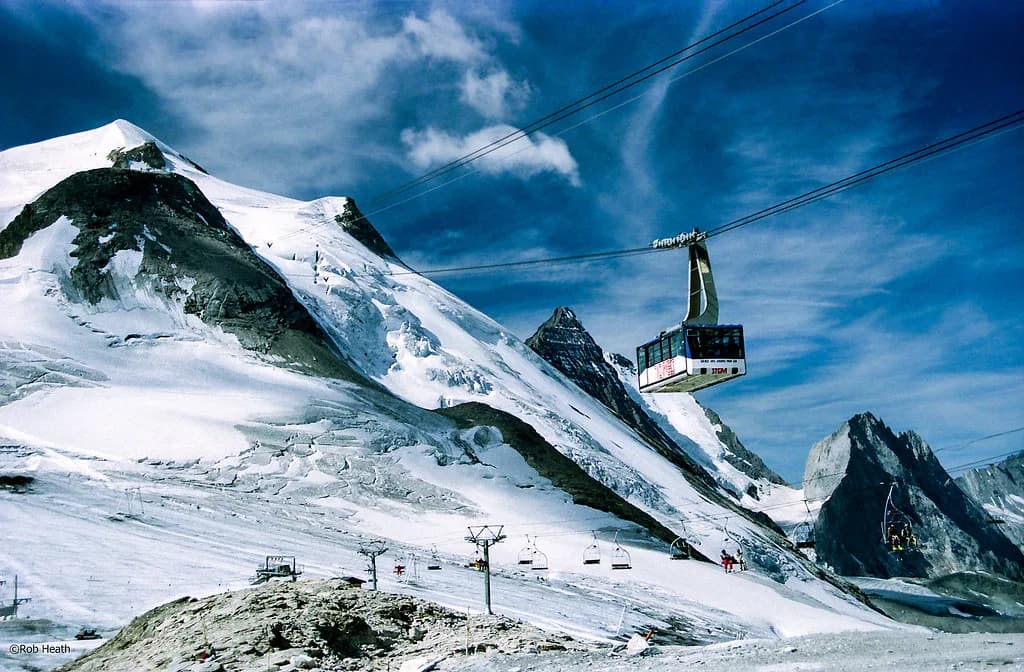
Tignes sits in the Tarentaise Valley in Savoie, between 1,550 m and 2,150 m at village level, with lifts reaching up to 3,456 m. That altitude is the reason the resort publishes a season stretching from late November into the first days of May, and it is also the reason early and late weeks behave very differently from February.
This guide works through the published winter 2026-27 plan phase by phase, explains how the five villages change your access to the lifts, and sets out which pass product applies when. The Tignes ski guide covers the resort as a whole if you want the wider planning picture, while this piece concentrates on dates, terrain and what each part of the winter actually delivers.
The Tignes ski season at a glance
The resort publishes its winter as running from 21 November 2026 to 2 May 2027, with skiing up to 3,456 m and more than 300 km of groomed piste across the linked Tignes-Val d'Isère area. Snowmaking covers a large share of the slopes and the resort describes snow cover as reliable through the winter, which is a fair summary of a high, largely north-facing domain rather than a promise about any single day.
What matters for planning is that the season has a shape. Opening day applies to the Tignes lifts, the link across to Val d'Isère follows later, the full domain operates from mid-December, and the last week runs on a reduced spring footing. Buying a pass or booking a week without noticing which phase you land in is the most common way to misjudge a Tignes trip.
Five villages and how each changes your ski day
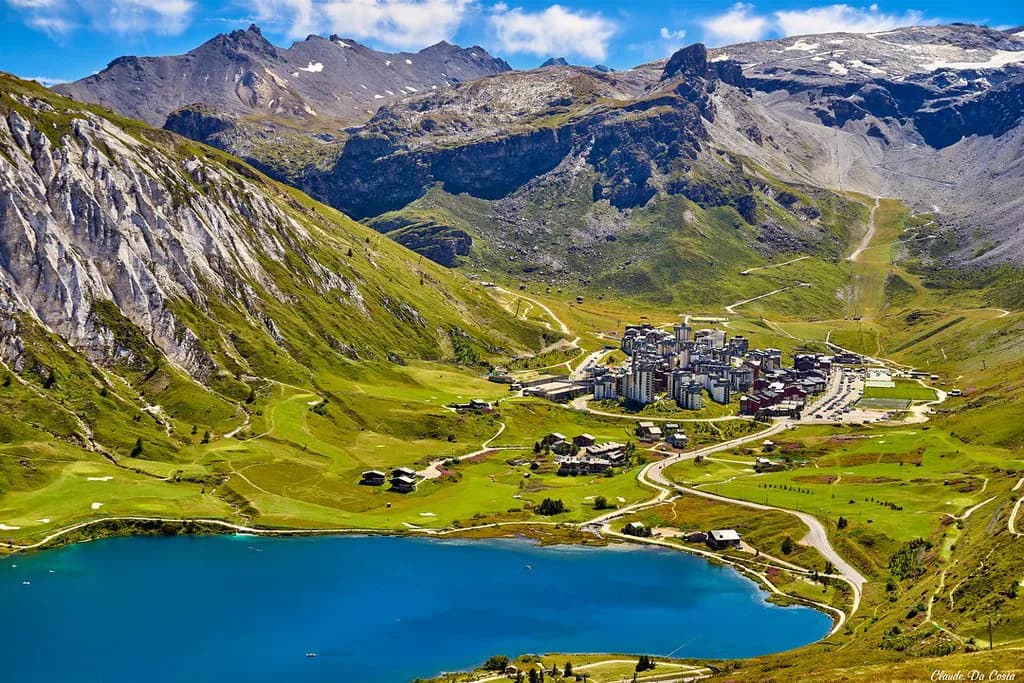
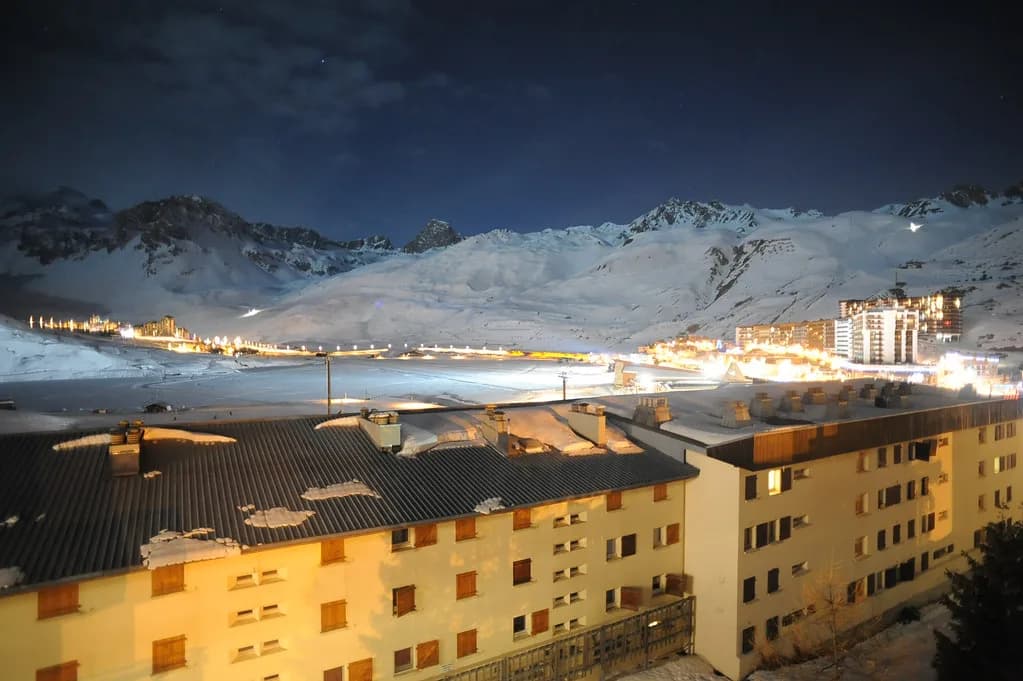
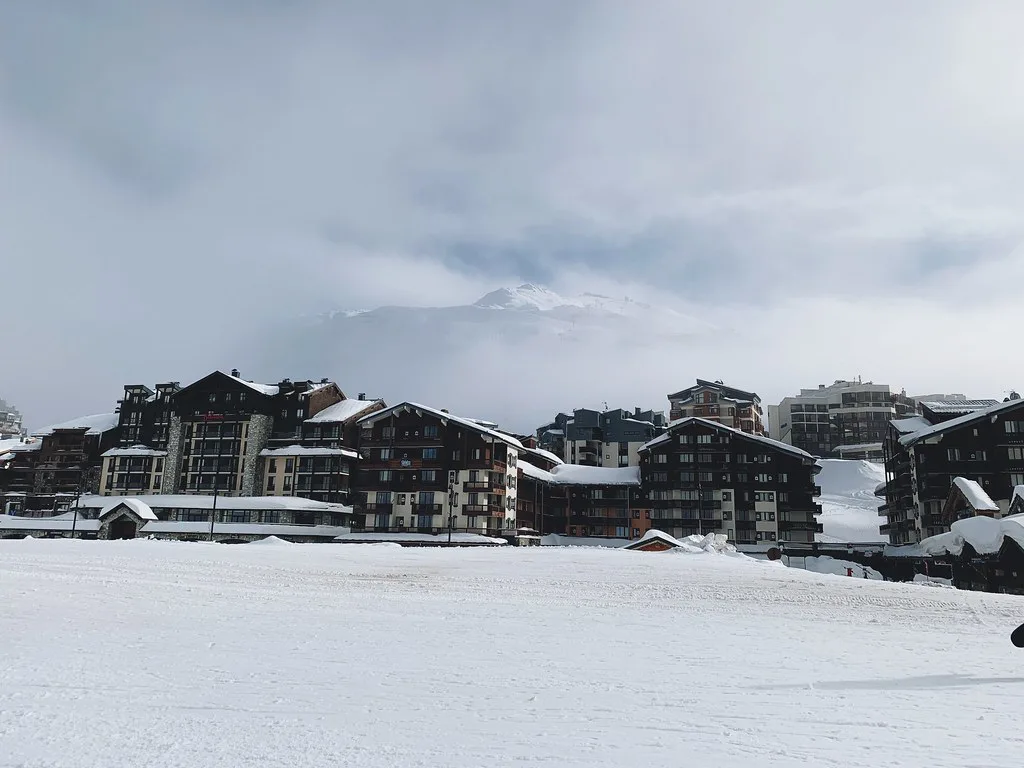
Tignes is not one resort centre but five villages strung along the valley and the lake: Les Brévières at 1,550 m, Tignes 1800 (Les Boisses) at 1,800 m, Le Lavachet at 2,050 m, Le Lac at 2,100 m and Val Claret at 2,150 m. Each has its own lift access and its own character, and the choice affects how much skiing you do versus how much travelling you do.
Les Brévières is the quiet, low base with a village feel and a cable car up towards the higher terrain; it suits families and anyone who wants space and a shorter drive from the valley road. Tignes 1800 is small and purpose-built with easy access to the Boisses lifts. Le Lavachet and Le Lac sit in the middle with the main snowfront, shops and the lake, while Val Claret at the top of the road is the most convenient base for the Grande Motte cable car and the high, snow-sure terrain.
The trade-off is straightforward: the higher villages cut morning lift queues and put you closer to the glacier sector, but they are busier and more built-up. Les Brévières costs you time on the lifts at each end of the day. A free resort shuttle network links the villages, so a lower base is workable if you accept a bus ride in ski boots.
The ski area in numbers
The Tignes-Val d'Isère domain, still widely called Espace Killy, publishes 300 km of marked runs between 1,550 m and more than 3,400 m, served by 71 lifts including 37 chairlifts, six gondolas and three cable cars. The run count is 161: 21 green, 65 blue, 41 red and 32 black, with 11 lifts open to pedestrians.
The headline number for Tignes skiers is the altitude band rather than the kilometre count. The Grande Motte cable car and funicular take you above 3,000 m from Val Claret, which is what keeps the upper runs in condition in December and April when lower resorts are struggling. The Val d'Isère side adds the Bellevarde face, Solaise and La Daille, reachable by lift from Tignes once the link opens.
Print or download the official piste map before you travel and mark the sectors you actually plan to ski; a 300 km domain punishes wandering. The Tignes piste map Guide covers where to find the official version and how to read live lift and run status alongside it.
Season phases: opening week, preview, full winter and spring
The first phase is opening week, 21 to 27 November 2026, when the Tignes ski area runs alone at a single flat day rate. The second is the Avant-première window from 28 November to 11 December 2026, timed so that the Val d'Isère link can open on 28 November and the full domain becomes available at reduced prices while it is still opening up.
Full winter runs from 12 December 2026 to 23 April 2027, with the whole Tignes-Val d'Isère area in play and standard pricing. The closing week then runs from 24 April to 2 May 2027 at lower prices, with spring conditions and the upper terrain doing most of the work.
Early-season trips are a bet on the glacier and snowmaking rather than on the whole map, and the resort's own calendar reflects that. Late April is the opposite bet: long sunny days, soft snow low down and firm, fast pistes high up. If your group includes beginners, full winter is the safer choice; if it includes strong skiers chasing altitude, the shoulder phases can be excellent value.
Lift-pass products and published prices
Tignes sells two products: a Tignes-area pass and a Tignes-Val d'Isère pass that covers the link to Val d'Isère. In opening week the Tignes pass is a single price for everyone at 50 euros per day. In the Avant-première window the full-area pass is 67 euros per adult day, 54 euros for children and seniors, and 402 euros for a six-day pass that covers seven days; the Tignes-only pass is 60 euros adult and 49 euros reduced.
In full winter, from 12 December, the full-area pass is 78 euros per adult day, 63 euros reduced, and 468 euros for the six-days-for-seven product; the Tignes-only version is 70 euros adult and 57 euros reduced. The closing week drops back to the preview level: 67 euros adult and 54 euros reduced per full-area day, 402 euros for six days. Half-day afternoon passes are also published for each phase.
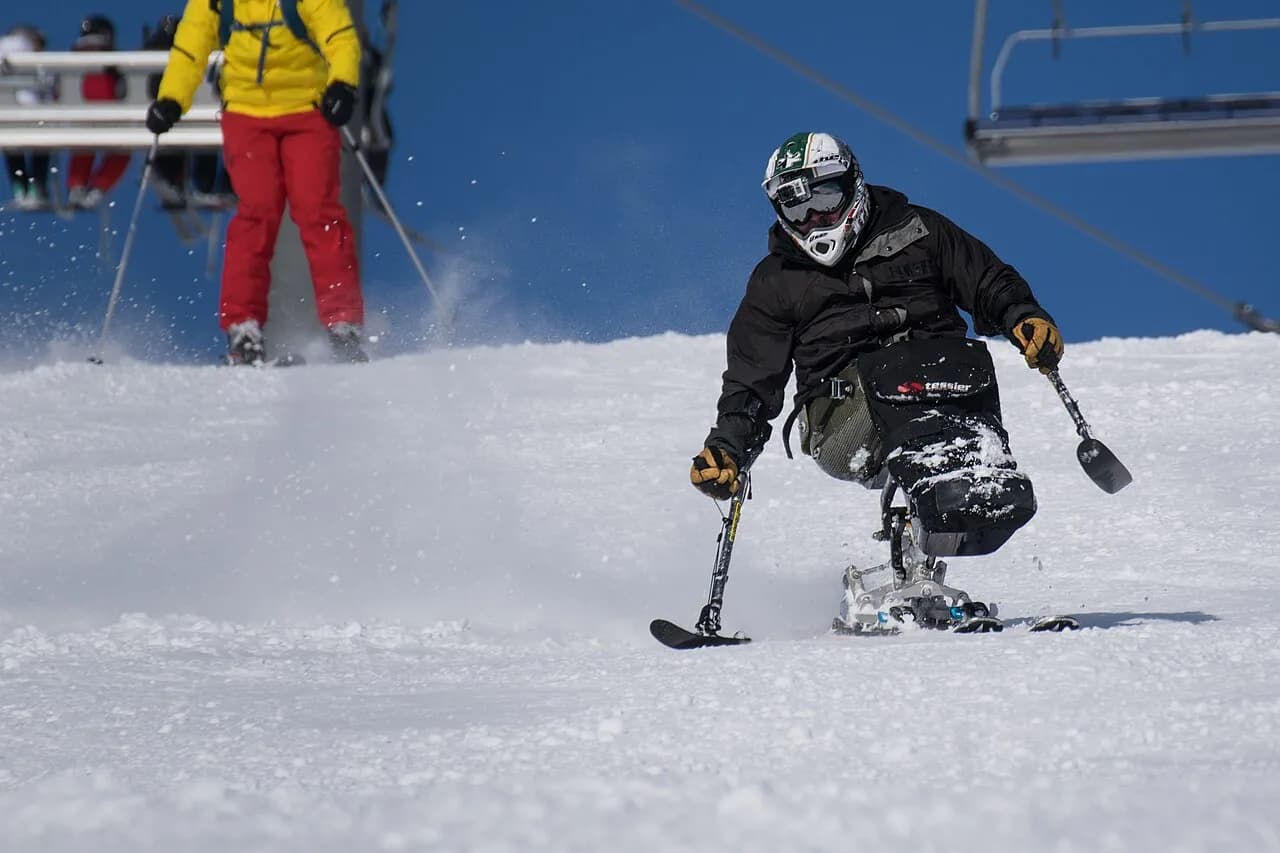
Family economics are unusually generous. Passes are free for children under eight, the child rate applies up to and including 18, the senior rate starts at 65 and passes are free from 75. Holders of a disability card and their accompanying person each get 50 per cent off at the standard rate, provided both passes are bought together at the ticket office for the same duration and area.
The Tignes ski Pass page breaks down how the two products differ in practice, including the time limits on short-duration passes and when the full-area upgrade is worth paying for. Read it before you decide which pass your group needs, because the gap between the two products is small in the preview and closing weeks and much larger in midwinter.
Where to buy and how to avoid first-morning queues
Passes can be bought online in advance, at resort ticket offices or from express purchase terminals, and recharging an existing hands-free card is the quickest route. Buy before you travel for the first day at least, so your first morning goes on snow rather than on admin, and collect or recharge cards the evening you arrive if your accommodation is near a ticket point.
If your group is split between a Tignes-only and a full-area pass, decide before purchase: mixing products within a family is possible but complicates meeting up, since the Val d'Isère sectors are off limits on the cheaper pass. For a week-long trip the full-area product is almost always the better fit; for a short break based entirely in Val Claret, the Tignes pass can be enough.
Which sectors suit which ability
Beginners are best served around Le Lac and Val Claret, where gentle nursery slopes and easy greens sit close to the villages, and in Val d'Isère where the Savonnette green run on the snowfront lets children learn within sight of parents. Several free lifts make first turns cheap, and the ValKids play areas and easy-skiing zones on Solaise and Bellevarde give progressing families somewhere to go next.
Intermediates get the widest choice: the long blues off the Grande Motte, the runs above Tignes 1800 and Les Boisses, and the cruising terrain on Solaise. Strong skiers head for the steep pitches above Val Claret, the Face de Bellevarde above Val d'Isère and the black runs off the Belleface and Grande Motte sectors. The Face is a genuinely serious run and not a place for tentative skiers.
If you are new to the resort or bringing learners, the Tignes skiing for beginners guide sets out which learning areas to book into and how pass choices interact with lessons.
Terrain beyond the groomed runs
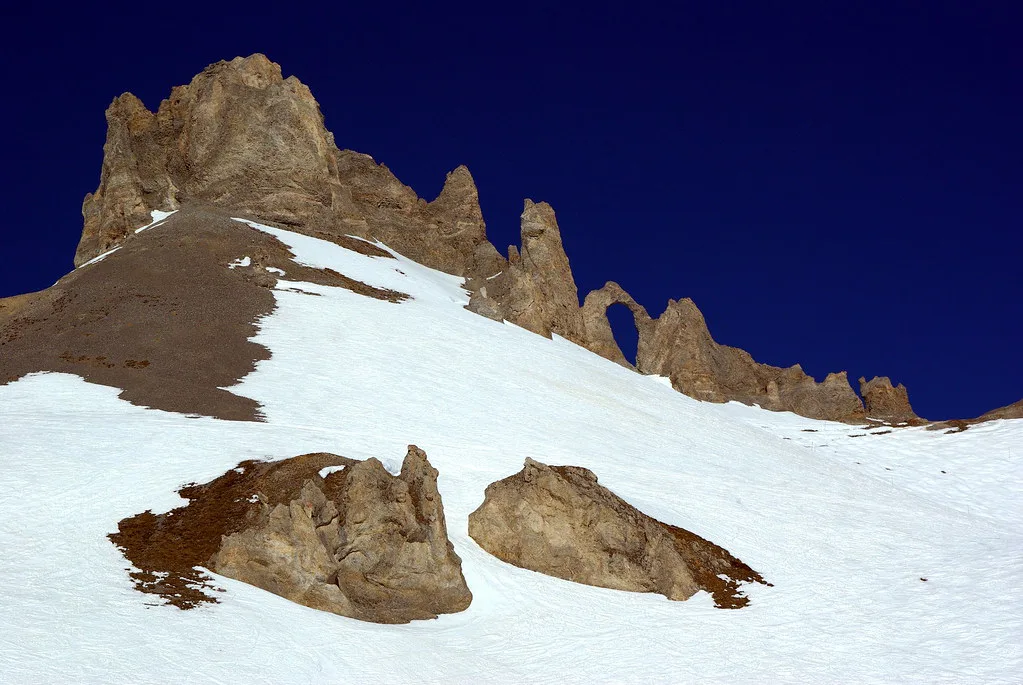
The domain publishes a snowpark at around 2,500 m on the reverse side of Bellevarde in the Combe du Mont Blanc, south-facing and built for all levels from entry features upwards. Tignes adds its own freestyle and freeride zones, and there are marked, secured ski-touring routes on both sides of the area for those with the kit and the fitness.
Off-piste is a major draw, with accessible routes off the Grande Motte and Bellevarde, but the terrain is glaciated in places and the avalanche risk serious. Go with a guide or an instructor unless you know the routes and the snowpack, and carry the standard transceiver, shovel and probe.
Ski schools, guiding and equipment hire
Group lessons, private instruction and guided off-piste are all available through the resort ski schools and independent instructors in both Tignes and Val d'Isère. Book lessons before you travel for peak weeks, and match the meeting point to your village, because a lesson meeting at Val Claret is awkward if you are staying in Les Brévières. The Tignes Ski lessons page explains the course formats and what to confirm at booking.
Hire shops cluster in Le Lac, Val Claret and Tignes 1800, with pickup points near the main lift stations. Pre-book in school holiday weeks to guarantee the right boot size, and collect skis the evening before your first day so a fitting problem does not eat into a lesson.
Getting to Tignes and moving between villages
Tignes is reached by road from Bourg-Saint-Maurice, which has the nearest mainline station and connects to the valley by funicular and bus, or by road from Chambéry, Grenoble or Geneva airports. The road up from Bourg-Saint-Maurice runs through the Tarentaise to Tignes, so transfers can drop at any of the five villages, though the higher ones are furthest along the road.
Once there, free shuttles run between the villages, which is what makes a lower base at Les Brévières or Tignes 1800 practical despite the distance from the glacier. Cars are useful for day trips out of the valley but unnecessary inside the resort, and parking is easiest at the lower villages.
Snow reliability and what altitude actually buys you
Val d'Isère describes the domain as sitting between roughly 1,550 m and over 3,400 m, with snowmaking on more than 65 km of piste, mostly north-facing slopes and a weather pattern influenced by nearby Italy that brings regular top-ups. That combination is what keeps the winter running to early May rather than to Easter.
Altitude buys you cold temperatures and a long season; it does not remove the risk of a mild spell in December or high winds that close the upper lifts. The practical reading is that the glacier and upper Grande Motte runs are dependable in the shoulder phases, while the runs back to Les Brévières can be thin at either end of the season.
Choosing your week
Opening week is cheap and quiet but limited to the Tignes lifts, with a single flat day rate and partial terrain. The Avant-première window is the sweet spot for confident skiers on a budget: the Val d'Isère link is on, prices sit well below full-winter levels on the six-day product, and the mountain is rarely busy.
Midwinter from mid-December to late April gives the whole area, the best snow and the heaviest crowds, with school holidays driving accommodation prices far more than lift-pass prices move. Late April and the closing week trade reliable top-to-bottom snow for sunshine, quieter slopes and lower pass prices, provided you accept that low-level runs may be finished and the afternoon gets slushy.
If you are comparing the shoulder weeks against other French resorts, the Alpe d'Huez Ski Season guide shows how a second high-altitude Tarentaise-area option handles its own dates and phases.
Plan Your Visit
Choose your week first and your accommodation second. A December or April trip is about altitude, so book Val Claret or Le Lac and plan on the upper terrain; a February trip is about the full map, so a mid-village base with easy shuttle and lift access works well.
Then sort passes and lessons before you travel, and check the published season dates and current tariff on the official Tignes site once you have shortlisted dates. Details such as daily lift hours, run openings and short-term snow conditions are published live by the resort and are worth checking close to departure rather than weeks ahead.
Frequently Asked Questions
When does the Tignes ski season start and finish?
The resort publishes its winter 2026-27 as running from 21 November 2026 to 2 May 2027. Opening week uses the Tignes lifts, the link to Val d'Isère is scheduled from 28 November and the full area from 12 December. The final week runs from 24 April with spring conditions, so check which phase matches your dates.
Can you ski in Tignes in November?
Yes, from 21 November, but on the Tignes ski area alone at first. Expect a partial early-season terrain, typically on the glacier and upper slopes, with a single flat day rate. It is a good week for confident skiers who value quiet slopes over a full map.
How much is a Tignes ski pass for a week?
The official Tignes price list publishes a six-days-for-seven product with separate adult and reduced child or senior rates, and the figure changes between the preview window, full winter and the closing week. Check the current winter tariff on the official Tignes site before booking.
Do children ski free in Tignes?
Passes are free for children under eight, and the child rate applies up to and including 18. That combination makes Tignes unusually reasonable for families with teenagers. Proof of age may be required, so carry documentation for the youngest skiers.
Which Tignes village is best for access to the slopes?
Val Claret at 2,150 m gives the quickest access to the Grande Motte and the high terrain, while Le Lac and Le Lavachet sit close to the main snowfront and shops. Les Brévières and Tignes 1800 are quieter and better value but need a shuttle or drive to reach the upper lifts.
Is Tignes linked to Val d'Isère by lift?
Yes. The two form one ski area of around 300 km of marked runs, but the link does not open on the first day of the Tignes season. In 2026-27 it is scheduled from 28 November, so book the Tignes-only pass only if your dates or plans keep you in Tignes.
How high is the skiing in Tignes?
Villages range from 1,550 m at Les Brévières to 2,150 m at Val Claret, and the linked domain reaches 3,456 m. That altitude spread is why the season runs into May and why the glacier and upper runs stay in condition at the edges of the season.
When should I check live lift and piste status?
Check in the days before you travel and again each morning. The resort publishes live lift and run openings, snow conditions and webcams; these change with wind and snowfall, so a plan made weeks ahead may need adjusting on the day.
Sources
Useful notes for your next ski trip
Optional updates to our Alpine resort guides.
You might also like
Continue reading
More guides you'll find useful