Is Tignes Good for Beginners? Learning Areas & Passes
Tignes suits beginners well: free lifts in dedicated learning zones, five villages to base yourself in, and lessons that don't need a pass at first.
On this page
Tignes works for beginners because the resort has built learning into its layout rather than bolted it on: every village has a designated progress area served by free lifts. That means your first hours on snow cost nothing in lift fees, and you can decide about a pass once you can turn and stop. The catch is scale, because Tignes–Val d'Isère is a huge area and the village you book shapes your whole week.
This guide covers the five villages, the specific free lifts, ESF and Oxyski lesson formats with their published from-prices, and when a full area pass starts to make sense. It also sets out realistic progression, from the nursery slopes to the wider domain, so you know what week one can and cannot deliver. Our Tignes ski guide covers the resort layout, ski areas and how this fits into a wider trip.
Quick Answer: Why Tignes Works for a First Ski Trip
The strongest argument for Tignes is the free beginner lift network. The resort lists four magic carpets, two teleskis and three chairlifts dedicated to learning, spread across the villages so you do not have to travel far from your accommodation to start. Add high altitude and a long season and you get reliable snow for a first week, which matters more to beginners than steep terrain.
It suits skiers who want a proper mountain town with several bases and a big linked area to grow into, and who are happy to book lessons rather than rely on friends. It suits less well anyone who wants a single compact base with everything within a few minutes' walk, or a first-timer travelling without a car who books the cheapest outlying village without checking the lift links.
Opening dates and lift status change through the winter, so look at the resort's interactive map in the week before you travel to see which sectors and runs are running.
How Tignes Is Laid Out: Five Villages and What Each Means for a Beginner
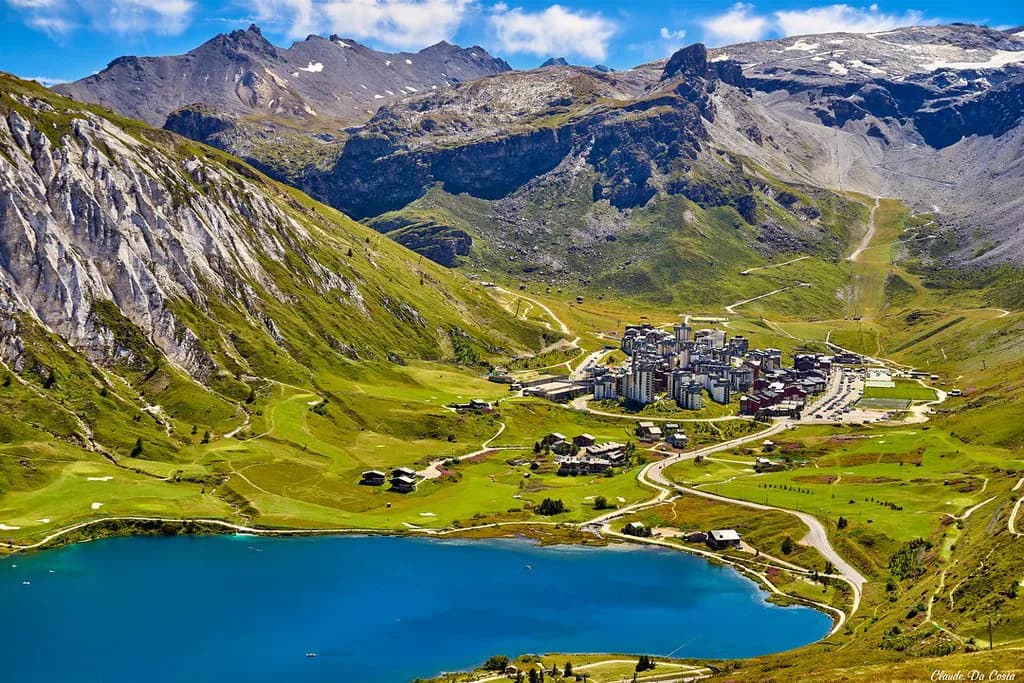
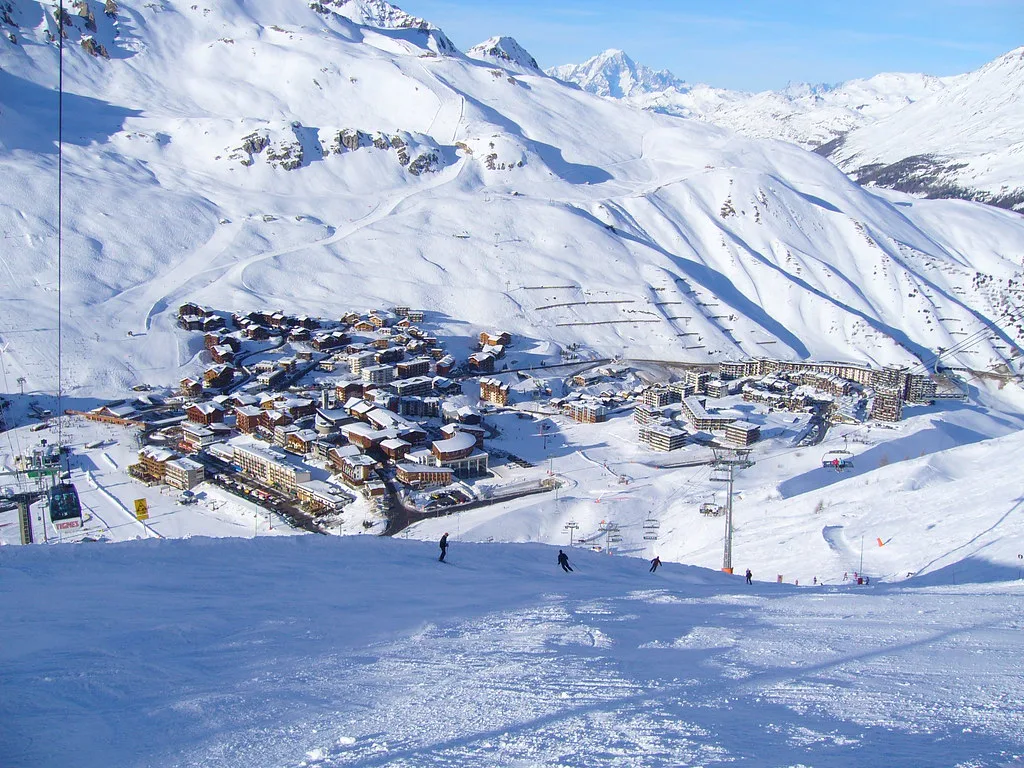
Tignes is a string of five villages stacked up the valley: Val Claret at 2,300m, Tignes Le Lac at 2,100m, Le Lavachet at 2,000m, Les Boisses at 1,800m and Les Brévières at 1,550m. Val Claret and Le Lac sit highest and closest to the glacier side of the area, while Les Boisses and Les Brévières are lower, quieter and further from the high-altitude terrain.
For a beginner, the trade-off is atmosphere versus convenience. Le Lac is the natural default: it has the main snowfront, the ESF and Oxyski meeting points, and a choice of shops and restaurants within walking distance. Val Claret puts you higher and closer to the lifts that serve the upper area, but it is busier and more spread out. Lavachet sits between the two and is walkable to Le Lac.
Les Boisses and Les Brévières appeal if you want a calmer base and easier prices, and both have their own beginner provision, but you will spend more time on lifts or buses to reach the big terrain later in the week. If you are skiing only a few days and want minimum faff, base in Le Lac or Lavachet.
The Free Beginner Lifts and Which Village Each Serves
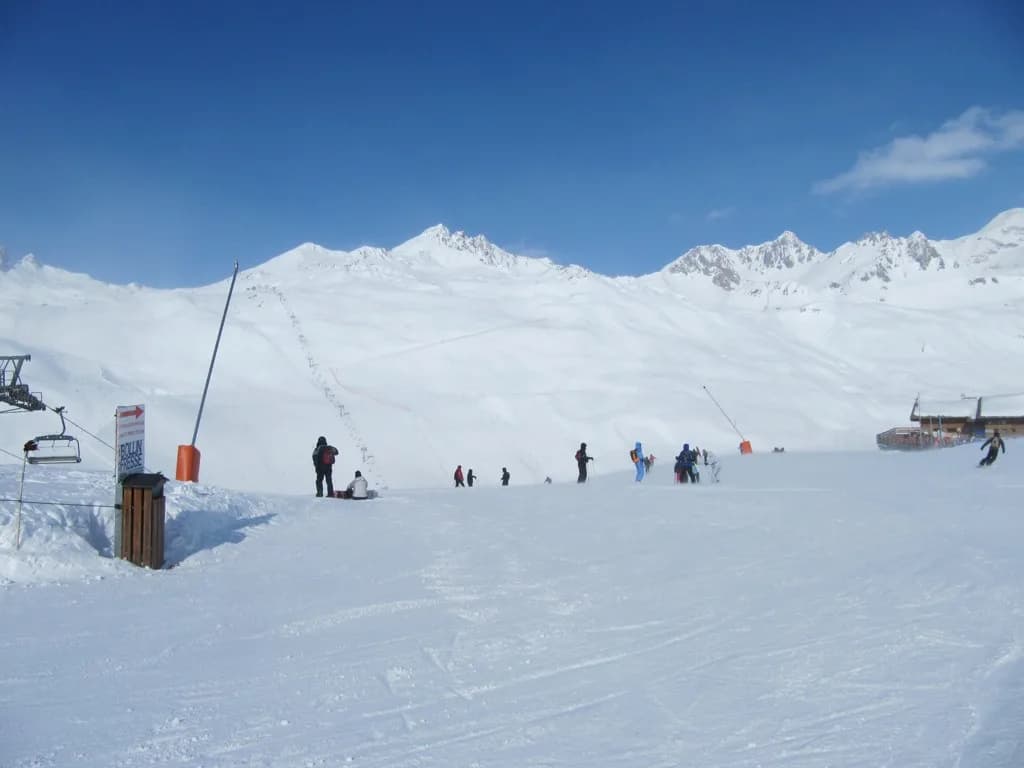
The resort lists its free learning lifts precisely: four carpets at Claret, Centre and Boisses 1 and 2; two teleskis at Lavachet and Grande Pareï; and three chairlifts at Bollin, Almes and Rosset. These are the lifts you use before buying anything, and they are laid out so each village has its own entry point to the snow.
In practice, the carpets are where you spend your first session getting used to skis, the teleskis bridge the gap to sliding on a slope, and the free chairlifts let you repeat a longer beginner run without paying. Knowing the names helps when you read the piste map or ask at the tourist office, where paper maps are available.
Where to Learn in Each Village: Claret, Centre, Boisses and Lavachet
Each village has a defined progress area with its own lifts, so you can learn where you sleep. Claret and Centre are the Le Lac and Val Claret zones, Boisses covers the lower village of Les Boisses, and Lavachet has its own teleski. That means a beginner in Les Brévières or Les Boisses is not stranded: there is a learning area on the doorstep rather than a bus ride away.
Choose your area by your accommodation, not by reputation. If you are in Le Lac, the Centre area is your default; from Val Claret, the Claret carpets are closest. Staying in Lavachet or Les Boisses keeps you on quieter snow with shorter queues, at the cost of fewer nearby non-skiing options in the evening.
Ski Schools in Tignes: ESF Group and Private Lessons
ESF Tignes Le Lac runs adult beginner group lessons in 2.5-hour blocks, morning or afternoon, with five or six sessions across the week. Morning groups meet on the snowfront in your village; afternoon and full-day groups meet in front of the ESF office in Le Lac. Helmets are compulsory, and the school states that beginners do not need a ski pass for their first lesson, with the instructor telling you if one becomes necessary.
If you want one-to-one attention or a flexible schedule, ESF also sells private lessons for one to three students in sessions of one to one and a half hours, bookable across the week. That format suits a nervous first-timer, a child who needs a gentler start, or a couple who want the instructor's full attention.
Oxyski is the alternative, running groups capped at six participants across children, teenagers and adults, plus its own private lessons and guiding. Its meeting point is the snowfront in Tignes Le Lac in front of the Hôtel Le Levanna terrace, and its office and ski shop are on Rue de la Poste in Le Lac. Choosing between the schools comes down to group size, format and meeting point rather than one being better.
Lesson Formats and What They Cost
ESF publishes its adult beginner group prices as from-figures: 236 euros for a morning or afternoon block of five or six 2.5-hour lessons, and 384 euros for the full-day version with two sessions a day. Exact prices vary by week and date, so confirm the figure for your own dates when you book.
Oxyski's private lessons start at 159 euros per session, with one-hour, half-day and full-day options, one-to-one or shared with up to five people. Private sessions are a good fit if your dates fall outside group start weeks or you want to work on one specific skill rather than follow a week's programme.
Group lessons are the cheaper route per hour and give you the rhythm of a daily routine; private lessons cost more but compress progress into fewer days, which matters if you are skiing a long weekend. Either way, book before you travel in school-holiday weeks, when beginner groups fill first.
Do Beginners Need a Lift Pass on Day One?
No. ESF states plainly that beginners do not need a ski pass for their first lesson, and the instructor will tell you when one is required. Between the free learning lifts and that arrangement, you can start skiing without buying anything beyond your lesson and equipment hire.
The decision point comes when you can link turns on the beginner slopes and want to ride the main lifts. At that stage, buy a pass for the sectors you will actually use rather than the full area, and upgrade to the Tignes–Val d'Isère domain once your instructor says you are ready for longer runs. Pass products and validity periods change by season, so check the options and current prices on the Tignes ski Pass page before you commit.
For a first week, a common pattern is free lifts plus lessons early on, a local pass for the middle days, and the full area only if you get the chance to use it. Buying the biggest pass on arrival is the classic first-trip waste of money.
Equipment Hire and What to Sort Before You Travel
Hire skis and boots rather than buying for a first trip, and book online before you arrive so the fitting does not eat into your first morning. Le Lac and Val Claret both have shops, and Oxyski runs its own shop in Le Lac with on-site fitting and the option of delivery to your chalet.
Bring or hire a helmet, since ESF makes one compulsory for its lessons, and pack goggles and sun cream: high altitude means strong sun even on cold days. Boots that fit properly matter more than ski model for a beginner, so allow time for the fitting and ask for an exchange if anything pinches.
Progression: From Learning Zones to the Tignes–Val d'Isère Area
Once you are off the beginner lifts, the linked Tignes–Val d'Isère area opens up, with 300 kilometres of runs and 153 pistes from green to black according to the resort. Treat that as a menu for future trips rather than a week-one target; most beginners spend their first week on a handful of blue runs near their village.
For a sense of scale, the resort's longest run is La Sache, a 10km black from the top of the Marais chairlift down to Les Brévières. It is a marker of how far the domain extends, not a realistic goal for a first week. A sensible aim is comfortable linked turns on blue runs by the end of the week, with the glacier and the bigger linked circuits saved for a return visit.
When to Come: Early Season, Spring and School Holidays
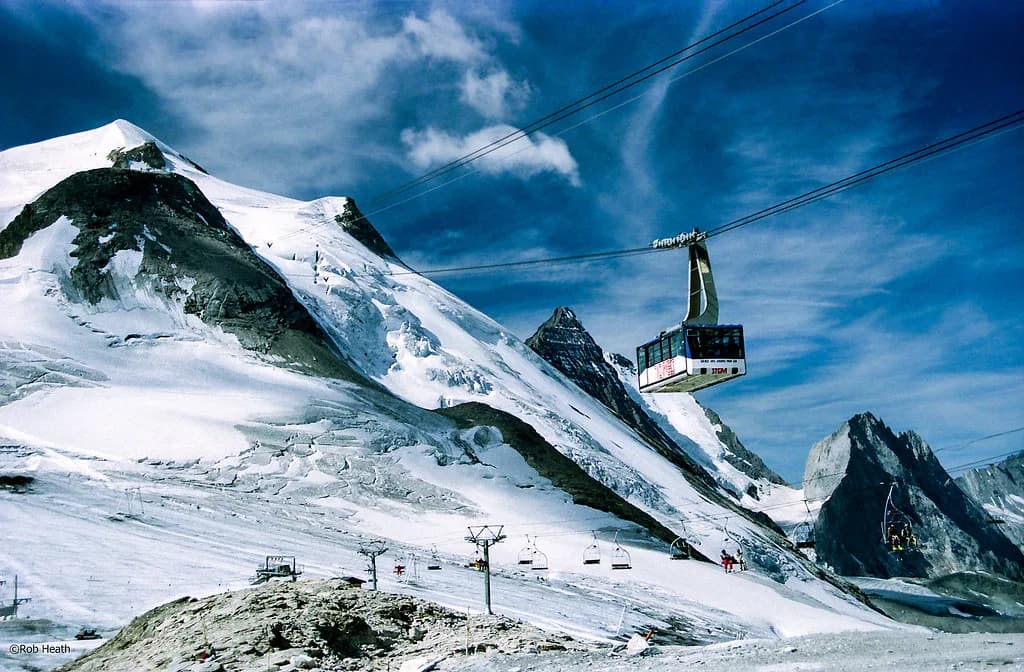
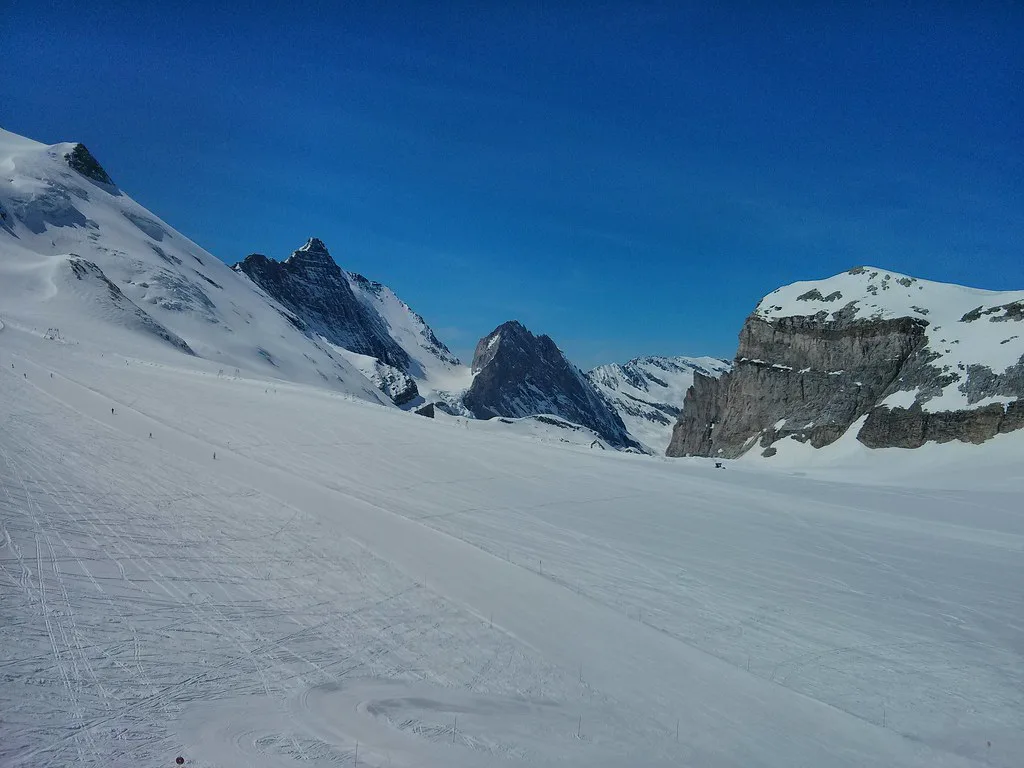
Tignes sits high enough that early-season and spring weeks are genuinely viable, and the Grande Motte glacier extends skiing into the summer. For a beginner, the trade-off is quieter slopes and cheaper-feeling accommodation in early December and late April against the risk of limited lower runs and cold or slushy conditions.
ESF's calendar gives a useful signal: group lessons at Tignes Le Lac begin on Sunday 13 December 2026, and only private lessons run before that date. If you are travelling in the first half of December, plan around private lessons or a later arrival. School holidays bring the busiest beginner areas, so book lessons and hire early and expect queues at the carpets.
Getting There and Getting Around Without a Car
Tignes is reached by road up the Tarentaise valley, with the nearest major airports and rail stations outside the resort; transfers and shuttle buses connect the villages with the valley. Once you are in resort, local buses link the five villages, which matters if you stay in Les Boisses or Les Brévières and ski in Le Lac.
If you are car-free, base in Le Lac or Lavachet so lessons, hire and the beginner slopes are within walking distance, and use the bus for evenings out in Val Claret. Staying lower saves money but adds a daily transfer, which is a real cost in time when you are carrying boots and skis.
Common First-Trip Mistakes
The most expensive mistake is buying a full area pass on day one, before you know whether you will use it. The second is booking a base far from your lesson meeting point, which turns every morning into a logistics exercise. The third is under-booking lessons: two or three mornings of instruction will move you further than a week of trial and error with friends.
Other avoidable errors include hiring equipment on the first morning rather than in advance, skipping the helmet that ESF requires, and treating a long black run as a week-one ambition. Sort lessons, hire and village first, then decide on the pass once you have skied a day or two.
Verdict: Who Should Book Tignes for a First Ski Week
Tignes is a strong choice for a first ski week if you want free beginner lifts in every village, a choice of ski schools, and a high-altitude area you can grow into over several seasons. Base in Le Lac or Lavachet for convenience, book lessons before you travel, and hold off on the full area pass until your instructor says you are ready.
Look elsewhere if you want a single compact resort where everything is a short walk away, or if you are booking late in a school holiday and cannot secure lessons. For everyone else, the combination of free learning lifts and a genuinely large linked domain makes Tignes a sensible first booking. If you are weighing up a different valley altogether, our guide to Méribel Skiing for beginners compares learning areas, lessons and passes there.
Frequently Asked Questions
Is Tignes good for beginners?
Yes. Every village has a designated learning area served by free lifts, including four magic carpets, two teleskis and three chairlifts dedicated to beginners. Ski schools run dedicated adult beginner groups, and beginners do not need a lift pass for their first lesson.
Are there free lifts for beginners in Tignes?
The resort lists four carpets at Claret, Centre and Boisses 1 and 2, two teleskis at Lavachet and Grande Pareï, and three chairlifts at Bollin, Almes and Rosset, all available to beginners without a pass.
Do beginners need a ski pass in Tignes?
Not at first. ESF states that beginners do not need a ski pass for their first lesson and the instructor will say when one is required. Buy a pass once you are ready to use the main lifts, and start with a local product rather than the full area.
How much are beginner ski lessons in Tignes?
Lesson prices are set each season and vary by date and format, so check the current price lists on the ESF Tignes and Oxyski websites for the week you plan to travel. Group courses are generally cheaper per hour than private sessions, which compress progress into fewer days.
Which Tignes village is best for beginners?
Tignes Le Lac is the most convenient, with the main snowfront, ski school meeting points and shops within walking distance. Lavachet is a quieter alternative within walking distance of Le Lac, while Les Boisses and Les Brévières are calmer but further from the high-altitude terrain.
Is December too early to learn to ski in Tignes?
It can work, but ESF group lessons start on Sunday 13 December 2026, with only private lessons before that. If you travel earlier in December, plan around private instruction or a later arrival.
Is April too late to ski in Tignes?
No. Tignes is high altitude and the Grande Motte glacier extends skiing into the summer. Late April brings quieter slopes and softer snow, though lower runs may be limited, so check live piste status before booking.
Sources
Useful notes for your next ski trip
Optional updates to our Alpine resort guides.
You might also like
Continue reading
More guides you'll find useful