Is Tignes Expensive? Real Ski-Trip Costs for 2026-27
Is Tignes expensive? We break down 2026-27 lift-pass prices, free child and senior passes, ski hire and lessons so you can budget honestly.
On this page
Tignes has a reputation as a pricey resort, and the lift-pass rates for 2026-27 do nothing to dispel it. But the headline figure hides real variation: opening week, the avant-première window, full winter and the closing week all carry different prices, and children, teenagers and older skiers pay less or nothing at all. The practical question is not whether Tignes is expensive but which parts of the trip you can steer.
This cost breakdown works through the three lines you actually control — the pass, ski and boot hire, and lessons — using the figures Tignes publishes for 2026-27. Food, drink, accommodation and transfers are covered qualitatively, because there is no reliable published rate to quote and they vary enormously by village and week.
If you want the wider picture of how the resort fits together before you start budgeting, the Tignes ski guide covers the five villages, the linked ski area and the booking decisions that come before price.
Quick Answer: Where Tignes Sits on the Alpine Price Scale
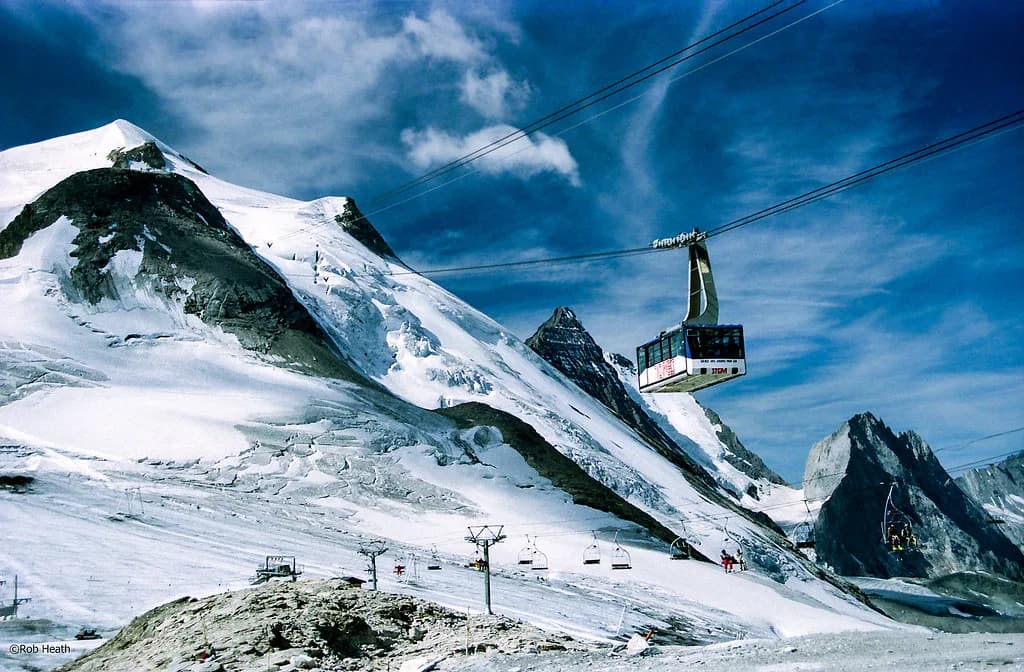
Tignes is an expensive resort by French Alpine standards, and the main reason is altitude. The ski area runs from 1,550 m up to 3,450 m, with more than 300 km of linked piste shared with Val d'Isère, and a snow-sure season that the resort states runs from November to May. High, glaciated terrain costs more to lift, groom and secure than a low-altitude village hill, and that is reflected in the pass price.
The comparison that matters is with other high-altitude French resorts rather than with cheaper low-level ski areas. A week's pass here buys you glacier access and a genuine door-to-door linked circuit, and if you ski the full area every day the per-kilometre cost looks far better than the sticker price suggests. If you mainly ski short, gentle days in one sector, you are paying for terrain you will not use.
The verdict depends on your group. Families with young children or teenagers often come out cheaper than expected because of the free and reduced categories, while a couple of adults skiing peak weeks pays a premium for the altitude and the address.
The 2026-27 Season at a Glance: Dates That Change the Price
Tignes splits its winter into four priced periods, and the calendar drives the bill as much as your ability does. The season opens with a first week of skiing in the Tignes ski area from 21 to 27 November 2026, then moves into an avant-première window from 28 November to 11 December 2026 while the Val d'Isère link opens gradually.
Full winter pricing runs from 12 December 2026 to 23 April 2027, when the whole Tignes–Val d'Isère area is open. The closing week, 24 April to 2 May 2027, drops back to lower prices for late-season skiing. School holiday weeks inside the full-winter block are the most expensive dates to be in resort, even though the pass itself is priced by period rather than by week.
Plan around those windows rather than assuming a season-long flat rate. An early December trip or a late April week buys the same vertical for noticeably less, at the cost of partial lifts or softer afternoon snow.
Lift-Pass Prices by Period: What the 2026-27 Rates Look Like
Opening week is the cheapest way onto the mountain. For 21 to 27 November 2026, a single day in the Tignes ski area is priced at 50 EUR for everyone, with one flat rate rather than adult and child tiers. Expect a limited lift network at that stage, since the link to Val d'Isère is not yet running.
In the avant-première window, the full Tignes–Val d'Isère pass costs 67 EUR for a day and 54 EUR for a half-day afternoon for adults aged 19 to 64; the child and senior rate is 54 EUR a day. The six-days-for-seven product is 402 EUR adult and 324 EUR child or senior. A separate Tignes-only pass is sold alongside it at 60 EUR a day adult and 49 EUR reduced.
Full winter is the peak rate: 78 EUR a day adult and 63 EUR reduced for the Tignes–Val d'Isère area, or 468 EUR adult for six days of skiing on a seven-day pass. The Tignes-only version runs at 70 EUR a day adult and 57 EUR reduced. The closing week from 24 April to 2 May 2027 returns to avant-première levels, at 67 EUR a day adult for the full area.
These are published 2026-27 rates and the resort notes that prices, date ranges and opening times can change during the season. Confirm the current figure on the official site before you commit a group booking.
Tignes-Only vs Tignes–Val d'Isère: When the Smaller Pass Saves Money
The Tignes-only pass is not a beginner ticket; it covers the local lifts but stops at the boundary with Val d'Isère. The gap between the two products is modest on a daily basis but adds up across a family over six days, and the official price list breaks it down period by period.
Choose the smaller pass if you are skiing with young children, staying in Val Claret or Le Lac and unlikely to travel far, or on a short trip where you want one sector at a time. The linked circuit to Val d'Isère, Le Fornet and the Grande Motte glacier rewards strong intermediates and experts who will use the full 300 km.
The glacier is the one argument for the full pass even on a short trip: high-altitude skiing in poor weather or late season often means riding the Grande Motte lifts, and access rules and opening dates are worth checking on the Tignes ski Pass page before you decide.
Who Skis Free or Cheap: Family and Senior Rates
Tignes is unusually generous with family pricing. The Tignes–Val d'Isère pass is free for children under 8, and the child rate applies up to and including 18 — a rare concession that covers teenagers as well as small children. A family with two teenagers therefore pays child rates for four people rather than two adults and two children.
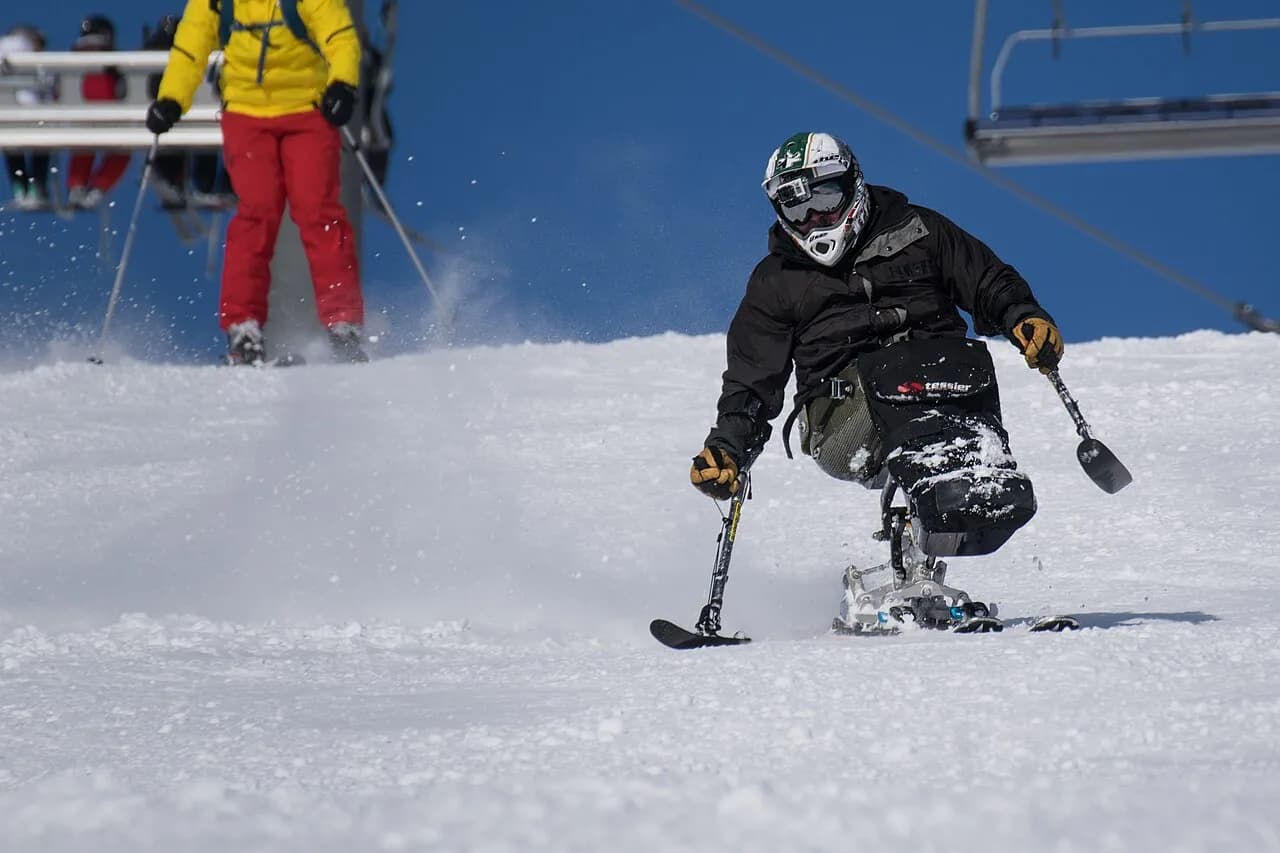
Older skiers get a similar break: the senior rate starts at 65 and the pass is free from 75. Skiers with a disability card and their accompanying person each receive 50% off the standard rate, but both passes must be bought together at the ticket office with the same duration and the same ski area.
The family maths is worth doing before you look at accommodation. Two adults and two under-8s on a six-day full-area pass in peak winter costs the adult rate twice with nothing for the children, which changes the resort's reputation considerably.
Choosing Pass Duration: Day, Half-Day, Four-Hour and the Seven-Day Deal
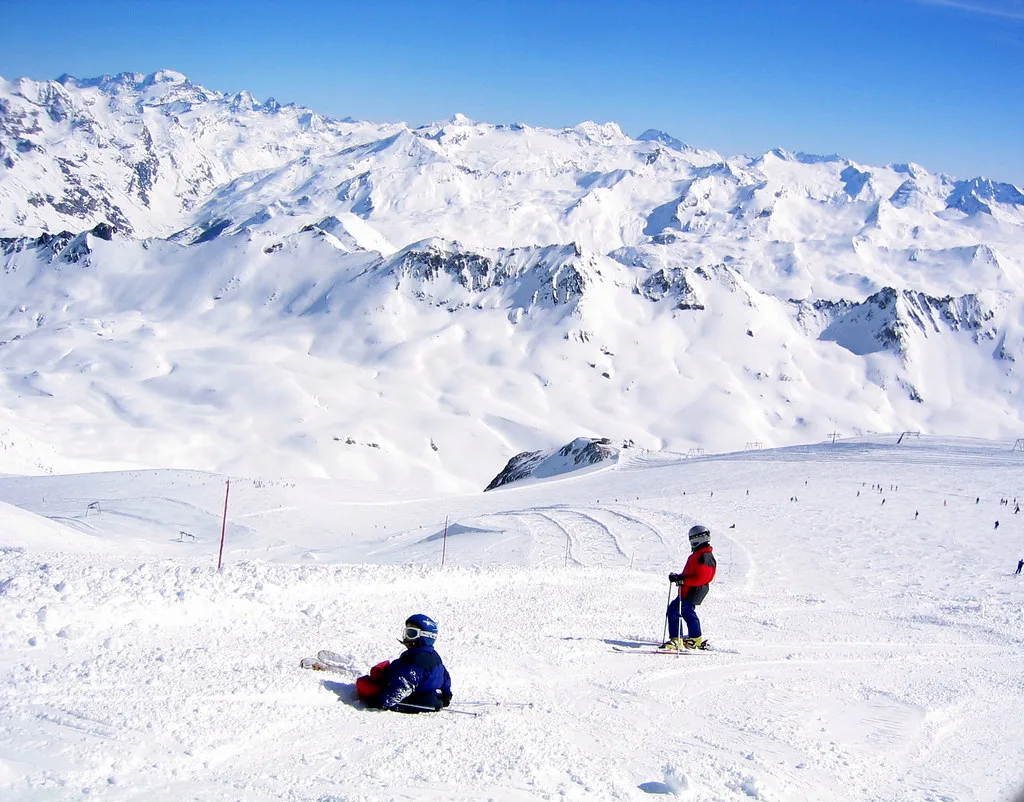
Tignes sells more than one shape of pass, and matching the shape to your skiing habits is where real savings sit. The Tignes-only area offers a four-hour pass alongside a full-day rate, while the Tignes–Val d'Isère pass is sold by the half-day afternoon, the day and the six-day block.
The six-days-for-seven product is the one to plan around. You pay for six days and receive seven, so a conventional Saturday-to-Saturday week covers the whole holiday without buying a separate final day. Skiers who arrive late on Saturday and leave early the following Saturday effectively waste a day of a standard seven-day purchase, so the bundled version suits most weekly trips.
Half-day afternoon passes suit arrivals, departure days and tired legs, but they are not proportionally cheaper than a full day. If you plan to ski every morning, buy the day or block rate; if you ski two or three afternoons in a week, single half-days may beat a season of overbuying.
Where to Buy Passes and How to Avoid Queue Costs
Passes can be bought online, from resort advisers, or from express purchase terminals that issue a pass in a few minutes. Buying before you travel is the queue-avoidance move that matters most on a Saturday in February, when ticket windows and the first lift both draw crowds.
Pedestrian passes exist for non-skiers in the group, which keeps the cost of a mixed-ability holiday down and lets everyone ride the lifts to meet for lunch. If a member of your party is not skiing, a pedestrian pass is usually cheaper than a full ski pass they will not use.
Keep all passes for the group in one online account so you can top up durations without hunting for separate cards. If you are unsure how the sectors connect before buying, the Tignes Piste Map shows the lift layout across the five villages.
Ski and Boot Hire: What the Shop Network Looks Like
Hire is the second controllable cost line, and Tignes has a dense network of shops rather than a single monopoly. Skiset lists ten stores across the resort, spread through Val Claret, Le Lac, Lavachet, Les Boisses and Les Brévières, several of them at the base of the slopes, so you can walk to fitting rather than driving.
The practical difference between shops is fitting quality and convenience, not just price. Some Val Claret branches offer a 3D foot scan and boot fitting, free lockers or free in-store caretaking, and a workshop for repairs — worth having if you are skiing six days and want your own boots stored overnight.
Book hire early for peak weeks, especially if you need a specific boot size or performance skis. Choose the shop nearest your apartment rather than the cheapest across the village, because carrying boots uphill in the morning is a cost in itself.
Ski School: ESF Lesson Tiers and What to Book
Lessons are the third controllable line, and Tignes has two ESF ski schools across its five villages, so the right one depends on where you stay. ESF Tignes le Lac runs Club Piou-Piou for ages 3 to 5, children's groups from 6 to 12, teen and adult lessons, freestyle, competition and off-piste courses, plus private instruction.
The village split matters more than you might expect: booking lessons at the wrong base costs you a morning's transfer. If you are staying in Val Claret, Tignes 1800 or Les Brévières, confirm the meeting point for your chosen school before you pay.
Group lessons are the cheaper route for beginners and improvers; private lessons cost more but deliver more per hour for a nervous first-timer or a skier chasing a specific technique. Book both early in school holiday weeks, when popular time slots fill first.
Terrain Value: What the Pass Buys
A full-area pass buys 300 km of linked piste between Tignes and Val d'Isère, served by 87 lifts, with terrain from 1,550 m to 3,450 m. The resort counts 20 green, 67 blue, 41 red and 26 black runs across that terrain.
The layout rewards skiers who move around. The Grande Motte glacier gives high, reliable snow and long vertical, while the lower village runs suit early and late season when the valley is warmer. Beginners have dedicated nursery zones but the resort's real strength is the intermediate cruising above Le Lac and Val Claret.
For a first-timer, that argues for a shorter or local pass; for a confident intermediate, the full area pays back in variety. Tignes skiing for beginners sets out which zones to learn in before you spend on the bigger pass.
What Tignes Doesn't Charge For
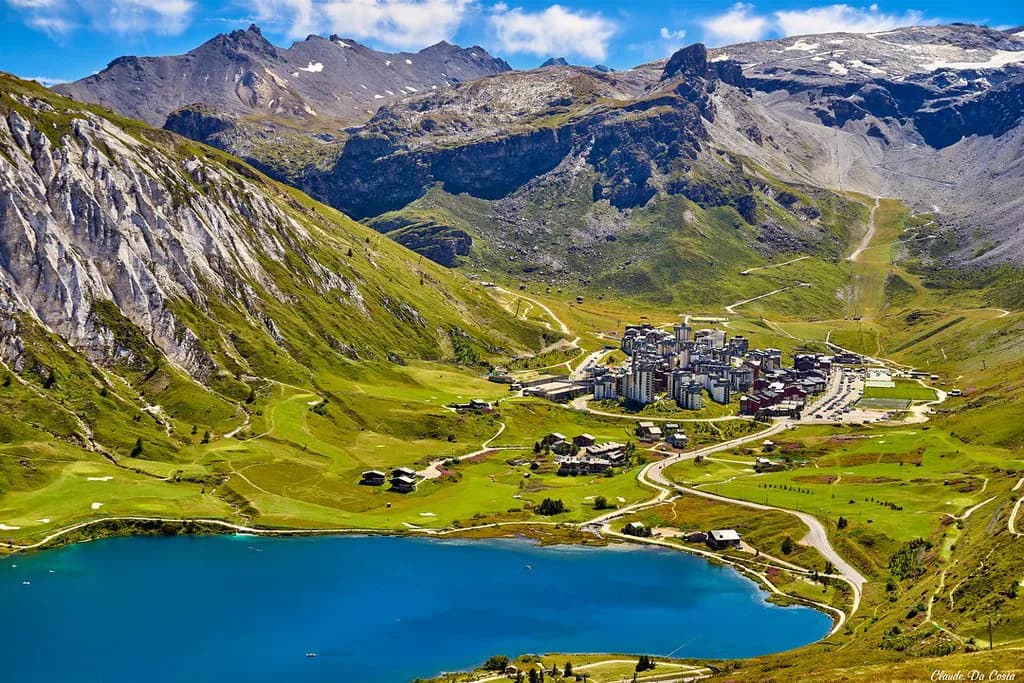
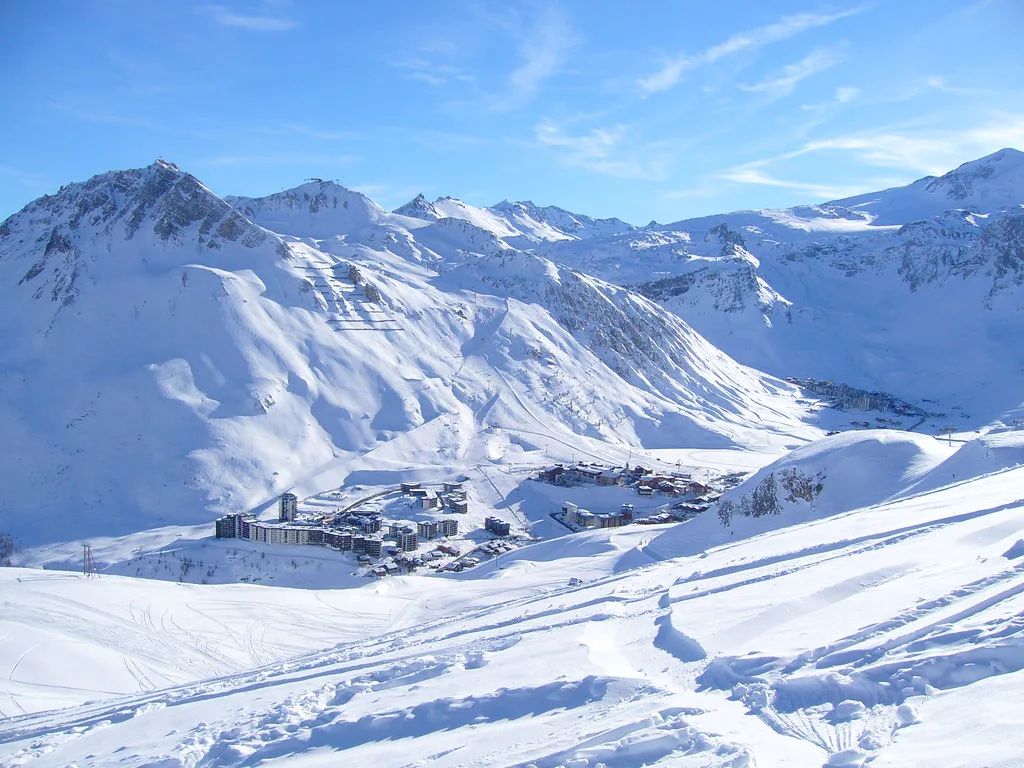
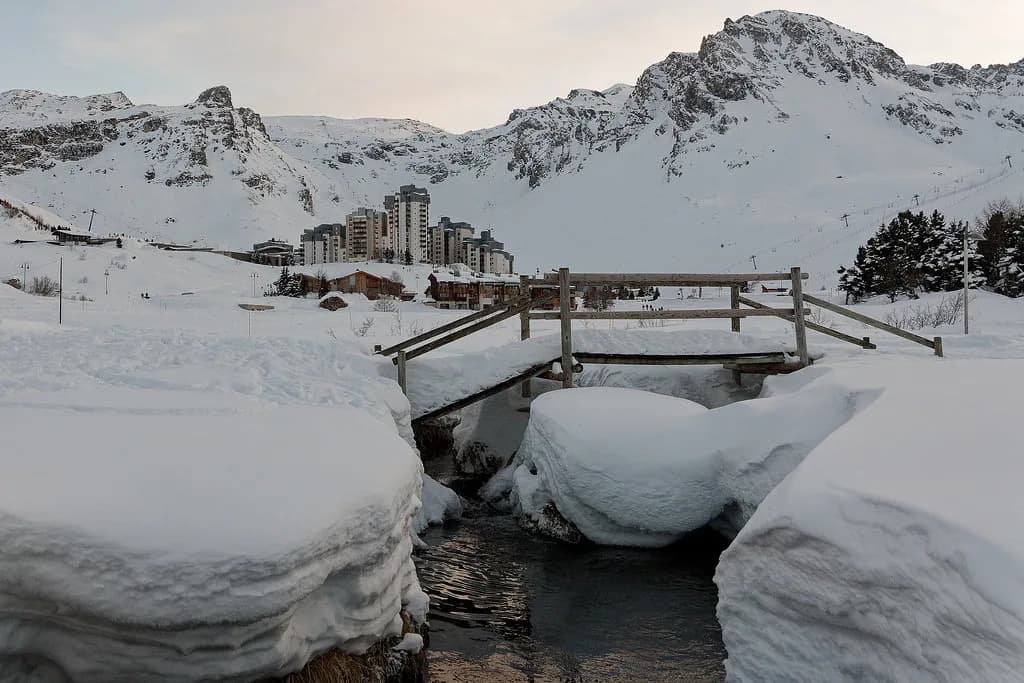
The five villages — Val Claret, Le Lac, Lavachet, Les Boisses and Les Brévières — sit along the valley, with the upper three effectively ski-in, ski-out and the lower two linked by road and lift. Tignes 1800 and Les Brévières are quieter and often cheaper for accommodation, trading convenience for a short commute.
Within the resort, the free local bus network connects the villages, which means a cheaper apartment lower down does not require a car. Parking and driving between levels costs both money and time in peak weeks, so the bus is usually the better plan for a family without a vehicle.
Pedestrian passes keep non-skiers part of the day without paying for terrain they will not use, and pedestrian lift access also covers walkers heading to mountain restaurants.
Where Tignes Stings: Lunch, Accommodation and Peak Weeks
On-mountain lunches are the line most likely to surprise you. High-altitude restaurant terraces charge for the view, and a family lunch at 2,500 m costs considerably more than a sandwich from a village bakery. There is no published price to quote reliably, so treat this as a budget to control rather than a figure to plan against.
Accommodation at altitude carries a premium: Le Lac and Val Claret ski-in, ski-out apartments are the convenient and expensive option, while Les Boisses, Tignes 1800 and Les Brévières sell lower rates in exchange for a bus or lift ride. Book early for Christmas, New Year and February half-term, when the cheapest stock goes first.
Peak-week pricing applies to everything around the mountain as well as the pass. If your dates are flexible, the avant-première window and the closing week both deliver the same terrain at lower rates and thinner crowds.
A Sample Budget Shape for a Week
Build the week from the three lines you can control. For two adults in full winter, a six-day full-area pass at 468 EUR each comes to 936 EUR before hire or lessons; adding two children under 8 costs nothing on the lift pass. In the avant-première window the same adult passes drop to 402 EUR each.
Hire and lessons then sit on top, varied by shop, equipment level and whether you choose group or private tuition. A useful rule is to book the pass and hire first, because those are fixed once you arrive, then decide on lessons based on how the first day goes — though popular group levels fill before the season starts.
If you are comparing resorts on cost rather than terrain, Méribel Ski trip costs sets out a similar published-rate approach for a different high-altitude French resort.
Is Tignes Expensive? The Verdict
Yes, Tignes is expensive in absolute terms: a full-winter adult day pass at 78 EUR and a six-day pass at 468 EUR place it among the pricier French resorts. But the cost is not fixed. Opening week, the avant-première window and the closing week all cut the pass price substantially, and the free under-8 pass and child rate to 18 make family trips far cheaper than the headline suggests.
The decisive choices are when you travel, whether you need the full Tignes–Val d'Isère area, and how far ahead you book hire and lessons. Get those three right and Tignes delivers high-altitude skiing from November to May at a price that competes with its peers; get them wrong and you pay peak rates for terrain you barely touch.
Frequently Asked Questions
Is Tignes expensive compared with other French ski resorts?
Tignes sits at the upper end of French resort pricing because of its altitude and the 300 km linked area with Val d'Isère. The full-winter adult day pass is a premium rate, but the resort's free under-8 pass and child rate up to 18 make family trips cheaper than the headline figure implies.
How much is a Tignes lift pass in 2026-27?
Rates differ by period: the opening week, the avant-première window, full winter and the closing week each have their own price list, with separate rates for the Tignes-only area and the full Tignes–Val d'Isère area. Current figures are published on the official Tignes ski-pass page.
Are children free on Tignes lift passes?
Children under 8 ski free on the Tignes–Val d'Isère pass, and the child rate continues up to and including the age of 18. That covers teenagers as well as small children, which materially changes the cost of a family ski week.
Is the Tignes-only pass cheaper than the Tignes–Val d'Isère pass?
Yes. The Tignes-only pass is priced below the full-area pass in each period; consult the official price list for the current difference. It suits families with young children, short trips and skiers staying put in one sector, while the full pass pays off if you will use the Val d'Isère link and the glacier.
Do I need to book ski hire and lessons in advance in Tignes?
Book hire early for peak weeks, especially if you need specific boot sizes or performance skis. Lessons fill fastest in school holiday weeks, and group levels sell out before the season starts, so reserving both before you travel is the safer plan.
When is the cheapest week to ski in Tignes?
Opening week from 21 to 27 November 2026 has the lowest single-day rate, and the avant-première window from 28 November to 11 December 2026 plus the closing week from 24 April to 2 May 2027 are also cheaper than full winter. Expect partial lift networks or softer snow at the edges of the season.
Does Tignes offer discounts for disabled skiers?
Holders of a disability card and their accompanying person each receive 50% off the standard rate. Both passes must be purchased together at the ticket office with the same duration, validity and ski area.
What does a Tignes pass include beyond the lifts?
The pass covers the lifts and pistes; it does not include hire, lessons, food or equipment. Pedestrian passes are sold separately for non-skiers who want to ride lifts to mountain restaurants or viewpoints.
Sources
Useful notes for your next ski trip
Optional updates to our Alpine resort guides.
You might also like
Continue reading
More guides you'll find useful